
The global transition toward clean energy and sustainable transportation is reshaping the world economy. At the center of this transformation is the electric vehicle (EV) revolution, which is driving unprecedented demand for battery minerals, rare earth elements, and strategic raw materials.
As governments around the world accelerate efforts to reduce carbon emissions and promote renewable energy, the demand for electric vehicles continues to grow. This growth has created a global race for the minerals required to manufacture batteries, electric motors, charging infrastructure, and energy storage systems.
Africa, long recognized for its vast mineral wealth, is increasingly emerging as one of the most important regions in the future of electric vehicle minerals. With abundant deposits of lithium, cobalt, graphite, manganese, copper, nickel, rare earth elements, and other strategic minerals, the continent is becoming a key player in the global energy transition.
The future of electric vehicle minerals in Africa presents enormous opportunities for governments, investors, mining companies, processors, and local communities. However, it also presents significant challenges that must be addressed to ensure sustainable development and long-term economic benefits.

Understanding Electric Vehicle Minerals
Electric vehicle minerals are the raw materials required to manufacture electric vehicles and their associated technologies.
These minerals are used in:
- Rechargeable batteries
- Electric motors
- Charging infrastructure
- Renewable energy storage systems
- Power transmission equipment
- Advanced electronic components
Some of the most important electric vehicle minerals include:
- Lithium
- Cobalt
- Nickel
- Graphite
- Copper
- Manganese
- Rare Earth Elements
- Tin
- Tantalum
- Niobium
Without these minerals, the electric vehicle revolution would not be possible.
Why Demand for EV Minerals Is Growing
The automotive industry is undergoing its most significant transformation in over a century.
Governments across Europe, North America, Asia, and other regions are promoting electric vehicle adoption through:
- Emission reduction targets
- Renewable energy initiatives
- Fuel efficiency regulations
- Incentives for EV manufacturers
- Consumer subsidies
As a result, major automobile manufacturers are investing billions of dollars into electric vehicle production.
Industry forecasts indicate that demand for battery minerals will continue growing for decades as electric vehicle sales increase worldwide.
This trend is creating unprecedented opportunities for mineral-rich regions such as Africa.
Africa’s Strategic Advantage
Africa possesses some of the world’s largest undeveloped reserves of critical minerals.
The continent’s geological diversity provides significant advantages in the race to secure electric vehicle mineral supplies.
Key advantages include:
Vast Mineral Resources
Africa hosts substantial deposits of:
- Lithium
- Cobalt
- Copper
- Manganese
- Graphite
- Rare Earth Elements
Growing Investment Interest
International investors are increasingly seeking opportunities in African mining projects.
Untapped Potential
Many regions remain underexplored, creating opportunities for new discoveries.
Strategic Importance
As global manufacturers seek diversified supply chains, Africa’s role is becoming increasingly important.
Lithium: The Foundation of the Battery Revolution
Lithium is often referred to as “white gold” because of its importance in rechargeable battery technology.
Lithium-ion batteries power:
- Electric vehicles
- Smartphones
- Laptops
- Energy storage systems
Several African countries possess lithium resources, including:
- Zimbabwe
- Namibia
- Democratic Republic of Congo
- Mali
- Nigeria
Nigeria has emerged as one of Africa’s most promising lithium jurisdictions, with growing exploration and mining activity in several states.
Opportunities
- Exploration projects
- Mining operations
- Beneficiation plants
- Export opportunities
- Future battery material production
Challenges
- Infrastructure development
- Processing capacity
- Environmental management
- Financing requirements
Cobalt and the Electric Vehicle Industry
Cobalt remains a critical component of many battery chemistries.
The Democratic Republic of Congo currently dominates global cobalt production.
Cobalt contributes to:
- Battery stability
- Energy density
- Battery longevity
Despite efforts to reduce cobalt usage in some battery technologies, demand remains significant.
Africa’s dominance in cobalt production ensures the continent will remain a critical player in the EV supply chain.
Copper: The Metal of Electrification
Electric vehicles require substantially more copper than traditional internal combustion vehicles.
Copper is essential for:
- Wiring systems
- Electric motors
- Charging stations
- Renewable energy infrastructure
Countries such as Zambia and the Democratic Republic of Congo possess world-class copper resources that will continue supporting global electrification efforts.
Rare Earth Elements and Electric Vehicles
Rare earth elements play a critical role in electric vehicle manufacturing.
Elements such as:
- Neodymium
- Praseodymium
- Dysprosium
are used in powerful permanent magnets found in:
- Electric motors
- Wind turbines
- Advanced electronics
Africa possesses significant rare earth potential, including deposits in:
- Nigeria
- Tanzania
- Malawi
- South Africa
In Nigeria, minerals such as Monazite and Bastnasite are attracting growing interest from investors and industry participants.
Nigeria’s Growing Role in EV Minerals
Nigeria is increasingly positioning itself as a future supplier of critical minerals.
The country possesses:
Lithium Resources
Lithium-bearing pegmatites have been identified in:
- Nasarawa State
- Niger State
- Kaduna State
- Kogi State
- Kwara State
Rare Earth Minerals
Nigeria hosts occurrences of:
- Monazite
- Bastnasite
which contain commercially valuable rare earth elements.
Tin and Coltan
Nigeria’s historic tin belt also contains:
- Tantalum
- Niobium
- Other strategic minerals
These materials are important for electronics and advanced technologies.
The Importance of Beneficiation
One of Africa’s greatest opportunities lies in moving beyond raw mineral exports.
Beneficiation involves:
- Concentration
- Separation
- Upgrading
- Processing
Benefits include:
- Higher export earnings
- Job creation
- Technology transfer
- Industrial development
Countries that successfully develop local processing capacity will capture more value from their mineral resources.
Investment Opportunities
The future of EV minerals in Africa offers opportunities across multiple sectors.
Exploration
Large areas remain underexplored.
Mining Operations
Growing demand supports new production projects.
Mineral Processing
Beneficiation facilities can significantly increase mineral value.
Infrastructure Development
Roads, power systems, and logistics networks are essential for sector growth.
Strategic Partnerships
Collaboration between governments, investors, miners, and technology companies can accelerate development.
Risks and Challenges
Despite the opportunities, several challenges remain.
Infrastructure Constraints
Many mineral-rich regions require improved infrastructure.
Regulatory Uncertainty
Stable policies are important for attracting long-term investment.
Environmental Considerations
Responsible mining practices are essential.
Financing
Large-scale projects often require substantial capital.
Market Volatility
Commodity prices can fluctuate significantly.
Effective risk management is essential for successful project development.
Sustainability and Responsible Mining
The future success of Africa’s EV minerals sector depends on sustainable development.
Key priorities include:
- Environmental protection
- Community engagement
- Responsible sourcing
- Transparency
- Good governance
International buyers increasingly expect minerals to be produced responsibly and ethically.
The Future Outlook
Several trends support a positive outlook for Africa’s EV minerals sector:
Accelerating EV Adoption
Global electric vehicle sales continue increasing.
Energy Storage Expansion
Renewable energy projects require battery systems.
Supply Chain Diversification
Manufacturers seek alternative sources of critical minerals.
Technological Innovation
New battery technologies will continue driving mineral demand.
Increasing Investment
Global investors are actively pursuing opportunities in critical minerals.
Conclusion
The future of electric vehicle minerals in Africa is exceptionally promising. As the global economy transitions toward clean energy and sustainable transportation, the continent’s vast mineral resources position it as a critical participant in the emerging energy landscape.
From lithium and cobalt to rare earth elements and strategic battery minerals, Africa possesses the resources needed to support the next generation of electric vehicles and renewable energy technologies.
Countries such as Nigeria are increasingly attracting attention due to their growing critical mineral sectors, expanding exploration activities, and opportunities for value-added processing.
While challenges remain, the combination of abundant resources, rising global demand, increasing investment, and ongoing technological advancement suggests that Africa will play an increasingly important role in the future of electric vehicle minerals and the global energy transition.
For investors, governments, and industry participants, the opportunity is clear: the future of electric vehicle minerals in Africa is only beginning, and the potential remains enormous.
-
Previous Post
Battery Minerals in Nigeria: Opportunities and Risks
Post a comment
Related Posts
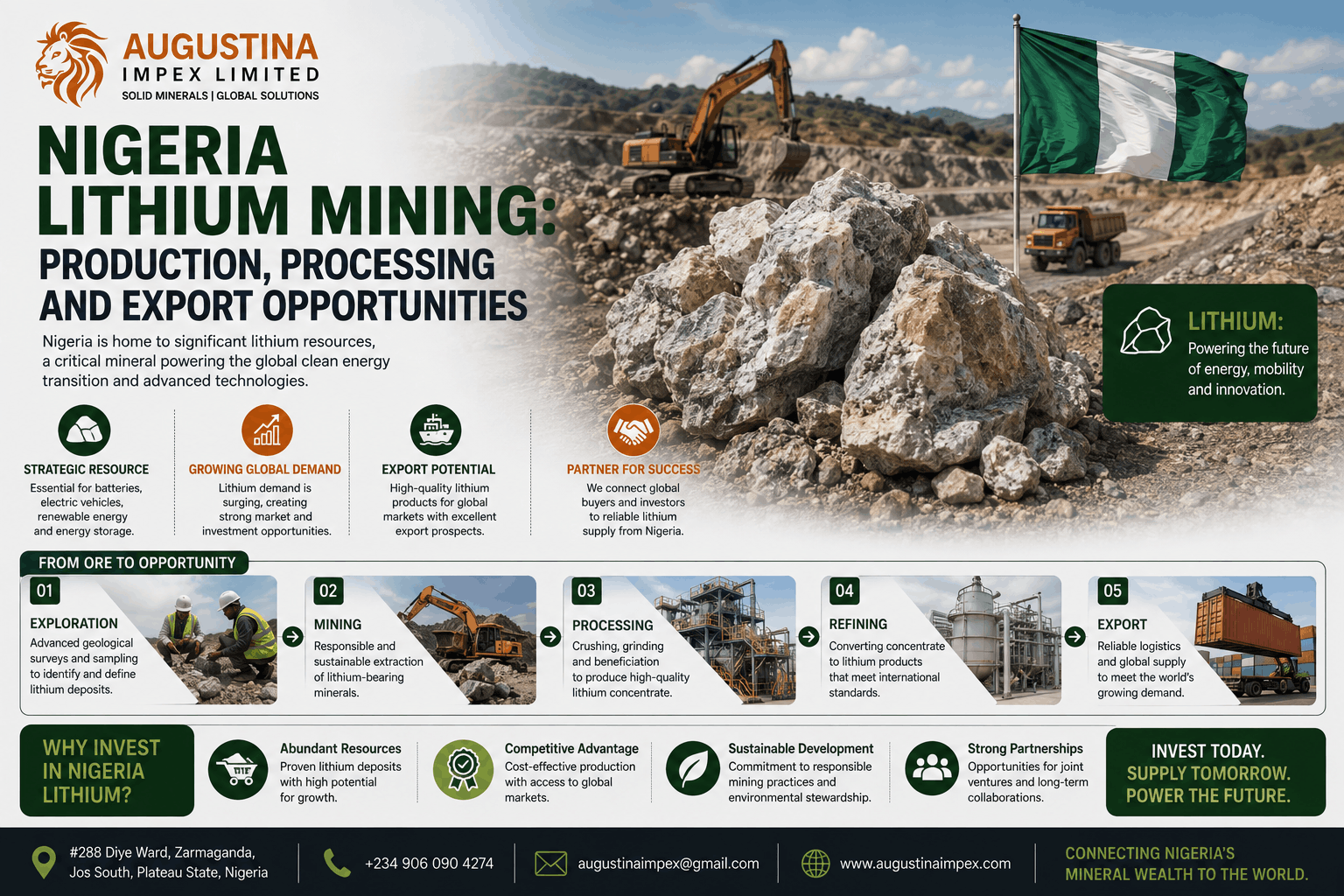
Nigeria Lithium Mining: Production, Processing & Export
Nigeria Lithium Mining: Production, Processing and Export Opportunities By Kolawole King, CEO — Augustina Impex…
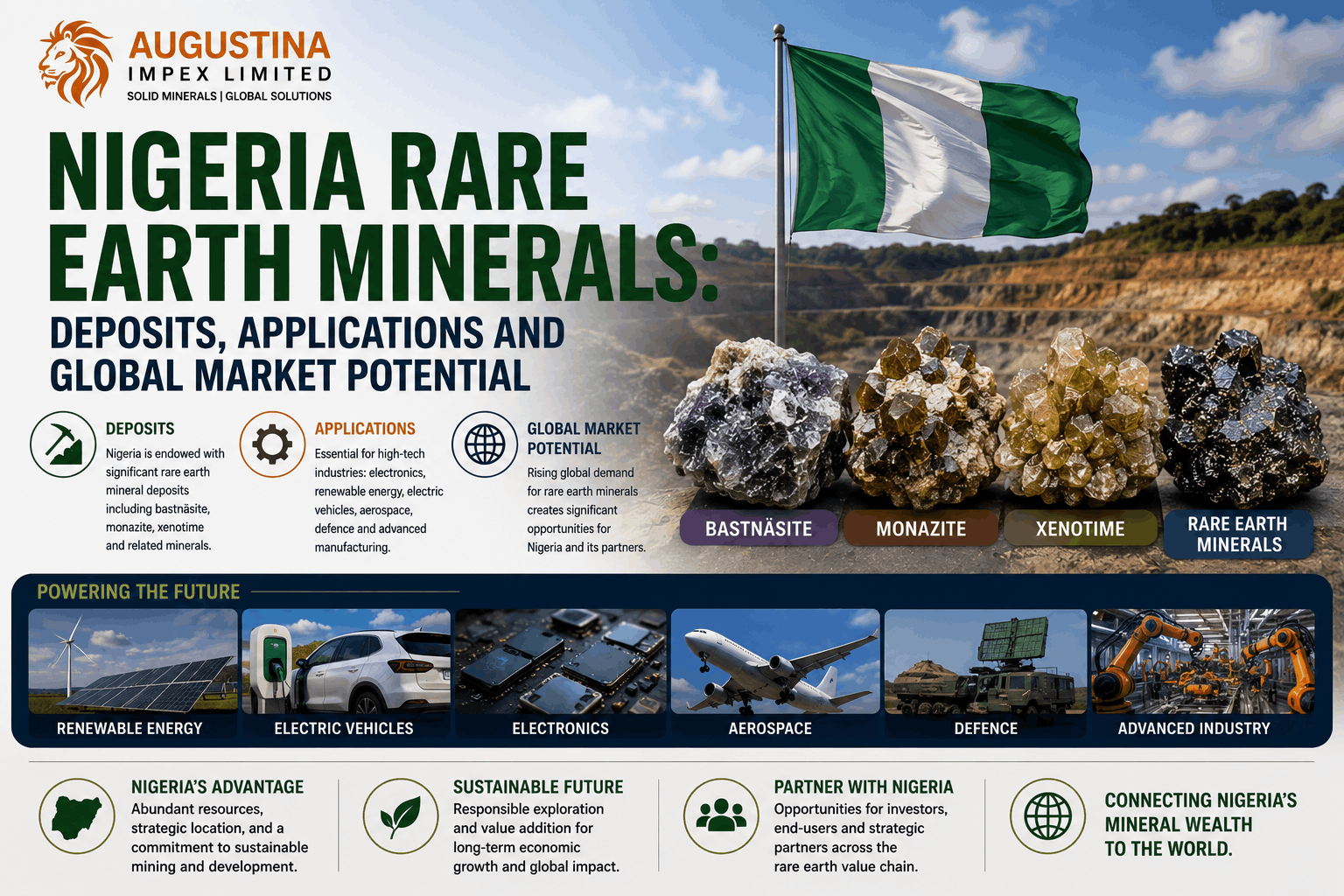
Nigeria Rare Earth Minerals: Deposits & Market Potential
Nigeria Rare Earth Minerals: Deposits, Applications and Global Market Potential By Kolawole King, CEO —…
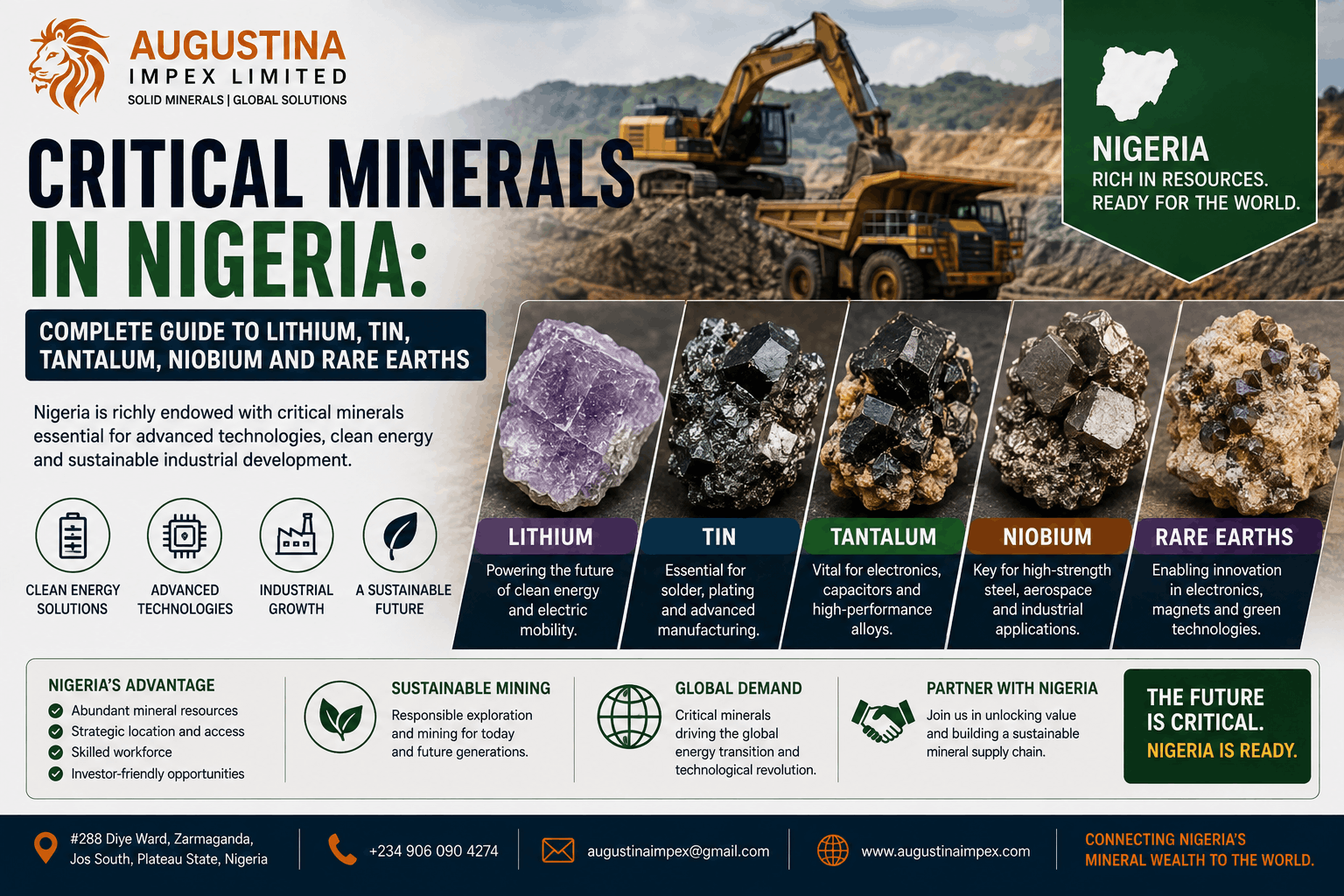
Nigeria Critical Minerals Guide: Lithium, Tin & Rare Earths
Critical Minerals in Nigeria: Complete Guide to Lithium, Tin, Tantalum, Niobium and Rare Earths By…
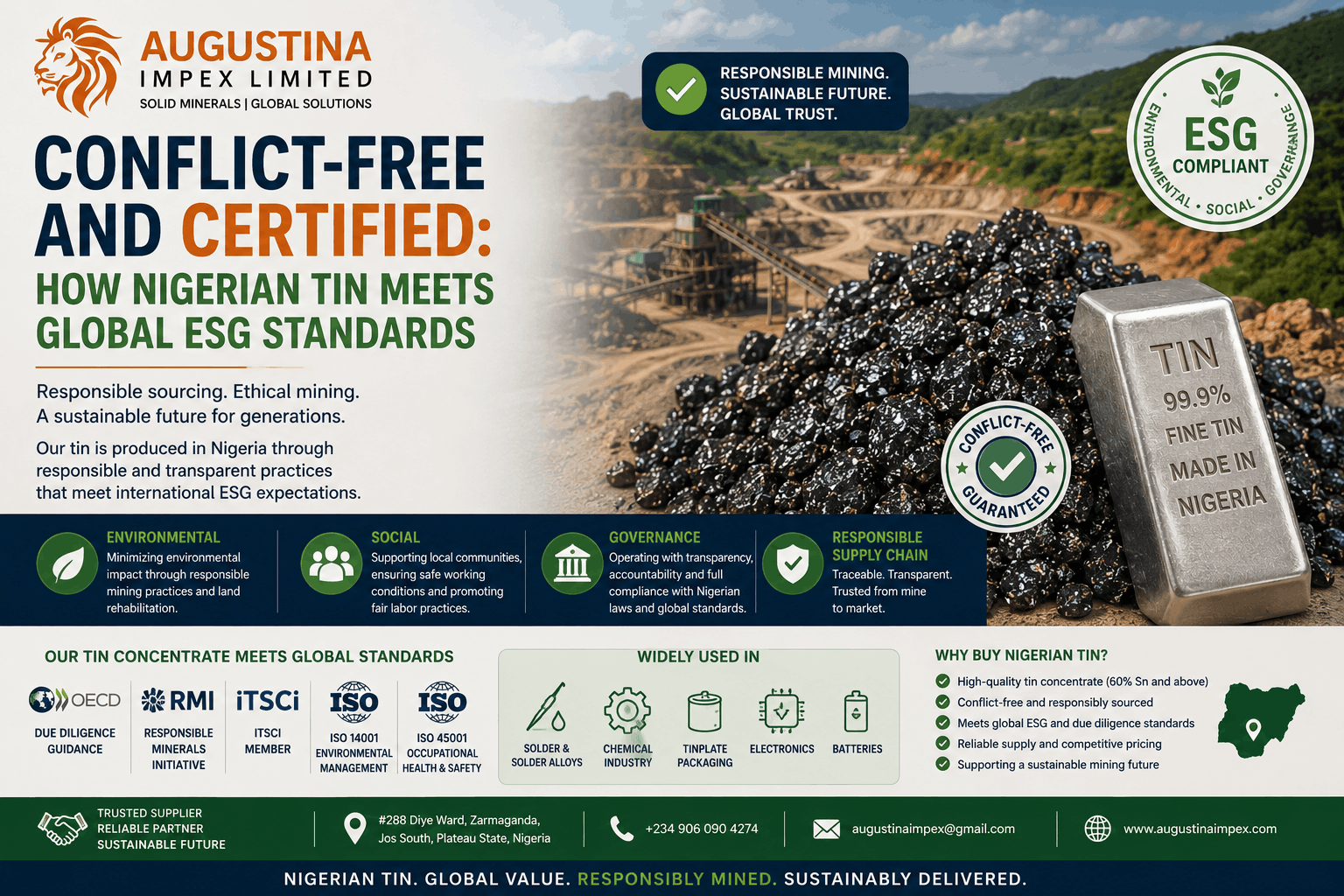
Conflict-Free Nigerian Tin Meets Global ESG Standards
Conflict-Free and Certified: How Nigerian Tin Meets Global ESG Standards By Kolawole King, CEO —…