

The global transition toward clean energy is reshaping the mining industry at an unprecedented pace. As electric vehicles, renewable energy systems, energy storage technologies, and advanced electronics continue to expand worldwide, demand for battery minerals has surged to record levels.
Countries endowed with critical mineral resources are increasingly becoming important players in the global energy transition. Nigeria, Africa’s largest economy and one of the continent’s most mineral-rich nations, is attracting growing attention due to its substantial battery mineral potential.
From lithium-bearing pegmatites and tin deposits to coltan and rare earth-bearing minerals, Nigeria possesses a diverse portfolio of resources that could contribute significantly to the global battery supply chain.
However, while opportunities abound, investors, operators, and policymakers must also understand the risks associated with developing a battery minerals industry.
This article explores the opportunities, challenges, and future outlook for battery minerals in Nigeria.

What Are Battery Minerals?
Battery minerals are naturally occurring minerals and metals used in the production of batteries, particularly rechargeable batteries utilized in:
- Electric vehicles (EVs)
- Energy storage systems
- Consumer electronics
- Renewable energy infrastructure
- Telecommunications equipment
- Industrial power systems
The most important battery minerals globally include:
- Lithium
- Nickel
- Cobalt
- Graphite
- Manganese
- Copper
- Rare Earth Elements
- Tin
- Tantalum
- Niobium
Nigeria possesses several of these strategic minerals, creating significant opportunities for future development.
Why Battery Minerals Matter
The energy transition is driving unprecedented demand for critical minerals.
Governments around the world are encouraging:
- Electric vehicle adoption
- Renewable energy development
- Carbon emission reduction
- Sustainable industrial growth
As a result, manufacturers require increasing quantities of battery raw materials.
According to industry forecasts, demand for battery minerals is expected to grow substantially over the coming decades as nations pursue clean energy objectives.
This creates opportunities for countries such as Nigeria to become strategic suppliers within global supply chains.
Nigeria’s Battery Mineral Potential
Nigeria’s geology contains several minerals relevant to battery manufacturing and clean energy technologies.
The country hosts extensive pegmatite belts, granitic intrusions, alluvial deposits, and heavy mineral sands that contain valuable battery minerals.
Key mineral-producing regions include:
- Plateau State
- Nasarawa State
- Niger State
- Kaduna State
- Bauchi State
- Kogi State
- Zamfara State
- Benue State
These areas continue attracting exploration and investment interest.
Lithium: Nigeria’s Most Prominent Battery Mineral
Lithium has become synonymous with the battery revolution.
Lithium-ion batteries power:
- Electric vehicles
- Smartphones
- Laptops
- Renewable energy storage systems
Nigeria has witnessed growing interest in lithium-bearing pegmatites, particularly in:
- Nasarawa State
- Niger State
- Kaduna State
- Kogi State
- Kwara State
Numerous exploration and mining projects have emerged in recent years as investors seek exposure to the expanding lithium market.
Opportunities in Lithium
Lithium presents several opportunities:
- Exploration projects
- Mining operations
- Mineral aggregation
- Beneficiation plants
- Export operations
- Battery materials processing
Growing global demand continues to attract investor attention.
Risks
Lithium projects also face risks:
- Commodity price fluctuations
- Resource uncertainty
- Infrastructure limitations
- Regulatory changes
- Environmental concerns
Investors must conduct proper due diligence before committing capital.
Tin: An Overlooked Battery Mineral
Nigeria has a long history of tin production.
While tin is traditionally associated with solder and industrial applications, it is increasingly important in battery technology.
Tin is used in:
- Battery anodes
- Electronic components
- Energy storage systems
Plateau State remains one of Nigeria’s most significant tin-producing regions.
Opportunities
- Existing mining expertise
- Established production areas
- Export potential
- Beneficiation opportunities
Risks
- Variable ore grades
- Market volatility
- Informal mining activities
Coltan: Strategic Importance in Battery Technologies
Coltan, which contains tantalum and niobium, is another important battery-related mineral.
Tantalum is widely used in:
- Capacitors
- Smartphones
- Electric vehicles
- Advanced electronics
Niobium contributes to:
- High-strength alloys
- Battery technology development
- Energy infrastructure
Nigeria possesses commercially significant coltan deposits, particularly in:
- Plateau State
- Nasarawa State
- Kaduna State
- Zamfara State
Opportunities
- Growing global demand
- Strategic importance
- Export potential
- Long-term industrial applications
Risks
- Responsible sourcing requirements
- Traceability expectations
- International compliance obligations
Rare Earth Elements and Battery Technologies
Rare earth elements are increasingly important in modern battery and energy technologies.
Minerals such as:
- Monazite
- Bastnasite
contain valuable rare earth elements used in:
- Permanent magnets
- Electric motors
- Wind turbines
- Advanced electronics
Nigeria’s growing rare earth sector represents an emerging opportunity for investors seeking exposure to critical minerals.
Copper and the Energy Transition
Copper is essential for electrification.
Electric vehicles require significantly more copper than conventional vehicles.
Copper is used in:
- Battery systems
- Charging infrastructure
- Power transmission
- Renewable energy projects
Nigeria possesses copper occurrences that may become increasingly important as electrification accelerates globally.
Investment Opportunities
Exploration
Large areas of Nigeria remain underexplored.
Exploration investments can generate substantial value through new discoveries.
Mining Operations
Direct participation in mining projects provides exposure to mineral production.
Beneficiation
Processing and upgrading minerals create higher-value products.
Export Development
Growing international demand supports export opportunities.
Strategic Partnerships
Collaboration between miners, processors, investors, and buyers can accelerate project development.
Risks Facing Battery Mineral Development
Infrastructure Challenges
Mining projects require:
- Roads
- Power supply
- Water access
- Logistics networks
Infrastructure limitations can increase project costs.
Regulatory Compliance
Operators must comply with:
- Mining regulations
- Environmental standards
- Export requirements
- Community obligations
Financing Constraints
Mining projects often require significant capital investment.
Access to financing remains a challenge for some operators.
Environmental Considerations
Responsible mining practices are essential for long-term sustainability.
Environmental management programs should be integrated into project planning.
Market Volatility
Battery mineral prices can fluctuate significantly.
Investors should maintain realistic expectations and adopt long-term strategies.
The Role of Beneficiation
One of Nigeria’s greatest opportunities lies in local mineral beneficiation.
Instead of exporting raw ores, value can be added through:
- Concentration
- Separation
- Processing
- Refining
Benefits include:
- Increased export revenue
- Job creation
- Industrial development
- Technology transfer
Beneficiation will play a critical role in maximizing the economic impact of battery minerals.
The Future of Battery Minerals in Nigeria
Several factors support a positive outlook:
Rising Global Demand
Electric vehicle adoption continues increasing worldwide.
Energy Storage Growth
Renewable energy systems require advanced battery technologies.
Supply Chain Diversification
Manufacturers seek alternative sources of critical minerals.
Government Support
Nigeria continues promoting mining sector development and value addition.
Investor Interest
Domestic and international investors are increasingly exploring opportunities in battery minerals.
Conclusion
Battery minerals in Nigeria represent one of the country’s most promising mining opportunities. Lithium, tin, coltan, rare earth elements, and other strategic minerals position Nigeria to become an increasingly important participant in the global energy transition.
However, successful development requires balancing opportunities with risks. Investors must conduct proper due diligence, support responsible mining practices, and focus on long-term value creation.
With appropriate investment, infrastructure development, beneficiation initiatives, and regulatory support, Nigeria has the potential to become a major supplier of battery minerals to global markets.
As demand for clean energy technologies continues to rise, battery minerals are likely to play an increasingly important role in Nigeria’s economic future and its contribution to the global critical minerals industry.
-
Previous Post
Heavy Mineral Sands Processing in Nigeria
Post a comment
Related Posts
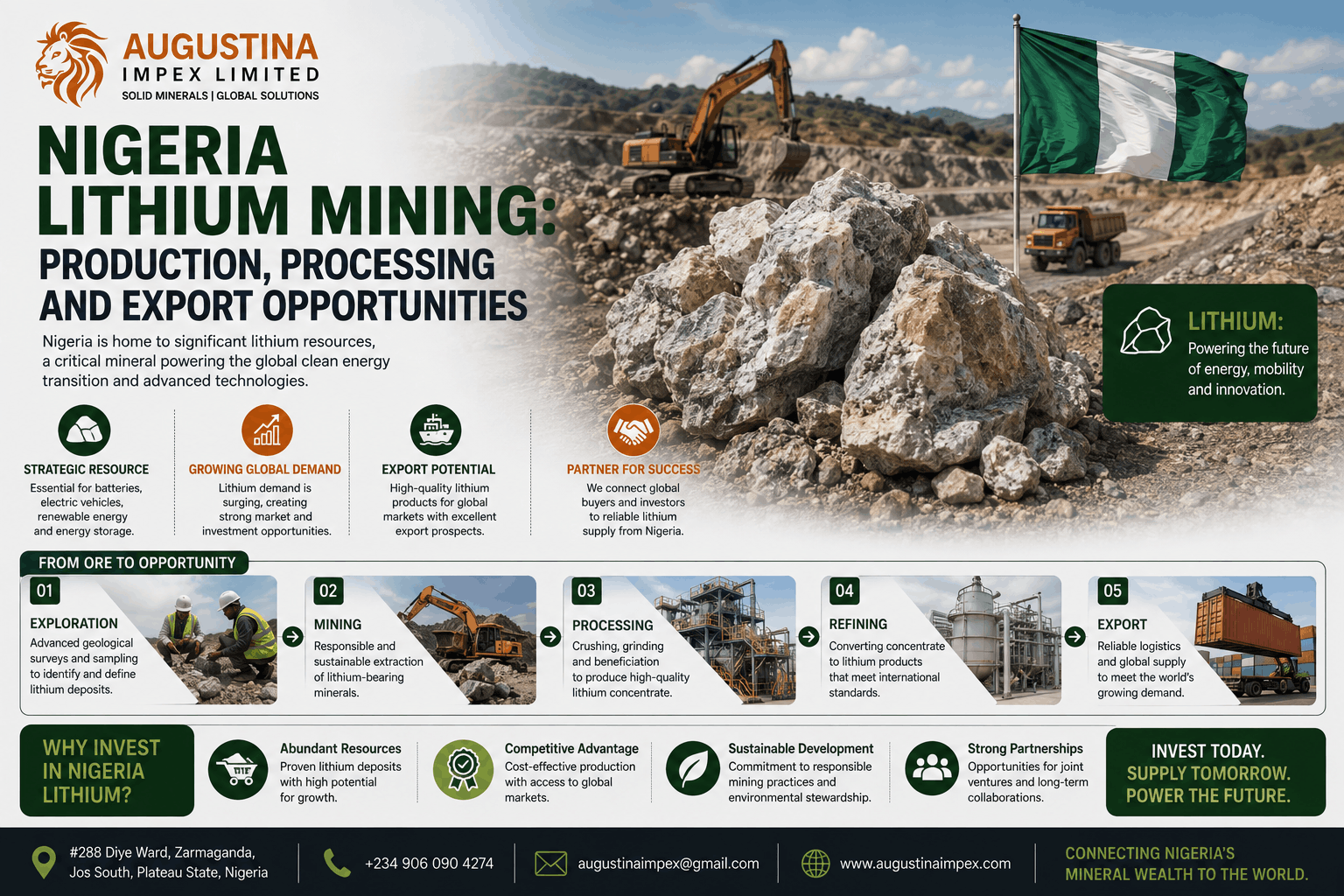
Nigeria Lithium Mining: Production, Processing & Export
Nigeria Lithium Mining: Production, Processing and Export Opportunities By Kolawole King, CEO — Augustina Impex…
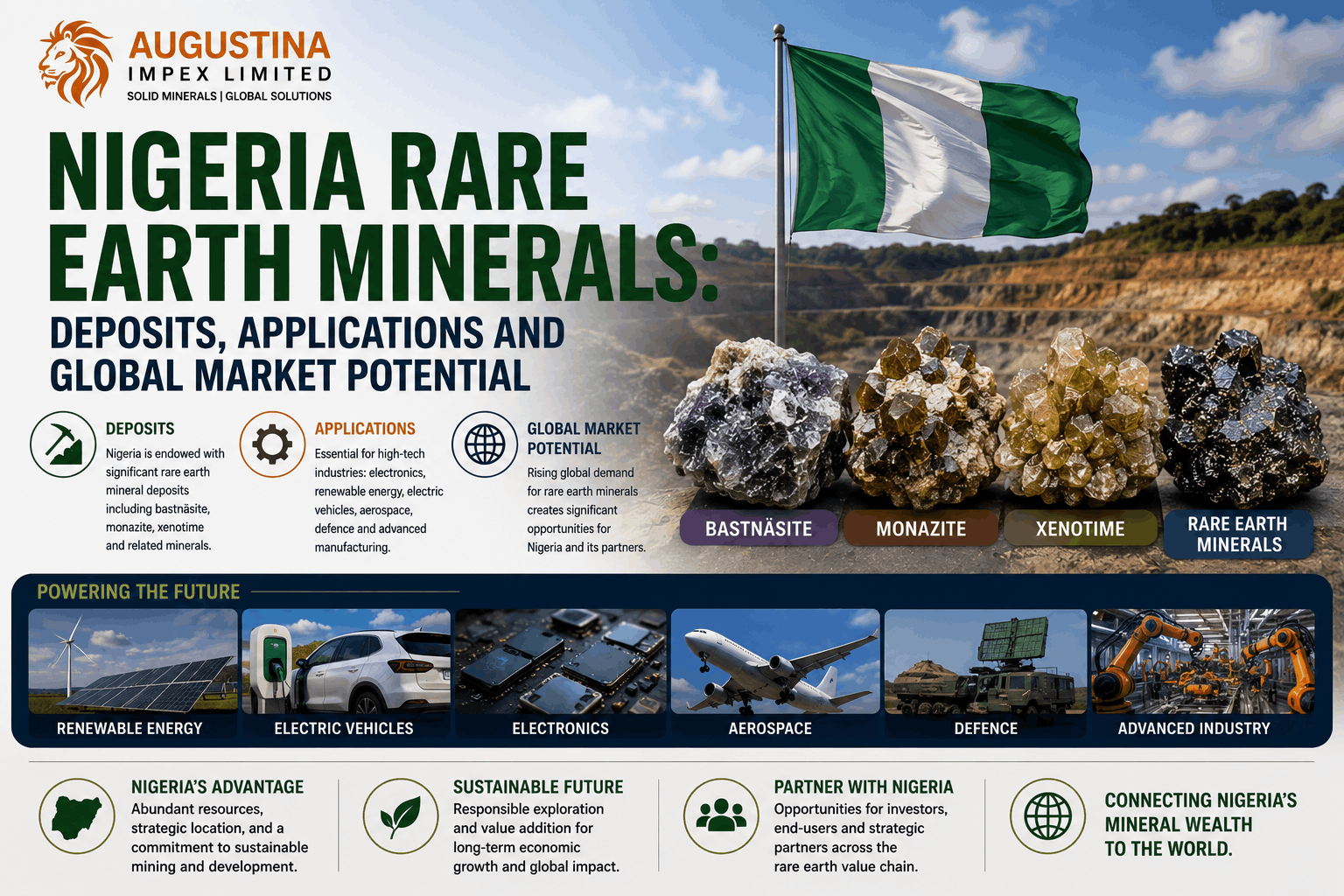
Nigeria Rare Earth Minerals: Deposits & Market Potential
Nigeria Rare Earth Minerals: Deposits, Applications and Global Market Potential By Kolawole King, CEO —…
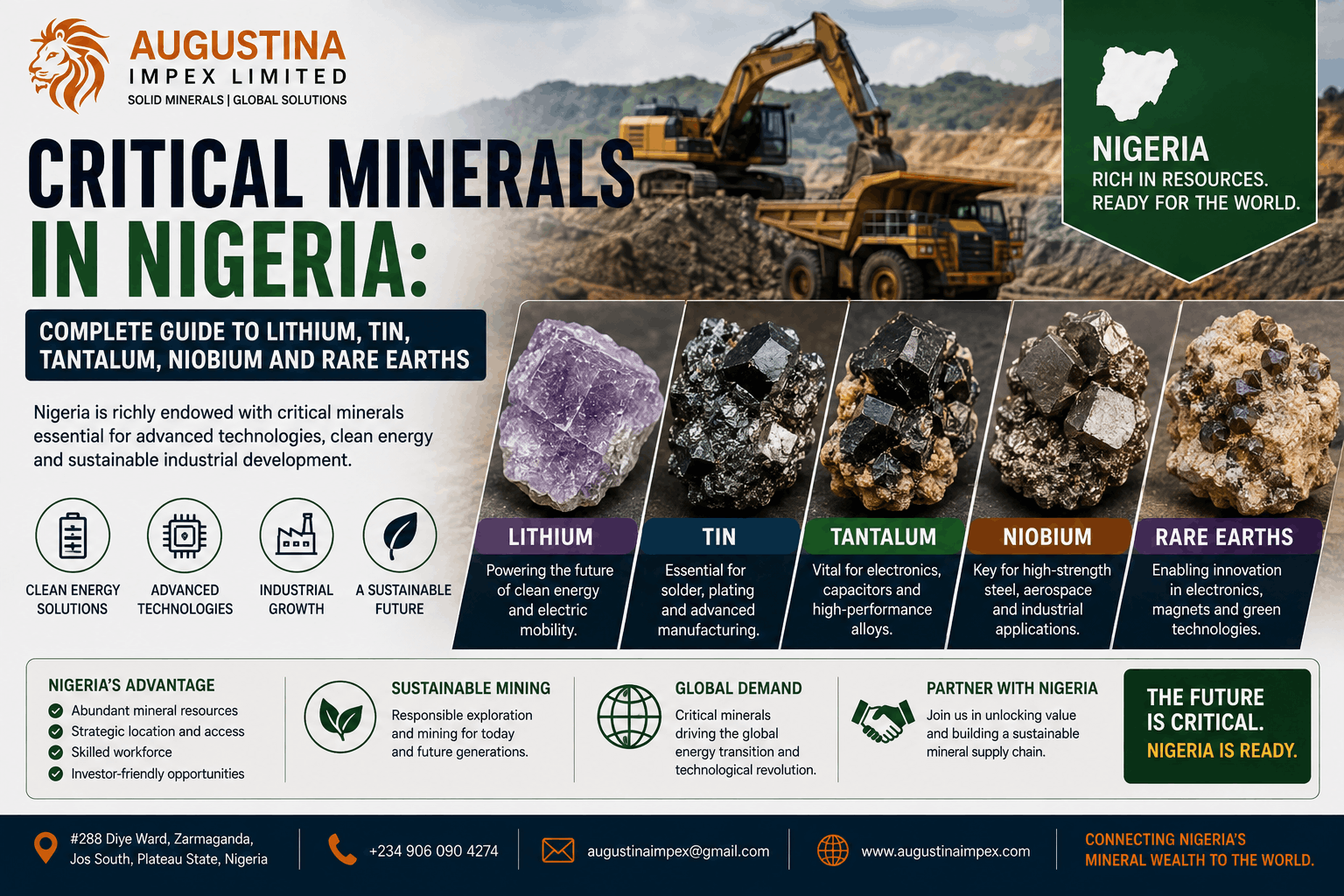
Nigeria Critical Minerals Guide: Lithium, Tin & Rare Earths
Critical Minerals in Nigeria: Complete Guide to Lithium, Tin, Tantalum, Niobium and Rare Earths By…
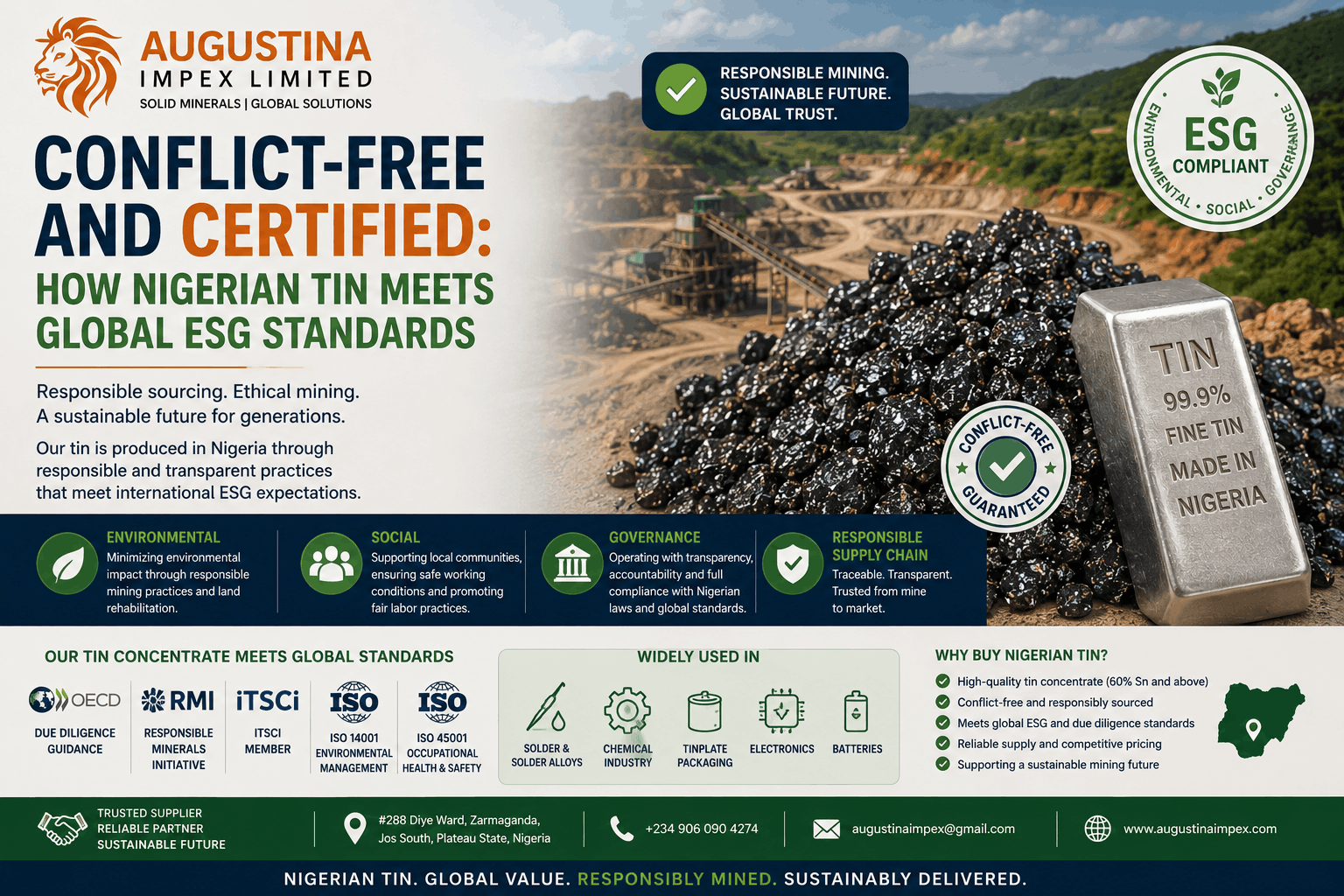
Conflict-Free Nigerian Tin Meets Global ESG Standards
Conflict-Free and Certified: How Nigerian Tin Meets Global ESG Standards By Kolawole King, CEO —…