
If you are looking to buy monazite sand from Nigeria, you are making a strategically sound decision at exactly the right time. Nigeria sits on an estimated six million metric tonnes of monazite ore according to the United States Geological Survey (USGS), and with China tightening its grip on global rare earth exports in 2025 and 2026, international buyers from China, Malaysia, Vietnam, South Korea, Japan, Europe, and the United States are turning their attention to Nigeria as a reliable, non-Chinese source of this critical rare earth-bearing mineral.
This guide is written for serious buyers — procurement officers, rare earth traders, mineral importers, processing plant operators, and commodity brokers — who want a clear, honest, and practical roadmap to sourcing monazite sand from Nigeria. We will walk you through what monazite sand is, why Nigeria is one of the best places in the world to source it, how the buying process works step by step, what documentation is required, what to expect on pricing and shipping, and how to protect yourself from fraudulent suppliers.
Augustina Impex Limited, based in Jos, Plateau State, Nigeria, has prepared this guide as part of its commitment to connecting Nigeria’s mineral wealth to the global market with transparency, reliability, and professionalism.
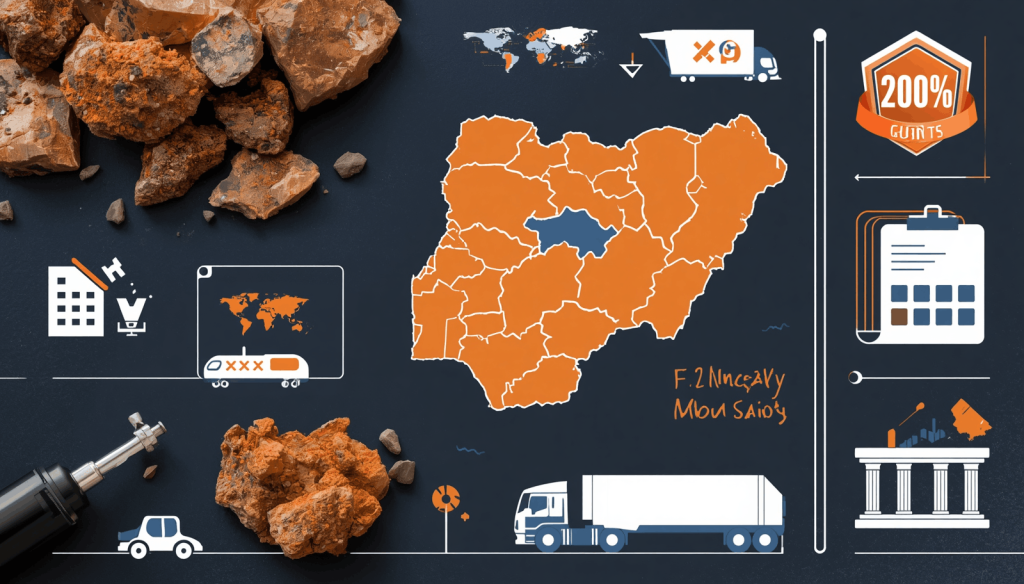
What Is Monazite Sand and Why Does It Matter?
Monazite is a phosphate mineral belonging to the rare earth element (REE) family. It is one of the most commercially significant rare earth-bearing minerals in the world, primarily because of its high concentration of cerium (Ce), lanthanum (La), neodymium (Nd), and praseodymium (Pr) — four rare earth elements that are absolutely essential to modern technology.
Neodymium and praseodymium together (referred to as NdPr) are the key ingredients in neodymium-iron-boron (NdFeB) permanent magnets — the most powerful type of magnet used in electric vehicle motors, wind turbine generators, military hardware, and consumer electronics. The global demand for NdPr is surging, driven largely by the explosive growth of the EV market and renewable energy infrastructure.
Cerium and lanthanum, the other major REEs in monazite, are used in polishing powders, catalytic converters, glass manufacturing, petroleum refining, and phosphors for lighting.
What makes monazite sand particularly valuable — and why buyers across Asia, Europe, and North America are actively seeking it — is that it offers a natural, pre-concentrated source of multiple rare earth elements in a single mineral form. Rather than having to mine and process vast quantities of low-grade ore, buyers can work directly with high-grade monazite concentrate and extract the REE suite they need through hydrometallurgical processing.
A critical quality distinction to understand before you buy monazite sand from Nigeria is the thorium (Th) and uranium (U) content. Monazite from many global sources carries measurable concentrations of thorium — typically 4.5% to 9.5% ThO₂ — which classifies it as a Naturally Occurring Radioactive Material (NORM). This creates regulatory obligations for importers in countries including China, Malaysia, South Korea, and the European Union. Nigerian monazite varies in its radioactivity profile depending on the deposit, and buyers should always request certified laboratory analysis reports confirming the Th and U content before committing to a transaction.
Why Nigeria Is One of the World’s Premier Sources of Monazite Sand
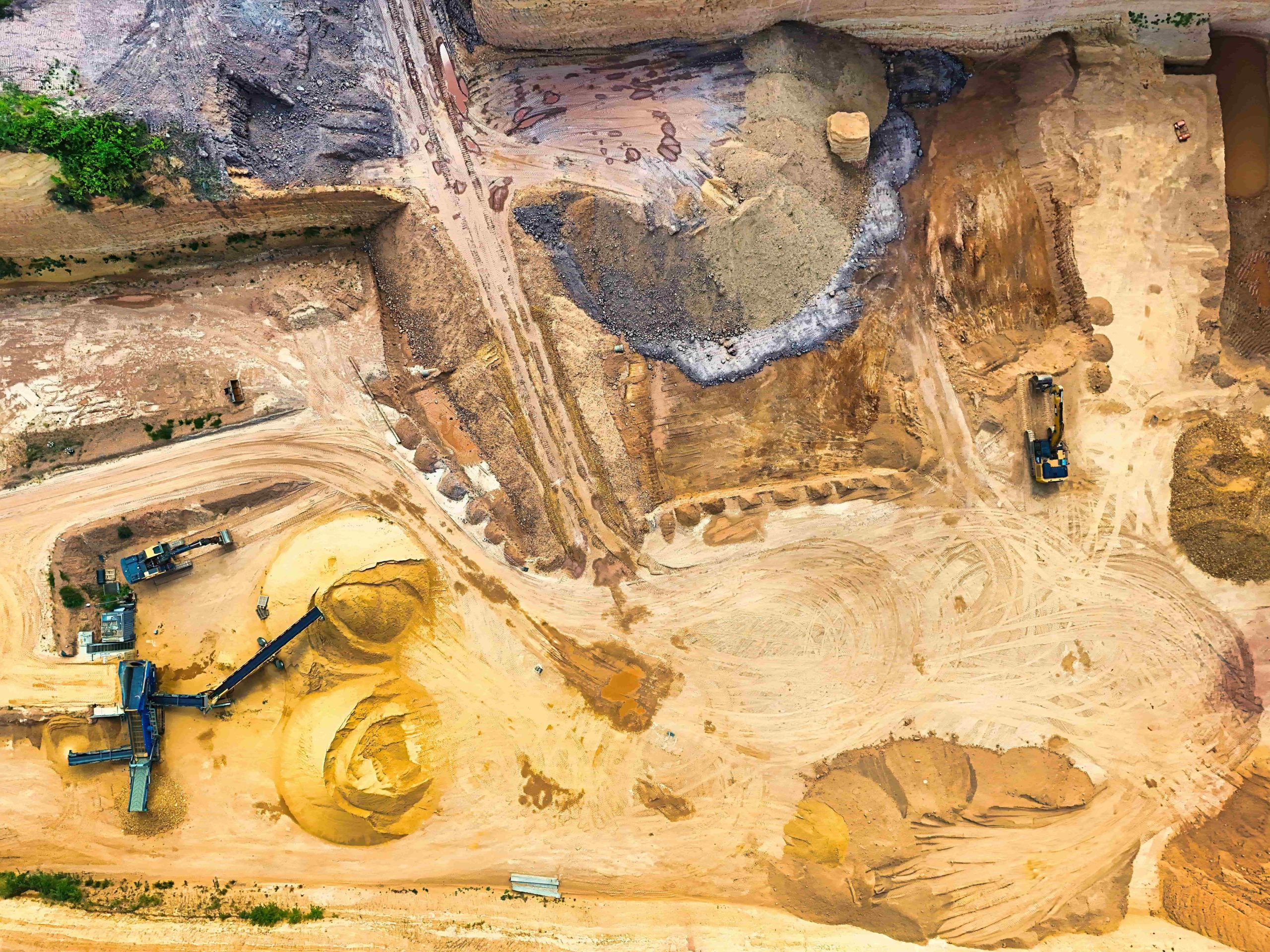
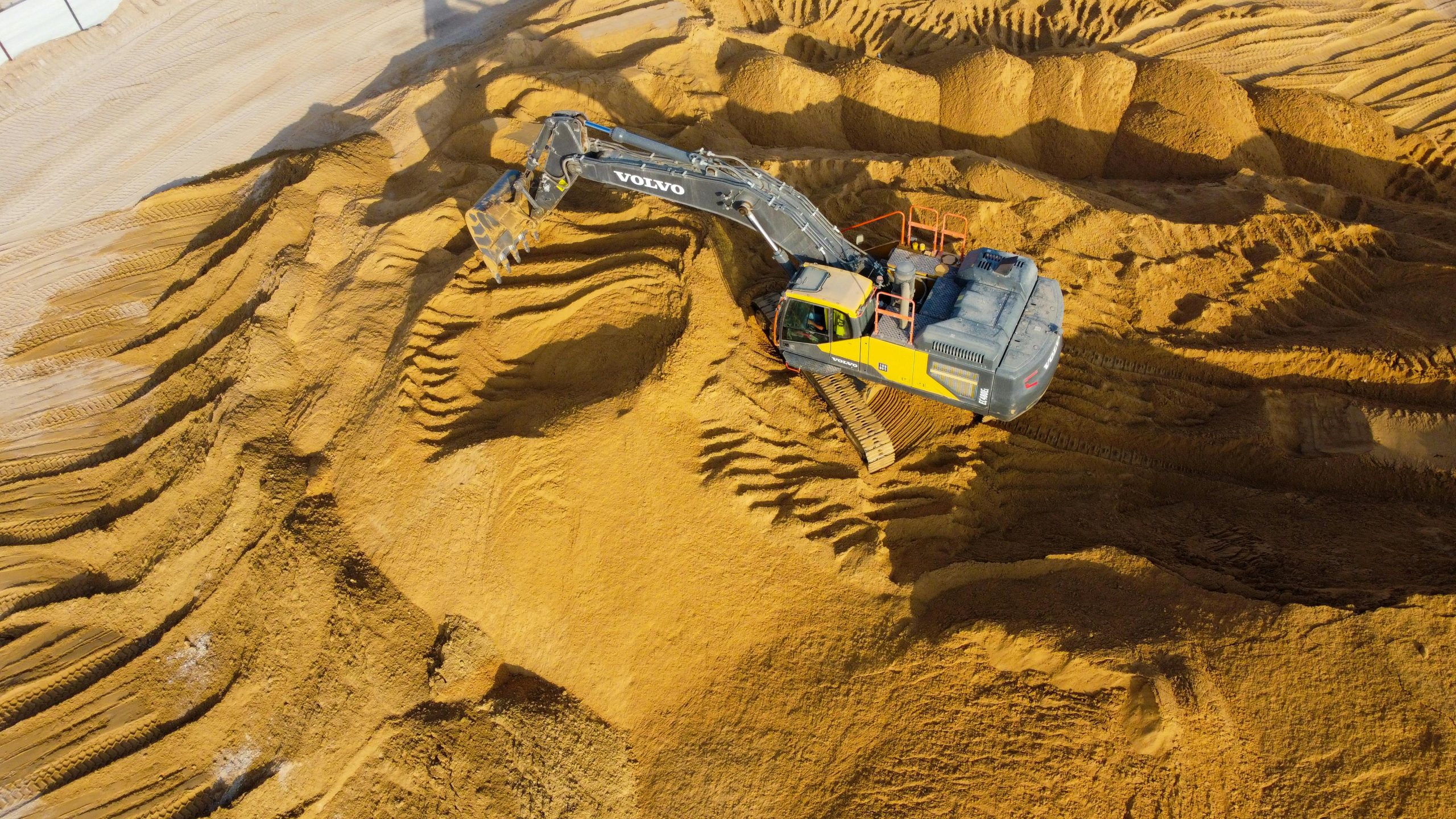
Nigeria’s geology tells a remarkable story. The country’s basement complex — an ancient expanse of Precambrian crystalline rocks stretching across the north-central and southeastern states — is among the richest in Africa for rare earth mineral deposits. Monazite occurs in Nigeria primarily in two geological contexts: as a component of heavy mineral sand deposits, and as an accessory mineral in granitic pegmatites and alluvial placer deposits associated with the country’s historically rich tin and columbite mining zones.
The Jos Plateau in Plateau State is the heartland of Nigeria’s monazite occurrence. For decades, the same alluvial fields that produced some of the world’s finest tin and columbite also yielded significant concentrations of monazite as a co-product. As global demand for rare earth minerals has intensified over the past decade, Nigerian miners and processors have increasingly turned their attention to monazite as a standalone product in its own right.
Other significant monazite-bearing zones in Nigeria include parts of Nasarawa State, Cross River State, Akwa Ibom State, and Kaduna State. Each zone has slightly different mineralogical characteristics, and the REE composition and grade of the monazite will vary accordingly.
From a buyer’s perspective, Nigeria offers several compelling advantages as a monazite source:
Direct producer access. Unlike many commodity trading situations where multiple layers of intermediaries inflate prices and dilute accountability, Nigeria has a growing number of direct mining and processing companies that own or operate the deposits themselves. Buying from a direct producer means better pricing, greater traceability, and a shorter supply chain.
Non-China supply security. China’s dominance of global rare earth processing is well documented. In 2025, China imposed sweeping export controls on a broad range of rare earth elements and their derivatives, sending prices higher and prompting governments and manufacturers worldwide to accelerate their diversification away from Chinese supply. Nigeria represents exactly the kind of alternative, non-Chinese source that buyers are urgently seeking.
Favourable geology for low-Th deposits. While thorium is commonly associated with monazite globally, certain Nigerian deposits have shown notably low radioactivity profiles — a significant commercial advantage for buyers in regulated markets.
Established export infrastructure. Lagos Port (Apapa and Lekki) and Onne Port in Rivers State are well-connected to major global shipping routes, with regular vessel calls from international carriers serving Chinese, Southeast Asian, European, and American ports.
Competitive pricing. Nigerian monazite is competitively priced relative to comparable material from India, Malaysia, and other producing regions, particularly when purchased directly from a licensed producer with no intermediary markups.
How to Buy Monazite Sand from Nigeria: A Step-by-Step Process
Buying monazite sand from Nigeria is a structured process. Unlike purchasing a commodity from a domestic supplier, international mineral trade involves regulatory compliance, documentation, financial instruments, and logistics coordination that must all be handled correctly. Here is how the process works, step by step.
Step 1 — Identify Your Requirements
Before reaching out to any Nigerian supplier, you need to define exactly what you are looking for. This includes:
The grade of monazite you require, expressed as Total Rare Earth Oxide (TREO) percentage. Nigerian monazite is available in a range of grades depending on the deposit and the level of processing. Higher TREO content means more rare earth value per tonne but may command a premium price.
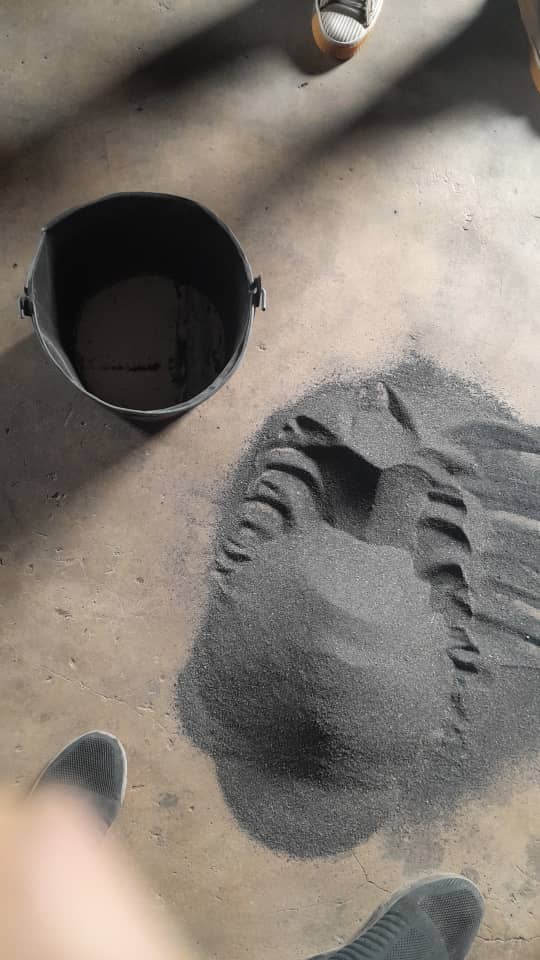
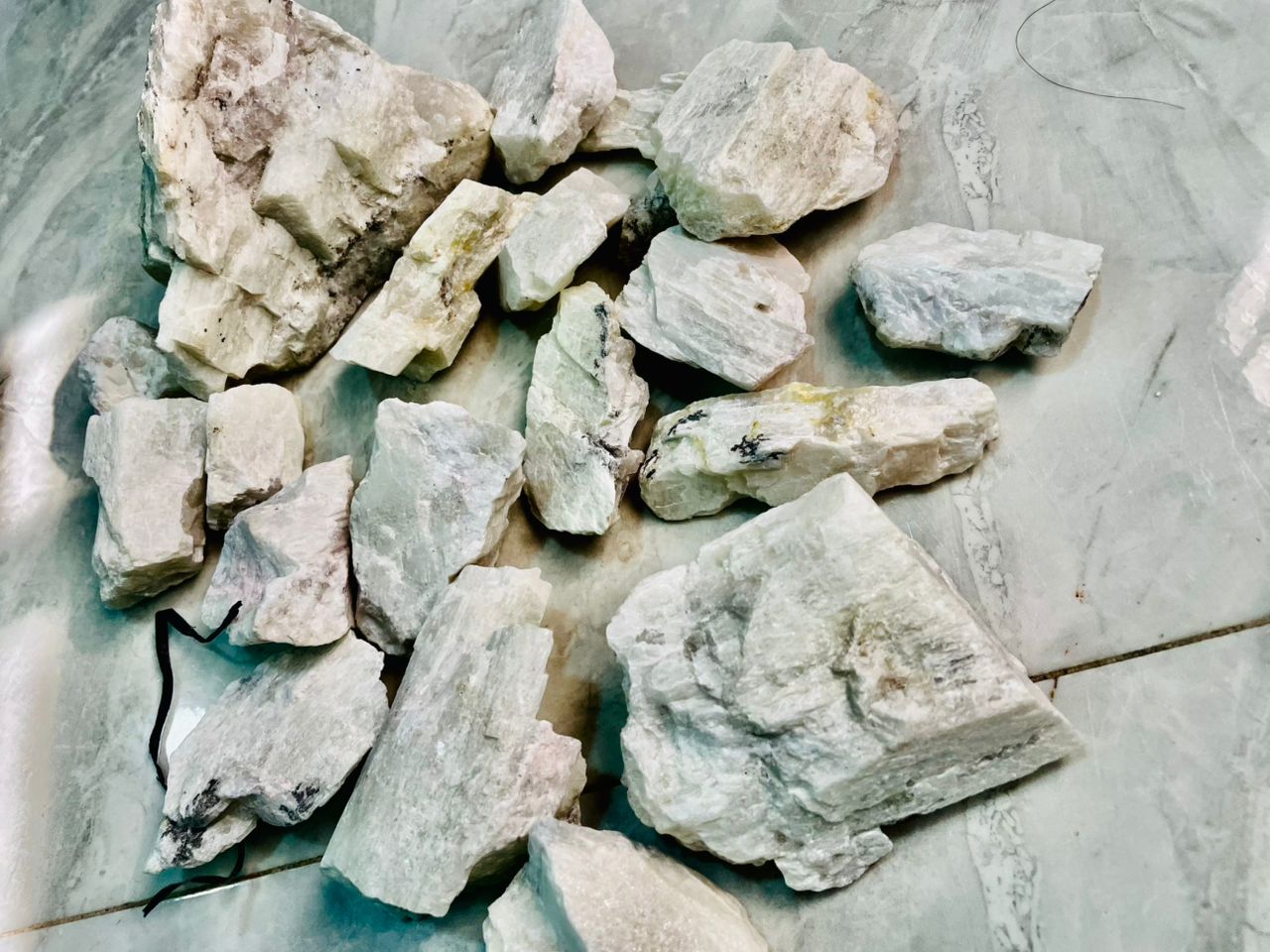
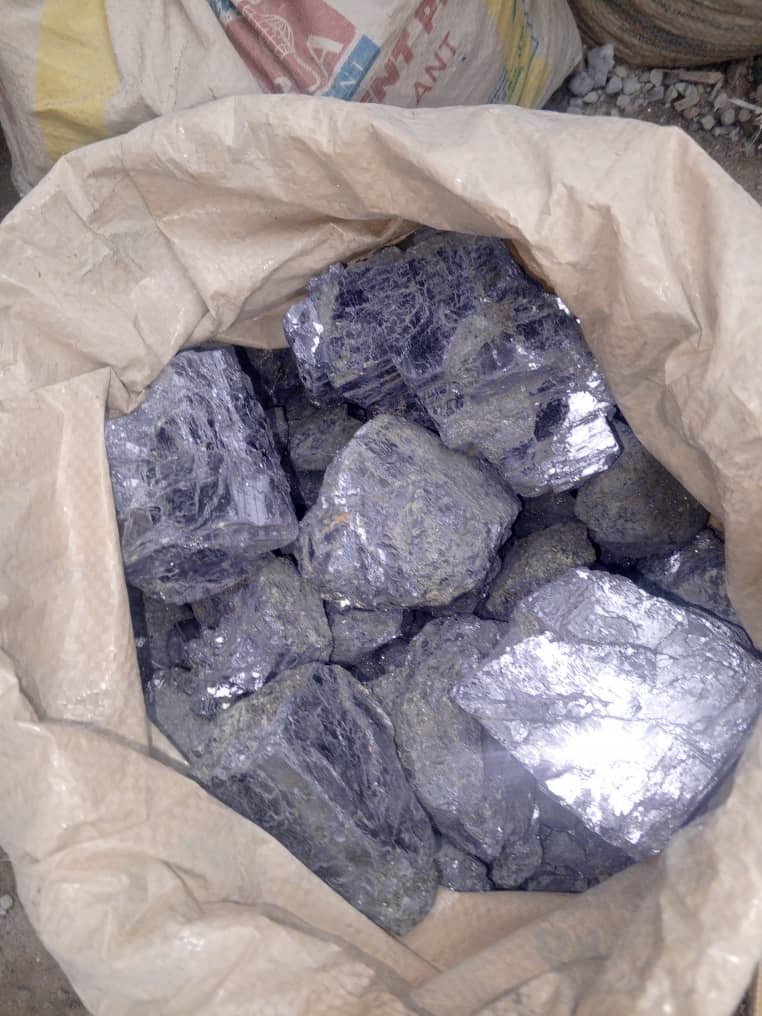
Your preferred physical form. Monazite from Nigeria is available as lump ore (directly from the pit, minimal processing), sand or granular concentrate (processed through a ball mill for uniform particle size), or a finer, beneficiated concentrate. Most Chinese and Southeast Asian processing plants prefer the sand/granular form as it feeds more efficiently into their hydrometallurgical circuits.
Thorium and uranium tolerance. If your processing facility or importing country has specific NORM regulatory thresholds, specify the maximum Th and U content you can accept in the material. This is non-negotiable from a compliance standpoint and should be established before any price discussion begins.
Quantity requirements. Are you looking for a trial shipment of a few metric tonnes for laboratory evaluation? A monthly supply contract? An annual offtake agreement? Nigerian suppliers will tailor their offer based on the quantity and frequency of your needs.
Step 2 — Source and Verify a Licensed Nigerian Supplier
This is arguably the most important step, and the one where buyers most commonly make mistakes. The Nigerian minerals export market, like any commodity market, has its share of fraudulent actors who present themselves as mine owners or licensed exporters without having access to any real material. Protecting yourself begins with verification.
A legitimate Nigerian monazite sand supplier should be able to provide:
A valid mining lease or mineral title issued by the Nigerian Ministry of Mines and Steel Development (MMSD), confirming that they are legally authorised to mine or purchase the mineral.
A valid export licence from the Nigerian Export Promotion Council (NEPC). The NEPC issues RE (Registered Exporter) numbers to licensed mineral exporters. Ask for the RE number and verify it.
Third-party laboratory analysis reports confirming the grade, composition, and radioactivity profile of the material. These should be issued by an ISO/IEC 17025 accredited laboratory. Do not accept supplier-generated assay sheets without independent verification.
A company registration certificate (CAC — Corporate Affairs Commission) proving the company is a legally registered Nigerian entity.
Photographs and, ideally, video footage of the material at the mine site or warehouse, with visible quantity indicators (stockpile size, drum counts, bag counts, etc.).
Willingness to support a third-party inspection at the loading port before the buyer makes payment. Credible suppliers welcome this — it is a sign of confidence in their product.
Step 3 — Request a Soft Corporate Offer (SCO) or Proforma Invoice
Once you have identified a supplier you are comfortable with, request a formal Soft Corporate Offer (SCO) or a Proforma Invoice. This document sets out the key commercial terms of the proposed transaction, including:
Product specification (TREO%, REE breakdown, Th/U content, physical form, particle size)
Origin and loading port
Quantity and packaging
Price per metric tonne (usually on a FOB basis)
Payment terms (LC at sight, T/T, etc.)
Validity period of the offer
Review the SCO carefully. If anything is vague or inconsistent, ask for clarification before proceeding.
Step 4 — Arrange Third-Party Inspection and Laboratory Testing
For any serious transaction, you should arrange for an independent third-party inspection agency to visit the supplier’s warehouse or mine site and verify the existence and quantity of the material. International inspection agencies that operate in Nigeria include SGS, Bureau Veritas, Intertek, and CCIC (China Certification and Inspection Group). Your inspection agency will issue a certificate of quantity and can also collect samples for independent laboratory analysis.
If you require a physical sample before committing to a full shipment, negotiate a sample dispatch arrangement with the supplier. A standard 1 kg representative sample of the monazite concentrate can be sent to your facility or your buyer’s laboratory via DHL or FedEx for independent analysis. This is a common and widely accepted practice in international mineral trade.
Step 5 — Agree on Commercial Terms and Payment Structure
Once you are satisfied with the product verification, negotiate and agree on the final commercial terms. Key elements include:
Incoterms. Most Nigerian mineral exporters offer FOB (Free On Board) terms, meaning the seller delivers the goods on board the vessel at the nominated Nigerian port (Apapa, Lekki, or Onne), and the buyer arranges and pays for ocean freight and insurance from that point. Some buyers arrange CIF (Cost, Insurance, and Freight) through their own freight forwarders booking the vessel from Lagos, which is often more cost-effective than asking the Nigerian seller to quote CIF.
Payment terms. For established buyers, payment by irrevocable Letter of Credit (LC) at sight issued by a first-class bank is the standard. The LC at sight structure typically involves 95% of the invoice value payable upon presentation of shipping documents, with the remaining 5% released against discharge port survey results confirming quantity and quality at the destination. For trial shipments, Telegraphic Transfer (T/T) — either 100% prepayment or a split of 30% advance and 70% against bill of lading — is also common.
Performance Bond. For large commercial orders, buyers may request a Performance Bond (typically 2% of the contract value) from the seller as a guarantee of delivery. Reputable Nigerian suppliers with strong production capacity can accommodate this, usually after the buyer has first issued a non-operative LC as evidence of genuine buying intent.
Step 6 — Finalise Documentation and Ship
Once commercial terms are agreed and the financial instrument is in place, the supplier prepares the shipment. Required export documentation for Nigerian monazite sand includes:
Commercial Invoice, Packing List, Certificate of Origin (issued by NEPC or the Nigerian Association of Chambers of Commerce), Bill of Lading, Certificate of Analysis (laboratory report confirming composition and radioactivity), NEPC Export Certificate, Form M or e-Form M (Nigeria’s import/export monitoring instrument), Radiation Safety Certificate (where applicable, issued by the Nigerian Nuclear Regulatory Authority — NNRA), Weight Certificate issued by a licensed weighbridge, and third-party inspection certificate.
Your freight forwarder or shipping agent will coordinate with the supplier to ensure all documents are in order for both Nigerian export customs clearance and your country’s import customs requirements.
Monazite Sand Specifications to Request from Your Nigerian Supplier
When you buy monazite sand from Nigeria, ensure you specify and confirm the following parameters in the contract and laboratory analysis report:
Total Rare Earth Oxide (TREO) content — expressed as a percentage of the total weight. Premium-grade Nigerian monazite typically ranges from 55% to 72% TREO depending on the deposit and beneficiation process.
Individual REE breakdown — cerium oxide (CeO₂), lanthanum oxide (La₂O₃), neodymium oxide (Nd₂O₃), praseodymium oxide (Pr₆O₁₁), and other REEs expressed as individual percentages.
Thorium dioxide (ThO₂) content — critical for NORM compliance and import regulatory purposes.
Uranium content (U₃O₈) — similarly critical for regulatory compliance.
Moisture content — monazite is typically sold on a dry weight basis; moisture affects the actual REE payload per tonne.
Particle size — if purchasing sand/granular concentrate, confirm the mesh size or P80 specification.
Pricing and Market Dynamics
Monazite sand from Nigeria is priced per metric tonne on an FOB Lagos basis and is subject to negotiation depending on grade, quantity, payment terms, and market conditions. The global monazite market, valued at approximately USD 57.6 million in 2024 and projected to grow at a CAGR of 2.5% through 2033, has seen notable price movement in 2025 and 2026 driven by China’s export restrictions on rare earth elements.
As a general guide, higher TREO grades command proportionally higher prices. Buyers should be cautious of prices that seem too low — this is a common indicator of misrepresented grade or outright fraud. Western European and American buyers of Nigerian rare earth minerals have historically paid premium prices over Asian buyers, reflecting the supply scarcity in their markets. A realistic, competitive price for high-grade Nigerian monazite concentrate will reflect the cost of mining, beneficiation, laboratory analysis, export compliance, and a reasonable margin for the producer and exporter.
Regulatory Considerations for Importing Monazite Sand
Because monazite naturally contains thorium — a radioactive element — importing it into many countries carries regulatory obligations that you must understand before you buy.
In China, the National Nuclear Safety Administration (NNSA) regulates the import of NORM-bearing minerals. Importers must obtain the appropriate radiation safety approvals and ensure their processing facilities are licensed to handle thorium-bearing materials.
In Malaysia, the Atomic Energy Licensing Board (AELB) governs all matters related to NORM, and importers of monazite must comply with the Atomic Energy Licensing Act.
In the European Union, Council Directive 2013/59/Euratom sets out basic safety standards for protection against the dangers from exposure to ionising radiation, and member states have transposed this into national law with varying specific thresholds.
In the United States, the Nuclear Regulatory Commission (NRC) and individual state agencies regulate the possession, use, and import of radioactive materials including thorium.
Always consult your country’s nuclear regulatory authority and ensure you have the appropriate import licences before purchasing. Reputable Nigerian exporters will provide all necessary radiation safety certificates alongside standard export documentation.
Common Mistakes to Avoid When Buying Monazite Sand from Nigeria
Over the years, international buyers have lost significant sums by ignoring basic due diligence principles when dealing with Nigerian mineral suppliers. Here are the most common mistakes — and how to avoid them.
Paying advance payments without verification. Never transfer money to a Nigerian mineral supplier before you have independently verified their mining licence, export registration, and the physical existence of the material through a third-party inspection agency. Credible suppliers do not require full prepayment before inspection.
Relying on supplier-provided assay certificates. Always commission your own independent laboratory analysis from a certified testing house, either on a physical sample sent to your laboratory or through a sample collected by your inspection agent at the mine or warehouse.
Ignoring NORM compliance. Assuming that monazite is “just a mineral” and skipping radioactivity compliance is a costly error. Know your country’s regulations before you buy.
Dealing through too many intermediaries. Long chains of brokers and agents between you and the actual producer increase cost, reduce accountability, and create opportunities for misrepresentation. Where possible, work directly with the licensed producer or an authorised agent with demonstrable access to the material.
Failing to use a proper financial instrument. Verbal agreements and informal arrangements are not enforceable in international trade. Use a Letter of Credit or a properly structured Sales and Purchase Agreement with clear default provisions.
Why Source Nigerian Monazite Through Augustina Impex Limited
Augustina Impex Limited is a licensed Nigerian solid minerals export company based in Jos, Plateau State, Nigeria — the heart of the country’s historic and contemporary mineral trade. We work directly with verified, licensed Nigerian production partners who have active mining operations, on-site processing facilities, and independently certified mineral stockpiles ready for export.
Our production partner for monazite and other rare earth minerals is Tulay Africa, a reputable Nigerian mining and processing company with multiple operational mining concessions and on-site processing infrastructure including ball milling capability for producing fine, homogeneous sand/granular concentrate.
When you source through Augustina Impex Limited, you benefit from:
Direct access to verified, laboratory-certified Nigerian monazite from a licensed producer, with no unnecessary intermediary chain inflating your cost.
ISO/IEC 17025 certified laboratory analysis reports for every shipment, confirming grade, composition, and radioactivity profile.
Support for third-party inspection at the loading port by an agency of your choice (SGS, Bureau Veritas, Intertek, CCIC, or equivalent).
Transparent commercial terms with standard international instruments — FOB terms, LC at sight payment, and Performance Bond capability for qualified buyers.
Full export documentation compliance including NEPC certification, Certificate of Origin, Radiation Safety Certificate, and all statutory Nigerian export paperwork.
Physical samples available on request for your buyer’s independent laboratory evaluation before any commercial commitment is made.
A professional, responsive team that communicates clearly in English and understands the practical realities of international rare earth mineral trade.
Frequently Asked Questions About Buying Monazite Sand from Nigeria
What is the minimum order quantity for Nigerian monazite sand? Minimum order quantities vary by supplier. For trial or evaluation purposes, 1 kg to 1 metric tonne samples are typically available for laboratory testing. Commercial orders usually start from 5 to 20 metric tonnes and scale upward to full container loads or bulk vessel parcels depending on your needs.
What is the TREO content of Nigerian monazite sand? Nigerian monazite sand varies in TREO content depending on the deposit and the level of beneficiation. Material from well-processed concentrates can yield TREO of 55% to 72%. Always request a laboratory certificate confirming the specific grade of the batch you are purchasing.
Does Nigerian monazite contain thorium? It depends on the deposit. Some Nigerian monazite carries measurable thorium content, which classifies it as NORM. Other deposits from specific zones have significantly lower or near-zero thorium content. This must be confirmed by an ISO/IEC 17025 accredited laboratory for each specific batch. Ask your supplier for certified analysis reports confirming Th and U content.
What are the standard payment terms for buying monazite from Nigeria? The most common payment term for commercial orders is an irrevocable Letter of Credit (LC) at sight, with 95% of the invoice payable against shipping documents and 5% upon discharge port survey confirmation. For smaller trial shipments, Telegraphic Transfer (T/T) is also acceptable.
Can I visit the mine or warehouse in Nigeria before paying? Yes. Reputable Nigerian monazite suppliers welcome warehouse visits and third-party inspections before the Letter of Credit is opened. A visit to the processing warehouse allows you or your representative to physically see and assess the material, confirm the quantity, and collect samples for independent analysis.
Which ports in Nigeria are used for monazite export? Nigerian monazite sand is exported through three main ports: Apapa Port in Lagos, Lekki Deep Seaport in Lagos, and Onne Port in Rivers State. All three are connected to international shipping routes with regular vessel calls.
How long does it take to ship monazite from Nigeria to China? Ocean transit from Lagos to major Chinese ports (Shanghai, Tianjin, Qingdao, Guangzhou) typically takes 25 to 35 days depending on the shipping line, vessel schedule, and specific destination port.
Is there a Performance Bond available? Yes. Licensed Nigerian monazite exporters with strong production capacity can issue a Performance Bond (typically 2% of the contract value) to guarantee delivery. Standard practice is for the buyer to first issue a non-operative Letter of Credit as a demonstration of genuine buying intent, after which the seller issues the Performance Bond simultaneously.
Conclusion: The Right Time to Buy Monazite Sand from Nigeria
The global rare earth supply landscape is shifting faster than at any point in the past two decades. China’s export restrictions, the explosive growth of EV and renewable energy manufacturing, and the urgent need for supply chain diversification among governments and corporations worldwide have created a historic window of opportunity for buyers willing to engage with credible, compliant, and transparent African mineral exporters.
Nigeria, with its vast monazite reserves, established mining infrastructure, and a growing community of professional mineral exporters, is exceptionally well positioned to meet this demand. For buyers looking for a reliable, non-Chinese, competitively priced, and well-documented source of monazite sand, Nigeria deserves serious consideration.
Augustina Impex Limited is ready to guide you through the entire process — from product specification and supplier verification to laboratory analysis, commercial negotiation, third-party inspection, shipping, and documentation. We believe that building honest, transparent, and mutually profitable long-term relationships is the foundation of sustainable international trade.
To begin the process of buying monazite sand from Nigeria, contact us today:
Kolawole King Chief Executive Officer — Augustina Impex Limited 📧 augustinaimpex@gmail.com 📱 WhatsApp: +234 906 090 4274 🌐 www.augustinaimpex.com 📍 #288 Diye Ward, Zarmaganda, Jos South, Plateau State, Nigeria
Post a comment
Related Posts
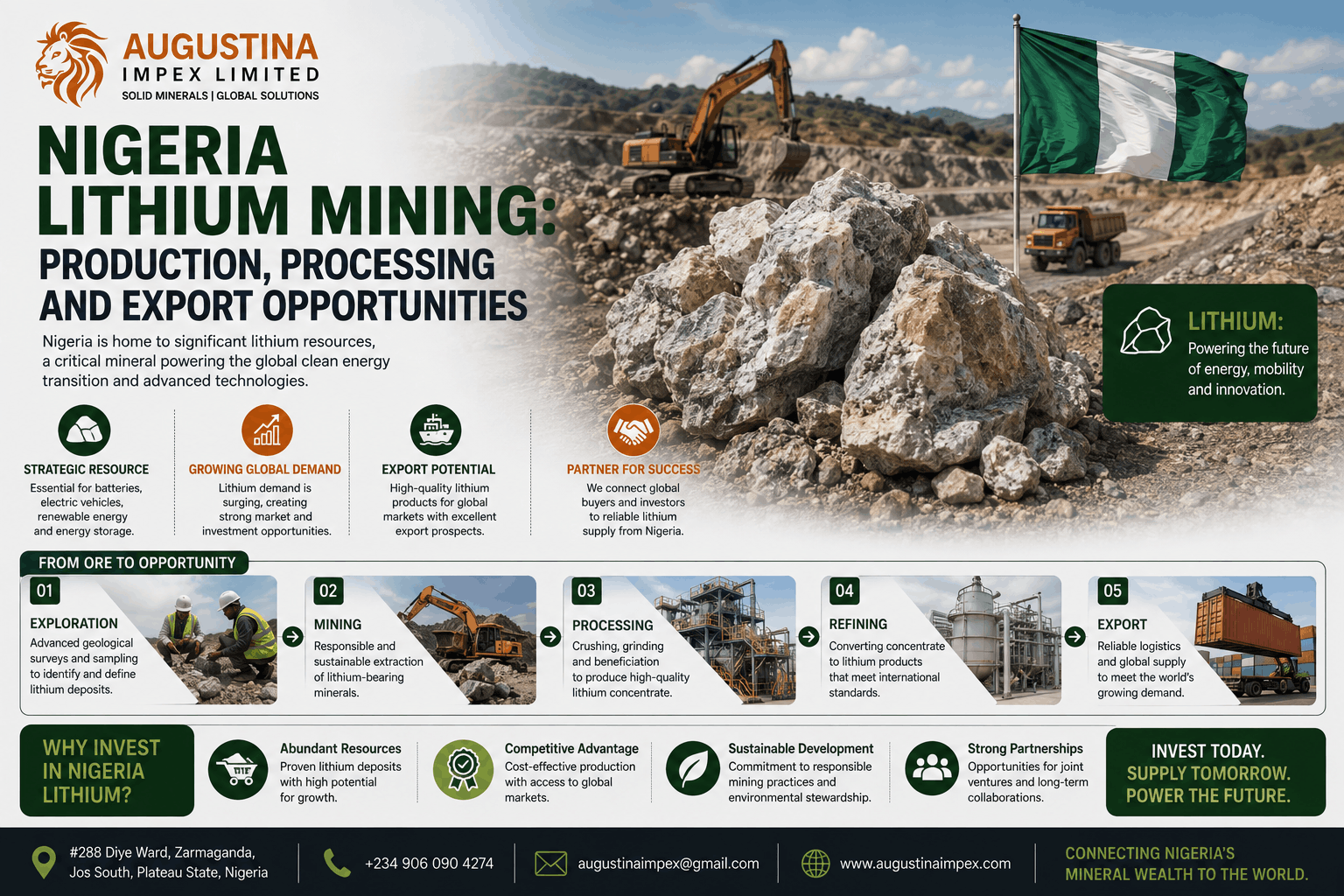
Nigeria Lithium Mining: Production, Processing & Export
Nigeria Lithium Mining: Production, Processing and Export Opportunities By Kolawole King, CEO — Augustina Impex…
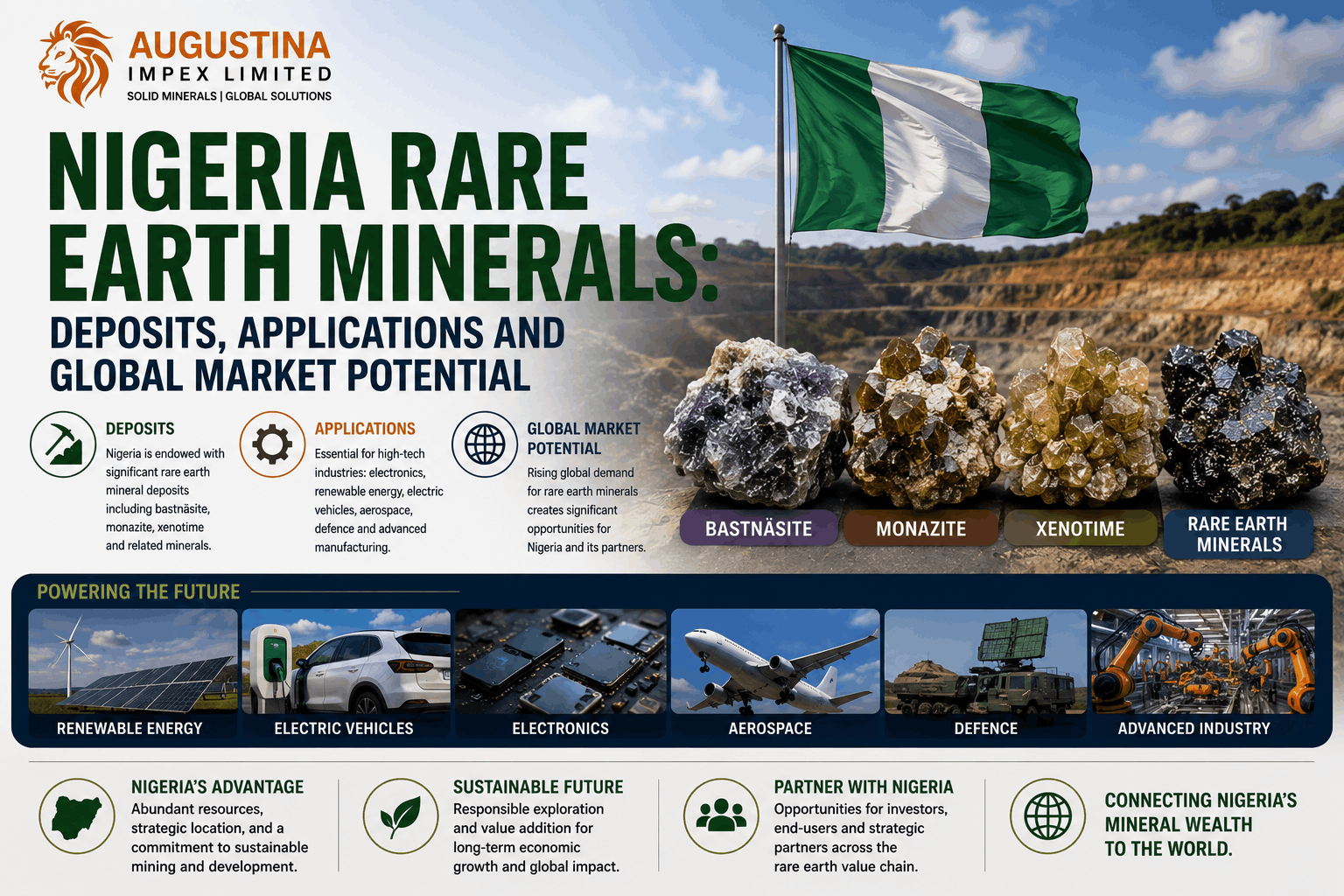
Nigeria Rare Earth Minerals: Deposits & Market Potential
Nigeria Rare Earth Minerals: Deposits, Applications and Global Market Potential By Kolawole King, CEO —…
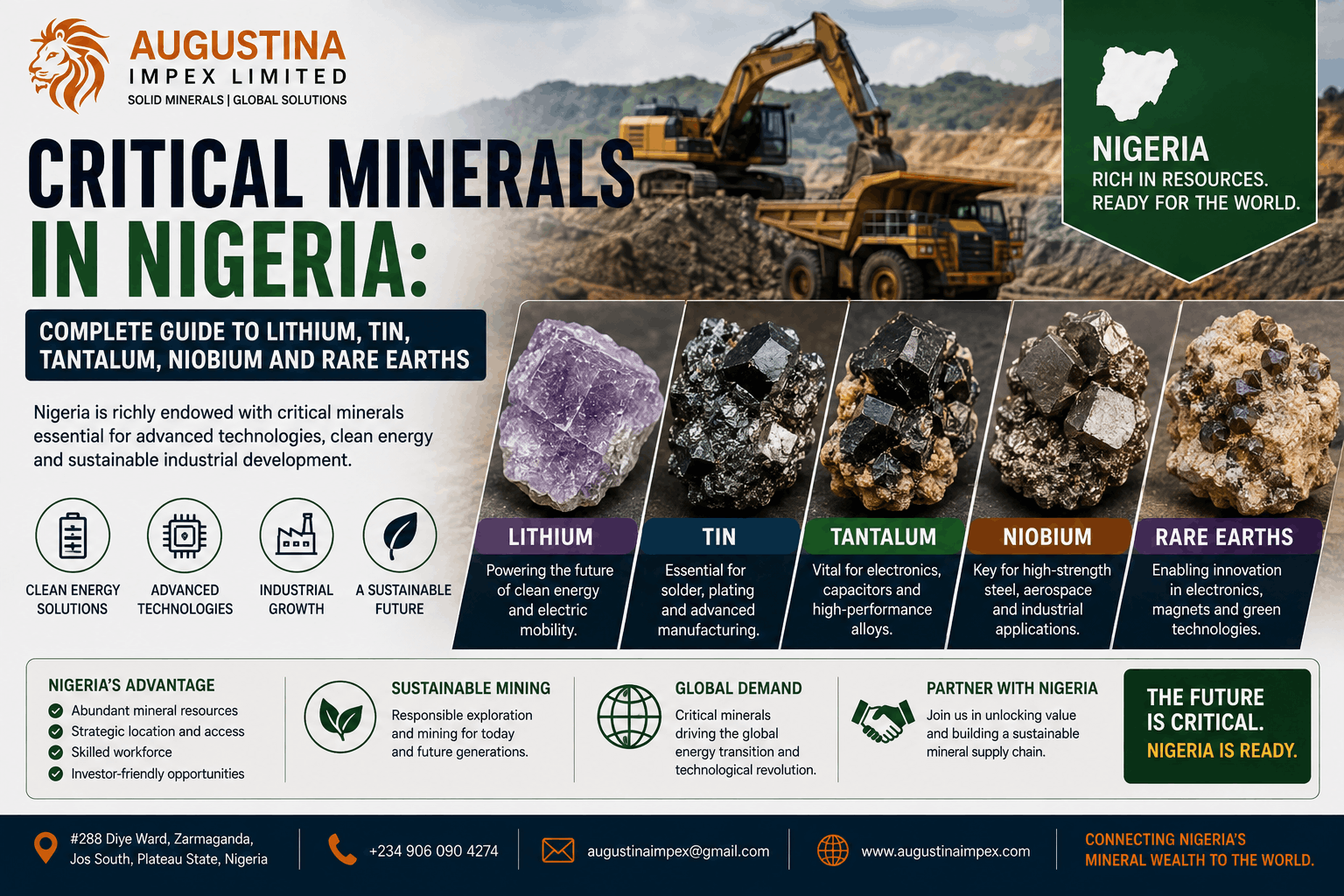
Nigeria Critical Minerals Guide: Lithium, Tin & Rare Earths
Critical Minerals in Nigeria: Complete Guide to Lithium, Tin, Tantalum, Niobium and Rare Earths By…
Conflict-Free Nigerian Tin Meets Global ESG Standards
Conflict-Free and Certified: How Nigerian Tin Meets Global ESG Standards By Kolawole King, CEO —…