

The global demand for rare earth minerals has grown rapidly over the past decade as industries increasingly rely on advanced technologies, renewable energy systems, and electric vehicles. At the center of every rare earth transaction is one important measurement: TREO, or Total Rare Earth Oxides.
Whether you are a mining company, mineral exporter, investor, laboratory analyst, or international buyer, understanding TREO is essential. It is one of the first values buyers examine when evaluating rare earth mineral deposits or negotiating commercial contracts.
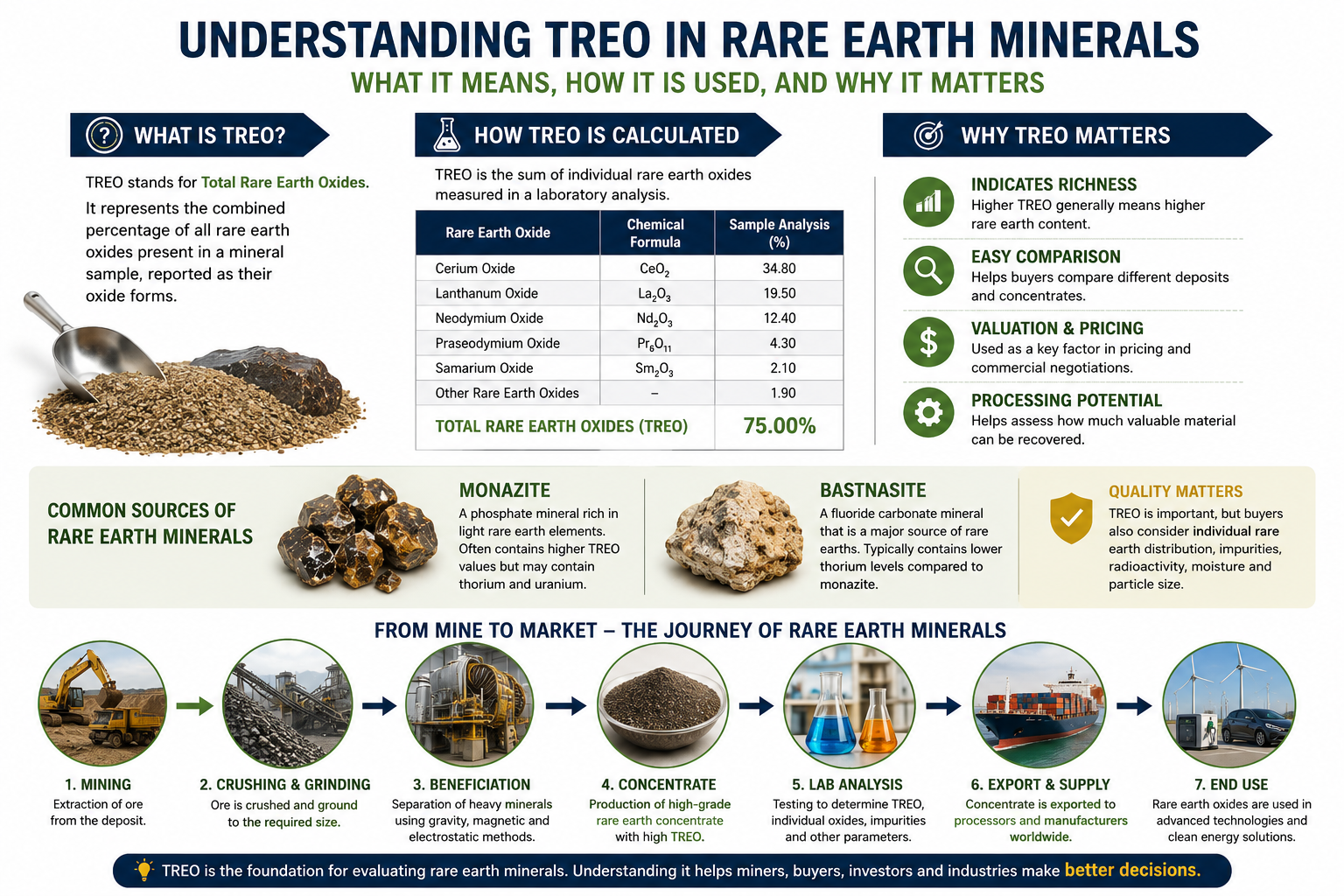
In simple terms, TREO represents the combined percentage of all rare earth oxides contained in a mineral sample. It provides a quick indication of the overall rare earth content and serves as a benchmark for comparing different deposits and concentrates.
This article explains what TREO is, how it is calculated, why it is important, and how it influences the commercial value of rare earth minerals such as monazite and bastnasite.
What Does TREO Mean?
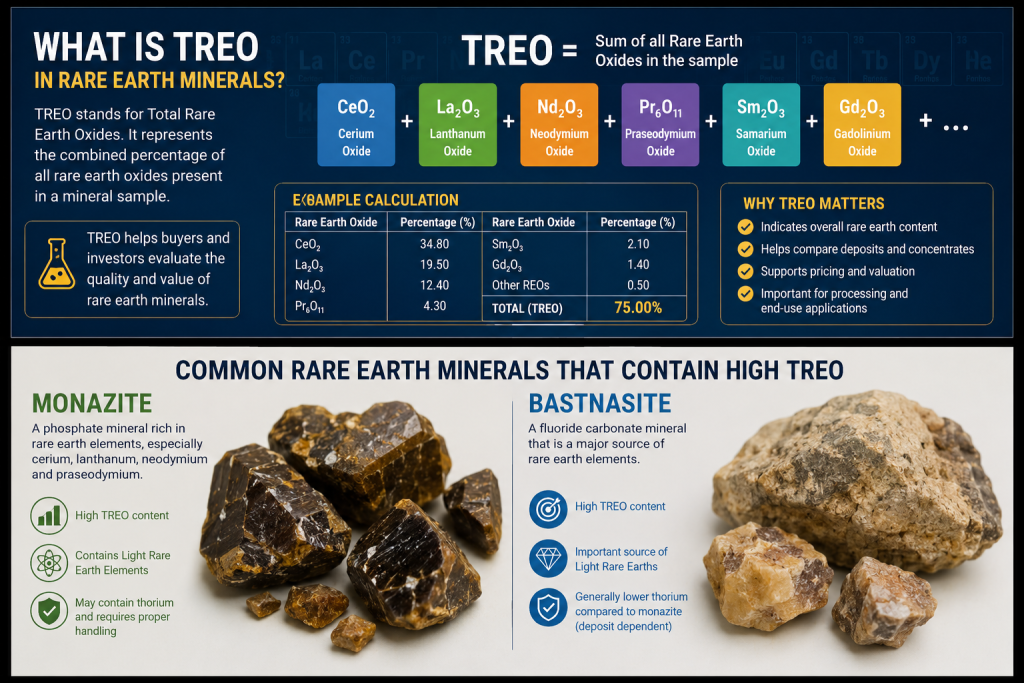
TREO stands for Total Rare Earth Oxides.
Rare earth elements (REEs) are usually reported as their oxide forms because this is the standard used in mining, laboratory analysis, and international mineral trading.
Rather than reporting only the amount of individual elements, laboratories convert each rare earth element into its corresponding oxide and calculate the total percentage.
TREO therefore represents the sum of all measurable rare earth oxides in a sample.
Rare Earth Oxides Commonly Included in TREO
A laboratory assay may include several rare earth oxides, such as:
- Cerium Oxide (CeO₂)
- Lanthanum Oxide (La₂O₃)
- Neodymium Oxide (Nd₂O₃)
- Praseodymium Oxide (Pr₆O₁₁)
- Samarium Oxide (Sm₂O₃)
- Europium Oxide (Eu₂O₃)
- Gadolinium Oxide (Gd₂O₃)
- Terbium Oxide (Tb₄O₇)
- Dysprosium Oxide (Dy₂O₃)
- Holmium Oxide (Ho₂O₃)
- Erbium Oxide (Er₂O₃)
- Thulium Oxide (Tm₂O₃)
- Ytterbium Oxide (Yb₂O₃)
- Lutetium Oxide (Lu₂O₃)
- Yttrium Oxide (Y₂O₃)
The TREO value is obtained by adding the percentages of these oxides present in the sample.
How is TREO Calculated?
TREO is calculated by summing the percentages of all rare earth oxides identified during laboratory analysis.
For example:
| Rare Earth Oxide | Percentage |
| CeO₂ | 34.80% |
| La₂O₃ | 19.50% |
| Nd₂O₃ | 12.40% |
| Pr₆O₁₁ | 4.30% |
| Sm₂O₃ | 2.10% |
| Other REOs | 1.90% |
TREO = 75.00%
Modern laboratories use advanced analytical techniques such as:
- X-Ray Fluorescence (XRF)
- Inductively Coupled Plasma Optical Emission Spectroscopy (ICP-OES)
- Inductively Coupled Plasma Mass Spectrometry (ICP-MS)
These methods provide accurate measurements of individual rare earth oxides.
Why TREO Matters
TREO is one of the most important indicators of a rare earth mineral’s quality.
Higher TREO generally indicates a greater concentration of valuable rare earth oxides, which can make a concentrate more attractive to processors. However, TREO alone does not determine commercial value. Buyers also consider the distribution of individual rare earth elements, impurities, processing characteristics, and applicable regulations.
TREO helps buyers:
- Compare mineral deposits
- Evaluate concentrate quality
- Estimate processing potential
- Assess economic viability
- Screen potential suppliers
TREO in Monazite
Monazite is among the world’s richest rare earth minerals.
It commonly contains:
- Cerium
- Lanthanum
- Neodymium
- Praseodymium
- Samarium
Monazite concentrates often report high TREO values, making them an important source of light rare earth elements.
Because monazite can also contain thorium and, in some deposits, uranium, buyers evaluate both the TREO and the levels of naturally occurring radioactive elements to ensure compliance with applicable regulations.
TREO in Bastnasite
Bastnasite is another important rare earth mineral.
It is the primary source of rare earth production in several major mining operations worldwide.
Bastnasite typically contains significant amounts of:
- Cerium
- Lanthanum
- Neodymium
- Praseodymium
Compared with many monazite deposits, bastnasite often contains lower thorium levels, although composition varies by deposit.
High-quality bastnasite concentrates frequently attract strong interest because they can provide high rare earth content with favorable processing characteristics.
Does a Higher TREO Always Mean a Better Product?
Not necessarily.
Two concentrates can have the same TREO but very different economic value.
For example:
Sample A
TREO: 65%
Mostly:
- Cerium
- Lanthanum
Sample B
TREO: 65%
Contains larger proportions of:
- Neodymium
- Praseodymium
- Dysprosium
- Terbium
Depending on market conditions and end-use applications, Sample B may command a higher value because certain rare earth elements are more sought after for technologies such as high-performance permanent magnets.
This is why buyers examine both the TREO and the distribution of individual rare earth oxides.
Factors That Influence the Commercial Value of Rare Earth Minerals
Professional buyers evaluate multiple factors, including:
TREO Percentage
Higher TREO often indicates a richer concentrate.
Individual Rare Earth Distribution
The proportions of specific rare earth oxides influence the material’s suitability for different industrial applications.
Impurities
Common impurities include:
- Iron
- Silica
- Calcium
- Phosphorus
Lower impurity levels generally reduce processing requirements.
Radioactive Elements
Some deposits contain naturally occurring thorium or uranium. Compliance with international regulations and customer specifications is essential.
Moisture Content
Lower moisture can reduce transport costs and improve handling.
Particle Size
Consistent particle size may improve processing efficiency.
Industries That Depend on High-TREO Materials
Rare earth oxides are essential for:
- Electric vehicles
- Wind turbines
- Permanent magnets
- Consumer electronics
- Smartphones
- Medical imaging equipment
- Defense technologies
- Catalytic converters
- Glass polishing
- Petroleum refining
The global shift toward clean energy has increased demand for reliable rare earth supplies.
Nigeria’s Potential in Rare Earth Minerals
Nigeria possesses promising rare earth mineral resources, including monazite and bastnasite found in association with heavy mineral sands and other geological environments.
With continued investment in:
- Exploration
- Beneficiation
- Laboratory testing
- Responsible mining
- Mineral processing
Nigeria has the opportunity to strengthen its role in the global rare earth supply chain.
Developing local expertise in mineral characterization and value addition can further increase the competitiveness of Nigerian exports.
Quality Assurance and Laboratory Testing
Reliable laboratory analysis is essential before marketing rare earth minerals.
Independent testing helps:
- Verify TREO
- Identify impurities
- Determine oxide distribution
- Support pricing discussions
- Build buyer confidence
Accurate laboratory reports reduce uncertainty and facilitate international trade.
The Role of Augustina Impex Limited
Augustina Impex Limited is committed to supplying responsibly sourced industrial minerals and critical minerals to international markets.
We emphasize:
- Quality assurance
- Laboratory verification
- Transparent business practices
- Reliable export logistics
- Long-term partnerships
By working closely with mining partners and independent laboratories, we strive to provide mineral products that meet customer specifications and international quality expectations.
Future Outlook
Demand for rare earth elements is expected to remain strong as industries expand production of electric vehicles, renewable energy systems, robotics, aerospace components, and advanced electronics.
TREO will continue to serve as a key benchmark for evaluating rare earth concentrates, but buyers are increasingly focused on the complete chemical profile, processing characteristics, and sustainability of the supply chain.
Countries that invest in responsible mining, mineral processing, and quality control will be well positioned to benefit from the growing importance of critical minerals.
Conclusion
TREO, or Total Rare Earth Oxides, is one of the most important measurements used in the rare earth mining and trading industry. It provides a standardized way to express the combined concentration of rare earth oxides in a mineral sample and serves as a valuable indicator when comparing deposits and concentrates.
While a high TREO is often associated with higher-quality material, commercial value also depends on the distribution of individual rare earth elements, impurity levels, processing characteristics, and regulatory considerations.
For mining companies, exporters, and buyers, understanding TREO is fundamental to making informed decisions. As global demand for rare earth minerals continues to grow, accurate laboratory analysis, responsible sourcing, and transparent quality assurance will remain essential for building successful and sustainable international partnerships.
Post a comment
Related Posts

Nigeria Lithium Mining: Production, Processing & Export
Nigeria Lithium Mining: Production, Processing and Export Opportunities By Kolawole King, CEO — Augustina Impex…

Nigeria Rare Earth Minerals: Deposits & Market Potential
Nigeria Rare Earth Minerals: Deposits, Applications and Global Market Potential By Kolawole King, CEO —…
Nigeria Critical Minerals Guide: Lithium, Tin & Rare Earths
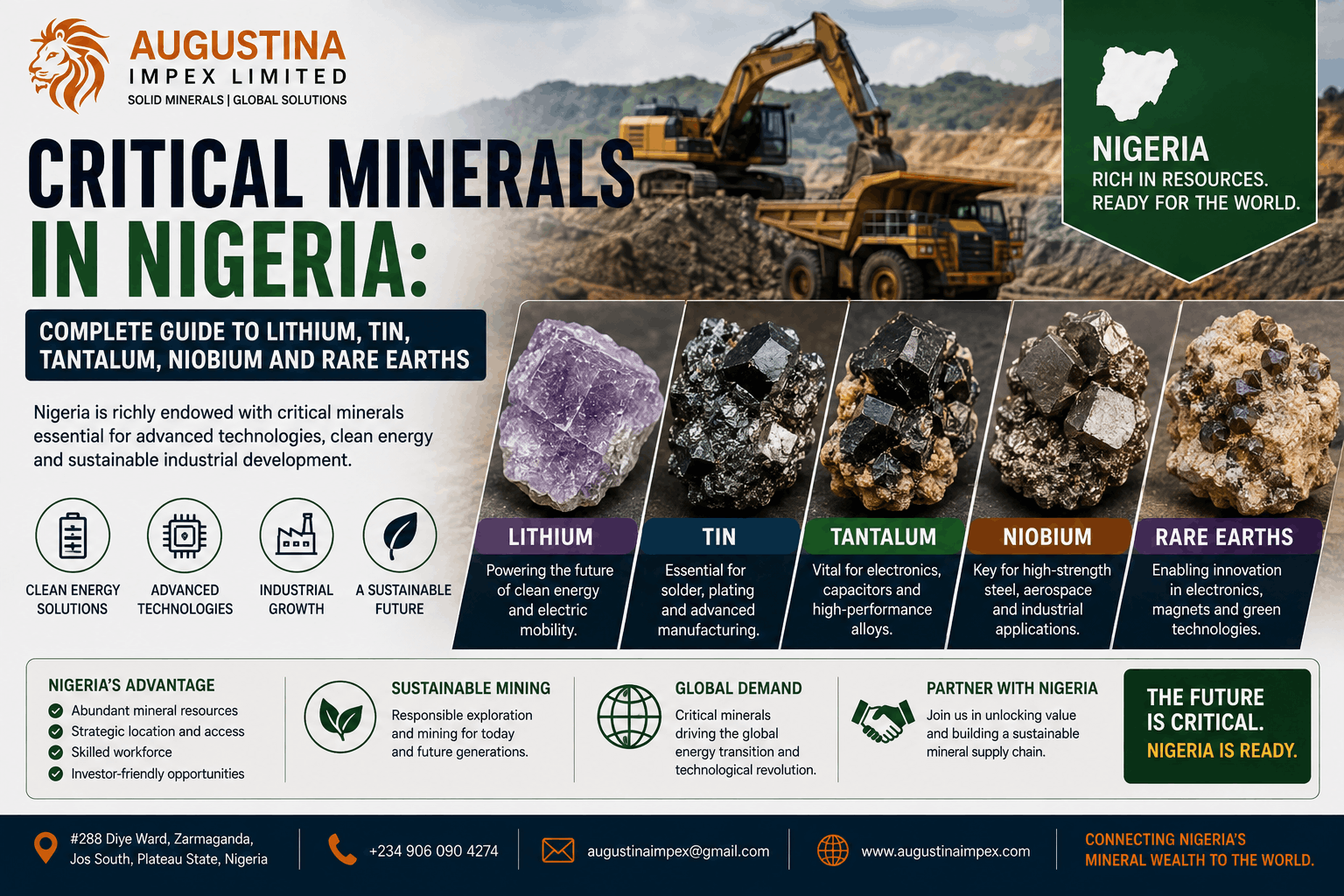
Critical Minerals in Nigeria: Complete Guide to Lithium, Tin, Tantalum, Niobium and Rare Earths By…
Conflict-Free Nigerian Tin Meets Global ESG Standards
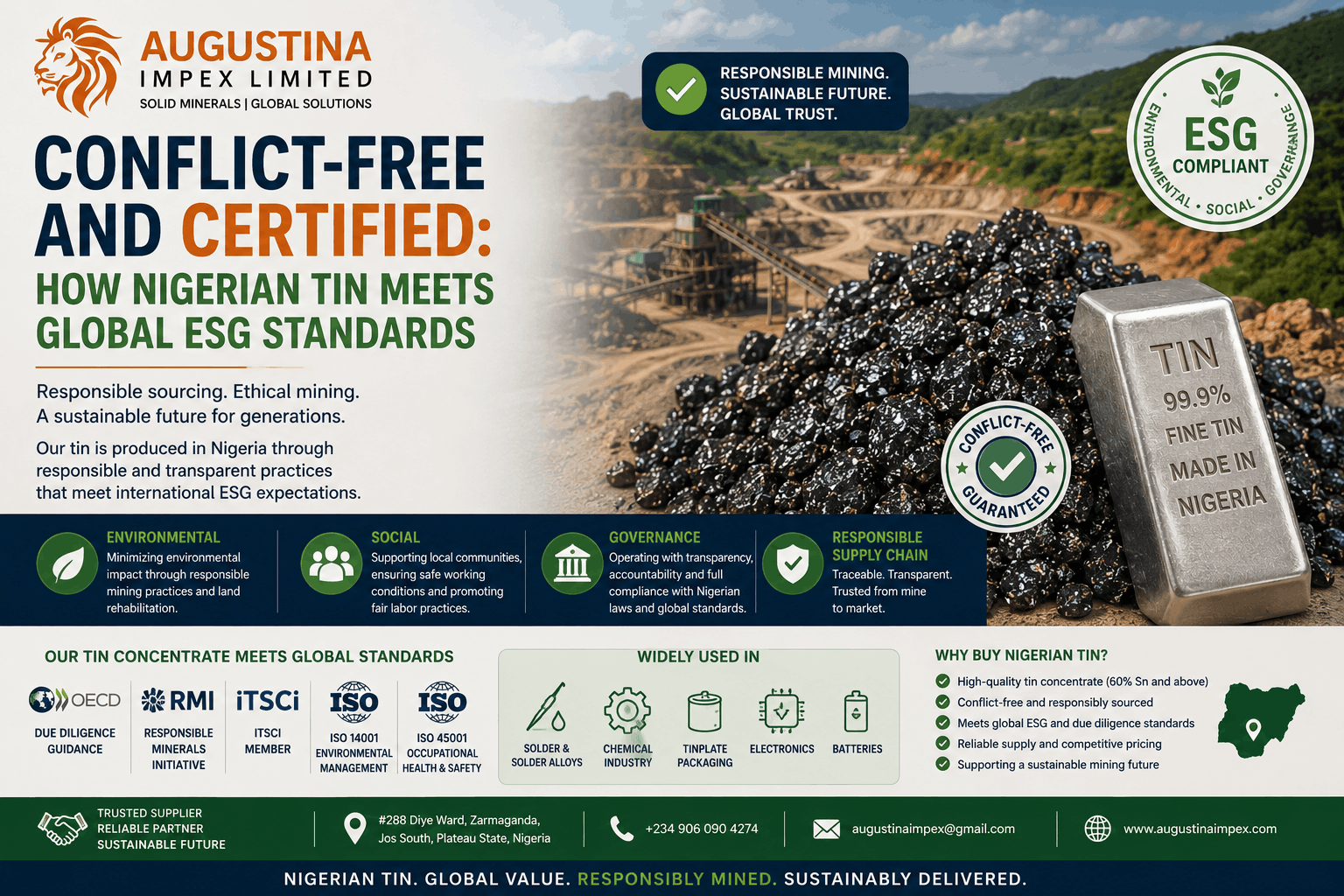
Conflict-Free and Certified: How Nigerian Tin Meets Global ESG Standards By Kolawole King, CEO —…