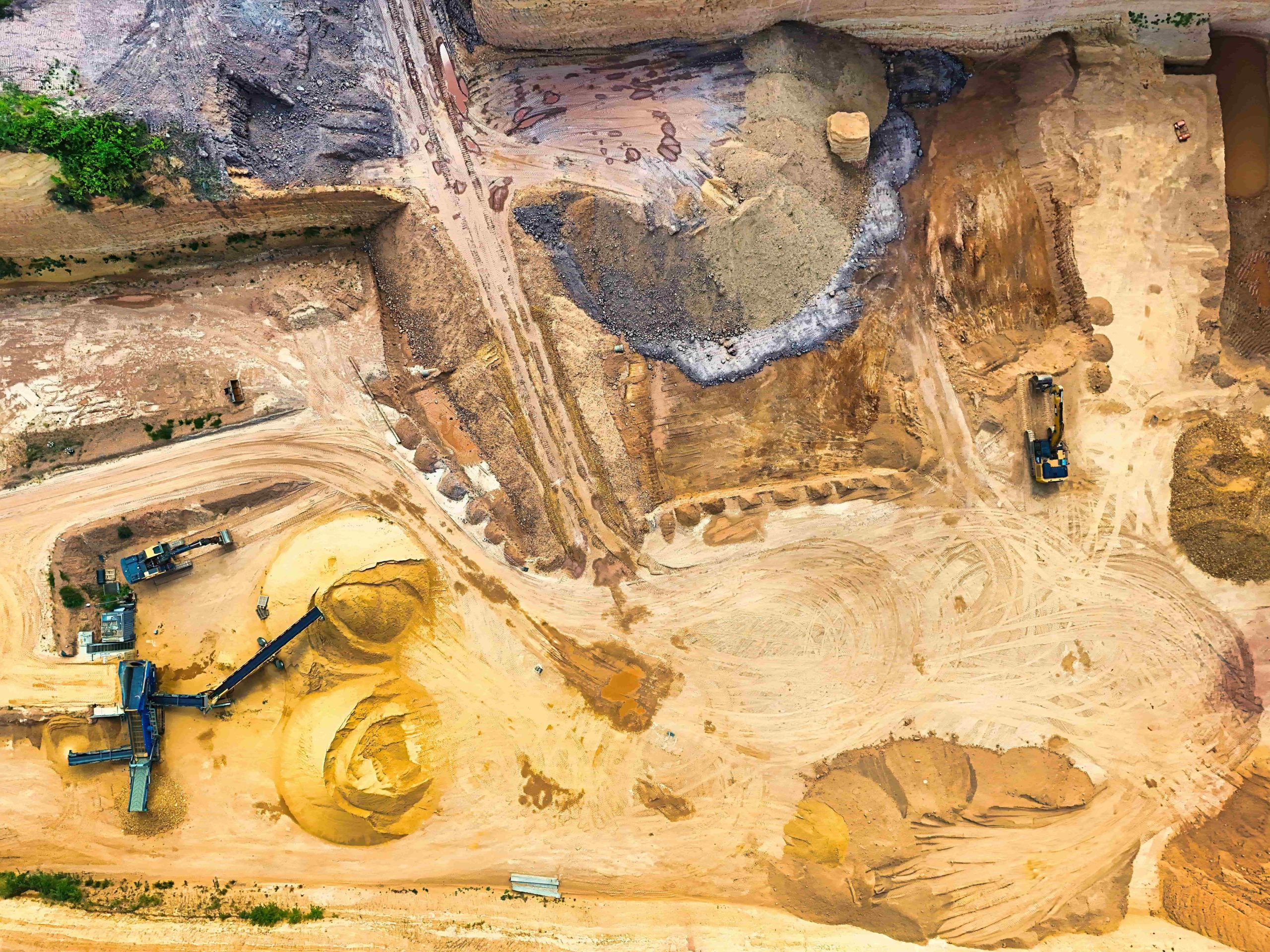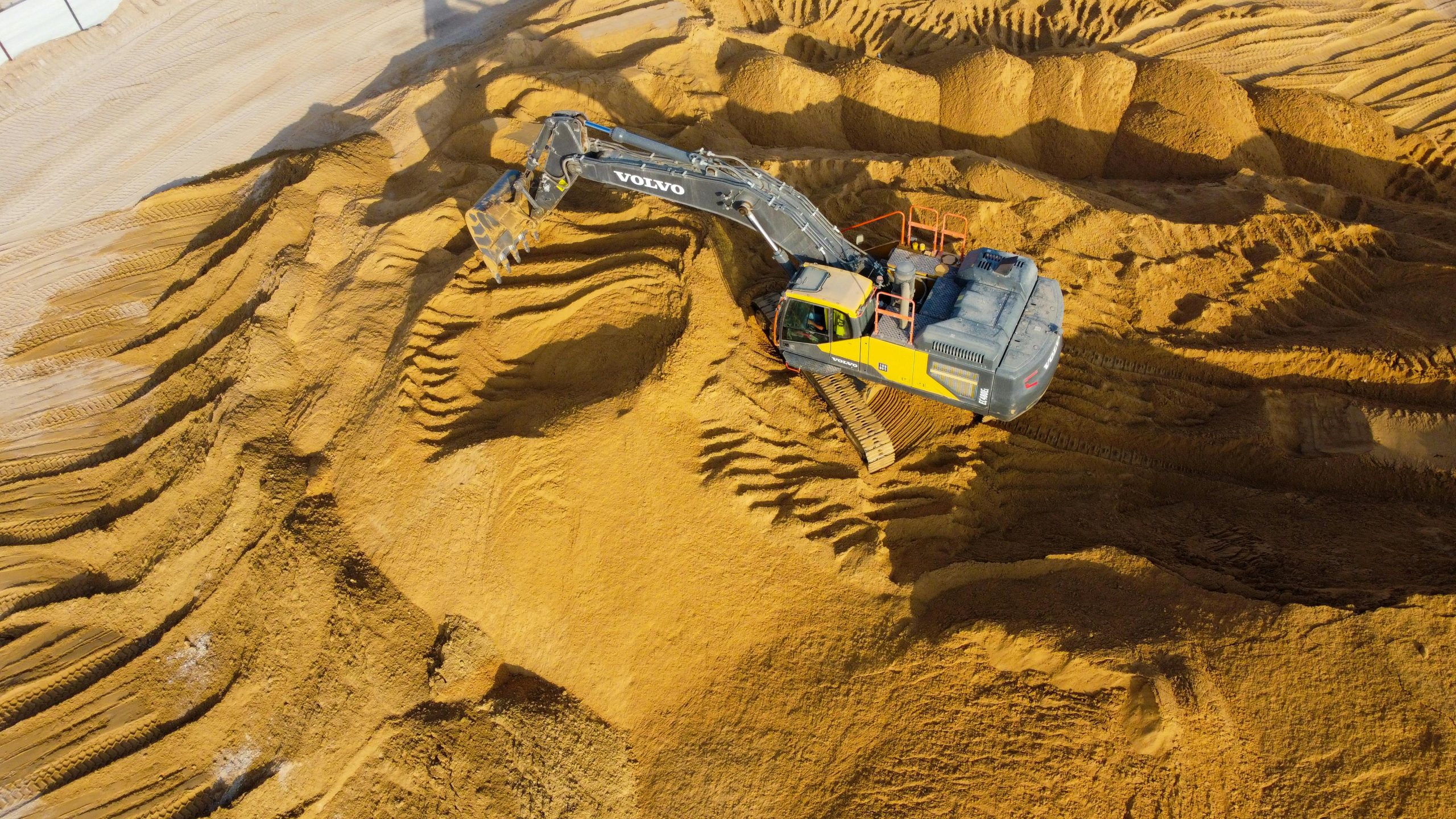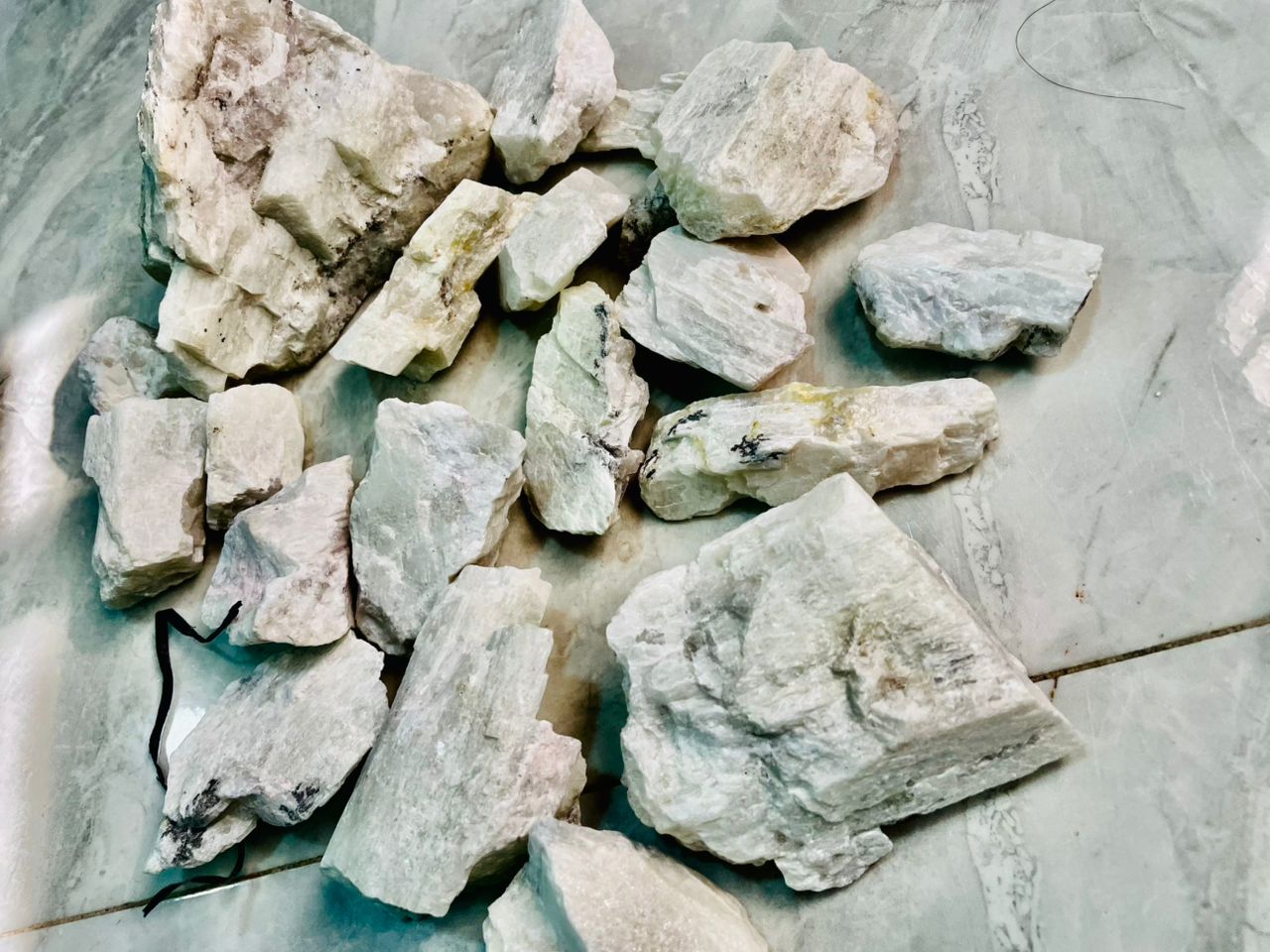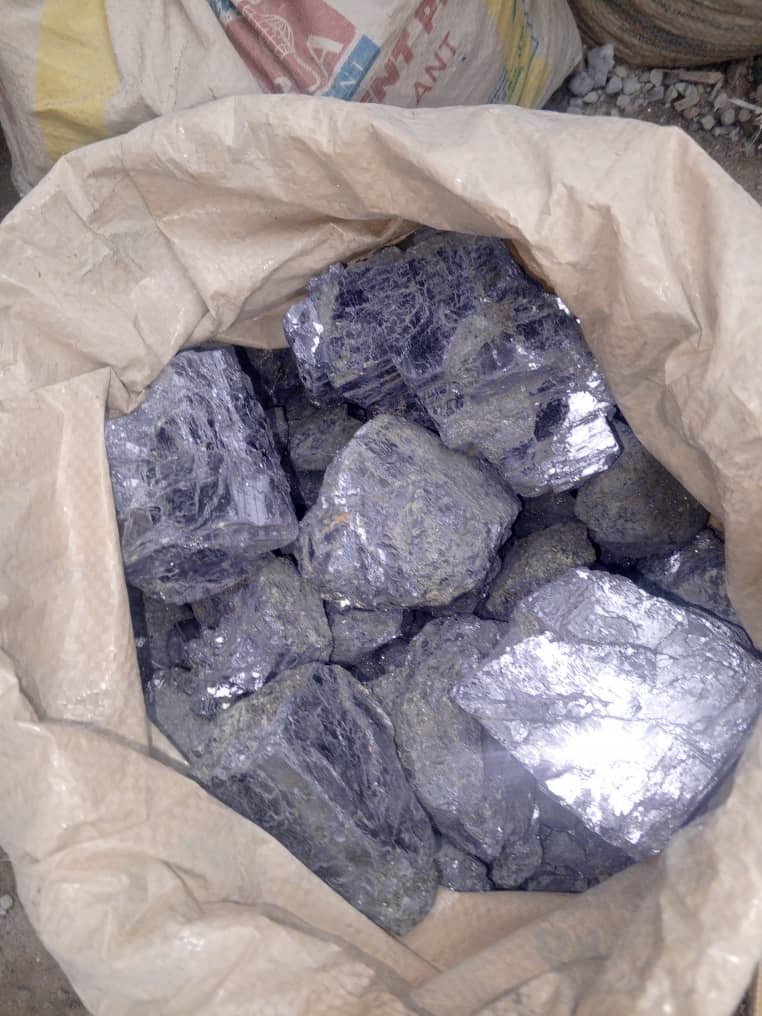
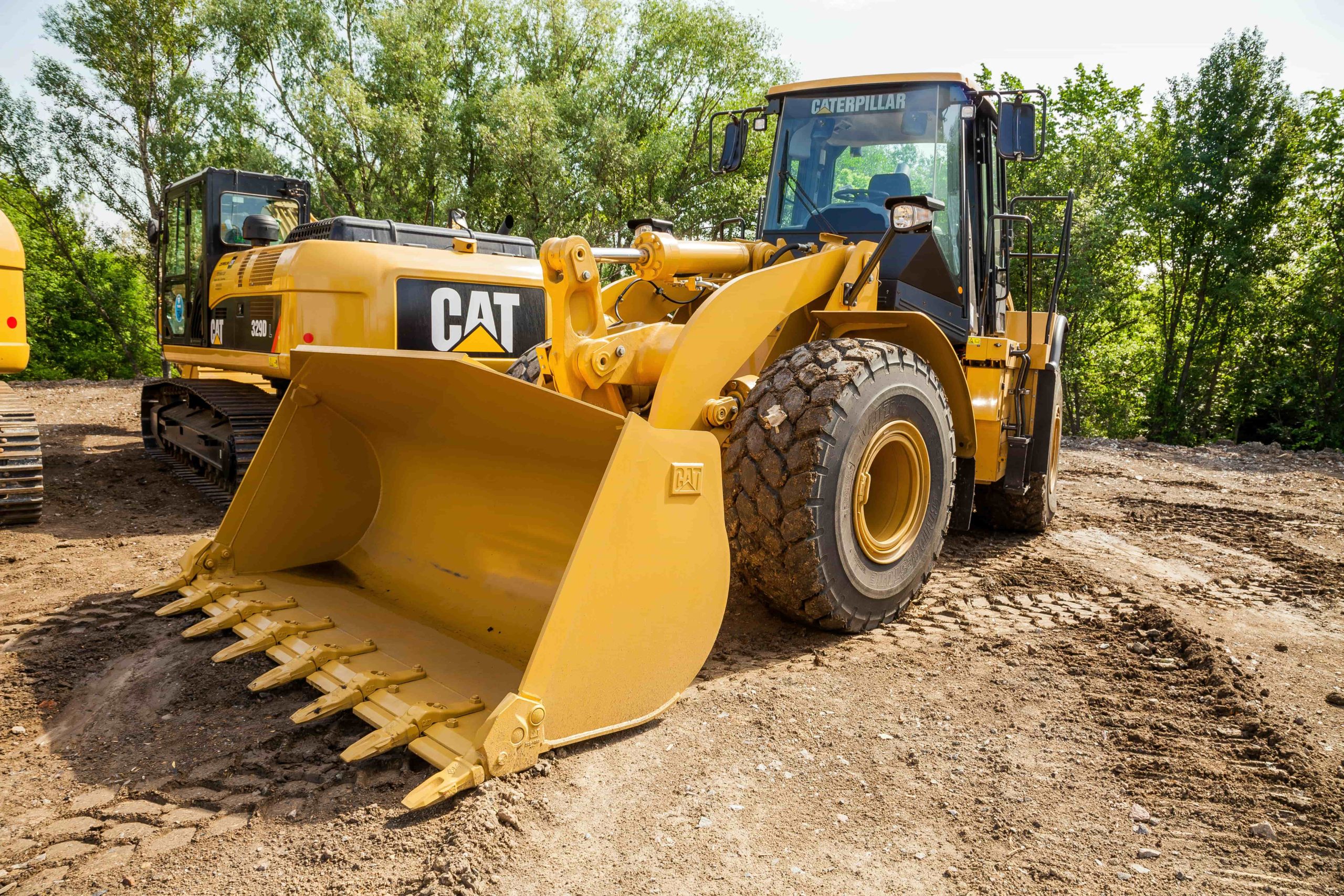

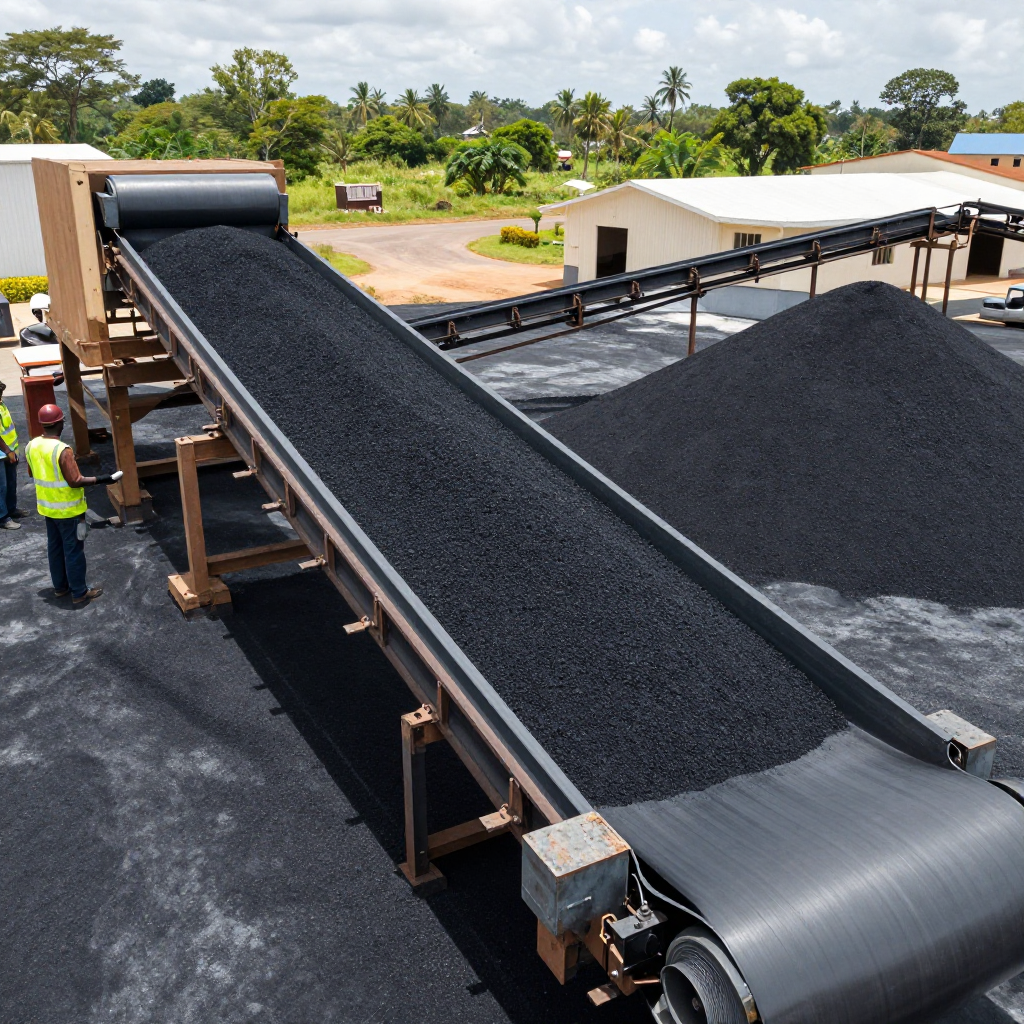
Nigeria is one of Africa’s most mineral-rich nations, possessing vast deposits of industrial minerals, strategic minerals, and rare earth-bearing resources. While much attention has traditionally focused on commodities such as crude oil, gold, tin, and lithium, another segment of the mining industry is steadily gaining prominence: heavy mineral sands processing.
Heavy mineral sands contain some of the world’s most valuable industrial and strategic minerals, including zircon, ilmenite, rutile, monazite, garnet, and other rare earth-bearing minerals. These materials play a crucial role in industries ranging from ceramics and construction to aerospace, renewable energy, electronics, and advanced manufacturing.
As global demand for critical minerals continues to rise, Nigeria’s heavy mineral sands sector is emerging as a promising opportunity for investors, processors, exporters, and industrial users.

Understanding Heavy Mineral Sands
Heavy mineral sands are naturally occurring concentrations of dense minerals that accumulate through geological processes such as weathering, erosion, transportation, and sediment deposition.
Unlike ordinary sand deposits, heavy mineral sands contain economically valuable minerals with higher specific gravity than common quartz sand.
Common minerals found in heavy mineral sands include:
- Zircon
- Ilmenite
- Rutile
- Monazite
- Garnet
- Magnetite
- Cassiterite
- Columbite
- Tantalite
These minerals are often recovered from alluvial deposits, river systems, coastal environments, and areas associated with historical tin mining activities.
Nigeria’s Heavy Mineral Sands Potential
Nigeria possesses significant heavy mineral sands resources, particularly in regions historically associated with tin mining.
Plateau State remains one of the most important heavy mineral sands provinces in Nigeria. Decades of tin mining activities have contributed to the concentration and recovery of numerous associated minerals.
Other states showing heavy mineral sands potential include:
- Nasarawa State
- Niger State
- Kaduna State
- Bauchi State
- Zamfara State
- Kogi State
These regions continue attracting interest from miners, processors, and investors due to their diverse mineral assemblages.
Why Heavy Mineral Sands Are Important
Heavy mineral sands contain materials that support several critical industries.
Zircon
Zircon is widely used in:
- Ceramic tiles
- Refractory products
- Foundry applications
- Precision casting
- Nuclear technology
Global demand for zircon continues to increase because of growth in construction, manufacturing, and advanced industrial applications.
Ilmenite
Ilmenite is the world’s most important titanium-bearing mineral.
It is used in the production of:
- Titanium dioxide pigments
- Aerospace components
- Medical implants
- Paints and coatings
- Plastics
- Paper products
Titanium-based products remain essential to modern industry.
Monazite
Monazite is one of the most valuable rare earth-bearing minerals.
It contains:
- Cerium
- Lanthanum
- Neodymium
- Praseodymium
These elements are critical for electric vehicles, wind turbines, advanced electronics, and defense technologies.
Garnet
Garnet is used for:
- Abrasive blasting
- Waterjet cutting
- Filtration systems
- Industrial abrasives
Rutile
Rutile is another important titanium mineral used in:
- Pigment production
- Welding electrodes
- Aerospace manufacturing
The Importance of Processing
Mining alone does not maximize the value of mineral resources.
Many heavy mineral sand deposits contain mixtures of minerals that must be separated before they can be sold to industrial users.
Processing allows operators to:
- Increase mineral purity
- Improve product quality
- Enhance market value
- Meet customer specifications
- Increase export earnings
This process is commonly referred to as beneficiation.
Heavy Mineral Sands Processing Techniques
Several techniques are used to process heavy mineral sands.
Gravity Separation
Gravity separation is often the first stage of processing.
This method relies on differences in mineral density.
Equipment commonly used includes:
- Spiral concentrators
- Shaking tables
- Sluice systems
- Concentrating cones
Gravity separation helps recover heavy minerals from waste material.
Magnetic Separation
Magnetic separation is widely used in heavy mineral processing.
Different minerals respond differently to magnetic fields.
This allows processors to separate:
- Ilmenite
- Magnetite
- Monazite
- Other magnetic minerals
Magnetic separation significantly improves concentrate quality.
Electrostatic Separation
Electrostatic separation takes advantage of differences in electrical conductivity.
This method is particularly useful for separating:
- Zircon
- Rutile
- Ilmenite
Electrostatic separators help produce high-grade concentrates suitable for export markets.
Screening and Classification
Particle size plays an important role in mineral recovery.
Screening and classification ensure that materials are processed efficiently and consistently.
Drying and Packaging
Once minerals have been separated and upgraded, they are:
- Dried
- Stockpiled
- Bagged
- Prepared for shipment
Proper packaging helps maintain product quality during transportation and export.
Nigeria’s Growing Processing Industry
Historically, many minerals produced in Nigeria were exported in raw form.
Today, there is increasing recognition of the importance of local beneficiation.
Several operators and processing facilities across Nigeria are investing in:
- Heavy mineral sands concentration
- Rare earth mineral upgrading
- Ilmenite beneficiation
- Zircon recovery
- Export-grade concentrate preparation
These developments are helping create additional value within the country.
Economic Benefits of Heavy Mineral Sands Processing
Heavy mineral sands processing provides numerous benefits.
Increased Export Revenue
Processed minerals command significantly higher prices than raw materials.
Job Creation
Processing plants create employment opportunities in:
- Engineering
- Laboratory analysis
- Plant operations
- Logistics
- Quality control
Technology Transfer
Processing operations encourage the introduction of modern technologies and technical expertise.
Industrial Development
Local processing supports the growth of related industries and strengthens the mining value chain.
Investment Opportunities
Nigeria’s heavy mineral sands sector offers numerous opportunities for investors.
Potential areas include:
Processing Plants
Investment in concentration and beneficiation facilities.
Mineral Aggregation
Collection and preparation of heavy mineral sands from multiple producers.
Rare Earth Recovery
Recovery of monazite and other rare earth-bearing minerals.
Export Operations
Supply of processed mineral concentrates to international markets.
Equipment Supply
Provision of processing equipment and technical services.
Challenges Facing the Sector
Despite its potential, several challenges remain.
These include:
- Limited processing capacity
- Infrastructure constraints
- Financing challenges
- Technical expertise requirements
- Regulatory compliance
However, continued investment and industry collaboration are helping address these issues.
The Future of Heavy Mineral Sands Processing in Nigeria
The future appears increasingly promising.
Several factors support growth:
Rising Global Demand
Demand for zircon, titanium minerals, and rare earth elements continues to expand.
Energy Transition
Renewable energy technologies require many minerals recovered from heavy mineral sands.
Supply Chain Diversification
Manufacturers are seeking alternative sources of strategic minerals outside traditional producing regions.
Government Support
The Nigerian government continues promoting mining sector development and local beneficiation.
Conclusion
Heavy mineral sands processing in Nigeria represents one of the most exciting opportunities within the country’s mining sector. With significant deposits of zircon, ilmenite, monazite, garnet, and other valuable minerals, Nigeria possesses the resources needed to become an important participant in global mineral supply chains.
By investing in beneficiation, processing infrastructure, technological advancement, and responsible mining practices, Nigeria can unlock substantial value from its heavy mineral sands resources.
As global demand for critical minerals, industrial minerals, and rare earth elements continues to increase, heavy mineral sands processing is poised to play a major role in the future growth of Nigeria’s mining industry and its contribution to the global economy.
-
Previous Post
Investment Opportunities in Nigeria’s Rare Earth Sector
Post a comment
Related Posts
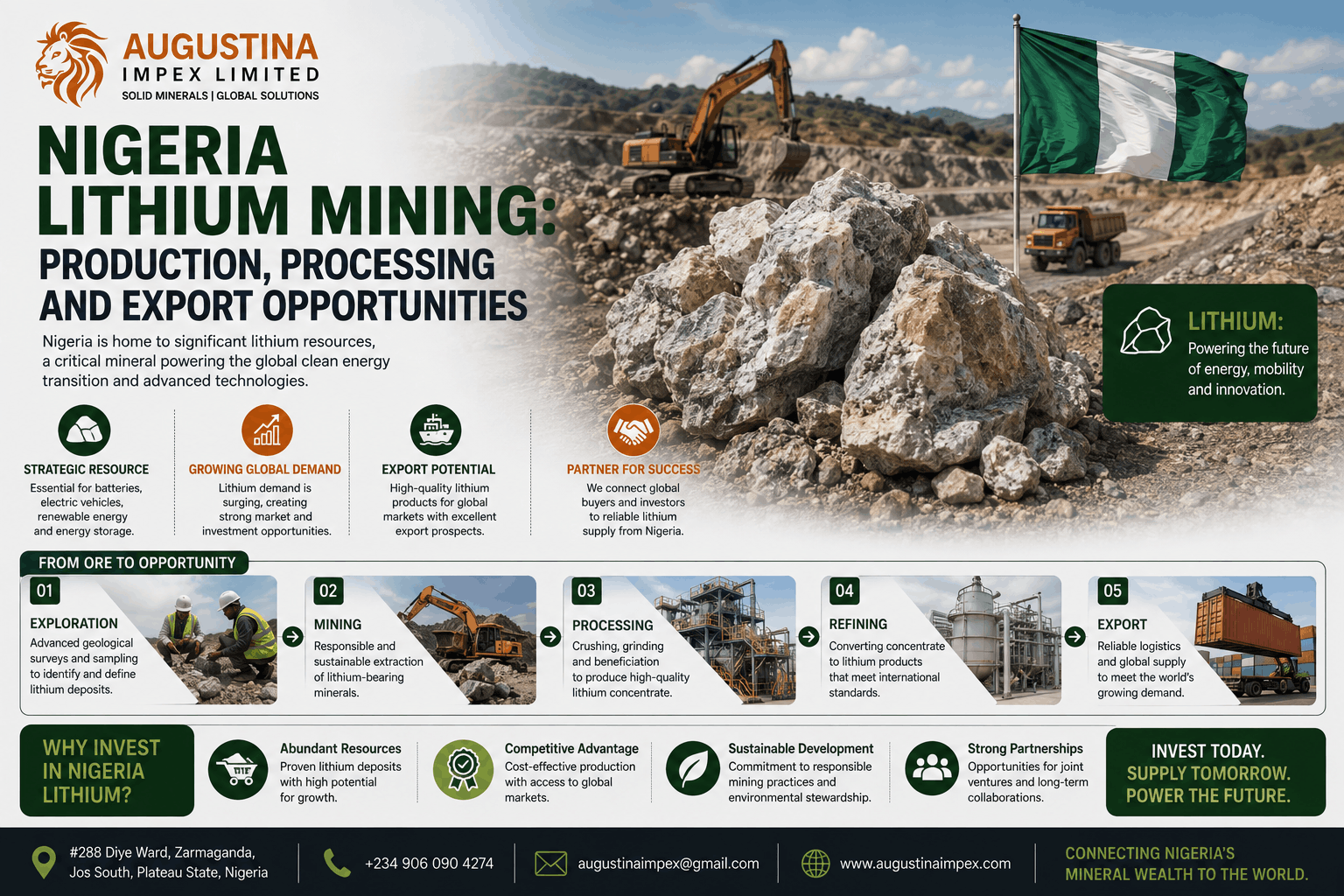
Nigeria Lithium Mining: Production, Processing & Export
Nigeria Lithium Mining: Production, Processing and Export Opportunities By Kolawole King, CEO — Augustina Impex…
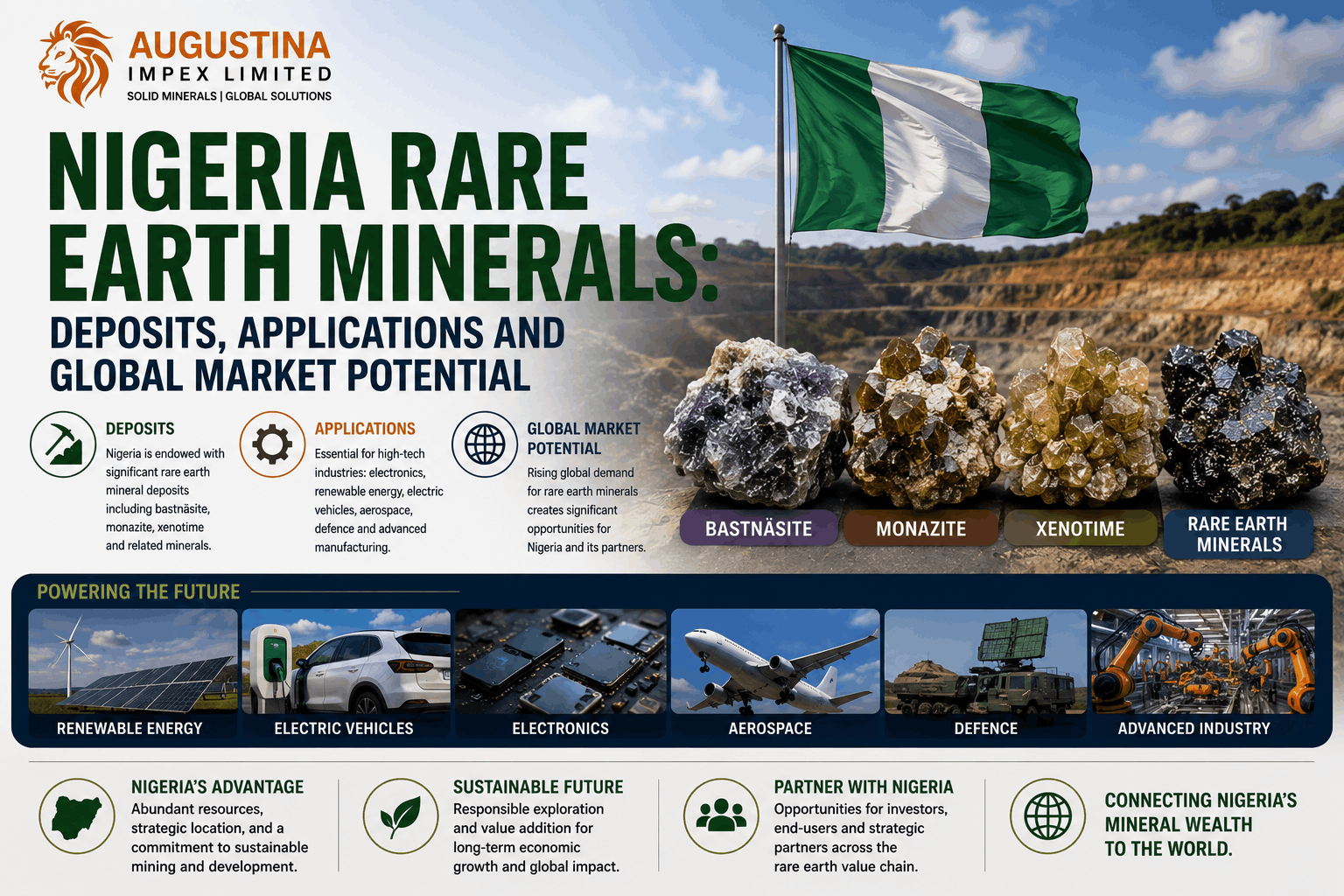
Nigeria Rare Earth Minerals: Deposits & Market Potential
Nigeria Rare Earth Minerals: Deposits, Applications and Global Market Potential By Kolawole King, CEO —…
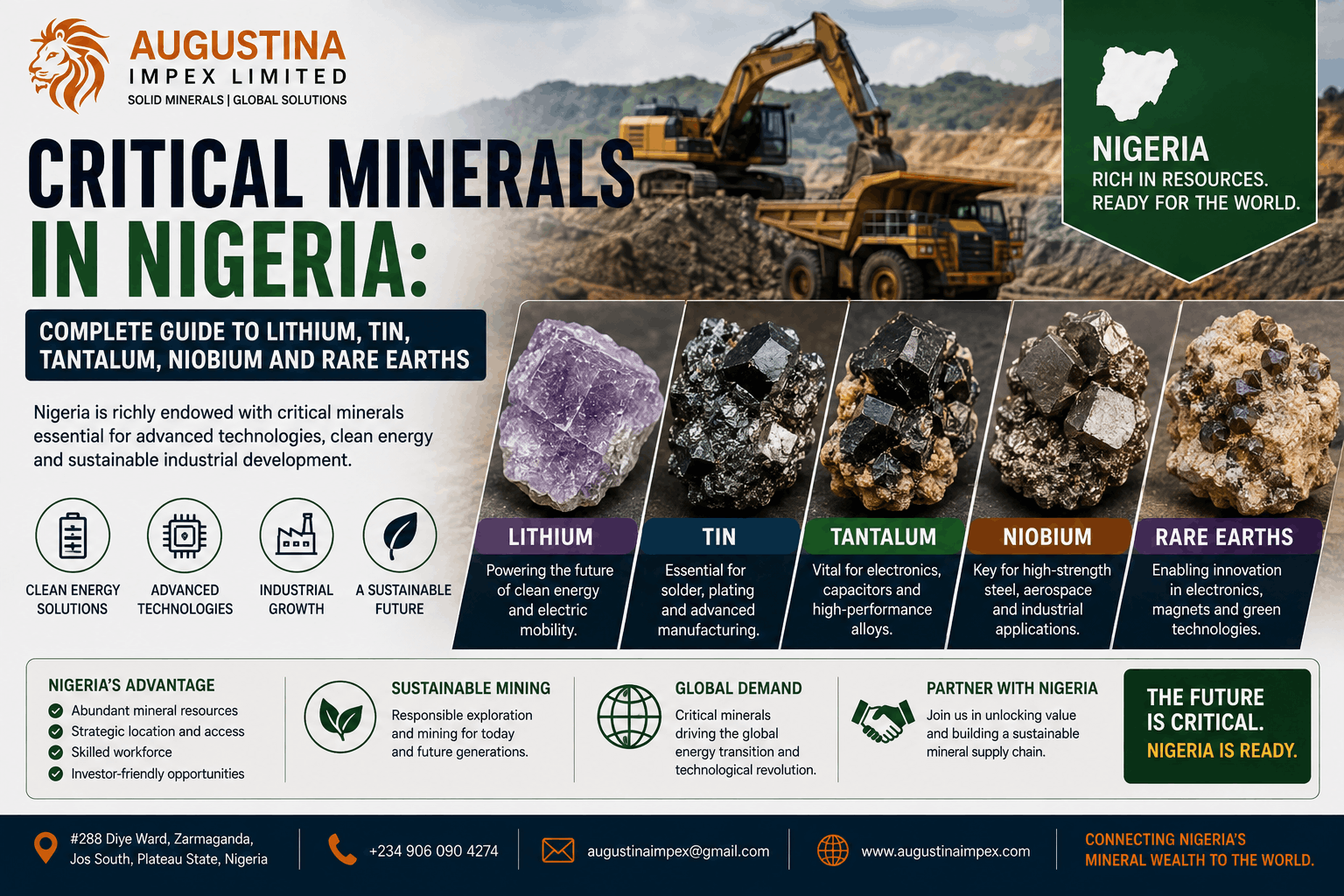
Nigeria Critical Minerals Guide: Lithium, Tin & Rare Earths
Critical Minerals in Nigeria: Complete Guide to Lithium, Tin, Tantalum, Niobium and Rare Earths By…
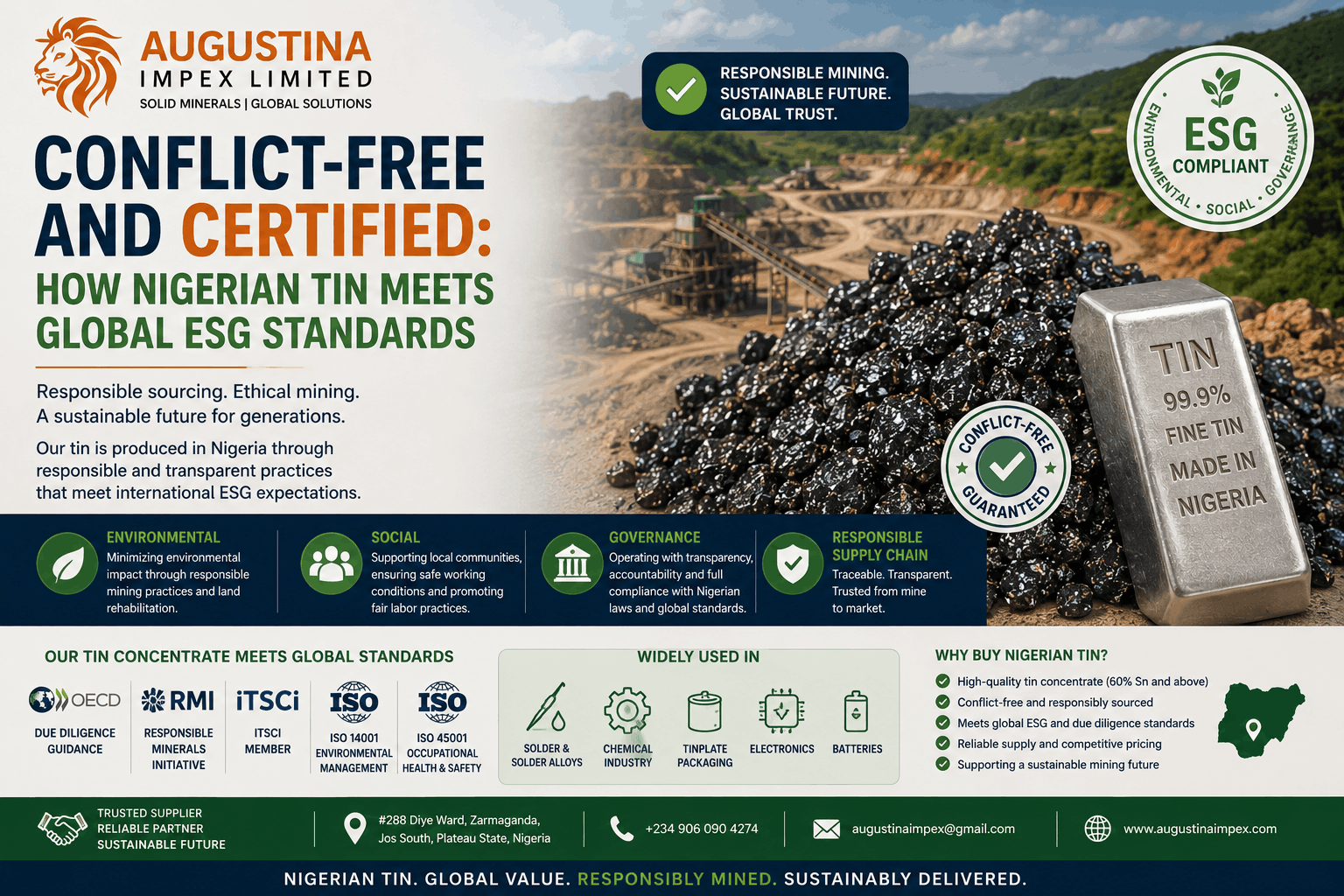
Conflict-Free Nigerian Tin Meets Global ESG Standards
Conflict-Free and Certified: How Nigerian Tin Meets Global ESG Standards By Kolawole King, CEO —…