

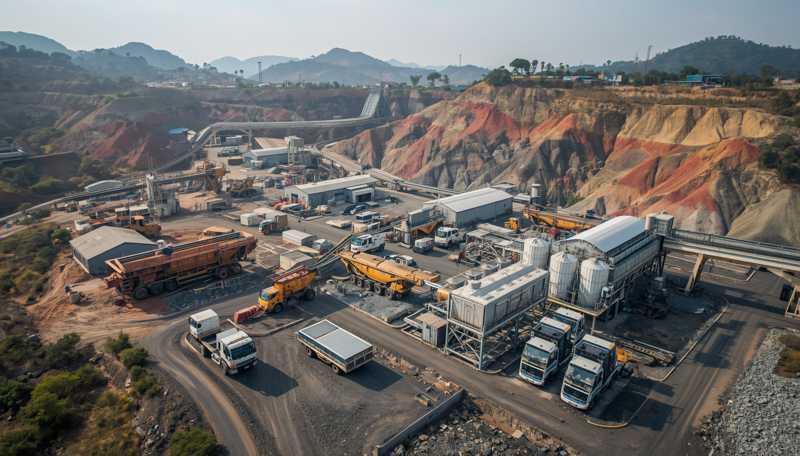
The global race for critical minerals is accelerating at an unprecedented pace. As nations seek secure supplies of raw materials required for electric vehicles, renewable energy systems, advanced electronics, aerospace applications, and defense technologies, rare earth elements have emerged as some of the most strategically important minerals in the world.
While countries such as China, Australia, the United States, and Canada have traditionally dominated discussions surrounding rare earth production, a new frontier is gradually emerging in Africa. Among the countries attracting increasing attention from investors is Nigeria, a nation blessed with abundant mineral resources and significant untapped rare earth potential.
For investors seeking exposure to the rapidly expanding rare earth industry, Nigeria presents a compelling opportunity. The country’s favorable geology, growing mining sector, improving regulatory framework, and increasing international interest in critical minerals are creating new possibilities for investment and long-term growth.

Understanding Rare Earth Elements
Rare earth elements (REEs) comprise a group of seventeen metallic elements that possess unique magnetic, luminescent, and electrochemical properties. These elements are essential for numerous modern technologies.
Rare earth elements are used in:
- Electric vehicle motors
- Wind turbines
- Smartphones
- Computer hard drives
- Defense systems
- Medical equipment
- Aerospace technologies
- Advanced manufacturing systems
- Industrial catalysts
- Renewable energy infrastructure
As the world transitions toward cleaner energy and advanced technology, demand for rare earth elements continues to grow rapidly.
Why Rare Earth Elements Are Important
The global energy transition is creating unprecedented demand for critical minerals.
Electric vehicles require powerful permanent magnets containing rare earth elements such as neodymium and praseodymium. Wind turbines depend heavily on rare earth magnets for efficient energy generation. Defense technologies and advanced electronics also rely on these strategic materials.
As governments and corporations seek to reduce dependence on a limited number of supply sources, there is increasing interest in developing new rare earth supply chains.
Nigeria is well positioned to benefit from this trend.
Nigeria’s Rare Earth Potential
Nigeria possesses significant geological potential for rare earth-bearing minerals.
Several states across the country contain deposits associated with granitic intrusions, pegmatites, heavy mineral sands, and alluvial concentrations.
Areas that have attracted growing attention include:
- Plateau State
- Nasarawa State
- Niger State
- Kaduna State
- Kogi State
- Bauchi State
- Zamfara State
These regions are known for hosting minerals that may contain commercially valuable rare earth elements.
Two of the most important rare earth-bearing minerals attracting investor interest in Nigeria are Monazite and Bastnasite.
Monazite: Nigeria’s Established Rare Earth Opportunity
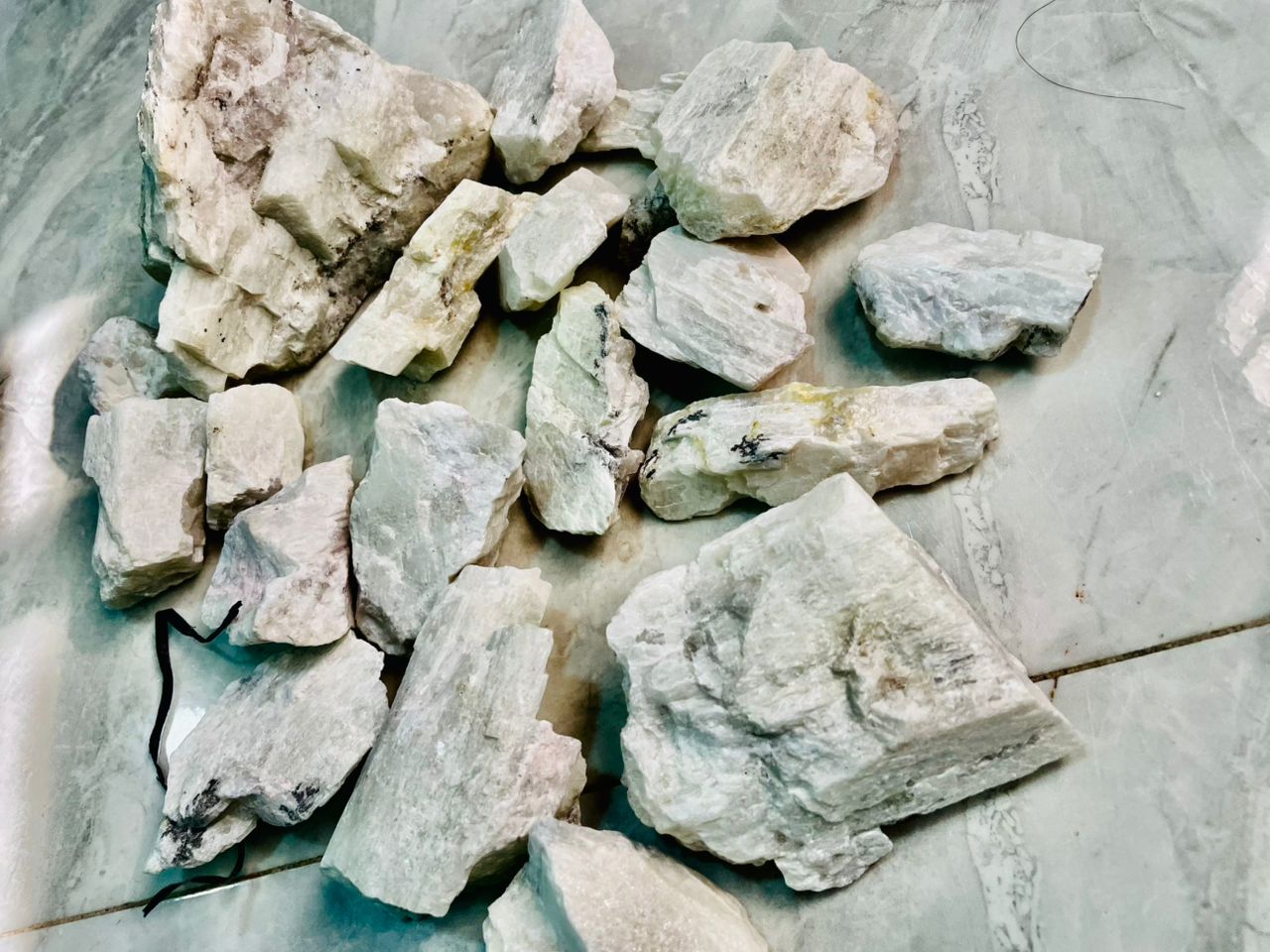
Monazite is one of the most important rare earth-bearing minerals found in Nigeria.
Historically, monazite has been recovered from heavy mineral sands associated with tin mining operations, particularly in Plateau State.
Monazite commonly contains valuable rare earth elements such as:
- Cerium
- Lanthanum
- Neodymium
- Praseodymium
These elements are critical for the production of permanent magnets used in electric vehicles and renewable energy technologies.
Nigeria’s long history of tin mining has resulted in the accumulation of substantial heavy mineral sand resources that may contain monazite concentrates suitable for commercial development.
Bastnasite: An Emerging Opportunity
Bastnasite is increasingly attracting attention within the global rare earth industry.
Many industry experts consider bastnasite to be one of the world’s most important rare earth minerals because it typically contains lower levels of radioactive elements compared to monazite, making it attractive for processing and refining.
In Nigeria, growing interest has been reported in bastnasite occurrences, particularly within parts of Niger State and surrounding regions.
For investors seeking exposure to the rare earth sector, bastnasite projects may represent significant long-term opportunities.
Key Investment Opportunities
Exploration Projects
Large portions of Nigeria remain underexplored from a rare earth perspective.
Investors can participate in:
- Geological surveys
- Exploration programs
- Resource definition projects
- Mineral evaluation studies
Successful exploration can create substantial value through resource discoveries and project development.
Mineral Production
As demand increases, there are opportunities to invest directly in:
- Mining operations
- Mineral aggregation
- Production partnerships
- Contract mining services
Production-focused investments can generate revenue from both domestic and export markets.
Mineral Beneficiation
Beneficiation remains one of the most attractive opportunities within Nigeria’s mining sector.
Rather than exporting raw minerals, investors can participate in:
- Concentration plants
- Gravity separation facilities
- Magnetic separation operations
- Rare earth upgrading projects
Beneficiation improves product quality and significantly increases mineral value.
Processing and Refining
One of Africa’s greatest opportunities lies in moving beyond raw mineral exports.
Rare earth processing facilities have the potential to create:
- Employment opportunities
- Technology transfer
- Increased export earnings
- Higher-value products
Investors willing to participate in downstream processing may benefit from substantial long-term returns.
Export and International Trade
Nigeria’s strategic location provides access to international markets.
Growing demand from:
- China
- India
- Europe
- United States
- Southeast Asia
creates opportunities for export-focused businesses and strategic mineral trading operations.
Government Support and Regulatory Environment
The Nigerian government continues implementing reforms aimed at encouraging investment within the mining sector.
Key objectives include:
- Increasing foreign investment
- Improving transparency
- Enhancing geological data availability
- Supporting local beneficiation
- Expanding mineral exports
These initiatives are helping improve investor confidence within the sector.
Challenges and Risk Management
As with any emerging mining jurisdiction, investors should conduct comprehensive due diligence.
Areas requiring attention include:
- Geological verification
- License validation
- Environmental compliance
- Community relations
- Infrastructure requirements
- Market volatility
Proper due diligence helps mitigate risks while improving investment outcomes.
Why Investors Are Looking at Nigeria
Several factors make Nigeria attractive:
Vast Untapped Resources
Large areas remain underexplored, creating significant discovery potential.
Strategic Location
Nigeria provides access to both African and international markets.
Growing Global Demand
Rare earth demand is expected to increase substantially over the coming decades.
Opportunities Across the Value Chain
Investors can participate in exploration, mining, beneficiation, processing, logistics, and export.
Competitive Operating Environment
Nigeria offers opportunities for investors seeking exposure to one of Africa’s largest economies.
The Future of Nigeria’s Rare Earth Sector
The future of Nigeria’s rare earth sector appears increasingly promising.
Global efforts to diversify rare earth supply chains are creating opportunities for new producers. As demand continues rising, countries with untapped mineral resources are likely to play an increasingly important role in meeting future requirements.
Nigeria possesses the geological potential, entrepreneurial talent, and strategic location necessary to become a significant participant in the global rare earth industry.
Continued investment in exploration, beneficiation, processing, infrastructure, and responsible mining practices will be essential to unlocking this potential.
Conclusion
Investment opportunities in Nigeria’s rare earth sector continue to expand as global demand for critical minerals accelerates. Monazite, bastnasite, and other rare earth-bearing minerals present attractive prospects for investors seeking exposure to one of the world’s fastest-growing resource markets.
From exploration and mining to beneficiation, processing, and export development, Nigeria offers opportunities across the entire rare earth value chain. For investors willing to adopt a long-term perspective and conduct proper due diligence, the country’s rare earth sector may represent one of Africa’s most promising mining investment opportunities.
As the global transition toward clean energy, advanced technology, and strategic mineral security continues, Nigeria is increasingly positioned to become an important contributor to future rare earth supply chains.
-
Previous Post
Rare Earth Magnet Supply Chains Explained
Post a comment
Related Posts
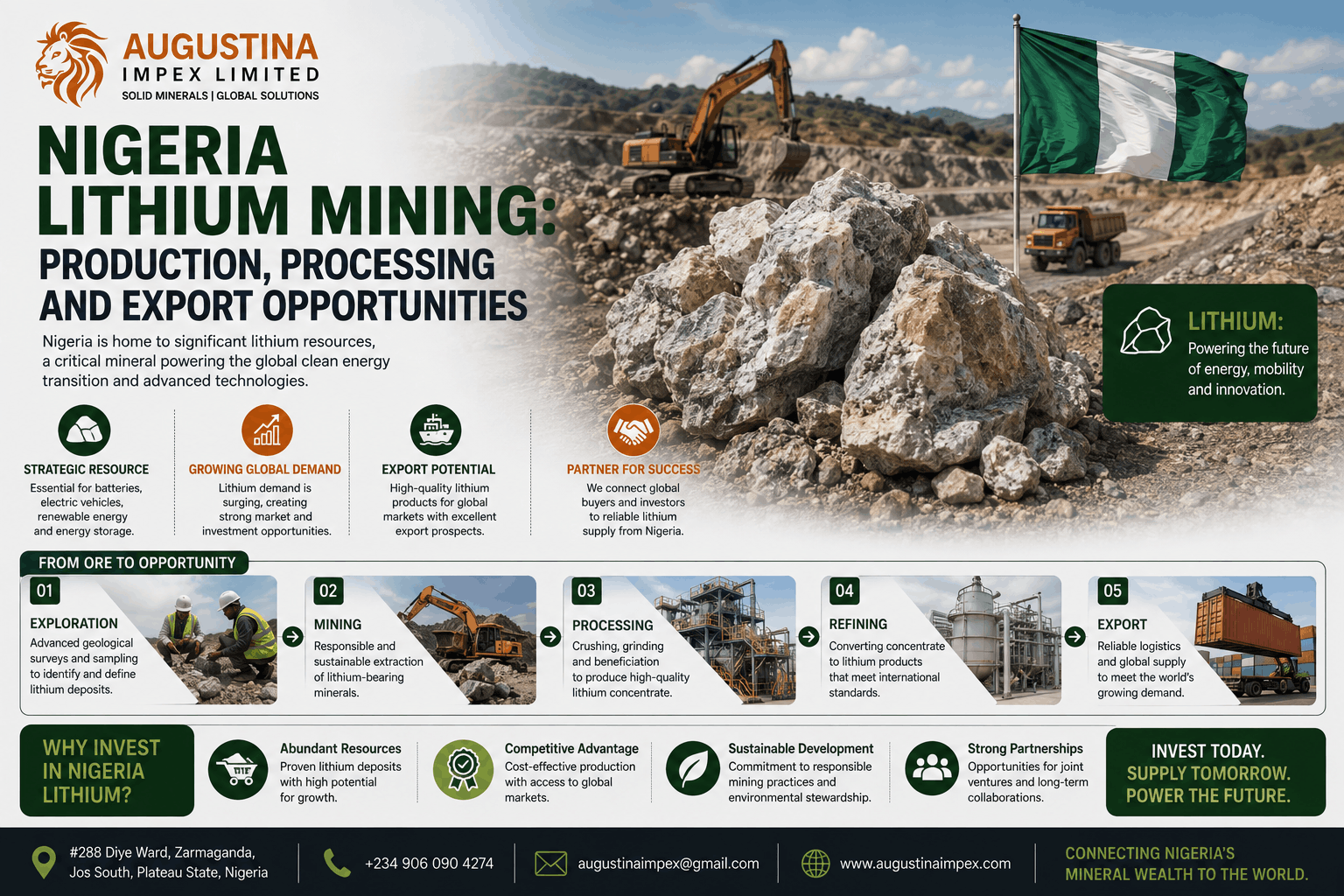
Nigeria Lithium Mining: Production, Processing & Export
Nigeria Lithium Mining: Production, Processing and Export Opportunities By Kolawole King, CEO — Augustina Impex…
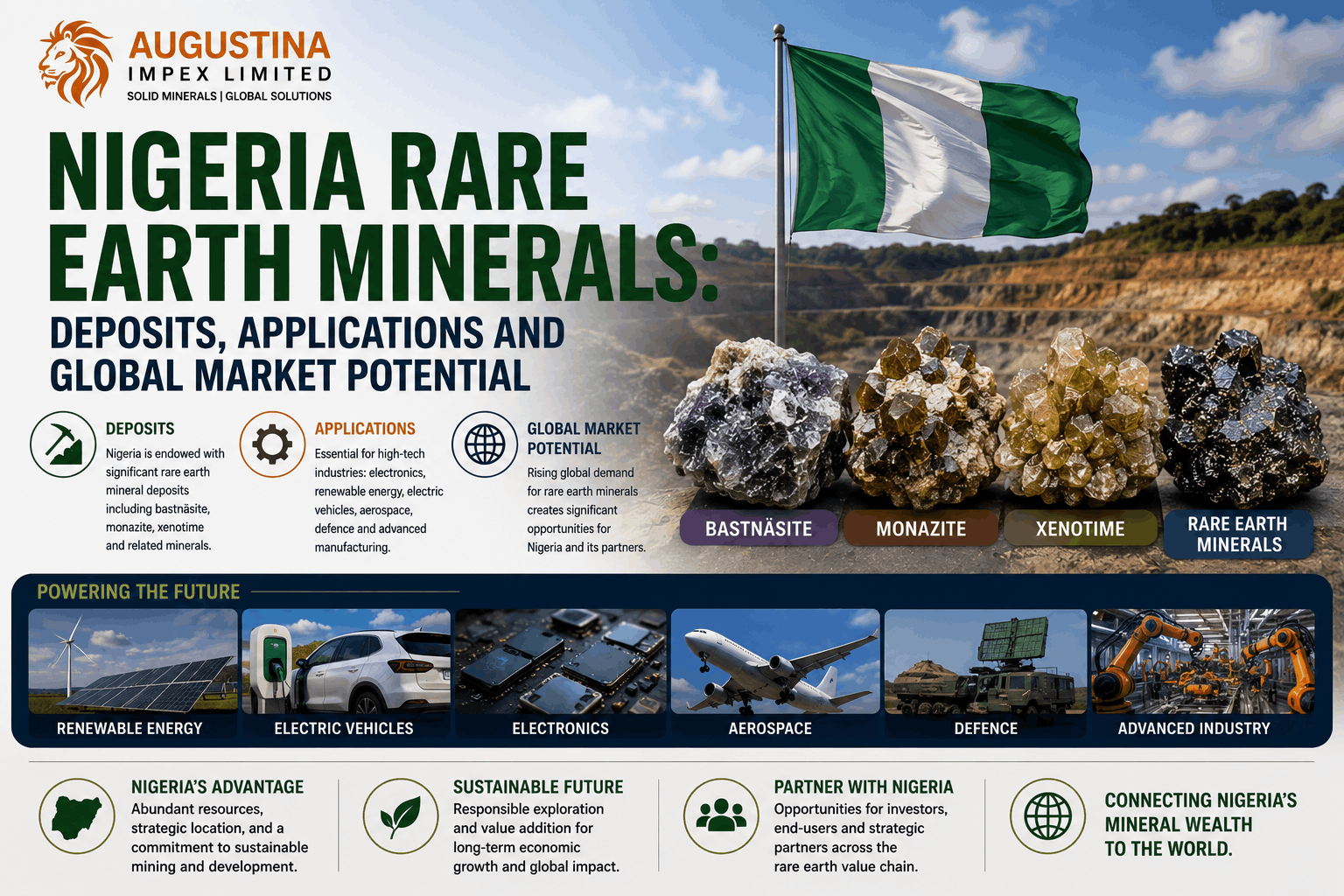
Nigeria Rare Earth Minerals: Deposits & Market Potential
Nigeria Rare Earth Minerals: Deposits, Applications and Global Market Potential By Kolawole King, CEO —…
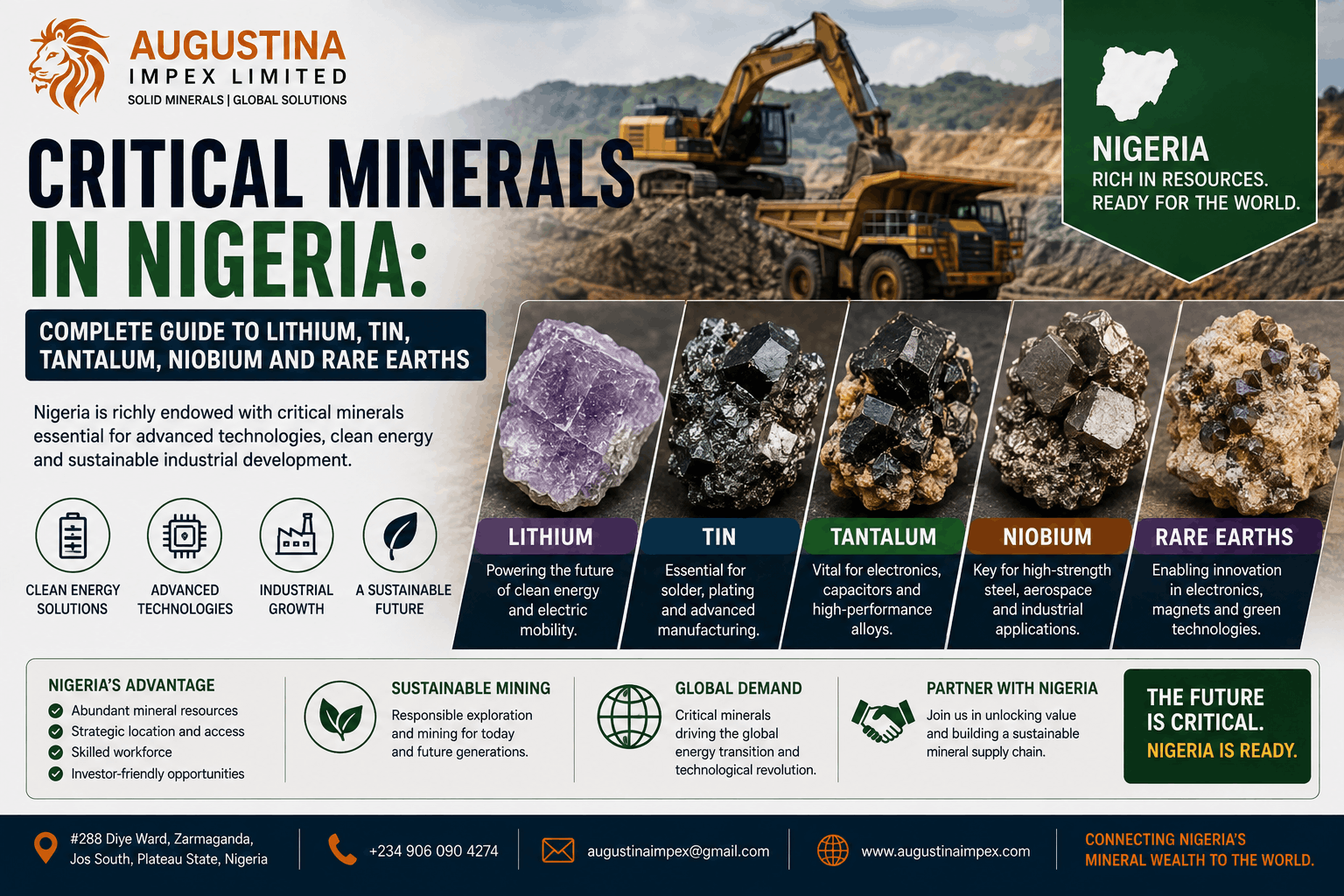
Nigeria Critical Minerals Guide: Lithium, Tin & Rare Earths
Critical Minerals in Nigeria: Complete Guide to Lithium, Tin, Tantalum, Niobium and Rare Earths By…
Conflict-Free Nigerian Tin Meets Global ESG Standards
Conflict-Free and Certified: How Nigerian Tin Meets Global ESG Standards By Kolawole King, CEO —…