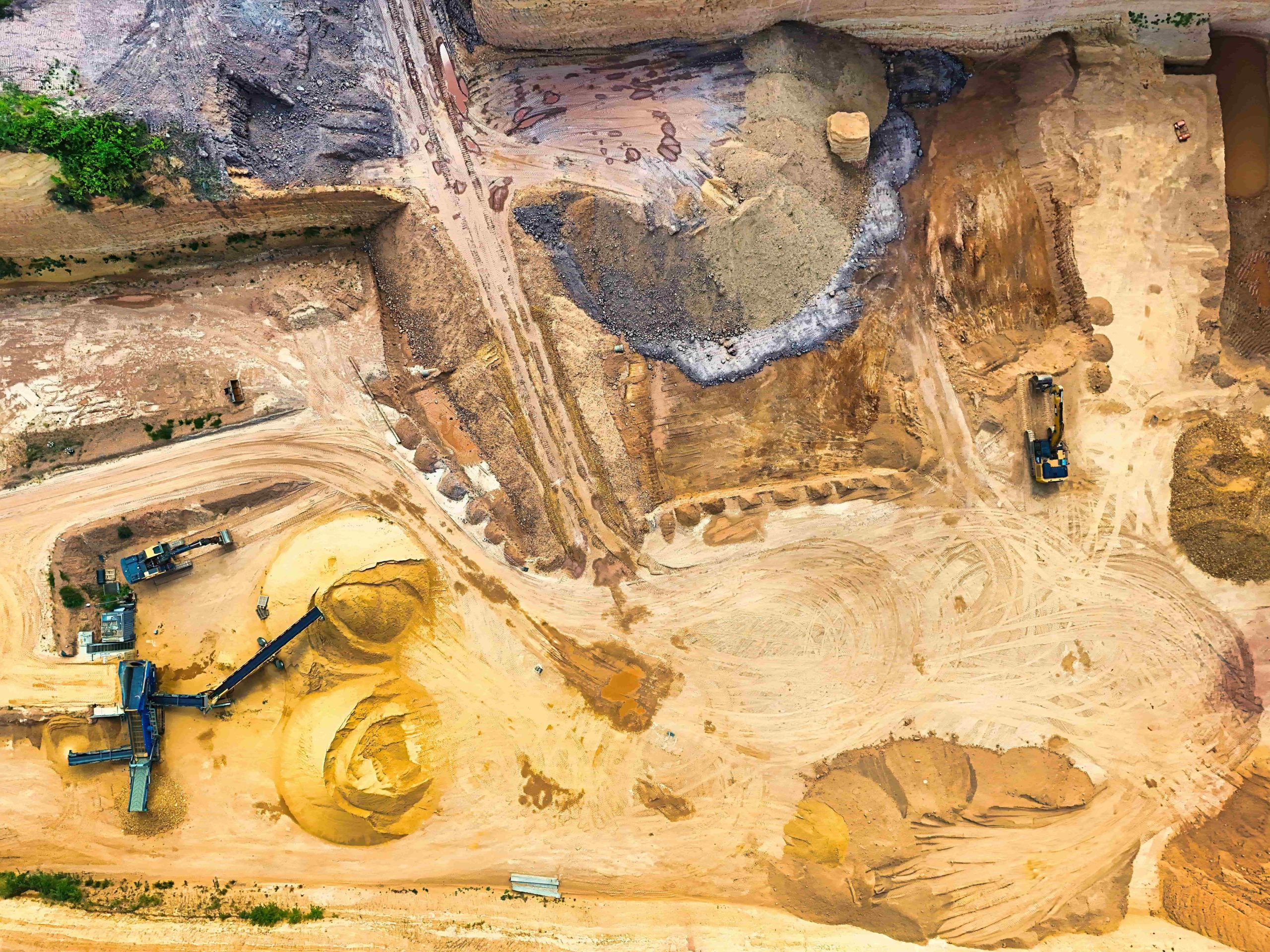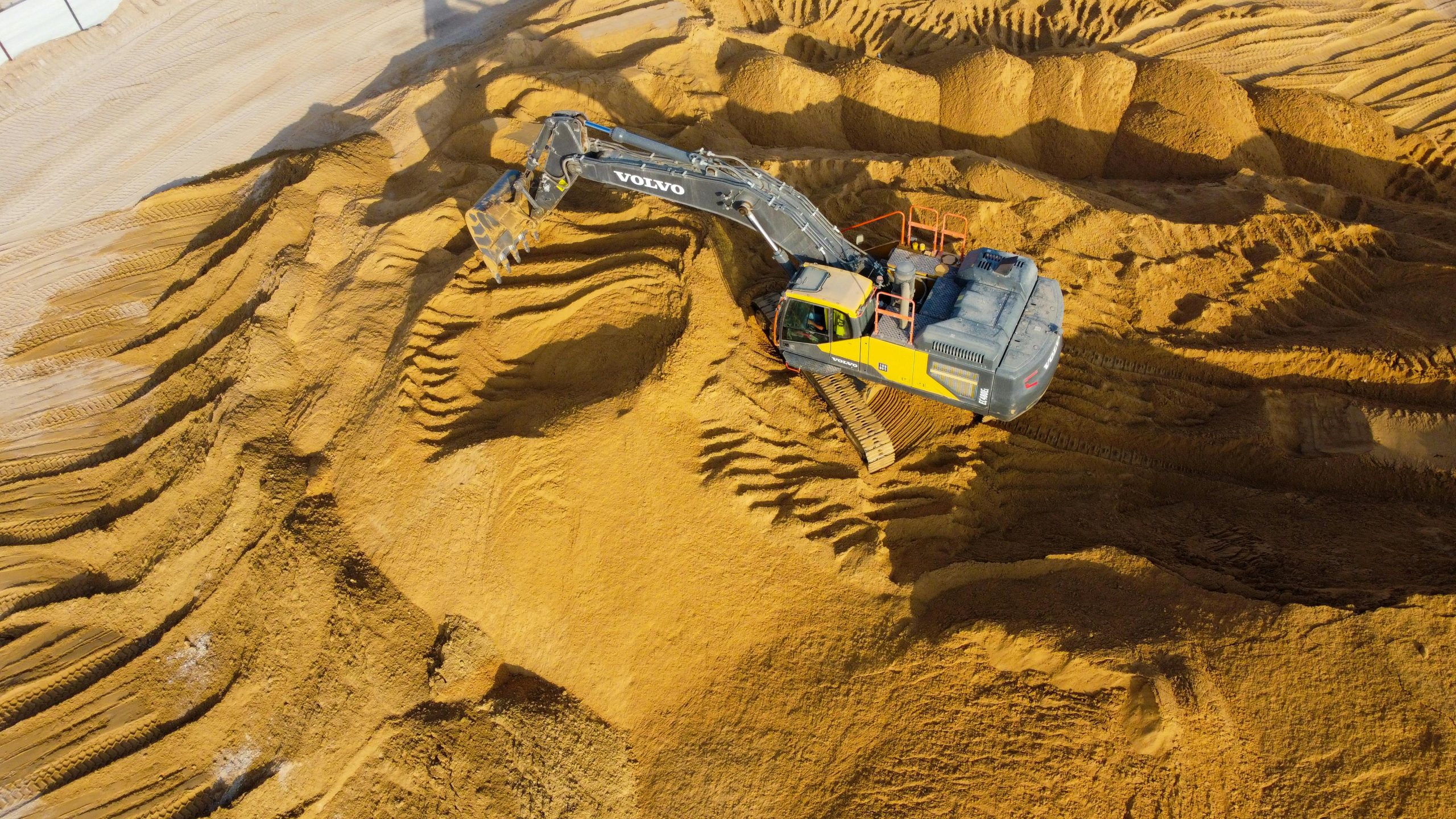

I still remember my first walk across a working minesite on the Jos Plateau, more than two decades ago. The red earth, the hand-dug pits, the artisanal miners panning cassiterite the same way their grandfathers had panned tin a century before. Back then, if you told anyone in a Lagos boardroom that solid minerals would one day rival oil as a serious investment conversation, they would have smiled politely and changed the subject.
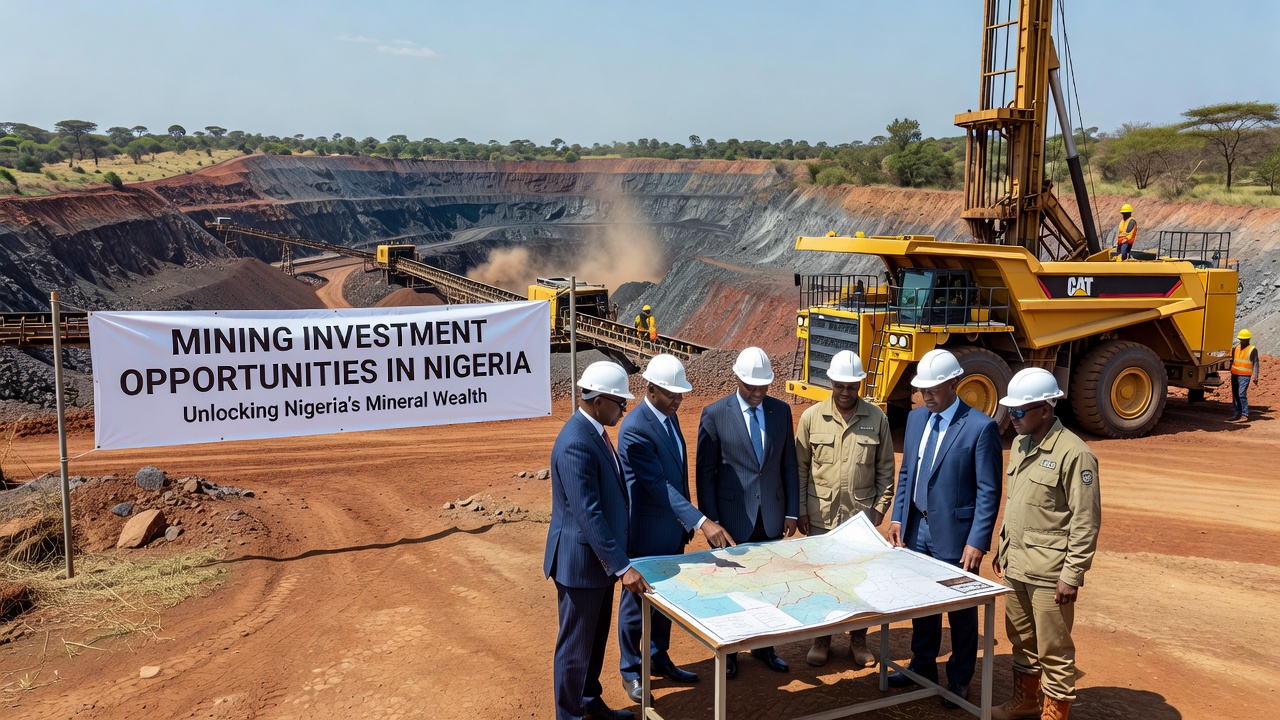
That conversation has changed. In 2026, the mining investment opportunities in Nigeria are no longer a footnote in some development report — they are one of the most talked-about frontier plays in Africa. I have spent roughly 24 years sourcing, trading and facilitating the export of minerals out of the North-Central belt, and I can tell you plainly: the ground beneath our feet is finally being valued for what it is worth.
This is a long read, because the subject deserves it. I want to walk you through where the real opportunities sit, what the reforms actually mean for an investor, and where the genuine risks still lie. No hype. Just what I have learned standing on the minesites and sitting across the table from international buyers.

Why Nigeria’s Mining Sector Is Suddenly on Every Investor’s Radar
For most of the last fifty years, Nigeria treated its minerals as an afterthought. We found oil, and the picks and shovels were quietly abandoned. The result is a sector that, until very recently, contributed less than half a percent to national GDP despite the country sitting on an estimated 700 billion dollars’ worth of mineral wealth spread across more than forty commercially viable minerals in 32 of our 36 states.
Then the numbers started moving. By the second quarter of 2025, the National Bureau of Statistics recorded the mining sector contributing around 4.6 percent to GDP — a remarkable jump from under 0.5 percent a decade earlier. Sector revenue climbed roughly sixfold between 2023 and 2024 as oversight tightened. The Federal Government earmarked an unprecedented one trillion naira within the 2025 budget specifically for solid minerals, funding geological surveys, mapping and the infrastructure needed to unlock mineral-rich regions.
Foreign capital noticed. More than a billion dollars in foreign direct investment has already flowed into mineral processing, and Chinese firms alone have committed over 1.3 billion dollars to lithium processing since late 2023. When you have spent as long as I have watching this sector be ignored, those figures are not just statistics. They are a signal that the window is open.
The Critical Minerals Story: Lithium, Rare Earths and the Energy Transition
If there is one storyline driving the new wave of interest, it is critical minerals. The world is electrifying, and the batteries, magnets and clean-energy hardware behind that shift all depend on inputs that Nigeria happens to have in abundance.
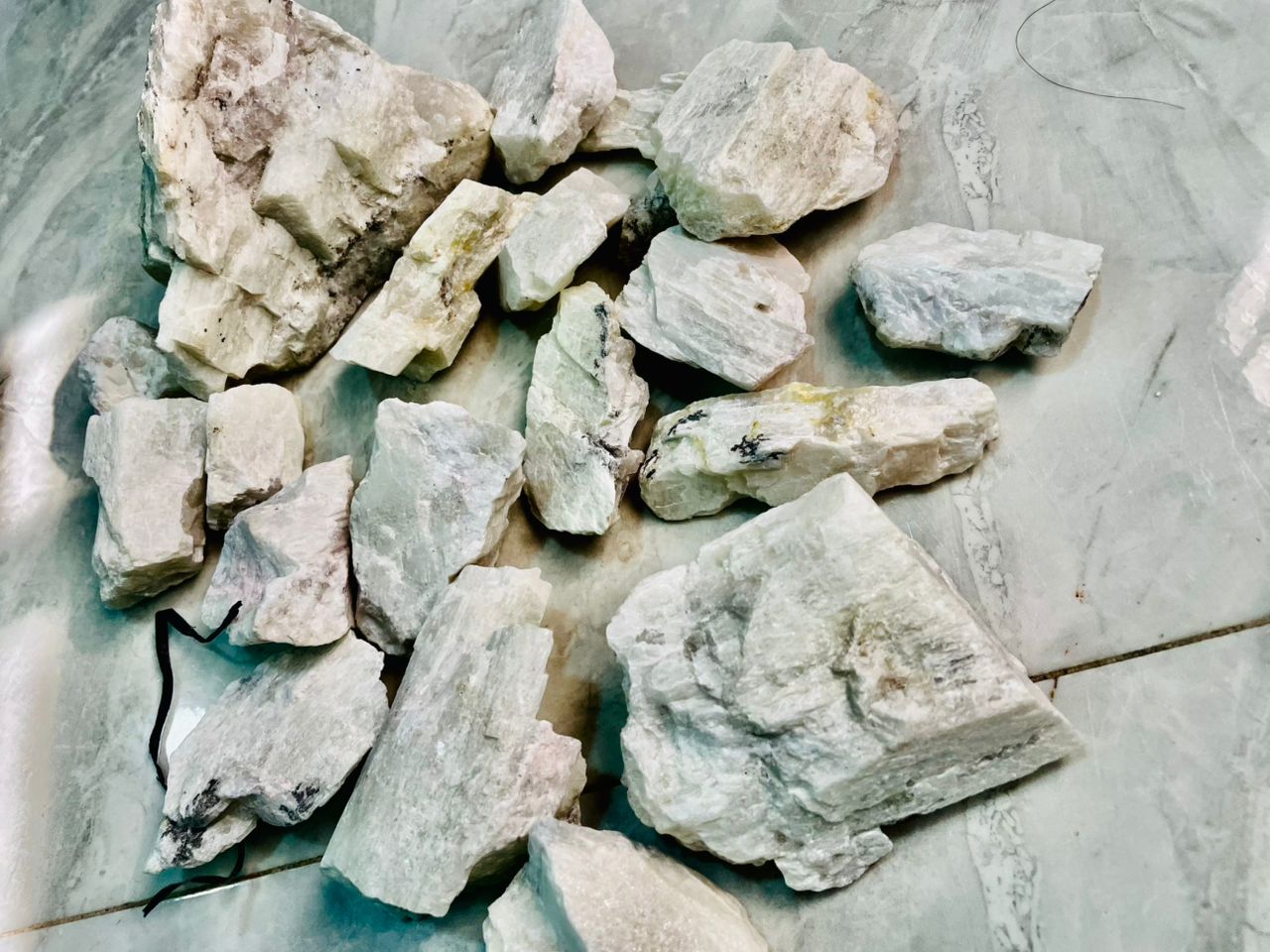
Lithium is the headline act. A 2022 study by our Geological Survey Agency confirmed significant high-grade deposits across half a dozen states, and the grades are genuinely impressive — some Nigerian ore carries as much as 13 percent lithium oxide, when deposits with just 0.4 percent are considered worth mining elsewhere. The investment has followed the geology. A 600 million dollar processing plant near the Kaduna-Niger border, a 200 million dollar refinery on the outskirts of Abuja, and additional facilities in Nasarawa State have brought the lithium processing pipeline to well over a billion dollars, with the stated ambition of eventually assembling electric vehicles on Nigerian soil.
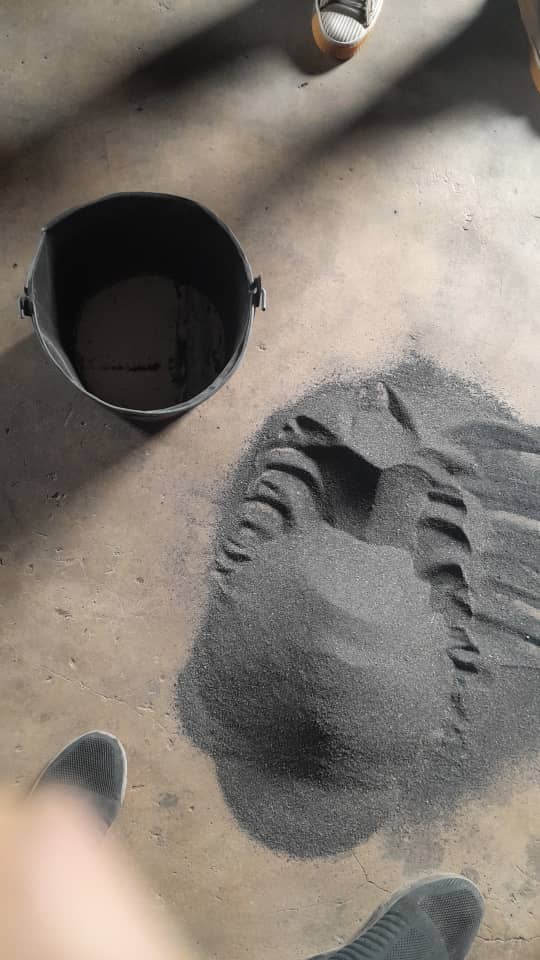
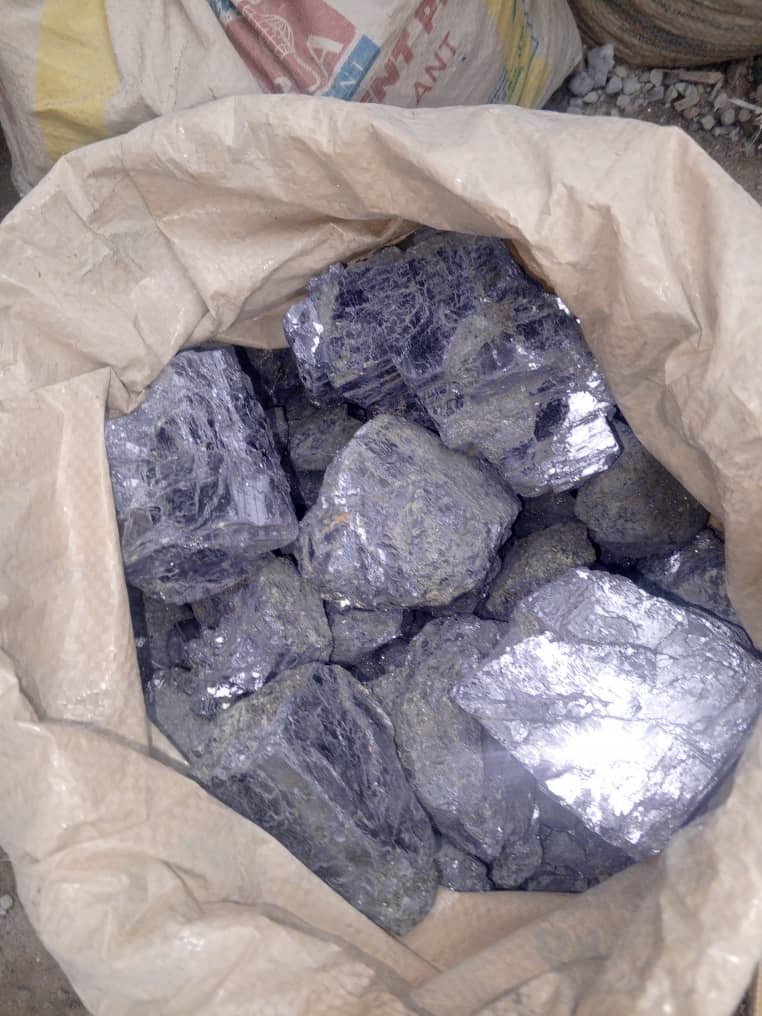
Then there are the rare earths. Through Augustina Impex, much of my own work centres on monazite sand — a rare-earth-bearing mineral that feeds the magnets inside wind turbines, EV motors and defence systems. As Western buyers actively look to diversify away from a single dominant supplier, African rare earth sources have moved from “interesting” to “strategic.” Nigeria’s monazite, ilmenite, zircon, columbite and tantalite all sit squarely in that conversation, and the demand from Asia, Europe and the Middle East is real and growing.
Beyond Batteries: Gold, Tin, Lead-Zinc and Industrial Minerals
Critical minerals get the headlines, but a balanced investor looks wider. Nigeria’s mineral basket is unusually diverse, and several long-established commodities offer steadier, less speculative entry points.
Gold mining continues to attract both formal operators and artisanal miners across Zamfara, Kebbi, Niger and Osun. Tin and columbite remain woven into the very identity of the Jos Plateau — this is, after all, the belt that once made Nigeria a major global tin exporter. Lead and zinc deposits across Benue, Ebonyi and Cross River States offer strong potential for large-scale mining and base-metal export to global smelters seeking supply-chain diversification.
And then there are the industrial minerals that quietly underpin construction and manufacturing: limestone, gypsum, barite, granite, kaolin, fluorite, garnet and lead ore. These rarely make exciting headlines, but they generate consistent demand from cement plants, oil-and-gas drilling operations and the building sector. In my experience, the smartest portfolios blend a high-upside critical mineral with one or two dependable industrial commodities.
Mining Investment Opportunities in Nigeria: Where the Real Money Is
When investors ask me where to actually deploy capital, I tell them the mining investment opportunities in Nigeria fall into five broad lanes, each with a different risk and return profile.
The first is exploration and acquisition of mineral titles — the highest risk, highest reward, and the one most dependent on good geological data and a trustworthy local partner. The second is processing and beneficiation, which is precisely where government policy is pushing capital and where most of the recent foreign money has landed; refining ore into a higher-value product captures margin that used to leak abroad. The third lane is mining support services — drilling, geological surveying, laboratory testing, equipment leasing, haulage and mine safety — all currently undersupplied and able to serve many clients at once.
The fourth is mineral trading, aggregation and export facilitation, which is the heart of what my own company does: connecting verified local supply to international buyers with the documentation and quality assurance that serious trade demands. And the fifth is equity participation in already-licensed, operating concerns — a way to enter without carrying the full weight of exploration risk. You do not have to pick only one. Some of the best structures I have helped put together combine an equity stake with an offtake or export arrangement.
The Reforms Making Nigeria Investable
I want to be candid here, because too many articles gloss over this. For years, the real barrier to mining investment in Nigeria was not geology — it was governance. That is what has shifted, and it is the single biggest reason I am more optimistic now than at any point in my career.
The Mining Cadastre Office has been digitised, so licence applications, title tracking and status checks now happen online with far less of the bureaucratic fog that used to swallow applications whole. A “use it or lose it” rule is being enforced to push out speculators who sit on titles without working them. Mining Marshals, working with security agencies and increasingly backed by satellite surveillance, are tackling the illegal mining that long bled value out of the system. The Solid Minerals Development Fund has been strengthened to catalyse private financing, and a new digital decision-support system is making geological and investment data genuinely accessible to prospective investors.
Perhaps most consequential is the value-addition policy. New mining licences increasingly require credible plans for local processing, and the export of wholly unprocessed minerals is being restricted. A state mining company has also been established, structured so that private investors can hold up to a 75 percent stake. Add the new community development agreement guidelines, and you have a framework that — while still maturing — looks far more like an investable jurisdiction than the one I started out in.
Incentives and the Numbers That Matter
Reforms attract attention; incentives close deals. Nigeria has built a genuinely competitive package for mining investors, and it is worth understanding before you model any project.
New mining entities can access a tax holiday on commencement, with capital allowances designed to help recover the heavy up-front cost of exploration. Mining plant, machinery and equipment can be imported duty-free, which materially lowers the capital expenditure of standing up an extraction or processing operation. There are credits for qualifying exploration and mineral-development activities — relief that applies from the pre-production phase, exactly when a project is spending heavily and earning nothing. Royalty payments can be deferred, and the broader Nigeria Tax Act 2025 consolidates much of this into a clearer set of statutory reliefs.
One honest caveat: the precise terms — the length of the tax holiday, the capital allowance percentage, the conditions attached — have evolved across recent reform cycles, and different agencies have at times quoted different figures. Before you build a financial model on any single number, confirm the current terms directly with the Nigerian Investment Promotion Commission and the Ministry of Solid Minerals Development. I always tell my partners to treat incentives as a real and significant tailwind, but to verify the fine print rather than rely on a headline.
An Honest Look at the Challenges
I would not be doing my job as a practitioner if I painted only the bright side. The opportunities are real, but so are the obstacles, and pretending otherwise helps no one.
Security remains the most serious concern in parts of the country, particularly in the northwest, and it directly affects which deposits can be safely worked. Illegal and informal mining still accounts for a large share of extraction, which complicates traceability — when ore passes through unlicensed middlemen before reaching an exporter, building a clean, auditable supply chain takes real effort. Infrastructure gaps, especially power and rural roads, raise operating costs in remote mineral belts. Financing for indigenous operators is still tight. And while the reforms are genuine, implementation can lag behind the policy: there have been high-profile processing plants commissioned with great fanfare that then sat largely idle for months awaiting federal approvals.
None of these is a reason to stay away. They are reasons to enter carefully, with eyes open, the right local knowledge and proper due diligence. Every frontier market that eventually rewarded investors looked exactly like this at the inflection point — full of promise and full of friction at the same time.
How to Enter the Market Without Getting Burned
After two decades of watching foreign investors succeed and fail here, the pattern is clear. The ones who succeed almost always do three things.
They secure a credible local partner who understands both the ground-level sourcing reality and the international trade documentation — someone who can tell the difference between a genuine deposit and a well-dressed story. They insist on real due diligence: verified titles through the Cadastre, independent assays, and a clear picture of who actually controls the supply. And they respect the new rules of the game — local value addition, transparent licensing and meaningful community development agreements — rather than trying to shortcut them. The investors who get burned are almost always the ones who wired money against a WhatsApp promise and a photograph of a sandbag.
Where Augustina Impex Fits In
This is the work I have built my company around. Augustina Impex Limited has operated across the Jos Plateau mineral belt since 2001, formally incorporated in 2008, and over those years we have grown into a trusted bridge between Nigeria’s mineral fields and international buyers across Asia, Europe and the Middle East.
We trade a broad portfolio — monazite, ilmenite, zircon, columbite, tantalite, tin, lithium, fluorite, garnet and lead ore — and we handle the parts that make or break a deal for a foreign investor: verified local sourcing, quality assurance, export facilitation and the on-the-ground consultancy that turns a promising opportunity into a completed, documented transaction. If you are an investor, buyer or financier looking at the mining investment opportunities in Nigeria and you want a credible local partner who has been doing this for nearly a quarter of a century, that is exactly the gap we exist to fill.
The window is open. The minerals are in the ground, the reforms are real, and the global demand is only growing. The question is no longer whether Nigeria’s solid minerals sector will matter — it is who will be positioned when it does.
If you would like to discuss a specific mineral, a sourcing requirement or an investment structure, I would be glad to talk.
Kolawole King Chief Executive Officer, Augustina Impex Limited #288 Diye Ward, Zarmaganda, Jos South, Plateau State, Nigeria Email: augustinaimpex@gmail.com WhatsApp: +234 906 090 4274 Website: https://augustinaimpex.com Blog: https://augustinaimpexng.blogspot.com/ Advert Video: https://www.youtube.com/watch?v=Izg0t7By6co
#NigeriaMining #SolidMinerals #CriticalMinerals #MiningInvestment #RareEarths #Lithium #Monazite #JosPlateau #MineralExports #AfricaMining #EnergyTransition #FDINigeria #AugustinaImpex #MiningReforms #Beneficiation
-
Previous Post
Conflict-Free Mineral Supply Chains in Africa
-
Next Post
Critical Minerals and Global Geopolitics
Post a comment
Related Posts
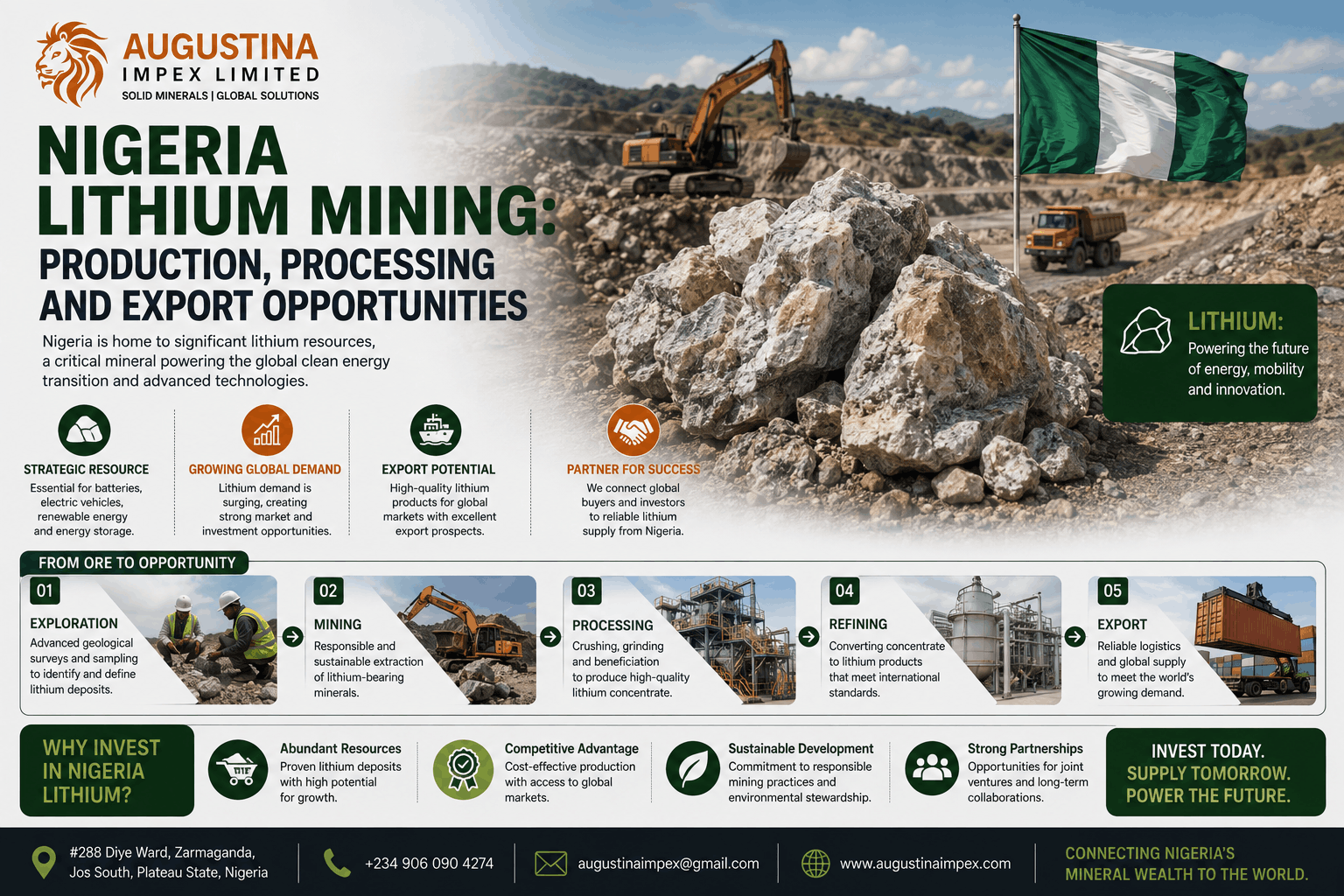
Nigeria Lithium Mining: Production, Processing & Export
Nigeria Lithium Mining: Production, Processing and Export Opportunities By Kolawole King, CEO — Augustina Impex…
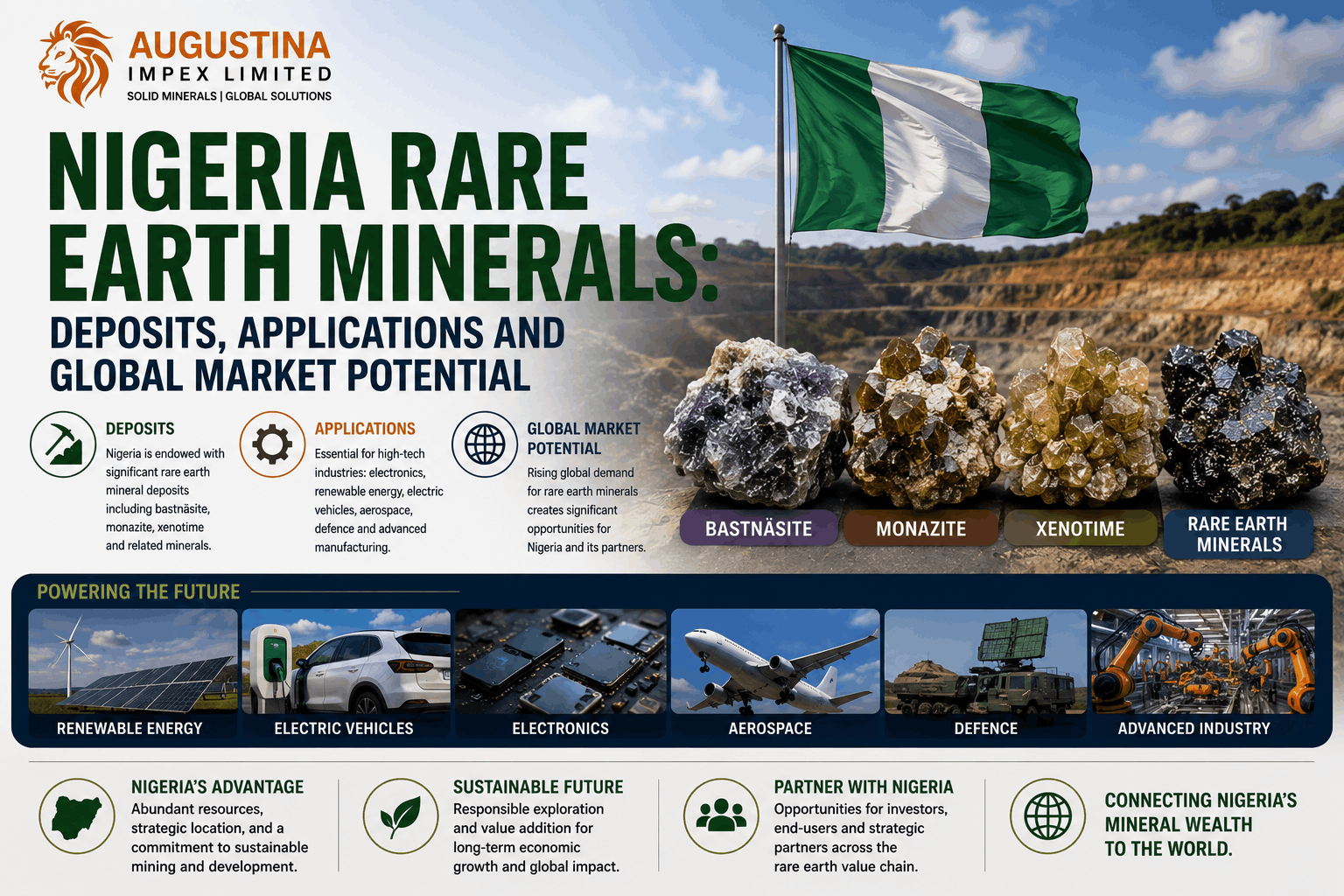
Nigeria Rare Earth Minerals: Deposits & Market Potential
Nigeria Rare Earth Minerals: Deposits, Applications and Global Market Potential By Kolawole King, CEO —…
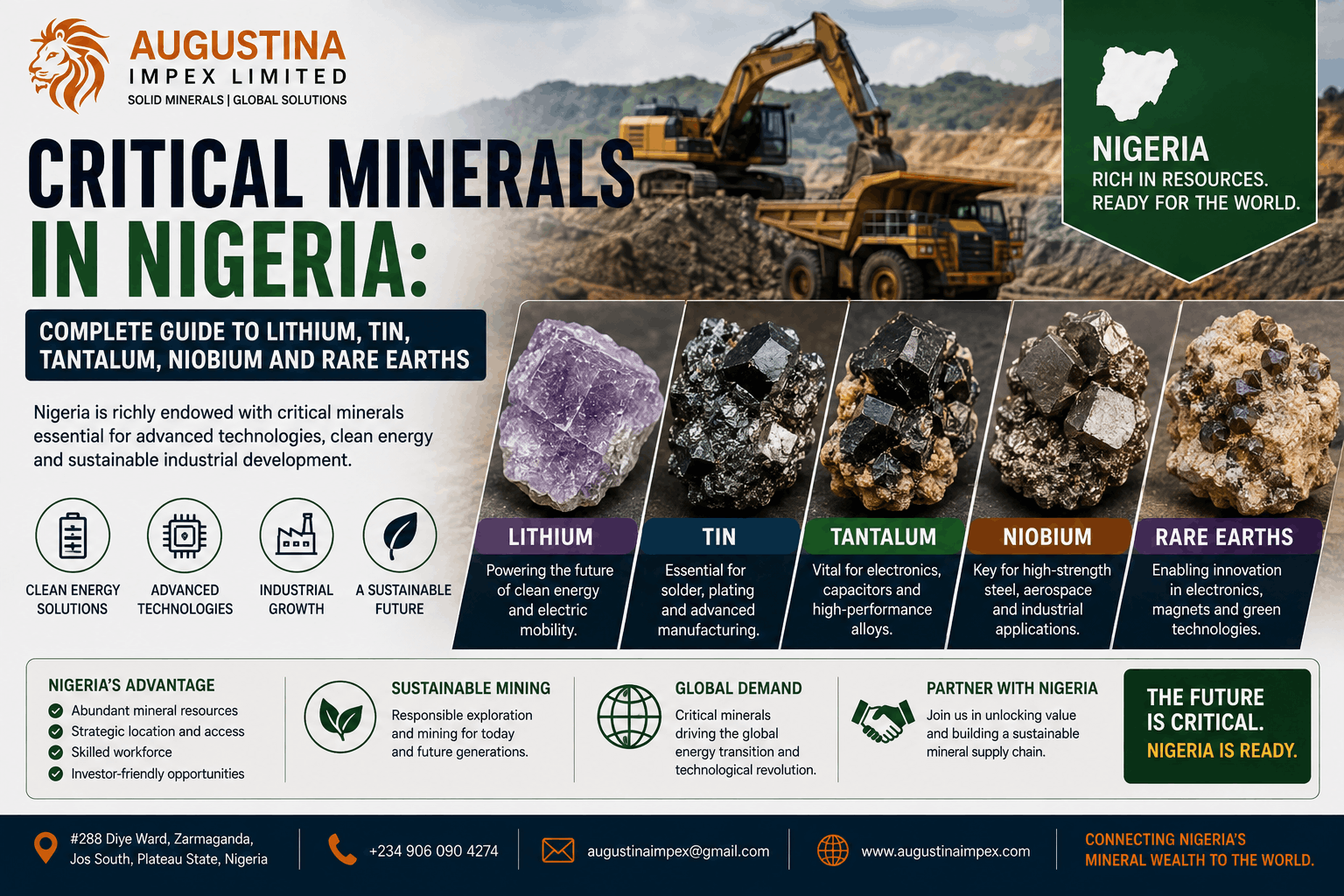
Nigeria Critical Minerals Guide: Lithium, Tin & Rare Earths
Critical Minerals in Nigeria: Complete Guide to Lithium, Tin, Tantalum, Niobium and Rare Earths By…
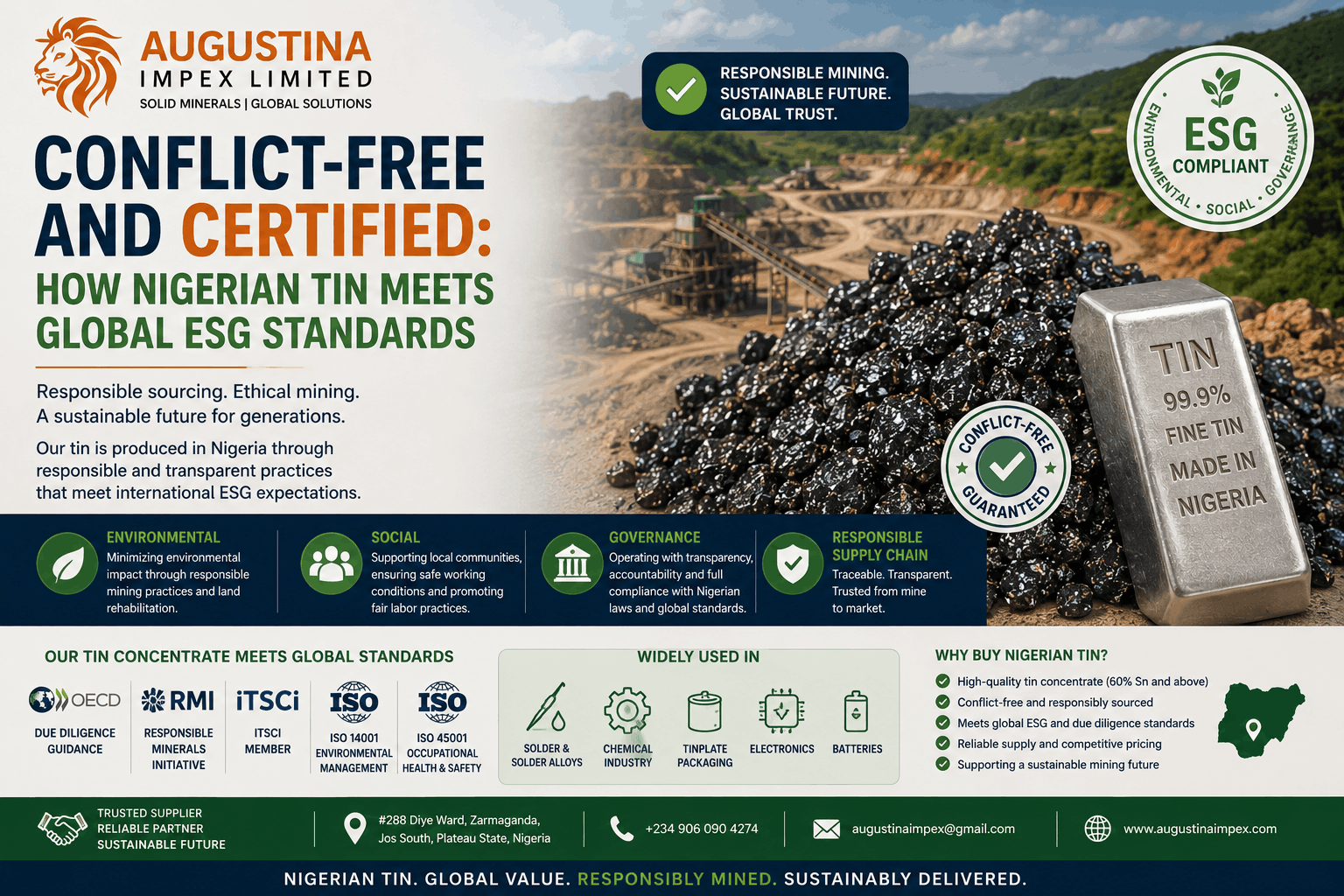
Conflict-Free Nigerian Tin Meets Global ESG Standards
Conflict-Free and Certified: How Nigerian Tin Meets Global ESG Standards By Kolawole King, CEO —…