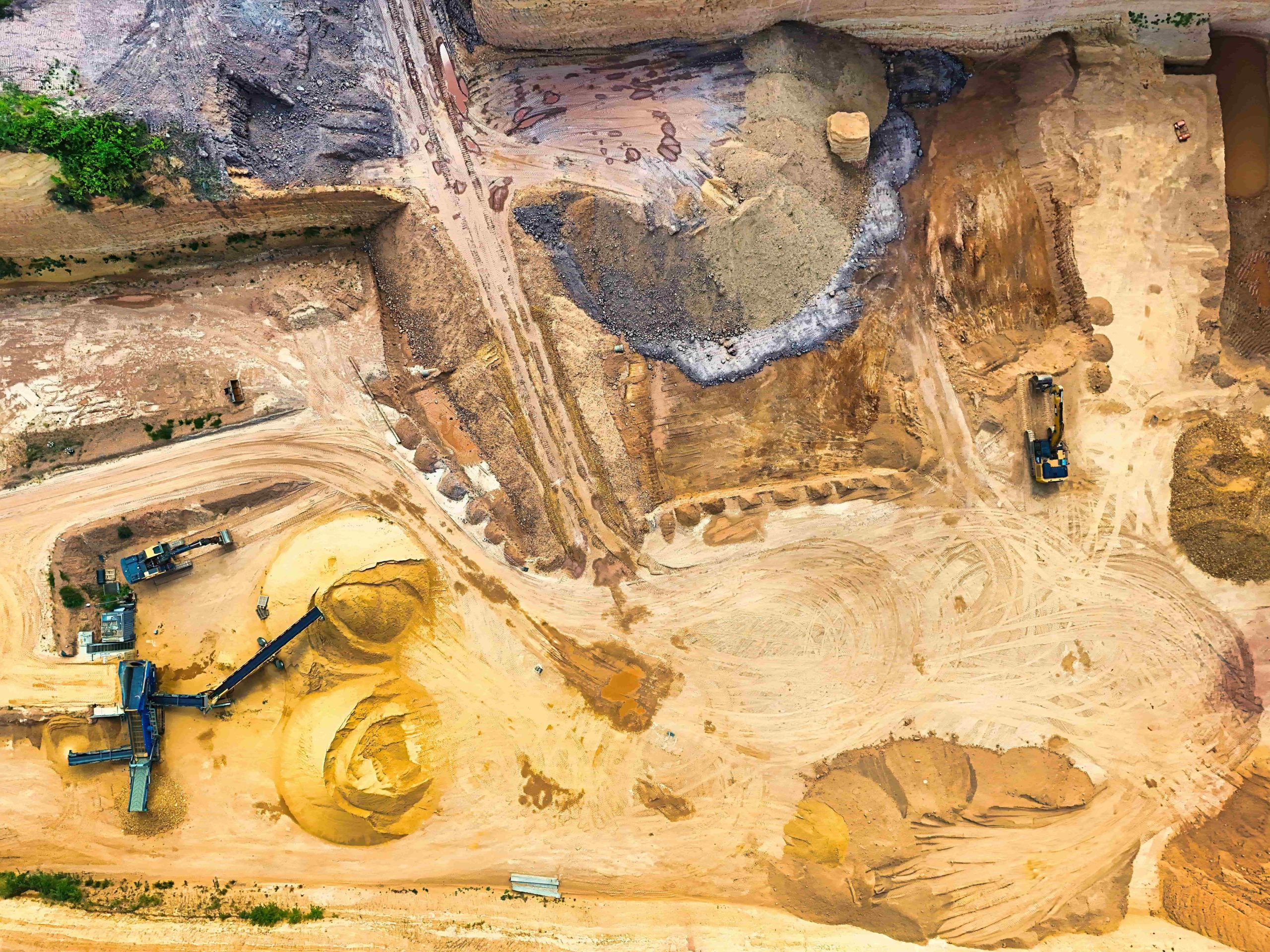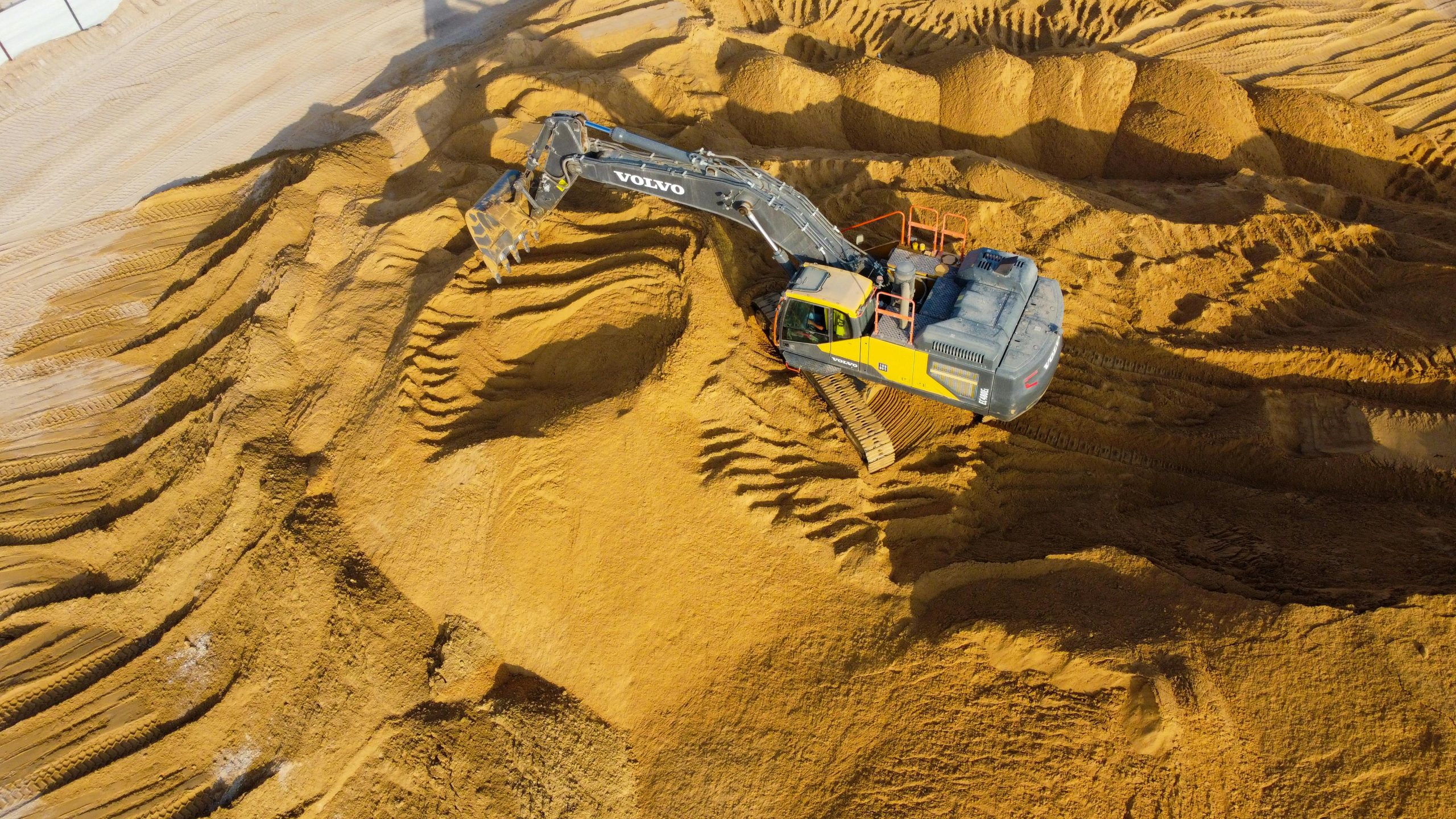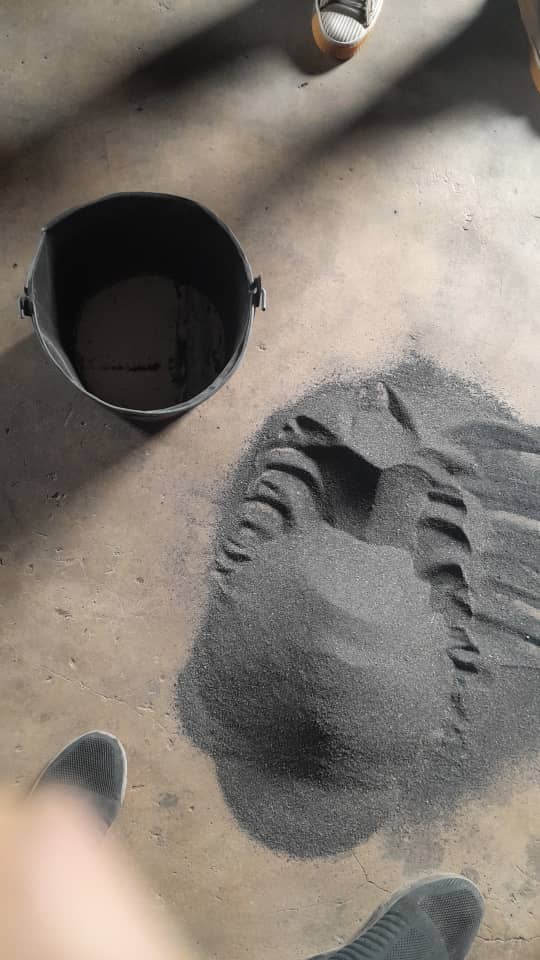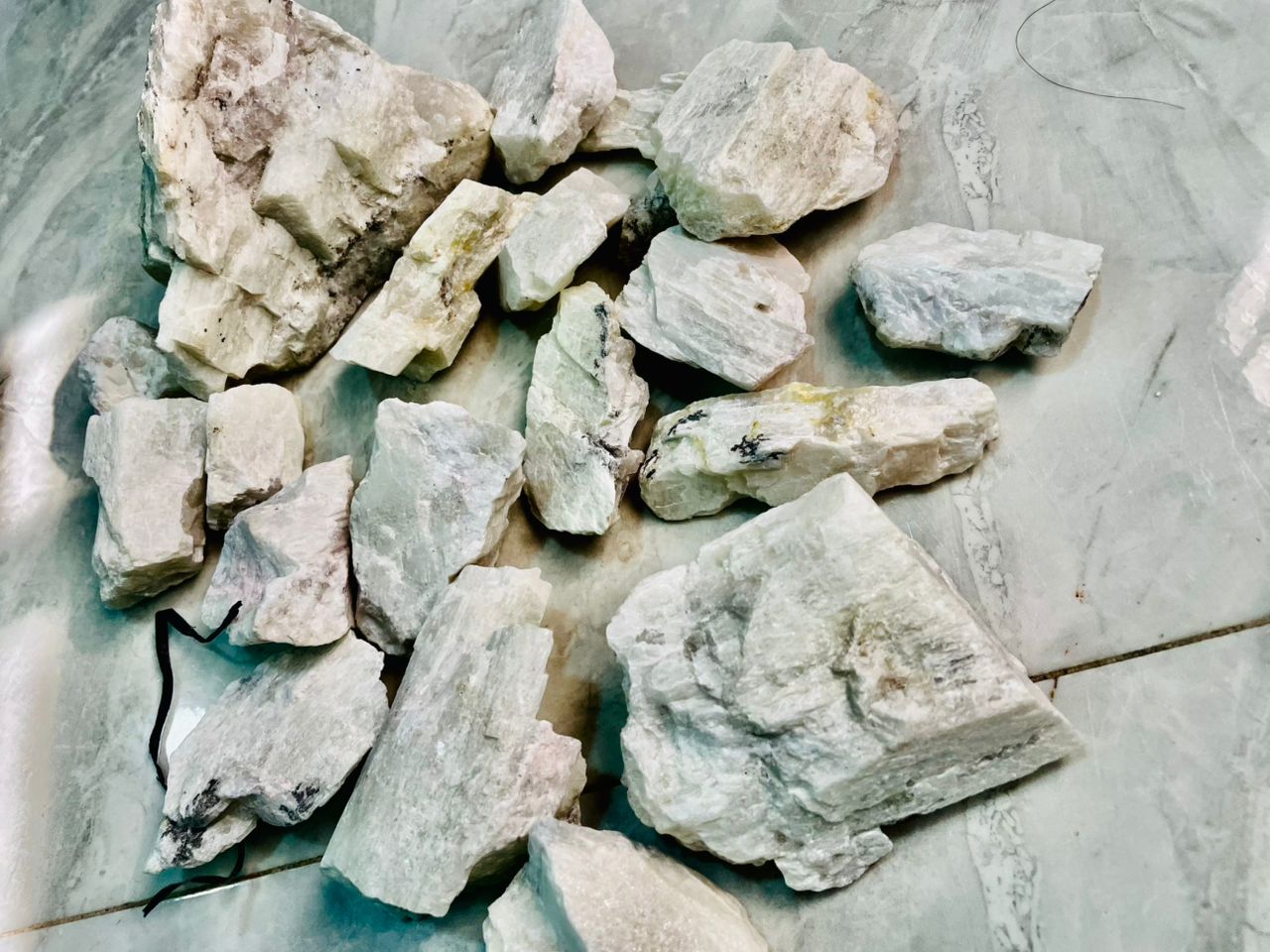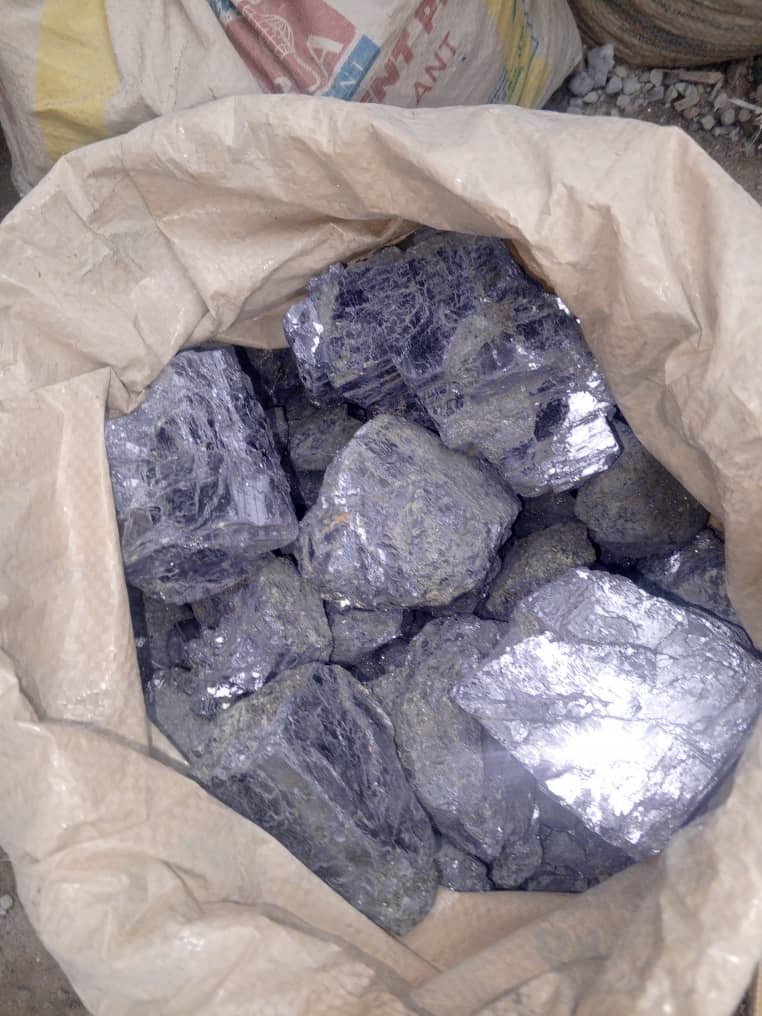

Years ago, when I walked the tin and columbite fields of the Jos Plateau, the minerals coming out of that red soil were treated as simple commodities. You dug them, you bagged them, you sold them at whatever price a distant buyer felt like paying. Nobody in those days spoke about columbite or tantalite as instruments of national power. They were just rock with a number attached.
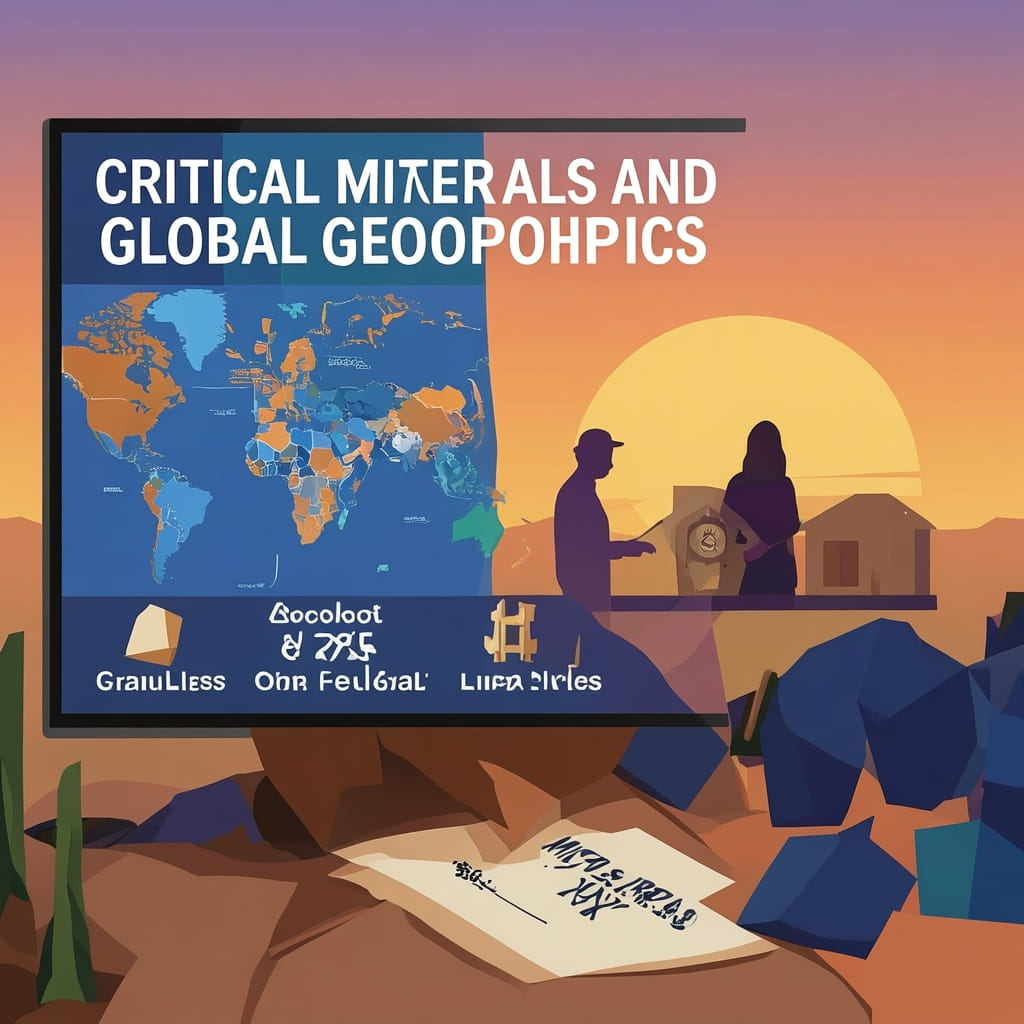
That world is gone. Today, the conversation about critical minerals and global geopolitics sits at the very top of the agenda in Washington, Beijing, Brussels and Tokyo. The same families of minerals I have traded for the better part of 24 years — rare earths, lithium, the columbite-tantalite group — are now spoken of in the language of national security, leverage and strategic vulnerability. I have watched this shift happen in real time, and I want to lay out, plainly and honestly, how we got here and what it means for those of us working at the African end of these supply chains.
This is a longer read. The subject earns it.

From Commodities to Weapons: Why Minerals Became Geopolitics
A critical mineral is, at its simplest, one that a modern economy cannot function or defend itself without, and which is vulnerable to supply disruption. The United States Geological Survey now lists 50 of them. They are the inputs behind electric vehicle batteries, wind turbines, semiconductors, fighter jets, guided missiles and the magnets inside almost every electric motor on earth.
What changed is demand and concentration arriving at the same moment. In 2025 alone, more than 20 million electric vehicles were sold worldwide — better than one in every four new cars. Global demand for lithium, cobalt, rare earths and graphite is expected to double or even treble before the end of this decade. When a handful of materials suddenly become essential to both the green economy and the defence industry, and when the supply of those materials runs through very few hands, they stop being ordinary commodities. They become chokepoints. And chokepoints are where geopolitics lives.
China’s Chokehold and the Power of the Export Licence
There is no understanding this subject without being honest about China’s position, which is extraordinary. China mines roughly 70 percent of the world’s rare earths, processes about 90 percent of them, and manufactures well over 90 percent of the high-performance rare earth magnets that the modern economy runs on. Its grip extends to other critical materials too — something in the order of 80 percent of tungsten processing and 60 percent of antimony. For the heavy rare earths in particular — the dysprosium and terbium that go into the magnets in defence systems and EV motors — the dependence is close to total.
For decades this was just a fact of the market. Then it became a tool. Beginning in April 2025, China began requiring export licences for a widening list of rare earths and the products that contain them, with its Ministry of Commerce holding discretion to delay, condition or deny any shipment. In October 2025 it went further, introducing extraterritorial rules — modelled openly on America’s own export-control playbook — under which any foreign-made product containing even a trace of Chinese-origin rare earth material would, in principle, need Beijing’s permission to move. It also moved to ban exports to certain Japanese military users in early 2026.
The effect was immediate and measurable. American imports of some controlled materials collapsed — indium fell by roughly three-quarters, yttrium shipments to US aerospace makers dropped from hundreds of tonnes to a trickle, and prices for restricted materials spiked several times over. What I find most instructive is the design of the strategy. China has not tried to permanently cut anyone off. It weaponises control rather than scarcity, using temporary and reversible restrictions that maximise leverage while stopping short of forcing the West to fully decouple. A truce struck in late 2025 suspended the most sweeping October measures until November 2026 — but the underlying licensing architecture was left completely intact. That distinction is everything. The machine was switched to standby, not dismantled.
The West’s Scramble to Diversify
The shock of 2025 lit a fire under every major economy that depends on these inputs, and the response has been substantial, if slow to bear fruit.
The United States has moved on multiple fronts at once: a critical-mineral stockpiling programme reported to be worth close to 12 billion dollars, a new forum to coordinate allied supply chains, a Critical Minerals Ministerial drawing in resource-rich nations, and direct money into production — a 400 million dollar Department of Defense stake in its only integrated mine-to-magnet producer, which also signed a half-billion-dollar supply deal with a major technology company. The US Export-Import Bank has issued letters of intent across the rare earth chain approaching four billion dollars.
Allies have matched the urgency. Australia, the most important Western counterweight in rare earths, backed a refinery with a 1.25 billion dollar government loan and, in a striking move in May 2026, ordered Chinese investors to divest their stakes in a domestic rare earth miner within two weeks — an open declaration that upstream ownership is now a national security matter, not merely a commercial one. A producer using Australian feedstock became the first company outside China to make commercial quantities of dysprosium oxide. Japan deepened its long-standing commitment to building ex-China supply chains, and the European Union advanced a critical raw materials strategy running into the hundreds of billions of euros.
Here is the hard truth beneath all that activity, and I say it as someone who deals in physical material rather than press releases: mining and processing are industries of long lead times. Independent analysts are near-unanimous that non-Chinese supply of the most strategic heavy rare earths will still meet less than a fifth of global demand a decade from now. Rebuilding genuinely independent supply chains could take 20 to 30 years. The West has perhaps a 12-to-18-month window of relative calm before the next escalation, and no amount of money can compress geology and engineering into that timeframe. That gap between ambition and reality is the central tension of the whole story.
Critical Minerals and Global Geopolitics Play Out in Africa
This is where my own continent enters the picture, and where the stakes are highest for those of us who live and work here. Africa holds roughly 30 percent of the world’s mineral reserves. Of the 50 minerals the United States classifies as critical, around 32 are found on African soil. The Democratic Republic of Congo alone produces close to three-quarters of the world’s cobalt.
And yet — this is the part that should trouble every African in the trade — the continent captures only about 10 percent of the value generated from its own mineral exports. We have spent generations shipping out raw material and importing back the finished products made from it. The great-power contest now unfolding offers a rare chance to change that, but only if we are deliberate about it.
The competition is fierce and concrete. The United States signed a strategic partnership with the DRC in December 2025, designating priority mining zones for joint development with preferential access for American firms — a direct challenge to a China that controls more than 70 percent of Congolese copper and cobalt operations. Washington has poured financing into the Lobito Corridor, the rail route designed to move minerals to the Atlantic while bypassing Chinese-controlled logistics. American-backed exploration ventures, some funded by the continent’s most famous billionaires, have struck deals across the region. Against that, China’s total economic engagement across Africa has long run far ahead of America’s in raw dollar terms.
What I find most encouraging is the change in posture among African governments themselves. The DRC recently sent Washington a shortlist of state mining assets open to American investment — using its endowment as a bargaining chip rather than simply waiting to be courted. Several governments are now insisting that partnerships include local processing, not just secure export routes. The leverage is finally flowing in both directions, and the African Continental Free Trade Area gives us a framework to negotiate as something closer to a bloc.
Where Nigeria Sits in the New Map
Nigeria is no longer a bystander to any of this. Chinese firms have committed well over 1.3 billion dollars to lithium processing on Nigerian soil since 2023, and the government has tied new mining licences to credible local-processing plans while restricting the export of wholly unprocessed minerals. Our mining sector’s contribution to GDP has climbed from under half a percent a decade ago to around 4.6 percent. Notably, Nigeria was an early mover in setting up a strategic investment fund to manage mineral wealth — a model the DRC then followed.
For my part, the rare earths story is personal and practical. The monazite sand of the North-Central belt carries exactly the rare earth elements that the magnet supply chain is now desperate to source outside China. Our columbite and tantalite feed the electronics and capacitor markets. As Western buyers actively hunt for verified, traceable, ex-China material, the minerals coming out of the Jos Plateau move from being a local commodity to being a strategically interesting one. That is a genuine shift, and Nigeria is positioned to benefit from it if we play the long game well.
An Honest Look at the Risks
I would be doing readers a disservice if I made this sound like a one-way bet. It is not.
The first risk is volatility. When a single government can move prices several-fold with a licensing announcement, anyone holding inventory or planning a project lives with real uncertainty. The second is policy whiplash: the truce suspending China’s broadest controls expires in late 2026, and if it lapses, analysts warn the disruption could touch trillions of dollars of activity. The third — and the one I worry about most as an African — is the danger of simply re-running history. If we let the new corridors and partnerships turn into nothing more than faster export routes for raw rock, we will have changed the logistics while preserving the very dependency we should be escaping. Genuine value addition has to be fought for; it is rarely offered freely.
There are quieter risks too. Traceability remains hard when material passes through informal channels before reaching an exporter. Infrastructure gaps raise costs. Environmental and governance scrutiny from international buyers is rising, and rightly so. And there is the delicate matter of great-power rivalry: a producer who leans too hard toward one side can find itself exposed when the diplomatic weather changes. The wise approach is to remain a credible, transparent supplier to legitimate buyers without becoming a pawn in someone else’s contest.
What This Means for Investors and Buyers
Strip away the geopolitics and a clear commercial logic remains. There is now a real and growing premium on supply that sits outside the Chinese chokepoint — buyers in defence, automotive and electronics will increasingly pay for diversification and for the certainty of a clean, documented, traceable source. Long lead times mean that early, patient movers are rewarded, because new capacity simply cannot appear overnight. And in a market this politically charged, documentation and provenance are no longer paperwork; they are part of the value of the material itself.
The investors and buyers who will do well are the ones who understand that this is a multi-year structural shift, not a passing news cycle, and who build relationships with partners who actually know the ground.
Where Augustina Impex Fits In
This is precisely the gap my company exists to fill. Augustina Impex Limited has operated across the Jos Plateau mineral belt since 2001, and over more than two decades we have grown into a trusted bridge between Nigeria’s mineral fields and serious international buyers across Asia, Europe and the Middle East. We trade exactly the materials this new era of critical minerals and global geopolitics has thrust into the spotlight — monazite, columbite, tantalite, lithium, ilmenite, zircon and more.
What we offer is what this charged market most needs: verified local sourcing, quality assurance, proper export documentation, and the on-the-ground consultancy that turns a strategically interesting deposit into a completed, traceable transaction. If you are a buyer, investor or financier trying to secure supply outside the usual chokepoints — and looking for a credible African partner who has been doing this work for nearly a quarter of a century — that is the conversation I welcome.
The map of global power is being redrawn around the materials beneath our feet. For those of us who have worked these minerals long before the world decided they mattered, the task now is to make sure the value finally stays where the minerals come from. I am glad to discuss how.
Kolawole King Chief Executive Officer, Augustina Impex Limited #288 Diye Ward, Zarmaganda, Jos South, Plateau State, Nigeria Email: augustinaimpex@gmail.com WhatsApp: +234 906 090 4274 Website: https://augustinaimpex.com Blog: https://augustinaimpexng.blogspot.com/ Advert Video: https://www.youtube.com/watch?v=Izg0t7By6co
#CriticalMinerals #RareEarths #Geopolitics #SupplyChainSecurity #EnergyTransition #ChinaExportControls #USChinaRivalry #AfricaMinerals #LobitoCorridor #Lithium #Monazite #ResourceNationalism #RareEarthMagnets #NigeriaMining #AugustinaImpex
-
Previous Post
Mining Investment Opportunities in Nigeria
Post a comment
Related Posts
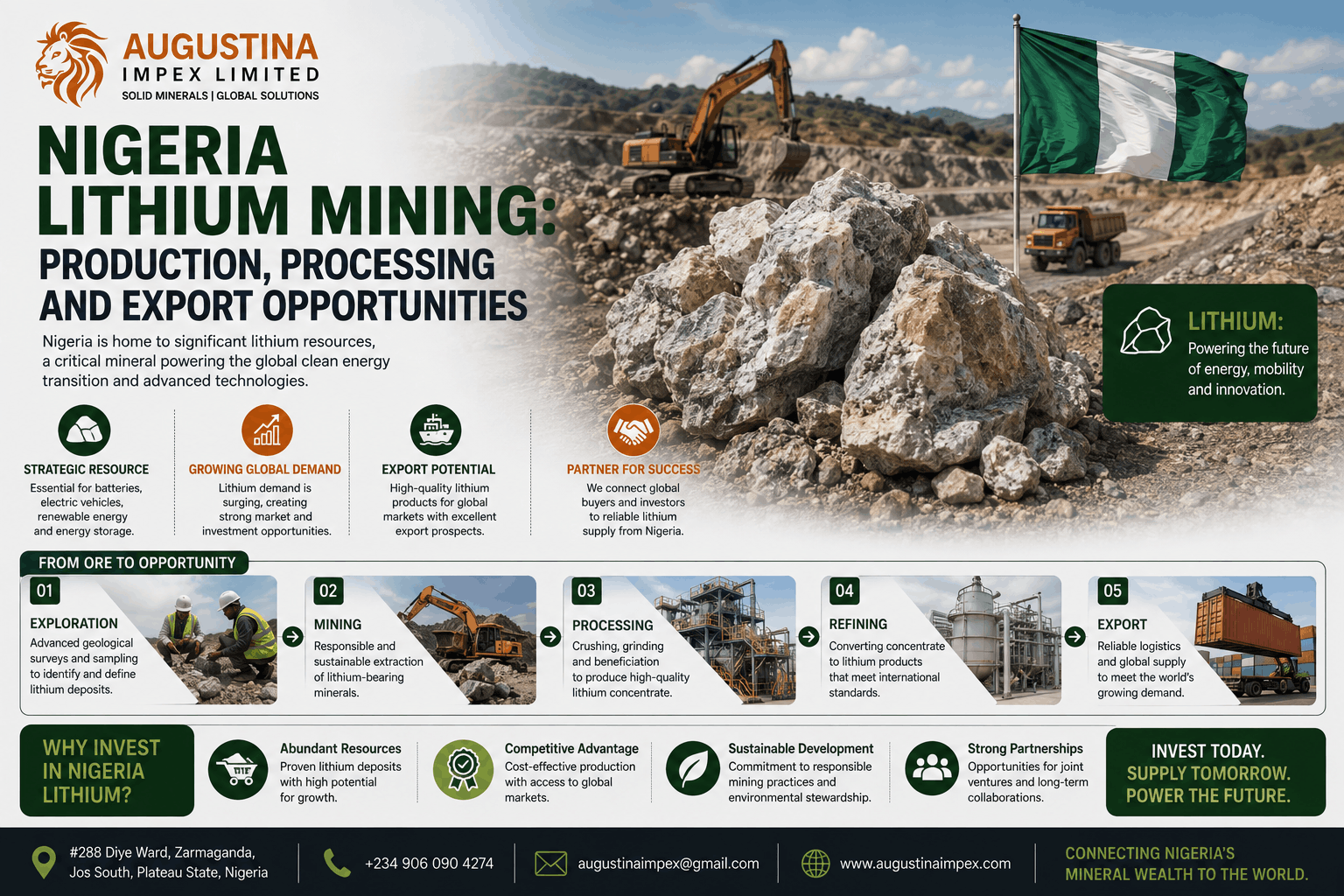
Nigeria Lithium Mining: Production, Processing & Export
Nigeria Lithium Mining: Production, Processing and Export Opportunities By Kolawole King, CEO — Augustina Impex…
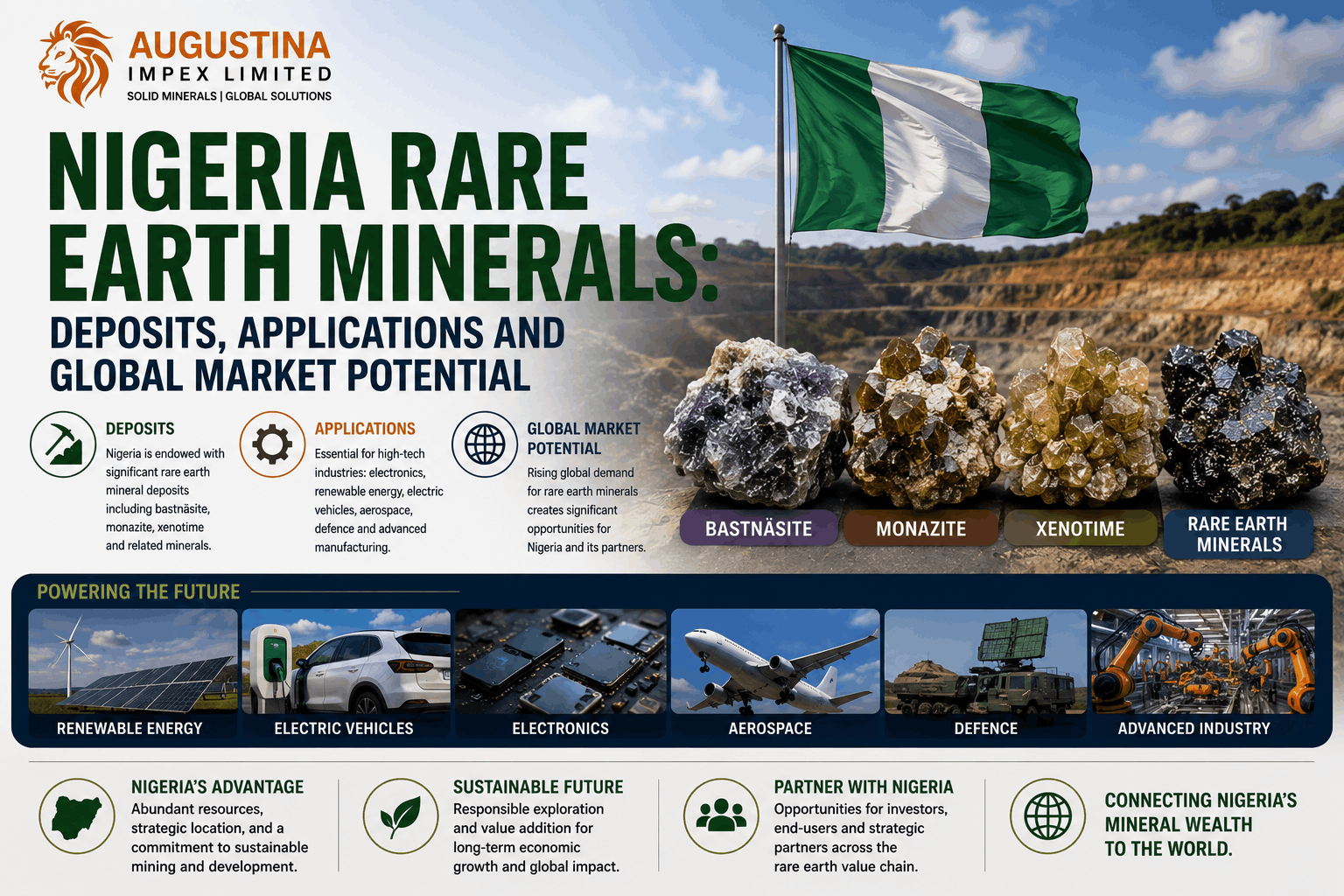
Nigeria Rare Earth Minerals: Deposits & Market Potential
Nigeria Rare Earth Minerals: Deposits, Applications and Global Market Potential By Kolawole King, CEO —…
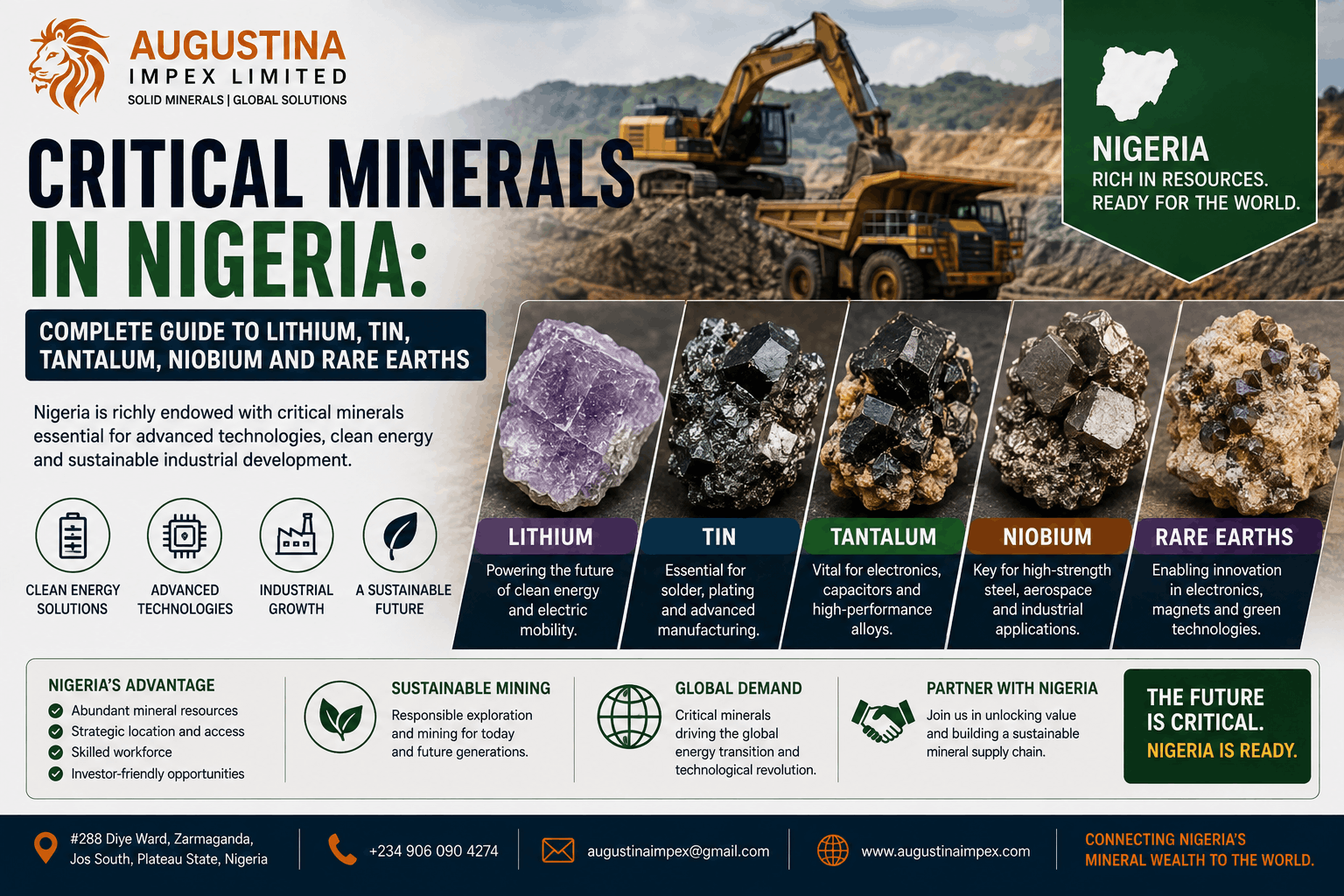
Nigeria Critical Minerals Guide: Lithium, Tin & Rare Earths
Critical Minerals in Nigeria: Complete Guide to Lithium, Tin, Tantalum, Niobium and Rare Earths By…
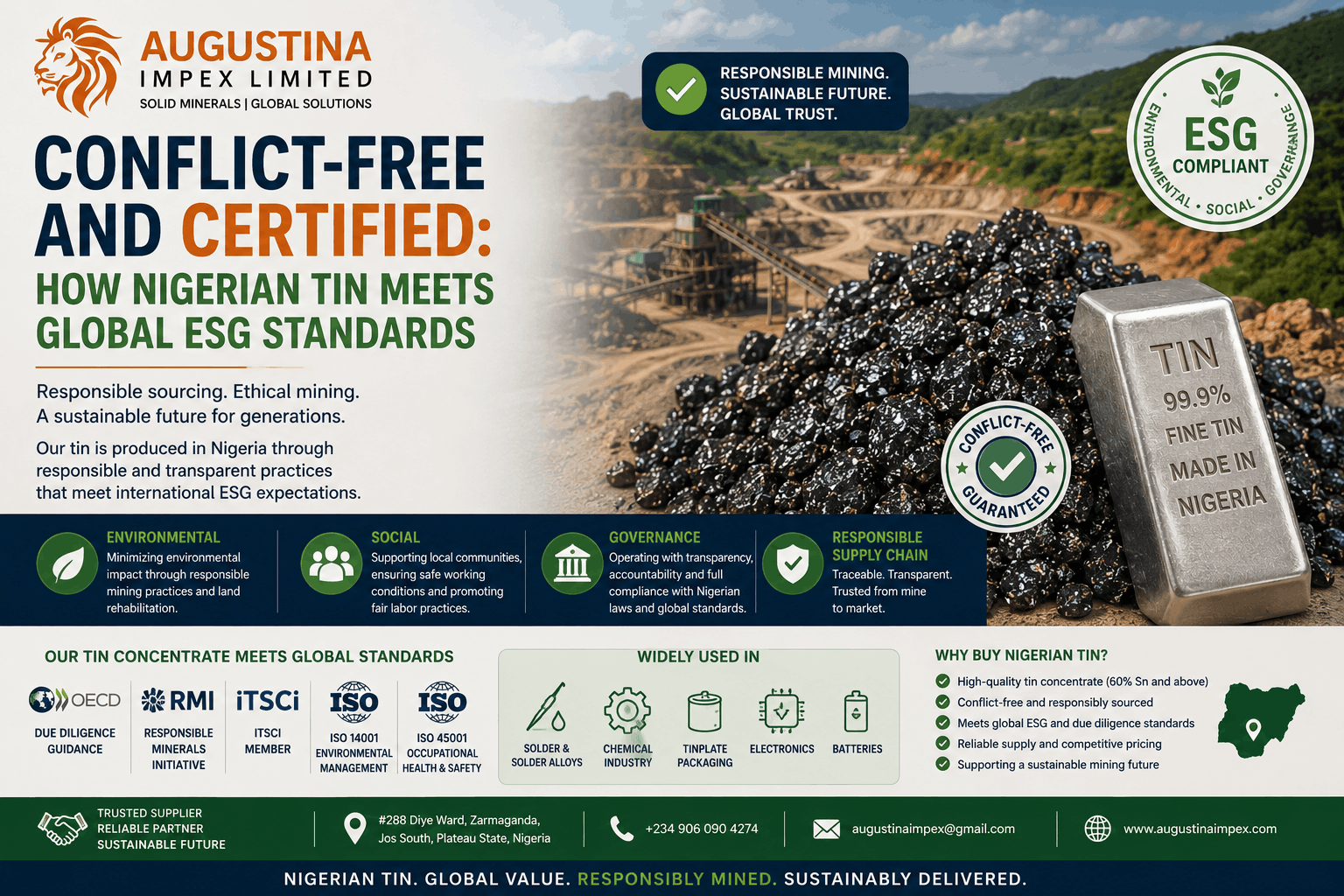
Conflict-Free Nigerian Tin Meets Global ESG Standards
Conflict-Free and Certified: How Nigerian Tin Meets Global ESG Standards By Kolawole King, CEO —…