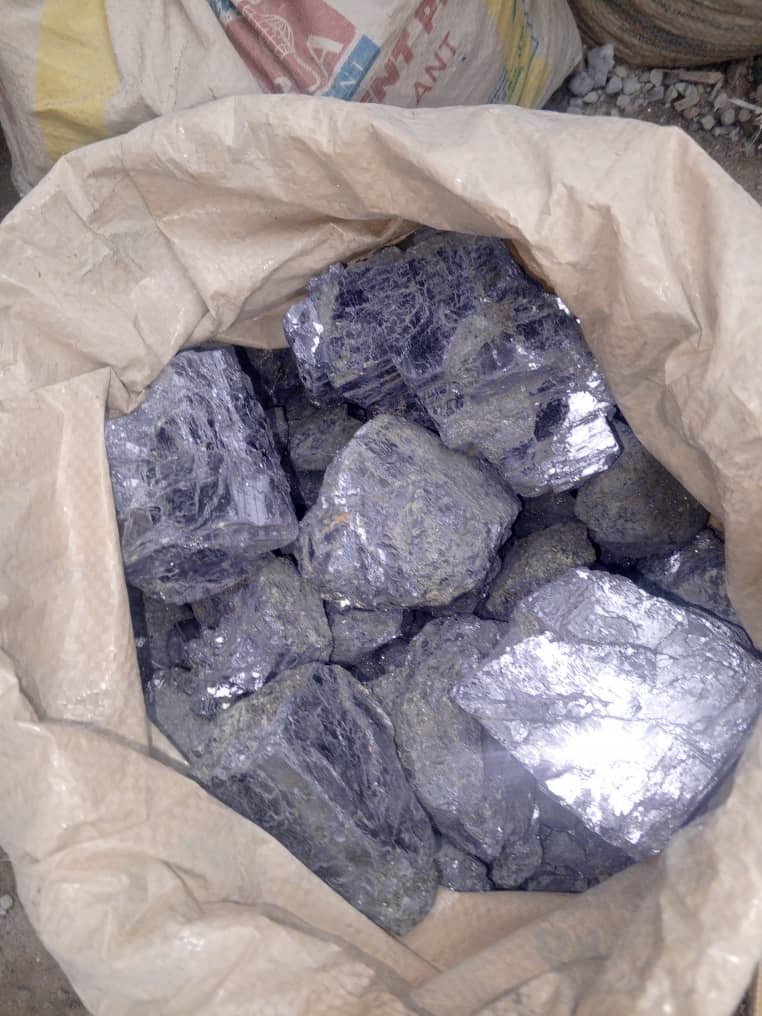

If you are in the market for a dependable Nigerian Ilmenite supplier, you have come to the right destination. Ilmenite Sand is the backbone of the global titanium industry — the primary raw material from which titanium dioxide pigment, titanium metal, synthetic rutile, and titanium slag are all derived — and Nigeria is home to meaningful, commercially viable Ilmenite deposits that international buyers are increasingly incorporating into their supply strategies. At Augustina Impex Limited, we are proud to serve as a professional, compliance-first Nigerian Ilmenite supplier that connects the quality mineral resources of Nigeria’s interior with the industrial supply chains of Asia, Europe, and beyond.
This article is a comprehensive guide for international buyers who are considering Nigerian Ilmenite as a supply source. We have covered every dimension of the subject: the geology of Nigerian Ilmenite, the technical specifications that matter most to TiO₂ producers and other downstream processors, how Ilmenite fits into the broader titanium supply chain, how pricing works in the Nigerian market, the step-by-step procurement process, export documentation, and regulatory compliance. Whether you are sourcing Ilmenite for the first time or adding Nigeria to an existing multi-origin supply strategy, this guide has been written specifically for you.

What Is Ilmenite and Why Does It Matter to Global Industry?
Ilmenite is an iron-titanium oxide mineral with the chemical formula FeTiO₃. It is the most abundant titanium-bearing mineral in the earth’s crust, and it is the primary feedstock for the global titanium industry — which is one of the most commercially significant industrial mineral sectors in the world. Globally, more than six million metric tonnes of Ilmenite are consumed annually, making it one of the most heavily traded industrial mineral commodities by volume.
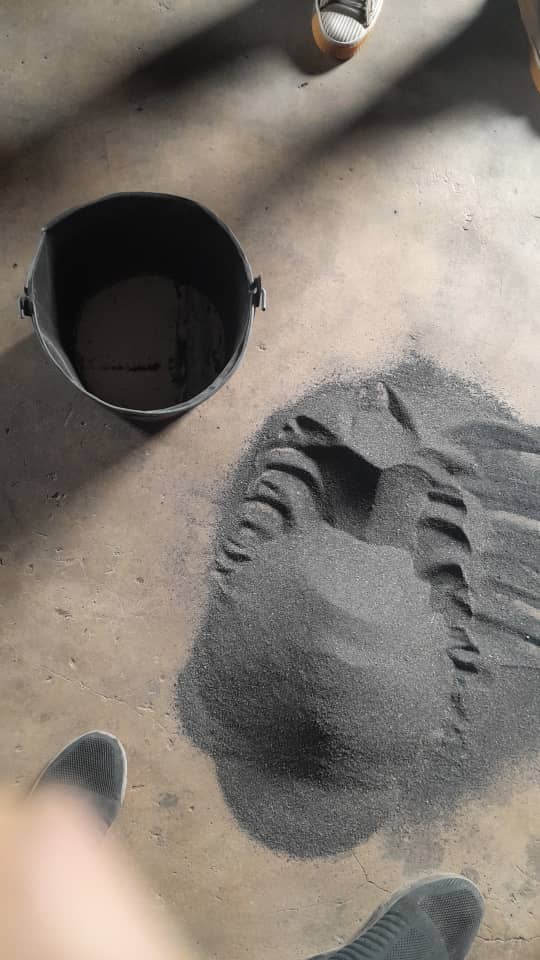
The name Ilmenite comes from the Ilmen Mountains in Russia, where the mineral was first systematically described in the nineteenth century. In appearance, Ilmenite is a dense, dark grey to black mineral with a metallic to submetallic lustre. It typically occurs as compact masses, tabular crystals, or irregular grains within heavy mineral sand deposits, where it is concentrated alongside Zircon, Rutile, Monazite, and other accessory minerals by wave, wind, and fluvial sorting processes.
The commercial value of Ilmenite is entirely driven by its TiO₂ content — titanium dioxide expressed as a percentage of the dry weight of the mineral. Natural Ilmenite contains TiO₂ in concentrations that vary from approximately 45% at the lower end to around 65% TiO₂ at the higher end, depending on the deposit’s geological history and the degree of alteration the Ilmenite has undergone. Higher TiO₂ content means more extractable titanium per tonne of material and, therefore, a higher commercial value.
What makes Ilmenite so strategically important is the extraordinary versatility of its downstream products. Titanium dioxide is one of the most widely used industrial chemicals in the world — the white pigment that makes paint white, that brightens paper, that gives plastics their opacity, and that provides SPF protection in sunscreen formulations. Titanium metal is one of the strongest, lightest, and most corrosion-resistant structural metals known, used extensively in aerospace, marine, and biomedical applications. Both products begin their life in an Ilmenite mine.
Nigeria’s Ilmenite Deposits: Geology, Location, and Commercial Significance
Nigeria’s Ilmenite endowment is closely linked to the country’s broader heavy mineral sand resource base — an endowment that is geologically rich but commercially underdeveloped relative to its potential. For international buyers, this means that genuine supply opportunity exists in Nigeria, with room for long-term supply chain development as the sector matures.
The Jos Plateau — Nigeria’s Heavy Mineral Sand Hub
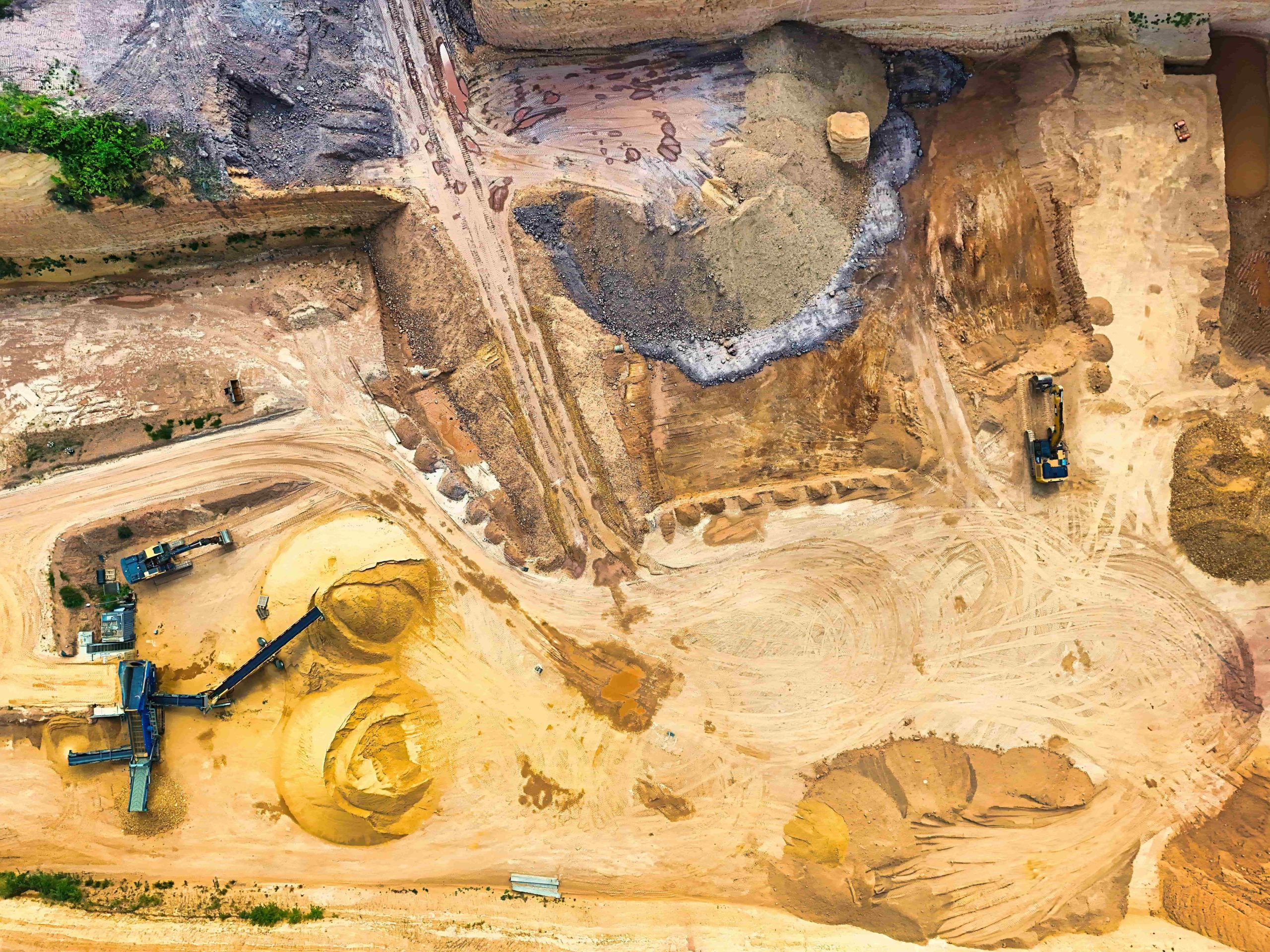
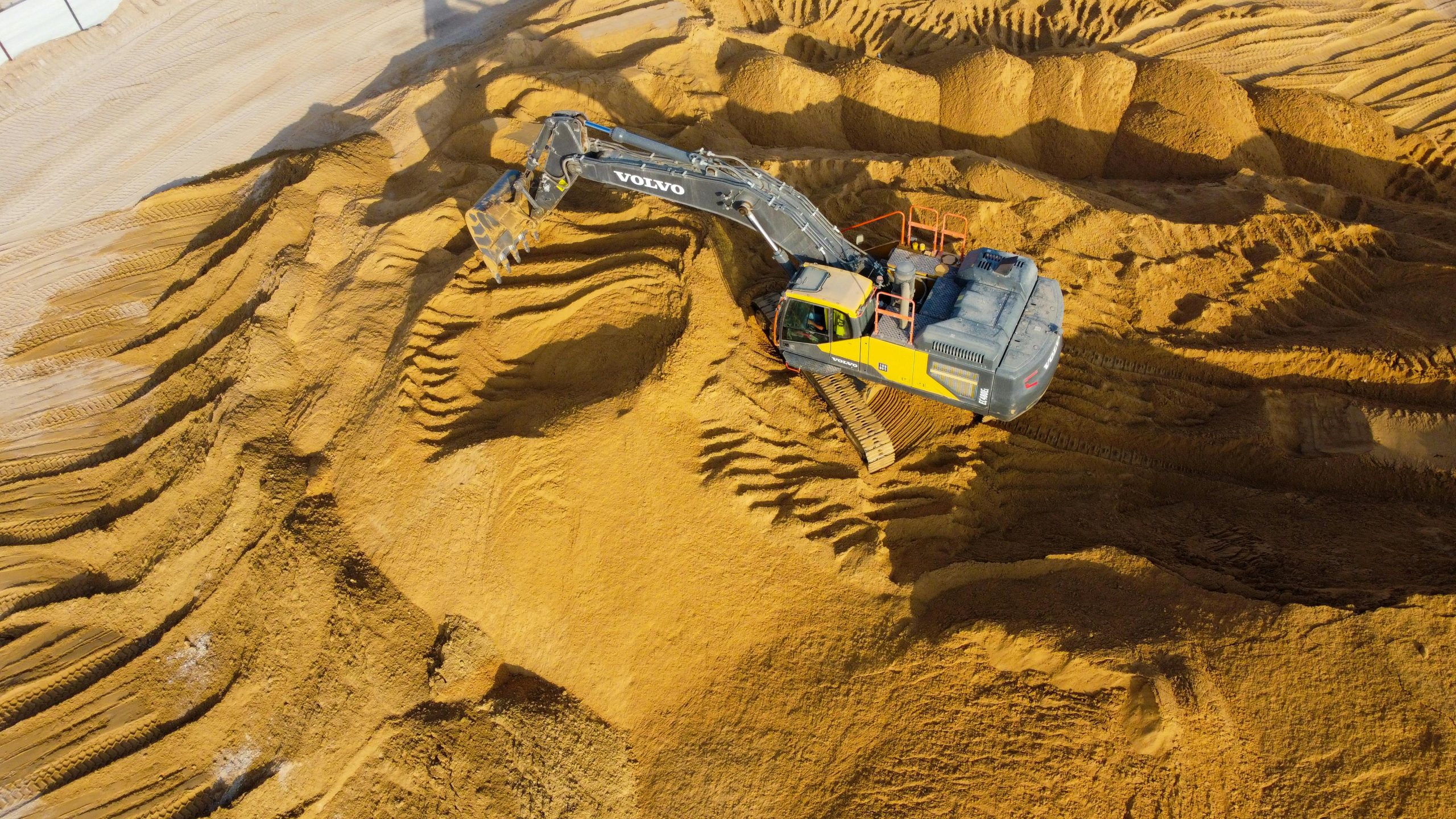
The most commercially active Ilmenite production in Nigeria is centred on the Jos Plateau in Plateau State, North-Central Nigeria. This elevated terrain — historically one of West Africa’s most productive artisanal and small-scale mining regions — hosts alluvial and placer heavy mineral sand deposits in which Ilmenite occurs as a major co-product alongside Zircon, Monazite, Columbite, and Rutile.
The geology underlying the Jos Plateau is characterised by Precambrian Basement Complex formations, Pan-African granites, and younger Mesozoic Jurassic Biotite granites. These granite types are enriched in iron-titanium oxide minerals including Ilmenite and Magnetite, and the weathering and erosion of these parent rocks over geological timescales has released the Ilmenite grains and concentrated them in river gravels, valley-fill deposits, and ancient fluvial channels across the Plateau landscape.
The tin and columbite mining operations that dominated the Jos Plateau through much of the twentieth century produced large volumes of heavy mineral concentrate as a by-product. Within this concentrate, Ilmenite was present but often discarded or stockpiled because the commercial infrastructure to process and export it was not in place. Today, as global Ilmenite demand strengthens and as Nigerian mineral export logistics improve, the Ilmenite component of Jos Plateau heavy mineral production is becoming commercially significant.
Ilmenite Occurrences Beyond the Jos Plateau
While the Jos Plateau remains the most commercially active region, Ilmenite occurrences have been documented across a wider geographic footprint within Nigeria’s geological terrane. Nasarawa State hosts heavy mineral sand deposits with Ilmenite content in areas adjacent to the Nasarawa lithium pegmatite belt. Coastal and nearshore areas in Ogun State, Lagos State, and Delta State have been identified as containing beach placer heavy mineral assemblages with Ilmenite content, reflecting the global pattern of marine placer Ilmenite concentration found in producer countries such as India, Sri Lanka, Mozambique, and Madagascar.
The coastal occurrences are particularly interesting from a long-term commercial perspective, as marine placer deposits of the type found along the West African coastline have proven to be among the world’s most productive Ilmenite sources when properly explored and developed. Nigeria’s approximately 853 kilometres of Atlantic coastline represent an underexplored heavy mineral sand frontier that could yield commercially significant Ilmenite resources with appropriate geological survey investment.
Nigerian Ilmenite Sand Specifications: What International Buyers Need to Know
When engaging a Nigerian Ilmenite supplier, the first document to request is a current product specification sheet backed by independent laboratory assay. Here is a comprehensive breakdown of the technical parameters that define Nigerian Ilmenite quality and commercial value.
TiO₂ Content — The Primary Commercial Driver
TiO₂ Content: Nigerian Ilmenite Sand from Jos Plateau alluvial concentrates typically assays at TiO₂ concentrations of 50% to 60%, depending on the specific deposit and the degree of magnetic separation and beneficiation applied to the raw heavy mineral sand concentrate. This TiO₂ range positions Nigerian Ilmenite in the mid-grade commercial category — above the lower-grade altered Ilmenite found in some weathered tropical deposits, and competitive with standard-grade Ilmenite from Mozambique, Madagascar, and India.
Material that has been subjected to more intensive magnetic separation and beneficiation processing can achieve TiO₂ grades toward the upper end of this range, improving commercial value and expanding the range of downstream processing applications for which it qualifies. Augustina Impex Limited works with supply partners who have processing capability to deliver material at specified TiO₂ grades within the commercially available range.
Iron Content and the Manganese Factor
Ilmenite contains iron oxide alongside titanium dioxide. The iron is present in two oxidation states — ferrous iron (FeO) and ferric iron (Fe₂O₃) — and the ratio between them is relevant for certain processing applications.
MnO (Manganese Oxide) content is a particularly important impurity specification for Ilmenite destined for the sulphate-process TiO₂ pigment route. The sulphate process generates large volumes of acidic effluent, and manganese in the feedstock increases the manganese content of this waste stream, creating disposal and environmental compliance challenges for TiO₂ producers. Low MnO Ilmenite is therefore preferred by sulphate-process pigment plants, and buyers from this sector should specify their maximum acceptable MnO threshold in their enquiry.
Key Secondary Specifications
Cr₂O₃ (Chromium Oxide): Chromium is a critical impurity in Ilmenite feedstock for TiO₂ pigment production. Even small amounts of chromium can cause undesirable colour tinting in the final pigment product. Premium TiO₂ pigment producers specify Cr₂O₃ below 0.1%, and some ultra-premium applications require even lower levels. Nigerian Ilmenite Cr₂O₃ content should be documented and evaluated against the buyer’s specification.
V₂O₅ (Vanadium Pentoxide): Vanadium is another colour-affecting impurity in TiO₂ pigment production. Low vanadium Ilmenite is preferred for the highest whiteness applications. Specification requirements vary by end use and processing route.
SiO₂ (Silicon Dioxide): Silica content indicates the presence of quartz and other silicate mineral contamination in the Ilmenite concentrate. High silica reduces the effective TiO₂ content per tonne of shipped material and increases processing costs. Buyers should specify a maximum acceptable SiO₂ content.
Al₂O₃ (Aluminium Oxide): Aluminium content comes from feldspar, clay, and other aluminosilicate contaminants. As with silica, high aluminium reduces the effective TiO₂ content and affects processing efficiency.
Physical Properties
Particle Size: Nigerian Ilmenite Sand from alluvial deposits is typically available in the 75 to 300 micron range, with the modal grain size concentrated in the 100–200 micron range. The particle size distribution is documented per shipment.
Specific Gravity: Ilmenite has a true specific gravity of approximately 4.5 to 5.0 g/cm³, which is significantly denser than most gangue minerals and enables efficient gravity and magnetic separation processing.
Magnetic Properties: Ilmenite is weakly magnetic, which allows it to be separated from non-magnetic minerals (like Zircon and Rutile) using low-intensity magnetic separation equipment. The degree of magnetic susceptibility varies with the FeO:Fe₂O₃ ratio and affects processing efficiency.
Colour: Bulk Ilmenite Sand is dark grey to black in appearance.
Moisture: Supplied at low moisture (typically below 2% on shipment), confirmed by pre-shipment inspection.
Ilmenite in the Global Titanium Supply Chain: From Nigerian Ore to End Product
Understanding how Nigerian Ilmenite fits into the global titanium supply chain helps buyers contextualise their sourcing decisions and understand what downstream processors are looking for when they evaluate Ilmenite feedstock. The pathway from Ilmenite mine to end-user product is more complex than it might appear, and the specific processing route chosen determines the feedstock specification requirements.
Ilmenite to Titanium Dioxide Pigment
The sulphate process and the chloride process are the two primary industrial routes for converting Ilmenite into titanium dioxide pigment.
The sulphate process digests Ilmenite in sulphuric acid, dissolves the titanium as titanyl sulphate, precipitates hydrated titanium dioxide through hydrolysis, and calcines it to produce rutile or anatase grade TiO₂ pigment. The sulphate process can work with lower-TiO₂ Ilmenite (typically 45–60% TiO₂), making it well-suited to mid-grade Nigerian Ilmenite. The trade-off is that it generates significant volumes of acidic waste (ferrous sulphate and spent sulphuric acid) that require treatment and disposal, creating ongoing environmental compliance costs for operators.
The chloride process reacts Ilmenite or other titanium-bearing feedstocks with chlorine gas at high temperature to produce titanium tetrachloride (TiCl₄), which is then oxidised to TiO₂ pigment. The chloride process is more efficient and produces a superior pigment, but it requires higher-TiO₂ feedstocks — typically 65% TiO₂ or higher — which means it predominantly uses rutile, synthetic rutile, or high-grade Ilmenite slag rather than standard-grade Ilmenite. Nigerian Ilmenite at 50–60% TiO₂ is better suited to the sulphate process than the chloride process, though upgrading to synthetic rutile or slag first (see below) opens the chloride process route.
Ilmenite to Synthetic Rutile and Titanium Slag
Two important intermediate processing steps convert standard-grade Ilmenite into higher-value feedstocks suitable for the chloride process.
Synthetic rutile is produced by selectively removing the iron from Ilmenite through a reduction-leaching process (such as the Becher process used extensively in Australia), leaving behind a TiO₂-enriched product with 90%+ TiO₂ content. Synthetic rutile is a premium titanium feedstock that commands a significantly higher price than standard Ilmenite.
Titanium slag is produced by smelting Ilmenite with coal in electric arc furnaces to selectively reduce and separate the iron into a pig iron by-product, leaving a high-TiO₂ slag (typically 80–95% TiO₂) as the primary valuable product. Titanium slagging operations are concentrated in South Africa and Canada, where the scale of Ilmenite production and the availability of large-scale electric arc furnace infrastructure support this capital-intensive processing step.
Nigerian Ilmenite at 50–60% TiO₂ is potentially well-suited as a feedstock for titanium slagging operations — either at existing South African and Canadian facilities or, in the longer term, at slagging plants that could be established within Nigeria as part of a minerals value-addition strategy.
Ilmenite to Titanium Metal
A small but high-value segment of global Ilmenite consumption flows into titanium metal production. Titanium metal is produced through the Kroll process, which reduces titanium tetrachloride (TiCl₄) with magnesium to produce titanium sponge, which is then further processed into ingots, billets, and mill products for aerospace, marine, biomedical, and high-performance industrial applications.
Titanium metal applications are extremely demanding in terms of raw material quality — aerospace-grade titanium specifications are among the tightest in any metals industry. Ilmenite for titanium metal production must be processed through synthetic rutile or slag upgrading first, and the impurity specifications — particularly chromium and vanadium — are more stringent than for pigment production.
The Industries That Depend on Ilmenite: Why Demand Remains Structurally Strong
The global market for Ilmenite is underpinned by demand from several major industries, and understanding these demand drivers helps buyers appreciate why Ilmenite supply is a strategically important procurement category.
Paint, Coatings, and Plastics
The paint and coatings industry is by far the largest single end-use market for TiO₂ pigment derived from Ilmenite, accounting for approximately 55–60% of total TiO₂ consumption. Every litre of white and light-coloured architectural paint contains TiO₂ as its primary opacifier and whitening agent. The global paint market is closely correlated with construction activity — residential, commercial, and infrastructure construction all drive paint consumption — and the long-term outlook for global construction remains firmly growth-oriented, particularly in Asia and Africa.
The plastics industry is the second-largest TiO₂ market, accounting for approximately 20% of consumption. TiO₂ is used in plastics to provide whiteness, opacity, and UV resistance. White plastic packaging, white plastic pipes and fittings, and white plastic components in appliances and consumer electronics all contain TiO₂ derived ultimately from Ilmenite.
Paper and Ink
The paper industry uses TiO₂ as a paper coating and filler pigment, improving the brightness, opacity, and printability of coated paper grades. While paper consumption in developed markets is declining due to digitalisation, paper demand in developing markets remains significant, and specialty paper applications — including food-safe packaging and high-brightness printing papers — maintain steady TiO₂ demand.
Cosmetics and Food
TiO₂ is widely used in cosmetics and personal care products as a white pigment in products including foundation, pressed powder, sunscreen, and tooth-whitening formulations. The sunscreen market in particular has driven significant TiO₂ demand growth as awareness of UV protection has increased globally.
In food applications, TiO₂ has historically been used as a food-grade whitening agent (E171), though regulatory action in the European Union has restricted this application in recent years. Alternative cosmetics and personal care applications continue to support demand.
Aerospace, Defence, and Medical
Titanium metal derived from the Ilmenite processing chain serves some of the world’s most demanding structural applications. In aerospace, titanium alloys are used in airframe structures, engine components, fasteners, and landing gear systems across commercial, military, and space applications. The global commercial aviation fleet is expected to expand significantly over the next twenty years as air travel demand grows in Asia and Africa, driving sustained titanium metal demand.
In biomedical applications, titanium’s unique combination of strength, light weight, and biocompatibility — the body does not reject titanium as a foreign material — makes it the material of choice for orthopaedic implants, dental implants, and surgical instruments. The ageing global population is driving steady growth in demand for titanium biomedical products.
In defence applications, titanium is used in naval vessels, military aircraft, armoured vehicles, and missile components where its combination of strength and low weight is operationally critical.
Nigerian Ilmenite vs Rutile: Which Titanium Feedstock Is Right for Your Operation?
Buyers evaluating their titanium feedstock options frequently ask how Ilmenite compares to Rutile — another titanium mineral that occurs in Nigerian heavy mineral sand deposits alongside Ilmenite. Here is a direct, practical comparison.
TiO₂ Content: Natural Rutile contains approximately 92–96% TiO₂ — dramatically higher than Ilmenite’s 45–65% TiO₂. This makes Rutile a far more concentrated titanium feedstock that delivers more titanium per tonne of material processed.
Processing Route Compatibility: Rutile’s high TiO₂ content makes it the preferred feedstock for the chloride process TiO₂ pigment route and for direct titanium metal production via the Kroll process. Ilmenite is the preferred feedstock for the sulphate process and, when upgraded to slag or synthetic rutile, for the chloride process.
Price: Rutile commands a significant price premium over Ilmenite — typically two to four times the price per metric tonne — reflecting its higher TiO₂ content and its suitability for premium processing routes. Ilmenite offers a lower cost per tonne of material but requires more processing to reach the same TiO₂ output.
Supply Availability: Ilmenite is far more abundant in nature and in commercial supply than Rutile. Global Ilmenite production is approximately ten times larger than Rutile production by volume, reflecting the relative scarcity of high-grade natural Rutile deposits.
The Practical Decision: For sulphate-process TiO₂ pigment producers, Ilmenite is the natural feedstock choice. For chloride-process producers, Rutile or synthetic rutile is preferred, but high-quality Ilmenite that can be upgraded through slagging or Becher-process synthetic rutile production is a commercially viable alternative. For titanium metal producers, Rutile or synthetic rutile is the standard feedstock.
Augustina Impex Limited can supply both Ilmenite Sand and Rutile from Nigerian heavy mineral sand operations. Buyers who require a mixture of both minerals are welcome to discuss a consolidated supply arrangement.
How Ilmenite Sand Is Priced in the Nigerian Market
Like other industrial minerals, Ilmenite Sand is not exchange-traded on a commodity exchange with publicly published daily prices. Nigerian Ilmenite Sand pricing is negotiated bilaterally between buyer and supplier, and the price you receive will reflect a combination of technical and commercial factors.
TiO₂ Content is the dominant variable. Every percentage point of TiO₂ above the minimum commercial threshold adds to the price per metric tonne. The difference in price between 50% TiO₂ and 58% TiO₂ Nigerian Ilmenite is significant and should be understood clearly before negotiating.
Impurity Profile affects value for buyers with specific processing requirements. Low MnO Ilmenite commands a premium from sulphate-process pigment plants. Low Cr₂O₃ material is more valuable to premium pigment producers. Buyers should specify their impurity tolerance requirements clearly so that the right material is matched to their need.
Global Ilmenite Market Conditions set the macro price environment within which all bilateral negotiations take place. Ilmenite reference prices are published by specialist minerals intelligence firms including Fastmarkets, Argus Media, and S&P Global. Buyers who track the global market will have a strong baseline for evaluating whether a Nigerian FOB quotation represents fair value.
Volume and Duration of Commitment are important pricing levers. Long-term offtake agreements with guaranteed monthly volumes attract meaningfully better pricing than spot purchases, because they allow the supplier to plan aggregation and logistics more efficiently and pass a portion of that efficiency saving to the buyer.
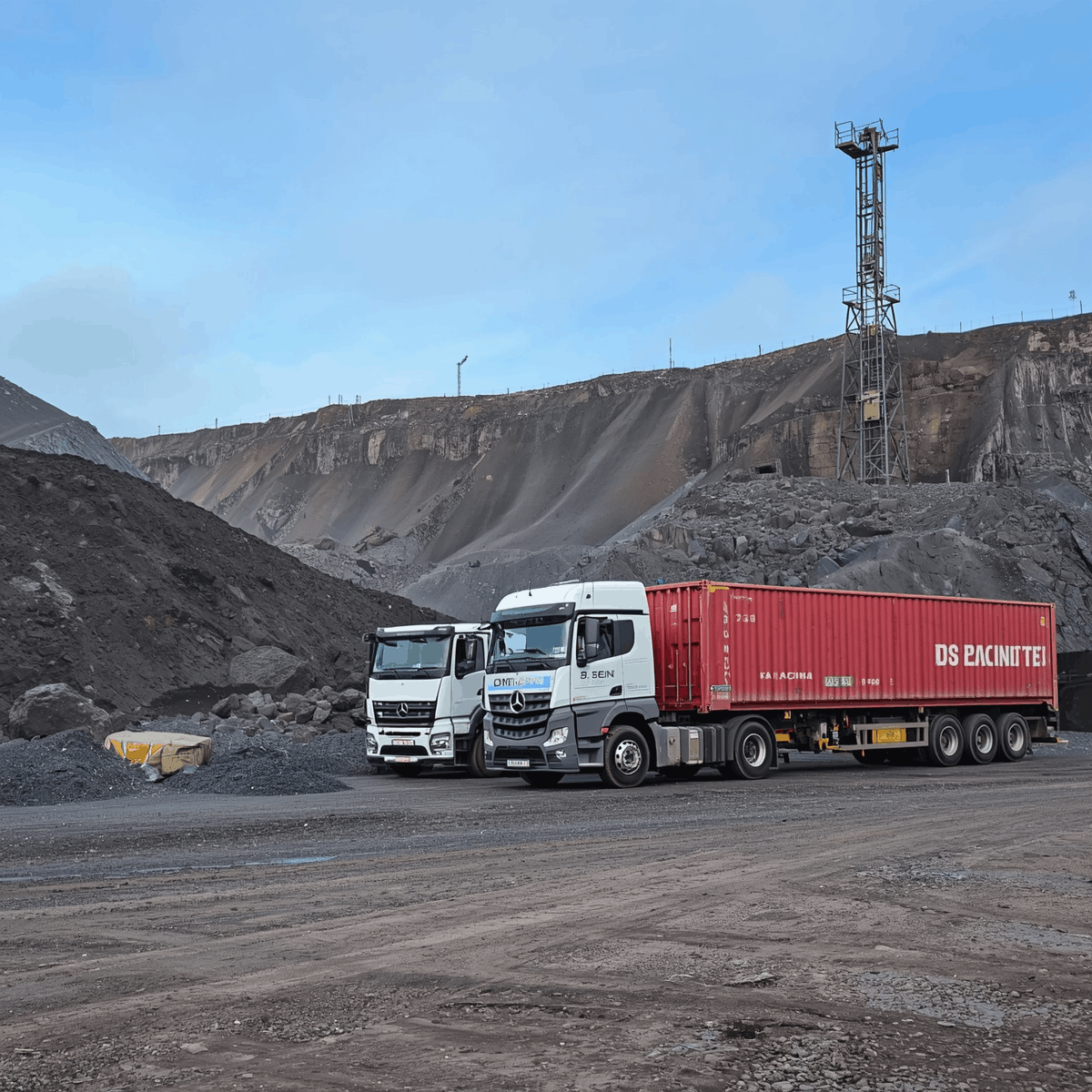
Loading Port affects the logistics cost component embedded in the FOB price. Nigerian Ilmenite Sand is priced on FOB (Free on Board) terms at the nominated loading port — Onne Port (Rivers State), Apapa Port (Lagos), or Lekki Deep Sea Port (Lagos). The inland transport distance from the Jos Plateau to each port influences the freight-to-port cost factored into the FOB price.
At Augustina Impex Limited, all pricing is quoted transparently as USD per metric tonne FOB Nigerian loading port, with a clear breakdown of what is included. We do not embed hidden fees or inflate documentation charges.
How to Buy Ilmenite Sand from Nigeria: The Complete Step-by-Step Procurement Guide
The procurement process for Nigerian Ilmenite Sand follows a well-defined international trade sequence. Here is a step-by-step guide to how it works when you engage Augustina Impex Limited as your Nigerian Ilmenite supplier.
Step 1 — Initial Enquiry and Soft Corporate Offer (SCO)
Begin your engagement by sending us a clear description of your requirements: the TiO₂ grade you need, key impurity tolerances (particularly MnO and Cr₂O₃ if you are a TiO₂ pigment producer), your monthly volume requirement, preferred port of destination, and any certification or documentation requirements specific to your import market.
We will respond within 48–72 hours with a Soft Corporate Offer (SCO) — a non-binding term sheet that sets out our proposed supply terms including product specification, indicative FOB price per metric tonne, minimum order quantity, payment structure, offer validity, and loading port. Review the SCO carefully, check the specification against your processing requirements, and raise any questions before proceeding.
Step 2 — Due Diligence and Independent Sample Testing
Before committing to a purchase, carry out thorough due diligence. Request from us our company registration (CAC) certificate, NGSA mineral export licence, current independent laboratory assay reports for the Ilmenite Sand on offer, and references from previous buyers. A professional Nigerian Ilmenite supplier will readily provide all of these.
Request a product sample — typically one to two kilograms — for independent assay at a laboratory you choose. Sample testing allows you to verify TiO₂ content, MnO, Cr₂O₃, V₂O₅, particle size distribution, and other parameters independently before signing any commercial agreement. We not only accept sample testing requests — we actively encourage them.
Step 3 — Full Corporate Offer (FCO) and Sales and Purchase Agreement (SPA)
Once sample testing and due diligence are complete and you are satisfied with the results, we will issue a Full Corporate Offer (FCO) — a binding commercial offer specifying all transaction terms in complete detail. If you accept the FCO, both parties sign a Sales and Purchase Agreement (SPA), which is the formal contract governing the transaction.
The SPA covers product specification with tolerance ranges, quantity and delivery schedule, FOB loading port and incoterm, payment terms and LC structure, nominated inspection agency and inspection procedures, force majeure provisions, governing law, and dispute resolution.
Step 4 — Letter of Credit Opening and Pre-Shipment Inspection
Payment is structured as an Irrevocable Documentary Letter of Credit (LC) issued by the buyer’s bank in favour of Augustina Impex Limited. Standard terms:
95% of invoice value — payable at sight against full shipping documents (Bill of Lading, commercial invoice, certificate of origin, NGSA certificate of analysis, pre-shipment inspection certificate, packing list)
5% final payment — payable against discharge port documents confirming weight and quality at destination
Once the LC is confirmed by our bank, we proceed with material aggregation and pre-shipment inspection scheduling. The pre-shipment inspection is conducted by your nominated independent inspection agency — CCIC, Bureau Veritas (BV), SGS, or Intertek — covering weight verification, representative sampling and on-site rapid assay for TiO₂ and key impurities, moisture measurement, particle size check, and cargo and container condition assessment.
Step 5 — Export Clearance, Loading, and Shipment
Following a satisfactory inspection result, the material is containerised and loaded at the Nigerian port. Nigeria Customs Service export clearance is obtained, and the full documentation package is prepared and transmitted by our bank to your bank under the LC terms.
You receive the original Bill of Lading and all shipping documents, the cargo sails to your port of destination, and you take delivery. The 5% retention payment is released after discharge port weight and quality documentation confirms delivery in accordance with the contract specification.
Export Documentation Package for Nigerian Ilmenite Sand
Every Ilmenite Sand shipment from Augustina Impex Limited comes with a complete and professionally assembled documentation package.
The Commercial Invoice details the buyer and seller particulars, product description, TiO₂ grade, quantity, unit price, and total invoice value in USD. The Bill of Lading is the primary shipping instrument and document of title — essential for LC payment processing and for taking delivery at the discharge port.
The Certificate of Origin confirms Nigerian origin and is issued by the Nigerian Export Promotion Council (NEPC) or the relevant Nigerian Chamber of Commerce. The NGSA Certificate of Analysis is issued by the Nigerian Geological Survey Agency and certifies the mineral type, TiO₂ content, and compliance with Nigerian export mineral standards for the specific shipment batch.
The Pre-Shipment Inspection Certificate is issued by the buyer’s nominated inspection agency, confirming weight, TiO₂ content, impurity levels, moisture, and cargo condition at the Nigerian loading port. The Packing List details the number and weight of bags, container numbers, and seal numbers. Additional country-specific documents — fumigation certificates, phytosanitary certificates, or import pre-clearance documents — can be arranged on request.
Nigerian Regulatory Framework for Ilmenite Export
Buyers conducting supply chain due diligence before purchasing Nigerian Ilmenite should understand the regulatory environment in which Nigerian mineral exports operate.
The Nigerian Minerals and Mining Act (2007) is the foundational legislation governing all solid mineral extraction and export in Nigeria. All mining operations must hold a valid licence — a Mining Lease, Small Scale Mining Licence, or Quarry Lease — issued by the Federal Ministry of Mines and Steel Development. Buyers should confirm that material they are purchasing originates from licensed operations. Purchasing from unlicensed operations creates both legal risk and reputational risk that buyers in regulated markets cannot afford.
The Nigerian Geological Survey Agency (NGSA) is the technical regulatory authority for mineral certification. Every solid mineral export from Nigeria must be accompanied by an NGSA Certificate of Analysis confirming the mineral identity and grade of the export batch. This certification provides a government-backed quality assurance checkpoint that is valuable to international buyers.
The Nigerian Export Promotion Council (NEPC) administers export registration, export licensing, and the issuance of Certificates of Origin. All solid mineral exporters must be NEPC-registered, and export permits are issued per shipment.
The Nigeria Customs Service (NCS) manages port-level export clearance, including documentary verification, cargo examination, and customs export declaration processing.
Augustina Impex Limited is fully registered with all relevant Nigerian authorities and maintains current compliance with the Nigerian Minerals and Mining Act, NGSA certification requirements, NEPC export licensing, and NCS export clearance procedures. Our documentation packages are prepared to satisfy the requirements of import customs authorities in China, India, South Korea, Japan, Taiwan, the United Arab Emirates, and European Union member states.
Who Are the Best Buyers for Nigerian Ilmenite Sand?
Nigerian Ilmenite Sand from Augustina Impex Limited is well matched to specific buyer profiles. Here is an honest assessment of who benefits most from sourcing from us.
Sulphate-Process TiO₂ Pigment Producers in China, India, Ukraine, and other markets who operate sulphate-process TiO₂ plants capable of processing mid-grade Ilmenite at 50–60% TiO₂ are the primary natural buyers for Nigerian Ilmenite. These plants process large volumes of Ilmenite continuously and benefit from supply diversification that reduces origin concentration risk. Nigerian Ilmenite at competitive FOB pricing represents a meaningful cost saving opportunity for these buyers.
Titanium Slag Smelters in South Africa and Canada that smelt Ilmenite in electric arc furnaces to produce high-TiO₂ slag and pig iron by-product are well-suited to Nigerian Ilmenite as an alternative or complementary feedstock to their current supply mix. The slagging process can accommodate mid-grade Ilmenite, and Nigerian supply’s competitive pricing is attractive for operations where feedstock cost is a major cost driver.
Synthetic Rutile Producers that upgrade Ilmenite through the Becher process or alternative reduction-leaching technologies may find Nigerian Ilmenite a viable feedstock for their upgrading operations. The key feedstock specifications for synthetic rutile production — TiO₂ grade, MnO content, and iron chemistry — should be evaluated against Nigerian supply characteristics.
Commodity Traders and Minerals Merchants with established relationships with downstream Ilmenite consumers who are looking to source and trade Nigerian origin material are natural partners for Augustina Impex Limited. Nigeria’s price point and the commercial credibility of our documentation and logistics make Nigerian Ilmenite attractive trading material.
Welding Electrode Manufacturers who use rutile and Ilmenite in welding electrode coatings are a smaller but consistent buyer segment for mid-grade Ilmenite. Welding electrode applications have less stringent impurity specifications than pigment production, making Nigerian Ilmenite a commercially competitive option for this sector.
Why Augustina Impex Limited Is Your Best Choice as a Nigerian Ilmenite Supplier
When you are selecting a Nigerian Ilmenite supplier, the most important questions to ask are: Can they consistently deliver what they quote? Is the documentation complete and internationally compliant? Are they honest about what Nigerian supply can and cannot deliver? Here is what you will find when you ask those questions about Augustina Impex Limited.
We are headquartered in Jos, Plateau State — the heart of Nigeria’s heavy mineral sand producing region. Our proximity to the producing areas means we have current, ground-level knowledge of available supply, established relationships with licensed mining operators, and the physical supply chain access needed to aggregate and process material reliably. We are not a remote intermediary — we are genuinely embedded in the Nigerian minerals supply chain.
We maintain full regulatory compliance at every stage. From sourcing from licensed operations through NGSA certification, NEPC export licensing, and Nigeria Customs Service clearance, every step of our export process is documented and compliant. We will never ask a buyer to accept undocumented material or cut regulatory corners, because our long-term business reputation depends on doing things correctly.
We provide independent third-party quality verification on every shipment. Your nominated inspection agency — CCIC, Bureau Veritas, SGS, or Intertek — is welcome to conduct a full pre-shipment inspection, and we will make all material fully accessible for representative sampling and testing. You never need to trust our TiO₂ figures without independent verification.
We offer multi-commodity supply capability. Augustina Impex Limited can supply Ilmenite alongside Zircon Sand, Monazite Sand, Rutile, Coltan, Copper Ore, and other Nigerian solid minerals from the same sourcing network. Buyers who want to simplify their West African supply chain by working with a single supplier for multiple minerals are welcome to discuss a consolidated offtake arrangement.
We prioritise long-term commercial relationships over transaction-by-transaction opportunism. The buyers who build multi-year supply relationships with us receive better pricing, more responsive service, more proactive supply chain communication, and priority access to new material as supply sources develop.
Frequently Asked Questions About Nigerian Ilmenite Sand
What TiO₂ grades are available from Nigerian Ilmenite suppliers? Nigerian Ilmenite Sand from Jos Plateau alluvial concentrates is available in TiO₂ grades of 50% to 60%, depending on the deposit and the degree of magnetic separation and beneficiation processing applied. We specify the TiO₂ content for each supply lot in our SCO and FCO, backed by NGSA and independent laboratory assay documentation. We advise buyers to specify their minimum acceptable TiO₂ grade clearly in their initial enquiry.
What is the minimum order quantity for Nigerian Ilmenite Sand? We can accommodate trial shipments from 50 metric tonnes. Standard commercial shipments are typically in the 100 to 500 metric tonne range per month. Monthly offtake volumes of 200 to 3,000 metric tonnes can be arranged under long-term supply agreements.
What is the MnO content of Nigerian Ilmenite? MnO content varies by deposit. We document MnO in our product specification sheets and NGSA certificates. Buyers from sulphate-process TiO₂ pigment plants who have strict MnO limits should specify their maximum acceptable MnO threshold in their enquiry, and we will confirm whether available supply meets the requirement.
Is Nigerian Ilmenite suitable for the chloride process? Standard Nigerian Ilmenite at 50–60% TiO₂ is better suited to the sulphate process than the chloride process in its raw form. However, Nigerian Ilmenite could serve as a feedstock for titanium slagging or synthetic rutile production, after which the upgraded product qualifies for the chloride process. Buyers operating or supplying upgrading facilities should discuss feedstock specification requirements directly with our team.
Can I visit the supply operations in Nigeria before committing? Yes. We can coordinate site visits for serious buyers who wish to conduct in-person supply chain due diligence, including visits to active heavy mineral sand production areas in the Jos Plateau region. We will provide logistical support for your visit.
What payment terms do you accept? All transactions are denominated and settled in United States Dollars (USD) via Irrevocable Documentary Letter of Credit. For first-time buyers, we do not accept advance bank transfer (T/T) as the primary payment instrument.
Do you supply other heavy mineral sands alongside Ilmenite? Yes. Augustina Impex Limited also supplies Zircon Sand, Monazite Sand, Rutile, Copper Ore, Lithium Ore, and other Nigerian solid minerals. Multi-commodity consolidated supply arrangements are available for buyers who wish to source more than one mineral type from a single Nigerian supplier.
Conclusion: Nigerian Ilmenite Is Ready for the World — and Augustina Impex Is Ready to Deliver It
The global titanium supply chain is fundamentally dependent on a small number of Ilmenite-producing countries — primarily Australia, South Africa, Mozambique, Madagascar, India, and Canada. This concentration of supply creates strategic risk for the TiO₂ pigment producers, titanium slag smelters, and synthetic rutile producers who depend on Ilmenite as their primary feedstock. Nigeria is not yet a major name in the global Ilmenite supply market, but the geological foundation is real, the commercial supply chain is being developed, and professional exporters like Augustina Impex Limited are demonstrating that Nigerian Ilmenite can meet international commercial and compliance standards.
For buyers who are building diversified supply chains, who want to develop relationships in a new origin before it becomes competitive, or who are looking for competitively priced mid-grade Ilmenite from a professionally managed West African export operation, Nigerian Ilmenite from Augustina Impex Limited is a genuinely compelling option.
As a committed, ground-level Nigerian Ilmenite supplier, we invite you to start the conversation. Send us your enquiry today — tell us your TiO₂ grade requirement, your monthly volume, and your port of destination — and we will respond within 48 hours with a Soft Corporate Offer tailored to your needs.
Contact Augustina Impex Limited Email: augustinaimpex@gmail.com Website: www.augustinaimpex.com Location: Jos, Plateau State, Nigeria
Post a comment
Related Posts
Nigeria Lithium Mining: Production, Processing & Export
Nigeria Lithium Mining: Production, Processing and Export Opportunities By Kolawole King, CEO — Augustina Impex…

Nigeria Rare Earth Minerals: Deposits & Market Potential
Nigeria Rare Earth Minerals: Deposits, Applications and Global Market Potential By Kolawole King, CEO —…
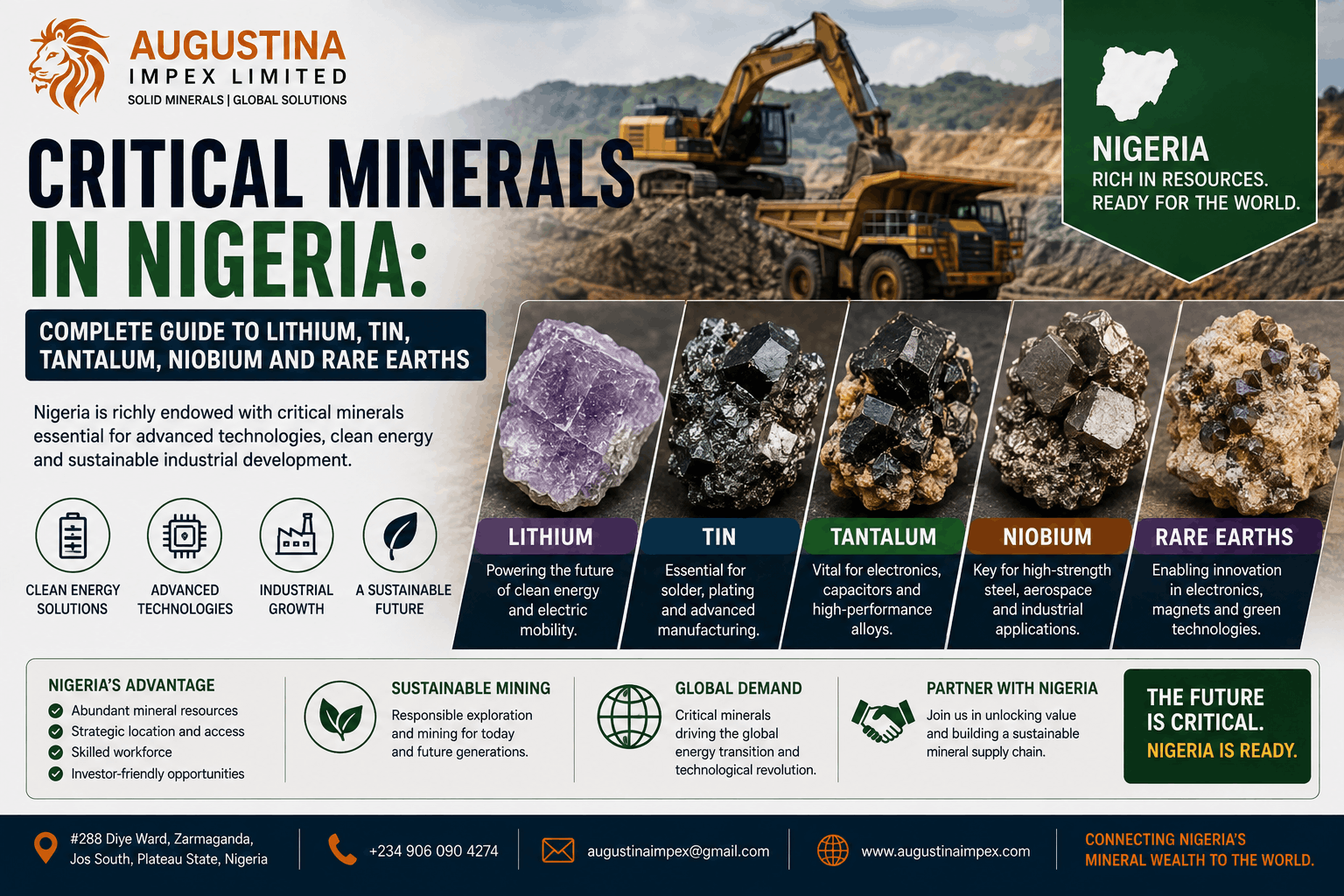
Nigeria Critical Minerals Guide: Lithium, Tin & Rare Earths
Critical Minerals in Nigeria: Complete Guide to Lithium, Tin, Tantalum, Niobium and Rare Earths By…
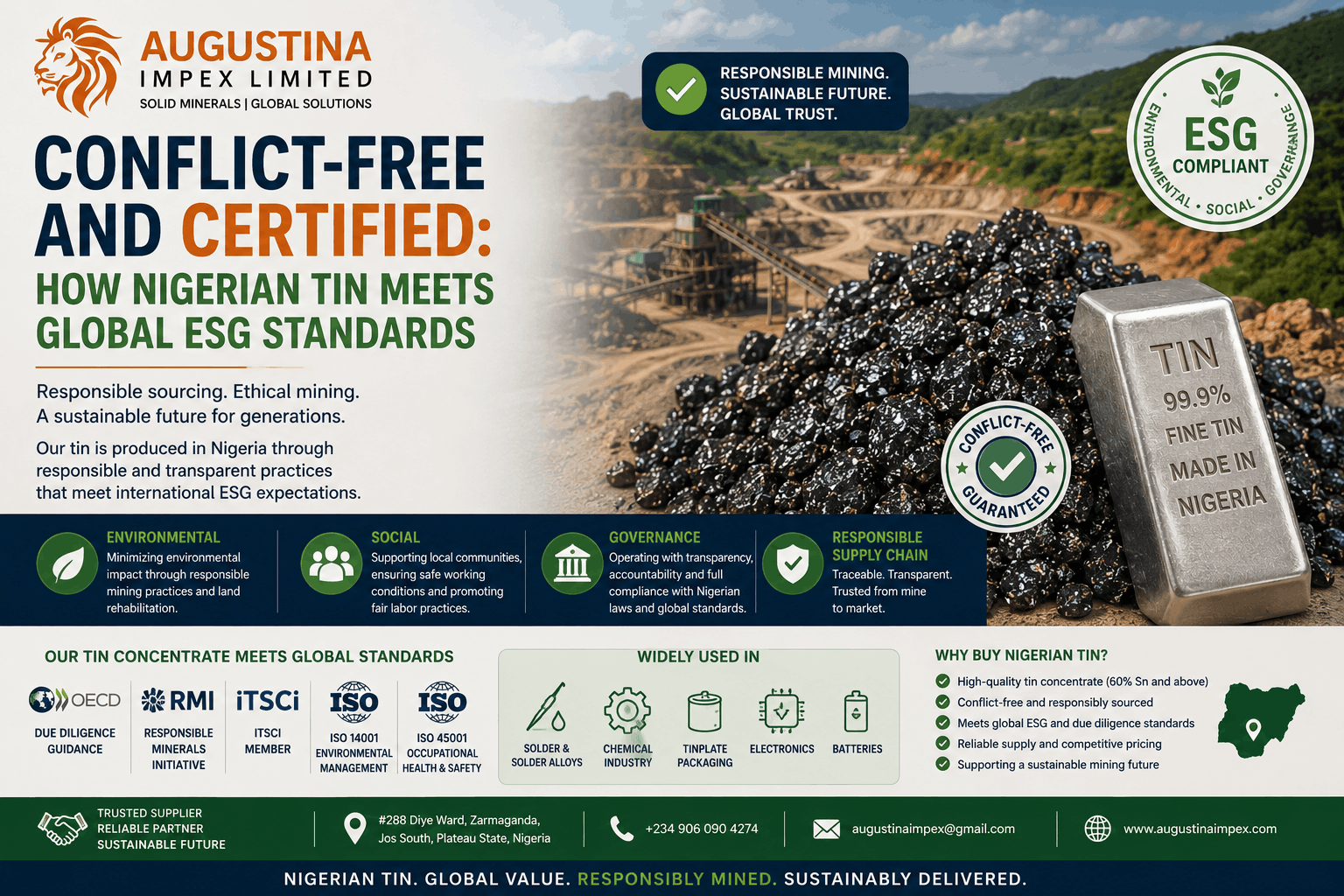
Conflict-Free Nigerian Tin Meets Global ESG Standards
Conflict-Free and Certified: How Nigerian Tin Meets Global ESG Standards By Kolawole King, CEO —…