
Lithium has emerged as one of the world’s most strategic minerals due to its critical role in rechargeable batteries, electric vehicles, renewable energy storage systems, and advanced electronics. As global demand for lithium continues to increase, understanding lithium ore quality has become essential for miners, investors, traders, processors, and buyers.
One of the most important factors used to evaluate lithium ore is its lithium oxide content, commonly referred to as Li₂O grade. The Li₂O grade directly influences the value of lithium ore, processing costs, market demand, and overall profitability.
Whether you are involved in lithium exploration, mining, mineral processing, trading, or investment, understanding Li₂O grades is essential for making informed business decisions. This article provides a comprehensive guide to Li₂O grades in lithium ore and explains why they are so important in today’s rapidly growing lithium industry.

What Is Li₂O?
Li₂O stands for lithium oxide, a chemical compound used as a standard measurement for determining lithium concentration within an ore deposit.
Although lithium itself is the valuable element, lithium content is commonly expressed as Li₂O percentage because it provides a standardized method for comparing lithium-bearing materials across the mining industry.
For example:
- 1.0% Li₂O means the ore contains the equivalent of 1.0% lithium oxide.
- 2.0% Li₂O indicates a higher lithium concentration.
- 5.0% Li₂O represents significantly richer lithium ore.
The higher the Li₂O percentage, the more lithium is present within the ore.
Why Li₂O Grade Matters
Li₂O grade is one of the most important factors affecting the economics of a lithium project.
Higher-grade ore generally offers:
- Greater market value.
- Lower processing costs.
- Higher recovery potential.
- Increased profitability.
- Better export opportunities.
- Stronger demand from buyers.
Lower-grade ore can still be commercially viable, but it often requires additional beneficiation and processing to achieve marketable lithium concentrations.
Common Lithium-Bearing Minerals
Several minerals contain lithium, but the most commercially important are:
Spodumene
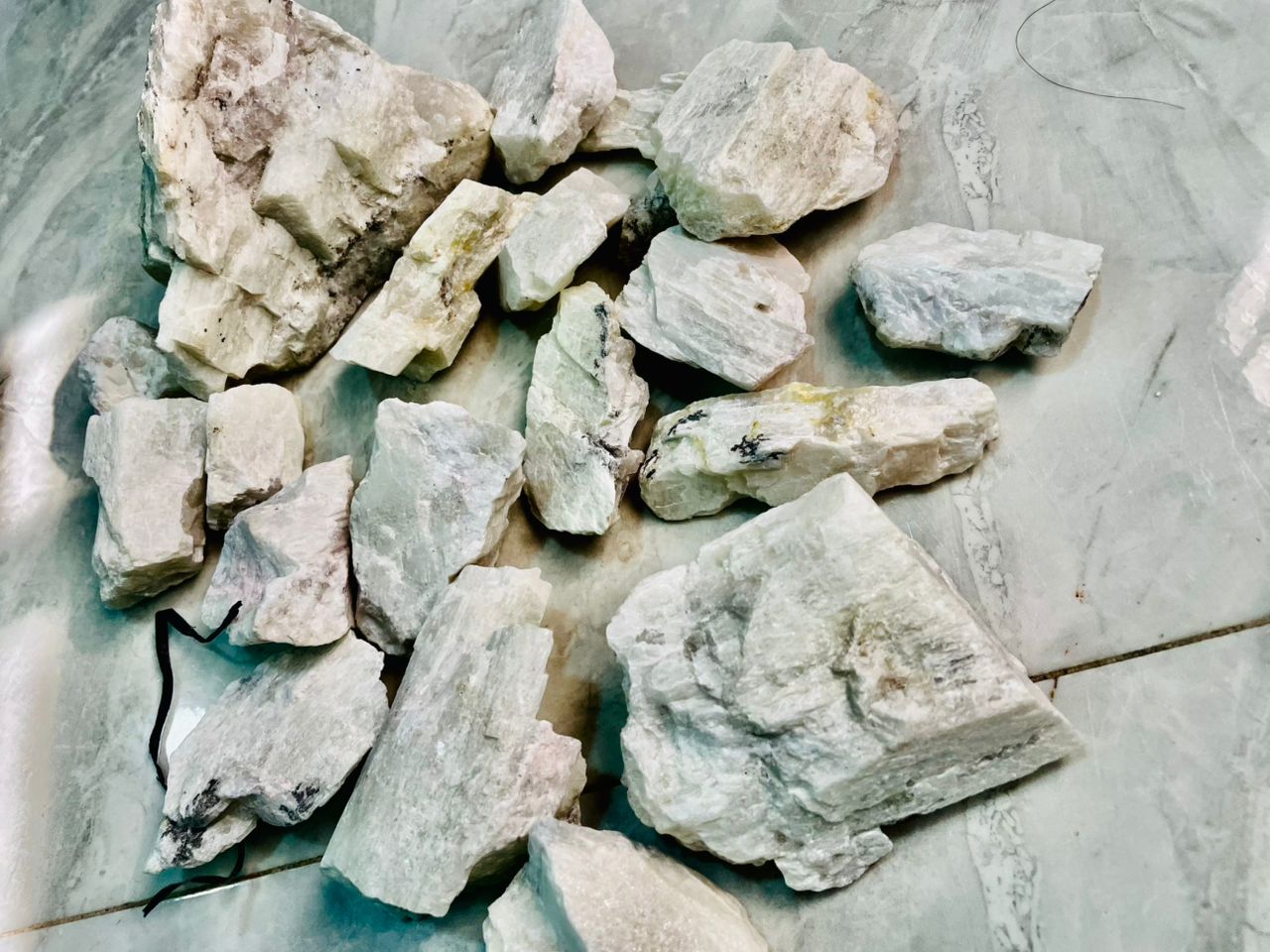
Spodumene is currently the world’s most important hard-rock lithium mineral.
It is widely used for producing lithium concentrates and lithium chemicals.
Lepidolite
Lepidolite is a lithium-bearing mica mineral that contains significant lithium content but is generally more challenging to process.
Petalite
Petalite contains lithium and is commonly used in specialty glass and ceramic applications.
Amblygonite
Amblygonite is another lithium-bearing phosphate mineral that can contribute to lithium production.
Among these minerals, spodumene remains the dominant source of lithium in many mining regions worldwide.
Classification of Li₂O Grades
Lithium ore grades are typically classified into several categories.
Low-Grade Lithium Ore
Low-grade lithium ore generally contains:
- 0.5% to 1.0% Li₂O
Characteristics:
- Lower market value.
- Requires extensive processing.
- Higher beneficiation costs.
- Often unsuitable for direct export.
Mining companies may need to upgrade low-grade ore before it becomes economically attractive.
Medium-Grade Lithium Ore
Medium-grade lithium ore typically contains:
- 1.0% to 2.0% Li₂O
Characteristics:
- Commercially viable in many projects.
- Moderate processing requirements.
- Growing market demand.
- Suitable for beneficiation into higher-grade concentrates.
Many emerging lithium projects operate successfully within this grade range.
High-Grade Lithium Ore
High-grade lithium ore generally contains:
- 2.0% to 4.0% Li₂O
Characteristics:
- Strong market demand.
- Better processing economics.
- Improved recovery rates.
- Higher profitability.
These deposits are highly attractive to investors and lithium processors.
Premium-Grade Lithium Ore
Premium-grade lithium ore typically contains:
- Above 4.0% Li₂O
Characteristics:
- Exceptional quality.
- Lower processing costs.
- High commercial value.
- Strong international demand.
Premium-grade lithium deposits are relatively rare and highly sought after.
The Importance of Spodumene Concentrate Grades
After mining, lithium ore is often processed into spodumene concentrate.
Typical spodumene concentrate grades include:
- 4% Li₂O concentrate
- 5% Li₂O concentrate
- 6% Li₂O concentrate
Among these, 6% Li₂O spodumene concentrate has become an industry benchmark and is widely traded in international markets.
Higher concentrate grades typically command premium prices because they reduce downstream processing requirements.
How Li₂O Grade Affects Pricing
The value of lithium ore is closely linked to its Li₂O content.
Several factors influence pricing:
Higher Lithium Content
Higher grades contain more recoverable lithium and therefore command higher prices.
Processing Costs
Low-grade ore requires additional beneficiation and refining, which increases costs.
Market Demand
Strong demand from battery manufacturers can increase the value of higher-grade lithium materials.
Recovery Efficiency
Higher-grade ore generally produces better recovery rates during processing.
As a result, buyers carefully evaluate Li₂O grades before entering supply agreements.
The Role of Laboratory Analysis
Accurate determination of Li₂O grade requires professional laboratory testing.
Common analytical techniques include:
- X-Ray Fluorescence (XRF)
- Inductively Coupled Plasma (ICP)
- Atomic Absorption Spectroscopy (AAS)
Independent laboratories provide detailed reports showing:
- Li₂O percentage
- Mineral composition
- Impurity levels
- Recovery potential
Reliable laboratory analysis is essential for establishing product quality and market value.
Impurities That Affect Lithium Ore Quality
While Li₂O grade is important, buyers also evaluate impurities.
Common impurities include:
- Iron (Fe)
- Aluminum (Al)
- Sodium (Na)
- Potassium (K)
- Calcium (Ca)
- Magnesium (Mg)
Excessive impurity levels can:
- Increase processing costs.
- Reduce concentrate quality.
- Affect battery performance.
- Lower market value.
For this reason, buyers often consider both Li₂O grade and impurity levels when evaluating lithium ore.
Beneficiation and Grade Improvement
Many lithium deposits contain ore that requires beneficiation before sale or export.
Beneficiation methods may include:
- Crushing
- Grinding
- Screening
- Dense media separation
- Flotation
- Magnetic separation
The goal is to increase Li₂O concentration while removing unwanted materials.
A successful beneficiation process can transform medium-grade ore into a high-value concentrate suitable for international markets.
Global Demand for High-Grade Lithium Ore
The rapid expansion of electric vehicle manufacturing has significantly increased demand for lithium.
Major consumers include:
- Battery manufacturers.
- Electric vehicle producers.
- Energy storage companies.
- Electronics manufacturers.
Countries leading lithium consumption include:
- China
- United States
- Japan
- South Korea
- Germany
As global battery production expands, demand for high-grade lithium ore and spodumene concentrate is expected to remain strong.
Opportunities for African Lithium Producers
Africa has emerged as an important region for lithium exploration and production.
Countries such as:
- Nigeria
- Zimbabwe
- Namibia
- Democratic Republic of Congo
- Mali
have attracted significant investment from international mining companies.
For African producers, understanding Li₂O grades is essential for:
- Resource evaluation.
- Project development.
- Mineral processing.
- Export marketing.
- Investor engagement.
The ability to produce higher-grade lithium products can significantly improve competitiveness in international markets.
Future Trends in Lithium Ore Grading
Several trends are expected to shape the future of lithium mining and processing:
- Growing demand for battery-grade materials.
- Increased investment in lithium beneficiation plants.
- Expansion of electric vehicle manufacturing.
- Improved mineral processing technologies.
- Greater emphasis on supply chain security.
- Increased exploration activity worldwide.
As these trends continue, Li₂O grades will remain one of the most important indicators of lithium ore quality and value.
Conclusion
Understanding Li₂O grades in lithium ore is fundamental to evaluating the quality, value, and commercial potential of lithium deposits. Li₂O content directly affects pricing, processing requirements, recovery rates, and overall project profitability.
Higher-grade lithium ore generally provides stronger economic returns, while lower-grade ore often requires beneficiation to achieve marketable quality. In addition to Li₂O content, factors such as impurity levels, recovery potential, and processing efficiency also play important roles in determining lithium ore value.
As global demand for lithium continues to rise due to the rapid growth of electric vehicles, renewable energy storage systems, and advanced technologies, knowledge of Li₂O grades will remain essential for miners, investors, traders, and buyers seeking to participate successfully in the expanding lithium industry.
-
Previous Post
The Global Lithium Supply Chain Explained
-
Next Post
Tin Ore Supply and Export from Nigeria
Post a comment
Related Posts
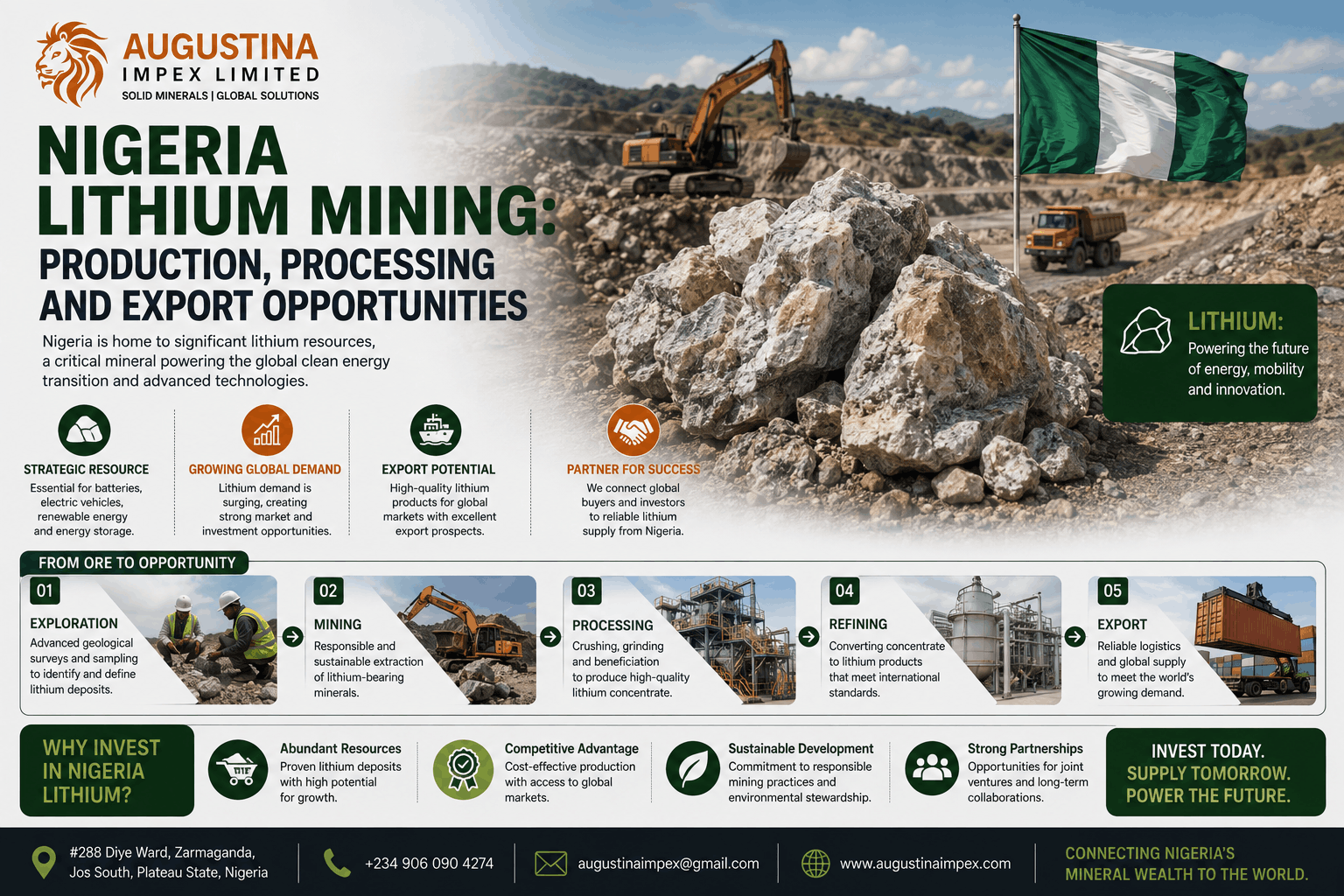
Nigeria Lithium Mining: Production, Processing & Export
Nigeria Lithium Mining: Production, Processing and Export Opportunities By Kolawole King, CEO — Augustina Impex…

Nigeria Rare Earth Minerals: Deposits & Market Potential
Nigeria Rare Earth Minerals: Deposits, Applications and Global Market Potential By Kolawole King, CEO —…
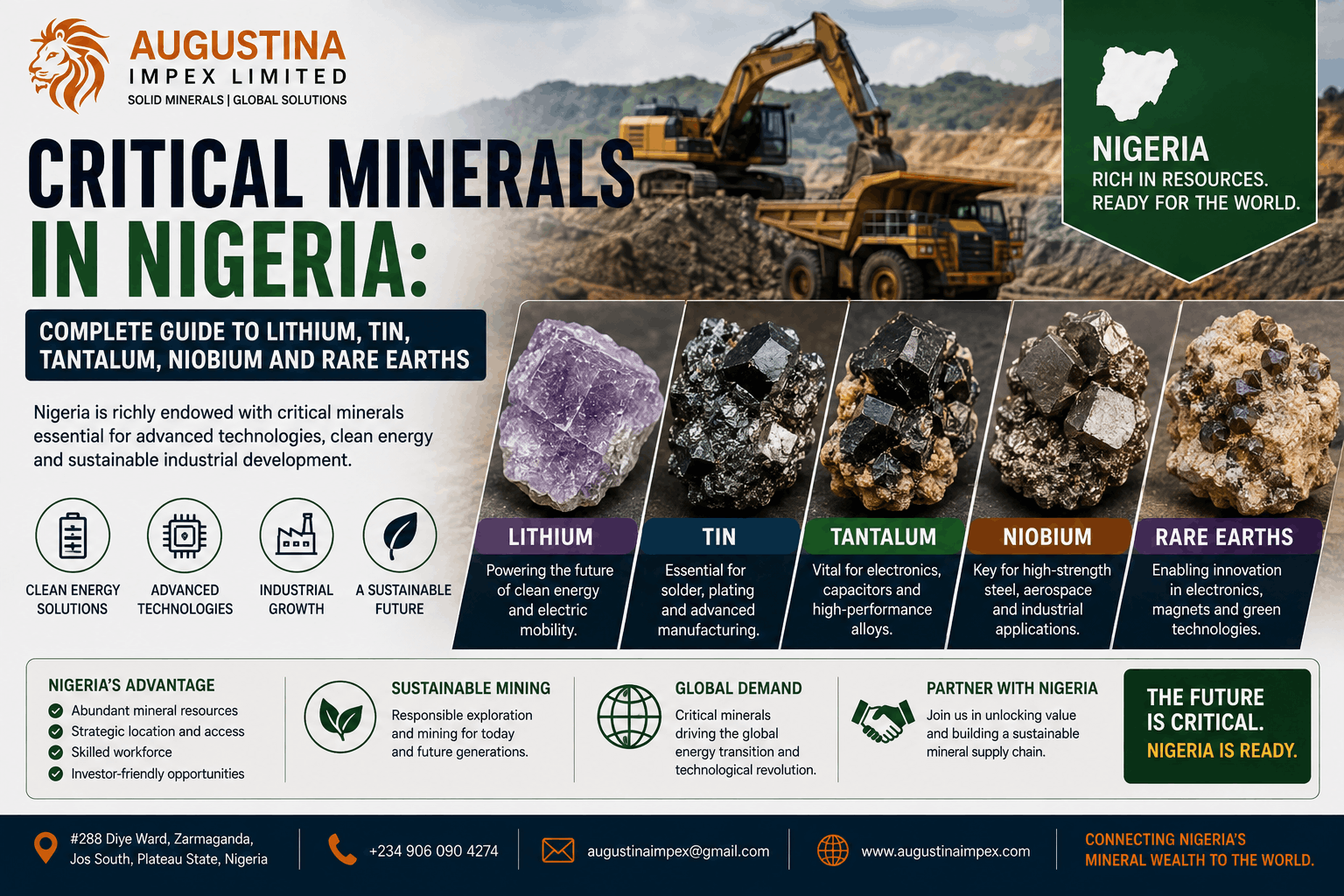
Nigeria Critical Minerals Guide: Lithium, Tin & Rare Earths
Critical Minerals in Nigeria: Complete Guide to Lithium, Tin, Tantalum, Niobium and Rare Earths By…
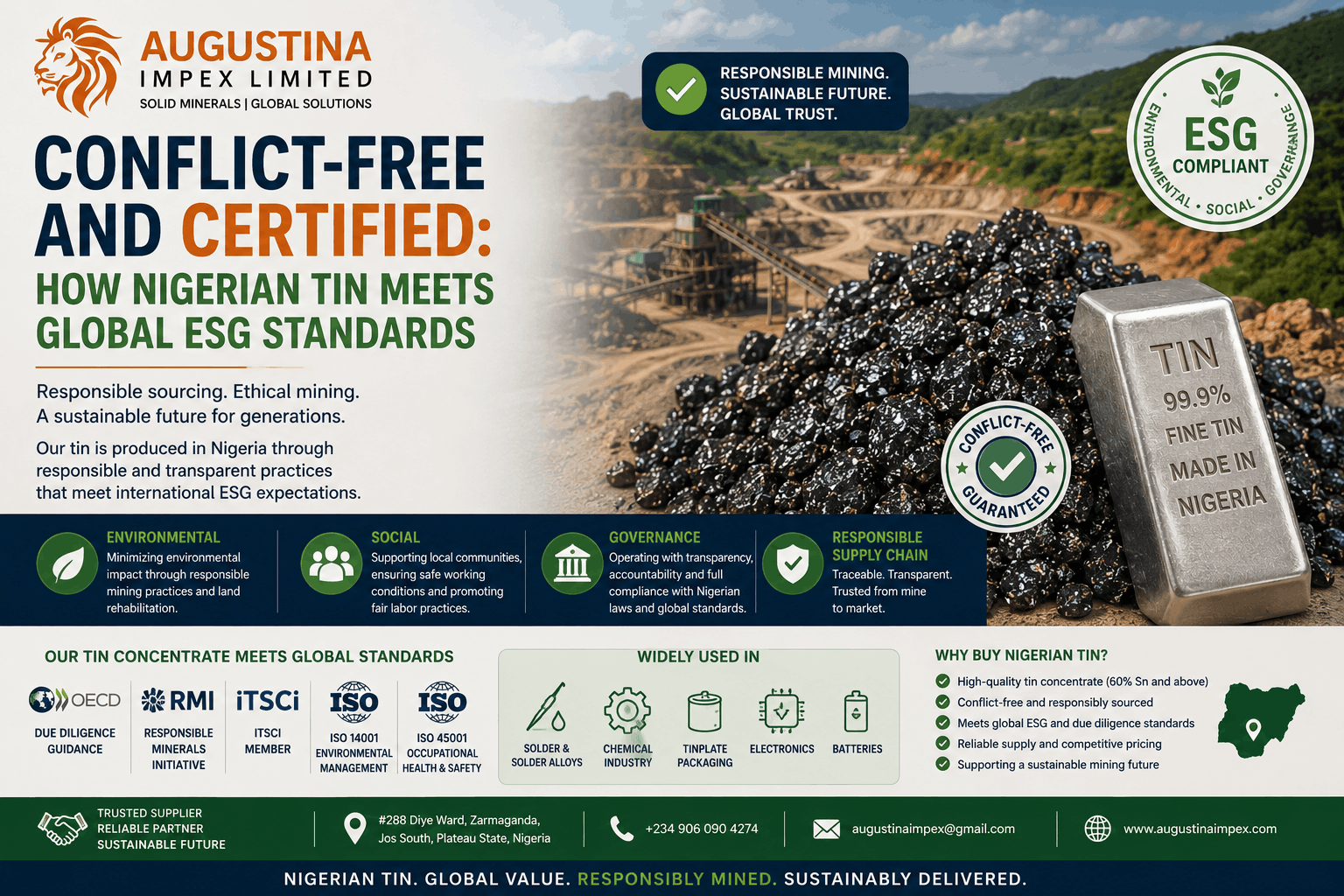
Conflict-Free Nigerian Tin Meets Global ESG Standards
Conflict-Free and Certified: How Nigerian Tin Meets Global ESG Standards By Kolawole King, CEO —…