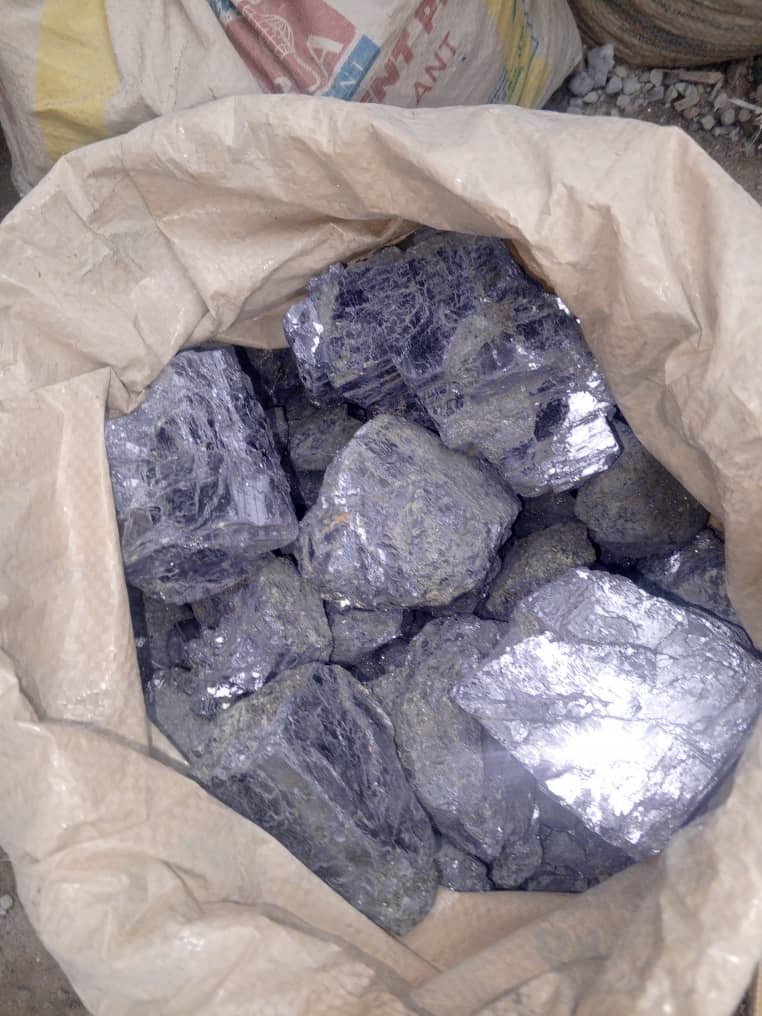

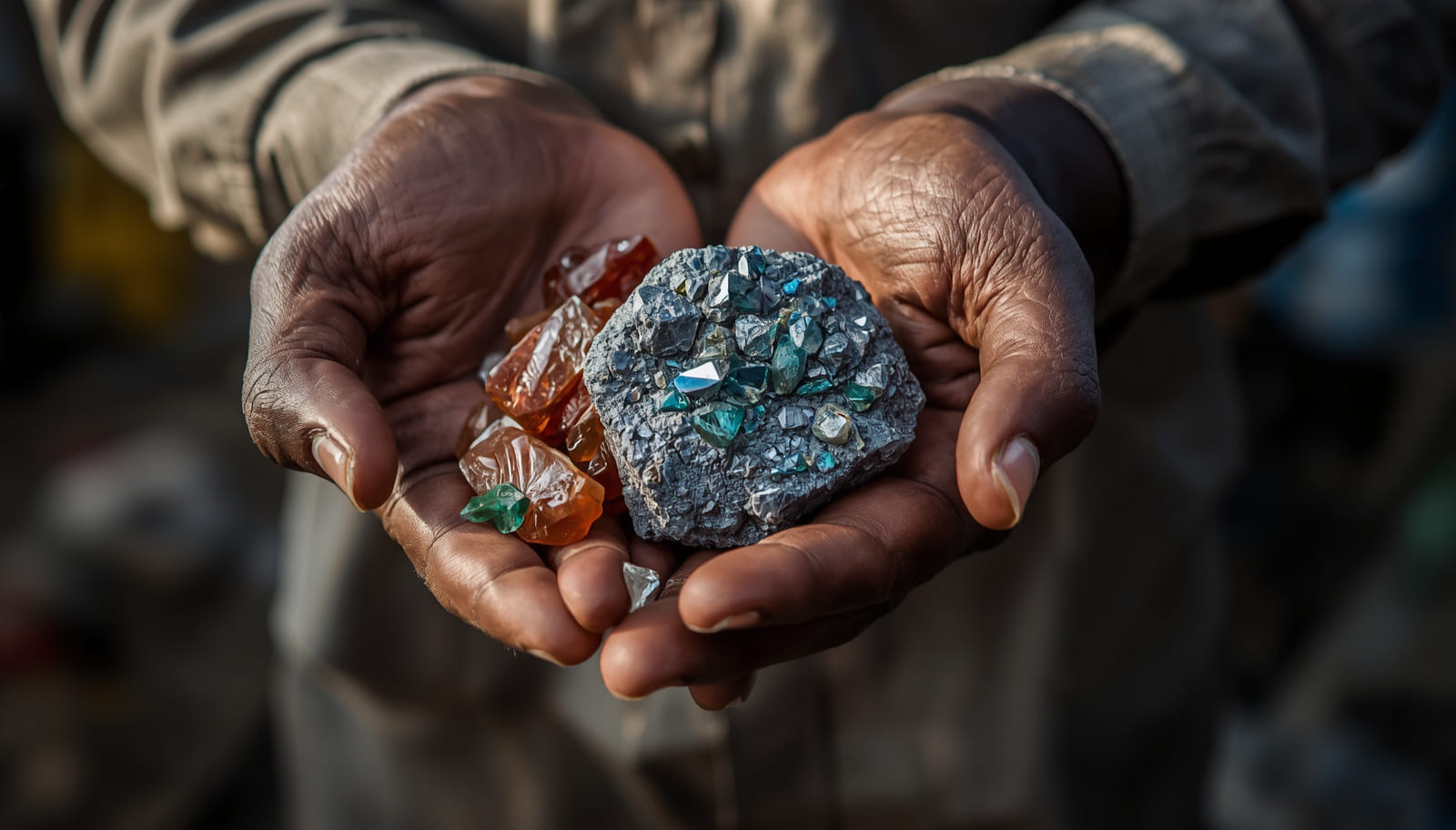
Nigeria is one of Africa’s most mineral-rich countries and possesses significant deposits of strategic, industrial, and critical minerals. As global demand continues to grow for battery minerals, rare earth elements, heavy mineral sands, and industrial raw materials, international buyers are increasingly looking toward Nigeria as a potential sourcing destination.
The country hosts commercially viable deposits of lithium ore, tin ore, columbite, tantalite, zircon sand, monazite sand, ilmenite, lead ore, zinc ore, copper ore, fluorite, silica sand, and numerous other mineral commodities. These resources have attracted attention from traders, manufacturers, refiners, processors, investors, and industrial consumers from around the world.
However, sourcing minerals from any emerging market requires careful planning, thorough due diligence, and proper risk management. While Nigeria offers significant opportunities, buyers who fail to conduct adequate verification may expose themselves to unnecessary commercial, operational, and financial risks.
This article provides a practical guide for international buyers, traders, investors, and industrial consumers seeking to source minerals from Nigeria safely and successfully.

Why Nigeria Has Become a Major Mineral Sourcing Destination
Several factors have contributed to growing international interest in Nigerian minerals.
Abundant Mineral Resources
Nigeria possesses significant reserves of:
- Lithium Ore (Spodumene)
- Tin Ore (Cassiterite)
- Columbite
- Tantalite
- Coltan
- Monazite Sand
- Zircon Sand
- Ilmenite
- Lead Ore
- Zinc Ore
- Copper Ore
- Fluorite
- Gold
- Iron Ore
- Silica Sand
Strategic Location
Nigeria’s location provides access to:
- Europe
- Asia
- The Middle East
- North America
making it an attractive source of mineral commodities.
Growing Mining Sector
The Nigerian mining industry continues to attract investment as government and private sector stakeholders work to expand mineral production and processing capacity.
Common Risks Faced by Mineral Buyers
Before discussing safe sourcing procedures, it is important to understand some of the risks that international buyers may encounter.
Unverified Suppliers
Not every individual claiming to have access to minerals actually possesses the products being offered.
Inaccurate Assay Reports
Some assay reports may be outdated, incomplete, or not representative of available material.
Licensing Issues
Minerals should ideally be sourced through properly licensed operators and legally compliant supply chains.
Quality Variations
Mineral grades can vary significantly between deposits and suppliers.
Documentation Problems
Improper export documentation can result in delays or regulatory complications.
Payment Risks
Poorly structured transactions can expose buyers to financial losses.
Fortunately, these risks can be substantially reduced through proper due diligence.
Step 1: Verify the Supplier
The first step in safe mineral sourcing is supplier verification.
Before discussing commercial terms, buyers should establish that the supplier is a legitimate business entity.
Important checks include:
Corporate Registration
Confirm:
- Company registration documents
- Corporate Affairs Commission (CAC) records
- Business licenses
Physical Presence
Verify:
- Office location
- Processing facilities
- Warehouses
- Mining operations
Business History
Review:
- Years in operation
- Previous transactions
- Industry references
- Company profile
A credible supplier should be willing to provide this information.
Step 2: Verify the Mineral Source
Understanding the origin of the material is essential.
Buyers should request information regarding:
Mine Location
Obtain:
- GPS coordinates
- Mining site videos
- Photographs
- Geological information
Production Capacity
Determine:
- Available stock
- Monthly production capacity
- Expansion potential
Ownership Structure
Clarify whether the supplier is:
- Mine owner
- Aggregator
- Processor
- Exporter
- Broker
This information helps buyers understand the supply chain.
Step 3: Request Independent Assay Reports
Assay reports are among the most important documents in mineral transactions.
For example:
Lithium Ore
Important parameters include:
- Li₂O content
- Fe₂O₃ levels
- Moisture content
Tin Ore
Key parameters include:
- Sn content
- Impurity levels
Monazite Sand
Important indicators include:
- TREO content
- Thorium levels
- Uranium levels
Zircon Sand
Key values include:
- ZrO₂ content
- Fe₂O₃ content
- TiO₂ content
Whenever possible, buyers should obtain independent laboratory verification.
Step 4: Conduct Site Visits
One of the safest ways to verify a supplier is through a physical inspection.
Site visits allow buyers to evaluate:
- Available stock
- Production capability
- Processing equipment
- Workforce
- Infrastructure
A site visit often reveals information that cannot be obtained through emails or videos alone.
Many experienced international buyers insist on visiting Nigeria before concluding major transactions.
Step 5: Understand Processing Capabilities
Not all minerals are sold in raw form.
Many international buyers require:
- Concentrates
- Beneficiated products
- Upgraded materials
For example:
Tin Ore
Often upgraded through gravity concentration.
Monazite Sand
Usually concentrated through heavy mineral processing systems.
Zircon Sand
Typically processed into zircon concentrates.
Ilmenite
Often upgraded through beneficiation systems.
Buyers should understand exactly how the material is processed and whether it meets their specifications.
Step 6: Verify Export Documentation
Proper export documentation is essential.
Common documents may include:
- Commercial Invoice
- Packing List
- Certificate of Origin
- Export Permit
- Quality Certificate
- Inspection Reports
- Bill of Lading
- Customs Documentation
Requirements vary depending on:
- Product type
- Destination country
- Applicable regulations
Professional export support can significantly reduce risks.
Step 7: Structure Payments Carefully
Payment structure is one of the most important risk management tools.
Common arrangements include:
Trial Orders
Many buyers begin with smaller trial quantities before committing to larger contracts.
Milestone Payments
Payments may be linked to specific transaction stages.
Inspection-Based Transactions
Payment may occur following successful inspection and verification.
The appropriate structure depends on the transaction and the relationship between the parties.
Step 8: Work with Local Experts
International buyers often benefit from local support.
Qualified local partners can assist with:
- Supplier verification
- Site inspections
- Logistics coordination
- Due diligence
- Negotiations
- Export documentation
Local expertise often helps avoid costly mistakes.
Step 9: Understand Nigerian Mining Regulations
Buyers should familiarize themselves with the Nigerian mining framework.
Important considerations include:
- Mining licenses
- Export regulations
- Environmental requirements
- Local content rules
- Tax obligations
Understanding the regulatory environment improves decision-making.
Step 10: Build Long-Term Relationships
Successful mineral sourcing is rarely based on a single transaction.
Long-term relationships often produce:
- Better pricing
- Consistent quality
- Reliable supply
- Improved communication
- Greater transparency
Many of the most successful international buyers have spent years building trusted supplier networks within Nigeria.
Minerals Commonly Sourced from Nigeria
Nigeria offers a wide range of sourcing opportunities.
Lithium Ore
Growing demand from battery manufacturers has increased international interest in Nigerian lithium deposits.
Tin Ore
Plateau State and Nasarawa State remain important tin-producing regions.
Monazite Sand
Monazite concentrates are attracting attention due to their rare earth element content.
Zircon Sand
Used extensively in ceramics, foundries, and refractory industries.
Ilmenite
Important feedstock for titanium dioxide production.
Columbite and Tantalite
Widely used in electronics and advanced manufacturing applications.
Warning Signs Buyers Should Watch For
Buyers should proceed carefully if a supplier:
- Refuses site inspections
- Cannot provide assay reports
- Avoids discussing mine ownership
- Provides inconsistent information
- Refuses independent verification
- Cannot demonstrate production capability
These situations require additional scrutiny.
The Future of Mineral Sourcing from Nigeria
The outlook for Nigeria’s mining sector remains positive.
Several factors support future growth:
- Rising demand for critical minerals
- Increased foreign investment
- Expansion of processing facilities
- Growing export opportunities
- Government support for mining development
As the sector continues to mature, Nigeria is likely to become an increasingly important source of strategic minerals for international markets.
Conclusion
Nigeria offers tremendous opportunities for buyers seeking access to lithium ore, tin ore, monazite sand, zircon sand, ilmenite, and other valuable minerals. However, successful sourcing requires careful planning, thorough due diligence, supplier verification, independent testing, proper documentation, and strong local support.
By following best practices and building relationships with credible suppliers, buyers can significantly reduce risks and create sustainable supply chains that support long-term commercial success.
For international traders, investors, processors, and manufacturers, sourcing minerals from Nigeria safely is not only possible—it can be highly rewarding when approached professionally and strategically.
At Augustina Impex Limited, we assist buyers with mineral sourcing, supplier verification, due diligence, export facilitation, and market intelligence to help create secure and successful mineral transactions throughout Nigeria.
-
Previous Post
Challenges Facing Lithium Export in Nigeria
Post a comment
Related Posts
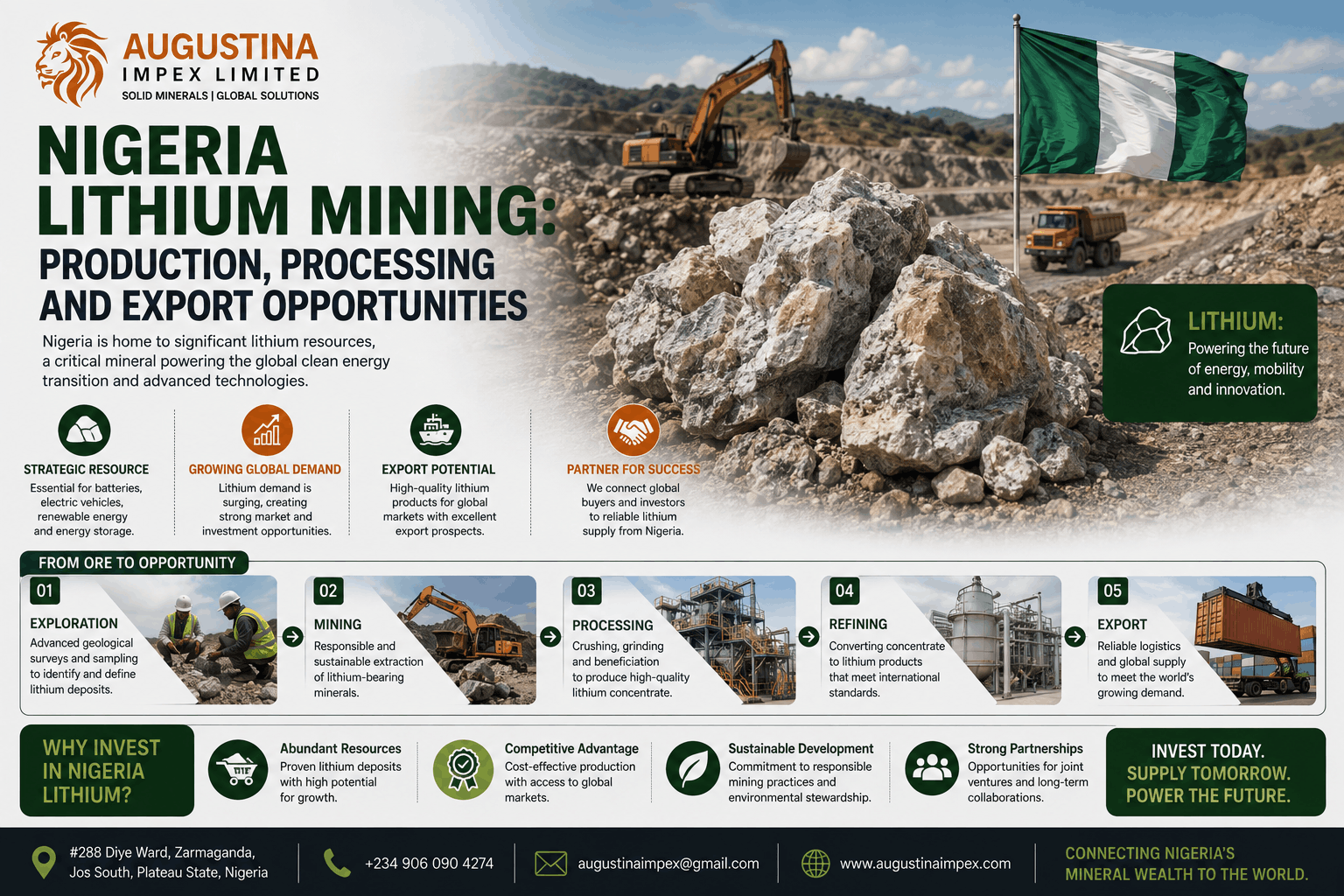
Nigeria Lithium Mining: Production, Processing & Export
Nigeria Lithium Mining: Production, Processing and Export Opportunities By Kolawole King, CEO — Augustina Impex…

Nigeria Rare Earth Minerals: Deposits & Market Potential
Nigeria Rare Earth Minerals: Deposits, Applications and Global Market Potential By Kolawole King, CEO —…
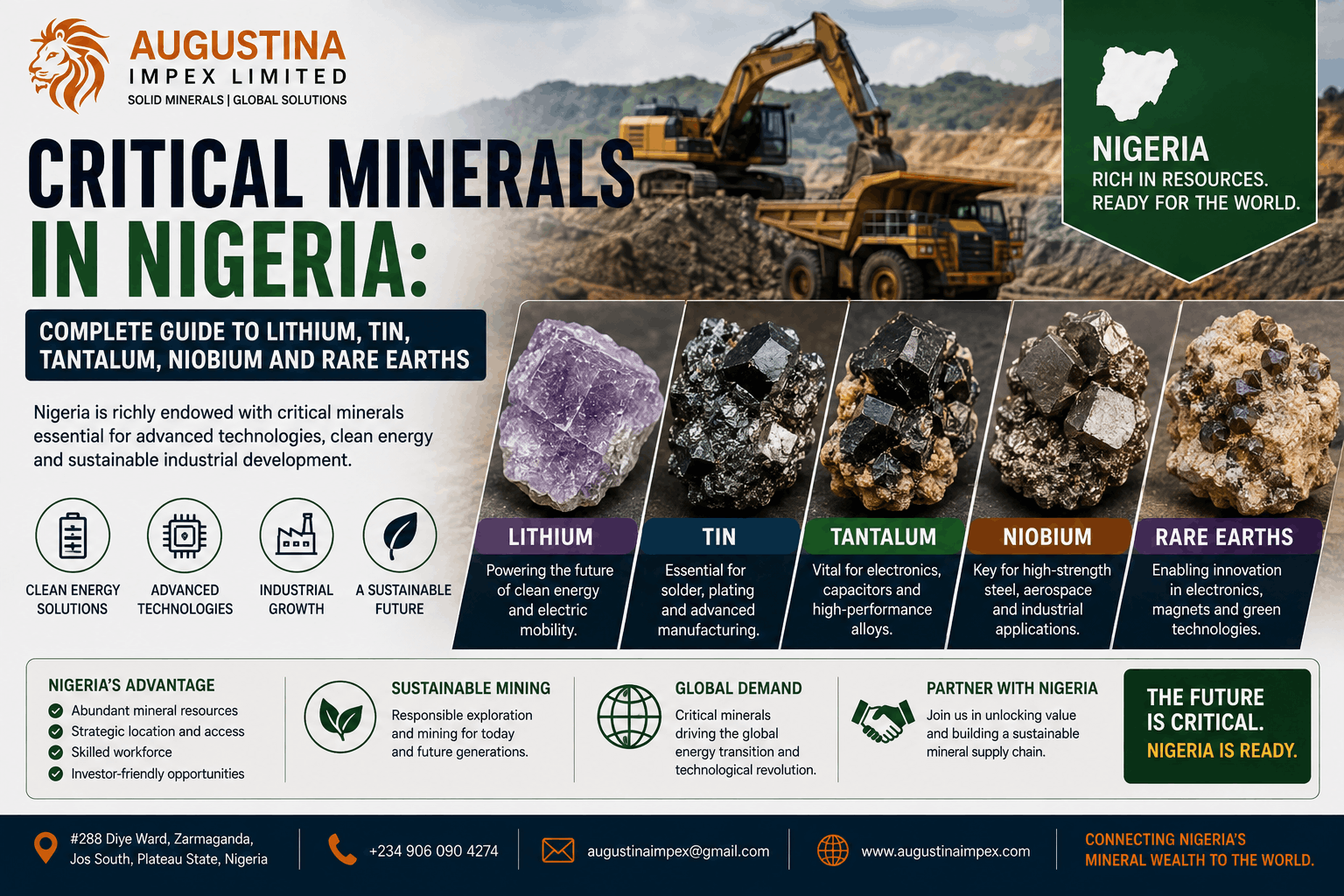
Nigeria Critical Minerals Guide: Lithium, Tin & Rare Earths
Critical Minerals in Nigeria: Complete Guide to Lithium, Tin, Tantalum, Niobium and Rare Earths By…
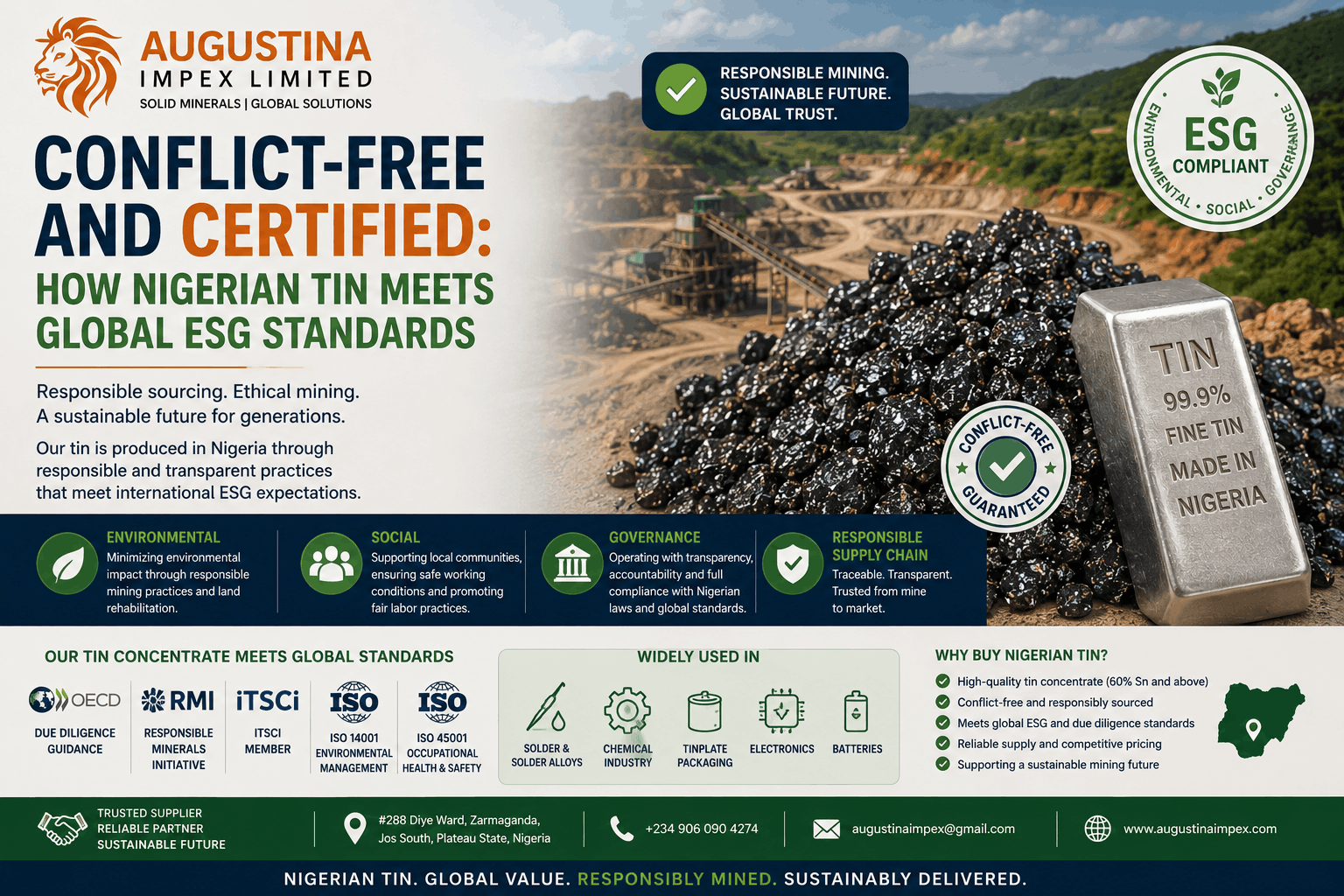
Conflict-Free Nigerian Tin Meets Global ESG Standards
Conflict-Free and Certified: How Nigerian Tin Meets Global ESG Standards By Kolawole King, CEO —…