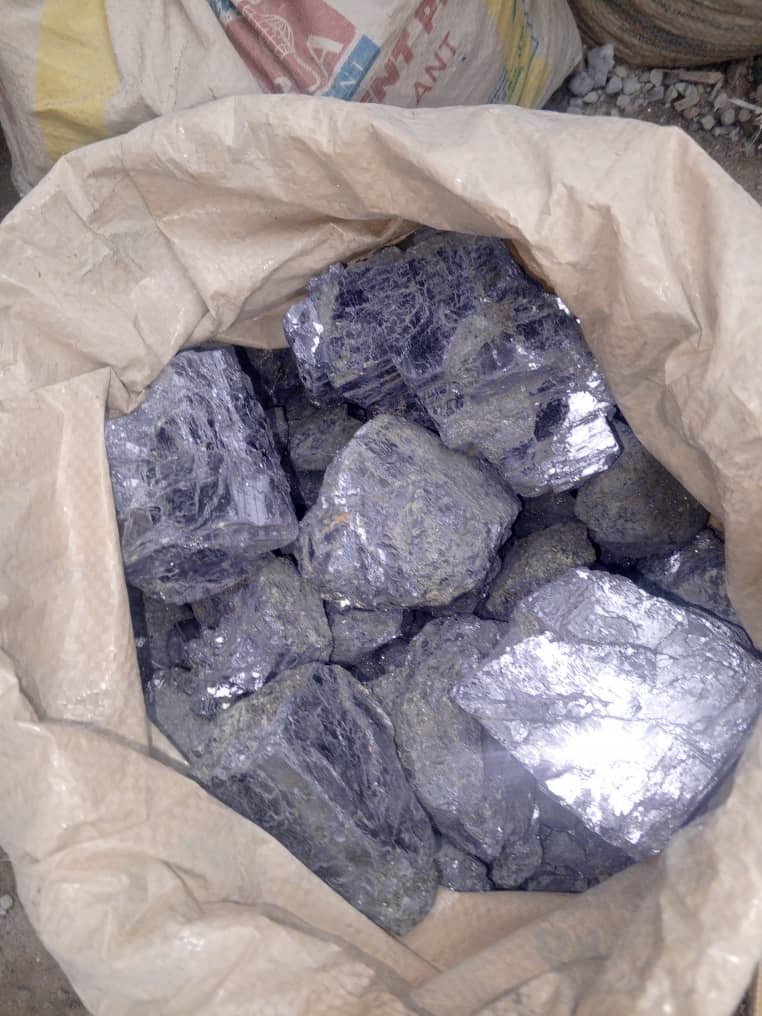
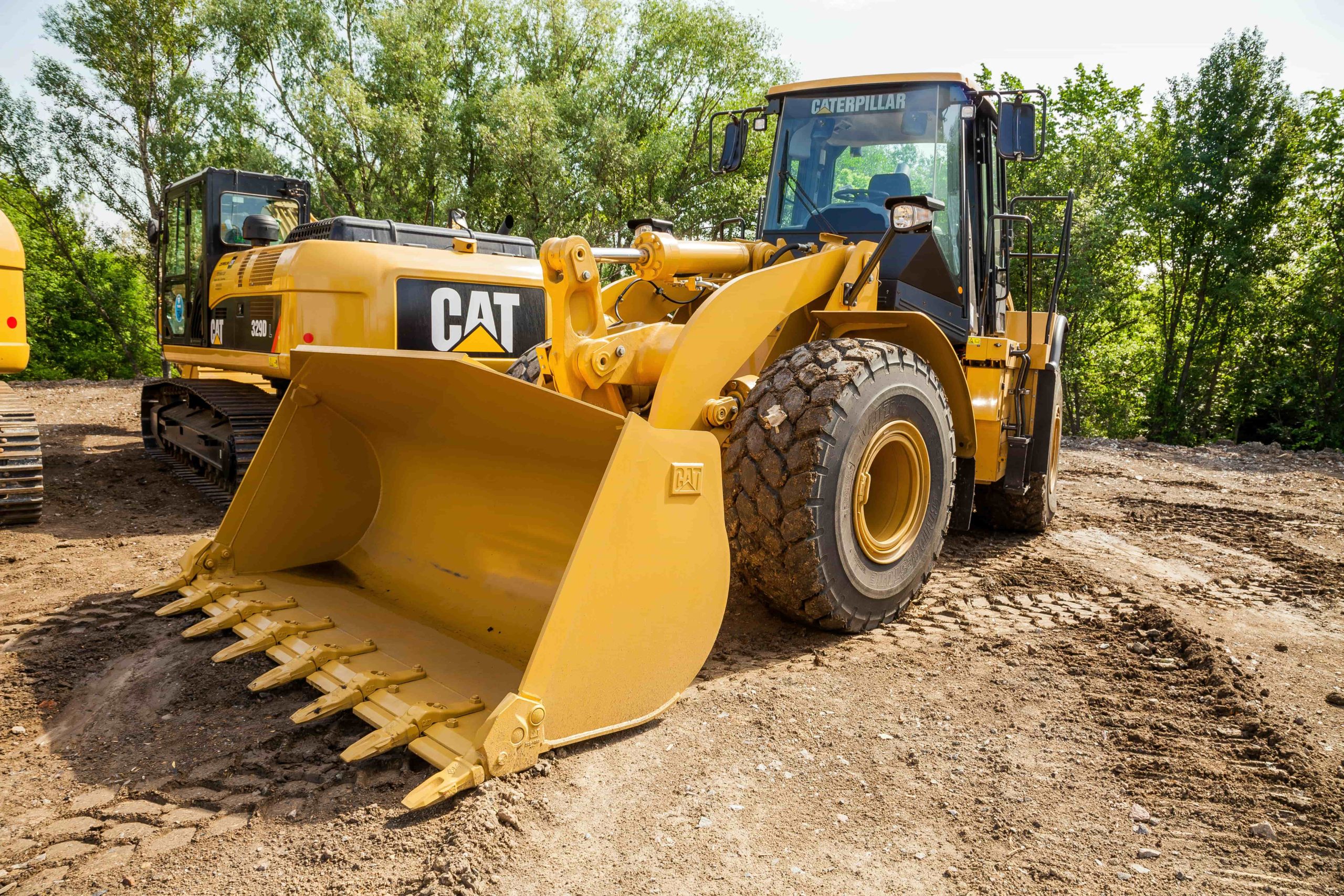

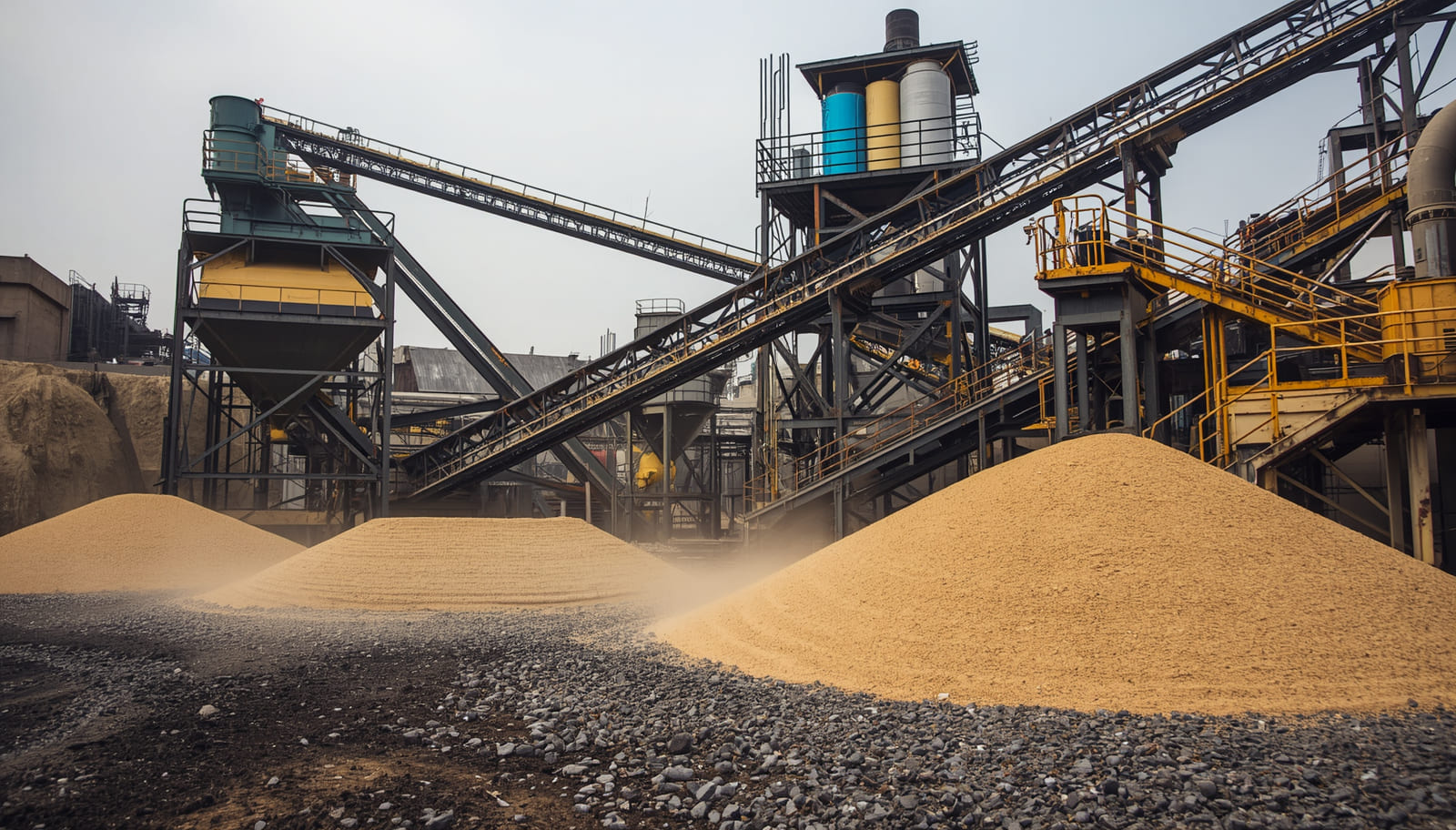
Nigeria is blessed with a wide variety of mineral resources, many of which remain underexplored and underdeveloped despite their enormous economic potential. Among these resources are heavy mineral sands, a group of valuable minerals that have become increasingly important in modern industrial, technological, and energy-related applications.
Heavy mineral sands contain minerals such as zircon, ilmenite, rutile, monazite, garnet, and other associated strategic minerals. These materials are used in ceramics manufacturing, titanium dioxide production, rare earth processing, aerospace industries, electronics manufacturing, advanced metallurgy, renewable energy technologies, and many other industrial applications.
As global demand for strategic minerals continues to increase, Nigeria’s heavy mineral sands sector is attracting growing attention from investors, processors, exporters, and industrial consumers worldwide.
This article explores how heavy mineral sands are processed in Nigeria, the technologies involved, the minerals produced, and the opportunities available within this rapidly growing sector.

What are Heavy Mineral Sands?
Heavy mineral sands are naturally occurring sedimentary deposits that contain minerals with higher specific gravity than common sand minerals such as quartz.
Over millions of years, geological processes including weathering, erosion, transportation, and sediment deposition have concentrated these heavy minerals into economically valuable deposits.
The most common heavy minerals found in Nigeria include:
Zircon
Zircon is a zirconium silicate mineral used extensively in:
- Ceramic tiles
- Sanitary ware
- Refractory products
- Foundry applications
- Zirconium chemicals
- Nuclear technology
Ilmenite
Ilmenite is a titanium-iron oxide mineral that serves as one of the world’s most important feedstocks for titanium dioxide production.
Applications include:
- Paint pigments
- Plastics
- Paper manufacturing
- Aerospace components
- Titanium metal production
Rutile
Rutile is a naturally occurring titanium dioxide mineral valued for its exceptionally high titanium content.
It is used in:
- Titanium metal production
- Welding electrodes
- Pigment manufacturing
- Aerospace applications
Monazite
Monazite is one of the most valuable heavy mineral sand products due to its rare earth element content.
Monazite typically contains:
- Cerium
- Lanthanum
- Neodymium
- Praseodymium
- Other rare earth elements
These materials are essential for:
- Electric vehicles
- Wind turbines
- Permanent magnets
- Defense systems
- Electronics manufacturing
Garnet
Garnet is commonly used for:
- Abrasive blasting
- Waterjet cutting
- Filtration systems
- Industrial abrasives
Where Heavy Mineral Sands are Found in Nigeria
Heavy mineral sands occur in several parts of Nigeria.
Some of the most significant areas include:
Plateau State
Plateau State remains one of Nigeria’s most important heavy mineral sands producing regions.
The state contains significant deposits of:
- Monazite
- Zircon
- Ilmenite
- Rutile
- Columbite
- Tantalite
Nasarawa State
Nasarawa State hosts numerous alluvial and residual mineral deposits containing valuable heavy minerals.
Kaduna State
Certain areas of Kaduna State contain heavy mineral-bearing sediments associated with granitic and pegmatitic formations.
Niger State
Niger State continues to attract attention due to increasing discoveries of rare earth-bearing minerals and heavy mineral sands.
Other Regions
Additional occurrences exist in:
- Bauchi State
- Taraba State
- Cross River State
- Rivers State
- Akwa Ibom State
- Ondo State
The Heavy Mineral Sands Processing Chain
The processing of heavy mineral sands in Nigeria generally follows several stages.
Stage 1: Mining and Material Collection
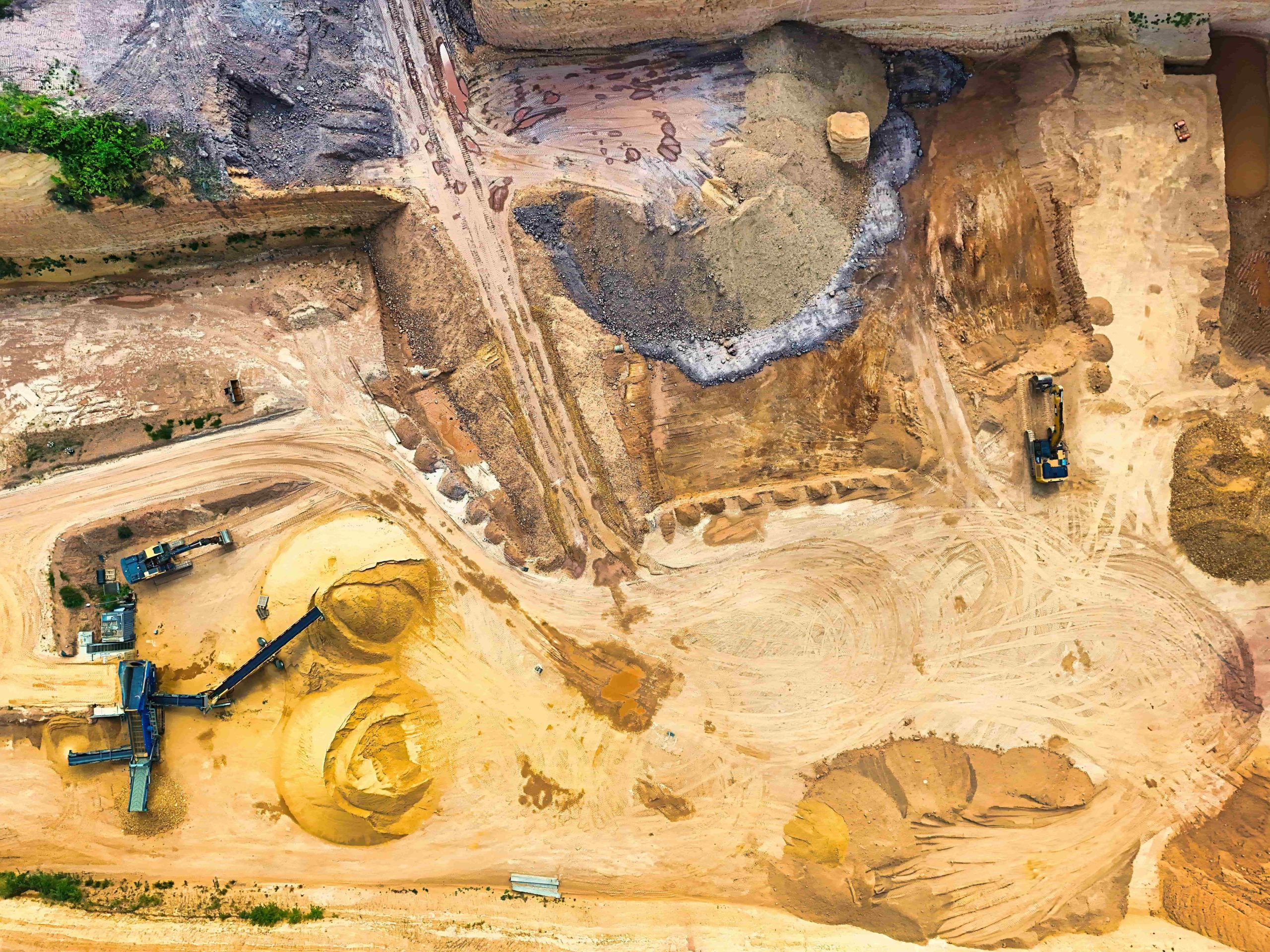
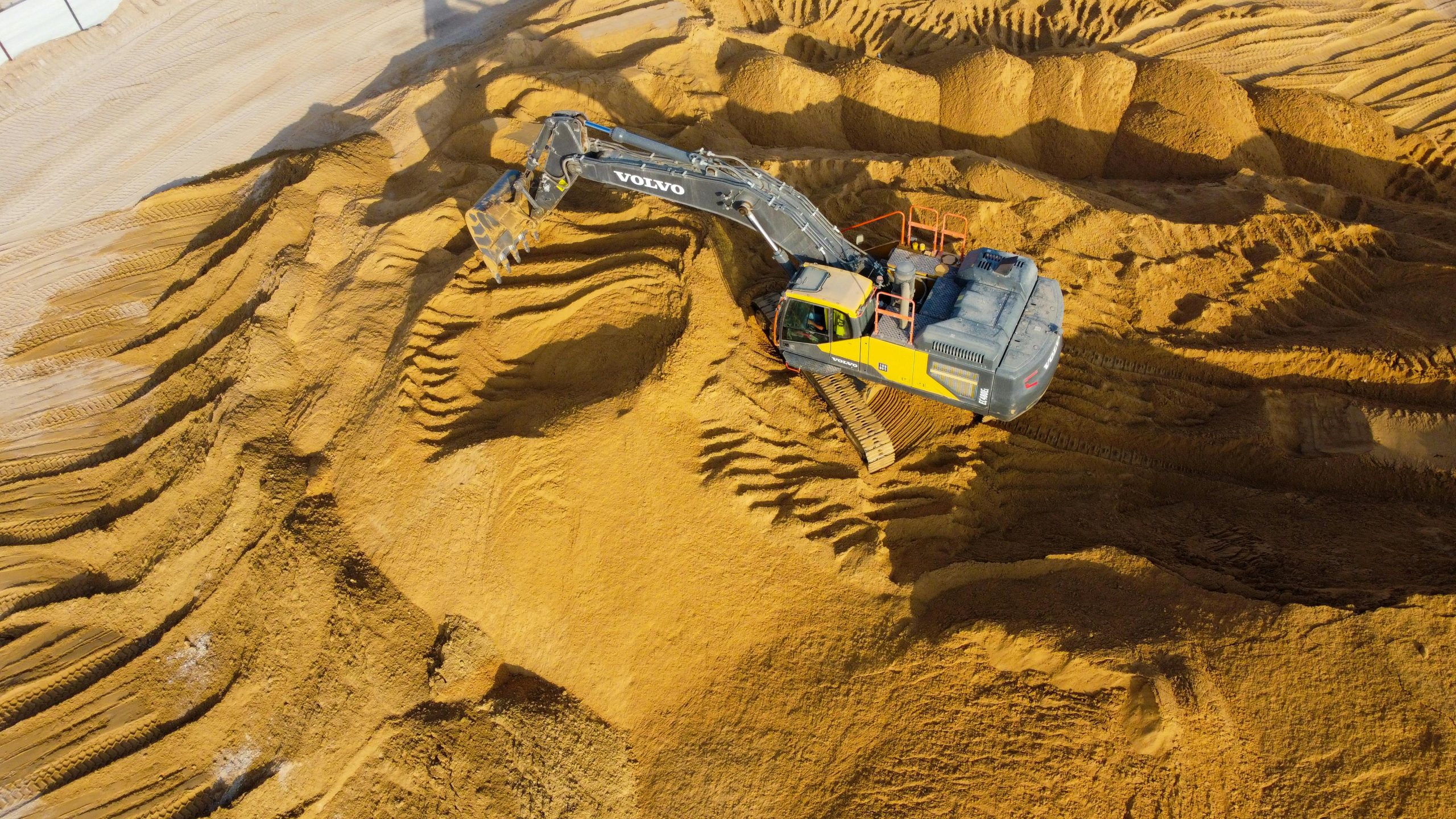
The first step involves the extraction of mineral-bearing sands from deposits.
Mining methods may include:
- Alluvial mining
- Surface mining
- Dredging
- Open pit mining
- Artisanal mining
The raw material collected at this stage contains a mixture of:
- Quartz sand
- Clay
- Organic matter
- Heavy minerals
The heavy mineral content may range from less than 1% to over 20%, depending on the deposit.
Stage 2: Washing and Screening
The mined material is transported to processing facilities where it undergoes washing.
The objective is to:
- Remove clay
- Remove organic materials
- Eliminate oversized particles
- Improve feed quality
Screening equipment is used to classify particles according to size.
This step improves the efficiency of downstream processing operations.
Stage 3: Gravity Separation
Gravity separation represents one of the most important stages in heavy mineral sands processing.
Because heavy minerals are significantly denser than quartz and other gangue materials, gravity-based systems can effectively separate them.
Common equipment includes:
- Spiral concentrators
- Shaking tables
- Jigs
- Sluice systems
At this stage, the heavy mineral content is significantly upgraded.
Stage 4: Magnetic Separation
Many heavy minerals possess different magnetic properties.
Magnetic separation equipment is therefore used to separate minerals such as:
- Ilmenite
- Monazite
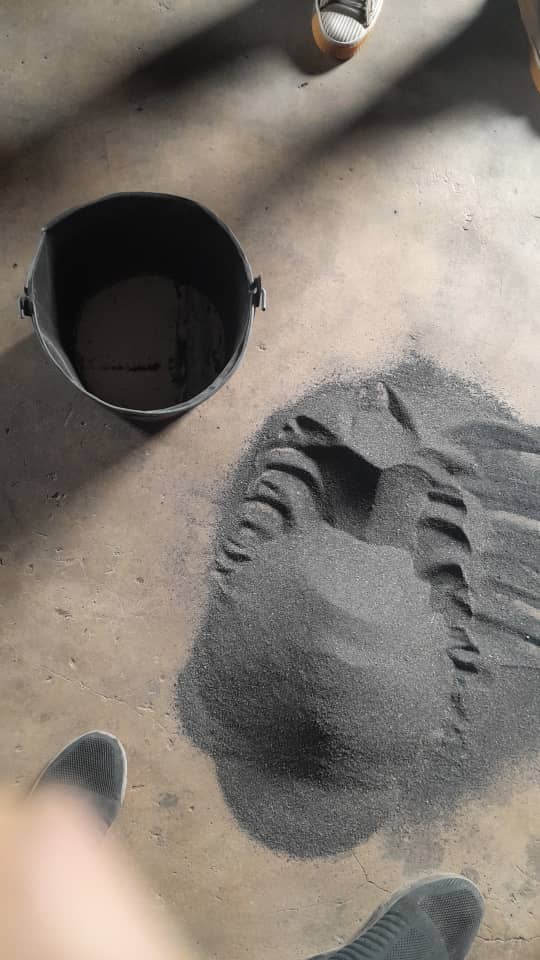
- Garnet
from non-magnetic minerals.
Both low-intensity and high-intensity magnetic separators may be employed.
Stage 5: Electrostatic Separation
Electrostatic separation further upgrades mineral concentrates by exploiting differences in electrical conductivity.
This process helps separate:
- Zircon
- Rutile
- Monazite
- Ilmenite
into individual products.
Stage 6: Final Concentrate Production
Following separation, the minerals are:
- Dried
- Stockpiled
- Sampled
- Tested
- Packaged
The resulting products become marketable mineral concentrates.
Quality Control and Laboratory Testing
Modern processing facilities place significant emphasis on quality control.
Samples are routinely analyzed for:
- Zirconium oxide (ZrO₂)
- Titanium dioxide (TiO₂)
- Total Rare Earth Oxides (TREO)
- Iron content
- Silica content
- Moisture levels
Testing may be conducted through:
- Independent laboratories
- University laboratories
- Buyer-designated facilities
- International inspection companies
Quality assurance is critical because buyers often require strict specifications before accepting shipments.
Monazite Processing in Nigeria
Monazite has emerged as one of Nigeria’s most strategically important heavy mineral sand products.
Processing typically involves:
- Gravity concentration
- Magnetic separation
- Electrostatic separation
The objective is to increase the concentration of rare earth-bearing minerals.
Commercial monazite concentrates produced in Nigeria commonly achieve TREO levels that attract international buyers and processors.
Growing demand for rare earth elements is expected to increase the importance of monazite processing in coming years.
Zircon Processing in Nigeria
Zircon production is also expanding within Nigeria.
Processing facilities aim to maximize:
- Zircon recovery
- Product purity
- Commercial value
The resulting zircon concentrates are used in numerous industrial sectors around the world.
Ilmenite Processing in Nigeria
Ilmenite processing focuses on producing titanium-bearing concentrates suitable for industrial use.
As global demand for titanium dioxide continues to grow, Nigerian ilmenite deposits may become increasingly important to international markets.
Challenges Facing the Industry
Despite significant opportunities, challenges remain.
These include:
- Limited processing infrastructure
- Financing constraints
- Inconsistent power supply
- Logistics bottlenecks
- Limited geological data
- Technical capacity constraints
Addressing these challenges could significantly increase Nigeria’s competitiveness within the global mineral sands market.
Investment Opportunities
The heavy mineral sands sector offers numerous opportunities for investors.
Potential investment areas include:
- Mining operations
- Processing plants
- Mineral aggregation centers
- Export infrastructure
- Laboratory services
- Equipment supply
- Logistics solutions
As demand for critical minerals increases globally, Nigeria’s heavy mineral sands sector may become one of the country’s most attractive mining investment destinations.
The Future of Heavy Mineral Sands Processing in Nigeria
The future appears promising.
Several factors support long-term growth:
- Rising global demand for critical minerals
- Growth in electric vehicle production
- Expansion of renewable energy technologies
- Increasing rare earth consumption
- Development of local processing capacity
As more investment flows into the sector, Nigeria has the potential to become a major supplier of heavy mineral sand products to international markets.
Conclusion
Heavy mineral sands processing represents one of the most exciting opportunities within Nigeria’s mining industry. Through the recovery and beneficiation of zircon, ilmenite, rutile, monazite, garnet, and other valuable minerals, Nigeria can create significant economic value while supporting global industries that depend on strategic and critical mineral resources.
As processing technologies improve and investment increases, the country is well positioned to strengthen its role within global mineral supply chains. For investors, processors, exporters, and industrial consumers, Nigeria’s heavy mineral sands sector offers substantial opportunities for growth, partnership, and long-term commercial success.
At Augustina Impex Limited, we remain committed to supporting the responsible sourcing, processing, marketing, and export of Nigeria’s mineral resources while helping connect international buyers with reliable suppliers throughout the country.
Post a comment
Related Posts
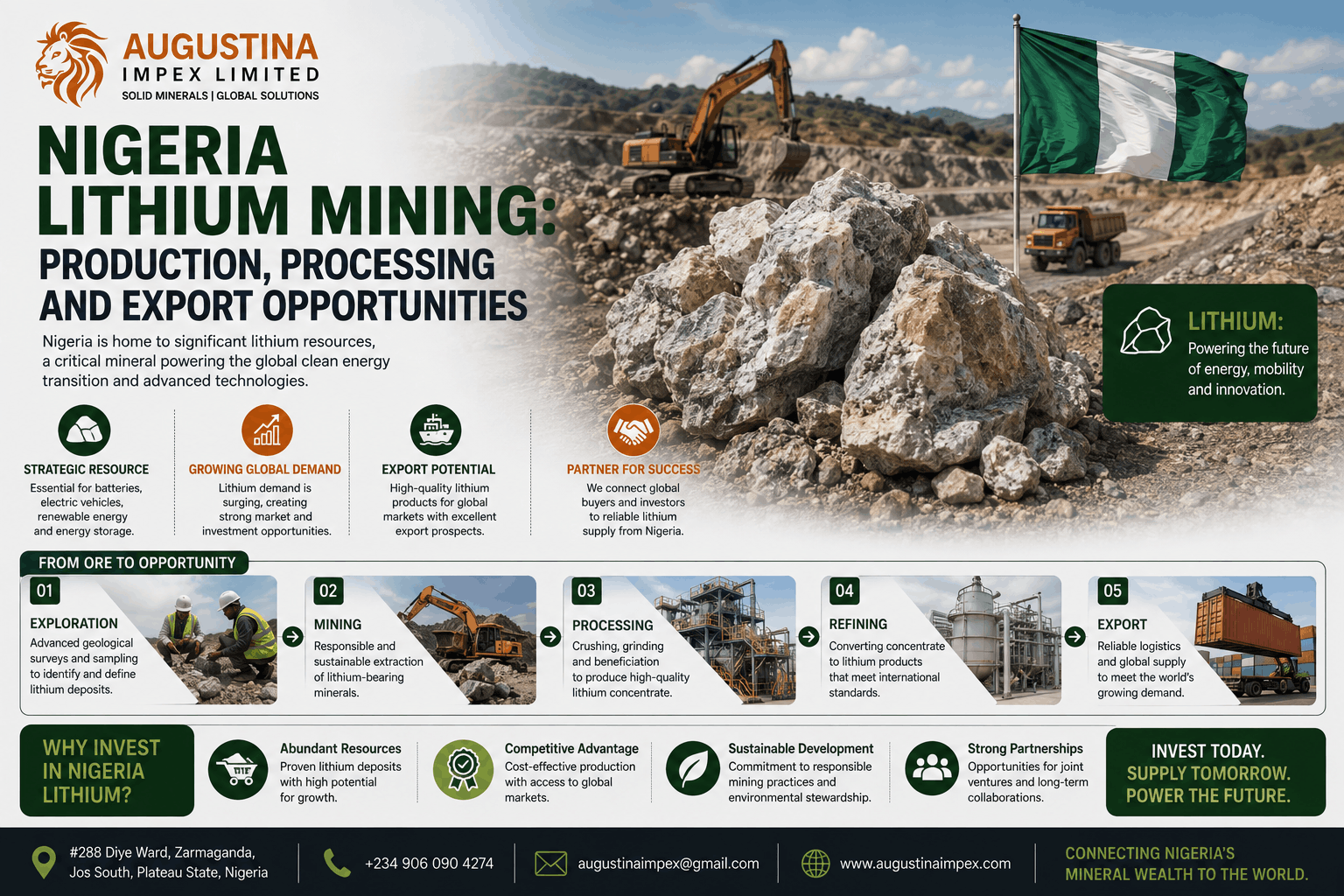
Nigeria Lithium Mining: Production, Processing & Export
Nigeria Lithium Mining: Production, Processing and Export Opportunities By Kolawole King, CEO — Augustina Impex…
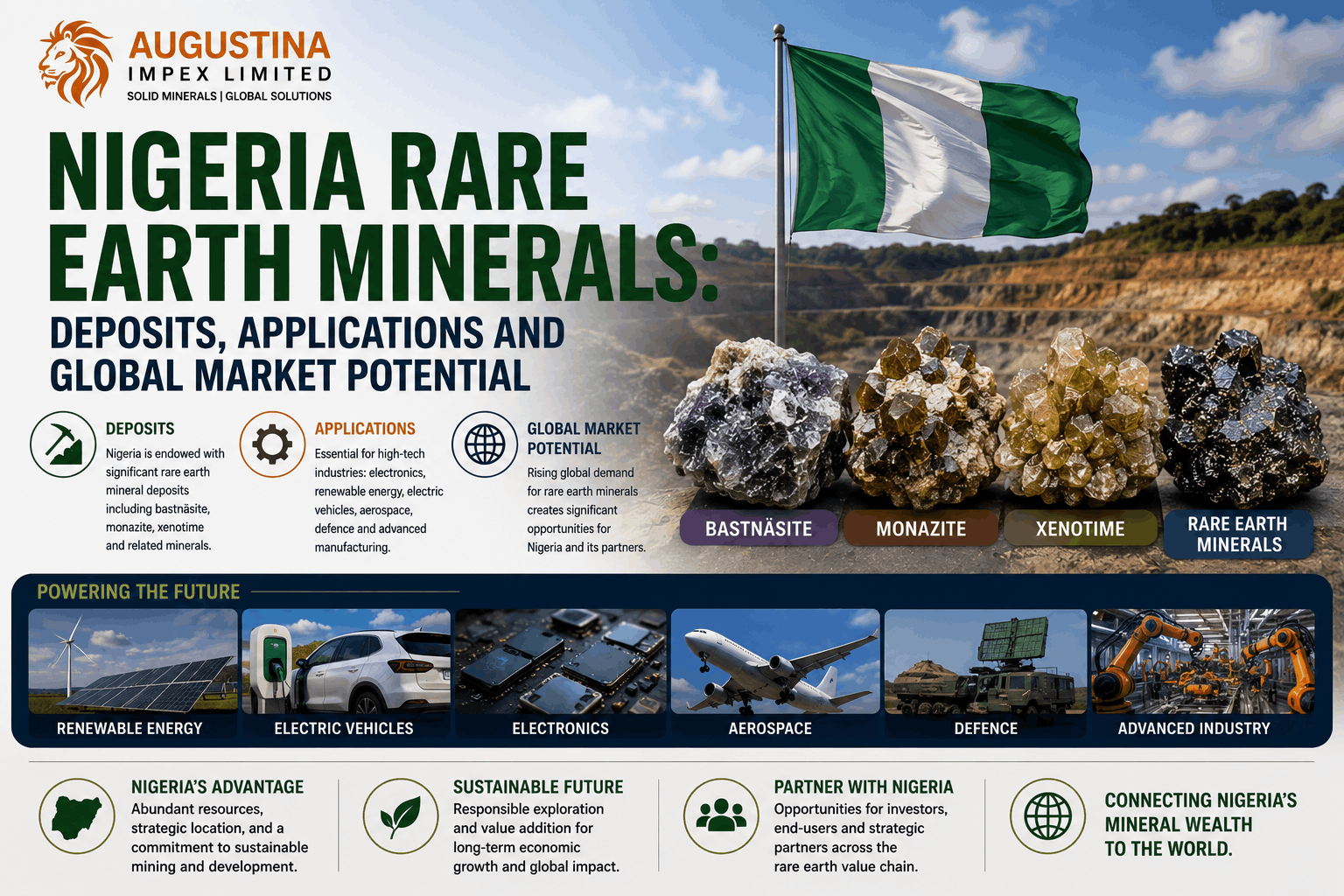
Nigeria Rare Earth Minerals: Deposits & Market Potential
Nigeria Rare Earth Minerals: Deposits, Applications and Global Market Potential By Kolawole King, CEO —…
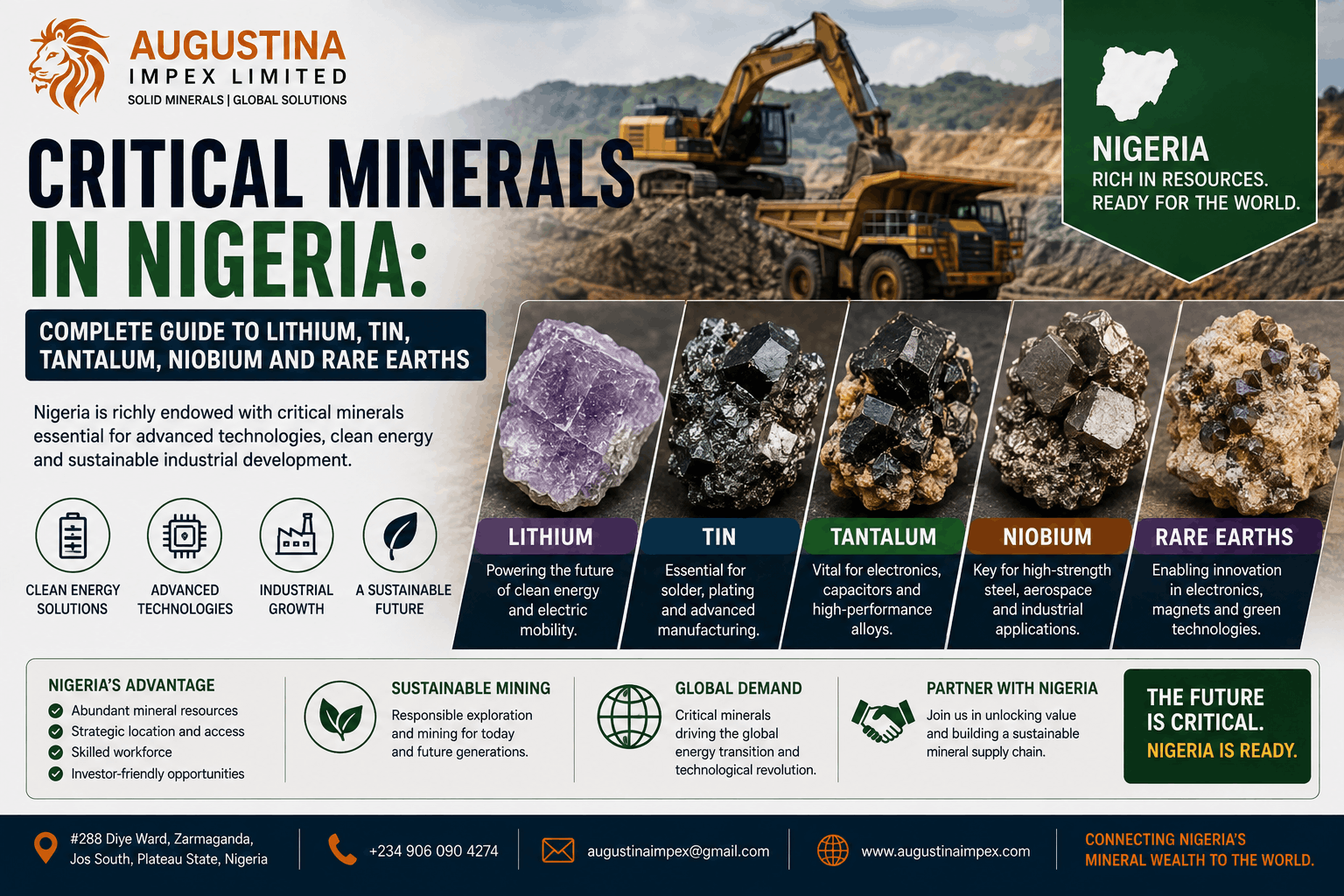
Nigeria Critical Minerals Guide: Lithium, Tin & Rare Earths
Critical Minerals in Nigeria: Complete Guide to Lithium, Tin, Tantalum, Niobium and Rare Earths By…
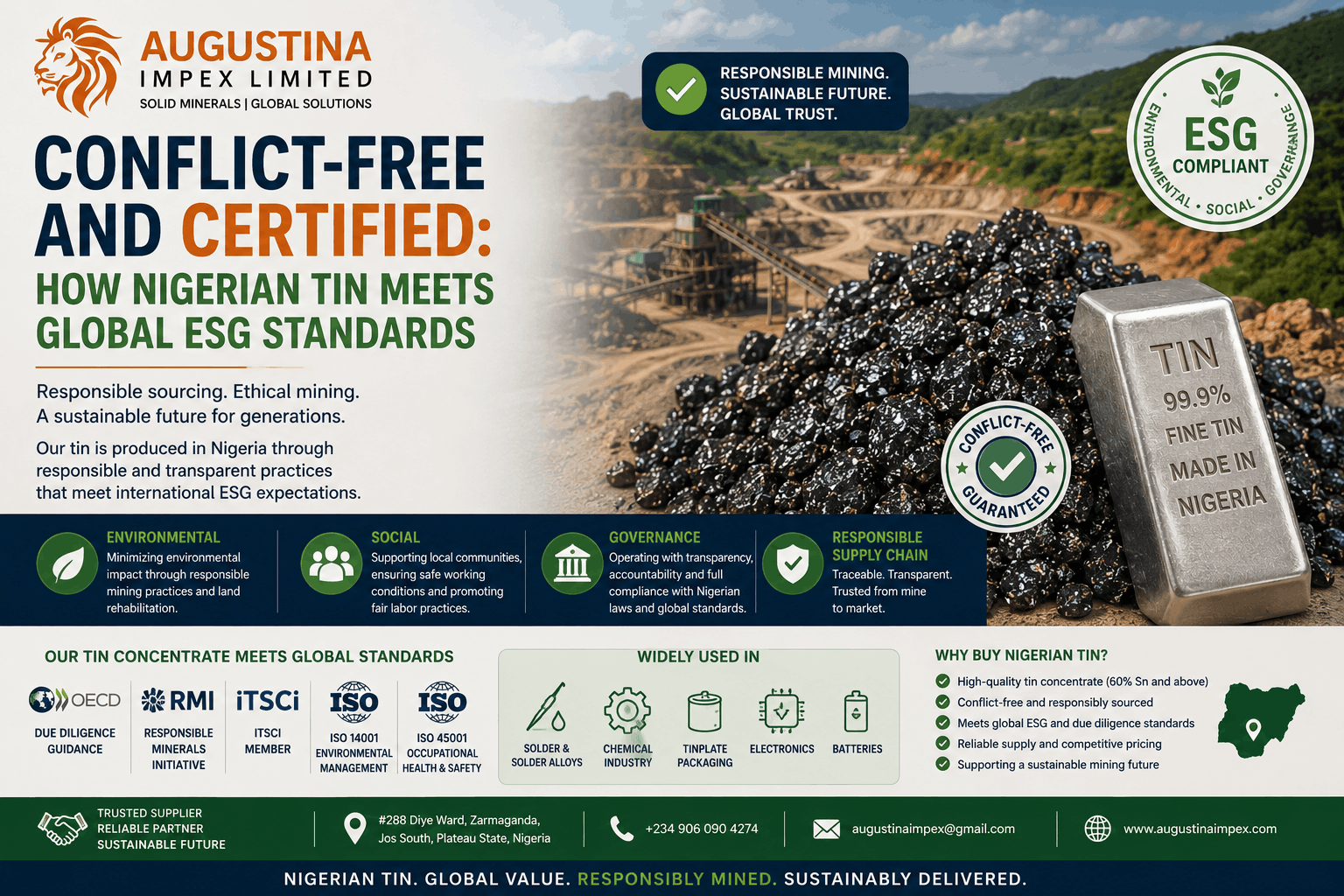
Conflict-Free Nigerian Tin Meets Global ESG Standards
Conflict-Free and Certified: How Nigerian Tin Meets Global ESG Standards By Kolawole King, CEO —…