
If you are looking to buy spodumene concentrate from Nigeria, you are positioning yourself at the forefront of one of the most significant shifts in the global critical minerals supply chain. Nigeria is emerging as a serious, non-Chinese source of lithium-bearing spodumene — a mineral that has become the backbone of the electric vehicle revolution, energy storage technology, and the global push for battery self-sufficiency outside of China’s sphere of influence.
This guide has been written specifically for serious buyers: procurement teams at battery manufacturers, lithium chemical converters, commodity traders, mineral importers, and supply chain diversification officers who want a complete, honest, and practical roadmap to sourcing spodumene concentrate from Nigeria. We cover everything — what spodumene concentrate is, why Nigeria is an increasingly important source, how the buying process works step by step, what specifications to demand, what documentation is required, how pricing works in 2026, and how to protect yourself from risk.
Augustina Impex Limited, a licensed Nigerian solid minerals export company based in Jos, Plateau State, has prepared this guide as part of our commitment to connecting Nigeria’s mineral wealth to the world with transparency, reliability, and professionalism.
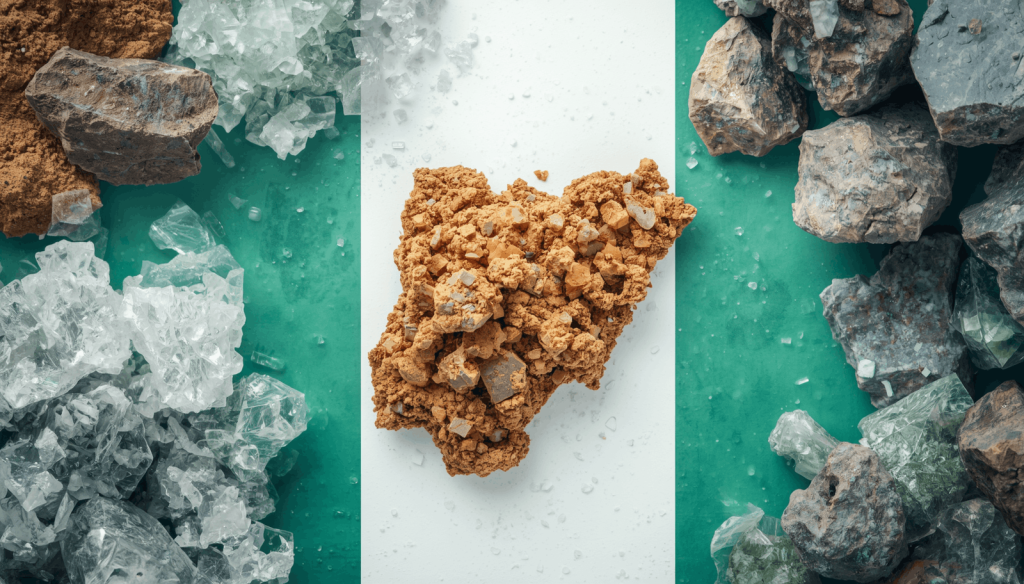
What Is Spodumene Concentrate and Why Does It Matter?
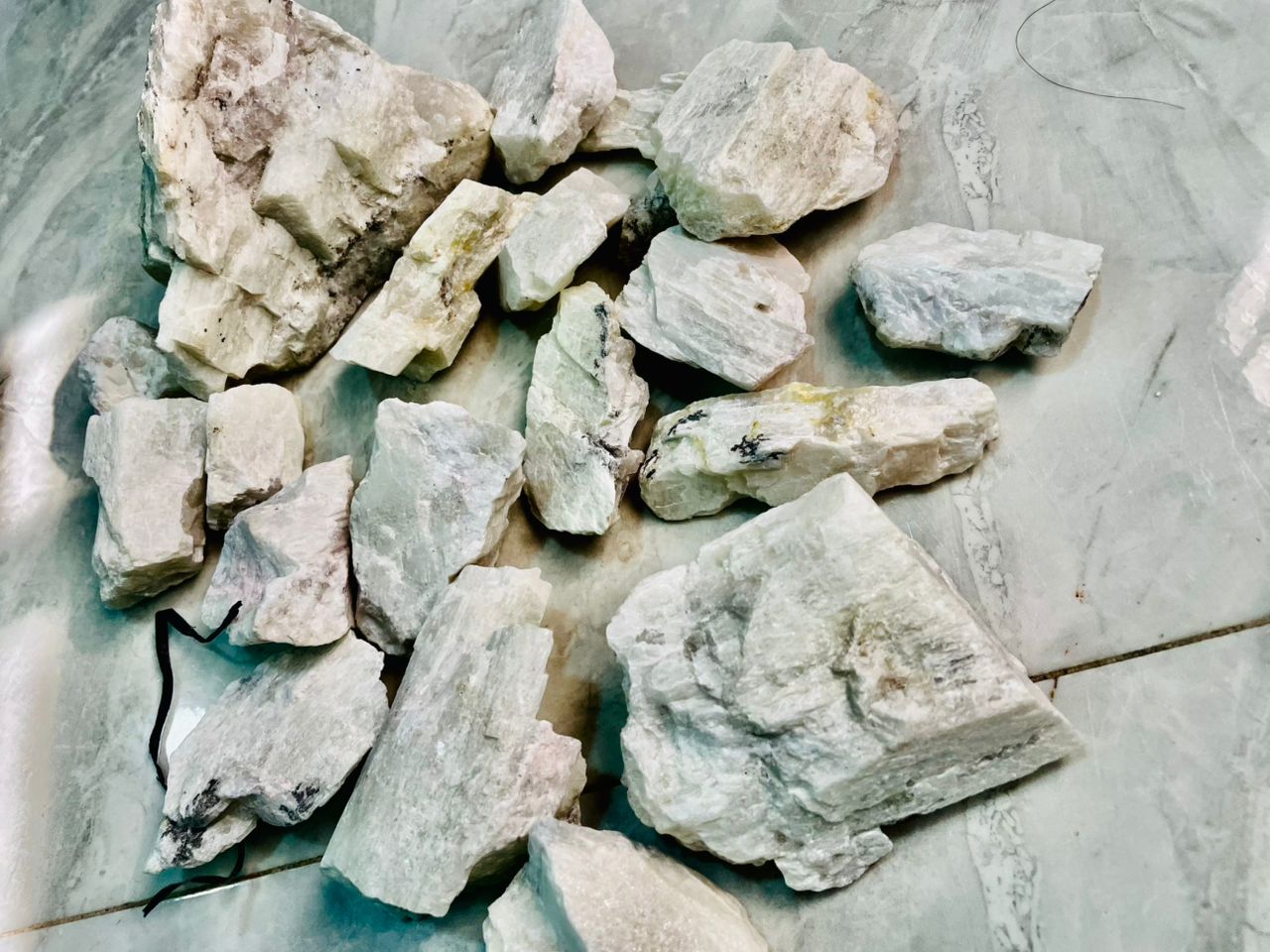
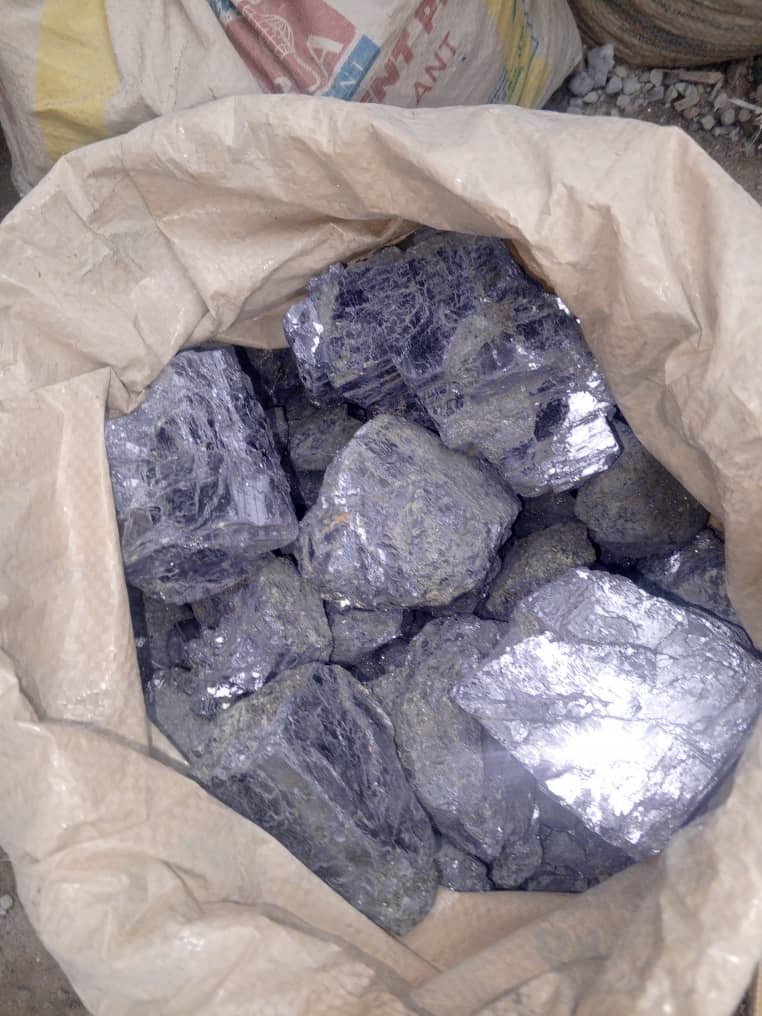
Spodumene is a lithium aluminium inosilicate mineral — a member of the pyroxene mineral group — that occurs naturally in granite pegmatites. It is, alongside lepidolite and petalite, one of the primary hard-rock lithium minerals from which commercial-grade lithium is extracted worldwide. When mined and processed through flotation to upgrade its lithium oxide (Li₂O) content, the resulting product is called spodumene concentrate.
The commercial grade that drives most of the global market is SC6 — spodumene concentrate with a minimum of 6% Li₂O content. SC6 is the standard feedstock for lithium hydroxide and lithium carbonate production, the two lithium chemicals that go into the cathode materials of lithium-ion batteries. SC5 (≥5% Li₂O) is used in glass and ceramics manufacturing and trades at a discount to SC6.
The reason spodumene concentrate matters so profoundly in 2026 is straightforward: the world is electrifying at pace. Electric vehicle sales are surging globally. Grid-scale energy storage is being deployed at unprecedented rates. Consumer electronics demand continues to grow. Every lithium-ion battery in every EV, every home battery, every industrial energy storage system needs lithium — and a substantial proportion of that lithium comes from spodumene concentrate. The International Energy Agency estimates that lithium demand could increase tenfold by 2040 under aggressive clean energy transition scenarios.
Australia has historically dominated global spodumene production, supplying the majority of the world’s hard-rock lithium feedstock. But with China’s control over downstream processing, geopolitical tensions, and the urgent need for supply chain diversification, buyers from China, South Korea, Japan, the EU, and the United States are actively seeking alternative, reliable spodumene sources. Nigeria is increasingly part of that answer.
Nigeria’s Spodumene Deposits: Geography, Geology, and Grade
Nigeria’s solid mineral endowment is one of the most underappreciated geological stories on the African continent. Beneath its vast expanse of Precambrian basement complex rocks — ancient crystalline formations that have remained geologically stable for hundreds of millions of years — lie some of the richest lithium-bearing pegmatite occurrences in Africa.
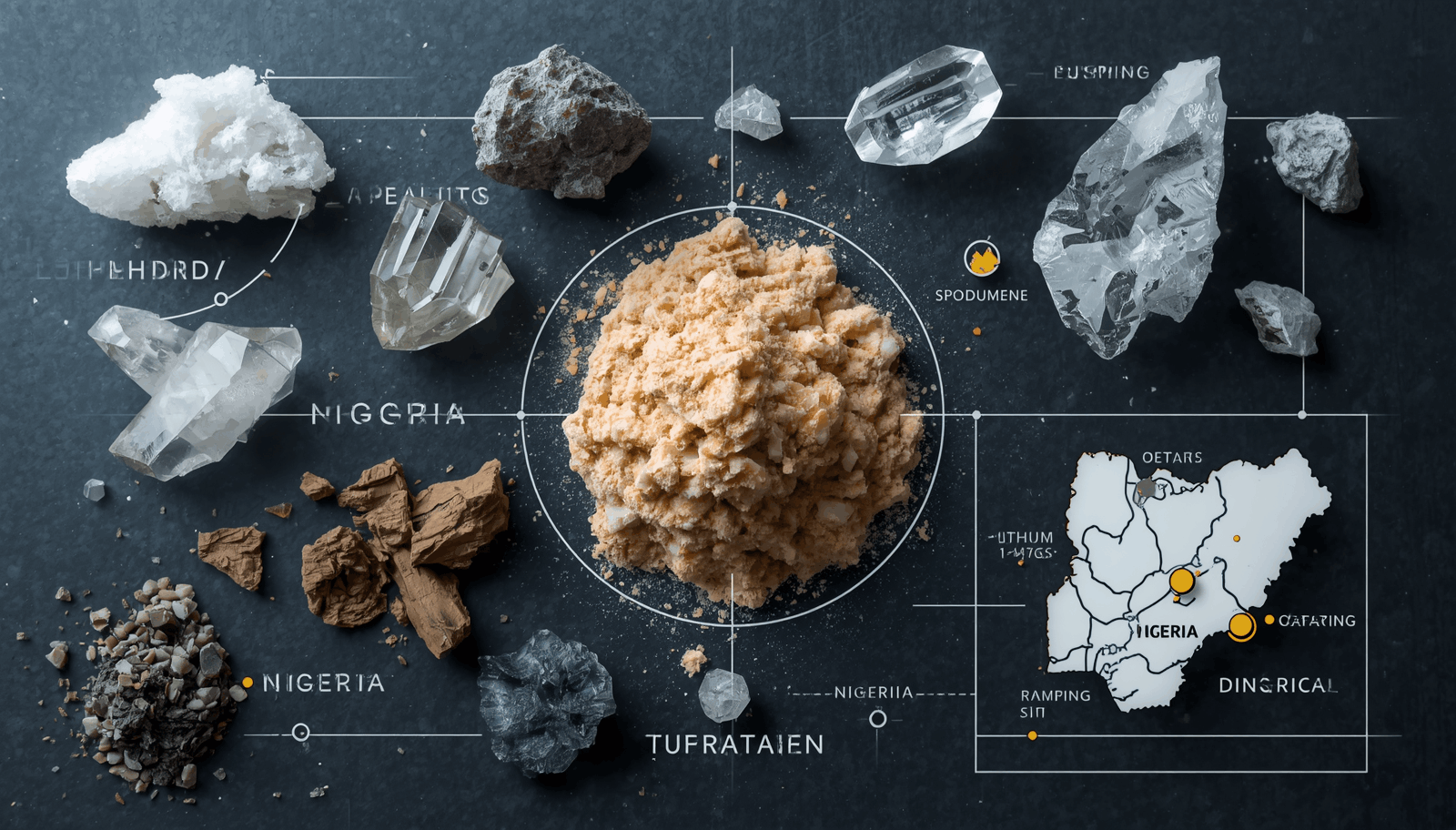
The Nigerian Geological Survey Agency (NGSA) has confirmed significant lithium concentrations in spodumene and lepidolite minerals across multiple states, with lithium oxide grades in some pegmatites reaching up to 9% Li₂O — well above the commercially viable threshold of 0.4% and competitive with the best spodumene deposits in Australia and Zimbabwe.
The primary spodumene-bearing states in Nigeria include the following:
| Nasarawa State | Often referred to as Nigeria’s “Lithium Hub.” Significant deposits of spodumene, amblygonite, and lepidolite in LGAs including Kokona, Karu, and Nasarawa. Specific deposit areas include Angwa-Kede, Gidan Kadiri, Agwada, Gidan Kwano, and Keffi. |
| Kwara State | Notable spodumene occurrences in Oke Ode and Shagbe. The Kwara State government has aligned with NEPC on a solid minerals export compliance framework, making this an increasingly regulated and credible sourcing region. |
| Kaduna State | Significant pegmatite formations host spodumene alongside columbite-tantalite. The state has an established artisanal and small-scale mining tradition, with growing interest from larger operators. |
| Cross River State | Emerging lithium prospecting zone with confirmed spodumene presence in pegmatite bodies associated with the Eastern Nigerian basement complex. |
| Plateau State | Historically the heartland of Nigeria’s solid minerals sector, Plateau State hosts spodumene alongside its famous tin, columbite, and rare earth deposits. The Jos Plateau’s mining infrastructure gives it an operational advantage. |
Nigeria’s spodumene occurrences are predominantly associated with late-stage granitic pegmatites — exactly the same geological setting that produces the world’s premier lithium deposits in Western Australia (Greenbushes, Wodgina, Pilgangoora) and Zimbabwe (Bikita). This geological kinship translates into genuinely competitive Li₂O grades and, crucially, a resource base that remains substantially underexplored, meaning early-moving buyers are accessing supply before the market fully prices in Nigeria’s potential.
Why Nigeria Is an Emerging Powerhouse for Spodumene Concentrate in 2026
The case for sourcing spodumene from Nigeria goes well beyond simply saying “there is lithium here.” Nigeria’s emergence as a significant spodumene origin reflects a confluence of geological reality, geopolitical urgency, and commercial opportunity that buyers need to understand in full.
China’s Export Controls Are Reshaping the Supply Chain
In 2025, China implemented sweeping export controls across a broad range of critical minerals and their processed derivatives, including various rare earth elements and associated compounds. While spodumene itself was not yet directly restricted, the broader policy trajectory has sent an unambiguous signal to manufacturers worldwide: over-reliance on Chinese-controlled supply chains is a strategic vulnerability. Procurement teams at battery makers in South Korea, Japan, the EU, and the United States are under board-level pressure to diversify their mineral supply away from Chinese control. Nigeria — non-Chinese, Commonwealth-aligned, English-speaking, and FOB-accessible from Lagos — meets that brief.
Zimbabwe’s Export Ban Creates Supply Pressure
By 2025, Zimbabwe had grown into Africa’s leading lithium producer and the world’s fourth-largest, accounting for approximately 10% of global mine output and around 15% of China’s total spodumene imports. However, Zimbabwe has announced a policy prohibiting the export of unprocessed lithium concentrate, scheduled to take effect in 2027. This policy, combined with existing processing obligations imposed on miners, is already constraining export availability from Zimbabwe and driving buyers toward alternative African sources — including Nigeria.
Africa Is Rising in China’s Spodumene Import Mix
Analysis of China’s spodumene import data confirms that Africa’s share of Chinese lithium feedstock imports has grown significantly in recent years. Nigeria, alongside the DRC, Zimbabwe, and Ghana, is increasingly visible in Chinese import statistics. As Africa emerges as a rising force in China’s growing spodumene import portfolio, Nigerian material is attracting more serious commercial interest from Chinese converters, particularly those seeking to establish offtake relationships before competition intensifies.
Nigeria’s Spodumene Prices Are Competitive
Global SC6 spodumene prices climbed above USD 2,000 per metric tonne CIF China in Q1 2026 for the first time since late 2023, driven by a structural supply deficit as converter overcapacity tightened the upstream market. Nigerian spodumene concentrate, offered on FOB Lagos terms, represents a genuinely competitive pricing option in this environment — particularly for buyers with established freight arrangements to Chinese or Southeast Asian ports.
Spodumene Concentrate Specifications: What to Request from Nigerian Suppliers
Before you buy spodumene concentrate from Nigeria, you need a precise specification. The quality and commercial value of spodumene concentrate is determined by a set of well-defined parameters that your supplier must confirm in writing, supported by an independent ISO/IEC 17025 accredited laboratory analysis report.
| Parameter | SC5 (Standard) | SC6 (Battery Grade) | Premium SC6+ |
| Li₂O Content | ≥5.0% | ≥6.0% | ≥6.5% |
| Fe₂O₃ (Iron Oxide) | ≤1.5% | ≤1.0% | ≤0.8% |
| Moisture | ≤10% | ≤8% | ≤6% |
| Physical Form | Granular concentrate | Granular concentrate | Fine granular |
| Key Use | Glass, ceramics | Lithium hydroxide / carbonate | Direct lithium extraction |
| Price Premium (vs SC5) | Baseline | +15% to +25% | +30% to +45% |
The following parameters should always be confirmed in the laboratory certificate accompanying any Nigerian spodumene purchase:
- Li₂O Content: Li₂O (Lithium Oxide) content — the primary value driver. Minimum 6.0% for SC6 battery grade. Always verify against independent analysis, not supplier-provided data.
- Iron Content: Fe₂O₃ (Iron Oxide) content — high iron contamination reduces value for battery applications. Converters prefer Fe₂O₃ below 1.0%.
- Moisture: Moisture content — commercial contracts are settled on a dry weight basis. Moisture content affects the actual Li₂O payload per tonne and therefore the real value you are receiving.
- Full Chemical Panel: Al₂O₃, SiO₂, CaO, MnO, P₂O₅, Na₂O, K₂O — full elemental oxide panel confirming the concentration of impurity elements that may affect downstream processing economics.
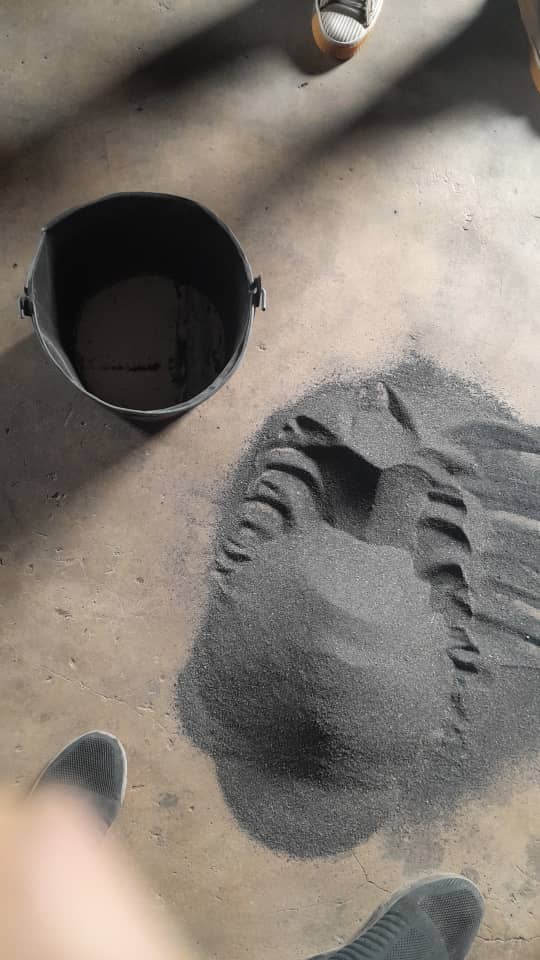
- Particle Size: Physical form and particle size — confirm whether the material is in a sand/granular concentrate form with a specific mesh size, or in a coarser form requiring further milling at your processing facility.
Always insist on laboratory reports from an internationally accredited testing house. In Nigeria, Zirconex Mining & Metal Laboratory (ISO/IEC 17025 accredited) and SGS Nigeria are among the recognised facilities. Do not accept supplier self-generated assay certificates as primary evidence of grade.
How to Buy Spodumene Concentrate from Nigeria: Step-by-Step
Buying spodumene concentrate from Nigeria follows a structured process that differs meaningfully from domestic procurement. International mineral trade requires regulatory compliance, proper financial instruments, careful supplier verification, and logistics coordination that must all be handled correctly. Here is the full process.
Step 1 — Define Your Procurement Requirements
Before reaching out to any Nigerian supplier, establish your requirements in writing. This includes: the minimum Li₂O grade you can accept (SC5, SC6, or SC6+); the quantity you need for a trial shipment and for ongoing monthly or quarterly supply; your preferred physical form and particle size specification; any chemical impurity limits (especially Fe₂O₃); your destination port and preferred Incoterms; and your payment instrument capability (LC at sight, T/T, etc.).
Having these requirements defined in advance allows you to evaluate supplier offers on an objective, apples-to-apples basis and prevents the common mistake of evaluating an attractive price without understanding whether the product specification actually meets your needs.
Step 2 — Identify and Verify a Licensed Nigerian Supplier
Nigeria’s solid minerals sector has a well-documented problem with misrepresentation. There are genuine, licensed, operational producers of spodumene concentrate in Nigeria — but there are also a significant number of brokers, intermediaries, and outright fraudsters presenting themselves as mine owners or licensed exporters with material they do not control.
A credible Nigerian spodumene supplier must be able to provide all of the following:
- Valid mining lease or mineral title from the Nigerian Ministry of Mines and Steel Development (MMSD)
- Valid export licence and Registered Exporter (RE) number from the Nigerian Export Promotion Council (NEPC) — note that only limited liability companies registered under Nigerian law are eligible to register with NEPC; registered business names are excluded
- Company registration certificate from the Corporate Affairs Commission (CAC)
- ISO/IEC 17025 accredited laboratory analysis reports confirming the Li₂O grade, impurity levels, and physical characteristics of a specific, identifiable batch of material
- Photographic and video evidence of the material at the mine site or processing warehouse, showing scale and quantity indicators
- Willingness to facilitate a third-party inspection at the mine site or processing warehouse before payment
- A bank account in the company’s registered name at a recognised Nigerian bank, verifiable through the bank’s correspondence
If a supplier is unwilling or unable to provide any of the above, treat this as a serious red flag and disengage. Do not allow attractive pricing to override basic due diligence.
Step 3 — Request a Soft Corporate Offer (SCO) or Proforma Invoice
Once you have identified a supplier whose credentials check out, request a formal Soft Corporate Offer (SCO) or Proforma Invoice. This document lays out the key commercial terms of the proposed transaction, including the product specification and grade, origin and loading port, quantity and packaging, price per metric tonne on a stated Incoterm basis, payment terms and financial instrument, validity period, and inspection provisions.
Review the SCO carefully and ask for clarification on anything that is ambiguous or incomplete. A professional Nigerian mineral exporter will respond to detailed technical questions with confidence and precision. Vague or evasive responses to straightforward commercial questions are a warning sign.
Step 4 — Commission Third-Party Inspection and Independent Laboratory Analysis
For any commercial transaction involving Nigerian minerals, independent third-party inspection is non-negotiable. Commission an internationally recognised inspection agency — SGS, Bureau Veritas, Intertek, or CCIC (China Certification and Inspection Group) — to visit the supplier’s warehouse or mine site and verify the physical existence and quantity of the spodumene concentrate.
Your inspection agent will collect representative samples from the stockpile, which are then submitted to an accredited laboratory for analysis. The resulting laboratory report — issued by your inspector’s chosen laboratory, not the supplier’s — is the document on which you base your final purchase decision. Always pay for this inspection yourself. Do not ask the supplier to arrange it — you need independence and impartiality.
Step 5 — Arrange a Physical Sample for Your Converter
If you are procuring on behalf of a lithium converter or battery material manufacturer, they will require a physical sample — typically 1 to 5 kilograms of the spodumene concentrate — for in-house pilot testing before committing to a commercial purchase order. This is standard international practice. A reputable Nigerian supplier will arrange sample dispatch via DHL or FedEx International Priority upon formal written request. Ensure the sample is drawn from the specific stockpile identified for your purchase, not from a separate, potentially unrelated batch.
Step 6 — Finalise Commercial Terms and Financial Instrument
Once your converter has approved the sample and you are ready to commit, negotiate and finalise the commercial terms. For established commercial relationships, the standard payment instrument is an irrevocable Letter of Credit (LC) at sight issued by a first-class bank. The typical structure is 95% of the invoice value payable upon presentation of shipping documents at sight, with the remaining 5% released upon discharge port survey confirmation of quantity and quality at the destination.
For buyers requesting it, a 2% Performance Bond can be issued by reputable Nigerian spodumene exporters as a guarantee of delivery — standard practice is for the buyer to first issue a non-operative LC as evidence of genuine buying intent, after which the seller issues the Performance Bond simultaneously. For smaller trial shipments, Telegraphic Transfer (T/T) — typically 30% advance and 70% against bill of lading — is also an acceptable arrangement with established partners.
Step 7 — Export Documentation and Shipment
Once the financial instrument is in place, the supplier prepares the shipment. Nigerian spodumene concentrate export requires a comprehensive set of documents, all of which must be properly executed for both Nigerian customs clearance and your country’s import compliance. The standard export documentation package includes:
- Commercial Invoice and Packing List
- Certificate of Origin issued by NEPC or the Nigerian Association of Chambers of Commerce (NACCIMA)
- NEPC Export Certificate (Mineral Export Permit)
- Bill of Lading issued by the shipping line
- ISO/IEC 17025 accredited Certificate of Analysis confirming grade and composition
- Weight Certificate from a licensed weighbridge facility
- Clean Certificate of Inspection (CCI) issued by the third-party inspection agency
- Form M or e-Form M (Nigeria’s import/export monitoring instrument filed with the Central Bank of Nigeria)
- Any additional country-specific import documents required by your importing country’s customs authority
Pricing and Market Dynamics for Nigerian Spodumene Concentrate in 2026
Understanding the pricing landscape is essential before you approach Nigerian suppliers with price expectations. The global spodumene market has experienced significant volatility in recent years, and 2026 is defined by a notable price recovery from the lows of 2024.
Benchmark SC6 spodumene prices — the industry-standard reference price for 6% Li₂O concentrate on a CIF China basis — climbed above USD 2,000 per metric tonne in Q1 2026 for the first time since late 2023, driven by a structural supply deficit as converter overcapacity tightened upstream supply. A documented transaction in origin spodumene concluded at approximately USD 967 per metric tonne on an SC5.5 CIF China basis in this period, equivalent to approximately USD 1,055 per metric tonne on an SC6 CIF China basis.
Nigerian spodumene concentrate is typically quoted on a FOB Lagos basis. The effective CIF China price from Nigeria needs to account for ocean freight from Lagos to Chinese ports — typically an additional USD 50 to USD 90 per metric tonne depending on vessel type, route, and market conditions — plus marine insurance.
Key pricing factors to understand when buying Nigerian spodumene include:
| Li₂O Grade Premium | SC6 (≥6.0% Li₂O) commands a premium of 15% to 25% over SC5 (≥5.0% Li₂O). SC6+ (≥6.5% Li₂O) commands an additional premium of 10% to 20% over standard SC6. Every percentage point of Li₂O above the minimum threshold has real cash value — make sure your laboratory analysis confirms the actual grade before agreeing a price. |
| Iron Oxide Discount | Material with Fe₂O₃ above 1.0% will attract a discount from converters, as higher iron content increases processing costs and waste generation. Nigerian suppliers with access to low-iron spodumene should highlight this as a commercial advantage. |
| Quantity Premium | Spot parcels (one-off shipments) typically command a price premium over offtake contract volumes. If you can offer a quarterly or annual supply commitment, negotiate accordingly — you should receive a better unit price in exchange for volume certainty. |
| Payment Terms Effect | LC at sight terms generally produce a slightly lower quoted price than T/T terms because the seller’s financing risk is reduced. If your financial position allows LC issuance, use it — it will improve your negotiating position on price. |
| Western Buyers Pay Higher | Market data consistently shows that European and North American buyers pay premium prices for Nigerian lithium minerals relative to Asian buyers. If you are a Western buyer, use the comparable Asian market price as a reference point for negotiating. |
Shipping and Logistics: Getting Nigerian Spodumene to Your Facility
Nigerian spodumene concentrate is exported through three primary ports, all of which have established connections to major global shipping routes:
- Apapa Port: Apapa Port, Lagos — Nigeria’s largest and most active port. High throughput but historically prone to congestion. Regular vessel calls from COSCO, MSC, CMA CGM, and other major carriers.
- Lekki Deep Seaport: Lekki Deep Seaport, Lagos — a newer, modern deep-water facility that has significantly improved loading capacity and efficiency in Lagos. Increasingly preferred by bulk mineral exporters for its faster vessel turnaround times.
- Onne Port: Onne Port, Rivers State — positioned in Nigeria’s Niger Delta region, Onne is a major industrial and oil services port with significant cargo handling capability. Used for bulk mineral exports to both Asian and European markets.
Ocean transit times from Nigerian ports to major destination markets are approximately as follows: China (Shanghai, Tianjin, Qingdao, Guangzhou) — 25 to 35 days; South Korea (Busan, Incheon) — 28 to 38 days; Japan (Tokyo, Osaka, Kobe) — 30 to 40 days; India (Mumbai, Nhava Sheva) — 15 to 22 days; Europe (Rotterdam, Hamburg, Antwerp) — 18 to 25 days.
Spodumene concentrate is typically shipped in bulk or in 1-metric tonne jumbo bags (FIBCs) loaded in 20-foot or 40-foot containers, depending on quantity and buyer preference. For very large commercial volumes, bulk vessel charter becomes viable and significantly reduces the per-tonne freight cost. Work with an experienced freight forwarder who has specific experience handling Nigerian mineral exports — they will navigate the port documentation requirements and NAFDAC/SON clearance processes efficiently.
Port congestion at Lagos has been cited as a logistical concern by some market participants, particularly during peak export periods. Factor this into your delivery timeline and maintain open communication with your freight forwarder about vessel scheduling. Having a reliable shipping partner who monitors Nigerian port conditions in real time is a significant operational advantage.
Regulatory and Legal Framework for Nigerian Spodumene Exports
Nigeria has a well-defined legal and regulatory framework governing solid minerals export, and understanding it is important for buyers who want to ensure they are dealing with compliant suppliers and who want their own import activities to be properly documented.
The primary regulatory bodies governing Nigerian spodumene exports are:
| Ministry of Mines and Steel Development (MMSD) | Issues mining leases, mineral titles, and mineral export permits. All legitimate Nigerian spodumene miners must hold a valid mining lease from MMSD. The ministry also monitors production and export volumes and enforces royalty collection. |
| Nigerian Export Promotion Council (NEPC) | The NEPC issues Registered Exporter (RE) certificates, which are mandatory for all companies seeking to export solid minerals from Nigeria. Only limited liability companies registered under Nigerian law are eligible — registered business names and sole proprietorships cannot register. Exporters must also obtain a Mineral Export Permit through NEPC. |
| Corporate Affairs Commission (CAC) | Governs company registration in Nigeria. Any credible Nigerian spodumene exporter should be a duly registered limited liability company with a valid CAC registration certificate. |
| Central Bank of Nigeria (CBN) | Oversees Nigeria’s e-Form M and pre-shipment inspection regime, which governs foreign exchange flows from mineral export transactions. Buyers’ banks will interact with their Nigerian counterparts through this framework. |
| Nigerian Customs Service | Handles export documentation and duties at Nigerian ports. Lithium minerals attract standard export duties; ensure your supplier’s freight forwarder is properly processing customs documentation to avoid delays. |
From the buyer’s perspective, the key compliance obligation is ensuring that your supplier holds valid, current licences — and that the documentation accompanying your shipment is complete, consistent, and authentic. Discrepancies between declared quantities, laboratory grades, and customs declarations have caused problems for buyers in the past. Insist on consistency across all documents from the outset.
How to Protect Yourself: Red Flags and Due Diligence Checklist
The Nigerian minerals export market is an environment where due diligence is not optional — it is the foundation on which every safe transaction is built. Here are the most common warning signs buyers should watch for, and the due diligence steps that protect you.
Red Flags
- Supplier cannot produce a valid, current mining lease or mineral title from MMSD
- No NEPC Registered Exporter certificate or an expired RE number
- Laboratory reports that are self-generated by the supplier rather than issued by an independent, accredited laboratory
- Unwillingness to allow third-party inspection of the material before payment
- Requests for large advance payments (more than 10-15% of contract value) before any documentation or inspection is completed
- Email addresses or company contact information that do not match the registered company details
- Multiple rapid changes in the quoted price, terms, or specification — a hallmark of a broker who does not actually control the material
- Inability to provide video or photographic evidence of the specific stockpile identified for your purchase
Due Diligence Checklist
- Request and verify the mining lease number through the MMSD’s online portal or by direct enquiry
- Verify the NEPC RE number through the NEPC’s official channels
- Commission a third-party inspection agency before issuing any payment
- Insist on a 1–5 kg physical sample for independent laboratory testing at your facility
- Use a Letter of Credit at sight as the payment mechanism for commercial orders — do not send T/T payments without prior inspection on your first transaction with a new supplier
- Have your legal counsel review the Sales and Purchase Agreement before signing — ensure it includes clear default provisions, quality warranties, and dispute resolution mechanisms
- Cross-check the company’s bank account details against the CAC registration address and NEPC documentation — any mismatch is a serious concern
Why Source Nigerian Spodumene Through Augustina Impex Limited
Augustina Impex Limited is a licensed Nigerian solid minerals export company with deep roots in the Jos, Plateau State mineral trade. We connect international buyers to verified, licensed Nigerian mineral producers through a transparent, professionally managed supply chain that is built on documentation, third-party certification, and long-term relationship integrity.
Our approach to the spodumene market is grounded in the same principles we apply across all our mineral products: we do not offer what we cannot deliver, we do not represent material we have not verified, and we do not cut corners on documentation or compliance. For buyers who have been frustrated by the misrepresentation and broken promises that are unfortunately common in African mineral trade, we offer a fundamentally different experience.
When you source Nigerian spodumene concentrate through Augustina Impex Limited, you receive:
- Access to verified, licensed Nigerian spodumene producers with active mining operations and documented stockpiles, not brokers with imaginary material
- ISO/IEC 17025 accredited laboratory analysis reports for every commercial batch, confirming Li₂O grade, impurity levels, and physical characteristics
- Support for third-party inspection at the mine site or warehouse by an agency of your choice — SGS, Bureau Veritas, Intertek, CCIC, or equivalent
- Physical sample dispatch for your converter’s in-house evaluation, coordinated and tracked from Nigeria to your door
- Transparent FOB pricing with no hidden fees or undisclosed intermediary markups
- Full export documentation compliance — NEPC, MMSD, CAC, CBN Form M, Certificate of Origin, and all statutory requirements
- A professional, English-speaking team that responds promptly, communicates clearly, and understands the practical realities of international lithium mineral trade
- Performance Bond capability for qualified buyers with active non-operative LC in place
| 📞 Ready to Buy Nigerian Spodumene Concentrate? Contact Kolawole King, CEO of Augustina Impex Limited, to discuss your requirements. We respond to all serious buyer enquiries within 24 hours. Email: augustinaimpex@gmail.com | WhatsApp: +234 906 090 4274 Website: www.augustinaimpex.com | Address: #288 Diye Ward, Zarmaganda, Jos South, Plateau State, Nigeria |
Frequently Asked Questions About Buying Spodumene Concentrate from Nigeria
What is the standard grade of Nigerian spodumene concentrate?
Nigerian spodumene concentrate is available in grades ranging from SC5 (≥5.0% Li₂O) to SC6 (≥6.0% Li₂O) and, from certain deposits, SC6+ (≥6.5% Li₂O). The specific grade depends on the deposit and the level of processing. Always insist on an ISO/IEC 17025 accredited laboratory analysis report confirming the exact grade of the specific batch you are purchasing.
What is the minimum order quantity for Nigerian spodumene?
For evaluation purposes, 1 to 5 kg physical samples are available for independent laboratory testing. Commercial minimum order quantities vary by supplier, but typically start at 20 to 50 metric tonnes for a trial shipment, scaling up to full container loads (approximately 25 MT per 20-foot container) and bulk vessel parcels for larger commercial orders.
What payment terms are accepted for Nigerian spodumene purchases?
The standard payment instrument for commercial orders is an irrevocable Letter of Credit (LC) at sight — 95% of the invoice value payable against shipping documents at sight, with 5% released upon discharge port survey confirmation. For trial shipments, Telegraphic Transfer (T/T) — typically 30% advance and 70% against bill of lading — is also acceptable with established partners.
Can I visit the mine or warehouse before payment?
Yes. Reputable Nigerian spodumene suppliers welcome warehouse visits and third-party inspections prior to the opening of the Letter of Credit. A warehouse inspection is the most practical form of verification — it allows you or your representative to physically assess the material, confirm the quantity, and collect samples for independent analysis.
What is the transit time from Nigeria to China?
Ocean transit from Lagos (Apapa or Lekki) to major Chinese ports — including Shanghai, Tianjin, Qingdao, and Guangzhou — typically takes 25 to 35 days depending on the shipping line, vessel schedule, routing, and specific destination port.
Is a Performance Bond available?
Yes. Licensed Nigerian spodumene exporters with proven production capacity can issue a 2% Performance Bond as a guarantee of delivery. Standard practice requires the buyer to first issue a non-operative Letter of Credit as evidence of genuine buying intent, after which the seller issues the Performance Bond simultaneously. This sequence protects both parties and reflects accepted international commodity trade norms.
What export documents will I receive with my Nigerian spodumene shipment?
A complete Nigerian spodumene export documentation set includes: Commercial Invoice, Packing List, Certificate of Origin (NEPC/NACCIMA), NEPC Export Certificate, Bill of Lading, ISO/IEC 17025 accredited Certificate of Analysis, Weight Certificate, Clean Certificate of Inspection (CCI) from the third-party inspection agency, and CBN e-Form M. Additional country-specific import documents required by your customs authority can be accommodated on request.
How do I verify that a Nigerian spodumene supplier is legitimate?
Request and verify: (1) the mining lease number through MMSD; (2) the NEPC Registered Exporter (RE) certificate and RE number; (3) the CAC company registration certificate; (4) ISO/IEC 17025 accredited laboratory reports for a specific, identified batch; and (5) arrange a third-party inspection by SGS, Bureau Veritas, Intertek, or CCIC before making any payment. A legitimate supplier will welcome all of these steps.
Conclusion: The Strategic Case for Buying Nigerian Spodumene
The global lithium supply chain is undergoing the most significant structural reconfiguration in its history. China’s export controls, Zimbabwe’s processing mandates, Australia’s capacity constraints, and the surge in EV-driven lithium demand are all converging to create both urgency and opportunity for buyers who are willing to engage with emerging African supply sources.
Nigeria’s spodumene deposits are real, they are geologically competitive, they are increasingly accessible through a growing community of professional mineral exporters, and they are available now — before the full weight of international capital and attention arrives and prices the early-mover advantage out of reach.
Buying spodumene concentrate from Nigeria is not without its due diligence requirements — but for buyers who follow the structured, verification-led process outlined in this guide, Nigeria represents a genuinely valuable addition to a diversified, resilient lithium supply chain.
Augustina Impex Limited is here to guide you through that process, from first enquiry to delivered cargo. We look forward to building a relationship with you that is built on real material, honest documentation, and long-term mutual success.
Kolawole King | Chief Executive Officer — Augustina Impex Limited
#288 Diye Ward, Zarmaganda, Jos South, Plateau State, Nigeria
augustinaimpex@gmail.com | WhatsApp: +234 906 090 4274 | www.augustinaimpex.com
Post a comment
Related Posts
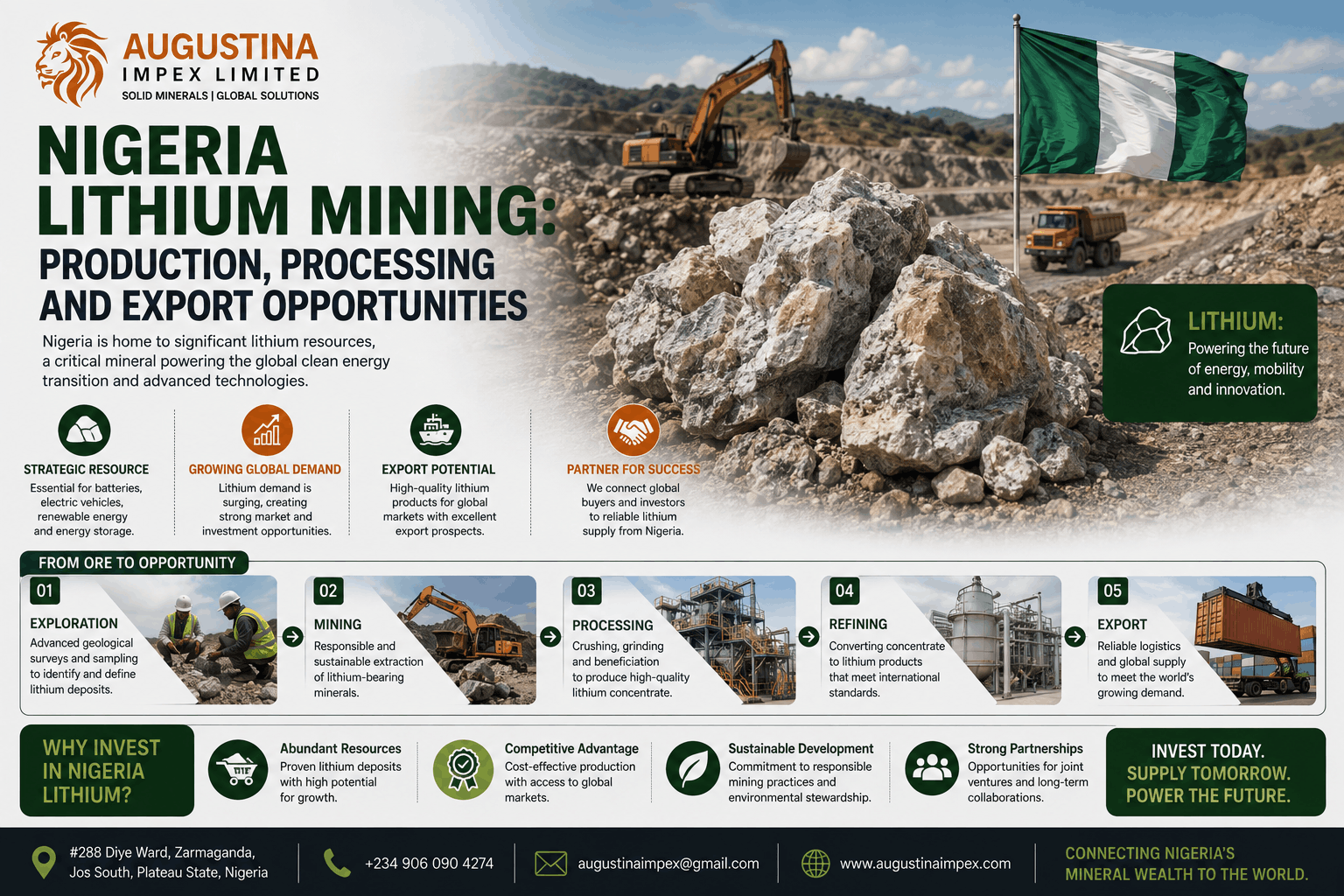
Nigeria Lithium Mining: Production, Processing & Export
Nigeria Lithium Mining: Production, Processing and Export Opportunities By Kolawole King, CEO — Augustina Impex…

Nigeria Rare Earth Minerals: Deposits & Market Potential
Nigeria Rare Earth Minerals: Deposits, Applications and Global Market Potential By Kolawole King, CEO —…
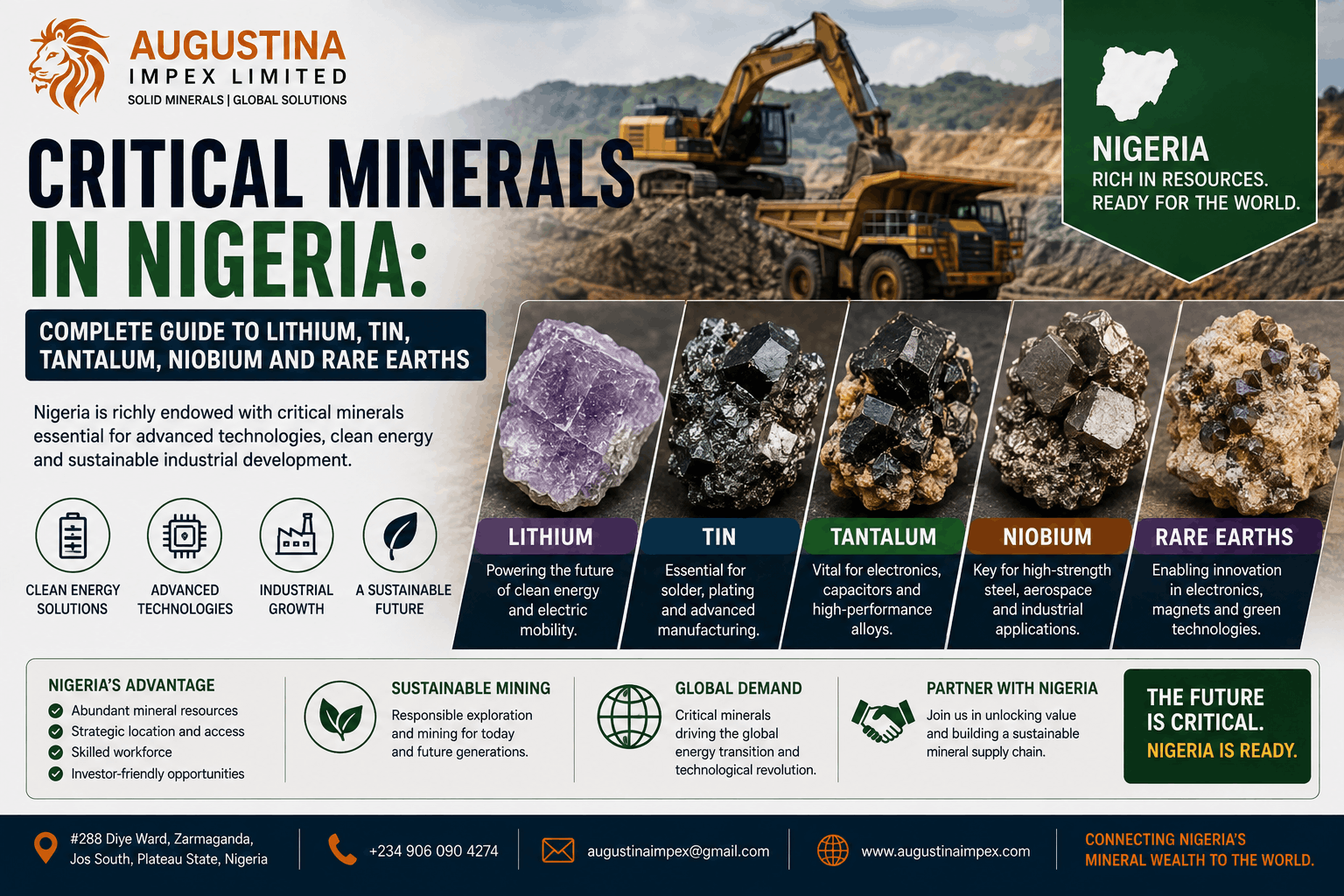
Nigeria Critical Minerals Guide: Lithium, Tin & Rare Earths
Critical Minerals in Nigeria: Complete Guide to Lithium, Tin, Tantalum, Niobium and Rare Earths By…
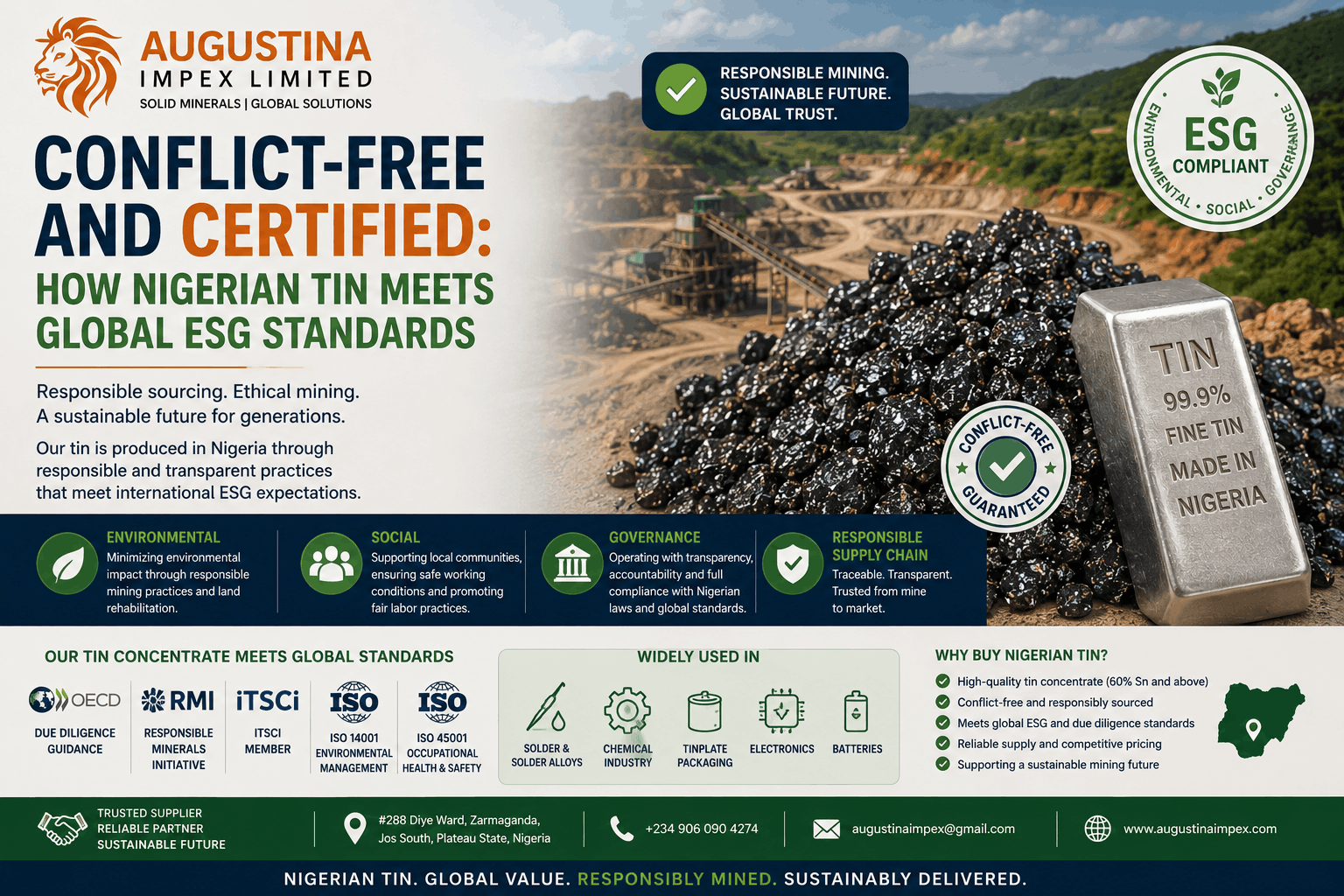
Conflict-Free Nigerian Tin Meets Global ESG Standards
Conflict-Free and Certified: How Nigerian Tin Meets Global ESG Standards By Kolawole King, CEO —…