
Tin Concentrate from Nigeria: Complete Buyer’s Guide 2026
By Kolawole King, CEO — Augustina Impex Limited | Published: August 2026 | 15 min read
Long before Nigeria became known for oil, it was known for tin. The Jos Plateau in Plateau State — that high, cool highland rising 1,200 metres above the surrounding Nigerian lowlands — was for decades one of the world’s most productive tin mining districts. At its colonial-era peak in the 1940s, Nigeria was the world’s fourth-largest tin producer, supplying British, European, and American smelters with cassiterite concentrate that powered an age of tinplate, electronics, and industrial chemistry. The mines employed tens of thousands, built colonial-era infrastructure across the Plateau, and established Jos as a city that the international mineral trade knew by name.
That era faded with the collapse of the International Tin Council and the global tin price crash of 1985 — but the deposits never disappeared. The Plateau’s Younger Granite geological system, which generated those extraordinary tin concentrations in the first place, is still there. The alluvial river terraces that accumulated cassiterite grains over millions of years of erosion are still being worked by artisanal and small-scale miners across dozens of mining communities. And in 2026, driven by the surging demand for tin as a solder metal in electronics manufacturing, as a coating for steel food packaging, and increasingly as a battery anode material, Nigerian tin concentrate is back in serious international demand.
This guide is written for international buyers — tin smelters, commodity traders, electronics supply chain managers, and industrial procurement teams — who want to understand Nigerian cassiterite: what it is, where it comes from, how it is graded and processed, what documentation surrounds its export, how it is priced, and how to source it reliably from a verified, NEPC-licensed Nigerian exporter. If you are considering Nigerian tin concentrate as a feedstock option in 2026, this is your complete buyer’s reference.
Cassiterite: The Mineralogy of Nigerian Tin Concentrate
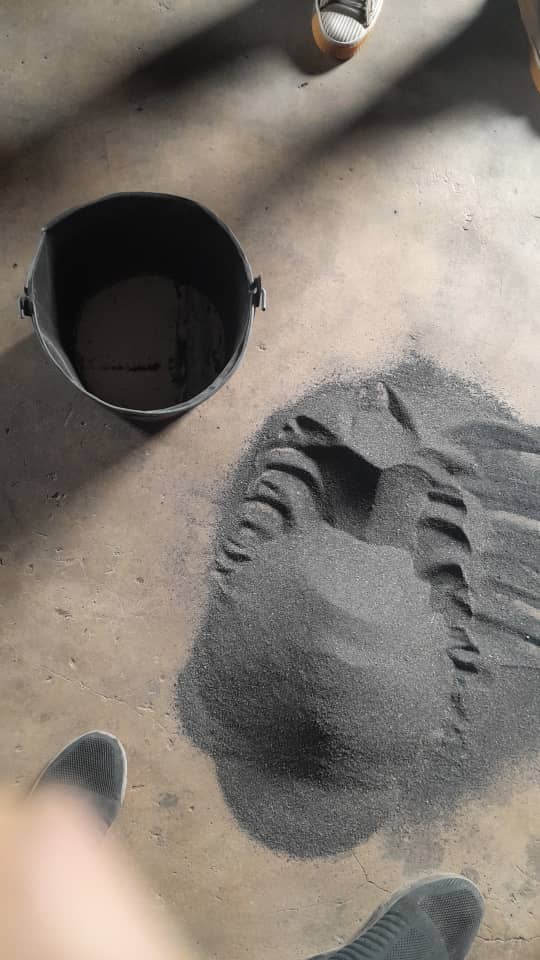
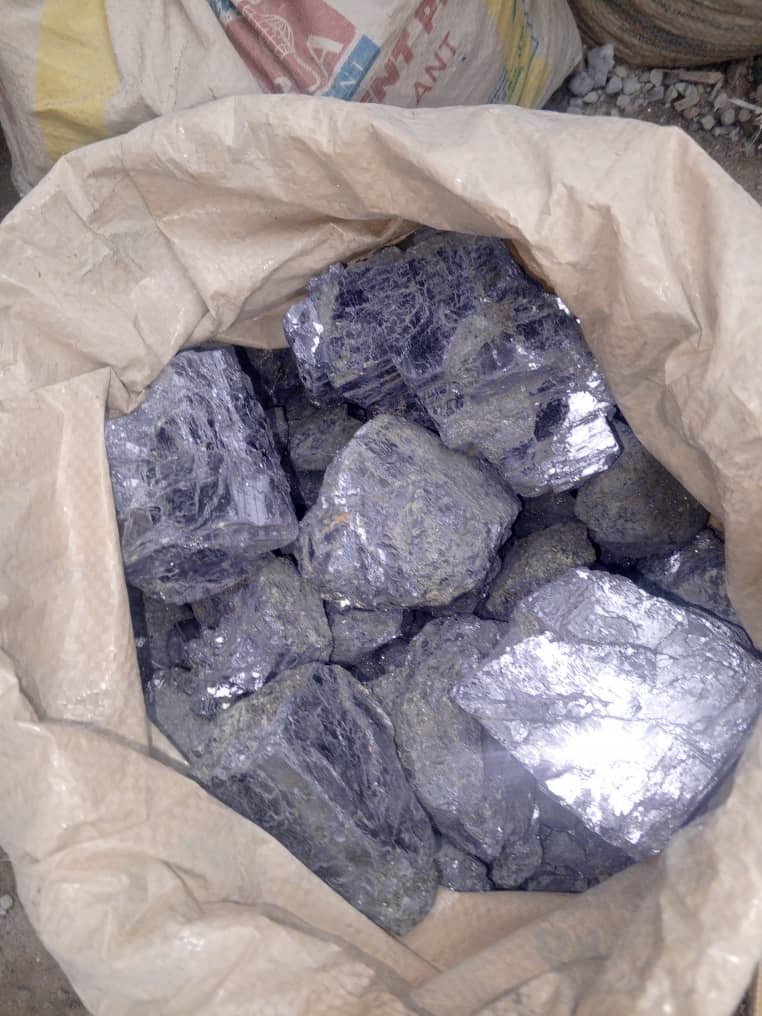
Tin concentrate is produced from the mineral cassiterite — tin(IV) oxide (SnO₂) — which is by far the most economically important tin ore mineral globally. Cassiterite is a heavy, hard mineral (SG 6.8–7.1, Mohs hardness 6–7) that occurs in a distinctive range of colours from yellowish-brown through deep reddish-brown to black, reflecting varying iron and manganese impurity content. Its high specific gravity — more than double that of quartz — is the basis for its concentration in alluvial placer deposits by the natural sorting action of water, and for its recovery through gravity-based mineral processing techniques.
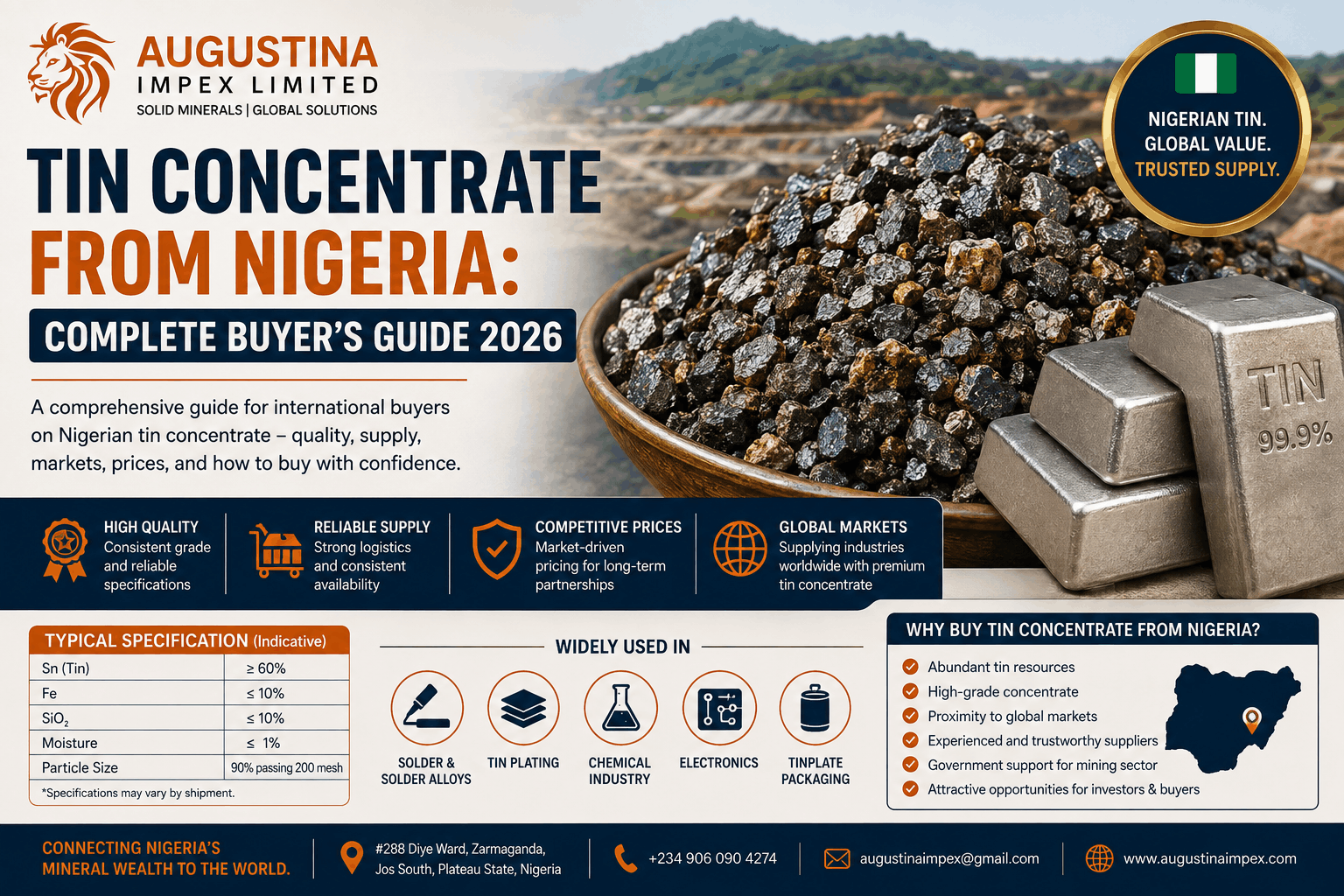
The theoretical tin content of pure cassiterite is 78.8% Sn — a figure that provides the ceiling for concentrate grade, since no ore processing achieves 100% recovery of pure mineral with zero impurities. In practice, commercial Nigerian tin concentrates are graded on actual Sn metal content by assay, with the premium commercial specification requiring a minimum of 60% Sn for acceptance by most Asian and European tin smelters. Sub-60% material can be accepted by smelters capable of processing lower-grade feeds, typically at discounted payability terms.
| Property | Cassiterite Value | Commercial Significance |
|---|---|---|
| Chemical Formula | SnO₂ (tin oxide) | Theoretical max Sn content 78.8% |
| Specific Gravity | 6.8–7.1 g/cm³ | Very dense — concentrates naturally in alluvial placers; recoverable by gravity separation |
| Mohs Hardness | 6–7 | Resists mechanical degradation during alluvial transport; grains remain coarse and recoverable |
| Colour | Yellow-brown to black; varies with Fe/Mn | Colour alone does not determine grade — assay required |
| Magnetic Properties | Weakly to moderately magnetic at high field | Partially separable by high-intensity magnetic separation in HMS circuits |
| Commercial Min. Grade | 40% Sn (low-grade) to 60%+ Sn (premium) | 60%+ Sn is standard smelter specification; payability basis varies by Sn content |
| Key Penalty Elements | As, Bi, Pb, S, W (at elevated levels) | Penalties charged by smelters on a per-unit basis above threshold limits |
The Global Tin Market in 2026: Why Nigerian Cassiterite Matters Now
Tin is one of the world’s most versatile industrial metals, and its demand profile in 2026 reflects a market in structural transition. The traditional tin applications — tinplate food and beverage cans, lead-free solder for electronics printed circuit boards (PCBs), organotin chemical compounds, and bronze alloys — remain large and stable. But what is driving renewed urgency in the tin supply chain is the emergence of three new demand vectors that were modest in 2020 but are now material in 2026.
The first is the explosive growth of advanced electronics and semiconductor packaging. Every semiconductor chip package — smartphone processors, automotive chips, AI accelerator modules, IoT sensors — requires tin-based solder to attach the chip to its substrate and the substrate to the PCB. The chip shortage of 2020–2022 revealed the fragility of this supply chain and triggered a massive wave of new semiconductor fabrication plant (fab) construction globally — the TSMC fabs in Arizona and Japan, Intel’s Ohio complex, Samsung’s Texas facility, and dozens of Chinese fabs — all of which will require substantial tin solder as they ramp production through 2026–2030.
The second new demand vector is EV battery technology. Tin is being investigated and, in some formulations, deployed as an anode material and anode coating agent in lithium-ion and solid-state batteries — tin offers a theoretical lithium capacity approximately four times that of conventional graphite anodes, though cycle life limitations have slowed commercial adoption. More immediately, the EV transition is expanding PCB and power electronics content per vehicle by a factor of three to five compared to conventional ICE vehicles — each of which requires tin solder joints.
The third driver is supply concentration risk. Myanmar, which emerged over the past decade as a major tin mining supplier (through the Man Maw mine in Wa State), has experienced significant production disruptions due to conflict and mine access restrictions. Indonesia (the world’s second-largest exporter) has imposed stricter export licensing. China (the world’s largest refined tin producer) consumes most of its domestic mine production. These dynamics are simultaneously reducing available export supply from traditional sources and increasing the premium that non-traditional suppliers — including Nigeria — can command from smelters seeking to diversify their feedstock base.
| Application Segment | % of Global Tin Demand | 2026 Demand Trend | Nigerian Tin Relevance |
|---|---|---|---|
| Solder (Electronics) | ~48% | ↑ Strong growth — semiconductor fab expansion | High — clean cassiterite suitable for refined tin solder production |
| Tinplate (Packaging) | ~18% | → Stable — food and beverage demand steady | Medium — feeds refined tin supply chain |
| Chemicals (Organotin) | ~15% | → Stable — PVC stabilisers, catalysts | Medium — feeds chemical-grade refined tin |
| Alloys (Bronze, Babbitt) | ~11% | → Stable to slight decline | Medium |
| EV Battery / Advanced | ~8% (growing rapidly) | ↑↑ Fast growth — EV electronics + anode research | High — clean, low-impurity cassiterite preferred |
London Metal Exchange (LME) tin has traded in the range of USD 25,000–38,000 per metric tonne in recent years, making it one of the highest-priced base metals on a per-tonne basis. At USD 30,000/MT Sn metal and a concentrate grade of 60% Sn, the gross contained metal value of Nigerian tin concentrate is approximately USD 18,000/MT concentrate before smelter charges — a compelling economic case for buyers who can access reliable Nigerian supply. Price volatility remains a feature of the tin market; buyers typically price cassiterite purchases on a formula basis tied to the LME cash settlement price at the time of smelter delivery or assay acceptance.
Nigeria’s Tin Deposits: Geology and Historical Significance
Nigeria’s cassiterite deposits are geologically linked to the Younger Granites — a suite of alkaline granite intrusions emplaced across the Jos Plateau and surrounding areas approximately 140–220 million years ago (Jurassic to Early Cretaceous) during a period of continental rifting associated with the opening of the Atlantic Ocean. These granites are characterised by high fluorine and tin content, which drove tin mineralisation into the associated hydrothermal veins, greisens, and pegmatites, and from there into the surrounding weathered alluvial sequences over geological time.
The alluvial cassiterite deposits of the Jos Plateau — the “stream tin” that powered Nigeria’s colonial-era mining boom — are distributed across the valley floors, river terraces, and hillside eluvium of the Plateau’s many drainage systems. The Shere Hills, Naraguta fields, Ropp district, Barkin Ladi area, and numerous other named sub-districts within the Jos Plateau tin field are among the most historically documented alluvial tin deposits in Africa. Beyond the Jos Plateau itself, Nigeria’s tin occurrence extends into the Younger Granite belt of Bauchi, Kaduna, Nasarawa, and Zamfara states, though production from these areas is smaller and less documented than the Jos core.
One important characteristic of Nigerian alluvial cassiterite is its association with coltan and wolframite in the same mineral sand feed — these three minerals are co-products of the same Younger Granite tin mineralising event, and their co-occurrence in the alluvial assemblage means that sophisticated HMS processing can recover all three from a single ore feed. This multi-product economics is one of the factors that makes Jos Plateau alluvial tin mining more economically robust than a single-metal operation would be.
How Nigerian Tin Concentrate is Produced: From Alluvial to Export-Grade
Nigerian cassiterite is produced through two principal pathways — artisanal small-scale gravity recovery and mechanised HMS processing — each yielding different grade and volume profiles. Understanding these production pathways helps buyers anticipate the supply characteristics and quality assurance requirements for each source.
① Artisanal and Small-Scale Mining (ASM) — Jigging and Hand Sluicing
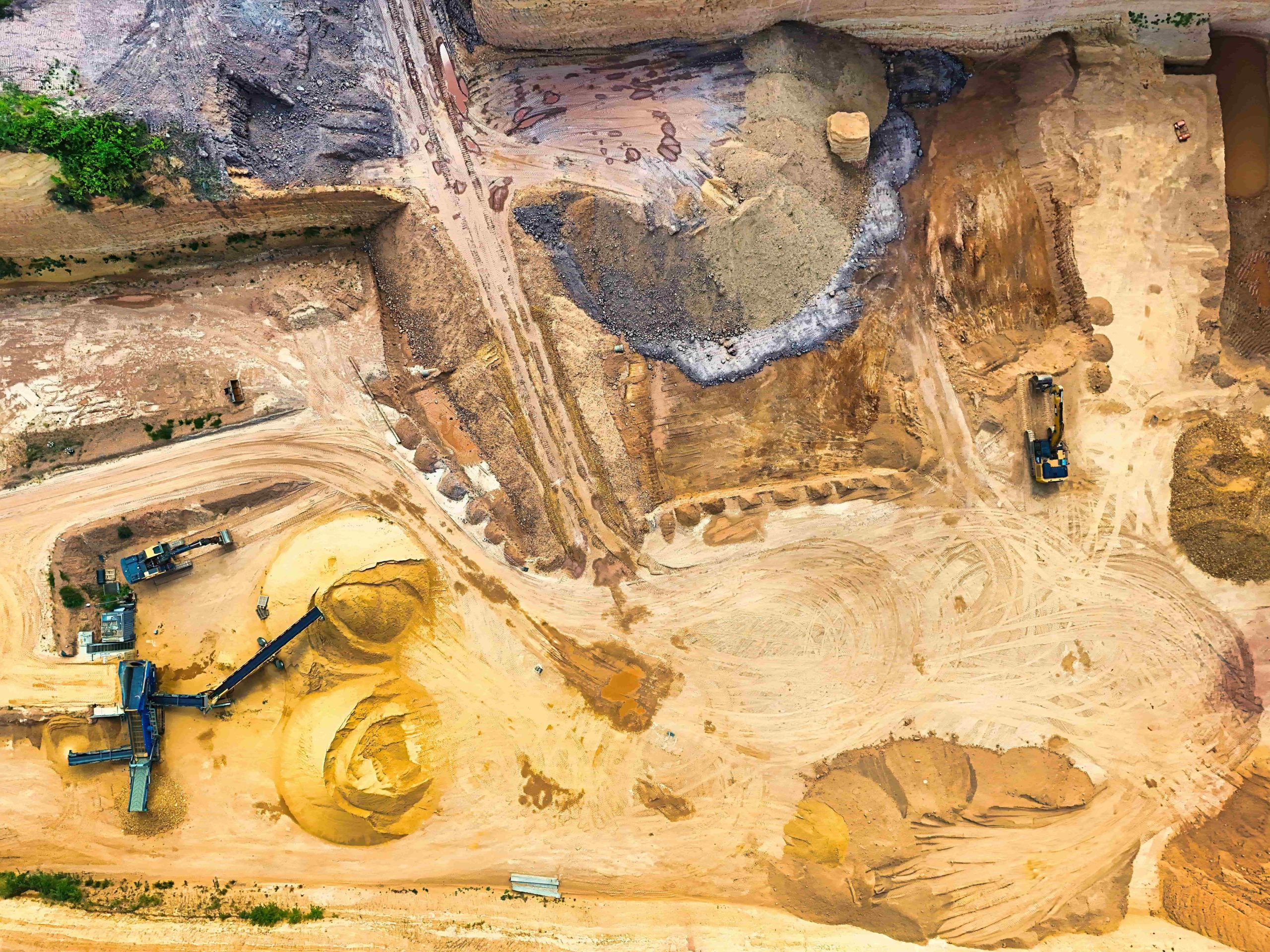
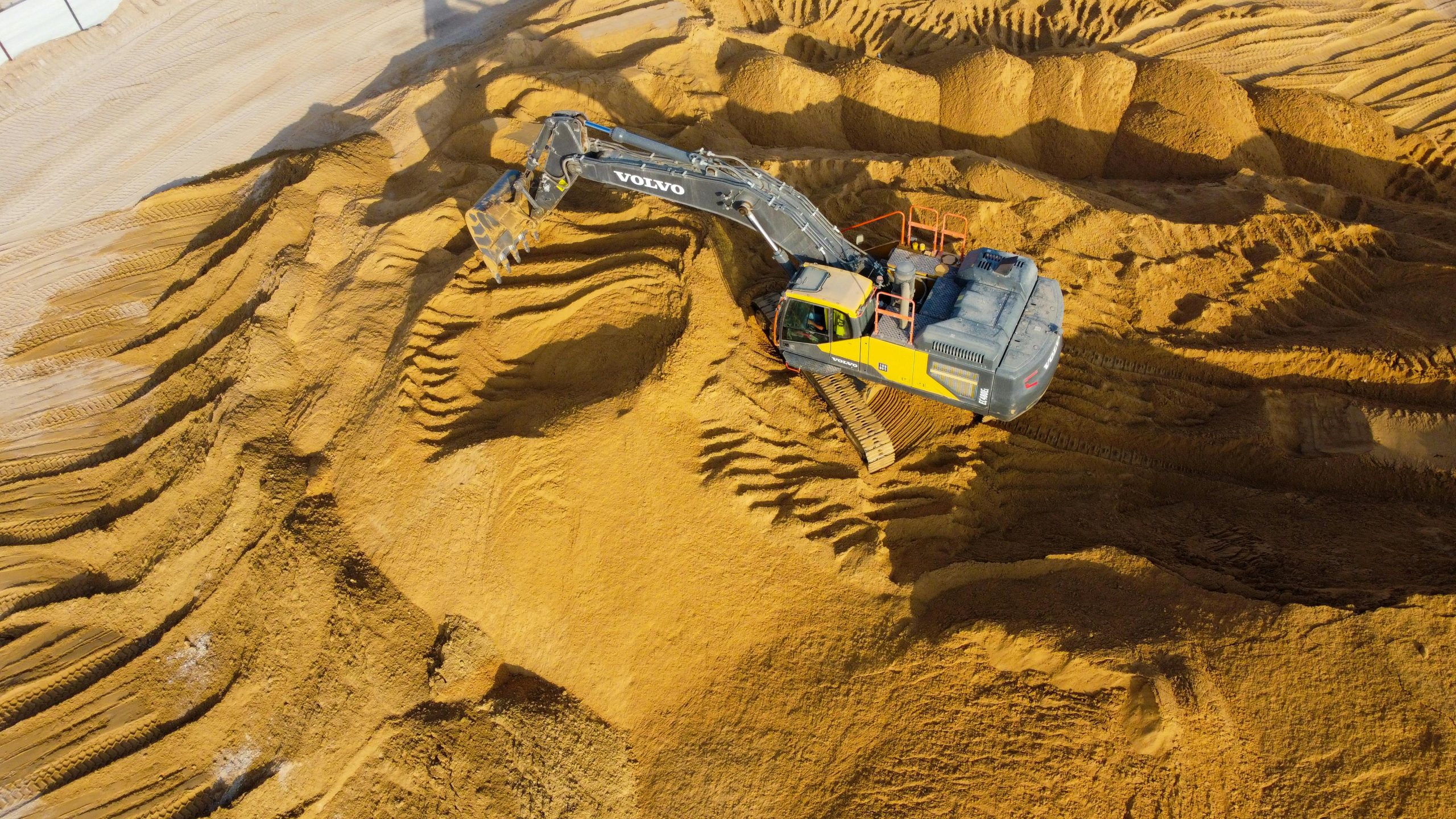
The majority of Nigerian cassiterite production in 2026 originates from artisanal and small-scale mining communities working the alluvial river terraces of the Jos Plateau. ASM miners typically use hand jigging — a traditional gravity separation method in which a perforated jig box is repeatedly raised and lowered in water, causing the dense cassiterite to settle through the jig bed while lighter gangue minerals are flushed away — and hand sluicing on portable wooden sluice boxes.
ASM-produced cassiterite in Nigeria typically grades 40–70% Sn depending on the skill of the miner, the richness of the deposit, and the number of cleaning passes applied. Premium hand-jigged material from experienced miners working rich alluvial faces can reach 65–70% Sn, while typical mixed-community production averages 50–60% Sn before further beneficiation. Augustina Impex aggregates ASM-produced cassiterite from multiple community sources, blends for consistency, and upgrades through additional processing at the Jos HMS plant to achieve export-specification Sn 60%+ product.
② Mechanised HMS Processing — Jos Plant Multi-Stage Gravity and Magnetic Circuit
Cassiterite recovered through the Augustina Impex partner HMS processing plant in Jos undergoes a full multi-stage physical separation circuit — spiral gravity concentration, shaking table upgrading, high-intensity magnetic cleaning (to remove magnetic impurities), and dense media or Knelson concentrator polishing for premium-grade product. This processing chain consistently produces cassiterite concentrates grading 60–72% Sn with controlled impurity levels (As, Bi, Pb, S, W) within international smelter specification limits.
The mechanised HMS circuit also recovers cassiterite that ASM methods leave in tailings — particularly fine-grained cassiterite (below 0.5 mm) that is difficult to capture with hand jigging. This “fine tin” recovery adds significantly to the total tin production from a given deposit area and improves the overall economics of the HMS processing operation. For buyers requiring consistent, documented-grade material, HMS plant-processed Nigerian cassiterite is the preferred supply source.
Nigerian Cassiterite — Commercial Grades and Typical Specifications
| Grade | Sn Content | Typical Impurities | Smelter Suitability | Price Basis |
|---|---|---|---|---|
| Premium Grade | 65–72% Sn | As <0.03%; Bi <0.02%; Pb <0.1%; S <0.3% | All tin smelters globally; no penalties | LME × 65–70% payability (no penalties) |
| Standard Grade | 60–65% Sn | As <0.05%; Bi <0.05%; Pb <0.2%; S <0.5% | Malaysia (MSC), Indonesia, China, Thailand smelters | LME × 60–65% payability basis |
| Augustina Impex Export Spec | 60%+ Sn (min) | Confirmed by CCIC/SGS pre-shipment assay | Malaysia, Indonesia, China, Bolivia | Per buyer negotiation — Sn content basis |
| Sub-Grade / Low-Grade | 40–59% Sn | Higher gangue mineral content; elevated impurities | Selected Chinese smelters; secondary refiners | Discounted — Sn content basis with penalty deductions |
Penalty elements — arsenic (As), bismuth (Bi), lead (Pb), sulphur (S), tungsten (W) — are of particular concern to tin smelters because they contaminate the refined tin output and require additional processing steps to remove. Nigerian cassiterite from the Jos Plateau alluvial deposits is generally low in penalty elements compared to cassiterite from some other producing countries, reflecting the relatively clean geochemical environment of the Younger Granite alluvial system. However, assay confirmation of penalty element levels is always required before pricing is finalised.
Key Tin Smelter Markets and Their Purchase Requirements
Understanding where Nigerian cassiterite goes — and what the receiving smelters require — is essential for structuring supply agreements that will work in practice. The major tin smelter markets for Nigerian cassiterite are:
① Malaysia — MSC (Malaysia Smelting Corporation)
Malaysia Smelting Corporation (MSC) in Butterworth, Penang, is one of the world’s oldest and largest independent tin smelters — tracing its history directly to the Straits Trading Company that processed British colonial tin from Malaya and Nigeria in the early 20th century. MSC accepts a wide range of cassiterite grades from West Africa, Southeast Asia, and beyond, and is well-equipped to process Nigerian cassiterite. MSC typically requires minimum 40% Sn for acceptance, with pricing calculated on actual Sn content at LME-based payability. MSC is one of the best entry-point smelters for Nigerian cassiterite given its existing African supply relationship infrastructure.
② Indonesia — PT Timah and Bangka-Belitung Smelters
Indonesia is the world’s second-largest tin exporter, with PT Timah as the dominant state-owned producer and smelter. The Bangka-Belitung smelting cluster also includes private smelters that import cassiterite from non-Indonesian sources. Indonesian smelters typically require 60%+ Sn for standard terms, with strict impurity limits particularly on As and Bi. Indonesian buyers have become increasingly active in sourcing West African cassiterite as a complement to declining domestic ore grades.
③ China — Yunnan Tin, Chengfeng, and Multiple Secondary Smelters
China is the world’s largest refined tin producer and consumer, with major smelting operations concentrated in Yunnan Province (Yunnan Tin Group — the world’s largest tin producer), Guangxi, and Hunan. Chinese smelters import cassiterite from Myanmar, Australia, Bolivia, and increasingly Africa. Chinese buyers are the most price-competitive purchasers of Nigerian cassiterite and are most comfortable with a wide range of grades and impurity profiles. For Nigerian sellers, Chinese buyers often offer the fastest transaction speed and most flexible specifications, though payment security protocols require careful attention.
④ Bolivia — ENAF and Associated Smelters
Bolivia’s national tin smelter ENAF and associated private smelters have a long tradition of processing complex, high-impurity tin concentrates — Bolivia’s own cassiterite deposits are notoriously complex in mineralogy. This experience makes Bolivian smelters more tolerant of moderately elevated impurity levels than some Asian competitors, potentially offering an option for Nigerian cassiterite batches that exceed Asian penalty thresholds on one or more elements.
A critically important distinction for European, American, and Japanese electronics manufacturers is the conflict mineral status of tin. The US Dodd-Frank Act Section 1502 and EU Conflict Minerals Regulation require that manufacturers using tin, tantalum, tungsten, and gold sourced from the DRC and adjoining countries conduct supply chain due diligence to ensure the minerals are not funding armed conflict. Nigerian cassiterite is not subject to these conflict mineral designation requirements — Nigeria is not on the list of covered countries. This means Nigerian tin concentrate can be used by electronics manufacturers subject to Dodd-Frank and EU CMR without triggering the associated compliance burden, giving Nigerian cassiterite a significant regulatory advantage over DRC-origin tin.
Pricing Nigerian Tin Concentrate: How the Economics Work
Cassiterite pricing is based on the contained metal value of the concentrate — calculated by multiplying the Sn grade (%) by the quantity of concentrate (MT) by the current LME tin metal price — adjusted by a payability factor and a set of smelter charges. Understanding this formula is essential for buyers and sellers to negotiate on common ground.
① Payability — Tin smelters do not pay for 100% of the contained Sn in a concentrate, because some Sn is lost in the smelting process as slag, fume, and slime. Payability typically ranges from 65–75% of Sn assay for premium grades, to 55–65% for standard grades. A 60% Sn concentrate at 70% payability and LME USD 30,000/MT calculates to: 60% × 70% × USD 30,000 = USD 12,600/MT concentrate in gross metal payments.
② Treatment Charge (TC) — The smelter charges a treatment fee per dry metric tonne of concentrate processed, typically USD 400–800/MT depending on grade, impurity complexity, and market conditions. This is deducted from the gross metal payment.
③ Penalties — Each penalty element (As, Bi, Pb, S, W) above a threshold limit incurs a per-unit deduction. For example, arsenic above 0.1% might attract a deduction of USD 1–3 per 0.01% As above the threshold, per MT of concentrate. Clean Nigerian cassiterite with low penalty element levels minimises these deductions.
④ Moisture and Sizing — Concentrate moisture content is deducted from the dry weight basis used for pricing. Coarse oversize fractions may attract a sizing penalty at some smelters. Augustina Impex supplies cassiterite at specified moisture content and screens out oversize fractions before shipment.
Assumptions: 10 MT Nigerian cassiterite at 62% Sn; LME tin USD 30,000/MT; payability 70%; TC USD 600/MT; no significant penalties.
Gross metal payment: 10 MT × 62% × 70% × USD 30,000 = USD 130,200
Less TC: 10 MT × USD 600 = USD 6,000
Net payment to seller: USD 124,200 (USD 12,420/MT concentrate)
Note: Actual pricing is always based on final assay results confirmed by independent inspection and subject to the specific terms of the purchase agreement between buyer and seller.
Nigerian Tin Concentrate Export: Documentation and Compliance
Nigerian tin concentrate exports through Augustina Impex/Jase Odus Nigeria Limited are fully compliant with Nigerian export regulatory requirements and carry the complete documentation package that international smelters and buyers require. The standard export document set for each shipment includes:
① Independent Assay Certificate — full XRF or fire assay at an ISO/IEC 17025-accredited laboratory, covering Sn, Fe, As, Bi, Pb, S, W, Cu, moisture, and sizing per buyer specification.
② CCIC / SGS / Bureau Veritas Pre-Shipment Inspection Certificate — independent verification of quantity (net dry weight), quality (grade), and packaging condition at the loading point.
③ NESS Certificate (Nigerian Export Supervision Scheme) — mandatory for all solid mineral exports from Nigeria.
④ NEPC Export Declaration — from Augustina Impex/Jase Odus Nigeria Limited (NEPC RE 0039421, valid July 2027).
⑤ Certificate of Origin — confirms Nigerian origin; required by buyers for customs and regulatory compliance including conflict mineral due diligence documentation.
⑥ Commercial Invoice and Packing List — from Jase Odus Nigeria Limited, itemising lot numbers, gross and net weights, moisture content, and container/bag identification.
Nigeria Tin Concentrate: State-by-State Geographic Guide
While the Jos Plateau in Plateau State is the historic and current centre of Nigerian tin production, cassiterite occurrences extend across multiple states in the Younger Granite belt and associated geological terrains. The following state-by-state guide summarises Nigeria’s tin deposit geography for international buyers seeking to understand the supply landscape:
| State | Deposit Type | Key Tin-Bearing Areas | Co-Products | Production Status |
|---|---|---|---|---|
| Plateau State | Alluvial river terrace; eluvial granite decay | Naraguta, Ropp, Shere Hills, Barkin Ladi, Bassa LGA, Riyom LGA | Coltan, Zircon, Wolframite, Monazite, Ilmenite | High — ASM + HMS plant; Augustina Impex export operational |
| Nasarawa State | Alluvial; Younger Granite extension | Wamba LGA, Awe LGA, Nasarawa-Eggon area | Coltan, Wolframite, Copper Ore | Active — feeds Jos aggregation and processing network |
| Bauchi State | Alluvial; Younger Granite southern extension | Tafawa Balewa LGA, Bogoro LGA, Alkaleri LGA | Coltan, minor Zircon | Active — artisanal ASM; processed through Jos |
| Taraba State | Alluvial river valley; basement complex | Gashaka LGA, Bali LGA, Gassol LGA | Coltan, Gold | Active artisanal; logistics to Jos for processing |
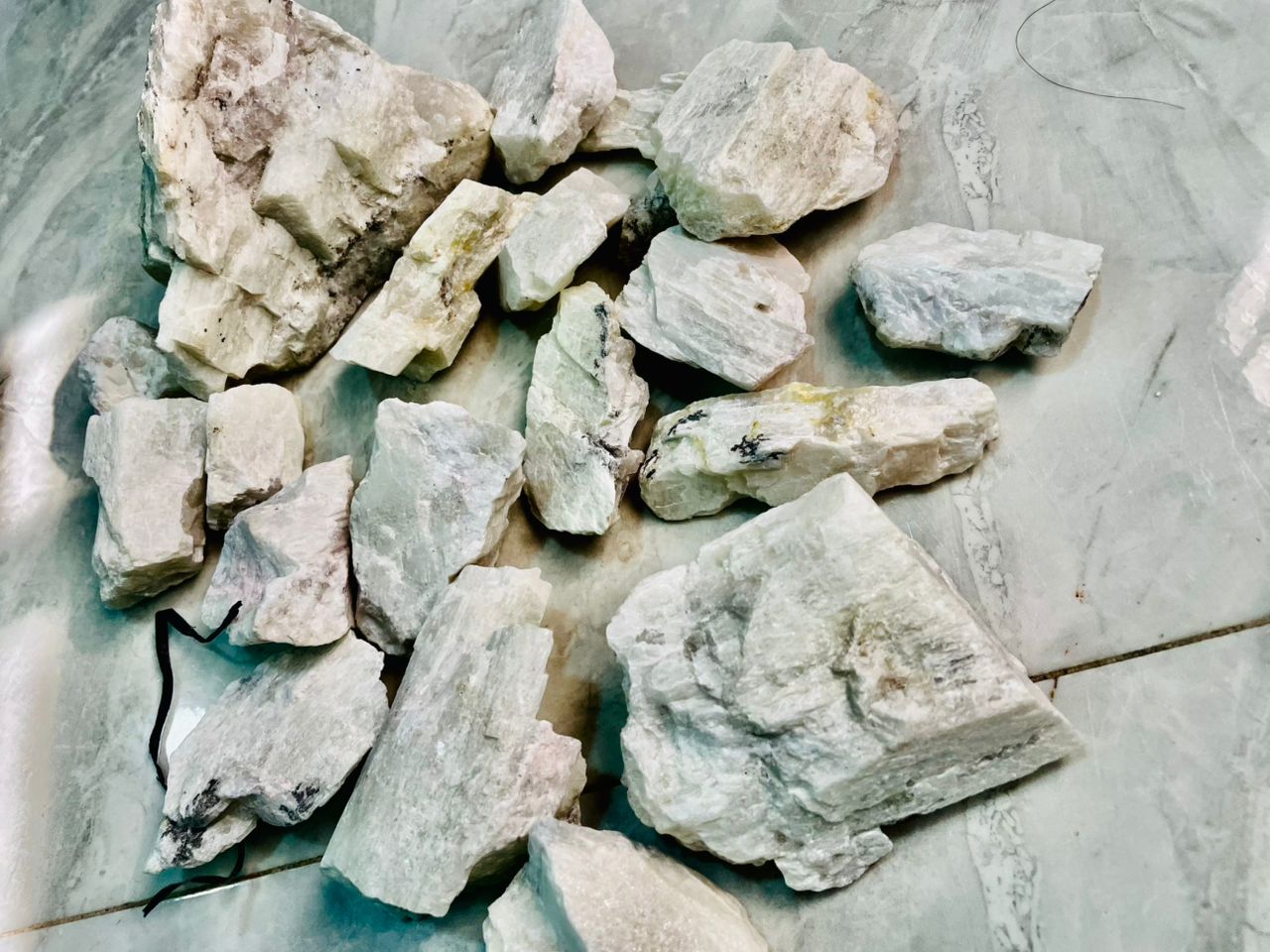
| Kaduna State | Pegmatite-associated eluvial; alluvial | Birnin Gwari LGA, Giwa LGA | Coltan, Lithium, Feldspar | Active ASM; minor cassiterite recovered with coltan |
| Zamfara State | Alluvial; western Younger Granite extension | Maru LGA, Talata Mafara LGA | Gold, Lead-Zinc | Emerging — security environment improving; ASM active |
| Adamawa State | Alluvial; northern basement complex | Guyuk LGA, Shelleng LGA | Coltan, minor Zircon | Low — remote; artisanal only; transported to Jos |
Sourcing Nigerian Tin Concentrate Through Augustina Impex Limited
Augustina Impex Limited (RC 750691) is headquartered in Jos, Plateau State — at the operational centre of Nigeria’s tin producing region. We aggregate cassiterite from verified artisanal mining communities and the HMS processing plant, blend for grade consistency, and process through our partner plant’s upgrading circuit to consistently achieve Sn 60%+ export specification. Our export entity, Jase Odus Nigeria Limited (RC 2022462, NEPC RE No. 0039421 — valid July 2027), handles all export documentation and NESS certification. Pre-shipment inspection by CCIC, SGS, or Bureau Veritas is standard for every bulk shipment. We supply from 500 kg sample parcels (for assay) up to full container loads and multi-container monthly supply programmes.
For tin buyers sourcing Nigerian cassiterite for the first time, we recommend the following engagement sequence: request a 500 kg to 1 MT sample parcel for independent assay at your nominated laboratory; review the assay results against your smelter’s purchase specification; negotiate a trial shipment of 5–20 MT on confirmed pricing terms; and then move to a framework supply agreement covering monthly volumes aligned with your smelter’s scheduling requirements. This step-by-step approach de-risks the initial engagement and builds the mutual confidence needed for a long-term supply relationship.
Our standard commercial terms for cassiterite export are: EXW (Ex-Works, Jos) or FCA (Free Carrier, Lagos or Onne Port), with 100% advance T/T for new buyer relationships, shifting to structured payment milestones (percentage advance + balance against CCIC inspection report) for established buyers. We work with your freight forwarder or can recommend our logistics partners for full door-to-port movement from Jos to Lagos (Apapa or Lekki) or Onne Port (Rivers State).
Frequently Asked Questions: Nigerian Tin Concentrate 2026
Augustina Impex’s export standard is a minimum of 60% Sn — consistent with the acceptance threshold of major tin smelters in Malaysia, Indonesia, China, and Thailand. Material below 60% Sn can be sold to selected buyers (primarily Chinese secondary smelters) at discounted payability terms, or can be upgraded through additional processing at the Jos HMS plant to reach the 60% threshold. We do not export sub-standard material to buyers who have specified 60%+ Sn without prior agreement on grade and pricing adjustment.
Yes. Nigeria is not listed as a conflict-affected or high-risk area under the US Dodd-Frank Act Section 1502 or the EU Conflict Minerals Regulation for tin, tantalum, tungsten, and gold. Nigerian cassiterite can be supplied to electronics manufacturers, automotive OEMs, and other companies subject to conflict mineral due diligence requirements without triggering Conflict Minerals Reporting Template (CMRT) concerns. A Certificate of Origin from Augustina Impex/Jase Odus Nigeria Limited, confirming Nigerian origin, is the primary documentation for this purpose.
Standard packaging is 50 kg woven polypropylene (PP) bags, sealed and stitched, stacked on wooden pallets of 1 MT per pallet for container loading. One-tonne flexible intermediate bulk containers (FIBCs / big bags) are available on request and are preferred by some smelters for ease of handling at discharge. All bags are labelled with lot number, gross weight, net weight, moisture content, product description (cassiterite/tin concentrate), and exporter details. Container loading is witnessed by the pre-shipment inspection agent, with container seal numbers recorded on the inspection certificate.
Augustina Impex can supply Nigerian cassiterite in monthly volumes ranging from trial parcels of 500 kg to 2 MT (for assay and qualification purposes) up to ongoing supply programmes of 20–50 MT per month through its Jos Plateau aggregation and HMS processing network. Larger volumes are achievable with advance notice and expanded aggregation across the Plateau and Nasarawa supply network. Volume commitments above 100 MT/month require a Supply and Purchase Agreement and advance notice of 8–12 weeks to build the necessary stockpile and processing pipeline.
We can work with buyers to target specific penalty element profiles through selective sourcing and blending within our supply network. Jos Plateau alluvial cassiterite is naturally low in arsenic and bismuth compared to many other global cassiterite sources. If your smelter has specific limits on As, Bi, Pb, S, or W, share the specification sheet and we will provide representative assay data from our current supply base. We can also arrange for penalty element profiling of sample material before bulk purchase commitment, allowing both parties to confirm smelter acceptability before any financial commitment is made.
Conflict-free. Independently assayed. CCIC/SGS inspected. NEPC-certified. Supplied by Augustina Impex Limited — Nigeria’s Jos-based mineral export professional.
📧 augustinaimpex@gmail.com
📞 WhatsApp: +234 906 090 4274
Kolawole King is the Chief Executive Officer of Augustina Impex Limited (RC 750691), a NEPC-licensed Nigerian solid mineral export company headquartered in Jos, Plateau State — Nigeria’s historic and active tin mining heartland. With hands-on experience in cassiterite aggregation, HMS processing coordination, and international mineral export documentation, Kolawole leads the supply of Nigerian tin concentrate, coltan, zircon, and associated HMS minerals to buyers across Asia, Europe, and the Middle East. For tin concentrate enquiries: augustinaimpex@gmail.com | WhatsApp: +234 906 090 4274 | www.augustinaimpex.com | Corporate Blog
Post a comment
Related Posts
Nigeria Lithium Mining: Production, Processing & Export
Nigeria Lithium Mining: Production, Processing and Export Opportunities By Kolawole King, CEO — Augustina Impex…

Nigeria Rare Earth Minerals: Deposits & Market Potential
Nigeria Rare Earth Minerals: Deposits, Applications and Global Market Potential By Kolawole King, CEO —…
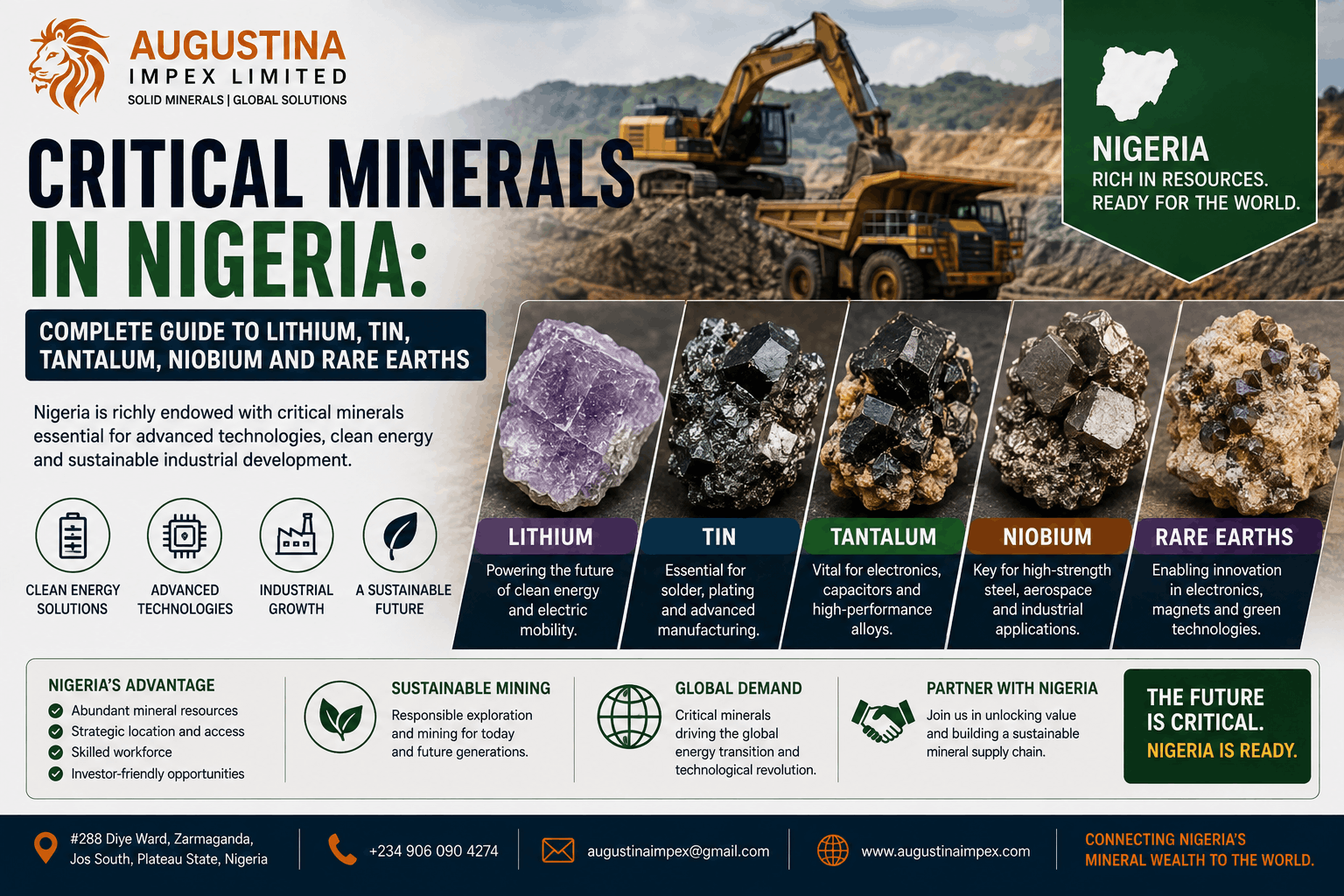
Nigeria Critical Minerals Guide: Lithium, Tin & Rare Earths
Critical Minerals in Nigeria: Complete Guide to Lithium, Tin, Tantalum, Niobium and Rare Earths By…
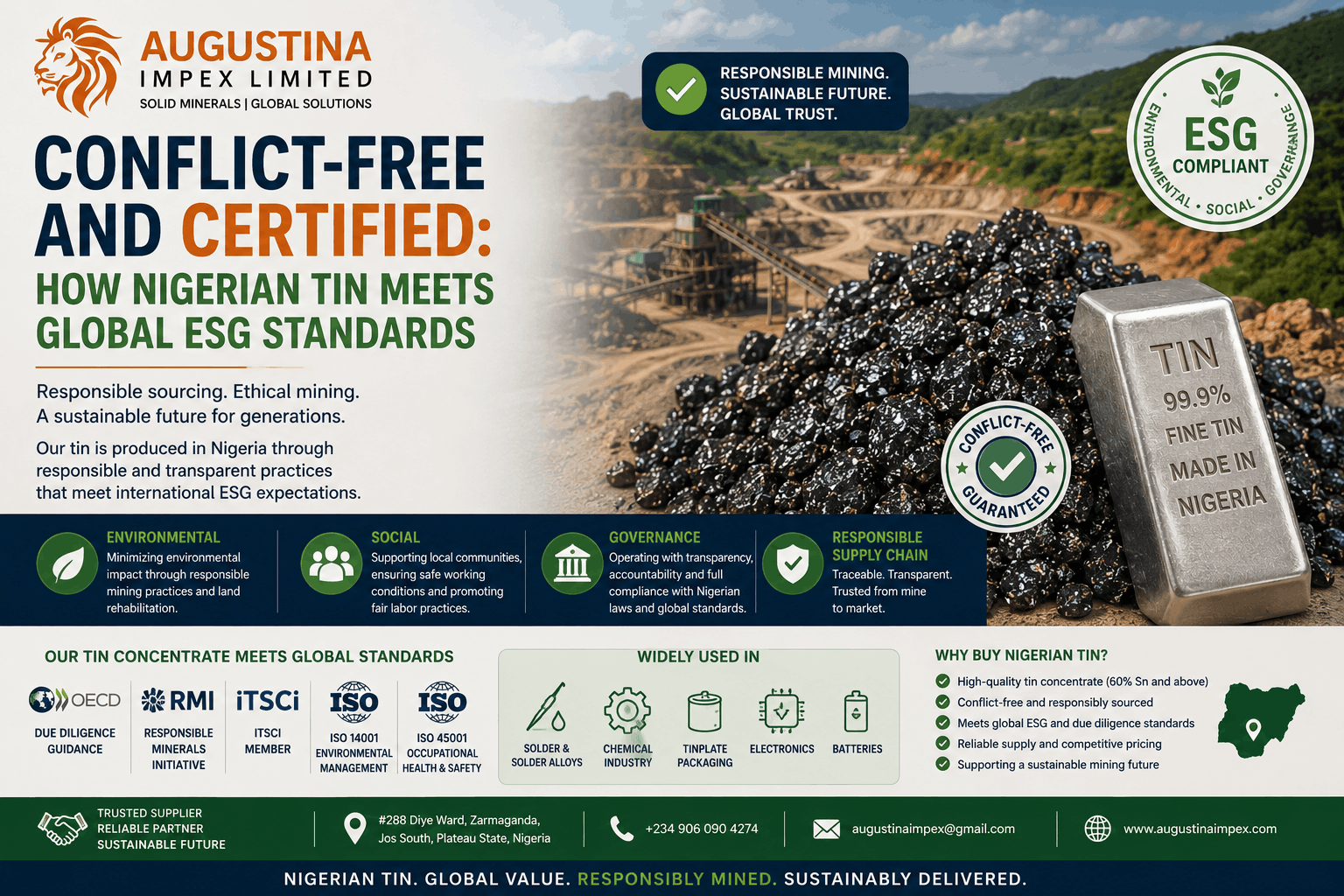
Conflict-Free Nigerian Tin Meets Global ESG Standards
Conflict-Free and Certified: How Nigerian Tin Meets Global ESG Standards By Kolawole King, CEO —…