
Critical Minerals in Nigeria: Complete Guide to Lithium, Tin, Tantalum, Niobium and Rare Earths
By Kolawole King, CEO — Augustina Impex Limited | Published: August 2026 | 20 min read
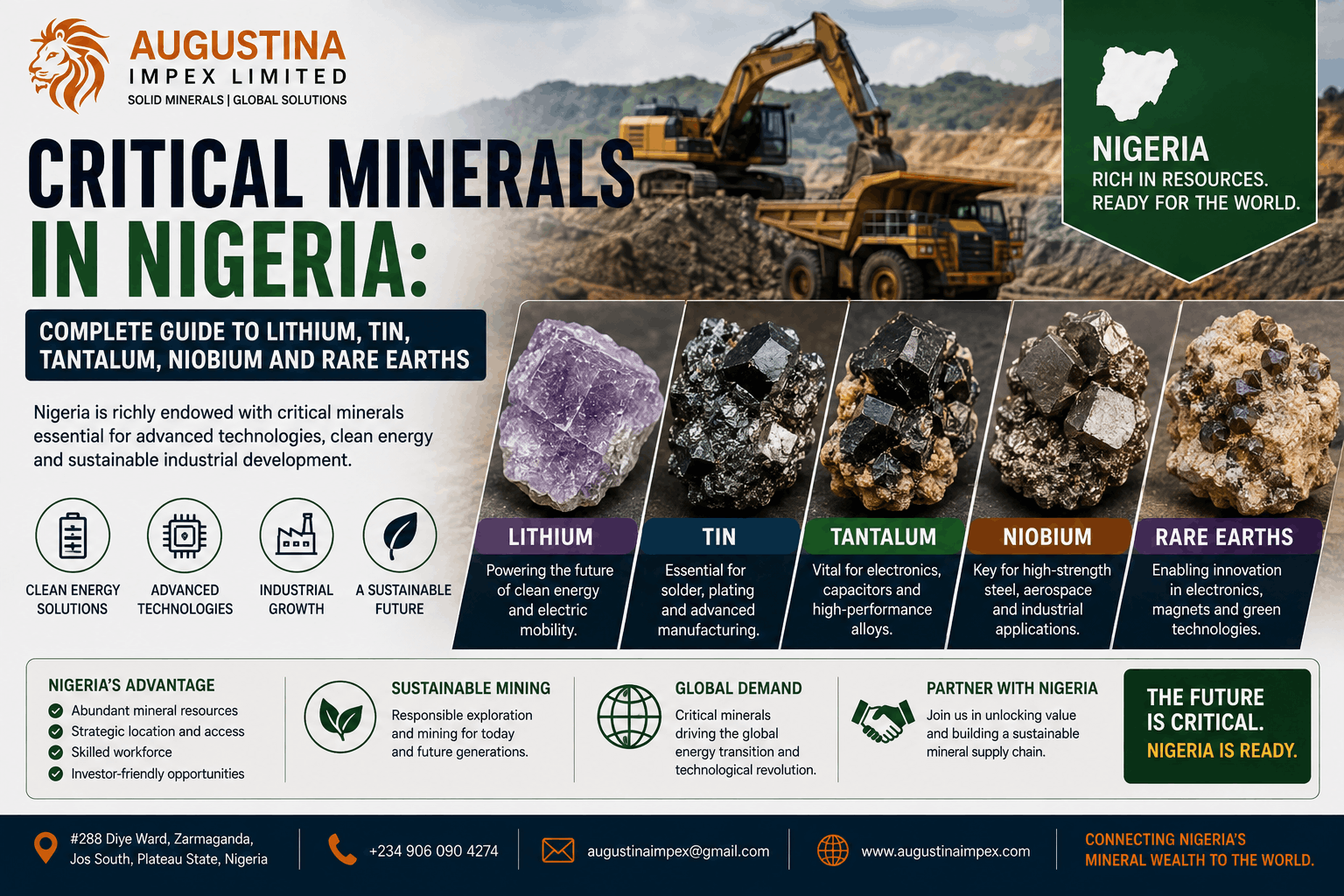
The global race for critical minerals has fundamentally changed how governments, manufacturers, and investors look at Africa — and Nigeria in particular. As the world’s demand for electric vehicles, renewable energy infrastructure, semiconductor devices, defence systems, and high-technology consumer electronics continues to climb at rates that few analysts predicted a decade ago, the raw material base needed to sustain that growth is coming under intense scrutiny. Lithium for batteries. Tin for solder. Tantalum and niobium for capacitors and superalloys. Rare earth elements for permanent magnets and catalysts. These are no longer marginal industrial commodities — they are the foundational inputs of the modern economy, and their geography of supply is being redrawn in real time.
Nigeria sits at the centre of this redrawn map. Endowed by geology with exceptional deposits of lithium-bearing pegmatites, vast alluvial tin fields, significant columbite-tantalite (coltan) occurrences, rare earth mineralisation in bastnasite and monazite form, and a supporting cast of industrial minerals that rounds out one of Africa’s most diverse critical mineral portfolios, Nigeria offers international buyers something rare: a single-country source for multiple critical mineral feedstocks, within a democratic governance framework, under a maturing regulatory system, and at a stage of development where entry pricing is still attractive.
This guide provides a comprehensive overview of Nigeria’s critical mineral landscape — what is available, where it is found, what grades are achievable, how export is structured, and how international buyers can access verified, documented supply. It is written for procurement managers, mineral traders, investment analysts, and sustainability officers who need reliable, current information on Nigerian critical minerals sourced from direct market experience.
What Are Critical Minerals? The Global Policy Context
The term “critical mineral” has specific meaning in policy and procurement contexts — it refers to minerals that are economically significant, face supply concentration risks (often dominated by one or two producing countries), and are essential inputs for clean energy technologies, advanced manufacturing, or national security applications. Different jurisdictions publish their own critical minerals lists, and there is considerable overlap across the major frameworks:
| Jurisdiction | Critical Minerals List / Policy | Nigerian Minerals Included |
|---|---|---|
| United States | USGS Critical Minerals List (50 minerals, updated 2022); IRA 2022 | Lithium, Tin, Tantalum, Niobium, REE (Ce, La, Nd, Pr), Graphite, Zirconium, Manganese, Tungsten, Fluorite |
| European Union | EU Critical Raw Materials Act (CRMA) 2024 — 34 Critical + 17 Strategic CRMs | Lithium, REE (light + heavy), Tantalum, Niobium, Tin, Graphite, Tungsten, Fluorite, Zirconium |
| United Kingdom | UK Critical Minerals Strategy 2022 / 2023 Refresh | Lithium, REE, Tantalum, Tin, Tungsten, Graphite, Zirconium |
| Japan | METI Critical Minerals Strategy; JOGMEC diversification programme | REE, Lithium, Tantalum, Niobium, Tin, Zirconium, Fluorite |
| Australia | Critical Minerals Strategy 2023–2030 | Lithium, REE, Tantalum, Niobium, Graphite, Zirconium, Tin |
Nigeria produces — or has commercially significant deposits of — minerals that appear on every major critical minerals list. This is not a coincidence of policy: it reflects Nigeria’s genuine geological endowment, rooted in the country’s position within the West African Craton, the Pan-African orogenic belt, and the younger Jos Plateau volcanic complex that hosts one of Africa’s most mineralogically diverse surface terrains.
Nigeria’s Geological Endowment: Why This Country Is So Mineralised
Nigeria’s extraordinary mineral wealth derives from three principal geological settings, each of which produces a distinct suite of critical minerals:
① Pan-African Pegmatite Belt (600–500 Ma) — A network of granitic pegmatite intrusions running through Kaduna, Kogi, Nasarawa, Ekiti, Cross River, Kwara, and Ogun states. Pegmatites are the primary host for lithium minerals (spodumene, lepidolite, kunzite), tantalum-niobium (columbite-tantalite), beryl, feldspar, and mica. Nigeria’s pegmatite belt is one of the most extensive in West Africa and has been a source of columbite — the niobium-bearing mineral — since the colonial era.
② Jos Plateau Younger Granites and Alluvial Fields (160–140 Ma) — The Jos Plateau was formed by Jurassic-age younger granites that weathered over millions of years to produce the alluvial tin-cassiterite, zircon, columbite, and rutile/ilmenite deposits for which Plateau State is famous. The HMS (heavy mineral sands) processing plant in Jos exploits this geological legacy, recovering multiple valuable mineral products from the same alluvial material using gravity, magnetic, and electrostatic separation.
③ Precambrian Basement Complex — The ancient basement rocks underlie much of central and northern Nigeria and host diverse mineral deposits including rare earth-bearing carbonatites (bastnasite), lead-zinc in carbonate sequences (Benue Trough), gold and iron ore occurrences, and phosphate deposits. The bastnasite rare earth carbonate deposits in Plateau State and adjoining areas are among the most geologically interesting rare earth occurrences in West Africa.
① Lithium — Nigeria’s Emerging Battery Minerals Powerhouse
Lithium is the foundational element of the modern battery economy — the key constituent of lithium-ion batteries that power electric vehicles, grid-scale energy storage, smartphones, laptops, and an expanding universe of consumer electronics. Global lithium demand is projected to grow by 300–500% between 2025 and 2040, driven overwhelmingly by EV adoption in China, Europe, and North America. This demand trajectory has made new lithium supply sources — particularly in Africa, which is rapidly emerging as the continent of the next lithium boom — a critical priority for battery manufacturers and chemical processors alike.
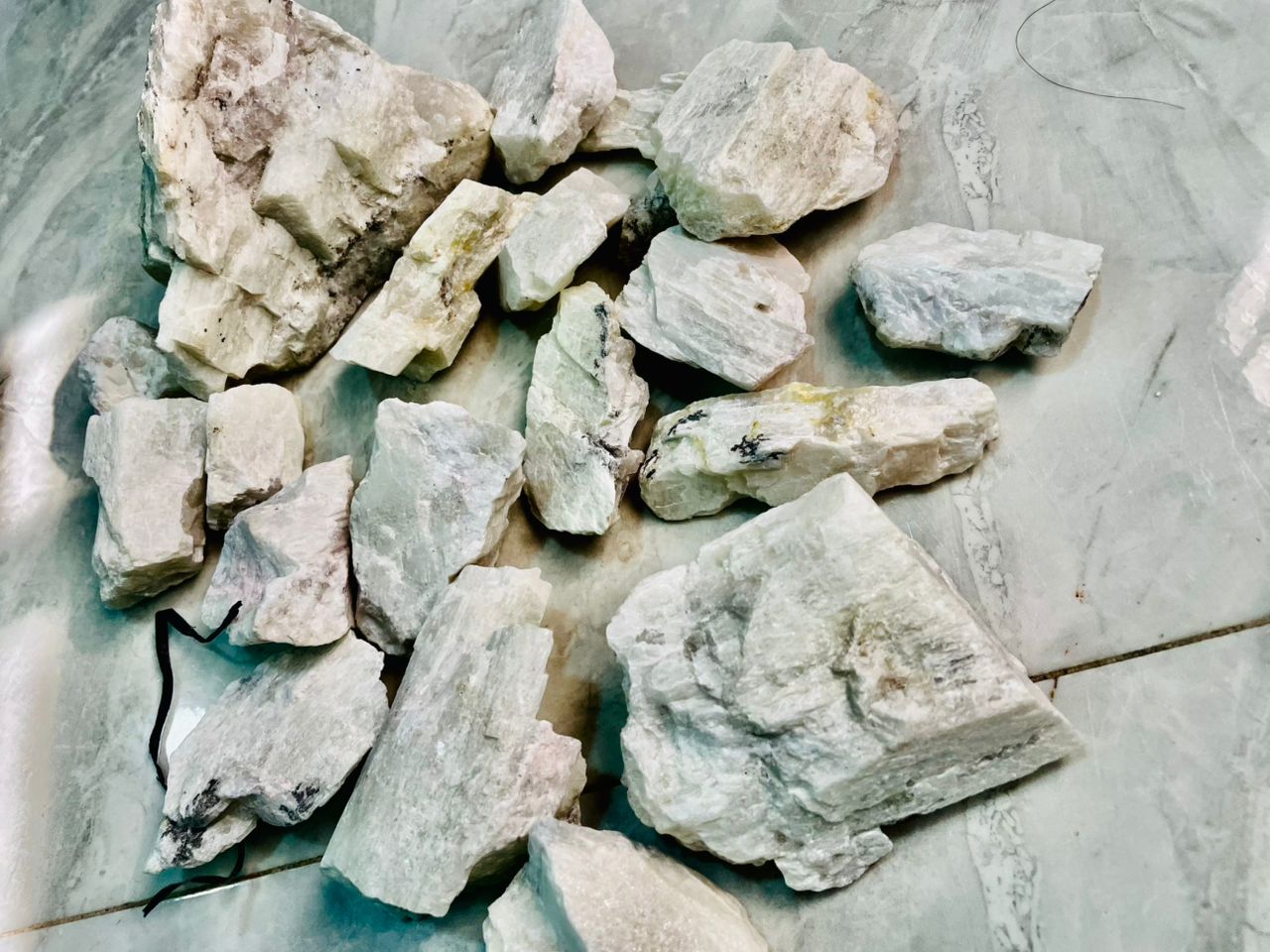
Nigeria’s lithium resources are primarily hosted in spodumene and kunzite pegmatites — the same mineral type that dominates the hard rock lithium supply from Australia, which currently provides approximately 50% of global lithium concentrate supply. Nigerian spodumene has been known to geologists for decades, but serious commercial evaluation has accelerated dramatically since 2020, as elevated lithium prices and supply concentration concerns directed exploration capital towards West Africa.
| Lithium Mineral | Li₂O Grade Range | Key States | Commercial Status |
|---|---|---|---|
| Spodumene (LiAlSi₂O₆) | 1.0% – 5.5%+ Li₂O | Kaduna, Kogi, Nasarawa, Kwara, Ekiti, Cross River | Active export; ASM and junior mining sector |
| Kunzite (gem spodumene) | Li₂O 4%–8% (pink/violet variety) | Kaduna (Minna area), Kogi | Dual-market: gem + industrial lithium source |
| Lepidolite (K(Li,Al)₃(AlSi)₄O₁₀) | 1.2% – 2.5% Li₂O | Edo State (Auchi area) | Active production; priced Ex-Works Auchi |
Nigerian spodumene is sold in run-of-mine (ROM) lump and crushed form — not as refined lithium carbonate or hydroxide, which requires chemical processing infrastructure that is not yet present in Nigeria at commercial scale. The commercial pathway is therefore: Nigerian spodumene concentrate (Li₂O 4%+, achieved through gravity and flotation beneficiation) → export to lithium chemical processors in China, South Korea, Finland, or Portugal → conversion to battery-grade Li₂CO₃ or LiOH → battery cathode manufacturing.
Lepidolite, sourced from Auchi, Edo State, is an alternative lithium mica mineral increasingly valued by processors who can handle its more complex mineralogy. Ex-Works pricing from Auchi is structured by Li₂O grade: ₦150,000/MT for 1.2–1.5% Li₂O material, ₦180,000/MT for 1.5–2.0% Li₂O, and ₦230,000/MT for the highest 2.0–2.5% Li₂O fraction.
Nigeria offers spodumene-kunzite at Li₂O grades from 1% to 5.5%+, lepidolite at 1.2–2.5% Li₂O, and active artisanal production networks in Kaduna, Kogi, Nasarawa, Kwara, Ekiti, and Edo states. Commercial terms are EXW Nigeria or FCA Lagos. Payment is 100% advance T/T. Pre-shipment assay by SGS or Bureau Veritas is available. NEPC export documentation and Certificate of Origin provided with every shipment.
② Tin (Cassiterite) — The Jos Plateau Legacy and Modern Supply
Tin may be the mineral most historically associated with Nigeria — the Jos Plateau was one of the British Empire’s most productive tin-mining regions in the first half of the twentieth century, and the tin boom that followed colonial discovery transformed the economic and demographic landscape of what is now Plateau State. At peak production in the 1960s, Nigeria was among the world’s top five tin producers. While production volumes have declined from those colonial highs, the geological resource base remains substantial, and the combination of alluvial accessibility, established processing infrastructure, and growing global tin demand is driving a meaningful revival of the Nigerian tin sector.
Tin’s role in modern industry is more important than ever. Solder — the primary use of refined tin — is the key joining material in every printed circuit board, semiconductor package, and electronic assembly produced anywhere in the world. There is no commercially viable substitute for tin solder in electronics manufacturing. As the global electronics industry expands — driven by AI hardware, EV electronics, IoT devices, and 5G infrastructure — tin demand grows proportionally. The International Tin Association (ITA) has repeatedly flagged concerns about medium-term supply adequacy, making diversified tin sourcing a strategic priority for electronics procurement teams.
| Parameter | Specification |
|---|---|
| Mineral Form | Cassiterite (SnO₂) — alluvial and eluvial |
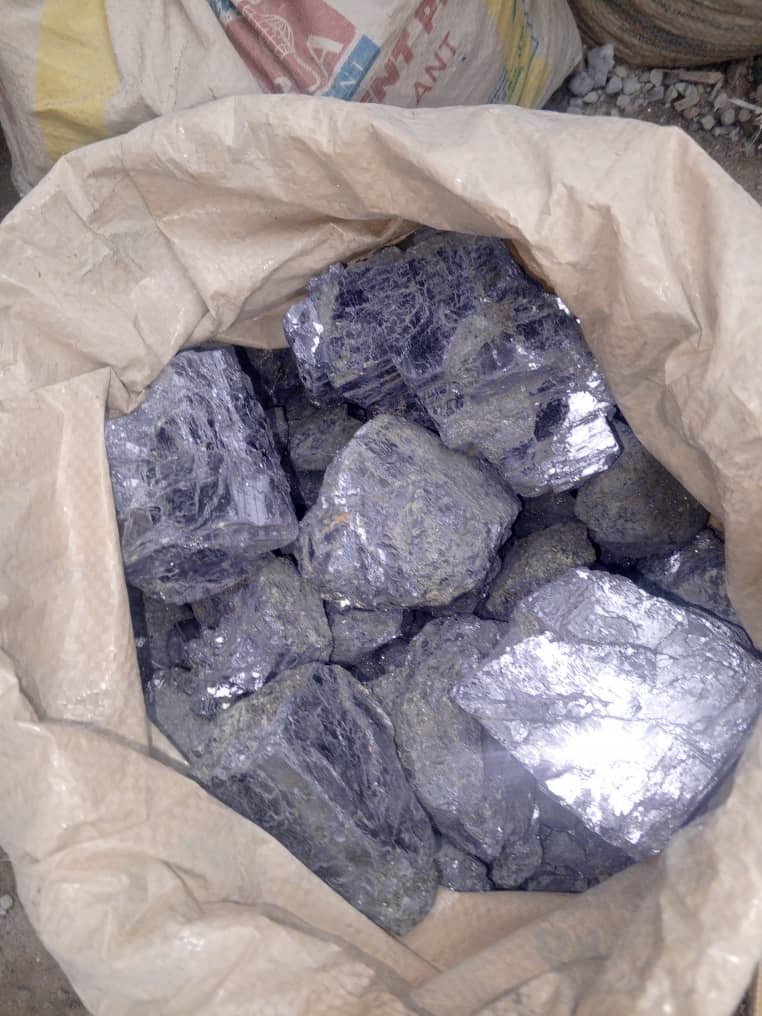
| Tin Grade | Sn 60%+ (concentrate, post-HMS processing); lower grades available as ROM |
| Origin | Jos Plateau (Plateau State); Nasarawa; Bauchi; Taraba |
| Processing | HMS plant — gravity (spiral), magnetic, electrostatic separation; chemical-free |
| ESG / Conflict Status | DRC Conflict Free; Nigeria not a CAHRA; COO + NEPC + NESS provided |
| Pricing Basis | LME tin price × payability factor × Sn% – treatment charge – penalties |
| Incoterms | EXW Jos or FCA Lagos |
| Min. Order Quantity | From 100kg sample to full FCL container loads |
The Jos HMS plant — operated by Augustina Impex’s partner Eliezer Onah — processes alluvial heavy mineral sands from the Jos Plateau to produce: cassiterite concentrate (Sn 60%+), zircon sand (ZrO₂ 40–66.5%), columbite concentrate (Nb₂O₅ bearing), ilmenite, and rutile — making it a multi-product operation that delivers exceptional economic efficiency per tonne of alluvial material processed.
③ Tantalum and Niobium — Nigeria’s Coltan Heritage and 21st Century Demand
Tantalum and niobium are among the most technologically critical minerals in modern industry, yet they remain little known outside the specialist minerals community. Understanding their applications helps explain why demand is growing and why Nigeria’s coltan deposits are commercially significant.
Tantalum (Ta) is primarily used in the manufacture of tantalum capacitors — miniature, highly efficient capacitors found in virtually every modern electronic device: smartphones, tablets, laptops, hearing aids, pacemakers, automotive ECUs, and military electronics. Tantalum capacitors are preferred for their superior electrical performance in high-frequency, high-reliability applications. There is no commercially viable equivalent substitute for tantalum capacitors in demanding applications, making tantalum supply security a strategic priority for electronics manufacturers. The global supply base for tantalum is highly concentrated — the DRC and Rwanda together supply the majority of artisanal tantalum, while Australia (Wodgina, Greenbushes) provides most of the large-scale hard rock supply. Nigerian tantalum offers a geopolitically diversified alternative from a non-CAHRA source country.
Niobium (Nb) is dominated — uniquely among critical minerals — by a single country: Brazil accounts for approximately 90% of global niobium supply, primarily through CBMM’s Araxá carbonatite deposit. Niobium’s primary market is high-strength low-alloy (HSLA) steel production: a small addition of niobium (0.03–0.05%) dramatically increases steel strength, allowing lighter structural components in vehicles, pipelines, ships, and buildings. Niobium is also used in superalloys for jet engines and gas turbines, and in niobium-doped lithium-ion battery cathode materials being developed for faster-charging EV applications.
Nigerian coltan is a mixed mineral — columbite-tantalite — that contains both niobium (as Nb₂O₅ in columbite) and tantalum (as Ta₂O₅ in tantalite). The ratio of Nb to Ta determines which metal predominates and therefore which market the material primarily serves. Augustina Impex sources two commercial coltan grades from Nigeria’s pegmatite belt:
| Grade | Total Grade | Nb₂O₅ | Ta₂O₅ | Price (FCA Lagos) |
|---|---|---|---|---|
| Grade 1 | 30% combined | 27% | 3% | USD 27/kg FCA Lagos |
| Grade 2 | 38% combined | 35% | 3% | USD 44/kg FCA Lagos |
Supply capacity is 60 MT per month, with loading at Lekki Deep Sea Port, Lagos. Inspection is by Bureau Veritas or CCIC at Lekki Port. Payment terms: 60% advance T/T after Supply and Purchase Agreement (SPA) signing, with the remaining 40% payable against the CCIC quality inspection report at Lagos port. Duration of supply: 12-month agreements with roll and extension options.
Nigeria has a long history in the columbite trade — columbite (the niobium-dominant member of the columbite-tantalite series) was one of Nigeria’s first commercial mineral exports. The name “columbium” — an alternative historical name for niobium, still used in the US steel industry — reflects the significance of the Nigerian deposits in the early history of this element’s commercial development. Modern Nigerian coltan supply comes primarily from artisanal and small-scale mining in Kaduna, Nasarawa, Kogi, and Cross River states, with the best grades typically from the Jurassic-age pegmatites of the central belt.
④ Rare Earth Elements — Nigeria’s Emerging REE Position
Rare earth elements (REEs) are a group of 17 elements — the 15 lanthanides plus scandium and yttrium — that are critical inputs for permanent magnets (neodymium-iron-boron magnets used in EV motors and wind turbines), catalytic converters, phosphors, glass polishing, and a wide range of high-technology applications. The global REE market is dominated by China, which controls approximately 60% of mining and 85% of processing, creating significant supply chain vulnerability for manufacturers outside China. Diversification of REE supply chains has become a strategic priority for the EU, US, Japan, and South Korea — and Africa is increasingly recognised as a potential alternative source region.
Nigeria’s REE mineralisation occurs in two principal forms:
Bastnasite — Light Rare Earth Carbonate
Bastnasite (RECO₃F) is a fluoro-carbonate mineral that is the world’s most commercially important rare earth ore — the Mountain Pass deposit in California and the Bayan Obo deposit in China, both bastnasite deposits, have historically provided the majority of global REE supply. Nigerian bastnasite deposits, developed and produced by Tulay Africa (Augustina Impex’s Bastnasite production partner in Victoria Island, Lagos), carry total rare earth oxide (TREO) values across a range of grades from multiple pit samples — including alluvial and hard rock occurrences assayed by Zirconex Mining and Metal Laboratory (ISO/IEC 17025 accredited, Abuja). The key REE components in Nigerian bastnasite include cerium (Ce), lanthanum (La), praseodymium (Pr), neodymium (Nd) — the economically most valuable NdPr fraction that drives permanent magnet demand.
Producer: Tulay Africa (Victoria Island, Lagos) — MD: Khafe Dirisu | Pit samples: multiple alluvial deposit sources assayed by Zirconex Mining Lab (Abuja, ISO/IEC 17025). Product: bastnasite concentrate shipped as both bulk and DHL-quality sample lots to qualified international buyers. DHL sample shipments have been completed to buyers in China (Fujian Brothers), India/Malaysia (EXGO Exim Gold Resources), and multiple other jurisdictions. Incoterms: EXW Nigeria or FCA Lagos. SCOs (Soft Corporate Offers) available on request.
Monazite Sand — Light REE Phosphate with NdPr and Low Thorium
Monazite ((Ce,La,Nd,Th)PO₄) is a phosphate mineral that concentrates in heavy mineral sand deposits alongside ilmenite, zircon, and rutile. Nigerian monazite — recovered from the Jos Plateau HMS processing operations — carries a highly attractive specification: TREO 52.2%, NdPr 12.0%, ThO₂ approximately 0.05%. This ultra-low thorium content is a critical commercial advantage: most monazite deposits carry ThO₂ values of 3–8%, which triggers NORM (naturally occurring radioactive material) classification requiring specialised handling, permitting, and regulatory compliance in importing countries. Nigerian monazite’s 0.05% ThO₂ content places it at the extreme low end of the global monazite spectrum — significantly reducing the regulatory and handling burden for importers, particularly in the EU where NORM import procedures are complex.
| REE Mineral | Key REEs Present | TREO / NdPr | Key Origin | Regulatory Note |
|---|---|---|---|---|
| Bastnasite | Ce, La, Pr, Nd (LREE dominant) | Grade per assay — multiple pit samples | Plateau State + Tulay Africa production | Fluoro-carbonate — standard REE handling; low radioactivity |
| Monazite Sand | Ce, La, Nd, Pr + Th (ultra-low) | TREO 52.2% | NdPr 12.0% | ThO₂ ~0.05% | Jos Plateau HMS processing | NORM classified; NNRA-compliant export; IATA air cargo for samples |
⑤ Supporting Critical Minerals: Copper, Zinc, Fluorite, Tungsten, Graphite and Zircon
Beyond the headline critical minerals, Nigeria’s mineral portfolio includes several additional commodities that appear on major critical minerals lists or serve critical industrial supply chains:
| Mineral | Grade / Spec | Key Origin States | Critical Use |
|---|---|---|---|
| Copper Ore | Grade A: Cu 8–11% | Grade B: 5–7% | Grade C: 3–4% | Nasarawa, Plateau, Kogi | EV wiring, grid infrastructure, electronics — global copper demand +50% by 2040 |
| Zinc Ore | Zn 30–35% | USD 1,390/MT FCA Lagos (35% basis) | Benue, Plateau, Nasarawa | Galvanising, alloys, EV battery anodes (zinc-air), chemicals |
| Fluorite (Fluorspar) | CaF₂ 60–85% | Benue, Taraba, Cross River | HF acid (fluorine chemistry), steel flux, aluminium smelting, lithium battery electrolyte |
| Wolframite (Tungsten Ore) | WO₃ 30–50% | Plateau, Nasarawa, Kaduna | Cutting tools, drill bits, armour-piercing projectiles, electronics |
| Graphite Ore | TGC 80–95% | Kogi, Kwara, Ogun | Li-ion battery anode (primary graphite use), refractories, lubricants |
| Zircon Sand | ZrO₂ 40–66.5% | Plateau State (HMS co-product) | Zirconia ceramics, nuclear cladding, dental crowns, foundry sand, opacifiers |
| Lead Ore (Galena) | Pb 40–70% | Plateau State (Dengi Mine, Kanam LGA) | Lead-acid batteries, radiation shielding, ammunition |
| Manganese Ore | Mn 35–48% | Plateau, Nassarawa, Ogun | Steel deoxidation; lithium-manganese-oxide battery cathodes |
Nigeria’s Regulatory Framework for Critical Mineral Exports
Nigeria’s solid mineral export sector is governed by a comprehensive regulatory framework that provides the governance and documentation infrastructure needed for international buyers to import Nigerian minerals within their legal compliance requirements:
① Federal Ministry of Mines and Steel Development (FMMSD) — The primary regulatory authority for the Nigerian mining sector. Licenses mineral title (Exploration Licence, Mining Lease, Small-Scale Mining Licence), oversees mining operations compliance, and administers the Mining Cadastre Office (MCO) that manages Nigeria’s electronic licence register.
② Nigerian Export Promotion Council (NEPC) — Registers all solid mineral exporters (RE number), issues Certificates of Origin for export shipments, and maintains the national export promotion infrastructure. Augustina Impex’s export entity (Jase Odus Nigeria Limited) holds NEPC RE Number 0039421 (valid through July 2027).
③ Nigerian Export Supervision Scheme (NESS) — Issues shipment-level export compliance certificates for all solid mineral export lots. The NESS certificate is a mandatory export document and provides the shipment-specific traceability that buyers need for supply chain due diligence records.
④ Nigerian Nuclear and Radiological Regulatory Authority (NNRA) — Issues NORM (Naturally Occurring Radioactive Material) export permits for minerals that carry radioactive elements above threshold levels. Monazite sand exports require NNRA compliance — Augustina Impex coordinates NNRA permitting for all monazite shipments. Bastnasite at typical Nigerian grades generally does not require NNRA permitting.
⑤ Nigerian Customs Service — Administers HS code classification and customs clearance for export shipments. Form M (import declaration) is completed by the buyer’s bank in the importing country for payment and import documentation purposes.
The Critical Mineral Export Process: Step by Step
① Specification Confirmation — Buyer confirms mineral type, grade requirements, quantity, incoterms, and required documentation package.
② Soft Corporate Offer (SCO) — Augustina Impex issues a commercial SCO within 48 hours of receiving confirmed buyer specifications. The SCO covers price, quantity, quality, incoterms, payment terms, inspection, and validity period.
③ Sample Shipment — For buyers requiring independent laboratory verification, sample lots (100kg–500kg) can be dispatched for assay by the buyer’s nominated laboratory before the main commercial order is placed. Sample dispatch is via DHL for small quantities or via air freight for larger sample lots.
④ Supply and Purchase Agreement (SPA) — A formal commercial contract executed between Jase Odus Nigeria Limited (seller) and the buyer, covering all terms and conditions. The SPA is the trigger document for payment and production.
⑤ Production, Aggregation, and Processing — Mineral is aggregated, quality-checked, and processed (where HMS processing is applicable) to meet agreed specification.
⑥ Pre-Shipment Inspection — CCIC, SGS, or Bureau Veritas conducts independent quantity and quality verification at the agreed inspection point (mine, processing plant, or Lagos port). Inspection certificate issued.
⑦ Export Documentation and Shipment — Full export documentation package: NESS certificate, NEPC certificate, Certificate of Origin, Commercial Invoice, Packing List, and Bill of Lading or Airway Bill. For NORM minerals (monazite): additional NNRA export permit included.
State-by-State Critical Minerals Map: GEO Guide to Nigerian Mineral Deposits
For procurement managers conducting supply chain geographic analysis, investment analysts mapping resource endowments, and logistics teams planning in-country transport routes, the following state-by-state critical mineral guide provides the geographic intelligence needed for informed sourcing decisions:
| State | Critical Minerals Present | Key Deposits / Areas | Commercial Status (2026) |
|---|---|---|---|
| Plateau State | Tin (cassiterite), Coltan, Zircon, Monazite, Bastnasite, Lead (Galena), Wolframite | Jos Plateau alluvial fields; Dengi Mine (Kanam LGA); Bukuru; Rayfield | Very Active — HMS plant operational; active ASM; established export infrastructure |
| Nasarawa State | Coltan, Copper Ore, Lithium (spodumene), Tin | Akiri Mine (SSML 59148, Lafia area); pegmatite belt | Active — copper ore and coltan ASM; JV mining development in progress |
| Kaduna State | Lithium (spodumene-kunzite), Coltan, Beryl, Feldspar | Birnin Gwari (lithium pegmatites); Minna area; Zaria | Very Active — major lithium ASM production; multiple junior mining licences |
| Kogi State | Lithium, Coltan, Iron Ore, Graphite | Itakpe (iron ore); Okaba; pegmatite belt | Active — lithium and coltan ASM; iron ore mid-scale operations |
| Edo State | Lepidolite (lithium mica), Coltan, Marble, Clay | Auchi (lepidolite); Benin-City environs | Active — lepidolite production at Auchi; priced Ex-Works; Rahim Momoh supply network |
| Benue State | Fluorite (Fluorspar), Zinc Ore, Lead Ore, Coltan | Nasarawa/Benue fluorite belt; Benue trough Zn-Pb | Active — fluorite ASM well-developed; Zn-Pb exploration ongoing |
| Taraba State | Tin, Coltan, Fluorite, Graphite | Mutum Biyu; Wukari (tin fields) | Moderate — ASM active; supply aggregated through Jos; improving documentation |
| Cross River State | Lithium (spodumene), Coltan, Barite, Limestone | Obudu; Ogoja (pegmatite belt extension) | Emerging — increasing ASM lithium activity; Calabar port proximity advantageous |
| Zamfara State | Zinc Ore, Lead Ore, Gold (artisanal), Copper Ore | Daura; Anka; Birnin Magaji (zinc-lead) | Moderate — zinc-lead production active; security improving; enhanced DD recommended |
| Kwara State | Lithium, Coltan, Feldspar, Quartz | Ilorin area pegmatites; Offa environs | Active — lithium ASM developing; supply to Kaduna aggregators |
| Ekiti State | Lithium (spodumene), Coltan, Feldspar | Ijero-Ekiti (lithium pegmatites); Aramoko | Active — significant lithium discovery activity; improving ASM formalisation |
| Enugu State | Steam Coal, Iron Ore, Clay | Coal Camp Coal Mine (NAPAAS Nigeria Ltd); Inyi | Very Active — commercial coal SCO issued; export via Onne Port; GCV 6,383 kcal/kg |
Why Source Critical Minerals from Nigeria? Six Strategic Reasons
① Supply Chain Diversification. Nigeria provides access to multiple critical minerals — lithium, tin, tantalum, niobium, REE, graphite, tungsten, copper, zinc, fluorite — from a single democratic, English-speaking country with an established export regulatory framework. For buyers seeking to reduce geographic concentration risk (China, Australia, DRC) across their mineral supply chains, Nigeria offers an attractive one-stop diversification option.
② Conflict-Free and ESG-Compliant. Nigeria is not designated as a CAHRA under Dodd-Frank, the EU CMR, or the OECD Due Diligence Guidance. Nigerian minerals carry a straightforward ESG profile — DRC conflict-free, civilian governance, documented regulatory compliance, with CCIC/SGS/Bureau Veritas independent inspection available for every shipment.
③ Early-Mover Pricing Advantage. Nigeria’s critical mineral sector is in an early commercial development phase — artisanal production is abundant, export infrastructure is functional, but international buyer awareness remains lower than in more established supply countries. Early-mover buyers who establish direct supply relationships now can access better pricing and priority supply as the sector matures.
④ Africa Continental Free Trade Area (AfCFTA). Nigeria is a signatory to the AfCFTA — the world’s largest free trade area by number of participating countries. As AfCFTA implementation progresses, Nigerian mineral exports may benefit from reduced trade barriers with African markets and improved logistics integration.
⑤ Established Export Infrastructure. Lagos (Apapa, Tincan Island, Lekki Deep Sea Port) and Onne Port (Rivers State) provide deep-water container handling for mineral exports to any global destination. CCIC, SGS, and Bureau Veritas all maintain Nigerian operations, providing inspection services for buyer assurance. Customs clearance and logistics are well-established for solid mineral exports.
⑥ Partnership with Augustina Impex. Augustina Impex Limited provides the aggregation, quality control, export documentation, inspection coordination, and commercial management infrastructure that transforms artisanal production into internationally acceptable, documented supply. We bridge the gap between Nigeria’s mineral wealth and international market requirements — so buyers get the benefit of the resource base without the operational complexity.
Augustina Impex Limited: Your Nigerian Critical Minerals Supply Partner
Augustina Impex Limited (RC 750691) is a NEPC-registered Nigerian solid mineral export company, operating through Jase Odus Nigeria Limited (RC 2022462, NEPC RE 0039421 — valid July 2027) as our export entity. We are headquartered in Jos, Plateau State — the epicentre of Nigeria’s mining industry — with an operational partnership with the Jos HMS Processing Plant (Eliezer Onah, #) and a production partnership with Tulay Africa (Khafe Dirisu, Victoria Island, Lagos) for Bastnasite and associated REE products. Our multi-state production network spans Plateau, Nasarawa, Kaduna, Kogi, Taraba, Zamfara, Cross River, Kwara, Adamawa, and Edo States. We can supply lithium ore (spodumene/lepidolite), tin concentrate (Sn 60%+), coltan (30–38% grades), bastnasite concentrate, monazite sand, copper ore, zinc ore, fluorite, tungsten ore, graphite, zircon, ilmenite, rutile, lead ore, and manganese ore — all with NEPC/NESS documentation, COO, and CCIC/SGS/BV inspection.
Frequently Asked Questions: Nigerian Critical Minerals
Minimum order quantities vary by mineral. For most minerals, initial sample orders start at 100kg–500kg for independent assay verification, with commercial orders from 5MT to full FCL container loads (20–25MT). For coltan, minimum commercial orders are typically 500kg–1MT. For large-volume minerals like tin concentrate, zinc ore, or copper ore, FCL loads are standard. Monthly supply capacity and seasonal availability (some minerals have dry-season/rainy-season production cycles) are disclosed in the SCO for each mineral.
Nigerian pricing is generally competitive with other West and Central African sources and typically lower than processed equivalents from Australia or established South American producers — reflecting the current early-commercial-development phase of the sector. However, Nigerian pricing does not yet carry the deep-discount associated with DRC-origin material, which is offset by the lower ESG compliance burden and simpler documentation. For minerals where Nigeria is genuinely competitive — spodumene, cassiterite, coltan, bastnasite, fluorite — pricing is negotiated on a case-by-case basis with reference to LME benchmarks, comparable international market rates, and the specific grade and documentation package requested.
Yes. Augustina Impex’s multi-mineral supply capability is one of our key differentiators. Buyers who require multiple mineral types — for example, tin concentrate plus zircon sand (both HMS co-products), or spodumene plus coltan from the same pegmatite region — can consolidate procurement under a single supply relationship and commercial agreement. This reduces administrative burden, simplifies compliance documentation management, and allows logistics consolidation at Lagos port. We recommend discussing multi-mineral requirements during the initial inquiry stage so that supply planning can be optimised across all commodities.
This question is under active legal and policy development. Under the US Inflation Reduction Act (IRA) 2022, minerals processed in “foreign entities of concern” (primarily China, Russia, North Korea, Iran) are not eligible for EV tax credit purposes. Nigeria is not a “foreign entity of concern.” However, the IRA’s preferential treatment provisions for minerals from FTA partner countries currently benefit a specific list of US free trade agreement partners — Nigeria does not currently have an FTA with the US, though the US-Africa policy framework and ongoing AGOA discussions may affect this in future. Buyers should consult legal counsel specialising in IRA compliance for specific guidance.
The process begins with a simple enquiry: specify the mineral(s) of interest, your target grade and specification, desired quantity and delivery frequency, preferred incoterms, and any specific documentation requirements your compliance team requires. Augustina Impex will acknowledge within 24 hours and issue a Soft Corporate Offer (SCO) within 48 hours of receiving your confirmed specifications. For buyers who wish to begin with an independent assay sample, sample pricing and dispatch logistics are provided in the SCO. Contact: augustinaimpex@gmail.com | WhatsApp: +234 906 090 4274.
Lithium · Tin · Tantalum · Niobium · Rare Earths · Copper · Zinc · Fluorite · Tungsten · Graphite — all with NEPC certification, COO, and CCIC/SGS inspection.
📧 augustinaimpex@gmail.com
📞 WhatsApp: +234 906 090 4274
Kolawole King is the Chief Executive Officer of Augustina Impex Limited (RC 750691), a NEPC-licensed Nigerian solid mineral export company headquartered in Jos, Plateau State. With a multi-state mineral supply network covering lithium, tin, coltan, rare earths, copper, zinc, fluorite, and other critical minerals, Kolawole brings direct sourcing, documentation, and export management expertise to international buyers navigating Nigeria’s critical minerals landscape. Contact: augustinaimpex@gmail.com | WhatsApp: +234 906 090 4274 | www.augustinaimpex.com | Corporate Blog
-
Previous Post
Conflict-Free Nigerian Tin Meets Global ESG Standards
Post a comment
Related Posts
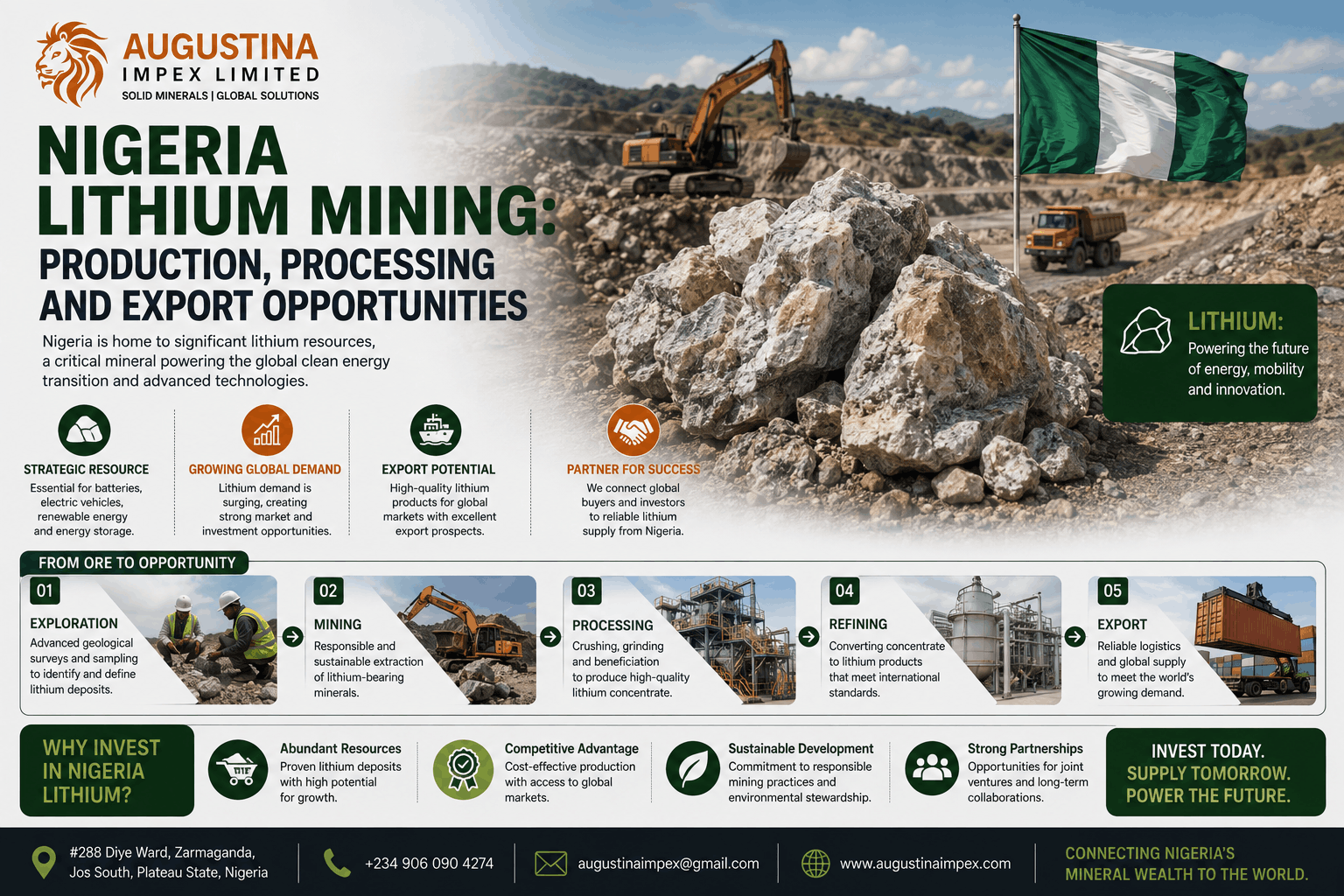
Nigeria Lithium Mining: Production, Processing & Export
Nigeria Lithium Mining: Production, Processing and Export Opportunities By Kolawole King, CEO — Augustina Impex…
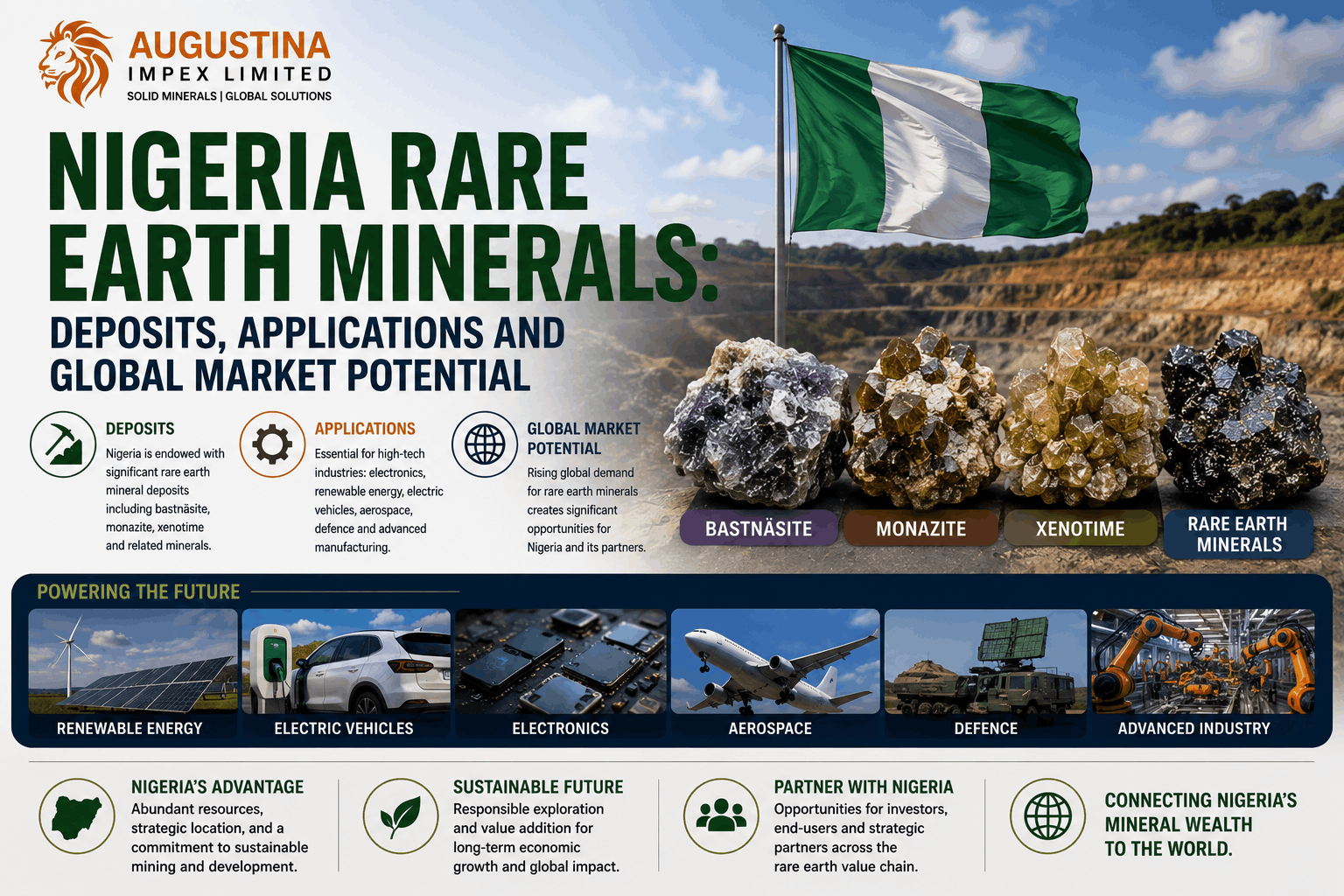
Nigeria Rare Earth Minerals: Deposits & Market Potential
Nigeria Rare Earth Minerals: Deposits, Applications and Global Market Potential By Kolawole King, CEO —…
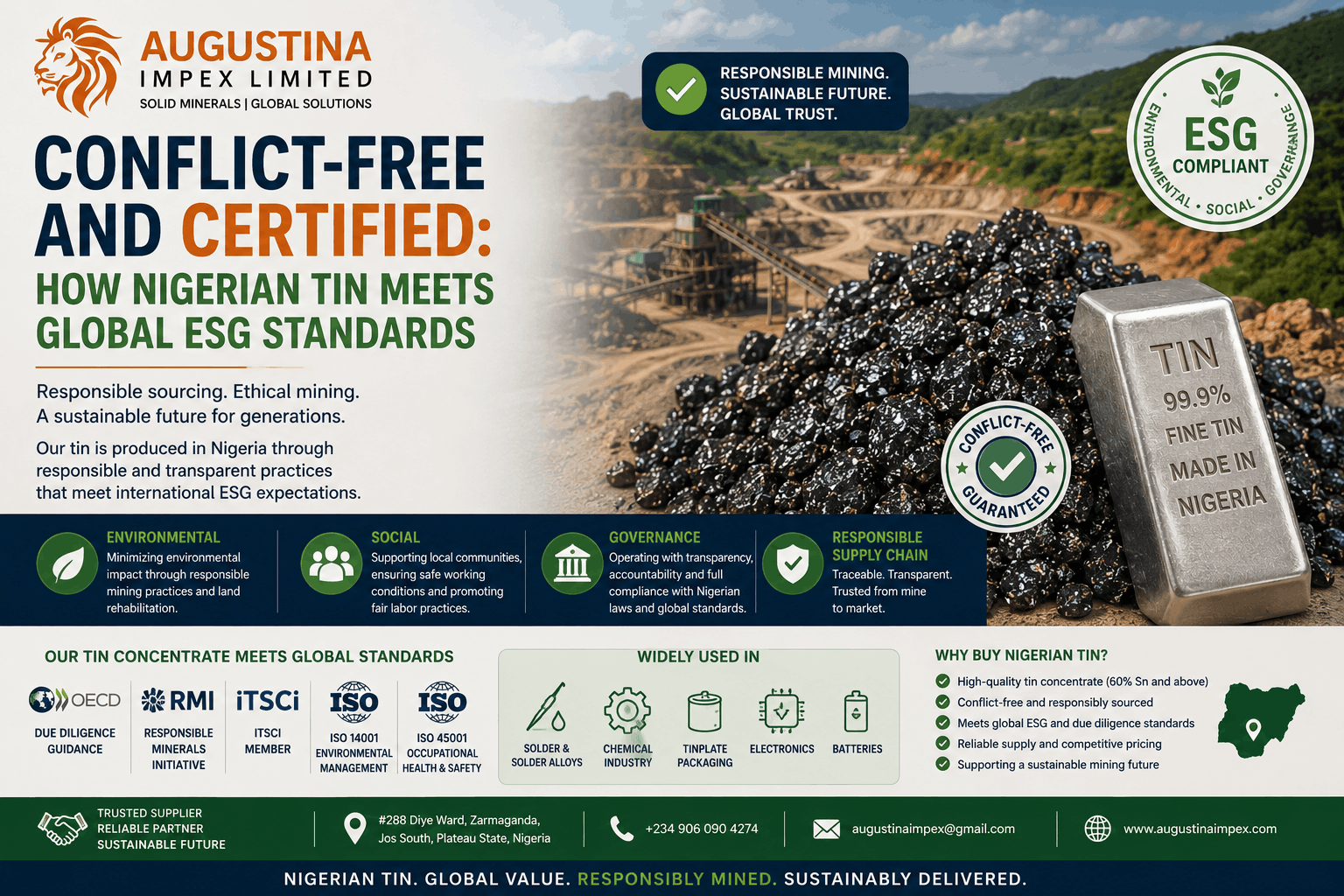
Conflict-Free Nigerian Tin Meets Global ESG Standards
Conflict-Free and Certified: How Nigerian Tin Meets Global ESG Standards By Kolawole King, CEO —…
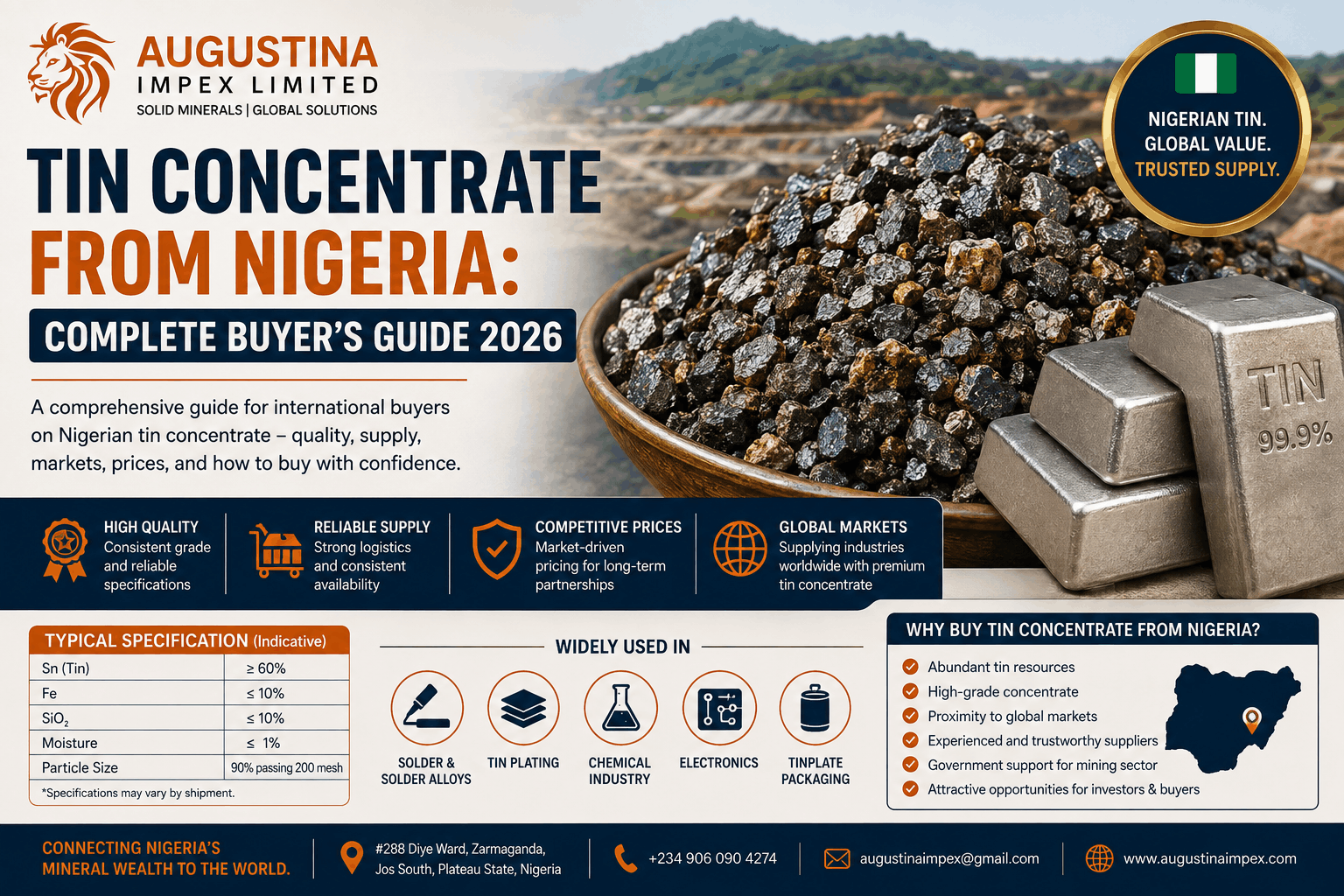
Tin Concentrate from Nigeria: Complete Buyer’s Guide 2026
Tin Concentrate from Nigeria: Complete Buyer’s Guide 2026 By Kolawole King, CEO — Augustina Impex…