


Introduction
In today’s rapidly evolving global economy, minerals are no longer viewed solely as industrial raw materials. Increasingly, they are being recognized as strategic assets directly connected to:
- National security
- Industrial competitiveness
- Technological leadership
- Energy transition
- Economic stability
- Defense capabilities
As countries worldwide continue expanding electric vehicle production, renewable energy infrastructure, aerospace systems, semiconductors, and advanced manufacturing technologies, the importance of strategic minerals has increased dramatically.

Minerals such as:
- Lithium
- Rare Earth Elements (REEs)
- Cobalt
- Nickel
- Tin
- Tantalum
- Graphite
- Titanium-bearing minerals
are now considered essential for both economic and geopolitical security.
The global competition for access to critical mineral supply chains is reshaping international trade, industrial policy, and long-term strategic planning.
This article explores:
- The meaning of strategic minerals
- Why they matter for national security
- Rare earth and battery mineral supply chains
- Africa’s growing importance
- Nigeria’s strategic mineral opportunities
- The future of global critical mineral competition
What Are Strategic Minerals?
Strategic minerals are mineral resources considered essential for:
- Economic development
- Industrial manufacturing
- Defense systems
- Technological advancement
- Energy infrastructure
These minerals are often difficult to replace because modern industries depend heavily on them.
Countries frequently classify minerals as “strategic” or “critical” when:
- Supply chains are vulnerable
- Demand is rapidly increasing
- Alternative sources are limited
- Industrial dependence is high
Why Strategic Minerals Matter
Strategic minerals are important because they support industries essential for modern civilization.
These industries include:
- Electric vehicles
- Renewable energy
- Aerospace
- Defense technologies
- Electronics
- Telecommunications
- Industrial manufacturing
- Semiconductor production
Without reliable access to these minerals, industrial and technological systems may face major disruptions.
Rare Earth Elements and National Security
Rare Earth Elements (REEs) have become some of the world’s most strategically important minerals.
Important rare earth elements include:
- Neodymium (Nd)
- Praseodymium (Pr)
- Dysprosium (Dy)
- Cerium (Ce)
- Lanthanum (La)
These elements are essential for producing:
- Permanent magnets
- Electric motors
- Wind turbines
- Missile guidance systems
- Radar systems
- Advanced electronics
Because of their military and industrial importance, rare earth supply chains are increasingly linked to national security planning.
Battery Minerals and Energy Security
Battery minerals such as:
- Lithium
- Cobalt
- Nickel
- Graphite
have become critically important because of the global transition toward:
- Electric mobility
- Renewable energy
- Energy storage systems
Lithium-ion batteries now play major roles in:
- Electric vehicles
- Grid energy storage
- Consumer electronics
- Industrial power systems
As battery demand increases, countries are increasingly focused on securing stable battery mineral supply chains.
Strategic Minerals and Defense Technologies
Several strategic minerals are essential for:
- Aerospace systems
- Defense manufacturing
- Advanced weapon systems
- Communication technologies
Rare earth elements are used in:
- Fighter aircraft
- Precision-guided systems
- Military radar
- Naval technologies
Titanium-bearing minerals such as ilmenite are important for:
- Aerospace engineering
- High-performance alloys
- Military equipment
This connection between minerals and defense capability has elevated strategic minerals to geopolitical importance.
Supply Chain Vulnerabilities
One of the major global concerns today involves:
Critical mineral supply chain concentration
Several strategic minerals are heavily concentrated within limited geographic regions.
This creates risks related to:
- Geopolitical tensions
- Trade restrictions
- Supply disruptions
- Industrial dependency
As a result, many countries are seeking:
- Alternative suppliers
- Diversified sourcing
- New mining jurisdictions
- Strategic partnerships
Africa’s Growing Importance in Strategic Minerals
Africa is becoming increasingly important within global strategic mineral supply chains because the continent possesses substantial reserves of:
- Lithium
- Rare earth minerals
- Cobalt
- Tin
- Tantalum
- Graphite
- Titanium-bearing minerals
As countries seek diversified mineral sourcing, Africa’s role within global mining is expanding significantly.
Several African countries are attracting growing international investment because of their critical mineral potential.
Nigeria’s Strategic Mineral Potential
Nigeria possesses substantial deposits of:
- Lithium
- Monazite
- Rare earth minerals
- Tin ore
- Tantalite
- Columbite
- Ilmenite
- Zircon sand
The country’s mining industry is increasingly attracting attention because of:
- Battery mineral opportunities
- Rare earth potential
- Heavy mineral sands
- Strategic mineral diversification
Several Nigerian regions, particularly Plateau State, are associated with:
- Historic mining
- Heavy mineral sands
- Rare earth-bearing deposits
Monazite and Rare Earth Opportunities in Nigeria
Monazite is one of the most important rare earth-bearing minerals associated with Nigeria’s heavy mineral sands.
It commonly contains:
- Cerium
- Lanthanum
- Neodymium
- Praseodymium
Monazite is strategically important because it serves as a source of:
Light Rare Earth Elements (LREEs)
Growing international demand for rare earth feedstock is increasing interest in Nigerian monazite opportunities.
Bastnasite and Low-Radioactivity Rare Earth Feedstock
Bastnasite is another important rare earth mineral increasingly attracting global interest.
Bastnasite is commercially attractive because it generally contains:
- Lower thorium content
- Lower radioactive characteristics
- Easier refining potential compared to some monazite materials
As industries increasingly seek lower-radioactivity rare earth feedstock, Bastnasite opportunities may become increasingly important globally.
Strategic Minerals and the Energy Transition
The global energy transition is heavily dependent on strategic minerals.
Renewable energy technologies require:
- Rare earth elements
- Battery minerals
- Industrial metals
- Advanced materials
Electric vehicles alone require substantial quantities of:
- Lithium
- Rare earth magnets
- Nickel
- Cobalt
As countries continue pursuing carbon reduction and clean energy goals, demand for strategic minerals may continue increasing significantly.
Beneficiation and Mineral Security
Beneficiation is becoming increasingly important within strategic mineral supply chains.
Mineral processing helps:
- Improve concentrate quality
- Increase export value
- Enhance industrial competitiveness
- Strengthen supply security
Several countries increasingly seek:
- Local processing capacity
- Export-grade concentrates
- Strategic mineral upgrading
Beneficiation may become increasingly important for countries seeking stronger participation within global supply chains.
Challenges Facing Strategic Mineral Development
Despite strong opportunities, several challenges remain.
1. Infrastructure Limitations
Mining and processing operations often require:
- Reliable power supply
- Transportation infrastructure
- Industrial facilities
- Logistics systems
2. Environmental and ESG Requirements
Responsible mining practices are increasingly important internationally.
Global buyers increasingly require:
- ESG compliance
- Responsible sourcing
- Environmental management
- Sustainable beneficiation
3. Technical and Financial Investment
Strategic mineral development often requires:
- Advanced processing technology
- Beneficiation systems
- Technical expertise
- Long-term capital investment
The Future of Strategic Minerals
Strategic minerals are expected to become increasingly important over the coming decades.
Several long-term trends support this outlook:
- EV industry expansion
- Renewable energy growth
- Industrial modernization
- Geopolitical competition
- Supply chain diversification
- Advanced technology development
Countries capable of securing reliable strategic mineral supply chains may strengthen their long-term industrial and economic competitiveness.
About Augustina Impex Limited
Augustina Impex Limited is a Nigerian mineral sourcing, export facilitation, and mining consultancy company with over two decades of industry experience.
We specialize in:
- Rare earth minerals
- Monazite sand
- Bastnasite
- Lithium ore
- Ilmenite concentrate
- Zircon sand
- Mineral beneficiation
- Export facilitation
- Strategic mineral trade
Our company works closely with mineral producers and processing partners across Nigeria.
Partnership with Mineral Processing Operations in Jos
Augustina Impex Limited maintains operational relationships with mineral processing facilities situated in Jos, Plateau State, Nigeria.
These operations support:
- Heavy mineral sands processing
- Gravity separation
- Magnetic separation
- Concentrate upgrading
- Export preparation
- Bulk aggregation
Products handled include:
- Monazite concentrate
- Ilmenite concentrate
- Zircon sand
- Tin-bearing concentrates
- Strategic mineral products
Sustainable Mining and Responsible Development
As strategic minerals become increasingly important globally, sustainable mining practices are also becoming more critical.
Long-term success within the strategic minerals sector may increasingly depend on:
- Responsible beneficiation
- Environmental management
- Community engagement
- International compliance standards
- Sustainable industrial partnerships
Conclusion
Strategic minerals are increasingly shaping the future of:
- National security
- Industrial competitiveness
- Energy transition
- Technological development
Minerals such as:
- Lithium
- Rare earth elements
- Monazite
- Bastnasite
- Titanium-bearing minerals
are becoming essential components of modern industrial systems and geopolitical planning.
Africa — and particularly Nigeria — possesses substantial opportunities within the evolving global critical minerals economy.
As international demand for strategic minerals continues increasing, responsible mining, beneficiation, and sustainable mineral development may play increasingly important roles in strengthening Nigeria’s future position within global supply chains.
Contact Information
Kolawole King
Chief Executive Officer
Augustina Impex Limited
📧 augustinaimpex@gmail.com
🌐 https://augustinaimpex.com
📝 https://augustinaimpexng.blogspot.com/
📱 WhatsApp: +234 906 090 4274
🎥 https://www.youtube.com/watch?v=Izg0t7By6co
-
Previous Post
Beneficiation and Value Addition in Nigerian Mining
Post a comment
Related Posts
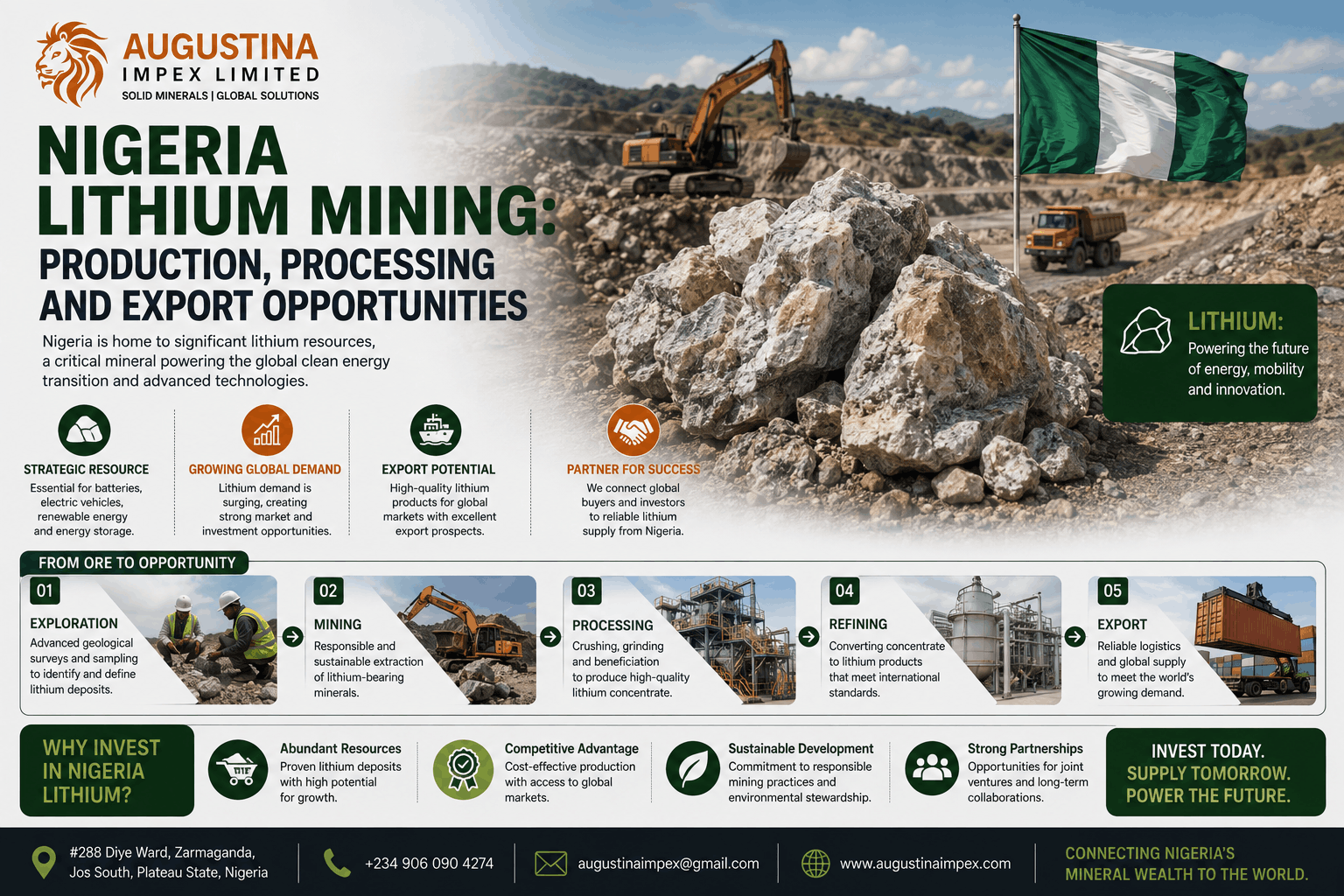
Nigeria Lithium Mining: Production, Processing & Export
Nigeria Lithium Mining: Production, Processing and Export Opportunities By Kolawole King, CEO — Augustina Impex…
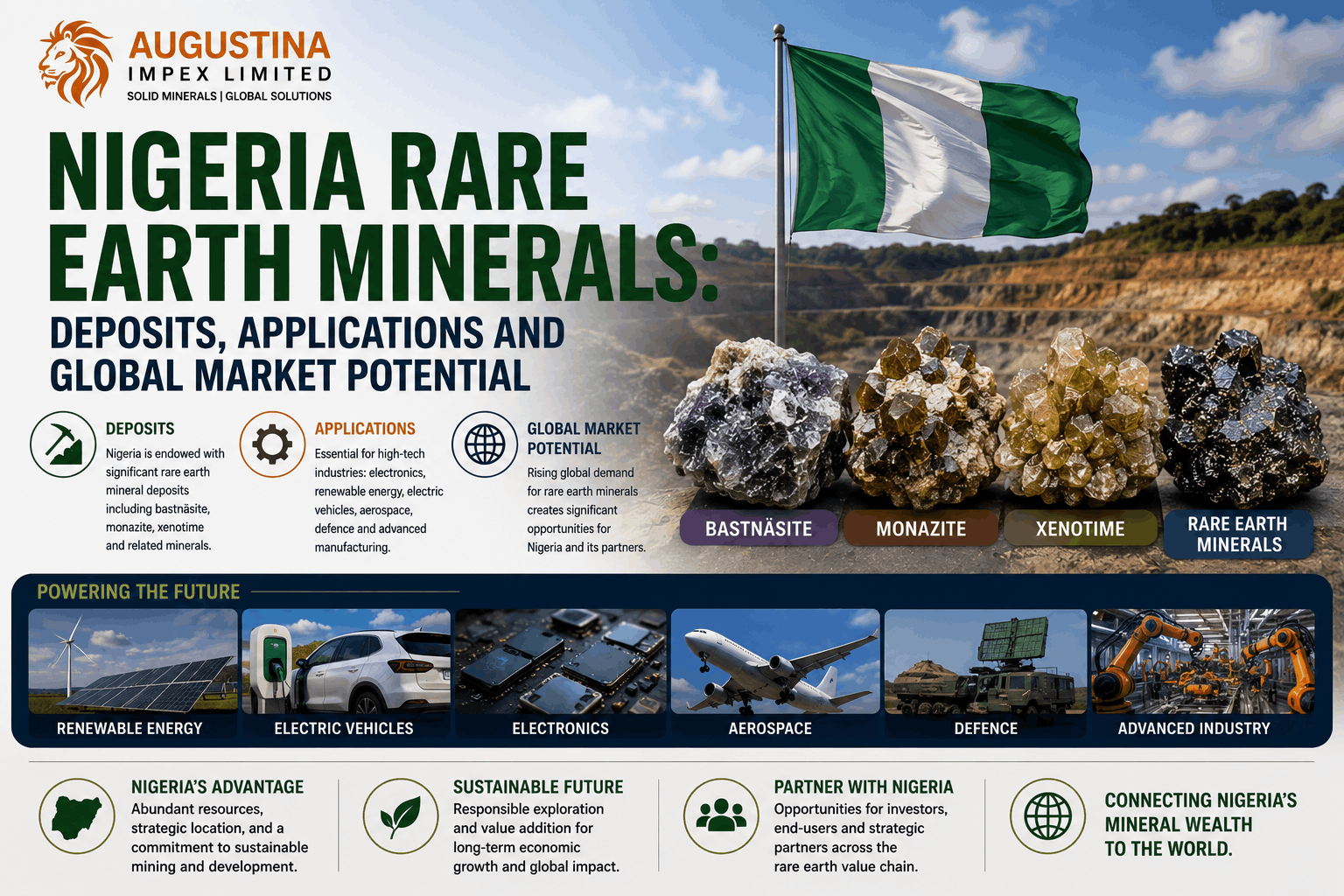
Nigeria Rare Earth Minerals: Deposits & Market Potential
Nigeria Rare Earth Minerals: Deposits, Applications and Global Market Potential By Kolawole King, CEO —…
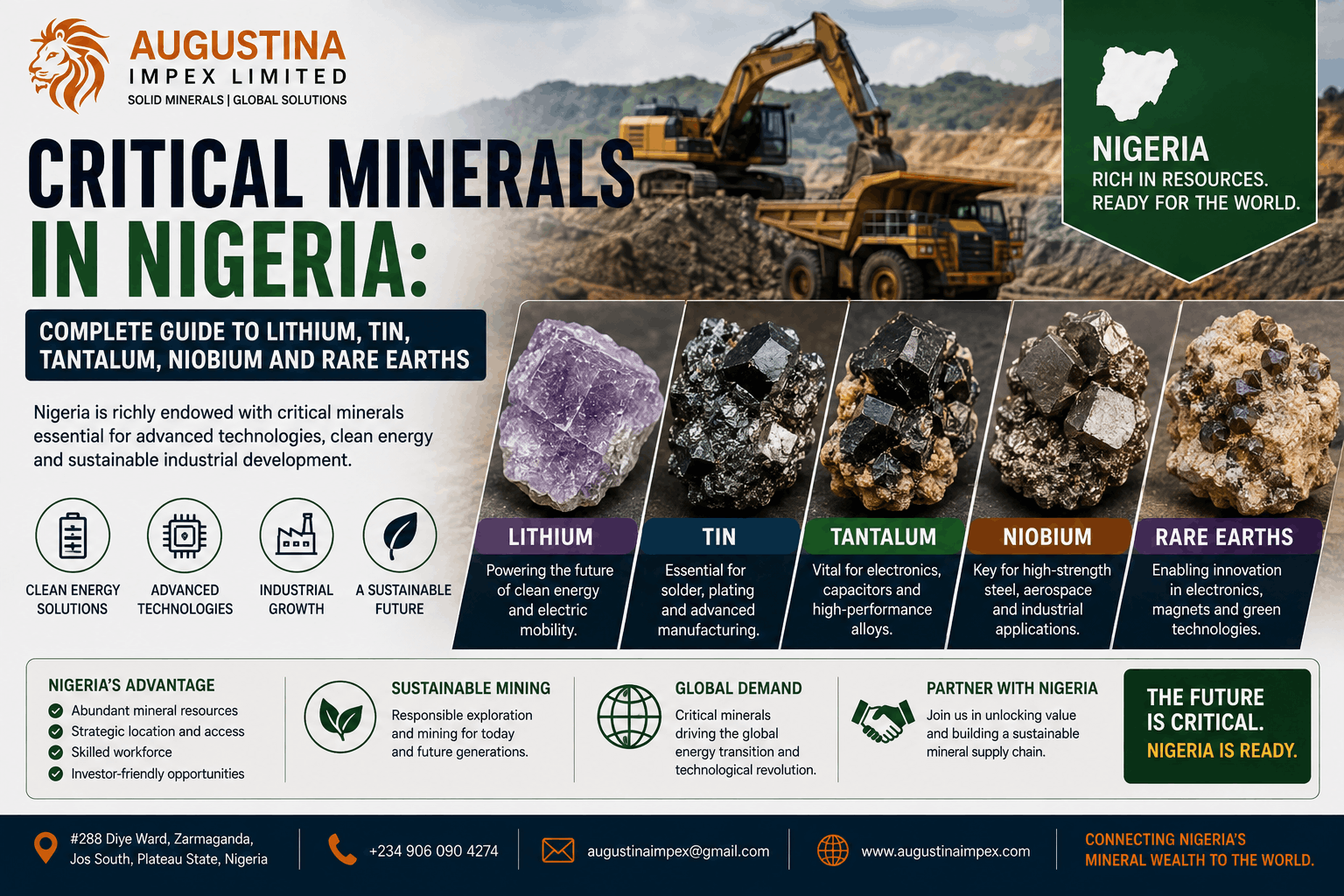
Nigeria Critical Minerals Guide: Lithium, Tin & Rare Earths
Critical Minerals in Nigeria: Complete Guide to Lithium, Tin, Tantalum, Niobium and Rare Earths By…
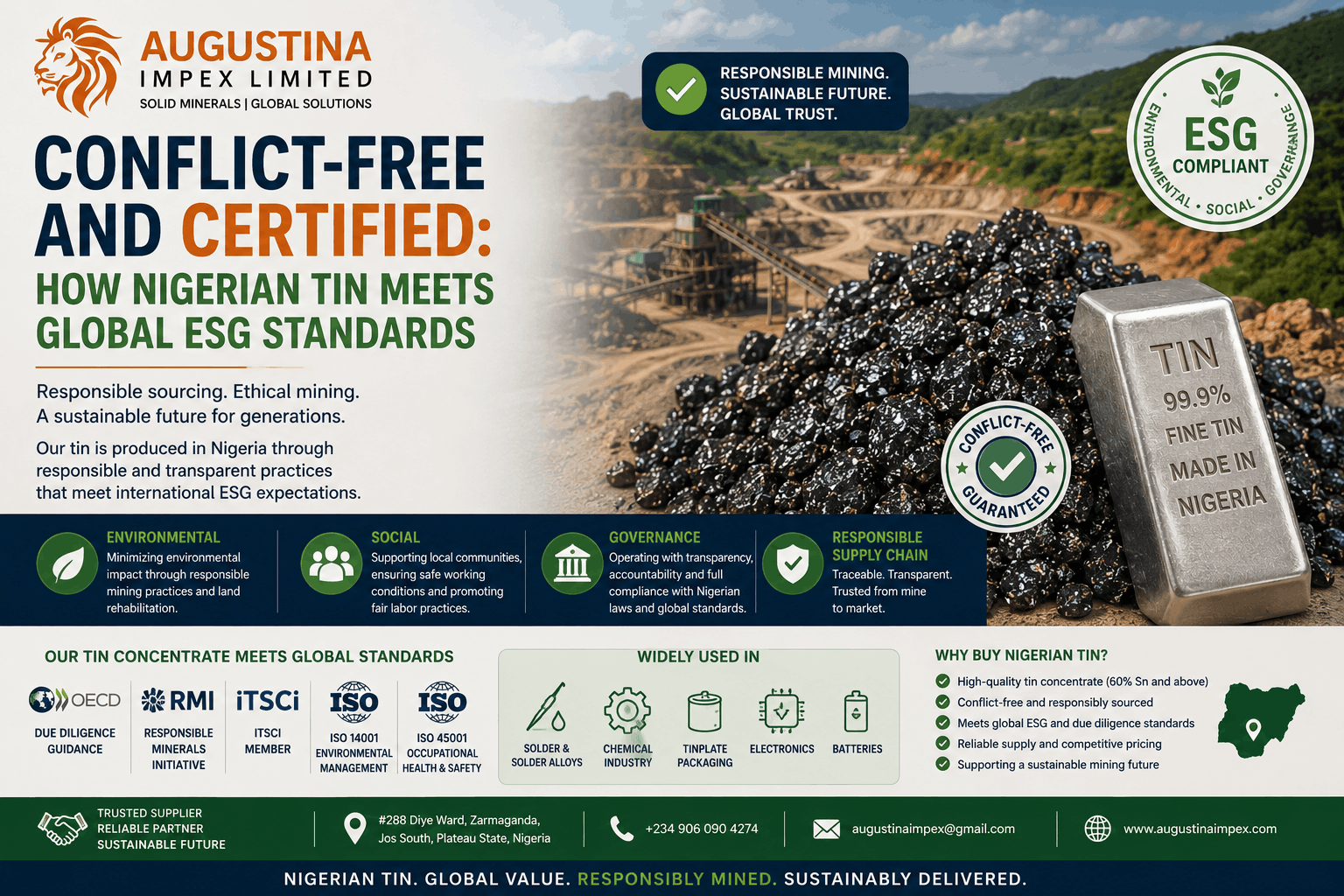
Conflict-Free Nigerian Tin Meets Global ESG Standards
Conflict-Free and Certified: How Nigerian Tin Meets Global ESG Standards By Kolawole King, CEO —…