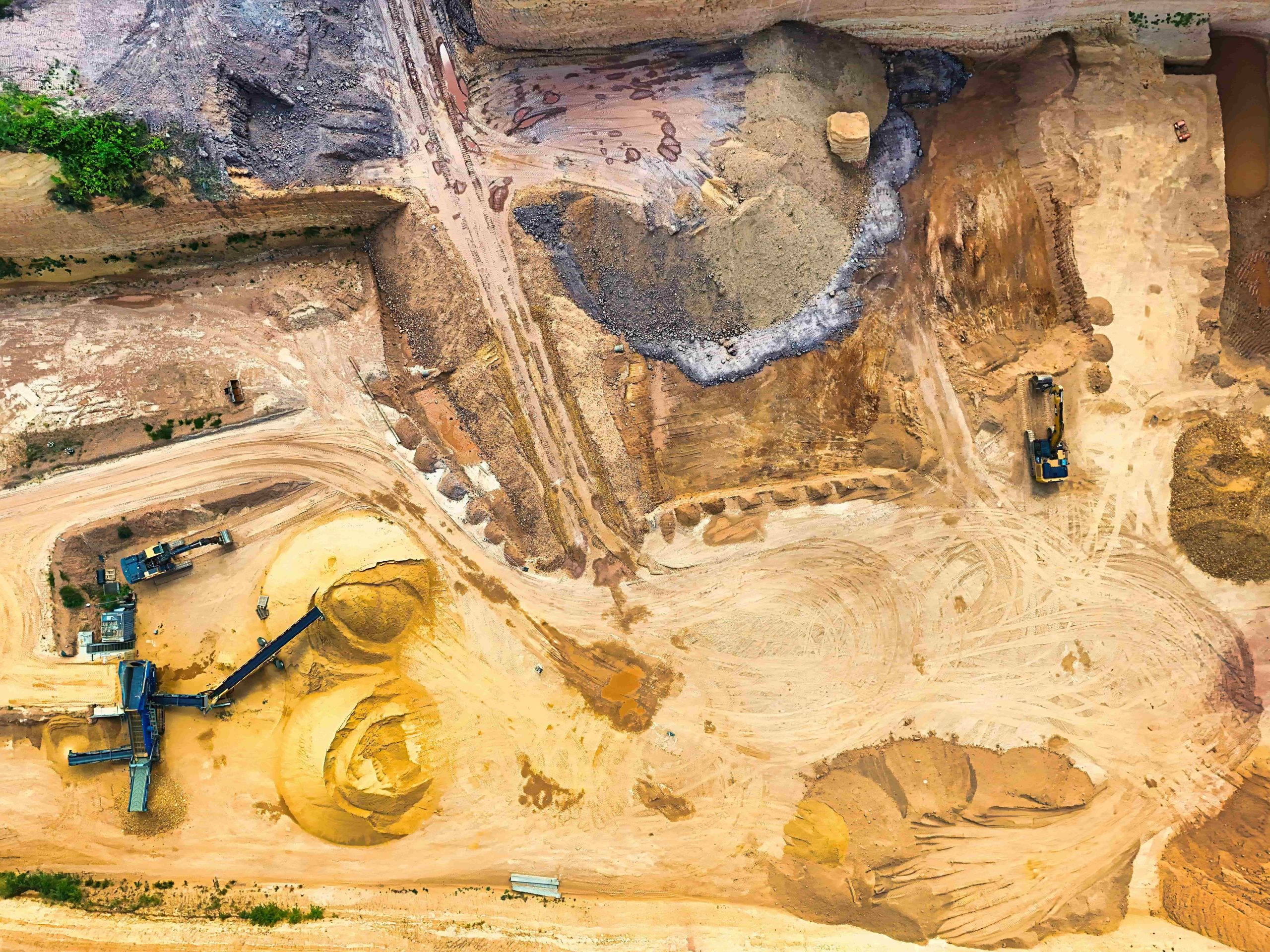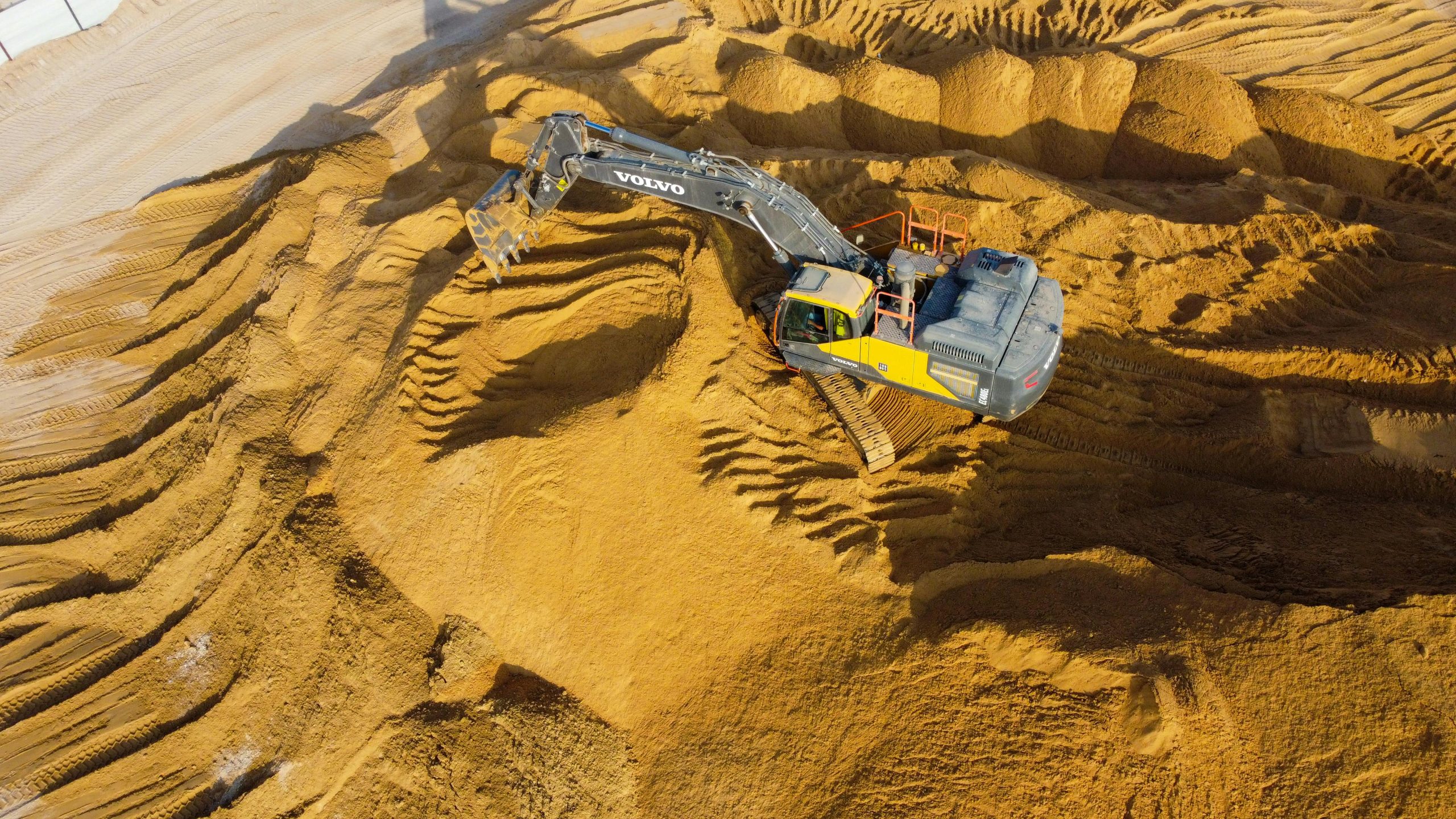

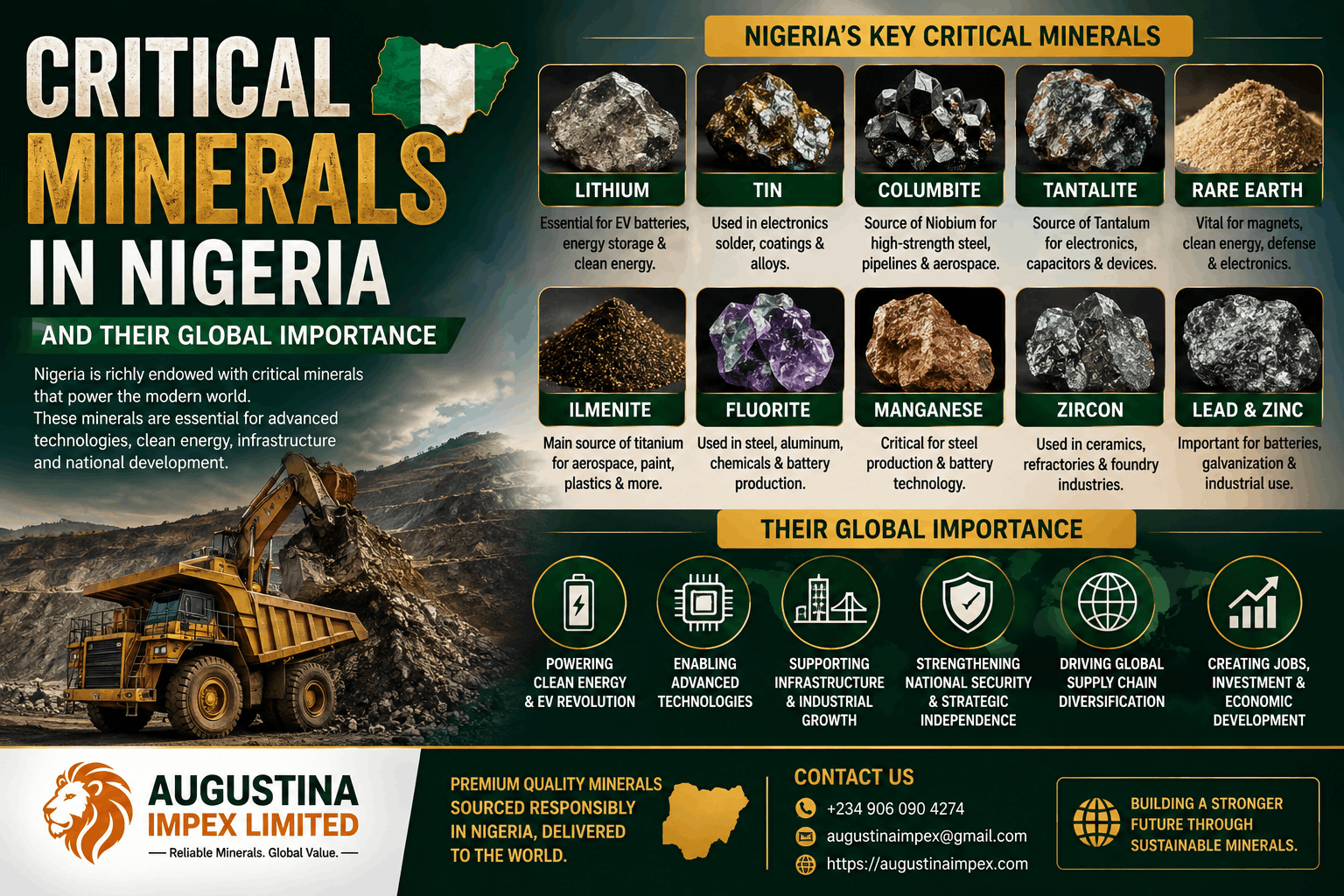
Nigeria sits on one of the most extraordinary concentrations of mineral wealth on the African continent — and, in the context of the 21st century’s rapidly evolving global resource economy, on some of the most strategically important raw materials in the world. From the tin-rich highlands of the Jos Plateau to the rare earth deposits of the North-Central belt, from the coltan fields of Plateau and Nasarawa States to the heavy mineral sands of the South-South coastline, Nigeria’s sub-surface endowment spans virtually every category of critical mineral that the global clean energy transition, the digital economy, and advanced manufacturing depend upon.
Yet for much of Nigeria’s post-independence history, this mineral wealth has remained dramatically underexploited — overshadowed by the country’s dominant petroleum sector, underserved by infrastructure investment, and undercapitalised by both domestic and foreign investors. That is now changing rapidly, and for a very specific set of reasons that are rooted in the global transformation underway in energy, technology, and industrial supply chains.
This article provides a comprehensive overview of Nigeria’s critical mineral portfolio, the geological endowment that underlies it, the global industrial applications that make each mineral strategically important, and the regulatory and commercial framework through which Nigerian minerals are exported to international markets. It is written for international buyers, investors, policymakers, and market observers who want to understand not just what Nigeria has, but why it matters — now more than ever.
What Are Critical Minerals?
Critical minerals — also referred to as critical raw materials (CRMs) in Europe or critical and strategic minerals (CSMs) in some national frameworks — are minerals or metals that satisfy two defining criteria simultaneously: they are economically essential to modern industrial processes, and they face a supply risk that could threaten economic stability, national security, or the achievement of strategic policy goals.
Different countries and international organisations publish their own lists of critical minerals, and the lists differ in their composition and prioritisation. However, certain minerals appear on virtually every major critical minerals list globally, including those published by the United States Geological Survey (USGS), the European Commission, the International Energy Agency (IEA), the Australian Government, and the UK Government. These include:
- Lithium — essential for lithium-ion batteries in electric vehicles and grid-scale energy storage
- Cobalt — a key component of lithium-ion battery cathodes
- Nickel — essential for high-energy-density battery cathodes (NMC, NCA)
- Rare Earth Elements (REEs) — critical for NdFeB permanent magnets in EV motors and wind turbines
- Manganese — essential for steel production and increasingly for manganese-rich battery cathodes
- Graphite — the dominant material for battery anodes
- Copper — the foundation of all electrification infrastructure
- Tungsten, Tantalum, and Tin — critical for electronics, defence, and advanced manufacturing
Nigeria holds commercially significant deposits of most of the minerals on this list — a geological coincidence of historical, tectonic, and economic significance that positions the country as a potentially pivotal player in the critical minerals supply chains that will shape the 21st century.
Why Critical Minerals Matter Now More Than Ever
The phrase “critical minerals” has moved from technical jargon to geopolitical headline in just a few years. The reason is straightforward: the global energy transition is mineral-intensive in a way that no previous energy transition has been. Unlike the shift from wood to coal, or from coal to oil, the transition from fossil fuels to clean energy is not primarily about burning a new fuel — it is about manufacturing a new generation of physical equipment, and that equipment requires specific minerals in large and rapidly growing quantities.
The Clean Energy Demand Driver
Consider the scale of demand that is already underway and will intensify over the coming decades:
- Electric vehicles: A single EV requires approximately 8 times more minerals than a conventional internal combustion engine vehicle. Global EV production exceeded 14 million units in 2023 and is projected to reach 40 million annually by 2030.
- Wind energy: A single onshore wind turbine requires approximately 335 tonnes of steel, 4.7 tonnes of copper, and — for turbines using permanent magnet generators — 600+ kilograms of rare earth magnets. Offshore wind turbines require significantly more.
- Solar photovoltaics: Solar panels require silver, silicon, indium, and tellurium, as well as aluminium and copper for mounting and wiring infrastructure.
- Grid-scale battery storage: The deployment of grid-scale battery systems — essential for balancing renewable energy generation — is creating voracious demand for lithium, manganese, graphite, cobalt, and nickel.
The Supply Concentration Problem
The second driver of the critical minerals crisis is supply concentration. For most critical minerals, the majority of global production is concentrated in a small number of countries — and often in a single country. China currently controls the overwhelming majority of global rare earth processing capacity, and dominates production or processing for graphite, lithium chemicals, manganese, and several other critical minerals. The Democratic Republic of Congo produces approximately 70% of global cobalt. Chile and Australia dominate lithium mining. Indonesia and the Philippines dominate nickel laterite mining.
This concentration creates systemic supply chain vulnerability for countries and industries that depend on these materials. The United States, the European Union, Japan, South Korea, and Australia have all identified this vulnerability as a national security issue and are actively pursuing supply chain diversification strategies — seeking to develop new critical mineral supply relationships with politically reliable partner countries outside the current dominant supply geography.
Nigeria, with its diverse and large-scale critical mineral endowment, its growing export infrastructure, its democratic governance, and its English-language business environment, is increasingly well-positioned to serve as a preferred critical minerals supply partner for these diversification-seeking nations and industries.
Nigeria’s Geological Advantage: The Mineral Belt
Nigeria’s extraordinary mineral wealth is not accidental — it is the product of a specific and favourable geological history spanning billions of years. Understanding the geology helps explain both the diversity and the concentration of Nigeria’s mineral endowment.
The Nigerian Basement Complex
The foundation of Nigeria’s mineral wealth is the Precambrian Basement Complex — a vast assemblage of ancient crystalline rocks (granite, gneiss, migmatite, schist, and quartzite) that underlie much of Northern and Central Nigeria. This basement, formed approximately 600 million to 2 billion years ago, hosts the majority of Nigeria’s hard rock mineral deposits, including lithium, coltan, cassiterite, wolframite, gold, and rare earth minerals.
The Jos Plateau — Nigeria’s Mineral Capital
The Jos Plateau in Plateau State is the most mineralised single region in Nigeria and one of the most mineralised areas in sub-Saharan Africa. Rising to over 1,200 metres above sea level, the Plateau is underlain by a complex of Jurassic ring complexes (younger granites) and Precambrian basement rocks that collectively host an extraordinary range of economically important minerals. Tin (cassiterite), columbite, tantalite, bastnasite rare earth ore, lithium, wolframite, zircon, and monazite have all been mined from the Jos Plateau at various scales.
The Plateau’s mining history dates back to the early 20th century, when it was one of the largest tin-producing regions in the world. The colonial-era tin mining industry left behind an extensive infrastructure of mine workings, road networks, and processing facilities that — while requiring modernisation — provide a foundation for contemporary mineral development.
The North-Central Mineral Belt
Extending beyond the Jos Plateau into Nasarawa, Taraba, Benue, Kogi, and Kwara States, the North-Central mineral belt contains significant extensions of the same geological terranes that host the Plateau’s mineral wealth. Lithium spodumene pegmatites, cassiterite deposits, wolframite mineralisation, lead-zinc occurrences, and iron ore bodies have all been identified across this belt.
The Southern and Coastal Mineral Provinces
Nigeria’s southern states — particularly Cross River, Delta, Ondo, Ogun, Lagos, and Edo — host a different suite of minerals associated with heavy mineral sands (HMS) deposits along the coastline and major river systems. These deposits carry monazite, zircon, rutile, and ilmenite, derived from the weathering and erosion of basement rocks inland and concentrated by coastal and riverine processes over millions of years. The South-West also hosts significant bitumen/tar sand deposits, particularly in Ondo and Ogun States.
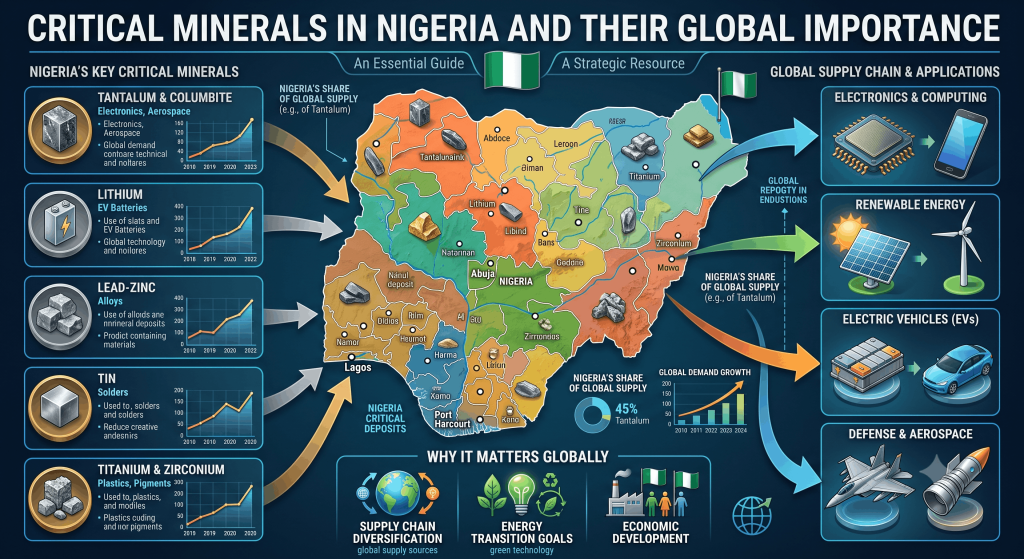
Nigeria’s Critical Mineral Portfolio: A Complete Overview
The table below summarises Nigeria’s principal critical mineral commodities, their key grade specifications, the primary producing states, and their most important global applications.
| Mineral | Key Grade | Key States | Global Application |
| Lithium Ore (Spodumene) | Li₂O: 3.0% – 5.5%+ | Plateau, Nasarawa, Kwara, Ekiti | EV batteries, energy storage |
| Bastnasite (Rare Earth) | TREO: 68% – 72% | Plateau State (Jos) | NdFeB magnets, EVs, wind turbines |
| Coltan / Tantalite | Nb₂O₅+Ta₂O₅: 35%–55%+ | Plateau, Nasarawa, Cross River | Electronics, capacitors, aerospace |
| Cassiterite (Tin) | Sn: 60%+ | Plateau, Nasarawa, Taraba | Soldering, electronics, coatings |
| Wolframite (Tungsten) | WO₃: 30%–50% | Plateau, Nasarawa | Cutting tools, defence, electronics |
| Monazite Sand | TREO: 55%–65% | Cross River, Delta, Ondo | REE processing, thorium research |
| Lead Ore | Pb: 40%–70% | Plateau, Nasarawa, Benue | Batteries, construction, radiation shielding |
| Zinc Ore | Zn: 30%–55% | Plateau, Nasarawa, Benue | Galvanising, batteries, alloys |
| Copper Ore | Cu: 5%–10% | Plateau, Nasarawa, Zamfara | Wiring, EVs, renewable energy infrastructure |
| Manganese Ore | Mn: 35%–48% | Plateau, Cross River | Steel production, EV batteries (NMC) |
| Graphite Ore | TGC: 80%–95% | Kogi, Kwara, Anambra | Battery anodes, fuel cells, lubricants |
| Iron Ore | Fe: 35%–65% | Kogi, Enugu, Cross River | Steelmaking, construction |
| Gold | Per assay (g/t) | Zamfara, Osun, Kebbi, Plateau | Monetary, electronics, jewellery |
| Bitumen/Tar Sands | — | Ondo, Ogun, Lagos, Edo | Road construction, energy |
| Zircon Sand | ZrO₂: 40%–66.5% | Cross River, Ondo (HMS) | Nuclear, refractory, ceramics |
| Lepidolite | Li₂O-bearing | Plateau, Nasarawa | Lithium source, glass, ceramics |
Note: Grade specifications are indicative typical ranges for commercially traded concentrates. Individual deposits vary. All exports require full documentation under FMMSD, NEPC, and NESS frameworks.
1. Lithium Ore (Spodumene) — The Battery Metal
Lithium is the defining mineral of the electric vehicle age. It is the lightest metal on the periodic table and the foundational element in lithium-ion batteries — the dominant energy storage technology in electric vehicles, smartphones, laptops, grid-scale battery systems, and an expanding range of industrial applications. Without lithium, the global EV revolution simply cannot happen at the scale that climate policy and automotive industry strategy demand.
Nigeria’s Lithium Endowment
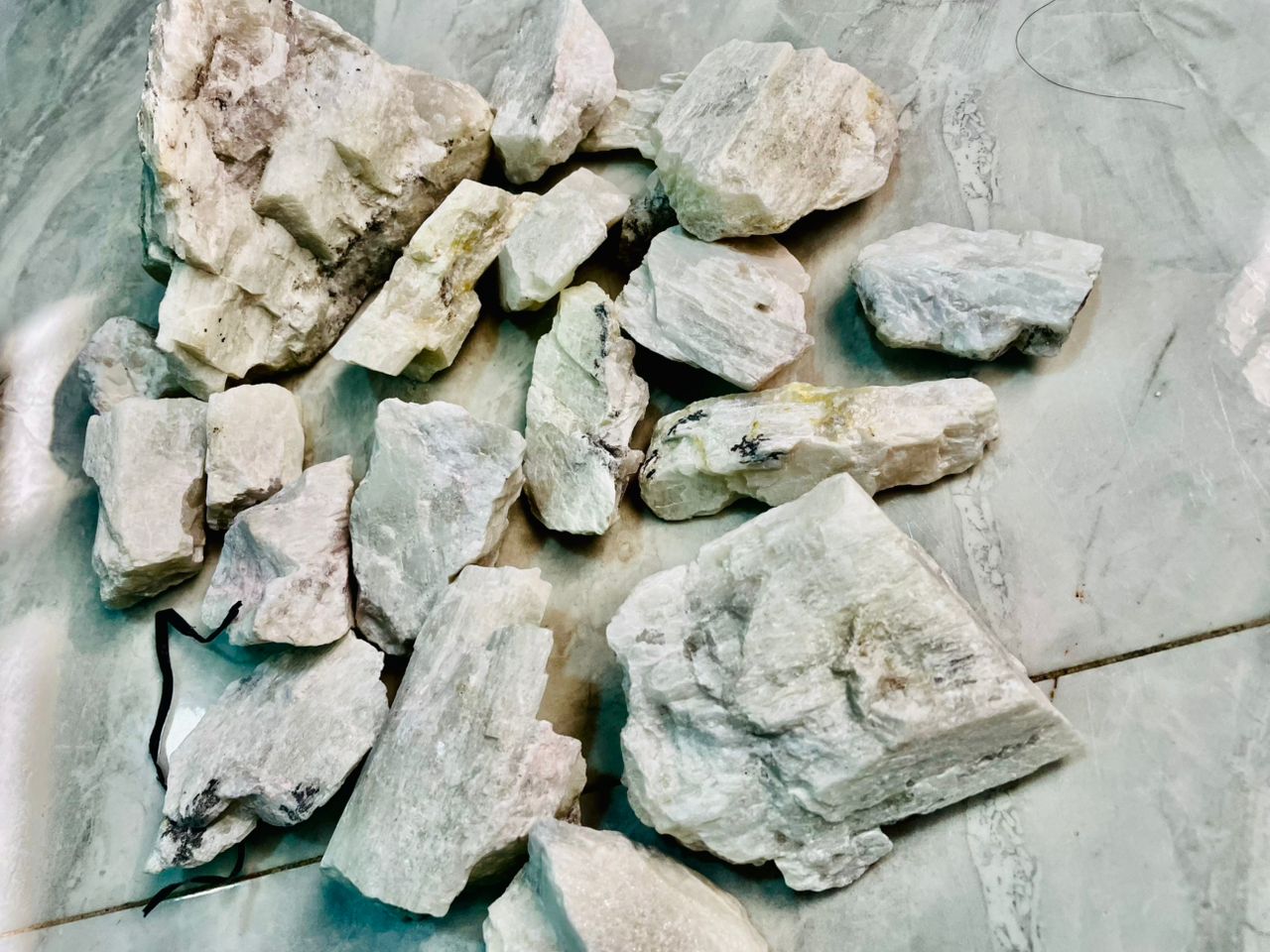
Nigeria hosts significant lithium resources primarily in the form of spodumene — the hard rock lithium aluminium silicate mineral (LiAlSi₂O₆) that is the principal commercial lithium ore mineral globally — and lepidolite, a lithium-bearing mica also found in Nigerian pegmatite systems. The key lithium-bearing states include Plateau, Nasarawa, Kwara, Ekiti, and several other states in the basement complex.
Nigerian spodumene ore typically carries Li₂O grades of 3.0% to 5.5%+, which is commercially competitive with spodumene deposits in Australia (the world’s dominant lithium producer), Brazil, and Canada. The deposits occur primarily in pegmatite bodies — coarse-grained granitic intrusions that commonly carry lithium, tantalum, columbite, and other rare metals.
Global Importance of Lithium
The IEA projects that lithium demand could increase by more than 40 times by 2040 under its Net Zero Emissions scenario, driven overwhelmingly by battery demand. Current global lithium production is dominated by Australia (spodumene), Chile and Argentina (brine), and China (processing). The development of Nigerian lithium supply adds an important new source geography to a market that is already experiencing structural tightening.
- Electric vehicle batteries (Li-ion NMC, LFP): The dominant use case; a single EV battery pack contains 8–12 kg of lithium carbonate equivalent
- Grid-scale energy storage: Large battery installations for renewable energy firming require enormous lithium volumes
- Consumer electronics: Smartphones, laptops, tablets, and wearable devices
- Industrial batteries and power tools: High-performance cordless tools and industrial equipment
2. Bastnasite Rare Earth Concentrate — The Magnet Metal
Nigeria’s most globally significant rare earth deposit is its carbonatite-hosted bastnasite concentrate, found primarily in the Jos Plateau region of Plateau State. This material has been independently certified at TREO grades of 68% to 72% — placing it among the highest-grade rare earth concentrates available on the global market. More importantly, certified pit samples have confirmed zero Thorium and zero Uranium across all tested samples, making Nigerian bastnasite one of the very few high-grade, non-radioactive rare earth concentrates in international trade.
The NdPr (Neodymium-Praseodymium) content of Nigerian bastnasite concentrate is approximately 21% of the total TREO — a distribution that positions it squarely within the supply chain for NdFeB permanent magnets, the most powerful permanent magnets known to science and the critical enabling component of electric vehicle traction motors and wind turbine generators.
Global Importance of Rare Earth Elements
The global rare earth market is dominated by China, which controls approximately 60% of global mining production and over 85% of global processing and separation capacity. This concentration has created a strategic vulnerability for EV manufacturers, wind turbine producers, and defence sector supply chains in the United States, European Union, Japan, and South Korea — all of whom have initiated programmes to diversify rare earth supply away from Chinese sources.
- NdFeB permanent magnets: Used in every EV traction motor, wind turbine direct-drive generator, and industrial servo motor; NdPr is the primary feedstock
- Cerium and lanthanum: Catalytic converters, fluid cracking catalysts, glass polishing compounds, and lighting phosphors
- Europium, Terbium, Dysprosium: LED phosphors, colour television screens, and high-performance magnet additives for high-temperature applications
- Defence applications: Guidance systems, laser rangefinders, night vision equipment, and precision weapons systems all rely on rare earth materials
Nigerian bastnasite’s combination of high TREO, strong NdPr distribution, and zero radioactivity makes it an exceptionally attractive product for the supply chain diversification agenda of Western governments and their allied industrial partners.
3. Coltan and Tantalite — The Technology Metal
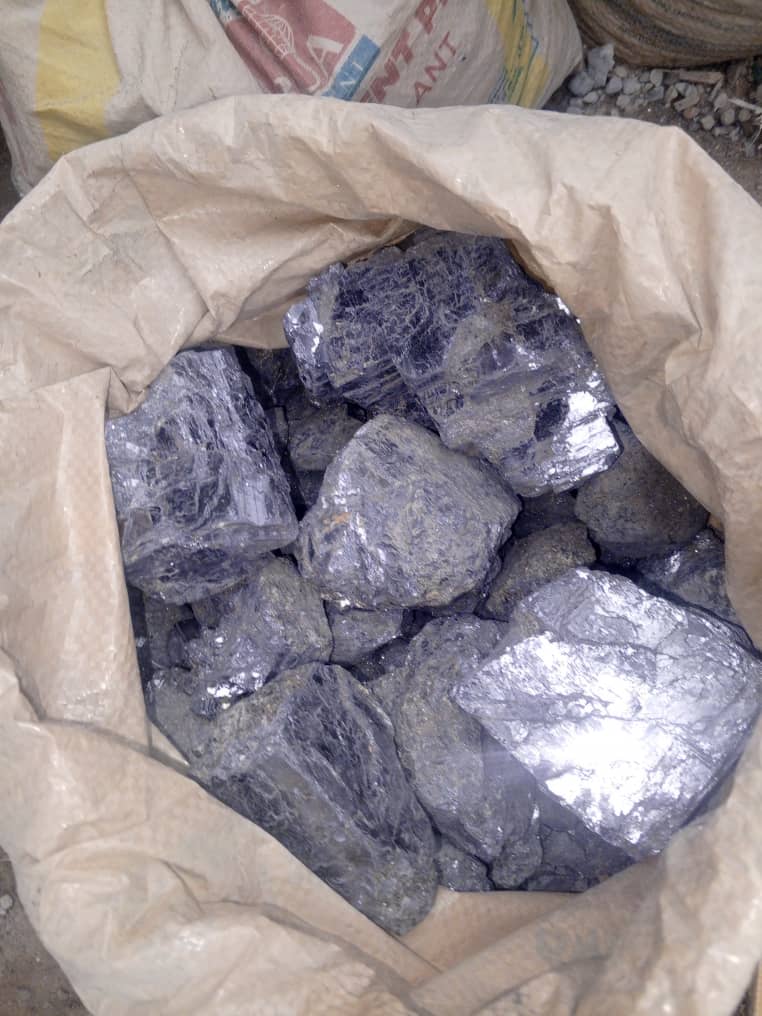
Coltan is a colloquial term for columbite-tantalite — a black metallic ore containing a mixture of two distinct minerals: columbite (Nb₂O₅-dominant) and tantalite (Ta₂O₅-dominant). These minerals are the primary commercial sources of niobium (Nb) and tantalum (Ta) respectively — two metals of critical strategic importance to the modern electronics and aerospace industries.
Nigeria’s coltan deposits are found primarily in Plateau, Nasarawa, and Cross River States, with significant occurrences also reported in Taraba, Ekiti, and Ondo States. Nigerian coltan concentrate typically carries combined Nb₂O₅ + Ta₂O₅ grades of 35% to 55%+, making it commercially competitive with material from the Democratic Republic of Congo (historically the world’s dominant coltan producer) and Australia (ASX-listed tantalum producers).
Global Importance of Tantalum and Niobium
Tantalum is primarily used in the manufacture of tantalum capacitors — miniaturised electronic components that store and regulate electrical charge in virtually every modern electronic device. A single smartphone contains up to 40 tantalum capacitors. Laptops, tablets, automotive electronics, telecommunications equipment, and medical devices all rely on tantalum capacitors.
Niobium is primarily used as an alloying element in high-strength low-alloy (HSLA) steel — improving strength, toughness, and weldability in structural steel for automotive, construction, and pipeline applications. It is also essential in superconducting applications (niobium-titanium alloys for MRI magnets and particle accelerators) and is increasingly being evaluated as a battery material in niobium oxide anode applications.
- Smartphones and consumer electronics: Tantalum capacitors in every modern device
- Automotive electronics: Advanced driver assistance systems (ADAS), powertrain control units, infotainment systems
- Aerospace: Tantalum alloys in jet engine components for their high temperature resistance
- Medical devices: Tantalum is biocompatible and used in surgical implants, dental implants, and stents
- Structural steel: Niobium-alloyed steel in automotive body panels, ship hulls, pipelines, and building structures
4. Tin Concentrate (Cassiterite) — The Industrial Metal
Nigeria’s history with tin mining is long and distinguished. The Jos Plateau was one of the world’s largest tin-producing regions in the early-to-mid 20th century, with colonial-era production at its peak supplying a significant fraction of global tin demand. The tin industry declined after Nigerian independence as petroleum revenues dominated the economy, but the underlying mineral endowment remains intact and commercially viable.
Cassiterite (SnO₂) — the primary tin ore mineral — is found in abundance across Plateau, Nasarawa, Taraba, Cross River, and Zamfara States. Nigerian cassiterite concentrate typically carries tin grades of 60%+ Sn — commercially high-grade material that meets the specifications of international tin smelters and the London Metal Exchange (LME) standard.
Global Importance of Tin
Tin is one of the oldest metals used by humanity, and in the digital age it has found a critical new role: as the essential component of solder. Approximately 50% of global tin consumption is used in the electronics industry for soldering electronic components to circuit boards. No printed circuit board can be manufactured without solder, and no solder can be manufactured without tin.
- Electronics soldering: Tin-based solders connect every component on every printed circuit board in every electronic device globally
- Tinplate packaging: Food and beverage cans are coated with tin to prevent corrosion
- Specialty chemicals: Tin compounds are used as PVC stabilisers, catalysts, and biocides
- Float glass: Tin baths are used in the float glass manufacturing process
- Bearing alloys: Tin-based alloys (babbitt metals) are used in bearings for machinery and engines
As electronics production expands to serve the EV, renewable energy, and consumer electronics markets, tin demand is growing steadily. The Tin Industry Association projects global tin demand growth of 3–5% annually through 2030. Nigeria is one of the few African countries with the existing mining infrastructure and deposit quality to respond to this growing demand at scale.
5. Wolframite (Tungsten Ore) — The High-Performance Metal
Wolframite — the iron-manganese tungstate mineral (Fe,Mn)WO₄ — is the primary ore of tungsten (W), one of the densest and hardest naturally occurring metals on Earth. Nigeria hosts significant wolframite deposits, primarily in Plateau and Nasarawa States, with WO₃ grades typically ranging from 30% to 50%.
Global Importance of Tungsten
Tungsten’s exceptional hardness, density, and high melting point (3,422°C — the highest of any pure metal) make it irreplaceable in a range of critical industrial and military applications:
- Cemented carbide (hard metal): The dominant use (~60% of consumption); tungsten carbide cutting tools, drill bits, and wear-resistant inserts are used in mining, construction, metalworking, and energy extraction
- Defence and military: Tungsten alloys are used in armour-piercing ammunition, anti-tank rounds, and shaped charge warheads because of their exceptional density
- Electronics: Tungsten filaments in incandescent bulbs and electrical contacts; tungsten targets in X-ray tubes
- Aerospace: Tungsten alloy components in aircraft engines and aerospace structures for high-temperature applications
- Energy: Tungsten is used in the electrode materials for plasma-facing components in nuclear fusion reactors
China currently dominates global tungsten production and processing, supplying approximately 80% of the world’s tungsten. Nigeria’s wolframite deposits represent an important potential non-Chinese supply option for tungsten consumers in Europe, North America, Japan, and South Korea who are actively seeking to reduce their exposure to Chinese supply chain risk.
6. Lead and Zinc Ore — The Industrial Base Metals
Nigeria hosts significant lead-zinc ore bodies, particularly in a belt running through Plateau, Nasarawa, and Benue States. Lead ore (predominantly galena, PbS) at grades of 40% to 70% Pb and zinc ore (predominantly sphalerite, ZnS) at grades of 30% to 55% Zn have been documented across numerous occurrences.
Global Importance of Lead and Zinc
Lead’s primary use globally (accounting for approximately 80% of consumption) is in lead-acid batteries — the dominant battery technology in automotive starter batteries, uninterruptible power supply (UPS) systems, and certain industrial energy storage applications. Despite the growth of lithium-ion batteries in EVs, lead-acid batteries remain the world’s most widely deployed energy storage technology and are expected to remain so for decades.
Zinc is principally used in galvanising — the hot-dip zinc coating of steel to prevent corrosion. Galvanised steel is used in construction, automotive bodywork, infrastructure, and — crucially — in the structural components of solar farms, wind turbine towers, and transmission line pylons. As renewable energy infrastructure expands globally, zinc demand for corrosion protection of this infrastructure will grow proportionally.
7. Copper Ore — The Electrification Metal
Copper is the single most important metal for the electrification of the global economy. It is an essential component of every electric motor, every transformer, every power cable, every charging station, and every renewable energy generator. There is no clean energy transition without copper — and in enormous quantities.
Nigeria’s copper ore deposits — found primarily in Plateau, Nasarawa, and Zamfara States — are typically lower-grade oxide and sulphide copper occurrences at 5% to 10% Cu in concentrate. While these grades are modest compared to the world’s great porphyry copper deposits (Escondida, Collahuasi, Grasberg), they represent commercially viable resources in a market that is facing a structural supply deficit projected to reach millions of tonnes per year by 2035.
Global Importance of Copper
- Electric vehicles: An EV uses 2.5–4 times more copper than a conventional vehicle — approximately 83 kg per BEV vs 23 kg for an ICE vehicle
- Renewable energy: Solar panels, wind turbines, and associated wiring and transformer infrastructure are all copper-intensive
- Grid infrastructure: Power transmission and distribution cables, transformers, and substations require large copper volumes
- Electronics: Printed circuit boards, microprocessors, and electronic components use copper wiring and traces
- Construction: Plumbing, roofing, and electrical wiring in buildings
The IEA projects that global copper demand could double by 2040 under its Net Zero Emissions scenario, driven by electrification. The mining industry has warned of a structural copper supply deficit beginning as early as 2025–2030. Nigeria’s copper resources represent an important future supply contribution as global demand outpaces existing mine supply.
8. Manganese Ore — The Steel and Battery Metal
Manganese ore deposits are found across several Nigerian states, with the most significant occurrences in Plateau and Cross River States. Nigerian manganese ore typically carries Mn grades of 35% to 48% — commercially workable material for both the steel and battery sectors.
Global Importance of Manganese
Manganese’s most established use is in steelmaking, where it is an essential alloying element. Steel without manganese would be brittle and unworkable — virtually all commercial steel contains 0.5% to 1.5% manganese. Global steel production of approximately 1.9 billion tonnes per year requires approximately 40 million tonnes of manganese ore annually.
Manganese’s emerging role in battery technology is equally important. Manganese is a key component of the NMC (Nickel-Manganese-Cobalt) battery cathode chemistry used in many EV battery systems, and the development of the LMFP (Lithium Manganese Iron Phosphate) battery chemistry — which uses very high manganese content cathodes — could create substantial additional manganese demand in the battery sector over the coming decade.
9. Graphite Ore — The Battery Anode Metal
Natural graphite deposits in Nigeria are found primarily in Kogi, Kwara, and Anambra States, with Total Graphite Carbon (TGC) grades typically ranging from 80% to 95%. Nigerian graphite occurrences include both flake graphite (the most commercially valuable form for battery applications) and vein graphite.
Global Importance of Graphite
Graphite is the dominant anode material in lithium-ion batteries — accounting for the largest single material input by weight in most battery cell chemistries. Every lithium-ion battery cell contains more graphite (by weight) than lithium. A single EV battery pack requires approximately 50 to 100 kg of graphite for the anode material alone.
China currently dominates global graphite production (approximately 67% of global natural graphite mining) and, crucially, global graphite processing and purification capacity (approximately 90%+ of battery-grade graphite). This concentration has placed graphite at the top of the critical minerals priority lists of the United States, European Union, and allied nations, with significant investment going into developing non-Chinese graphite supply chains.
- Battery anodes: Primary use in lithium-ion batteries for EVs, stationary storage, and consumer electronics
- Fuel cells: Graphite bipolar plates in hydrogen fuel cells
- Lubricants: Graphite lubricants for high-temperature and dry lubrication applications
- Refractories: Graphite crucibles and refractory linings for steelmaking and foundry operations
- Nuclear: Graphite moderator material in certain nuclear reactor designs
10. Gold — The Monetary and Technology Metal
Nigeria is an active gold-producing nation, with artisanal and small-scale gold mining (ASM) widely practised across numerous states. The most significant gold-producing areas include Zamfara, Osun, Kebbi, Plateau, and Kogi States. Industrial-scale gold mining is also underway or in development in several of these states.
Gold’s importance transcends its traditional monetary and jewellery roles. In the modern economy, electronics-grade gold is an essential material for high-reliability electrical contacts, wire bonding in semiconductor packages, and corrosion-resistant plating in printed circuit boards. The electronics industry consumes approximately 300 to 400 tonnes of gold annually — approximately 8% of global production.
11. Iron Ore — The Foundation of the Steel Economy
Nigeria’s most substantial iron ore resources are located in Kogi State (the Itakpe and Ajaokuta deposits) and in Cross River and Enugu States. The Itakpe iron ore deposit alone is estimated to contain over 200 million tonnes of iron ore at grades of 35% to 46% Fe, making it one of the most significant iron ore resources in West Africa.
Despite the completion of the Ajaokuta Steel Complex — one of the largest steel projects ever undertaken in Africa — Nigeria’s iron ore resources remain largely underdeveloped at the industrial scale. The development of a functional domestic steel industry, combined with iron ore export to regional and global markets, represents one of the most significant opportunities in Nigeria’s solid minerals sector.
Nigeria’s Regulatory Framework for Critical Mineral Export
The export of Nigerian critical minerals operates within a well-defined regulatory framework managed by multiple federal agencies. Understanding this framework is essential for any international buyer or investor seeking to engage with Nigerian mineral supply.
Federal Ministry of Mines and Steel Development (FMMSD)
The FMMSD is the primary regulatory authority for the Nigerian mining sector. It oversees mining licences, mineral title administration, mine safety and environmental compliance, and the broader policy framework for mineral development. All mining operations in Nigeria must be licensed under the provisions of the Nigerian Minerals and Mining Act 2007.
Nigerian Export Promotion Council (NEPC)
The NEPC administers the registration and licensing of mineral exporters. All companies wishing to export solid minerals from Nigeria must be registered with the NEPC and obtain a valid Export Registration Certificate. The NEPC also promotes Nigerian mineral exports through trade missions, exhibitions, and market intelligence programmes.
Nigerian Export Supervision Scheme (NESS)
NESS, administered by the Central Bank of Nigeria (CBN) through its approved Pre-Shipment Inspection Agents (PSIA), oversees the inspection and valuation of Nigerian exports — including solid minerals — at the point of export. The NESS Certificate is a mandatory document for the repatriation of export proceeds through the Nigerian banking system.
Nigerian Nuclear and Radiological Regulatory Authority (NNRA)
For radioactive mineral exports — particularly monazite, xenotime, and other NORM-classified minerals — the NNRA issues mandatory export permits and oversees compliance with Nigeria’s obligations under international nuclear non-proliferation treaties. Licensed exporters of radioactive minerals must comply with NNRA packaging, labelling, and transport standards.
Pre-Shipment Inspection
Nigerian mineral exports are typically subject to pre-shipment inspection by internationally accredited inspection agencies — CCIC, SGS, or Bureau Veritas — at the loading port. Pre-shipment inspection confirms the quantity, quality, and specification of the minerals before loading, and the resulting inspection certificate is a standard document in international mineral trade contracts.
Challenges and Opportunities in Nigeria’s Critical Mineral Sector
Nigeria’s critical mineral sector operates in a dynamic environment characterised by significant opportunities and real challenges. Understanding both is essential for any party seeking to engage with the sector.
Key Challenges
- Infrastructure deficit: Road networks in major mining areas — particularly in Plateau, Nasarawa, and Taraba States — require significant investment to support large-scale mineral extraction and export. The absence of rail links from inland mining areas to coastal export ports is a particularly significant logistical constraint.
- Artisanal and small-scale mining dominance: The majority of Nigerian mineral production comes from artisanal and small-scale miners (ASMs) rather than large industrial operations. While ASMs provide livelihoods for millions of Nigerians, they also present challenges for quality consistency, environmental management, and supply chain transparency.
- Power supply: Unreliable grid electricity increases operating costs for mineral processing operations and limits the viability of energy-intensive beneficiation processes.
- Regulatory complexity: Multiple overlapping regulatory jurisdictions can create delays and uncertainty for investors and exporters navigating the sector.
- Security concerns: Illegal mining, theft of mineral concentrates, and in some areas more serious security challenges present operational risks that must be managed by responsible operators.
Key Opportunities
- Timing advantage: Nigeria is entering the critical minerals export market at exactly the moment when global demand is surging and supply chain diversification is a top priority for major consuming nations. This timing provides significant commercial leverage.
- Mineral diversity: Nigeria’s ability to supply multiple critical minerals from a single country origin simplifies supply chain logistics for buyers seeking to diversify multiple mineral sourcing relationships simultaneously.
- Growing regulatory maturity: The Nigerian government has demonstrated increasing commitment to professionalising the solid minerals sector, with strengthened NEPC, NESS, and FMMSD frameworks providing greater investor confidence.
- Private sector development: The emergence of a new generation of professionally managed Nigerian mineral export companies — operating with full regulatory compliance, third-party inspection, and international quality documentation — is rapidly improving Nigeria’s reputation as a reliable mineral supplier.
- Strategic geopolitical positioning: Nigeria’s membership of ECOWAS, its bilateral relationships with major consuming nations, and its growing profile in international mineral trade discussions position it well for preferential supply arrangements as the critical minerals geopolitical competition intensifies.
Nigeria vs Other Critical Mineral Suppliers: How Does It Compare?
To contextualise Nigeria’s potential as a critical minerals supplier, it is useful to compare it briefly against the established and emerging supply geographies for key minerals.
Lithium: Nigeria vs Australia, Chile, and Argentina
Australia dominates global spodumene production, while Chile and Argentina lead brine-based lithium production. Nigeria’s spodumene pegmatite deposits are geologically comparable to Australian hard rock deposits and offer the advantage of West African geography for supply to European battery manufacturing hubs — shorter shipping distances and no Pacific routing required.
Rare Earths: Nigeria vs China, USA, and Australia
China’s dominance of rare earth processing is the critical supply chain vulnerability that governments globally are trying to address. Nigerian bastnasite’s combination of high TREO grade, strong NdPr distribution, and zero radioactivity makes it one of the most commercially attractive rare earth concentrate products outside China. Mountain Pass (USA) and Lynas (Australia) are the only significant non-Chinese rare earth concentrate producers; Nigeria offers additional geographic diversity and the specific advantage of zero-radioactivity material.
Coltan: Nigeria vs the DRC
The DRC’s coltan production is shadowed by longstanding concerns about conflict minerals, artisanal mining conditions, and supply chain transparency. While the DRC dominates global tantalum supply, internationally certified Nigerian coltan from licensed operations with full documentation increasingly offers buyers a more transparent, conflict-free supply option — particularly for electronics manufacturers with stringent responsible sourcing obligations under regulations such as the EU Conflict Minerals Regulation and the US Dodd-Frank Act Section 1502.
Frequently Asked Questions: Critical Minerals in Nigeria
What are the most important critical minerals in Nigeria?
Nigeria’s most commercially significant critical minerals for international export include bastnasite rare earth concentrate, lithium ore (spodumene), coltan/tantalite, cassiterite (tin), wolframite (tungsten), lead and zinc ore, graphite, and manganese. Nigeria also has commercially significant iron ore, gold, copper, and heavy mineral sands (monazite, zircon, ilmenite, rutile).
Where are critical minerals found in Nigeria?
The majority of Nigeria’s hard rock critical minerals — including lithium, rare earths, coltan, tin, tungsten, and lead-zinc — are found in the North-Central mineral belt, particularly in Plateau, Nasarawa, Taraba, Kogi, and Kwara States. Heavy mineral sands (monazite, zircon, ilmenite) are primarily found along the southern coastline and major river systems in Cross River, Delta, Ondo, and Ogun States.
Can international buyers source critical minerals directly from Nigeria?
Yes. International buyers can source critical minerals directly from licensed Nigerian mineral exporters. A professional export transaction will include: seller certification of mineral quality (third-party assay reports from accredited laboratories), pre-shipment inspection by SGS, CCIC, or Bureau Veritas, full export documentation (NEPC certificate, NESS certificate, commercial invoice, packing list, certificate of origin, and bill of lading), and bank T/T or LC payment terms agreed between buyer and seller.
Is Nigerian bastnasite rare earth concentrate radioactive?
Independently certified Nigerian bastnasite concentrate from licensed Jos Plateau carbonatite operations has returned confirmed zero Thorium and zero Uranium across all tested pit samples. This makes it a non-NORM material, eligible for import into countries with strict radioactivity thresholds (including Japan, South Korea, and EU member states) without the regulatory complications associated with monazite and other radioactive rare earth minerals.
What is Nigeria’s regulatory framework for mineral exports?
Nigerian mineral exports are regulated by a multi-agency framework: the Federal Ministry of Mines and Steel Development (FMMSD) for mining licences and compliance; the Nigerian Export Promotion Council (NEPC) for exporter registration; the Nigerian Export Supervision Scheme (NESS/CBN) for pre-shipment inspection and export documentation; and the NNRA for radioactive mineral exports. Licensed, compliant exporters provide buyers with full documentation packages covering all regulatory requirements.
How does Nigeria fit into the global critical minerals supply chain diversification agenda?
Nigeria is increasingly recognised by Western governments, multilateral development banks, and major industrial buyers as a priority partner for critical minerals supply chain diversification. Its diverse mineral endowment, growing regulatory framework, democratic governance, and English-language business environment make it a natural partner for supply chain diversification away from Chinese-dominated mineral sources. Multiple international buyers, trading companies, and government procurement bodies are actively exploring Nigerian mineral supply relationships.
What volume of critical minerals can Nigeria export?
Export volumes vary significantly by mineral and by the maturity of the supply chain. For established minerals like tin and coltan, Nigeria has a track record of consistent export volumes. For newer export streams like bastnasite rare earth concentrate and lithium ore, export capacity is growing as the supply infrastructure professionalises. Buyers are encouraged to engage directly with licensed exporters to discuss available volumes, specifications, and supply timelines specific to their requirements.
Conclusion: Nigeria’s Moment in the Critical Minerals Era
The global critical minerals landscape is undergoing the most significant transformation in decades. The convergence of clean energy demand, supply chain diversification imperatives, and the escalating strategic competition for mineral resources has created a moment of extraordinary opportunity for countries with diverse, high-quality critical mineral endowments — and Nigeria is one of the most important of those countries.
From the high-grade, zero-radioactivity bastnasite concentrate of the Jos Plateau to the lithium spodumene pegmatites of the North-Central belt, from the coltan fields of Plateau and Nasarawa to the heavy mineral sands of the southern coastline, Nigeria’s critical mineral portfolio is both diverse and strategically important in ways that the global market is only beginning to fully appreciate.
The challenge for Nigeria — and for the businesses, policymakers, and investors engaged in the sector — is to translate this geological endowment into reliable, transparent, and professionally managed mineral supply that meets the exacting standards of international buyers. That means robust quality documentation, third-party inspection, regulatory compliance, supply chain transparency, and a consistent, professional engagement with the global market.
Augustina Impex Limited is a fully registered and licensed Nigerian solid minerals export company headquartered in Jos, Plateau State, at the heart of Nigeria’s most mineralised region. We specialise in the aggregation, quality verification, and international export of Nigerian critical minerals — including certified bastnasite rare earth concentrate (TREO 68–72%, zero Th/U), lithium ore, coltan/tantalite, cassiterite, wolframite, and other critical mineral commodities — with full regulatory compliance under FMMSD, NEPC, NESS, and NNRA frameworks.
If you are an international buyer, refinery operator, trading house, or investor seeking a professionally managed Nigerian critical minerals supply partner, we invite you to reach us at www.augustinaimpex.com, email augustinaimpex@gmail.com, or contact us on WhatsApp at +234 906 090 4274.
“Connecting Nigeria’s Mineral Wealth to the World — with Transparency, Reliability, and Professionalism.”
-
Previous Post
Bastnasite vs Monazite: Understanding the Differences
-
Next Post
Rare Earth Minerals in Nigeria
Post a comment
Related Posts
Nigerian Mining Ebook Library: 10 Practical Guides for Buyers, Exporters and Investors
Nigerian Mining Ebook Library: 10 Practical Guides for Buyers, Exporters and Investors By Kolawole King,…
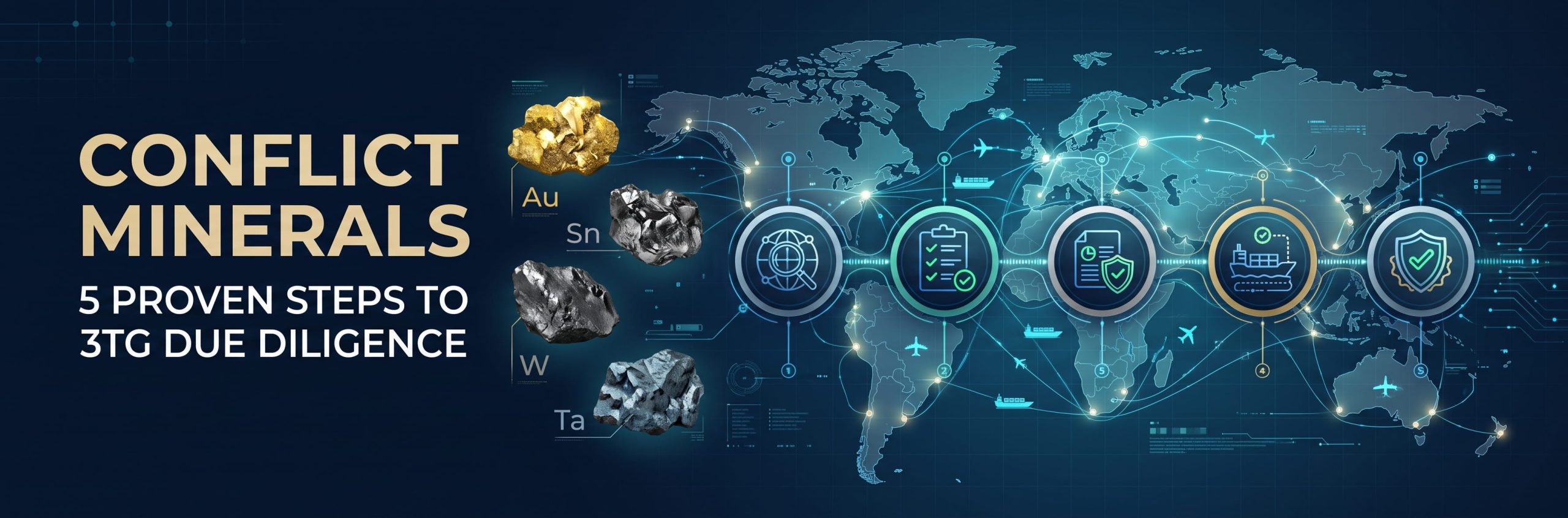
Conflict Minerals: 5 Proven Steps to 3TG Due Diligence
Conflict Minerals and Responsible Sourcing: A Practical Guide to 3TG and the OECD Due Diligence…
Mining Ebooks: 6 Expert Guides to Nigerian Minerals (2026)
Mining Ebooks: 6 Expert Guides to Buying and Exporting Nigerian and African Minerals By Kolawole…
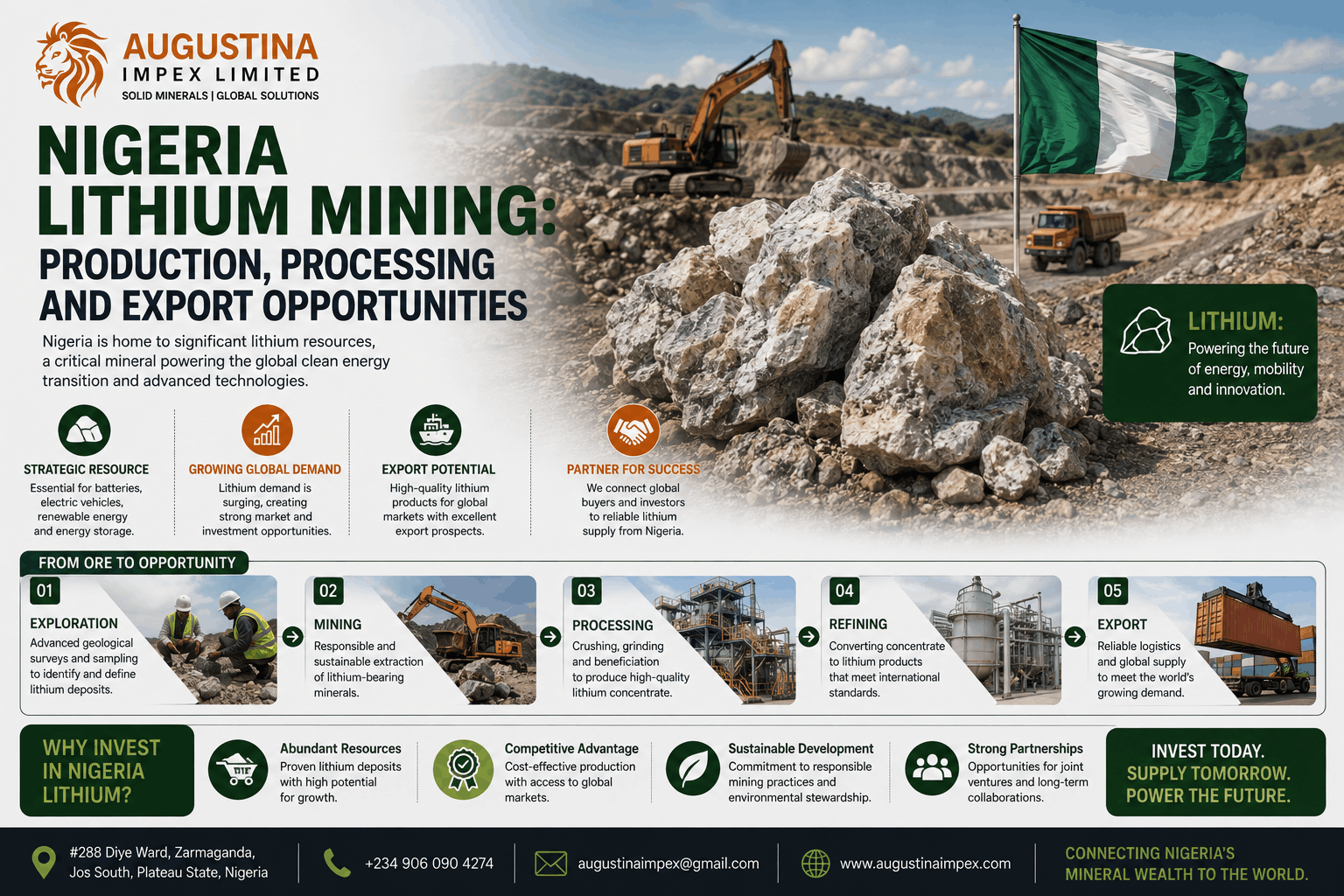
Nigeria Lithium Mining: Production, Processing & Export
Nigeria Lithium Mining: Production, Processing and Export Opportunities By Kolawole King, CEO — Augustina Impex…