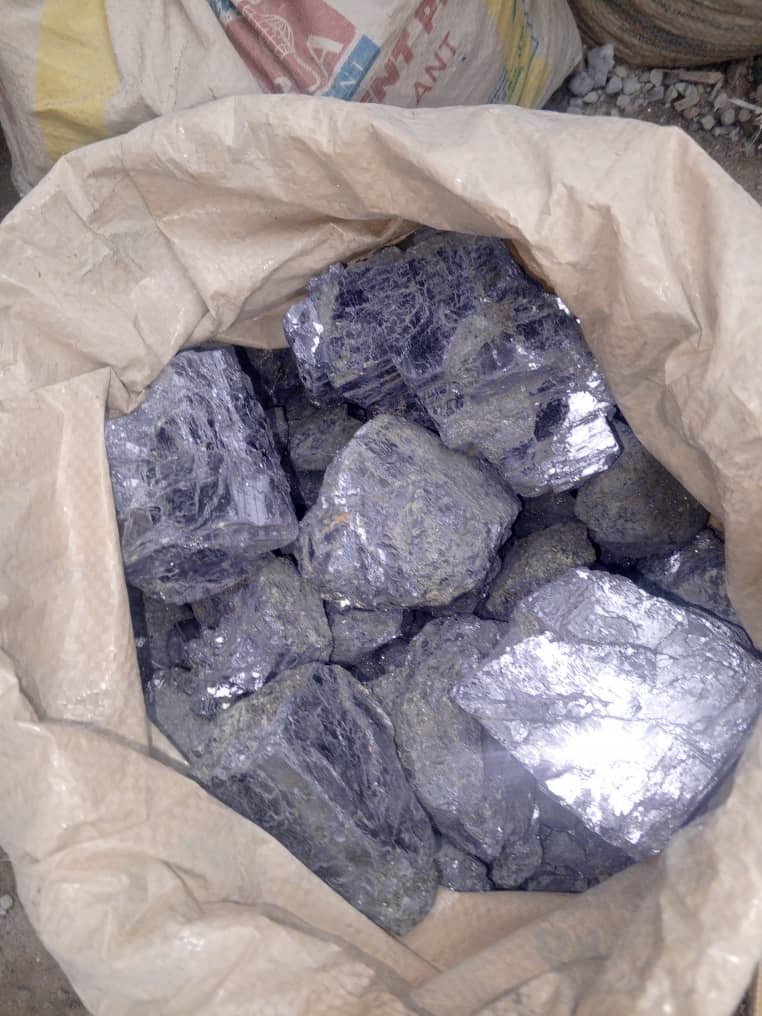

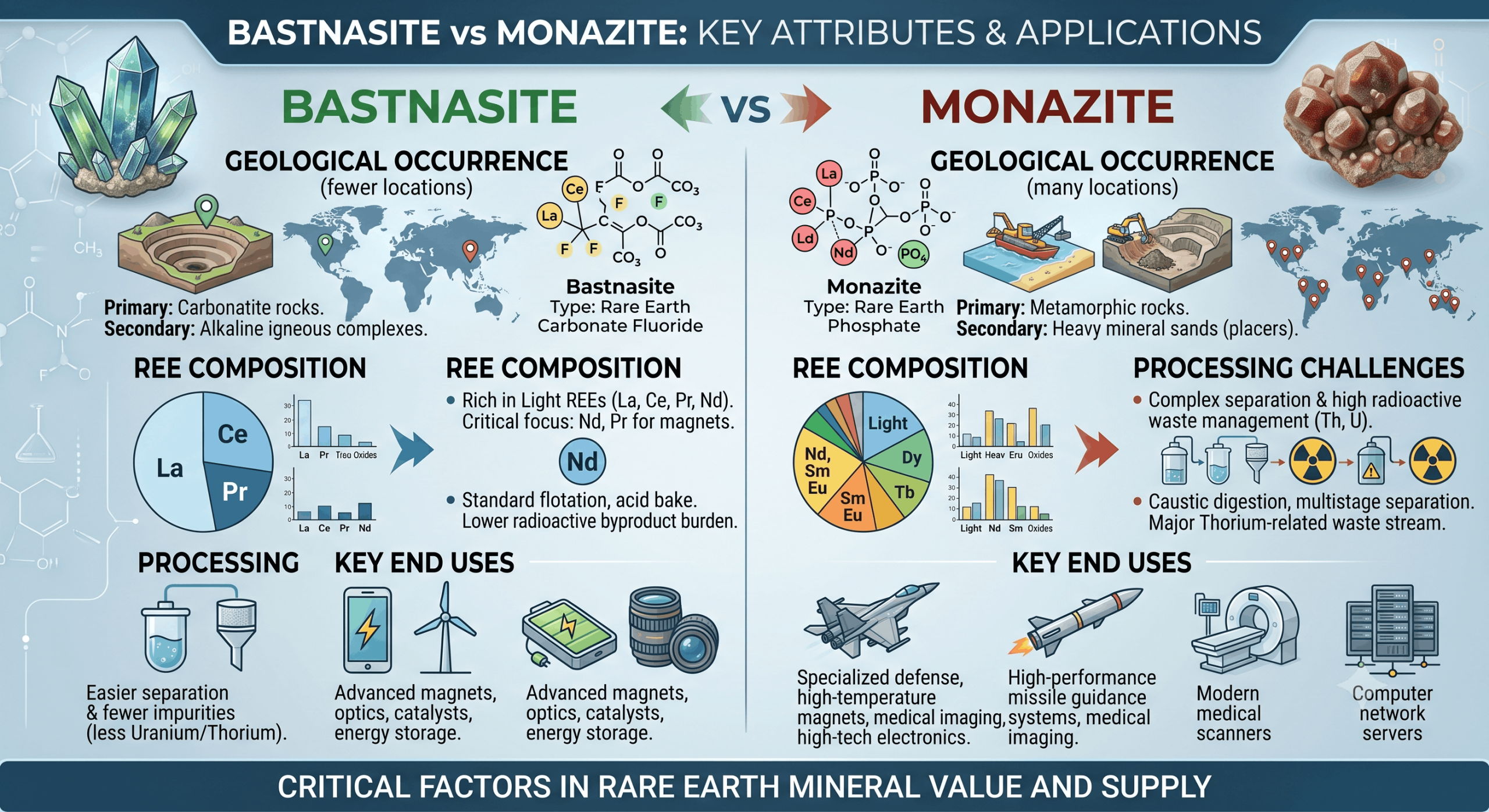
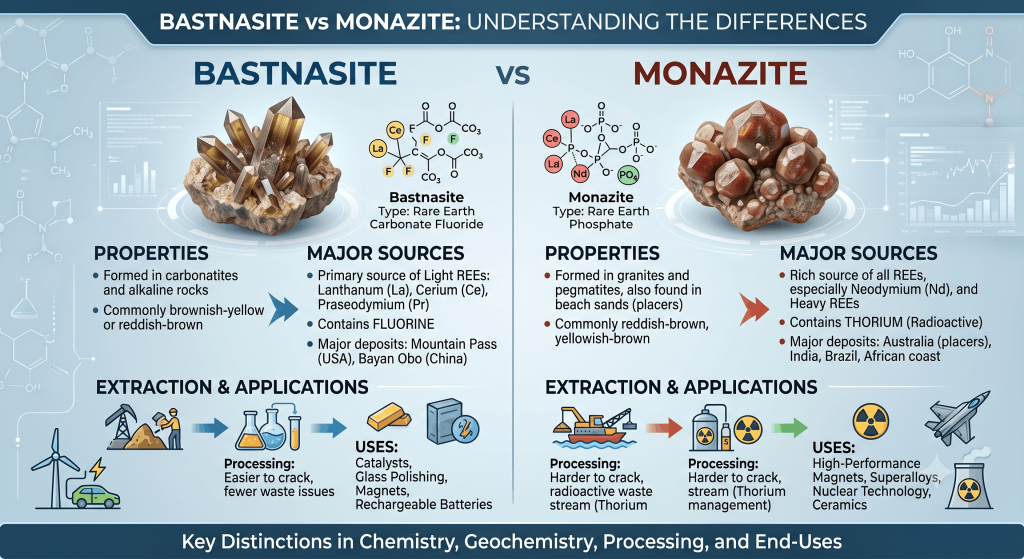
When it comes to rare earth minerals, few comparisons matter more to buyers, traders, and geologists than bastnasite vs monazite. These two minerals are, at first glance, close relatives — both are light rare earth element (LREE)-dominant minerals that carry significant quantities of cerium, lanthanum, neodymium, and praseodymium, and both have historically been the world’s two most commercially important sources of rare earth elements. But behind that superficial similarity lies a set of critical differences that affect pricing, processing, regulation, logistics, and commercial viability in ways that every serious participant in the rare earth trade must understand.
Whether you are a Chinese refinery buyer evaluating concentrate supply options, a trading house building a new supply chain, a developer assessing a rare earth project, or a Nigerian mineral producer looking to understand where your product sits in the global market, this guide will give you a clear, thorough, and commercially relevant comparison of these two minerals — their chemistry, their grades, their radioactivity profiles, their processing pathways, and their place in the clean energy revolution.
By the end of this article, you will know not just what makes bastnasite and monazite different, but which is commercially preferable, why, and under what circumstances — and what the emergence of high-grade, zero-radioactivity Nigerian bastnasite means for the global rare earth supply chain.
What Is Bastnasite? A Complete Overview
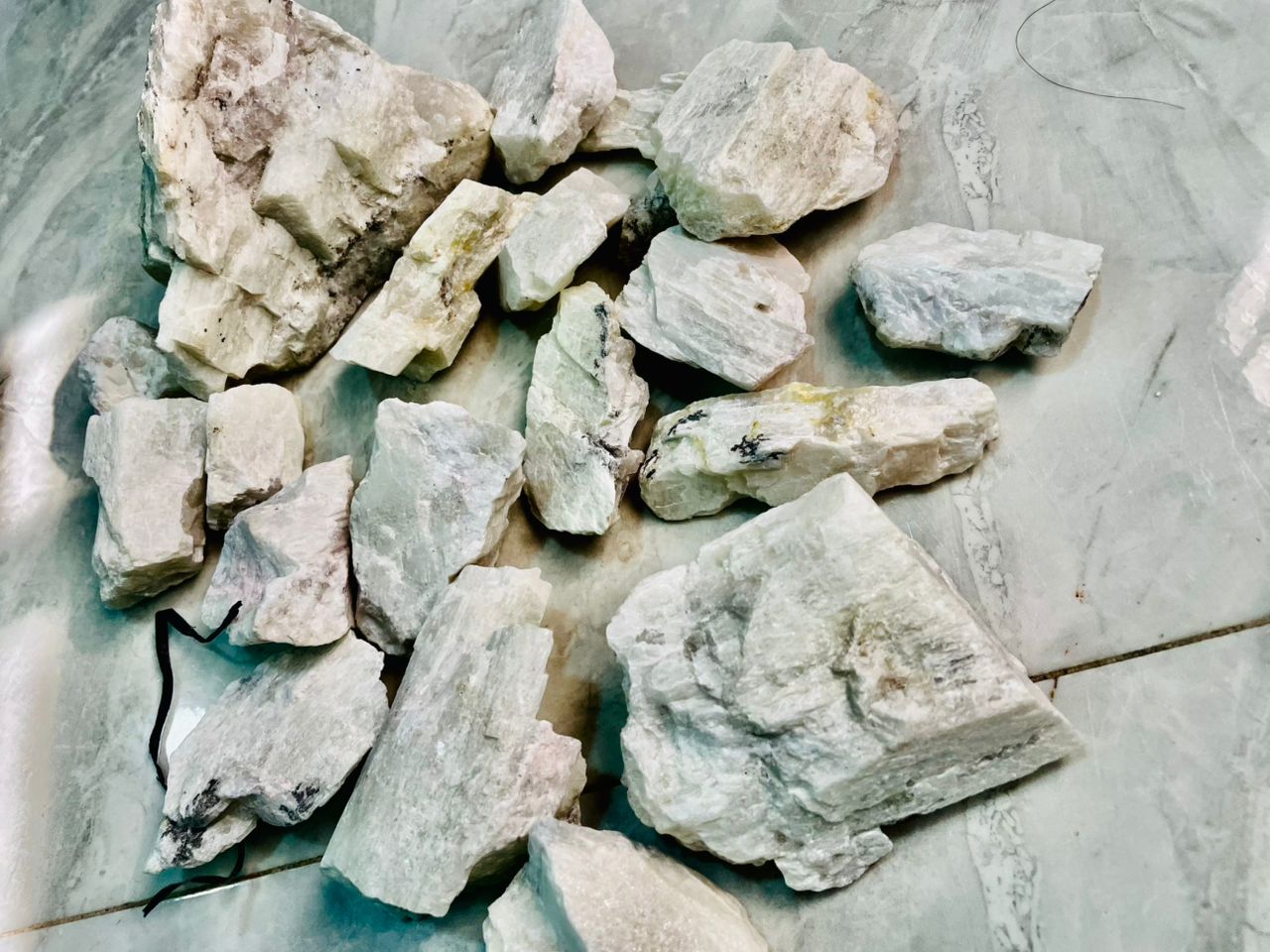
Bastnasite (also spelled Bastnäsite or Bastnaesite) is a group of rare earth fluorcarbonate minerals with the general chemical formula (Ce,La,Y)CO₃F. The name derives from Bastnas, a mining district in Sweden where the mineral was first described in the 19th century. Bastnasite belongs to the hexagonal crystal system and is typically found in carbonatite intrusions, alkaline igneous complexes, contact metamorphic zones, and hydrothermal veins.
Bastnasite is the world’s most commercially important rare earth mineral. It is the primary ore mined at two of the world’s largest rare earth operations — Mountain Pass in California, USA (operated by MP Materials) and Bayan Obo in Inner Mongolia, China (operated by China Northern Rare Earth Group). Together, these two deposits have historically accounted for the majority of global rare earth production outside of China’s heavy mineral sand and ion adsorption clay operations.
Key Chemical Properties of Bastnasite
The rare earth content in bastnasite is dominated by the light rare earth elements (LREEs), particularly:
- Cerium (Ce) — typically 40% to 45% of the total TREO, making it the most abundant component
- Lanthanum (La) — typically 20% to 25% of the TREO
- Neodymium (Nd) — typically 12% to 17% of the TREO
- Praseodymium (Pr) — typically 4% to 7% of the TREO
- Samarium (Sm) and trace heavy REEs — typically less than 3% combined
In concentrate form, bastnasite typically achieves TREO grades of 40% to 72%, depending on the degree of beneficiation. Premium-grade bastnasite concentrate — such as that produced from Nigerian carbonatite sources — can reach 68% to 72% TREO, placing it at the very top of the commercial quality spectrum.
Where Is Bastnasite Found?
Bastnasite occurs in a specific geological setting that makes it somewhat less ubiquitous than monazite, but far more commercially concentrated. Its principal geological associations include:
- Carbonatite intrusions — the most important commercial setting, producing high-grade, LREE-enriched bastnasite bodies as at Mountain Pass, Bayan Obo, and Jos Plateau in Nigeria
- Alkaline igneous complexes — associated with nepheline syenites and related rocks
- Contact metamorphic aureoles around carbonatite intrusions
- Hydrothermal veins — lower-grade but widespread occurrence
The global distribution of significant bastnasite deposits includes the United States (Mountain Pass, California), China (Bayan Obo, Inner Mongolia), Nigeria (Jos Plateau, Plateau State), Burundi (Gakara), Greenland (Kvanefjeld), Malawi (Songwe Hill), Tanzania (Ngualla), and several prospects in Canada and Australia.
What Is Monazite? A Complete Overview
Monazite is a rare earth phosphate mineral with the general chemical formula (Ce,La,Nd,Th)[PO₄]. The name comes from the Greek word monazein, meaning “to be alone,” reflecting the mineral’s tendency to occur as isolated grains dispersed through sedimentary deposits. Monazite belongs to the monoclinic crystal system and is an accessory mineral in a wide variety of igneous and metamorphic rocks, most commonly occurring as a heavy mineral in placer (alluvial and coastal) deposits.
Monazite is one of the oldest commercially exploited rare earth minerals. India was the world’s dominant rare earth producer for much of the 20th century, largely on the basis of monazite extraction from coastal heavy mineral sands. Brazil, Australia, Malaysia, and China have also been significant historical monazite producers. The mineral is almost invariably found in association with other heavy minerals — ilmenite, rutile, zircon, and xenotime — in what the industry calls heavy mineral sand (HMS) deposits.
Key Chemical Properties of Monazite
The rare earth content of monazite is similar in distribution to bastnasite — it is LREE-dominant, with cerium, lanthanum, neodymium, and praseodymium as the primary components. However, there is a critically important chemical difference that sets monazite apart from virtually all other rare earth minerals: its structural incorporation of thorium.
Thorium (Th) substitutes for the rare earth elements in the monazite crystal structure because of its similar ionic radius. As a result, monazite almost always contains significant quantities of Thorium, typically in the range of 5% to 12% ThO₂ by weight, and smaller quantities of Uranium (U), typically 0.1% to 0.5% UO₂.
This Thorium and Uranium content classifies monazite as a Naturally Occurring Radioactive Material (NORM) under the regulatory frameworks of virtually every country in the world — with profound commercial and logistical consequences that we will explore in detail later in this article.
Where Is Monazite Found?
Unlike bastnasite, which is primarily associated with carbonatite intrusions, monazite occurs in a much wider variety of geological settings and is geographically more widespread:
- Placer (alluvial and coastal) deposits — the primary commercial source; monazite accumulates through weathering and erosion of parent rocks, transported by water, and concentrated in river systems or beach environments alongside other heavy minerals
- Residual laterite deposits — formed by deep weathering of monazite-bearing rocks in tropical climates
- Granites and pegmatites — as an accessory mineral in primary crystalline rocks, though rarely in commercially extractable concentrations
- Metamorphic rocks — gneisses and schists containing monazite as an accessory mineral
Significant monazite deposits occur in Australia (Murray Basin, Eneabba), India (Kerala, Odisha coastal sands), Brazil (Bahia, Minas Gerais), China (Guangdong, Fujian coastal sands), Malaysia (now largely depleted), Nigeria (Cross River, Delta, and other coastal and riverine states), and Madagascar.
The Critical Comparison: Bastnasite vs Monazite Side by Side
Now that we have a solid foundation in what each mineral is, let us compare them directly across the criteria that matter most in commercial rare earth trade.
| Property | Bastnasite | Monazite |
| Property | Bastnasite | Monazite |
| Mineral Class | Rare Earth Fluorocarbonate | Rare Earth Phosphate |
| Chemical Formula | (Ce,La,Y)CO₃F | (Ce,La,Nd,Th)PO₄ |
| Primary REEs | Ce, La, Nd, Pr (LREEs) | Ce, La, Nd, Pr (LREEs) |
| Typical TREO (Concentrate) | 40% – 72% | 55% – 70% |
| Premium Grade TREO | 65% – 72%+ | 60% – 67% |
| Thorium (Th) Content | Low to Zero | HIGH: 5% – 12% |
| Uranium (U) Content | Negligible / Zero | 0.1% – 0.5% |
| NORM Classification | Generally Not NORM | YES — classified NORM |
| Radioactivity Regulations | Minimal | Strict in most countries |
| Processing Complexity | Moderate | High (due to NORM) |
| NdPr Distribution | ~18% – 25% of TREO | ~18% – 22% of TREO |
| Geological Setting | Carbonatites, veins | Placer / heavy mineral sands |
| Common Co-minerals | Calcite, dolomite, fluorite | Ilmenite, rutile, zircon |
| Global Price Premium | High (non-radioactive) | Discounted (radioactive) |
| Market Accessibility | Wide (most countries) | Restricted (many countries) |
| Nigerian TREO (Certified) | 68% – 72% | Per deposit assay |
| Zero Th/U Available? | YES (Nigerian bastnasite) | No — Th/U always present |
Note: Values shown are typical ranges for commercially traded concentrates. Individual deposits will vary. Always request independent certified assay reports before commercial commitments.
Chemical Composition: The Fluorocarbonate vs Phosphate Distinction
The most fundamental difference between bastnasite and monazite is their chemical nature. Understanding this distinction is not just an academic exercise — it has direct consequences for processing chemistry, product form, and end-use application.
Bastnasite is a fluorocarbonate — its rare earth elements are bound in a carbonate framework with fluorine as an additional anion. The carbonate (CO₃) component decomposes relatively easily during hydrometallurgical processing, and fluorine can be managed through established flotation and leaching circuits. This makes bastnasite concentrate comparatively straightforward to process, and it is the preferred feedstock for many rare earth separation facilities worldwide.
Monazite is a phosphate — its rare earth elements are bound to the phosphate (PO₄) group in a highly stable crystal structure. This phosphate bonding makes monazite significantly more resistant to chemical attack than bastnasite, requiring either alkaline cracking (NaOH digestion at high temperatures) or concentrated acid leaching to decompose the crystal structure. The presence of Thorium adds another layer of complexity, as the process streams must be managed to meet radioactive waste handling requirements throughout the refinery circuit.
TREO Grade: Which Mineral Carries More Rare Earth?
When it comes to TREO (Total Rare Earth Oxide) grade, the comparison between bastnasite and monazite is nuanced.
Bastnasite TREO Grades
In its raw ore form, bastnasite typically contains TREO grades of 0.5% to 10%, depending on the deposit. After beneficiation and concentration — using processes such as flotation, gravity separation, and magnetic separation — bastnasite concentrate grades typically range from 40% to 72% TREO. The highest commercially traded grades, such as those from Nigerian carbonatite sources, have returned certified TREO grades of 68% to 72% — placing them at the very top of the global market.
Monazite TREO Grades
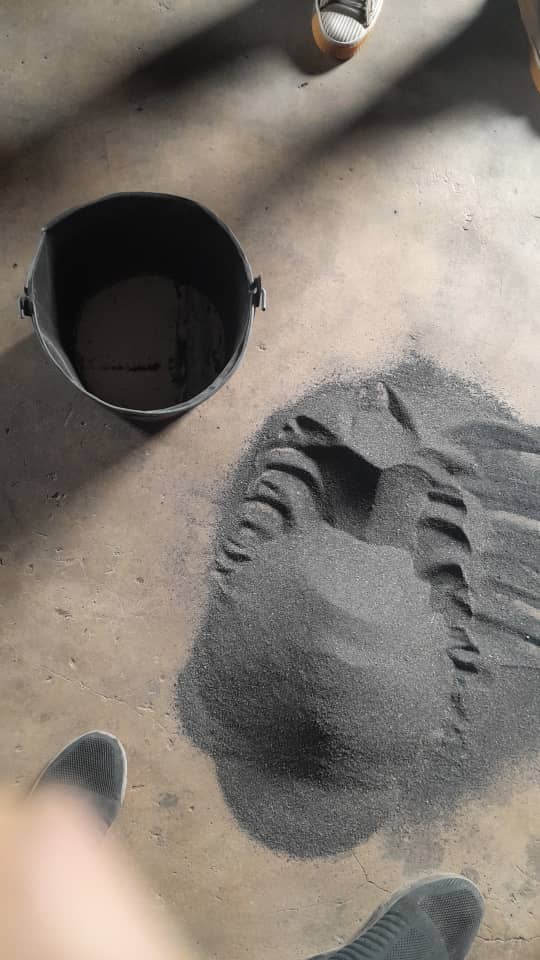
Monazite naturally contains high rare earth concentrations by virtue of its crystal chemistry. Typical monazite concentrate grades range from 55% to 70% TREO. Because monazite is almost always recovered as a heavy mineral concentrate (via gravity separation or electrostatic/magnetic separation from HMS deposits), it is rarely beneficiated to grades above 65–67% TREO in standard commercial practice.
The TREO Comparison Verdict
On paper, the TREO grades of bastnasite and monazite concentrates overlap significantly. However, premium-grade bastnasite concentrate outperforms monazite in achievable TREO, with top-quality bastnasite reaching 72%+ TREO — grades rarely achieved in commercial monazite production. More importantly, the radioactivity content of monazite (Thorium and Uranium) must be factored into any grade comparison, as the economic value of the rare earth content is substantially offset by the regulatory and processing costs associated with NORM handling.
The Radioactivity Question: The Single Most Important Difference
If there is one difference between bastnasite and monazite that dominates every other consideration in the commercial rare earth market, it is radioactivity. This single factor has reshaped global rare earth supply chains, created significant barriers to monazite trade, and elevated the commercial value of non-radioactive or low-radioactivity bastnasite concentrates to a degree that cannot be overstated.
Thorium and Uranium in Monazite
Monazite almost universally contains significant quantities of Thorium (Th) and Uranium (U) as structural substituents for the rare earth elements in its crystal lattice. Typical commercial monazite concentrates contain:
- Thorium (ThO₂): 5% to 12% — this is not a trace contaminant; it is a major component by weight
- Uranium (UO₂): 0.1% to 0.5% — lower than Thorium but still well above natural background levels in most geological materials
These levels of Thorium and Uranium classify monazite as a Naturally Occurring Radioactive Material (NORM) under the regulatory frameworks of virtually every country in the world. As a result, the import, export, transport, storage, and processing of monazite concentrate is subject to strict radiological licensing, waste management protocols, and environmental controls in most major markets.
Radioactivity in Bastnasite
The radioactivity situation for bastnasite is fundamentally different — and far more commercially favourable. The crystal chemistry of bastnasite does not structurally incorporate Thorium or Uranium in the same way as monazite, and many bastnasite deposits carry extremely low levels of these radioactive elements.
This is particularly true of bastnasite from certain geological settings — notably carbonatite-hosted Nigerian bastnasite, where independent certified laboratory analysis has confirmed zero Thorium and zero Uranium across multiple pit samples. This zero-radioactivity profile is not universal for all bastnasite globally — some deposits do carry elevated Th/U levels — but it is a commercially decisive characteristic of the best-quality bastnasite concentrates on the market.
Why This Difference Is Commercially Decisive
The commercial implications of the radioactivity difference between bastnasite and monazite cannot be overstated. Here is what it means in practice:
- Import restrictions: Many countries — including China, Japan, South Korea, the European Union member states, and the United States — impose strict import controls and regulatory thresholds on NORM materials. Monazite imports are either restricted, require special permits, or are subject to inspection and licensing conditions that add time, cost, and risk to the transaction.
- Shipping surcharges: Radioactive materials are subject to IAEA transport regulations (as Class 7 radioactive goods), which impose special packaging, labelling, shipping documentation, and carrier requirements — all of which add cost and complexity to the logistics chain.
- Port handling restrictions: Many major ports impose restrictions on the handling and storage of NORM-classified cargo. Delays, inspections, and diversions are common complications in the monazite trade.
- Refinery licensing: Processing facilities handling monazite must be licensed for radioactive materials handling in their jurisdiction. Not all rare earth refineries hold this licence, which limits the pool of buyers who can accept monazite as feedstock.
- Waste management costs: The thorium-bearing waste streams generated during monazite processing must be managed as low-level radioactive waste, adding significant cost to the refinery operation.
None of these complications apply to a zero-Th/U bastnasite concentrate. It can be imported, transported, stored, and processed without NORM regulatory compliance, making it accessible to a far wider range of buyers, refineries, and end-users globally — and commanding a corresponding price premium.
REE Distribution: What Is Inside the TREO?
Both bastnasite and monazite are LREE-dominant minerals, meaning their total rare earth oxide content is dominated by the light rare earth elements — Cerium, Lanthanum, Neodymium, and Praseodymium. However, there are subtle but commercially meaningful differences in their typical elemental distributions.
Bastnasite REE Distribution
A typical bastnasite concentrate might show the following distribution within its TREO:
- Cerium (Ce): ~43% of TREO — the dominant element
- Lanthanum (La): ~22% of TREO
- Neodymium (Nd): ~15% of TREO
- Praseodymium (Pr): ~6% of TREO
- NdPr combined: ~21% of TREO — highly attractive for magnet applications
- Samarium (Sm) and heavier REEs: less than 3% combined
Monazite REE Distribution
A typical monazite concentrate might show:
- Cerium (Ce): ~44% of TREO
- Lanthanum (La): ~23% of TREO
- Neodymium (Nd): ~14% of TREO
- Praseodymium (Pr): ~5% of TREO
- NdPr combined: ~19–20% of TREO
- Samarium (Sm) and heavier REEs: typically slightly higher than bastnasite at 3–5% combined
The NdPr Comparison
Both minerals offer similar NdPr distributions within their TREO — roughly 18 to 21% — making them both viable feedstocks for the NdFeB permanent magnet supply chain. However, bastnasite generally achieves a slightly higher NdPr fraction relative to its TREO, and this advantage is amplified in high-grade bastnasite concentrates where the total TREO is also higher. The net result is more contained NdPr per tonne of bastnasite concentrate shipped, compared to monazite of similar TREO.
For magnet-grade buyers — who are the highest-value customer segment in the LREE market — this makes bastnasite the preferred feedstock, all other things being equal. And when zero radioactivity is added to the equation, the preference becomes overwhelming.
Processing: How Are Bastnasite and Monazite Refined?
The processing pathways for bastnasite and monazite differ significantly, both in complexity and in the regulatory environment within which they must operate. Understanding these differences helps explain why the two minerals command different prices and serve different segments of the market.
Bastnasite Processing
The processing of bastnasite concentrate follows a well-established and relatively straightforward hydrometallurgical route:
- Flotation and beneficiation: Run-of-mine ore is crushed and processed through froth flotation to produce a bastnasite concentrate, rejecting silica, calcite, and other gangue minerals
- Oxidative roasting: The concentrate is roasted to convert the fluorocarbonate to a more reactive oxide form, and to remove the carbonate (CO₂) and fluorine components
- Acid leaching: Hydrochloric acid or sulphuric acid leaching dissolves the rare earth oxides into solution, leaving behind insoluble impurities
- Solvent extraction (SX): The dissolved rare earth solution is subjected to multi-stage solvent extraction to separate individual rare earth elements into purified fractions
- Precipitation and calcination: Individual rare earth elements are precipitated as oxalates or carbonates, then calcined to produce the final oxide products
The absence of significant radioactivity in most bastnasite concentrates means that this entire process chain can be operated in a conventional (non-nuclear-licensed) chemical processing facility, dramatically reducing capital and operating costs relative to monazite processing.
Monazite Processing
Monazite processing is significantly more complex, primarily because of the need to handle, separate, and dispose of radioactive Thorium and Uranium throughout the process chain:
- Gravity and electrostatic separation: Monazite is recovered from heavy mineral sands using a combination of gravity, magnetic, and electrostatic separation to produce a monazite concentrate
- Alkaline cracking (NaOH digestion): The most common commercial route; monazite is digested in concentrated sodium hydroxide at temperatures of 130–150°C to decompose the phosphate structure, producing a rare earth hydroxide cake and a sodium phosphate solution
- Acid dissolution: The rare earth hydroxide cake is dissolved in hydrochloric or nitric acid to produce a rare earth chloride or nitrate solution
- Thorium and Uranium removal: Selective precipitation or solvent extraction steps are required to remove Thorium and Uranium from the process stream before rare earth separation proceeds — these streams must be managed as radioactive waste
- Rare earth separation: Solvent extraction separates individual rare earth elements
- Radioactive waste management: Thorium-bearing waste streams must be immobilised, stored, and disposed of in compliance with national radioactive waste regulations — an ongoing cost burden for the processing facility
The radiological licensing requirements for monazite processing facilities are substantial. Many rare earth refineries that process bastnasite are not licensed to handle monazite, which significantly restricts the pool of facilities that can take monazite as feedstock. This structural limitation is one reason why bastnasite remains the preferred commercial feedstock in many markets.
Geological Settings and Mining Methods
The geological settings of bastnasite and monazite deposits also differ in ways that affect mining methods, capital costs, and the scalability of production.
Bastnasite Deposit Mining
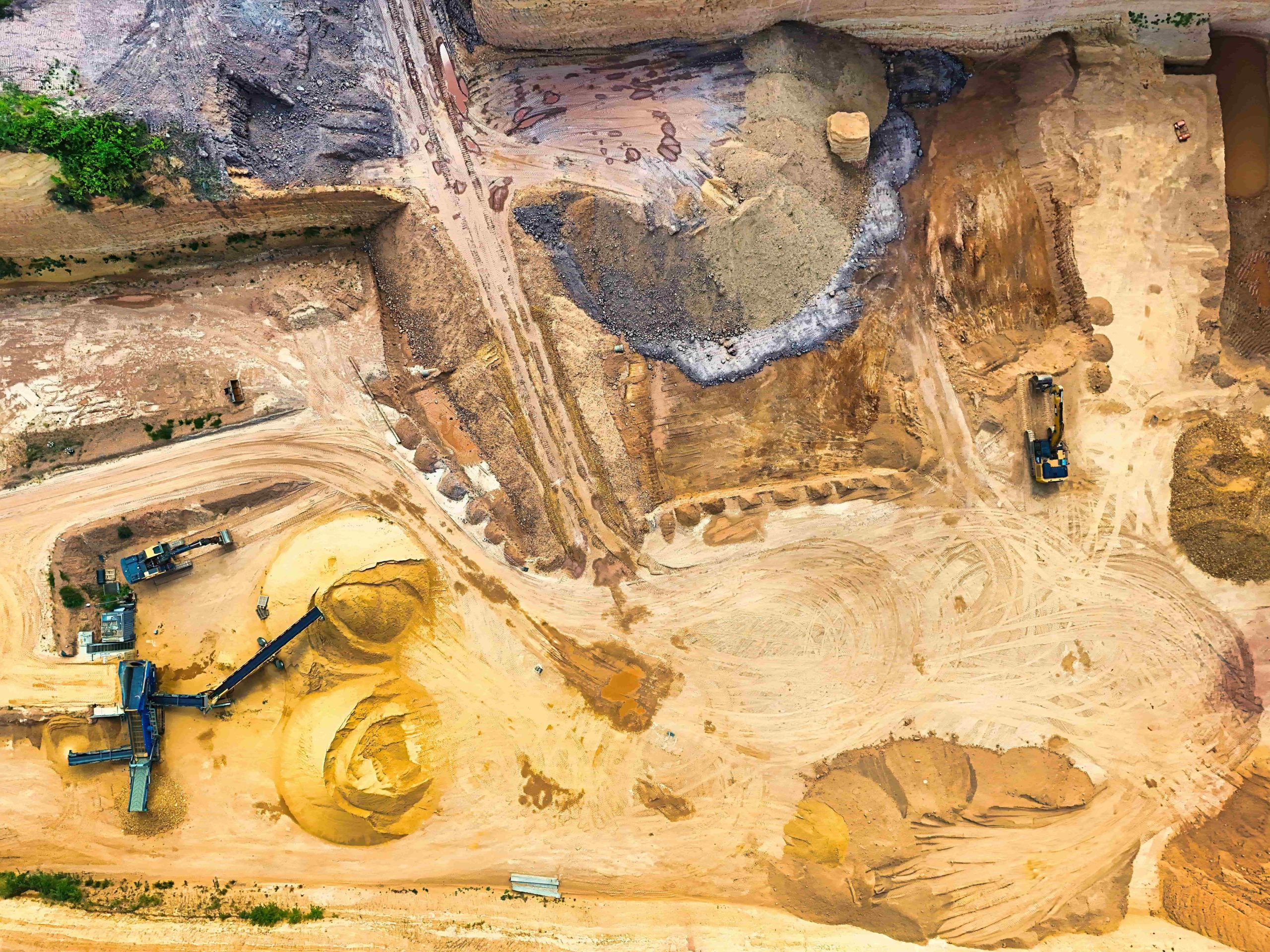
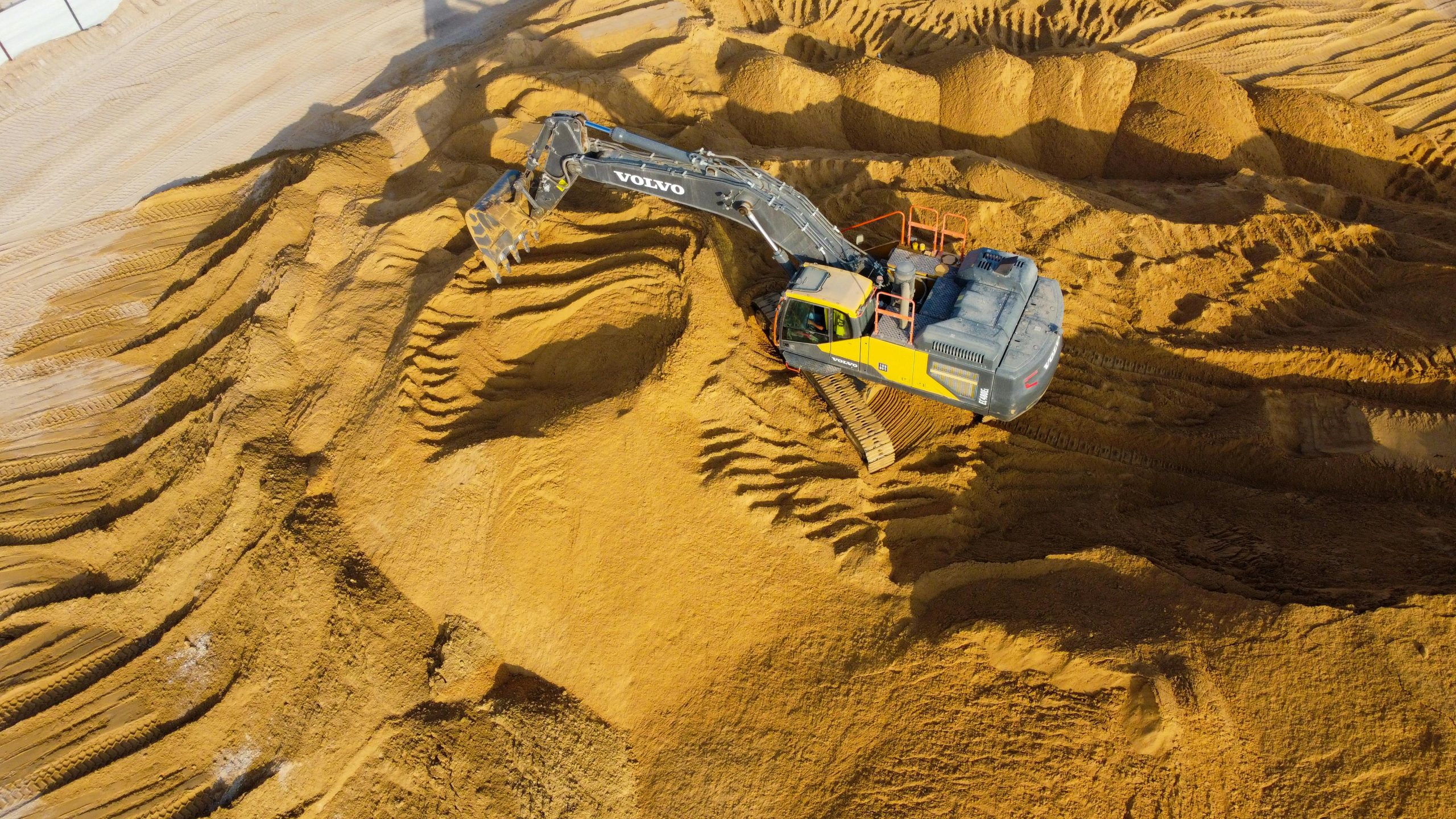
Bastnasite in carbonatite deposits is typically mined using conventional open-pit hard rock mining methods. The ore is drilled, blasted, and hauled to a crushing and processing plant. This requires significant capital investment in hard rock mining equipment and beneficiation infrastructure, but the high TREO grades achieved in concentrate — combined with the lack of radioactivity in many deposits — often justify the economics.
The concentrated, high-grade nature of many bastnasite carbonatite bodies means that relatively small mine footprints can produce economically significant quantities of concentrate. This is an important advantage for junior and emerging producers, including those operating in Nigeria.
Monazite Deposit Mining
Monazite in heavy mineral sand deposits is typically mined using dredging (wet mining) or dry mining methods, depending on the location and water availability. The ore — a mixture of sand grains containing ilmenite, rutile, zircon, monazite, and other heavy minerals — is processed through a dry mill (DM) and wet concentration plant (WCP) to separate the individual mineral species.
The dispersed, sand-based nature of heavy mineral sands deposits means that large volumes of material must typically be processed to recover the relatively small fraction of monazite present. However, the advantage of HM sand mining is that monazite is a co-product alongside more commercially straightforward minerals like ilmenite, rutile, and zircon, which may subsidise the cost of monazite recovery.
Pricing: What Does Each Mineral Fetch on the Market?
Pricing in the rare earth minerals market is complex and highly negotiable, varying by grade, radioactivity, origin, and market conditions. However, some general pricing principles apply consistently in the comparison of bastnasite vs monazite.
The Radioactivity Discount on Monazite
Despite its significant rare earth content, monazite typically trades at a substantial discount to bastnasite of equivalent TREO grade, specifically because of its radioactivity. This discount reflects:
- The additional processing cost required to handle and dispose of radioactive process streams
- The reduced pool of eligible buyers who are licensed and equipped to accept NORM materials
- The shipping, insurance, and logistical premiums associated with transporting Class 7 radioactive goods
- The regulatory risk and compliance costs embedded in each transaction
The exact magnitude of this discount varies by market and by the Thorium content of the specific product, but it can be significant — potentially 30% to 50% or more of the price a comparable non-radioactive bastnasite concentrate would command.
The Premium for Zero-Radioactivity Bastnasite
Conversely, bastnasite concentrates with confirmed zero Thorium and zero Uranium — such as Nigerian bastnasite from Jos Plateau carbonatite sources — command a premium in the market that reflects not just the TREO grade itself, but the full suite of commercial and logistical advantages that come with non-NORM classification. Buyers who have been unable to source monazite due to radioactivity import restrictions — or who have faced repeated delays and complications in the monazite supply chain — will pay a meaningful premium for a clean, non-radioactive alternative.
For buyers in markets with particularly strict NORM thresholds — including Japan, South Korea, and many EU member states — the ability to source a high-TREO, high-NdPr, zero-radioactivity bastnasite concentrate is not merely commercially attractive; it is commercially necessary.
Commercial Applications: Who Buys These Minerals?
Both bastnasite and monazite are primarily consumed as feedstocks for rare earth separation facilities — refineries that chemically separate the individual rare earth elements from the mixed concentrate and produce purified individual rare earth oxide, metal, or alloy products. However, the end-user landscape differs due to the radioactivity constraint.
Who Buys Bastnasite?
- Rare earth separation facilities in China (the dominant global consumer), the United States, Japan, South Korea, and Europe
- NdFeB magnet alloy producers sourcing NdPr feedstock
- Chemical companies producing cerium and lanthanum compounds for catalysts, glass polishing, and phosphors
- Trading companies supplying the above industrial buyers
- Any facility seeking rare earth feedstock in jurisdictions with strict NORM import controls
Who Buys Monazite?
- Licensed radioactive materials processing facilities — primarily in China and India, where the regulatory environment permits large-scale monazite processing
- Facilities with existing thorium waste management infrastructure
- Historical buyers in Malaysia (now largely inactive due to regulatory closures) and Brazil
- Research institutions processing small quantities for thorium or specific REE studies
The contrast is stark: bastnasite serves a global, open market with hundreds of potential buyers and refineries. Monazite serves a much smaller, licence-restricted market where transaction complexity and regulatory cost are permanent features of every deal.
Nigerian Bastnasite vs Nigerian Monazite: The Home Comparison
Nigeria produces both bastnasite and monazite, reflecting the geological diversity of the country’s mineral endowment. Understanding the difference between these two Nigerian products is essential for any buyer or exporter operating in the Nigerian rare earth space.
Nigerian Bastnasite — The Premium Product
Nigerian bastnasite is found primarily in carbonatite intrusions in Jos Plateau, Plateau State — the same geological province that has made Nigeria a globally significant hard rock mining district for over a century. Independently certified assay results from multiple pit samples at active Nigerian bastnasite operations have consistently returned:
- TREO: 68% – 72% — premium high-grade, among the highest in the world
- NdPr: ~21% of TREO — commercially excellent for the NdFeB magnet supply chain
- Thorium: ZERO (0%) — confirmed across all certified pit samples
- Uranium: ZERO (0%) — confirmed across all certified pit samples
- NORM classification: No — eligible for standard (non-nuclear) import and processing
These characteristics make Nigerian bastnasite one of the most commercially attractive rare earth concentrates available on the global market today. The combination of high TREO, strong NdPr distribution, and confirmed zero radioactivity is genuinely rare — and is driving growing international buyer interest in Nigerian supply.
Nigerian Monazite — The NORM Product
Nigerian monazite is found primarily in heavy mineral sand deposits in coastal and riverine states, including Cross River, Delta, and Ondo States, occurring alongside ilmenite, rutile, zircon, and other heavy minerals. Nigerian monazite carries typical TREO grades of 55% to 65%, with Thorium and Uranium content consistent with monazite globally.
Export of Nigerian monazite requires compliance with the Nigerian Nuclear and Radiological Regulatory Authority (NNRA) — Nigeria’s national nuclear and radiological regulator — in addition to the standard NEPC and NESS export framework. Licensed exporters must comply with NNRA export permit requirements, radiation monitoring protocols, and prescribed packaging and shipping standards for NORM materials.
While Nigerian monazite remains a potentially exportable product for licensed operators, it faces all of the same commercial constraints as monazite globally: a restricted buyer pool, shipping complexity, and a pricing discount relative to bastnasite. For most Nigerian rare earth exporters, bastnasite is the commercially superior product to prioritise.
Which Is Better for Buyers: Bastnasite or Monazite?
This is the question that most buyers ultimately want answered. The answer depends on the buyer’s specific circumstances, jurisdiction, and processing capabilities — but the commercial evidence consistently favours bastnasite in most situations.
Choose Bastnasite If:
- You are operating in a jurisdiction with strict NORM import regulations (Japan, South Korea, EU, USA)
- Your processing facility is not licensed for radioactive materials handling
- You want the broadest possible sourcing flexibility and supplier competition
- You need the highest achievable TREO grade (65–72%) in a single-source concentrate
- You are sourcing for the NdFeB magnet supply chain and need consistent, high NdPr distribution
- You want to minimise logistical complexity, shipping surcharges, and port handling risk
- You are building a long-term supply chain and need regulatory certainty
Monazite May Be Acceptable If:
- Your facility is already licensed for NORM/radioactive materials processing
- You are operating in a jurisdiction (such as China or India) with an established monazite processing framework
- You are seeking feedstock at a price discount relative to bastnasite
- You have existing thorium waste management infrastructure in place
- Monazite is a co-product in your existing heavy mineral sands operation
For the vast majority of rare earth buyers and refiners in today’s market — particularly those in East Asia (outside China), Europe, North America, and emerging markets — bastnasite is the clearly preferred feedstock. And within the bastnasite market, the emergence of high-grade, certified zero-radioactivity Nigerian bastnasite concentrate has created a compelling new supply option that is attracting serious buyer attention from multiple continents.
Environmental and Regulatory Considerations
Beyond the direct commercial implications of radioactivity, both minerals operate within environmental and regulatory frameworks that are becoming increasingly important in the global mineral trade.
Bastnasite Environmental Footprint
Bastnasite mining in carbonatite settings involves conventional hard rock mining, with the associated environmental impacts of open-pit excavation, waste rock management, tailings disposal, and reagent use in flotation. The absence of radioactivity in most bastnasite concentrates simplifies environmental compliance, as tailings and waste streams do not require radiological management. Licensed Nigerian bastnasite exporters operate under the environmental and export regulatory framework of the Federal Ministry of Mines and Steel Development and the NEPC.
Monazite Environmental Footprint
Monazite’s radioactivity creates a more complex environmental compliance picture. Tailings from monazite processing contain Thorium and Uranium at elevated concentrations and must be managed as NORM waste. In jurisdictions that have historically been permissive about monazite tailings disposal — notably parts of Malaysia and India — there have been significant environmental liabilities associated with legacy monazite processing operations. Modern monazite processing facilities in compliant jurisdictions must implement radiological monitoring, worker dose assessment, and long-term tailings management plans.
The Clean Energy Supply Chain: Bastnasite and Monazite in Context
Both bastnasite and monazite are potential feedstocks for the clean energy transition, as both carry the NdPr content that drives demand for NdFeB permanent magnets in electric vehicles and wind turbines. However, the supply chain dynamics strongly favour bastnasite as the preferred feedstock for the Western and allied rare earth supply chain diversification effort that is underway following growing concerns about Chinese supply chain concentration.
Governments in the United States, the European Union, Japan, and Australia have all initiated rare earth supply chain diversification programmes aimed at reducing reliance on Chinese rare earth processing capacity. These programmes are explicitly focused on sourcing non-Chinese rare earth concentrates for processing in allied-nation facilities. Given the NORM regulatory constraints on monazite import and processing in most of these jurisdictions, bastnasite — particularly non-radioactive bastnasite from allied or partner nations — is the logical feedstock of choice for these emerging Western rare earth processing facilities.
This strategic demand dynamic adds a geopolitical premium to high-quality bastnasite supply from transparent, well-documented, responsibly managed sources — a premium that will only grow as clean energy deployment accelerates and the rare earth supply chain diversification imperative intensifies.
Frequently Asked Questions: Bastnasite vs Monazite
What is the main difference between bastnasite and monazite?
The most important difference is radioactivity. Monazite contains significant levels of Thorium (5–12%) and Uranium (0.1–0.5%), classifying it as a Naturally Occurring Radioactive Material (NORM). Bastnasite, particularly from certain deposits, contains very low to zero Thorium and Uranium — making it far easier to import, transport, process, and trade internationally.
Which has a higher TREO grade — bastnasite or monazite?
Premium bastnasite concentrate can reach 68–72% TREO, while monazite typically tops out at 65–67% in commercial concentrate form. Both overlap in the 55–65% TREO range. For the highest achievable TREO in a non-radioactive product, bastnasite wins.
Can monazite be imported into China?
China has historically been the world’s largest consumer of both bastnasite and monazite. Chinese rare earth refineries — particularly those with established thorium waste management infrastructure — have imported monazite from Australia, India, and other sources. However, China has tightened its NORM import regulations in recent years, and the regulatory environment continues to evolve.
Is Nigerian bastnasite radioactive?
Independently certified Nigerian bastnasite concentrate from licensed Jos Plateau carbonatite operations has returned confirmed zero Thorium and zero Uranium across all tested pit samples. This is a commercially exceptional characteristic that distinguishes it from many other global bastnasite sources and from all commercial monazite concentrates.
Which mineral is more valuable per tonne?
Non-radioactive bastnasite of equivalent or superior TREO grade commands a significant price premium over monazite, reflecting the absence of radioactivity-related costs and restrictions. The exact premium varies by market conditions, but the structural commercial advantages of non-radioactive bastnasite consistently translate into higher realised prices per tonne.
Are bastnasite and monazite found together?
In some geological settings, bastnasite and monazite can occur in proximity — for example, in carbonatite complexes that have experienced secondary alteration. However, they typically form in different primary geological environments: bastnasite in primary carbonatite and alkaline igneous settings, monazite in secondary placer deposits derived from a wide range of source rocks. They are rarely mined together from the same ore body.
Why is monazite not preferred for the clean energy supply chain?
The radioactivity of monazite creates import, processing, and waste management complications that most non-Chinese rare earth refineries in Europe, North America, and East Asia (outside China) are not equipped or licensed to handle. For the emerging Western rare earth supply chain — which is being built to serve the EV and wind energy sectors — non-radioactive bastnasite is the preferred and in many cases the only practical feedstock.
What makes Nigerian bastnasite special compared to other bastnasite sources?
Nigerian bastnasite from certified carbonatite sources combines three commercially exceptional characteristics simultaneously: TREO grades of 68–72% (among the highest globally), NdPr content of approximately 21% of TREO (attractive for magnet feedstock), and confirmed zero Thorium and zero Uranium (eliminating all NORM-related trade complications). This combination is genuinely rare in the global market and is attracting growing buyer interest from qualified international refineries and trading houses.
Conclusion: Bastnasite and Monazite — Related Minerals, Very Different Commercial Propositions
Bastnasite and monazite share much in common: both are light rare earth-dominant minerals, both carry the prized NdPr content that feeds the clean energy economy, and both have played essential roles in the history of the global rare earth industry. But their differences — in chemistry, radioactivity, processing complexity, regulatory burden, market access, and pricing — are not minor. They are fundamental.
In the current market — shaped by accelerating clean energy demand, supply chain diversification imperatives, and tightening NORM regulations in major consuming nations — bastnasite is the clearly superior commercial product in most contexts. Its non-radioactive profile, higher achievable TREO, and wider market accessibility give it structural advantages that no amount of pricing adjustment can fully compensate for in the monazite column.
And within the bastnasite market, the emergence of certified high-grade Nigerian bastnasite concentrate — with its 68–72% TREO, ~21% NdPr distribution, and confirmed zero Th/U — represents one of the most compelling new supply propositions in the global rare earth minerals industry. It offers buyers everything they need: grade, chemistry, transparency, and full regulatory compliance, from a rapidly professionalising West African supply chain that operates under the full framework of Nigerian export regulations.
Augustina Impex Limited specialises in the aggregation, quality verification, and international export of high-grade Nigerian solid minerals, including certified Nigerian Bastnaesite-Ce Rare Earth Concentrate with independently verified TREO grades of 68–72%, NdPr of ~21% of TREO, and certified zero Thorium and zero Uranium. Our operations are fully compliant with FMMSD, NEPC, NESS, and NNRA regulatory requirements.
If you are a qualified buyer, refinery operator, or trading house seeking a reliable, transparent, and professionally managed supply of high-grade Nigerian bastnasite concentrate, we welcome your enquiry. Reach us at www.augustinaimpex.com, email augustinaimpex@gmail.com, or contact us directly on WhatsApp at +234 906 090 4274.
“Connecting Nigeria’s Mineral Wealth to the World — with Transparency, Reliability, and Professionalism.”
-
Previous Post
What Is TREO in Rare Earth Minerals? A Complete Guide
Post a comment
Related Posts
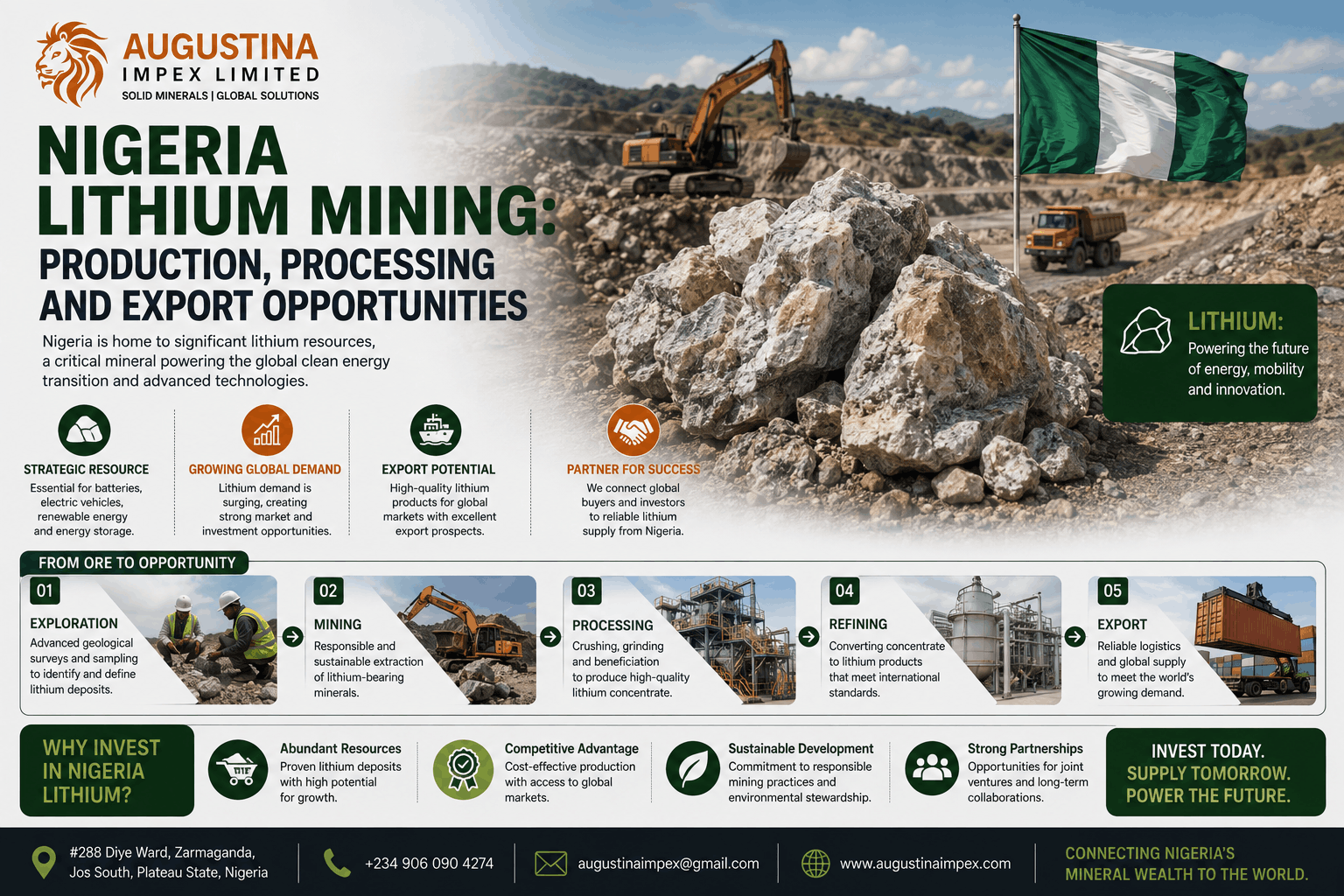
Nigeria Lithium Mining: Production, Processing & Export
Nigeria Lithium Mining: Production, Processing and Export Opportunities By Kolawole King, CEO — Augustina Impex…

Nigeria Rare Earth Minerals: Deposits & Market Potential
Nigeria Rare Earth Minerals: Deposits, Applications and Global Market Potential By Kolawole King, CEO —…
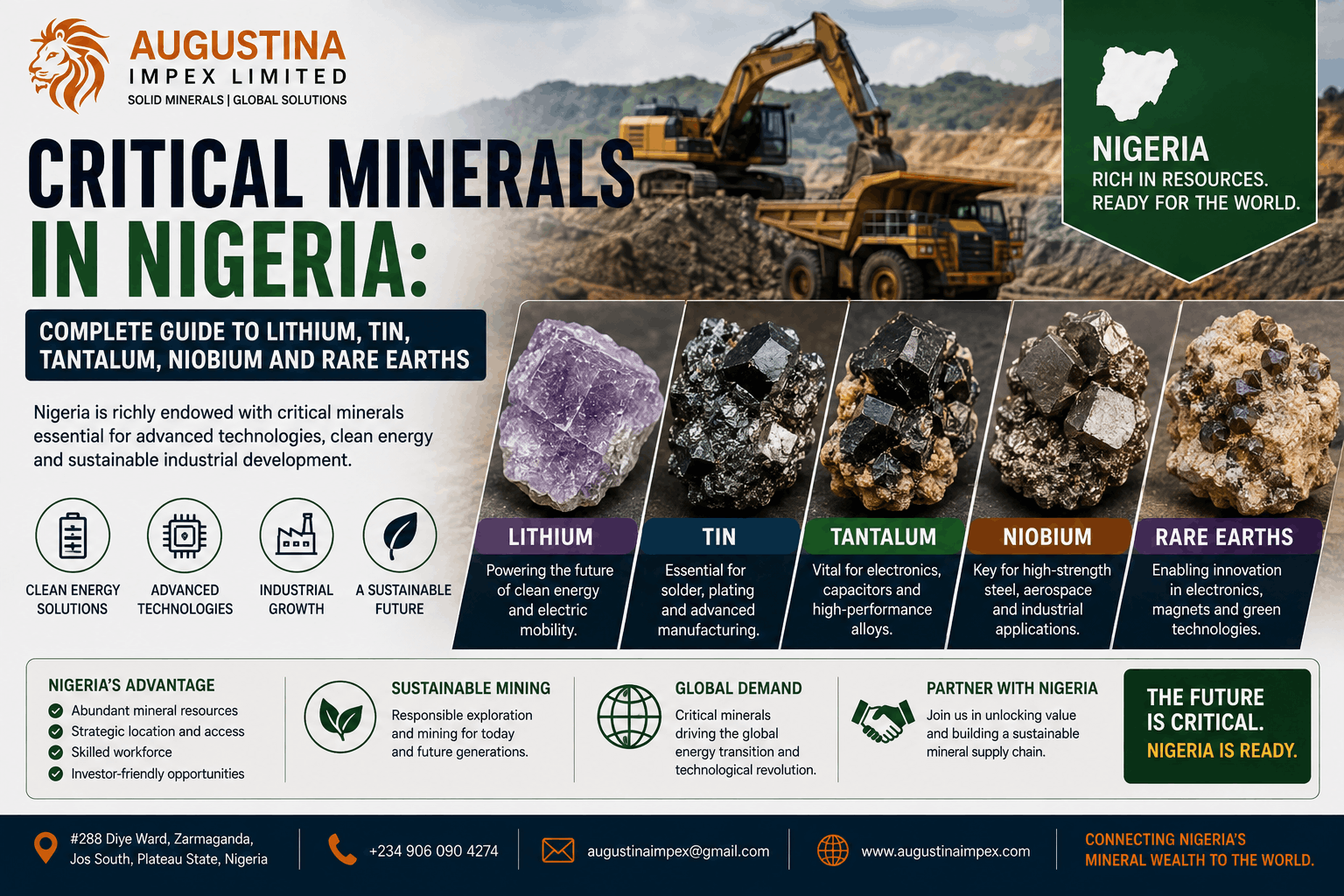
Nigeria Critical Minerals Guide: Lithium, Tin & Rare Earths
Critical Minerals in Nigeria: Complete Guide to Lithium, Tin, Tantalum, Niobium and Rare Earths By…
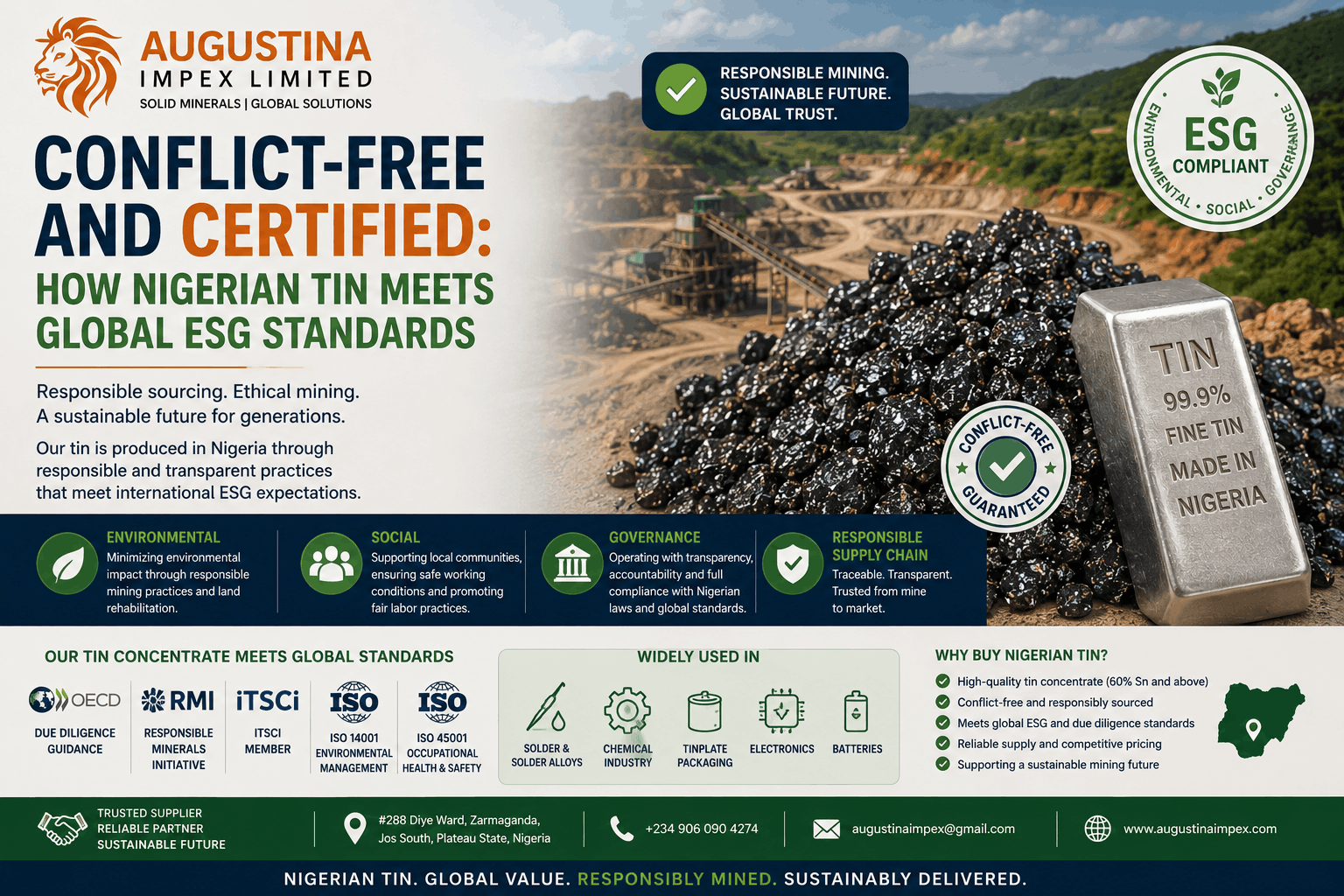
Conflict-Free Nigerian Tin Meets Global ESG Standards
Conflict-Free and Certified: How Nigerian Tin Meets Global ESG Standards By Kolawole King, CEO —…