
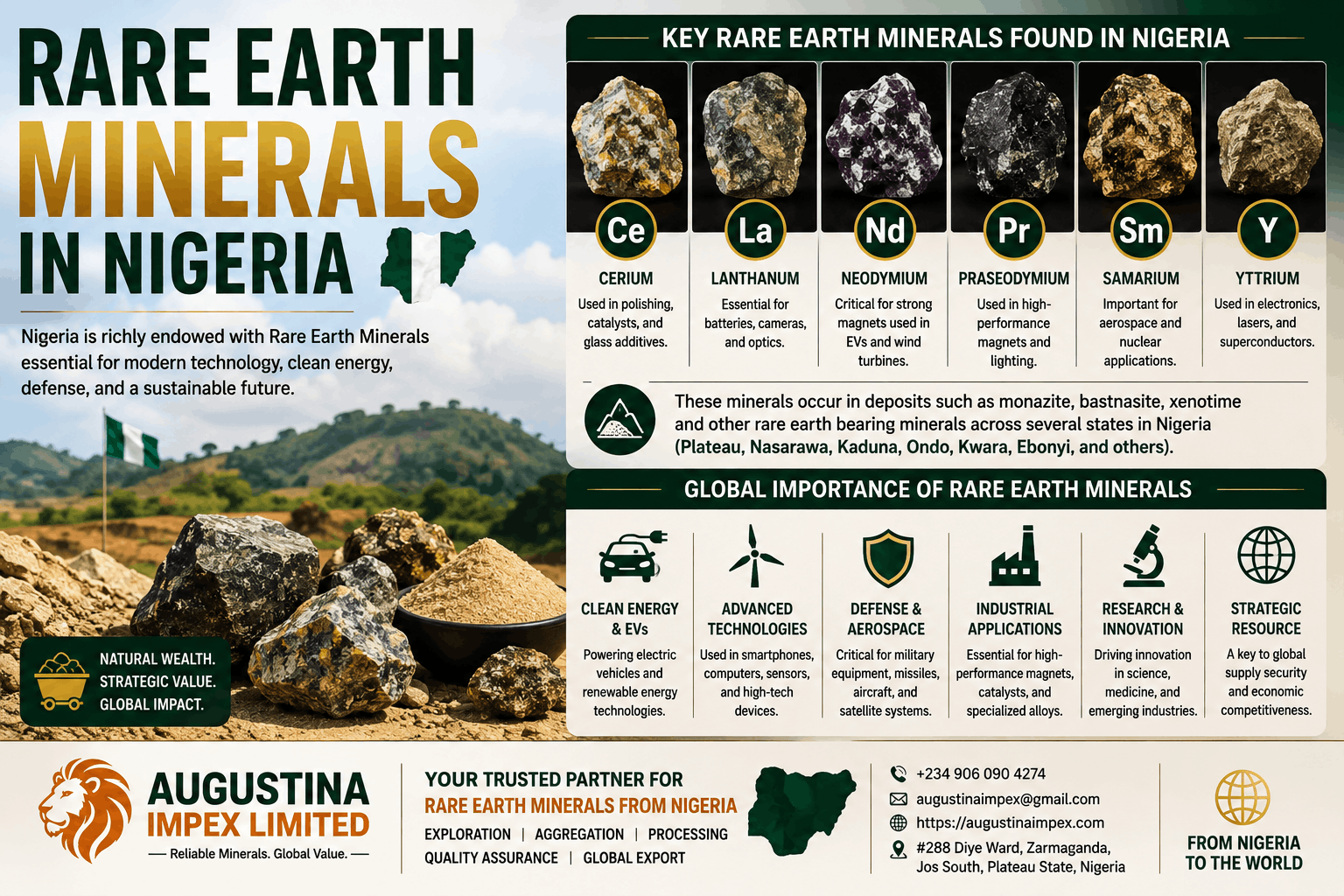
In a world racing toward electric vehicles, clean energy, and advanced electronics, rare earth minerals have moved from the margins of industrial chemistry to the very centre of the global resource agenda. These 17 elements — scattered across the bottom rows of the periodic table and hiding in plain sight within minerals that most people have never heard of — are the invisible foundation of the modern world. From the neodymium-iron-boron magnets spinning inside every electric vehicle motor, to the europium phosphors illuminating every LED screen, to the lanthanum compounds cracking crude oil in every major refinery, rare earth elements (REEs) are embedded in the infrastructure of 21st century civilisation in ways that are only now becoming widely understood.
And Nigeria — long perceived primarily as an oil nation — turns out to sit on some of the most interesting rare earth mineral resources in the world. The bastnasite carbonatite deposits of the Jos Plateau have been independently certified at TREO (Total Rare Earth Oxide) grades of 68% to 72%, with a confirmed NdPr (Neodymium-Praseodymium) fraction of approximately 21% — and, critically, with zero Thorium and zero Uranium across all tested pit samples. In a global rare earth market struggling to develop non-Chinese, non-radioactive alternatives to Chinese-dominated supply, that combination of grade, composition, and radiological cleanliness is genuinely remarkable.
This article is a complete guide to rare earth minerals in Nigeria — covering what they are, why they matter, where they are found in Nigeria, what grades are available, how they compare to global alternatives, what the regulatory framework for export looks like, and how international buyers can access Nigerian REE supply. It is written for buyers, refiners, investors, policymakers, and researchers who want to understand Nigeria’s rare earth story in depth — not just in headline terms, but with the scientific, commercial, and logistical detail that enables real decisions.
What Are Rare Earth Elements (REEs)?
Rare earth elements (REEs) are a group of 17 metallic elements comprising the 15 lanthanides (atomic numbers 57 through 71 on the periodic table) plus Scandium (Sc, Z=21) and Yttrium (Y, Z=39). The lanthanides are Lanthanum, Cerium, Praseodymium, Neodymium, Promethium, Samarium, Europium, Gadolinium, Terbium, Dysprosium, Holmium, Erbium, Thulium, Ytterbium, and Lutetium. Scandium and Yttrium are included in the REE group because they share similar chemical properties and are found in the same ore deposits as the lanthanides.
The name “rare earth” is something of a misnomer. REEs are not particularly rare in Earth’s crust — cerium is more abundant than copper, and neodymium is more abundant than gold. The “rare” in their name historically referred to the rarity of finding them in economically mineable concentrations and the difficulty of separating them from one another (they have very similar chemical properties). Today, the term persists for historical reasons, though the strategic rarity of REEs is very real — it lies in the geographic concentration of economically significant deposits and the extreme technical complexity of processing them.
Light REEs vs Heavy REEs
REEs are conventionally divided into two groups based on their atomic weight and their distribution in ore deposits:
Light Rare Earth Elements (LREEs): Lanthanum (La), Cerium (Ce), Praseodymium (Pr), Neodymium (Nd), Promethium (Pm), Samarium (Sm), and Europium (Eu). LREEs are more abundant in the Earth’s crust and in most ore deposits. They dominate the REE fraction of bastnasite and most carbonate-hosted REE ores. Neodymium and Praseodymium (collectively “NdPr”) are the most commercially valuable LREEs due to their essential role in NdFeB permanent magnet production.
Heavy Rare Earth Elements (HREEs): Gadolinium (Gd), Terbium (Tb), Dysprosium (Dy), Holmium (Ho), Erbium (Er), Thulium (Tm), Ytterbium (Yb), Lutetium (Lu), Yttrium (Y), and Scandium (Sc). HREEs are rarer and more difficult to process. Terbium and Dysprosium are particularly high-value HREEs, used as additives in NdFeB magnets to improve high-temperature performance in EV motor and wind turbine applications. China’s ion-adsorption clay deposits in Jiangxi Province are the dominant HREE source globally.
The 17 Rare Earth Elements — Complete Reference Table
| Element | Z | Class | Primary Industrial Application |
| Lanthanum (La) | 57 | Light REE (LREE) | Fluid cracking catalysts, La-NiMH batteries, optical glass |
| Cerium (Ce) | 58 | Light REE (LREE) | Auto catalytic converters, glass polishing, UV-blocking glass |
| Praseodymium (Pr) | 59 | Light REE (LREE) | NdFeB magnets (NdPr), high-strength alloys, aircraft engines |
| Neodymium (Nd) | 60 | Light REE (LREE) | NdFeB permanent magnets — EVs, wind turbines, speakers, HDDs |
| Samarium (Sm) | 62 | Light REE (LREE) | SmCo high-temperature magnets, cancer treatment (Sm-153) |
| Europium (Eu) | 63 | Light REE (LREE) | Red/blue phosphors in LED lighting and colour displays |
| Gadolinium (Gd) | 64 | Heavy REE (HREE) | MRI contrast agents, neutron shielding, magnetocaloric cooling |
| Terbium (Tb) | 65 | Heavy REE (HREE) | Green phosphors in LEDs; magnet additive for high-temp performance |
| Dysprosium (Dy) | 66 | Heavy REE (HREE) | NdFeB magnet additive for high-temperature EV motors |
| Holmium (Ho) | 67 | Heavy REE (HREE) | High-performance magnets, medical lasers |
| Erbium (Er) | 68 | Heavy REE (HREE) | Fibre-optic amplifiers, laser applications |
| Thulium (Tm) | 69 | Heavy REE (HREE) | Portable X-ray sources, high-power lasers |
| Ytterbium (Yb) | 70 | Heavy REE (HREE) | Fibre-optic amplifiers, atomic clocks |
| Lutetium (Lu) | 71 | Heavy REE (HREE) | PET scan scintillators, catalysts, LED phosphors |
| Yttrium (Y) | 39 | Heavy REE (HREE) | LED phosphors, YAG lasers, microwave filters, fuel cells |
| Scandium (Sc) | 21 | Heavy REE (HREE) | Aluminium-scandium alloys (aerospace), solid oxide fuel cells |
Note: Promethium (Pm, Z=61) is not listed as it has no stable isotopes and does not occur in commercially significant quantities in natural ore deposits. The 16 elements listed above represent the full commercial REE suite.
Why Rare Earth Elements Are Strategically Critical
The strategic importance of rare earth elements has escalated dramatically over the past decade, driven by the intersection of three powerful trends: the global clean energy transition, the digital revolution, and the geopolitics of supply chain dependency. Understanding why REEs matter requires understanding each of these trends.
The NdFeB Permanent Magnet Revolution
The single most important driver of REE demand is the neodymium-iron-boron (NdFeB) permanent magnet — the most powerful permanent magnet known to science, discovered in 1982. NdFeB magnets are the enabling technology in two of the defining industries of our era:
- Electric vehicles: Every electric vehicle using a permanent magnet synchronous motor (PMSM) — which includes most EVs made by Tesla, BYD, Toyota, Hyundai, GM, Ford, Volkswagen, and virtually every other major automaker — relies on NdFeB magnets in its traction motor. A single EV traction motor requires approximately 1 to 3 kg of NdFeB magnet material per unit, containing 25–32% NdPr by weight. Global EV production exceeded 14 million units in 2023 and is projected to reach 40+ million annually by 2030.
- Wind energy: Direct-drive wind turbines — the preferred design for offshore wind, where maintenance access is difficult and expensive — use NdFeB permanent magnet generators. A single 5 MW offshore wind turbine can require 600 to 900 kg of NdFeB magnet material. The global offshore wind buildout planned for the 2020s and 2030s will require hundreds of thousands of tonnes of NdPr oxide.
- Industrial motors and drives: High-efficiency permanent magnet motors are displacing conventional induction motors across industrial applications, from HVAC compressors to industrial robots to electric pumps. Each motor requires NdFeB magnets.
- Consumer electronics: Every smartphone speaker, earphone driver, hard disk drive read-write head, and vibration motor uses NdFeB magnets. Billions of devices per year.
The NdPr oxide that feeds NdFeB magnet production is sourced almost exclusively from bastnasite concentrate and separation plant output — making bastnasite the most strategically important rare earth ore mineral for the EV and clean energy economy.
The Supply Concentration Problem
China currently controls approximately 60% of global rare earth mining and more than 85% of global rare earth separation and processing capacity. This concentration is not accidental — it is the result of decades of deliberate policy, subsidised production, and investment in downstream processing capacity. China has also leveraged its REE dominance as a geopolitical tool, imposing export quotas in 2010 (triggering a WTO dispute) and more recently restricting exports of processed REE products in the context of US-China trade tensions.
The consequence is that the United States, the European Union, Japan, South Korea, Australia, and the United Kingdom have all classified rare earth elements as critical minerals representing national security risks. Governments have launched a series of initiatives — the US Critical Minerals Strategy, the EU Critical Raw Materials Act, the Japan-Australia Critical Minerals Partnership, and others — specifically aimed at developing non-Chinese REE supply chains.
Nigeria’s bastnasite rare earth concentrate, with its high TREO grade, commercially attractive NdPr distribution, and confirmed zero radioactivity, is an ideal candidate for the supply chain diversification agenda of these nations and their industrial partners.
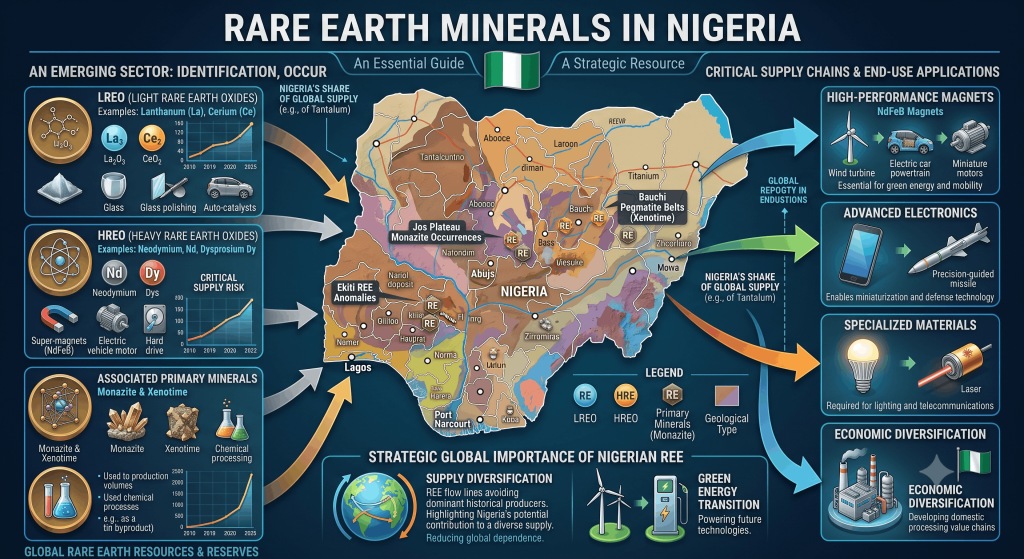
Nigeria’s Rare Earth Mineral Deposits: A Geological Overview
Nigeria’s rare earth mineral endowment is the product of a specific and favourable geological history. The country is underlain by a large portion of the West African Craton — an ancient stable block of Precambrian crystalline basement rock — overlaid by younger geological formations including Cretaceous sedimentary basins, Jurassic ring complexes, and coastal sedimentary sequences. Different REE mineral types are associated with different parts of this geological architecture.
Carbonatite-Hosted Bastnasite — The Jos Plateau
The most significant REE deposits in Nigeria are the carbonatite-hosted bastnasite occurrences of the Jos Plateau in Plateau State. Carbonatites are rare igneous rocks composed predominantly of carbonate minerals (calcite, dolomite, or ankerite) rather than the silicate minerals that make up most igneous rocks. They are the source of some of the world’s most important REE deposits, including the Mountain Pass deposit in California (USA) — historically the world’s largest REE mine outside China — and the Bayan Obo deposit in Inner Mongolia, China — the world’s largest REE deposit by reserves.
The Jos Plateau carbonatite bodies are associated with the Younger Granites — a suite of Jurassic ring complexes emplaced approximately 150 to 170 million years ago during the rifting of the African continent. These ring complexes created pathways for deep-seated carbonatitic magmas to intrude through the basement, bringing with them the REE-rich minerals that are now found at surface and near-surface in the Plateau region.
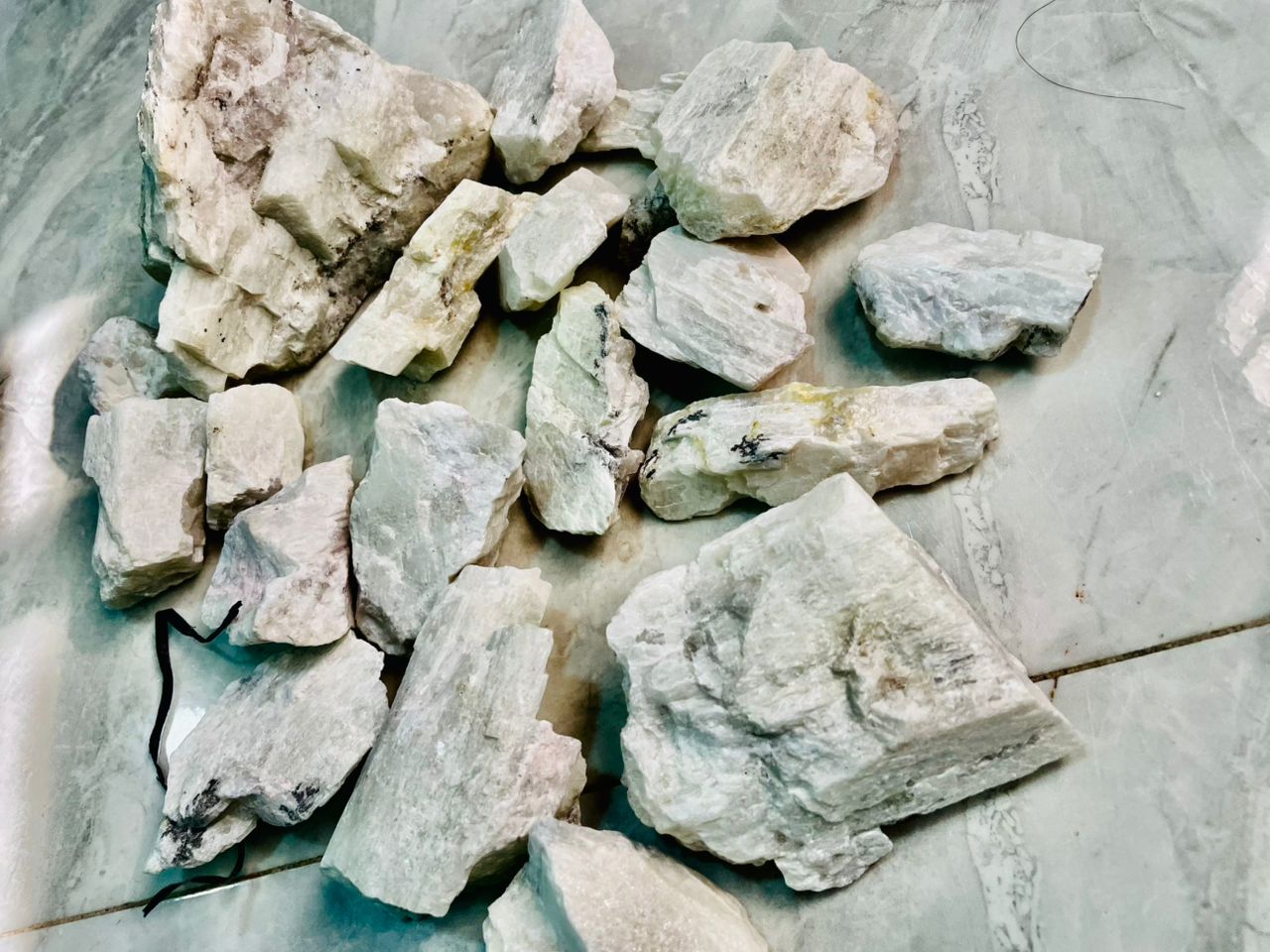
The bastnasite found in these carbonatite bodies is a rare earth fluoro-carbonate — chemically expressed as (Ce,La,Y)CO₃F — in which the rare earth elements are structurally incorporated into the crystal lattice of the carbonate mineral. This mineral form concentrates REEs to very high grades (68–72% TREO in the Jos material) and crucially, in a geological environment that is distinct from the thorium-rich monazite-bearing deposits found elsewhere in Nigeria and West Africa.
Monazite-Bearing Heavy Mineral Sand (HMS) Deposits
Nigeria’s second major REE mineral is monazite — a rare earth phosphate mineral (Ce,La,Nd,Th)PO₄ that occurs in heavy mineral sand (HMS) deposits along Nigeria’s southern coastline and the floodplains of major river systems. The key monazite-bearing states include Cross River, Delta, Ondo, Ogun, and Lagos States.
Monazite is an important REE ore mineral globally — it was historically the primary REE source before bastnasite deposits came to dominate production. However, monazite contains significant levels of Thorium (Th) and, to a lesser extent, Uranium (U) — naturally occurring radioactive materials (NORM) that complicate processing, transport, and import in many countries. Most advanced industrial nations impose strict regulatory controls on monazite imports due to its radioactive content.
Nigeria’s monazite exports therefore require compliance with the Nigerian Nuclear and Radiological Regulatory Authority (NNRA) — which issues export permits for NORM-classified minerals — as well as compliance with the import regulations of the destination country. Buyers importing Nigerian monazite must confirm their national regulatory requirements before concluding supply agreements.
Xenotime
Xenotime — yttrium phosphate (YPO₄) — is a heavy rare earth ore mineral that occurs in association with monazite in some Nigerian HMS deposits and in pegmatite systems in the basement complex states. Xenotime is the primary ore of Yttrium (Y) and is enriched in heavy REEs (Terbium, Dysprosium, Holmium, Erbium) relative to bastnasite and monazite. While xenotime deposits in Nigeria are less extensively documented than bastnasite and monazite, they represent a potentially significant HREE resource that warrants further exploration.
REE-Bearing Pegmatites
Nigeria’s extensive belt of Precambrian basement complex pegmatites — the same geological environment that hosts the country’s lithium spodumene deposits — also carries REE-bearing minerals, including gadolinite, allanite, and xenotime in some occurrences. These are not currently a significant commercial REE source in Nigeria but represent a longer-term exploration target as the sector matures.
Nigeria’s Flagship REE Product: Bastnasite Concentrate
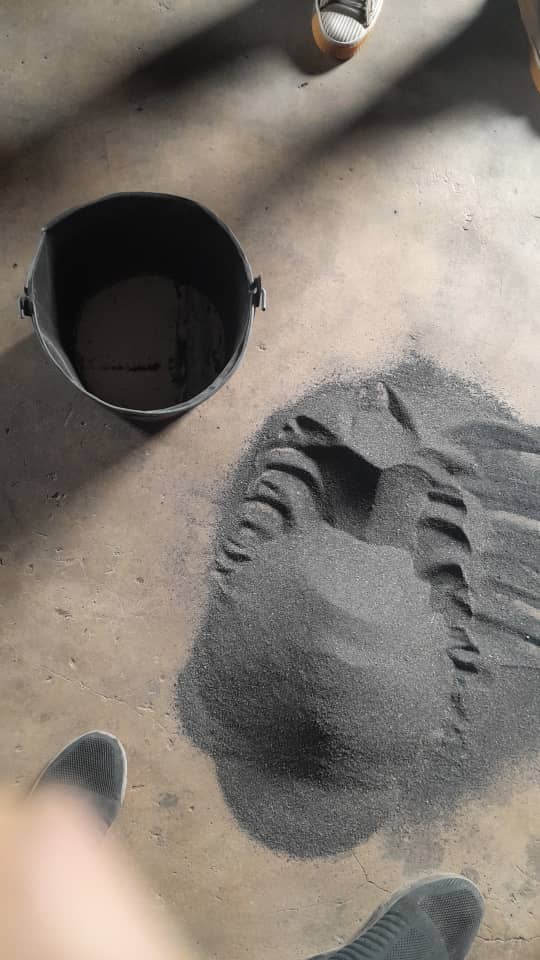
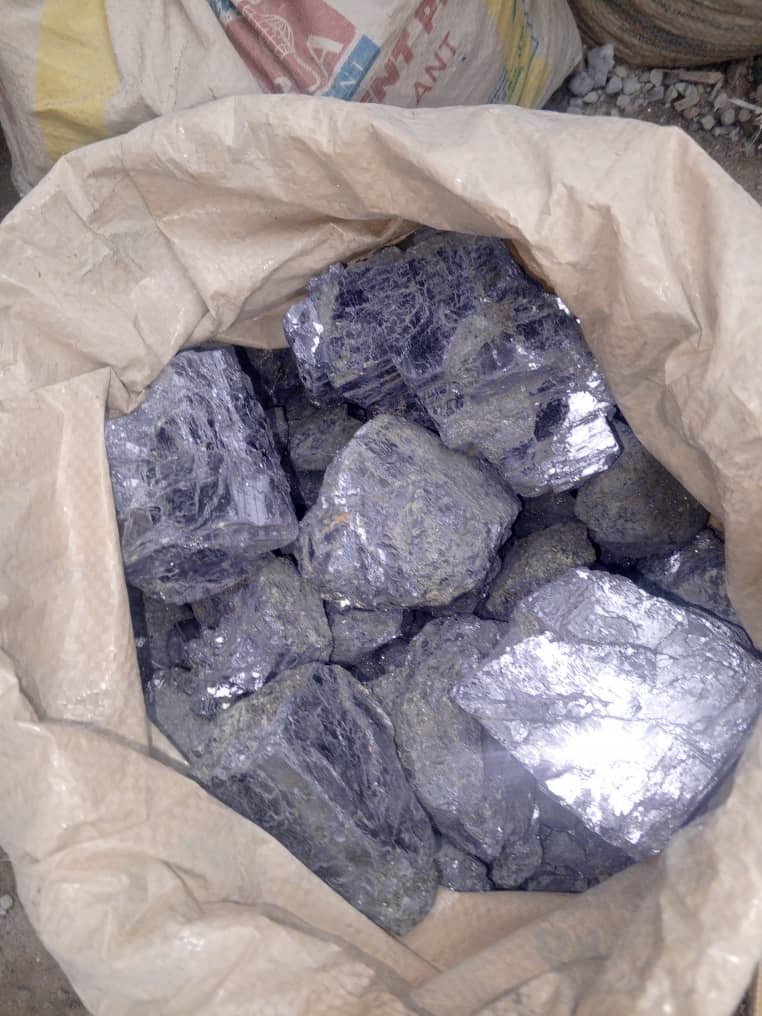
The commercial REE product that places Nigeria firmly on the global rare earth map is bastnasite concentrate — a processed mineral product derived from the carbonatite-hosted bastnasite ore of the Jos Plateau, beneficiated by physical separation methods (gravity, magnetic, and flotation) to produce a high-TREO concentrate suitable for direct export to rare earth separation facilities and refineries worldwide.
This material has been independently certified by Zirconex Mining and Metal Laboratory, Abuja — an ISO/IEC 17025 accredited analytical laboratory — across multiple pit samples from active production areas including Alluvial Deposit 0038, New Extraction Point TP003, Pit Old SM33, U-NM260716-04 Paul, and Pit SM01. The certification results confirm TREO grades of 68% to 72% — among the highest grades available in internationally traded bastnasite concentrate.
Certified Grade and Composition
The table below summarises the typical REE oxide composition of Nigerian bastnasite concentrate as confirmed by independent laboratory analysis:
| REE Component | Typical Grade (% of TREO) | Notes |
| Lanthanum Oxide (La₂O₃) | ~25% | Light REE; catalysts, optical glass |
| Cerium Oxide (CeO₂) | ~45% | Dominant by weight; catalysts, glass polishing |
| Praseodymium Oxide (Pr₆O₁₁) | ~5% | NdPr magnet feedstock |
| Neodymium Oxide (Nd₂O₃) | ~16% | Primary NdFeB magnet feedstock — highest-value fraction |
| Samarium Oxide (Sm₂O₃) | ~2% | SmCo magnets; niche specialty |
| Europium Oxide (Eu₂O₃) | ~0.1% | LED red phosphors; highest unit value REE |
| Other REOs (Gd, Tb, Dy, etc.) | Trace | Specialty HREEs; high unit value per kg |
| TREO (Total Rare Earth Oxide) | 68% – 72% | Confirmed by Zirconex Lab (ISO/IEC 17025) |
| Thorium (Th) | ZERO | Non-radioactive — confirmed nil Th across all pit samples |
| Uranium (U) | ZERO | Non-radioactive — confirmed nil U across all pit samples |
Source: Zirconex Mining and Metal Laboratory, Abuja (ISO/IEC 17025 accredited). Lab References: ZML047200726Bas-01, ZML047200726Bas-02, ZML047200726Bas-03 (dated 20 July 2026). Managed by Tulay Africa (www.tulay.africa), Jos Plateau operations.
The NdPr Significance
The most commercially significant fraction of Nigerian bastnasite concentrate is the NdPr (Neodymium + Praseodymium) content, which together constitute approximately 21% of the total TREO in the Jos material. This is commercially comparable to NdPr distributions in other major bastnasite deposits globally:
- Nigerian bastnasite (Jos Plateau): NdPr ≈ 21% of TREO — confirmed
- Mountain Pass (California, USA): NdPr ≈ 22–24% of TREO
- Mount Weld (Australia/Lynas): NdPr ≈ 23–25% of TREO
- Bayan Obo (China): NdPr ≈ 18–22% of TREO
This means that for every tonne of Nigerian bastnasite concentrate (at 70% TREO), approximately 147 kg of NdPr oxide equivalent can be expected after separation — the feedstock for the most valuable and most strategically important product in the rare earth market.
The Zero-Radioactivity Advantage
Perhaps the single most commercially and logistically significant characteristic of Nigerian bastnasite concentrate — beyond its high TREO grade — is its confirmed zero Thorium and zero Uranium content across all independently tested pit samples.
This is not a universal property of bastnasite globally. Some bastnasite deposits do contain detectable Thorium, though usually at lower levels than monazite. The complete absence of Th and U in Nigerian Jos Plateau bastnasite concentrate reflects the specific geochemistry of the local carbonatite system — a genuinely favourable geological characteristic that has major commercial implications:
- Unrestricted import access: Japan, South Korea, Taiwan, and most EU member states impose strict import restrictions on radioactive mineral concentrates. Nigerian bastnasite — with zero Th and zero U — is importable into these markets without the regulatory complications that restrict monazite and some other REE concentrates.
- Lower processing cost: Radioactive waste management at separation facilities is a significant cost item. Material with zero radioactivity eliminates this cost, improving the economics of Nigerian bastnasite processing relative to NORM-bearing alternatives.
- ESG compliance: Western REE consumers with ESG commitments face reputational and compliance risks from radioactive waste streams. Zero-radioactivity bastnasite eliminates this risk entirely.
- Shipping simplicity: Non-NORM material is not subject to the IAEA transport regulations that govern radioactive mineral shipments, simplifying logistics, documentation, and freight insurance.
Where Is Nigerian Bastnasite Produced? Key Locations
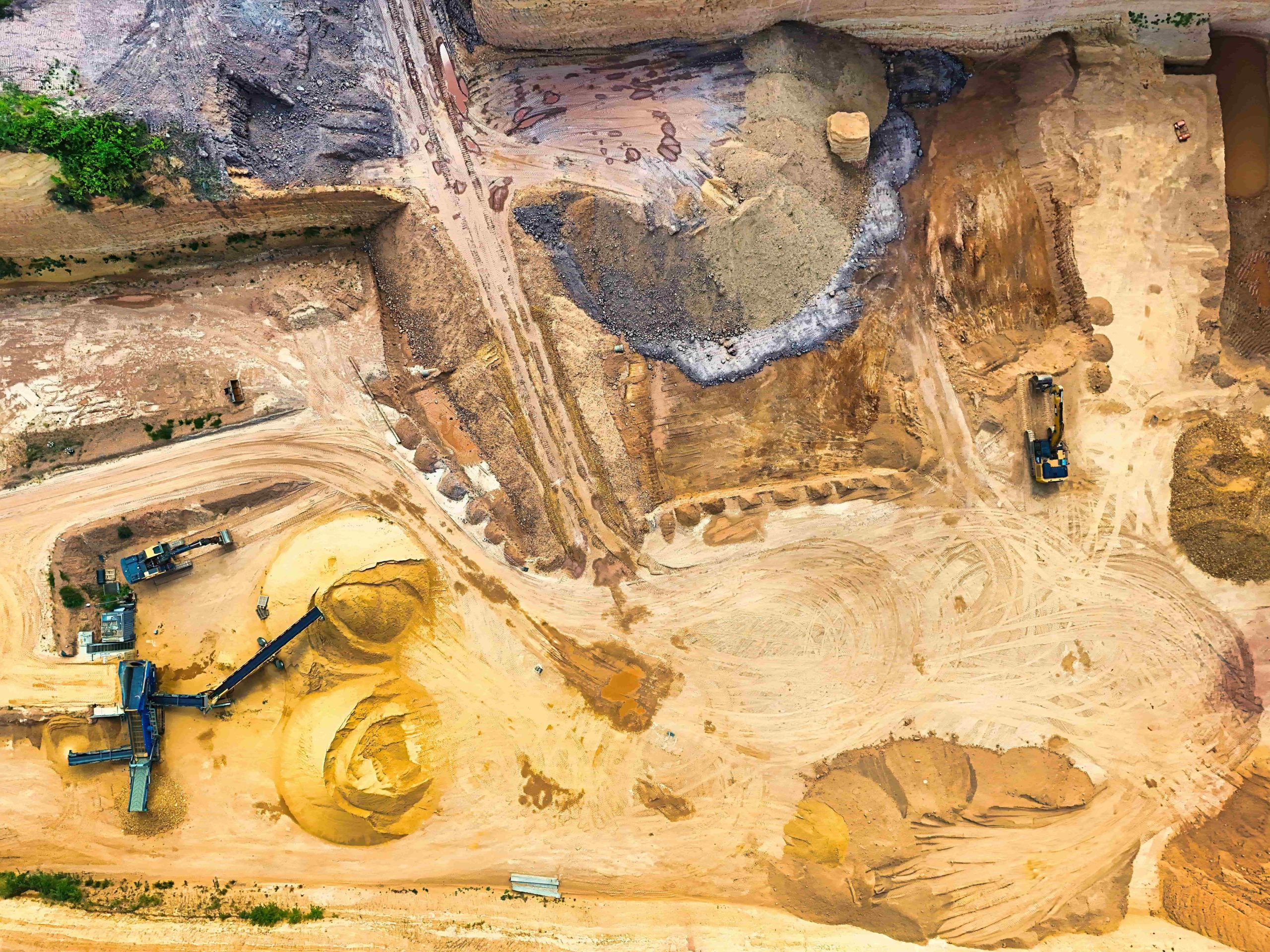
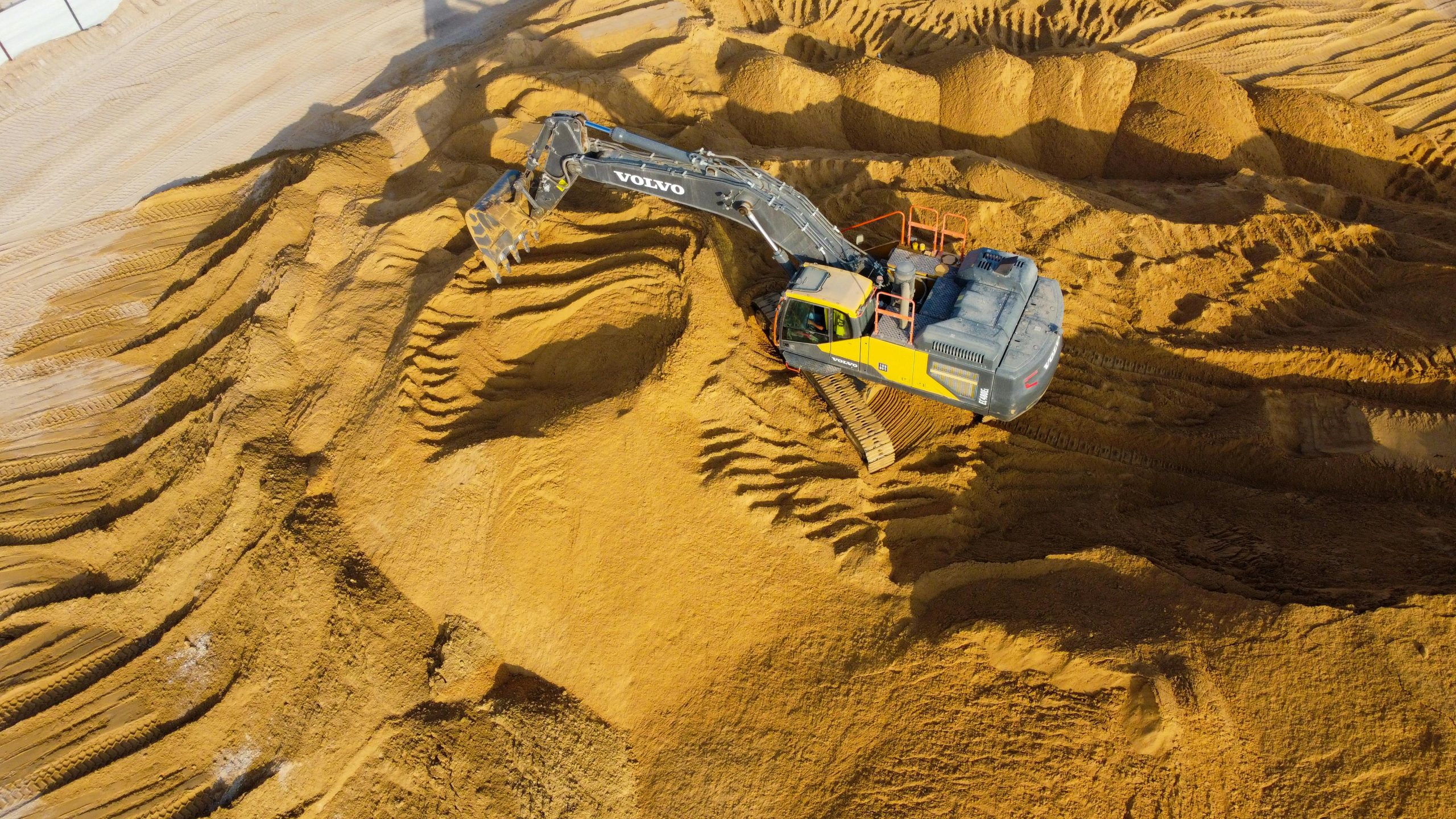
The active bastnasite production operation supplying Nigerian REE concentrate to international markets is managed by Tulay Africa (www.tulay.africa), a professionally managed Nigerian minerals company headquartered in Victoria Island, Lagos. Tulay Africa’s mining and processing operations are located in the Jos Plateau region of Plateau State, the heart of Nigeria’s historic and contemporary mining district.
Jos Plateau — Nigeria’s REE Capital
The Jos Plateau is a high-altitude tableland rising to over 1,200 metres above sea level in the North-Central region of Nigeria. It is the most mineralised single region in the country — hosting tin (cassiterite), coltan, lithium, wolframite, zircon, and rare earth minerals across an area of several thousand square kilometres. The plateau’s mining history dates to the early 20th century, when British colonial interests developed what was then one of the world’s most productive tin-mining districts.
The REE-bearing carbonatite bodies of the Jos Plateau occur as generally circular or elliptical intrusive bodies cutting through the Precambrian basement and Younger Granite ring complexes. The bastnasite mineralisation is typically found in disseminated form within the carbonatite matrix, concentrated by weathering and near-surface supergene processes to grades suitable for direct beneficiation.
Certified Production Sites (Tulay Africa Operations)
- Alluvial Deposit 0038: Certified TREO grade per ZML047200726Bas-01
- New Extraction Point TP003: Active production; certified per ZML047200726Bas-02
- Pit Old SM33: Legacy pit; certified per ZML047200726Bas-03
- U-NM260716-04 Paul: Secondary extraction site; certified
- Pit SM01: Active production pit; certified
All production is managed by licensed operators under FMMSD framework, with assay certification by Zirconex Mining and Metal Laboratory, Abuja (ISO/IEC 17025, accredited by SON — Standards Organisation of Nigeria).
Monazite Sand in Nigeria: The Alternative REE Mineral
Nigeria’s second REE commodity is monazite sand — a heavy mineral recovered from Heavy Mineral Sand (HMS) deposits along the country’s southern coastline and river systems. Monazite is a cerium-lanthanum-neodymium phosphate mineral with the general formula (Ce,La,Nd,Th)PO₄, and it is a significant source of REEs globally, particularly in countries like Australia, India, Brazil, and Malaysia.
Monazite Deposit Locations in Nigeria
Nigerian monazite-bearing HMS deposits are found primarily in the following states:
- Cross River State: Significant monazite concentrations in beach and river sand deposits; most advanced in terms of commercial development
- Delta State: Monazite in coastal and deltaic sediments along the Niger Delta margin
- Ondo State: Bitumen-associated coastal sand deposits also carry monazite
- Ogun and Lagos States: Coastal sand deposits with HMS mineral content including monazite
Monazite Grade and REE Content
Nigerian monazite sand typically carries Total Rare Earth Oxide (TREO) content of 55% to 65% — lower than bastnasite concentrate, but still commercially significant. The REE distribution in monazite differs from bastnasite, with a relatively higher Cerium content and a different La/Ce/Nd ratio. Nigerian monazite also carries Thorium (Th) content typically in the range of 3% to 8% ThO₂ — making it a NORM-classified material requiring specific regulatory handling.
NNRA Compliance for Monazite Export
All exports of Nigerian monazite sand must comply with the Nigerian Nuclear and Radiological Regulatory Authority (NNRA) export permit framework. The NNRA requires: (1) material characterisation and radioactivity assay; (2) compliance with IAEA transport standards (packaging, labelling, documentation); (3) pre-export NNRA inspection and permit issuance; and (4) confirmation that the importing country’s regulatory authority accepts the material. Licensed exporters must maintain NNRA compliance records for all shipments.
Buyers wishing to import Nigerian monazite should: confirm their national import regulations for NORM-classified minerals; engage an NNRA-compliant Nigerian exporter; and budget for the additional documentation, packaging, and regulatory costs associated with radioactive material export. Despite these additional steps, Nigerian monazite remains commercially competitive and can be a valuable feedstock for rare earth separation facilities equipped to handle thorium-bearing feeds.
TREO: What It Means and Why It Matters
TREO — Total Rare Earth Oxide — is the standard measure used in the rare earth industry to express the total concentration of all rare earth element oxides in a given ore or concentrate sample. It is calculated as the sum of the individual rare earth oxide (REO) concentrations as measured by assay: La₂O₃ + CeO₂ + Pr₆O₁₁ + Nd₂O₃ + Sm₂O₃ + Eu₂O₃ + Gd₂O₃ + Tb₄O₇ + Dy₂O₃ + Ho₂O₃ + Er₂O₃ + Tm₂O₃ + Yb₂O₃ + Lu₂O₃ + Y₂O₃ + Sc₂O₃.
TREO is the primary quality metric for rare earth mineral concentrates in international trade. A higher TREO means more rare earth content per tonne of material purchased — directly improving the economics of downstream processing. Nigerian bastnasite concentrate at 68–72% TREO is at the high end of the global range for bastnasite concentrates:
- Mountain Pass (USA) ore: ~8–9% TREO in run-of-mine ore; concentrate upgraded to 60–70%
- Mount Weld (Australia) ore: ~8–12% TREO in ore; concentrate to 40–45%
- Bayan Obo (China) ore: ~4–6% TREO in ore; concentrate typically 50–60%
- Nigerian bastnasite concentrate: 68–72% TREO — delivered as beneficiated concentrate, ready for separation
The distinction is important: Nigerian material is supplied as beneficiated concentrate — not as run-of-mine ore. Buyers receive a material that has already been processed to remove gangue minerals, maximising REE content and minimising the volume of material that needs to be shipped and processed. This improves the landed economics significantly compared to buying low-grade ore and processing it at the buyer’s facility.
Global REE Supply: Where Nigeria Fits
To properly understand Nigeria’s position in the global rare earth supply landscape, it is useful to compare the major current and emerging REE source geographies:
| Country / Source | Primary Ore Type | Volume / Share | Supply Risk Level |
| China | Bastnäsite, ion-adsorption clays | ~60% global mine production; ~85% processing | LOW (geopolitical/dominance risk) |
| USA (Mtn Pass) | Bastnäsite (carbonatite) | ~15% global production; ships to China for processing | MODERATE (processing dependency) |
| Australia (Lynas) | Bastnäsite (carbonatite) | ~10% global production; processes in Malaysia | MODERATE (single-country processing) |
| Myanmar | Ion-adsorption clays (HREEs) | ~8% global, particularly HREEs | HIGH (political instability) |
| Russia | Mixed deposits | ~2–3% global | HIGH (sanctions risk) |
| Nigeria (Emerging) | Bastnäsite (carbonatite, ZERO Th/U) | <1% currently; large growth potential | LOW (diversified, democratic, compliant) |
What the table makes clear is that Nigeria occupies a uniquely favourable position in the emerging non-Chinese REE supply landscape: high-grade, zero-radioactivity bastnasite concentrate, produced in a democratic, English-language country with an established export regulatory framework, and available for purchase under international commercial terms. This combination is genuinely rare in the global REE market today.
The Global REE Market: Demand Trends and Price Dynamics
NdPr Oxide — The Headline REE Product
The most closely watched REE price benchmark is NdPr oxide — the mixed neodymium-praseodymium oxide that is the direct feedstock for NdFeB magnet production. NdPr prices surged to approximately USD 150–175/kg in 2022 during the initial EV demand surge before moderating to USD 50–80/kg by 2024 as Chinese supply increased and EV demand temporarily softened. Analysts project a structural return to higher NdPr prices as EV production scales toward the volumes required by global net-zero commitments.
Supply Deficit Projections
Multiple independent analyses — from the IEA, BloombergNEF, Adamas Intelligence, and others — project that NdPr demand will outstrip supply from existing mines by the mid-to-late 2020s without significant new mine and processing capacity development. The IEA’s Sustainable Development Scenario projects a more than 6-fold increase in total REE demand by 2040 driven overwhelmingly by magnets for EVs and wind turbines.
This projected supply deficit is the commercial opportunity that makes Nigerian bastnasite concentrate commercially attractive now — not just as a niche curiosity, but as a real contribution to the supply chains that the global clean energy transition depends on.
Separation and Downstream Processing
Nigerian bastnasite concentrate is currently sold at the concentrate stage — i.e., the beneficiated ore ready for separation into individual rare earth oxides or metals. The separation process is technically demanding (involving solvent extraction, ion exchange, or ionic liquid separation) and is currently dominated by Chinese processing capacity. However, new separation facilities are being commissioned or planned in the USA (including at Mountain Pass and by multiple startup companies), Australia, Canada, Estonia, and elsewhere, specifically to create non-Chinese separation capacity for non-Chinese feedstocks.
Nigerian bastnasite concentrate is compatible with all standard hydrometallurgical separation flowsheets for bastnasite-type feeds, including sulphuric acid baking, caustic soda cracking, and hydrochloric acid leaching routes. Its zero Th and zero U content eliminates the need for radioactive waste management streams in the separation flowsheet — a significant processing cost advantage.
Regulatory Framework for REE Export from Nigeria
The export of Nigerian rare earth mineral concentrates operates within a well-defined multi-agency regulatory framework. Compliance with this framework is mandatory and is a condition of maintaining export authorisation. Licensed and compliant exporters provide buyers with a complete documentation package covering all regulatory requirements.
Federal Ministry of Mines and Steel Development (FMMSD)
The FMMSD regulates all mining operations in Nigeria under the Nigerian Minerals and Mining Act 2007. All mining companies must hold valid Mining Licences (ML), Small-Scale Mining Licences (SSML), or other relevant title instruments issued by the FMMSD. The ministry also coordinates mineral certification for export and enforces environmental and safety standards at mine sites.
Nigerian Export Promotion Council (NEPC)
All mineral exporters must be registered with the NEPC and hold a valid Export Registration Certificate (ERC). The NEPC promotes Nigerian mineral exports through market intelligence, trade facilitation, and international trade mission participation. The NEPC RE (Registered Exporter) number must appear on all export documentation.
Nigerian Export Supervision Scheme (NESS)
NESS is administered by the Central Bank of Nigeria (CBN) through approved Pre-Shipment Inspection Agents (PSIA) — specifically CCIC, SGS, and Bureau Veritas in the minerals sector. The NESS Certificate is required for all exports and is the mechanism through which mineral export proceeds are repatriated through the Nigerian banking system. Pre-shipment inspection confirms quantity, quality, and specification before loading.
Nigerian Nuclear and Radiological Regulatory Authority (NNRA)
NNRA export permits are required for all NORM-classified minerals — including monazite, xenotime, and any other radioactive mineral concentrate. Bastnasite concentrate with confirmed zero Th and zero U is NOT classified as NORM and does not require an NNRA permit — this is a significant regulatory simplification that expedites export logistics for Nigerian bastnasite relative to monazite.
Standard Export Documentation Package
A complete Nigerian REE concentrate export documentation package includes:
- Commercial Invoice (seller to buyer)
- Packing List
- Bill of Lading (issued by shipping line at port of loading)
- Certificate of Origin (issued by Plateau State Chamber of Commerce or NEPC)
- NESS Pre-Shipment Inspection Certificate (SGS / CCIC / Bureau Veritas)
- Independent Assay Certificate (Zirconex or equivalent ISO/IEC 17025 lab)
- NEPC Export Registration Certificate
- Form NXP (Nigeria Export Proceeds form, CBN)
- NNRA Export Permit (for monazite/NORM only; not required for zero-Th/U bastnasite)
How International Buyers Can Source Nigerian REE Concentrate
For international rare earth buyers — separation plants, trading companies, procurement offices, and government strategic stockpile programmes — the process for sourcing Nigerian bastnasite concentrate from a professional, licensed exporter follows a structured commercial framework designed to assure quality, quantity, and regulatory compliance.
Step 1: Buyer Specification and Enquiry
Buyers should submit a clear specification enquiry including: required TREO grade range; REE oxide distribution requirements (particularly NdPr% of TREO); required quantity (trial shipment and monthly volume); preferred incoterm (EXW Nigeria, FCA Nigerian port, or CIF destination port); required inspection and certification (SGS, CCIC, Bureau Veritas); and any specific radioactivity or NORM-related requirements.
Step 2: Soft Corporate Offer (SCO)
The seller issues a Soft Corporate Offer (SCO) within 48 hours of receiving buyer specifications. The SCO confirms product availability, grade certification, price basis, incoterms, payment terms, and the inspection and documentation package that will accompany the shipment. The SCO is valid for 30 days and invites the buyer to issue a Letter of Intent (LOI) or Buyer’s Offer to proceed.
Step 3: Trial Shipment
For new commercial relationships, a trial shipment of 1 to 5 metric tonnes is typically agreed before moving to contract quantities. The trial shipment includes a full documentation package — SGS/CCIC pre-shipment inspection certificate, independent assay certificate, certificate of origin, and all export documents. This allows the buyer to independently verify the grade and properties of the material before committing to larger volumes.
Step 4: Supply Contract
Upon successful trial shipment verification, buyer and seller execute a mineral supply contract covering: monthly supply volume and schedule; product specification and quality guarantees; price basis and adjustment mechanism; inspection and sampling protocol; payment terms (100% T/T advance or as negotiated); shipment and logistics arrangements; and force majeure and dispute resolution provisions.
Step 5: Ongoing Supply
Each shipment under the supply contract is accompanied by a fresh SGS/CCIC pre-shipment inspection certificate and Zirconex assay certificate confirming the specific lot’s grade and properties. Payment is typically settled before loading under T/T advance terms, or by irrevocable letter of credit (LC) for established relationships. Incoterm options include EXW (Ex Works, Nigeria), FCA (Free Carrier, Nigerian export port), or CIF (Cost, Insurance, and Freight to destination port).
Frequently Asked Questions: Rare Earth Minerals in Nigeria
What rare earth minerals are found in Nigeria?
Nigeria’s principal rare earth minerals are bastnasite (a rare earth fluoro-carbonate found in carbonatite deposits of the Jos Plateau), monazite (a rare earth phosphate found in heavy mineral sand deposits of southern Nigeria), and xenotime (a yttrium-heavy REE phosphate associated with some Nigerian pegmatite and HMS deposits). The commercially most significant is Jos Plateau bastnasite concentrate, certified at 68–72% TREO with zero Thorium and zero Uranium.
What is the TREO grade of Nigerian bastnasite?
Nigerian bastnasite concentrate from Jos Plateau carbonatite operations has been independently certified by Zirconex Mining and Metal Laboratory, Abuja (ISO/IEC 17025 accredited) at TREO grades of 68% to 72% across multiple pit samples. This is a high-grade product comparable to the leading bastnasite concentrate sources globally.
Is Nigerian rare earth concentrate radioactive?
Nigerian bastnasite concentrate from Jos Plateau operations has returned confirmed zero Thorium and zero Uranium across all independently tested pit samples — making it a non-NORM material that can be imported without radioactive material permits in most jurisdictions. This contrasts with Nigerian monazite, which contains Thorium (typically 3–8% ThO₂) and requires NNRA export permits and IAEA-compliant transport packaging.
Where can I buy Nigerian rare earth concentrate?
Nigerian rare earth concentrate can be sourced from licensed and NEPC-registered mineral export companies. Augustina Impex Limited (www.augustinaimpex.com) is a fully licensed Nigerian solid minerals export company with access to certified bastnasite concentrate supply from Tulay Africa’s Jos Plateau operations. Contact us at augustinaimpex@gmail.com or WhatsApp +234 906 090 4274 to receive a Soft Corporate Offer (SCO) with full certified specifications.
What is the NdPr content of Nigerian bastnasite?
NdPr (the commercially most valuable rare earth fraction — Neodymium + Praseodymium oxide combined) constitutes approximately 21% of the TREO in Nigerian Jos Plateau bastnasite concentrate. At a TREO of 70%, this equates to approximately 14.7% NdPr oxide by weight of concentrate — a commercially competitive NdPr yield.
What incoterms are available for Nigerian REE concentrate exports?
Nigerian bastnasite concentrate is available on EXW (Ex Works, Jos Plateau processing facility), FCA (Free Carrier, Apapa Port Lagos or Tin Can Island Port Lagos), and CIF (Cost, Insurance, and Freight to buyer’s destination port) terms. The standard default is EXW or FCA. CIF pricing is available for established buyers with agreed freight and insurance arrangements.
What is the minimum order quantity for Nigerian bastnasite concentrate?
Trial shipments of 1 to 5 metric tonnes are available for new buyers wishing to conduct independent assay verification before committing to contract volumes. Ongoing monthly supply under contract typically starts at 20 to 50 metric tonnes per month, scalable to larger volumes subject to production schedule and advance notice.
How does Nigerian bastnasite compare to Chinese rare earth ore?
Nigerian bastnasite concentrate compares favourably to Chinese bastnasite on TREO grade (68–72% vs typical Chinese commercial product at 50–65%), on radioactivity (Nigerian material: zero Th/U vs some Chinese material: trace Th), and on supply chain risk (Nigeria: democratic, diversified supply; China: dominant with documented geopolitical supply restriction history). For buyers specifically seeking a non-Chinese rare earth feedstock, Nigerian bastnasite is one of the most commercially attractive options currently available on the global market.
Conclusion: Nigeria’s Rare Earth Moment Has Arrived
For decades, Nigeria’s rare earth potential was a geological fact that the mineral industry largely overlooked — too focused on the country’s oil wealth to pay attention to what was happening in its ancient basement rocks and carbonatite intrusions. That era of neglect is ending, and ending rapidly, for reasons that are structural rather than cyclical.
The clean energy transition has made NdPr oxide — the magnet metal at the heart of every EV motor and wind turbine — one of the most strategically sought-after commodities in the world. The geopolitical tension around China’s REE dominance has made non-Chinese, non-radioactive, high-grade rare earth concentrate an almost uniquely scarce resource. And Nigeria’s bastnasite — 68–72% TREO, zero Thorium, zero Uranium, certified by an ISO-accredited laboratory, produced by licensed operators under FMMSD/NEPC/NESS compliance — fits that description precisely.
The opportunity is real, it is timely, and it is open to the right buyers. Whether you are a rare earth separation plant seeking reliable non-Chinese feedstock, a trading company building a diversified REE portfolio, a government strategic minerals programme, or an industrial consumer with supply chain resilience objectives, Nigerian bastnasite concentrate offers something that is genuinely difficult to find anywhere else on the global market today: a high-grade, zero-radioactivity, commercially certified, politically stable rare earth concentrate from a supplier who can deliver with full documentation, third-party inspection, and professional contract terms.
Augustina Impex Limited is a fully registered and NEPC-licensed Nigerian solid minerals export company headquartered in Jos, Plateau State, at the epicentre of Nigeria’s rare earth district. We are the commercial gateway to certified Nigerian bastnasite concentrate, with direct access to Tulay Africa’s Jos Plateau production operations and full supply chain management from mine to port.
To receive a Soft Corporate Offer (SCO) for Nigerian bastnasite concentrate or monazite sand, or to discuss your rare earth sourcing requirements in detail, please contact us:
- Website: www.augustinaimpex.com
- Email: augustinaimpex@gmail.com
- WhatsApp: +234 906 090 4274
- Blog: https://augustinaimpexng.blogspot.com/
“Connecting Nigeria’s Mineral Wealth to the World — with Transparency, Reliability, and Professionalism.”
-
Previous Post
Critical Minerals in Nigeria and Their Global Importance
Post a comment
Related Posts
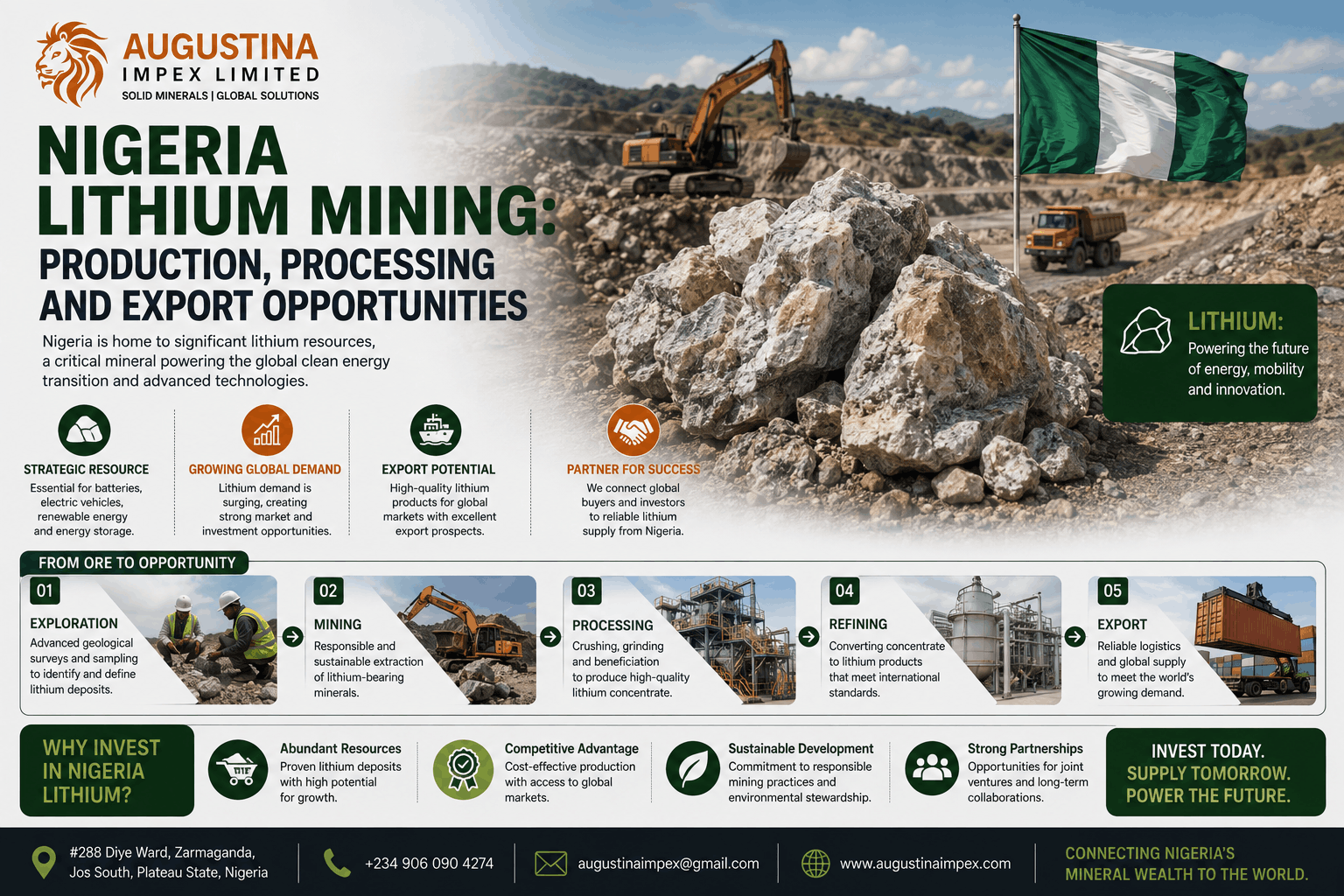
Nigeria Lithium Mining: Production, Processing & Export
Nigeria Lithium Mining: Production, Processing and Export Opportunities By Kolawole King, CEO — Augustina Impex…

Nigeria Rare Earth Minerals: Deposits & Market Potential
Nigeria Rare Earth Minerals: Deposits, Applications and Global Market Potential By Kolawole King, CEO —…
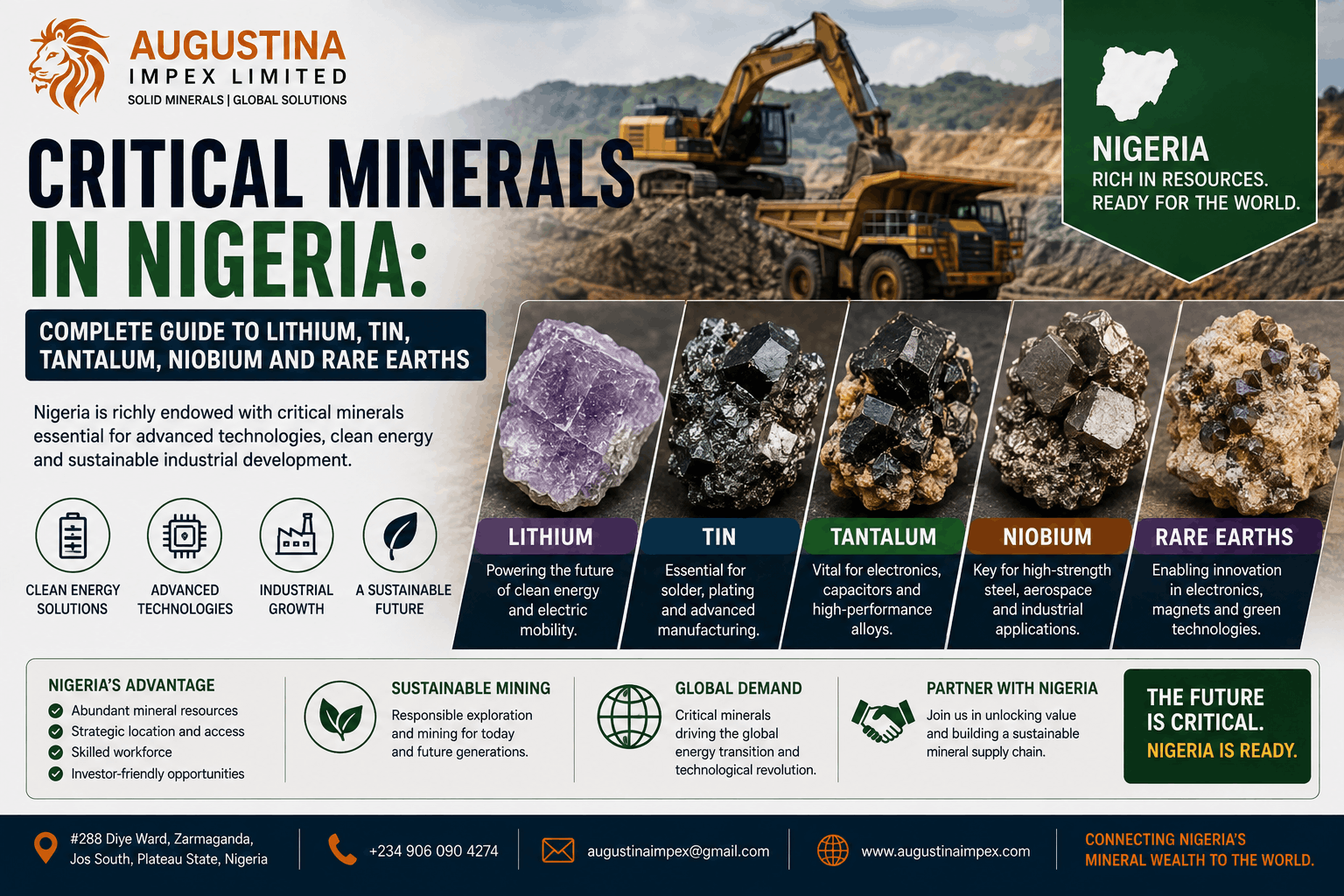
Nigeria Critical Minerals Guide: Lithium, Tin & Rare Earths
Critical Minerals in Nigeria: Complete Guide to Lithium, Tin, Tantalum, Niobium and Rare Earths By…
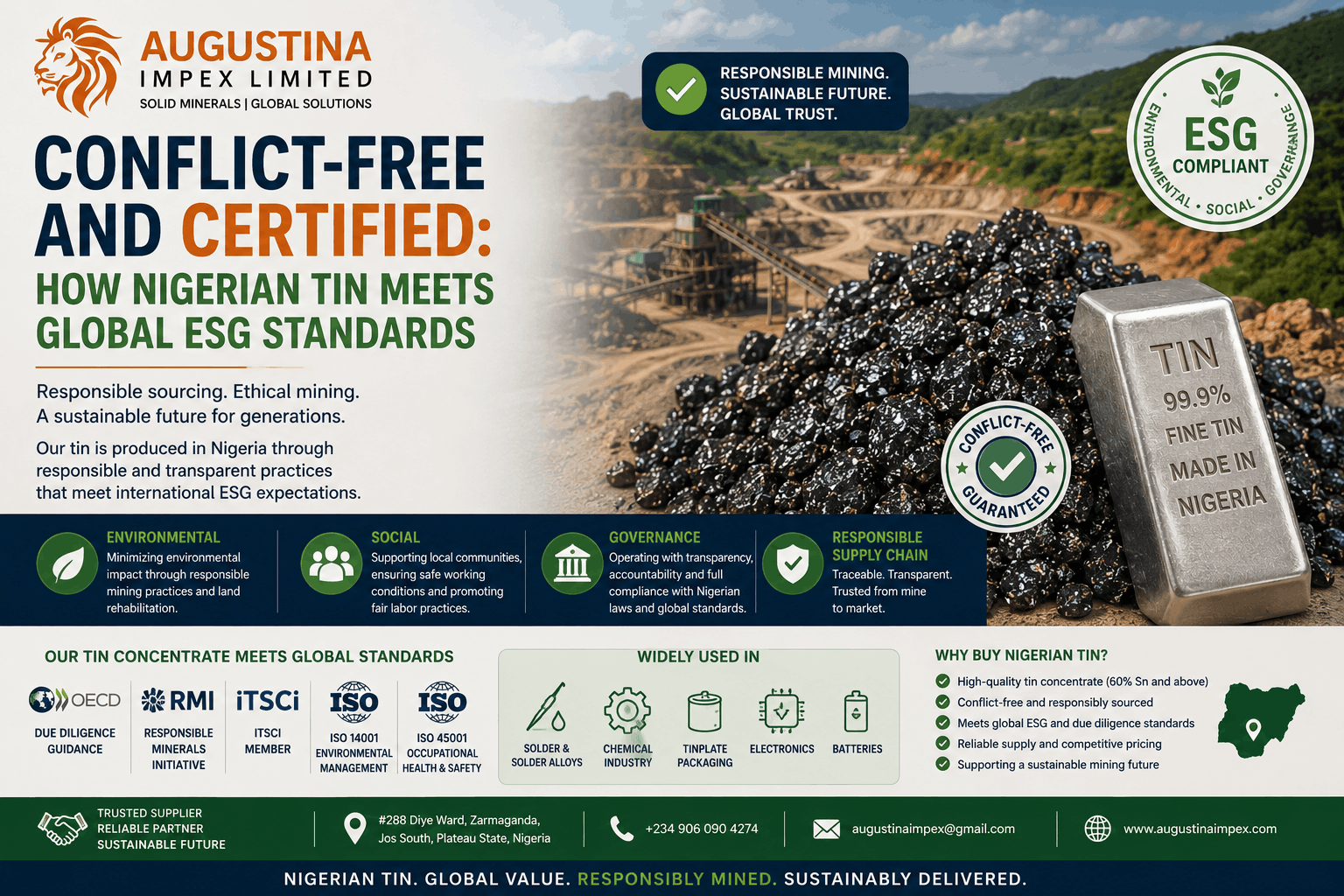
Conflict-Free Nigerian Tin Meets Global ESG Standards
Conflict-Free and Certified: How Nigerian Tin Meets Global ESG Standards By Kolawole King, CEO —…