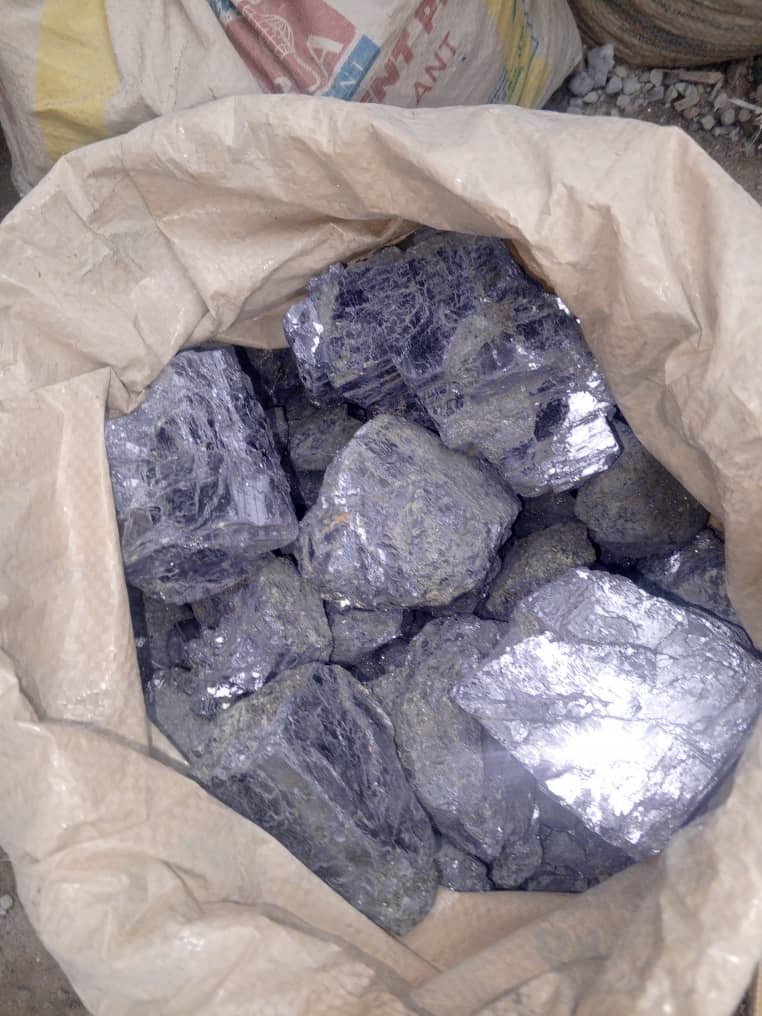

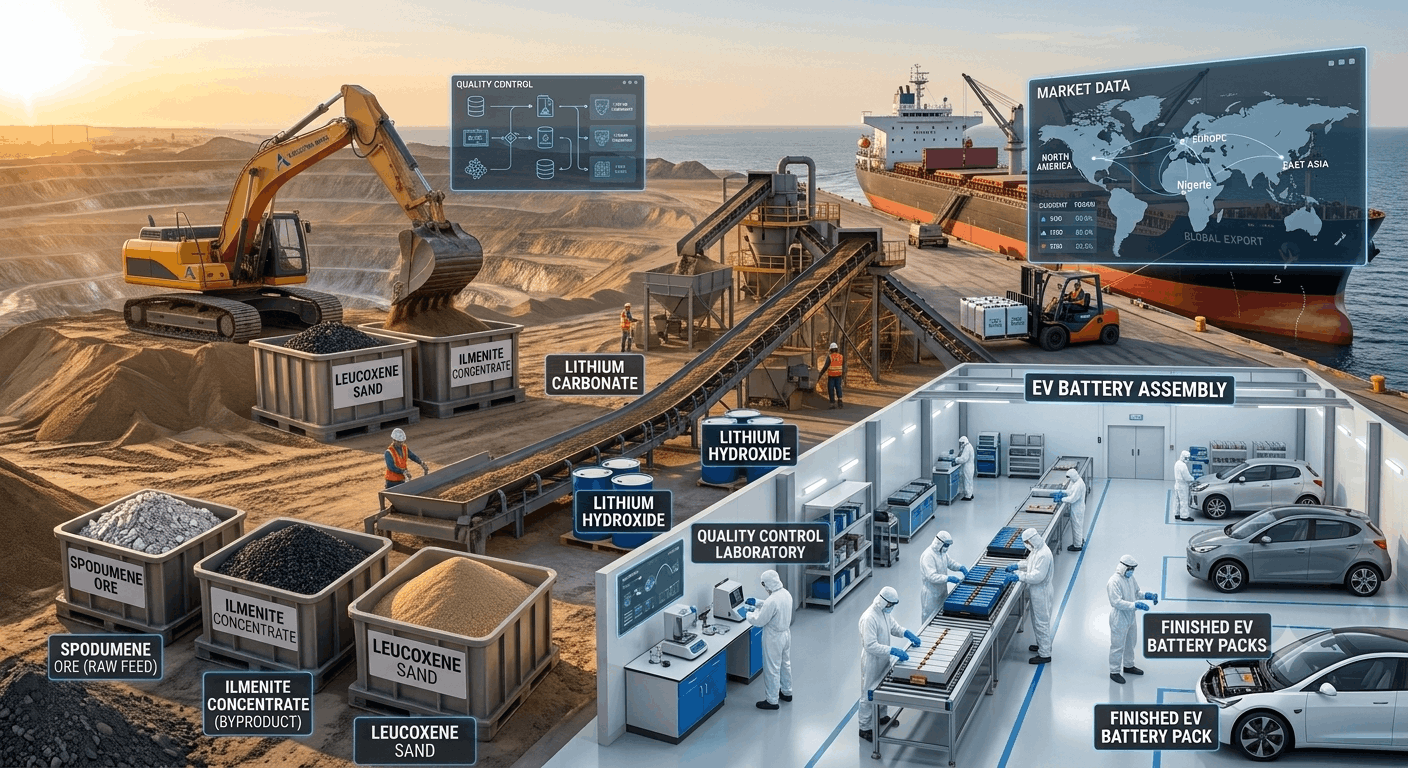
Inside every electric vehicle on the road today — in the battery that stores the energy, drives the motor, and makes the revolution in transportation possible — there is lithium. And for an increasing share of that lithium, the journey began not in a salt flat in Chile or Argentina, but in the hard, grey crystalline rock of a pegmatite mine somewhere in Australia, Zimbabwe, Canada, or Nigeria. That rock is spodumene, and the story of how it becomes the battery-grade lithium chemicals that power our electric future is one of the most technically sophisticated and commercially important industrial processes in the global critical minerals sector.
Spodumene is a lithium aluminium silicate mineral — LiAl(Si2O6) — and it is the world’s dominant hard-rock source of lithium, accounting for the majority of the lithium produced outside of South American brine operations. But extracting the lithium locked within spodumene’s crystalline lattice is far from a simple operation. The mineral must be mined, crushed, concentrated, thermally transformed, chemically processed through multiple reaction and purification stages, and finally crystallised and dried before it emerges as the high-purity lithium carbonate (Li2CO3) or lithium hydroxide monohydrate (LiOH·H2O) that battery manufacturers demand.
This article traces that entire journey in comprehensive technical detail — from spodumene ore in the ground to battery-grade lithium chemical in a drum — explaining the chemistry, the engineering, the quality requirements, the commercial landscape, and the role that emerging producers like Nigeria can play in the global spodumene supply chain. Whether you are a minerals trader, an EV industry professional, a battery materials researcher, or an investor seeking to understand the lithium value chain from first principles, this guide will equip you with a thorough and practical understanding of one of the most important industrial processes of the 21st century.
1. What Is Spodumene? Mineralogy, Properties, and Lithium Content
Spodumene is a pyroxene mineral belonging to the monoclinic crystal system, with the chemical formula LiAl(Si2O6) — lithium aluminium inosilicate. It is one of three principal lithium-bearing minerals found in lithium-caesium-tantalum (LCT) granitic pegmatites, the other two being lepidolite (a lithium-bearing mica) and petalite (LiAlSi4O10). Among these, spodumene is by far the most commercially important lithium mineral due to its high lithium content, its amenability to processing, and its abundance in economically workable hard-rock deposits.
The theoretical Li2O content of pure spodumene is 8.03% by weight — one of the highest lithium concentrations achievable in a naturally occurring silicate mineral. However, run-of-mine spodumene ore from operating mines contains far less lithium: typical ore grades range from 0.6% to 3.0% Li2O for bulk mining operations, with higher-grade zones within individual pegmatite bodies potentially reaching 4% to 6% Li2O. The ore must be beneficiated to produce a spodumene concentrate — typically grading 6.0% to 7.5% Li2O — before chemical processing can begin.
Spodumene occurs in two principal polymorphic forms, and the distinction between them is of critical practical importance for the processing industry. Alpha-spodumene (alpha-LiAl(Si2O6)) is the naturally occurring, thermodynamically stable, high-density form found in pegmatite deposits. It has a compact, monoclinic crystal structure in which the lithium ions are tightly held in a relatively inaccessible lattice — making them highly resistant to leaching and chemical extraction at ambient temperatures and pressures. Beta-spodumene (beta-LiAl(Si2O6)) is a metastable, lower-density polymorph that forms when alpha-spodumene is heated above approximately 1,050 to 1,100 degrees Celsius. Beta-spodumene has a more open crystal structure (it is isostructural with keatite) in which the lithium ions are far more accessible to chemical attack — making it the required intermediate for efficient lithium extraction.
This polymorphic transformation — the conversion of alpha-spodumene to beta-spodumene by high-temperature calcination — is the single most important and defining step in the entire spodumene processing chain. Without it, efficient lithium extraction is essentially impossible. With it, the door opens to a series of well-understood chemical processes that can deliver battery-grade lithium chemicals with remarkable purity and consistency.
| Property | Alpha-Spodumene | Beta-Spodumene |
| Crystal System | Monoclinic (C2/c) | Monoclinic (keatite-type) |
| Density | 3.03 – 3.23 g/cm3 | 2.38 – 2.40 g/cm3 (less dense) |
| Li2O Content (theor.) | 8.03% | 8.03% (same composition, different structure) |
| Lithium Accessibility | Low — tight lattice | High — open, reactive lattice |
| Transformation Temp. | Stable at ambient conditions | Forms above ~1,050–1,100 degrees C |
| Industrial Role | As-mined mineral in concentrate | Intermediate for chemical processing |
| Leachability | Poor — resists acid/alkali attack | Excellent — rapidly leached by H2SO4 |
2. Mining Spodumene — From Pegmatite to Run-of-Mine Ore
Spodumene deposits are found exclusively within lithium-caesium-tantalum (LCT) granitic pegmatites — highly differentiated, coarse-grained igneous rocks that form from the last, lithium-enriched fractions of granitic magmas as they crystallise and cool. Pegmatites are characterised by exceptionally large crystal sizes (individual spodumene crystals in some deposits exceed one metre in length), a distinctive mineralogy that includes not only spodumene but also associated minerals such as quartz, feldspar, lepidolite, tourmaline, cassiterite, coltan, and beryl, and a tabular to irregular body geometry that can be steeply dipping, sub-horizontal, or highly contorted depending on the structural setting of the host terrane.
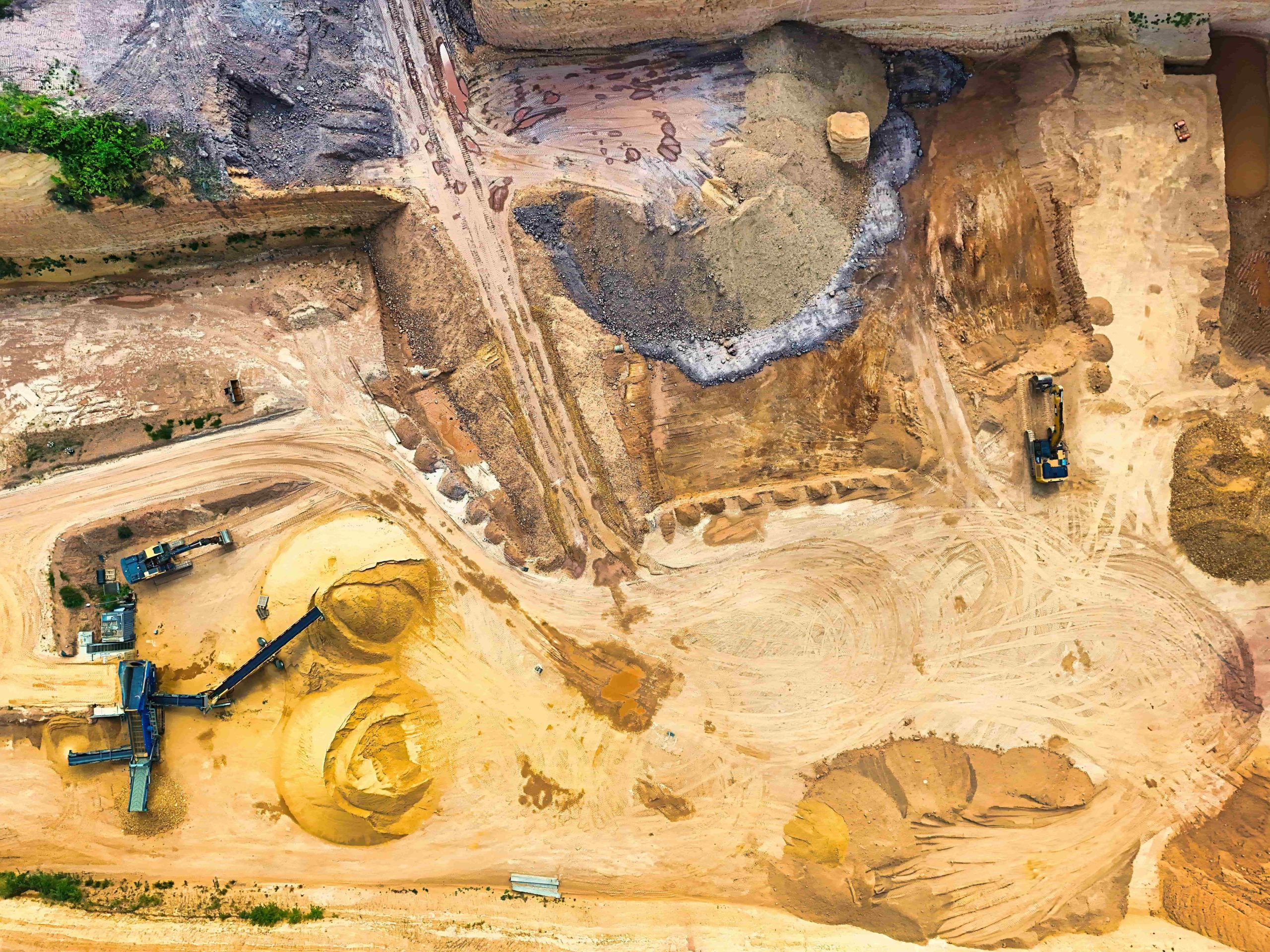
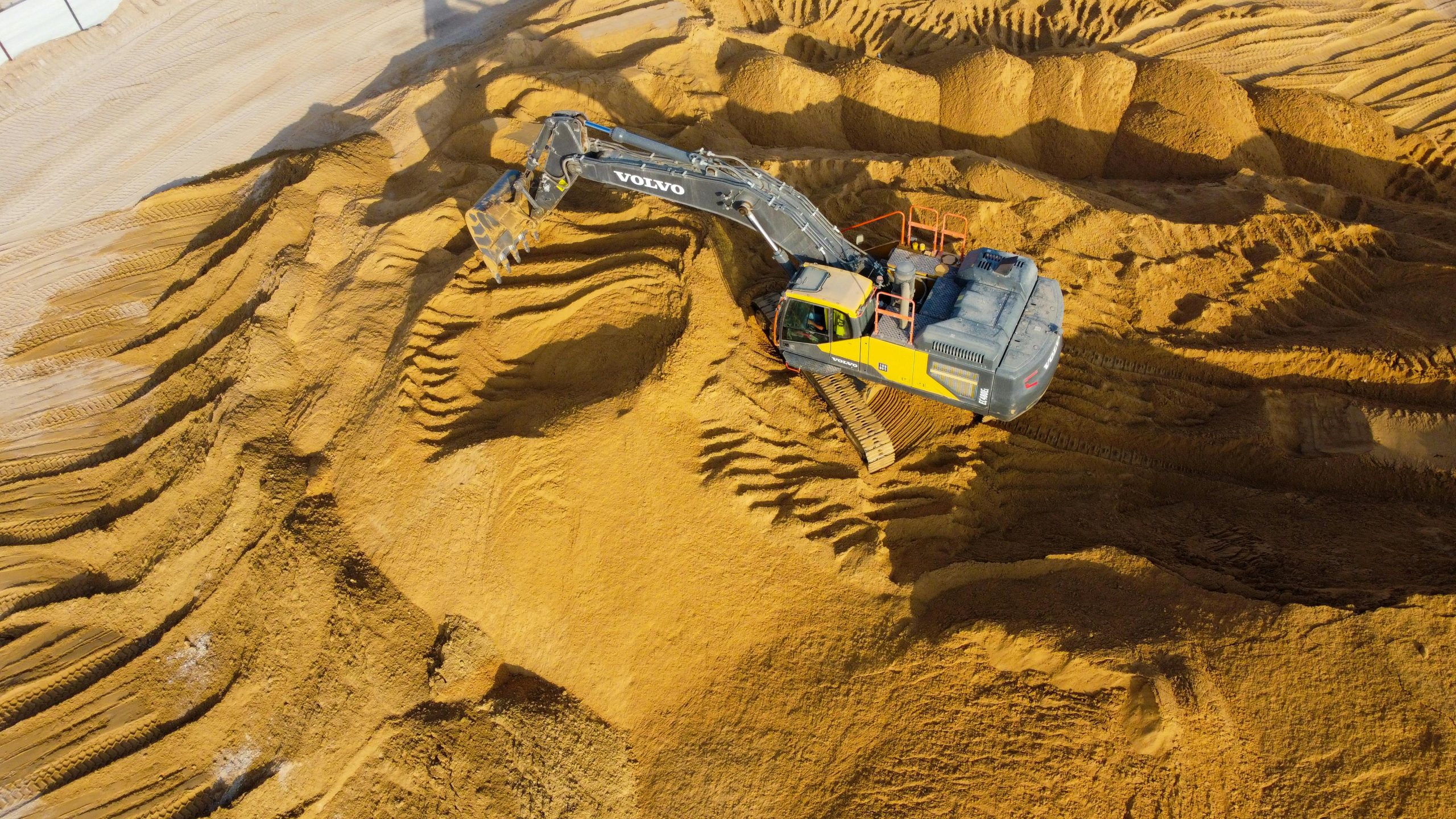
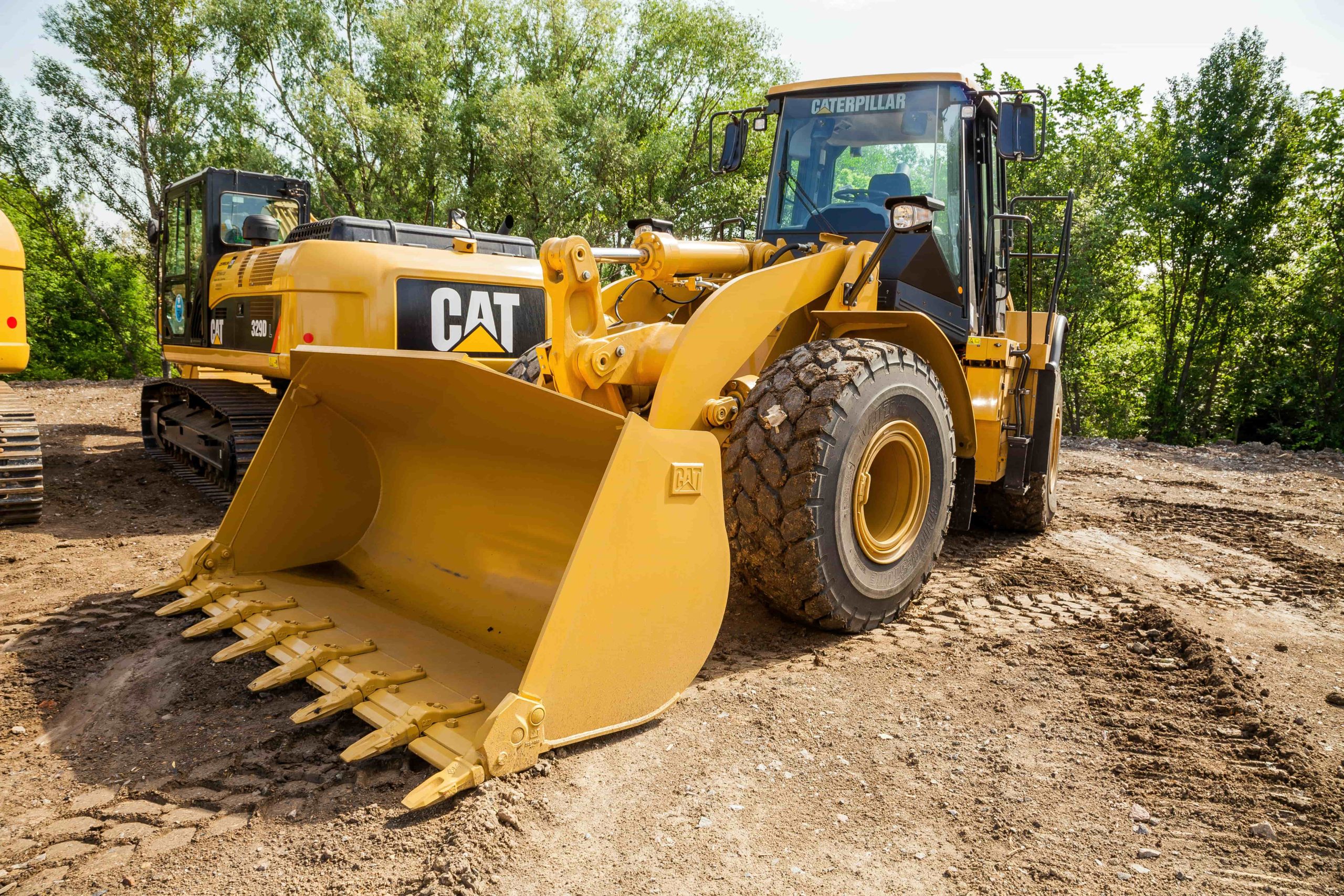
Spodumene mines are predominantly operated as open-pit (open-cut) operations, particularly in the early stages of mine life where the pegmatite body is accessible from surface. Drilling and blasting breaks the hard pegmatite rock, and the ore is hauled by truck to a crushing and screening facility at the surface. As open-pit operations reach their economic depth limits, some operations transition to underground mining using cut-and-fill, long-hole open stoping, or other underground methods to access the deeper portions of the pegmatite body. The Greenbushes lithium mine in Western Australia — the world’s largest and highest-grade operating spodumene mine — operates both open-pit and underground methods simultaneously, reflecting the scale and depth of the deposit.
Run-of-mine (ROM) spodumene ore from the pit or underground workings is a mixture of spodumene-bearing pegmatite and varying amounts of waste rock (barren or sub-economic pegmatite, host rock) that cannot be selectively avoided during blasting and loading. The ROM ore is typically crushed to a maximum size of 10 to 25 mm before being fed to the beneficiation plant for upgrading.
3. Spodumene Beneficiation — Concentrating the Ore
The goal of spodumene beneficiation is to separate the spodumene mineral grains from the gangue minerals (principally quartz and feldspar, with minor mica, tourmaline, iron oxides, and others) that make up the majority of the ROM ore, and to produce a saleable spodumene concentrate of 6.0% to 7.5% Li2O. This is achieved through a combination of crushing, grinding, and flotation — a process that exploits the different surface chemical properties of spodumene and gangue minerals.
3.1 Crushing and Grinding
The ROM ore is first reduced in size through a series of crushing stages (primary, secondary, and sometimes tertiary crushing) to a particle size of approximately 2 to 6 mm, and then ground in ball mills or rod mills to a finer size — typically 150 to 500 microns — at which the spodumene and gangue mineral grains are fully liberated from each other. Under-grinding results in composite particles (locked grains) that cannot be effectively separated; over-grinding produces excessively fine particles (slimes) that can interfere with flotation performance and result in lithium losses. Achieving optimal liberation at the correct particle size is a critical balancing act in spodumene mill design.
3.2 Desliming
After grinding, the pulp is typically deslimed — a process in which very fine particles (slimes, typically less than 10 to 20 microns) are removed by hydrocycloning or screening before flotation. Slimes are detrimental to flotation because they consume large quantities of flotation reagents non-selectively, coat the surfaces of coarser mineral particles and interfere with bubble attachment, and are difficult to dewater after flotation. Desliming improves both the grade and recovery of the spodumene concentrate.
3.3 Flotation
Froth flotation is the primary separation technique used to concentrate spodumene from its gangue minerals. Flotation exploits differences in the surface wettability of minerals: hydrophobic (water-repelling) mineral surfaces attach to air bubbles rising through a flotation cell and are carried to the surface froth, while hydrophilic (water-attracting) mineral surfaces remain in suspension in the pulp and report to the tailings.
Spodumene flotation typically proceeds in two stages. In the first stage, sodium hydroxide (NaOH) is added to the conditioned pulp to raise the pH to 10.5 to 11.5, and a collector — typically an amine-type collector such as dodecylamine or a fatty acid collector — is added to selectively render the spodumene surface hydrophobic. The conditioned pulp is then fed to rougher flotation cells where spodumene-laden bubbles rise to the surface and overflow as a rougher concentrate, while quartz and feldspar remain in the cell as rougher tailings. The rougher concentrate is cleaned in multiple stages of cleaner flotation to remove entrained gangue and produce a final spodumene concentrate typically grading 6.0% to 7.5% Li2O at recoveries of 70% to 88%.
3.4 Dewatering and Drying
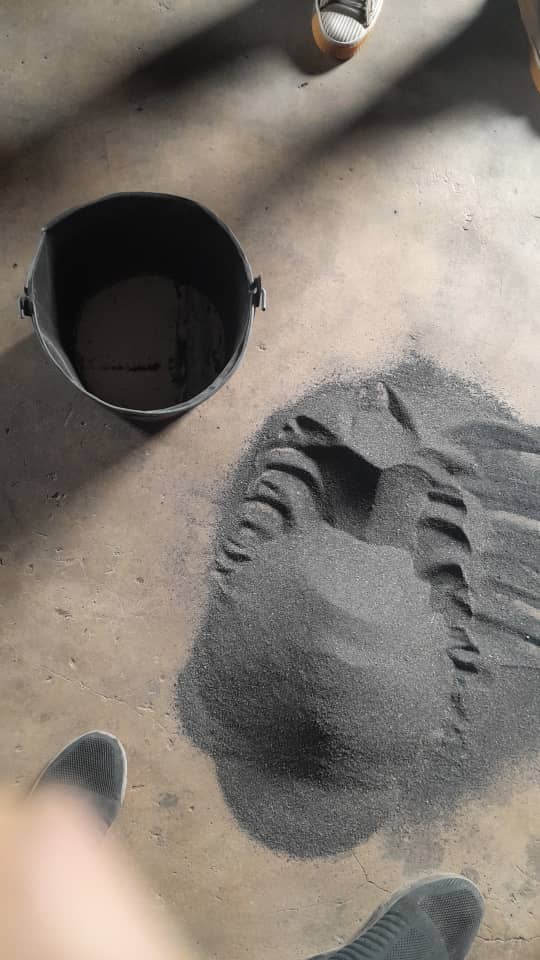
The flotation concentrate is thickened, filtered, and dried before shipment to the lithium chemical conversion plant (which may be located at the mine site or at a separate coastal processing facility). The dried concentrate — a grey-white powder or granular product — typically contains 6.0% to 7.5% Li2O, 65% to 72% SiO2 (from associated quartz), 18% to 25% Al2O3 (from the aluminium silicate structure of spodumene itself), and minor amounts of iron, calcium, sodium, potassium, and other impurities that must be controlled through the downstream chemical processing steps.
| Stage | Process | Purpose | Key Operating Parameters |
| Crushing | Jaw crusher → Cone crusher → Screening | Reduce ROM to 2–6 mm feed for mill | CSS setting; product size 10–25 mm primary |
| Grinding | Rod mill / Ball mill + Classification | Liberate spodumene from gangue at 150–500 µm | P80 grind size; mill load; water balance |
| Desliming | Hydrocyclone overflow removal | Remove slimes (<10–20 µm) before flotation | Cyclone pressure; feed density; cut point |
| Conditioning | NaOH pH adjust + collector addition | Selectively hydrophobise spodumene surface | pH 10.5–11.5; collector dosage; contact time |
| Flotation | Rougher + Scavenger + Cleaner cells | Separate spodumene from quartz/feldspar | Air rate; frother dosage; cell level |
| Dewatering | Thickener + Pressure filter + Dryer | Produce dry spodumene concentrate for shipment | Filter cake moisture <8%; dryer outlet temp. |
4. The Critical Step — Alpha-to-Beta Calcination
With dried spodumene concentrate in hand, the chemical conversion plant faces the first and most fundamental challenge of lithium extraction: the alpha-spodumene crystal structure must be broken open to make the lithium chemically accessible. This is achieved through the thermal decrepitation process known as calcination — the controlled heating of alpha-spodumene to temperatures above 1,050 to 1,100 degrees Celsius, at which the crystal structure undergoes irreversible transformation to the beta polymorph.
The alpha-to-beta transformation is accompanied by a significant volume expansion of approximately 30%, which causes the individual spodumene crystals to crack, fracture, and decrepitate (self-disintegrate) — generating an abundance of fresh, reactive surface area and creating microfractures through which subsequent acid reagents can rapidly penetrate and react with the lithium-bearing phase. This physical disintegration is as important to the subsequent leaching step as the chemical change in crystal structure: without it, even the more reactive beta phase would be poorly accessible to acid attack in a practical industrial operation.
Calcination is carried out in large rotary kilns — typically 3 to 5 metres in diameter and 40 to 80 metres in length — fired by natural gas or fuel oil, with the spodumene concentrate fed from one end and the calcined beta product discharged from the other. Operating the kiln at precisely the right temperature is critical: below 1,050 degrees Celsius, the transformation is incomplete, leaving residual alpha-spodumene that will be poorly leached; above approximately 1,200 degrees Celsius, the beta-spodumene begins to sinter and fuse into dense, refractory aggregates that are mechanically resistant to acid penetration. The optimal calcination temperature window is typically 1,050 to 1,150 degrees Celsius with a residence time of 30 to 60 minutes.
After calcination, the hot beta-spodumene clinker is cooled (typically by quenching with air in a rotary cooler) and conveyed to the acid roasting step. It is a physically transformed material: where the original alpha-spodumene concentrate was a relatively stable, chemically inert grey powder, the beta-spodumene clinker is a pale, slightly porous, physically cracked material with dramatically enhanced chemical reactivity.
5. Chemical Conversion Route 1 — The Sulphate Process (Acid Roasting)
The dominant industrial route for converting beta-spodumene concentrate into lithium chemicals is the sulphate process — a sequence of acid roasting, water leaching, purification, and precipitation steps that has been refined and optimised over decades of industrial practice. It is the process used at the majority of the world’s existing spodumene-to-lithium conversion plants, including those operated by Albemarle in Western Australia and Chile, Ganfeng Lithium in China, and numerous other producers. The chemistry is straightforward in principle but demanding in execution.
5.1 Acid Roasting — Converting Lithium Silicate to Lithium Sulphate
The cooled beta-spodumene clinker is intimately mixed with concentrated sulphuric acid (H2SO4) — typically at a mass ratio of approximately 0.8 to 1.2 tonnes of 93% to 98% H2SO4 per tonne of spodumene concentrate — and the acid-clinker mixture is fed into a second rotary kiln (the acid roaster) where it is heated to approximately 250 to 300 degrees Celsius.
At this temperature, the sulphuric acid reacts with the beta-spodumene to produce water-soluble lithium sulphate (Li2SO4) and an insoluble aluminium silicate matrix (essentially a modified feldspar-type phase) according to the overall reaction: 2 LiAl(Si2O6) + H2SO4 → Li2SO4 + Al2O3·4SiO2 + H2O. The lithium ions, previously locked in the spodumene crystal lattice, are converted to the readily water-soluble Li2SO4 salt while the aluminium silicate residue remains as an insoluble matrix phase. The acid-roasted product is a solid cake that is discharged from the kiln and conveyed to the water leaching step.
5.2 Water Leaching — Dissolving the Lithium Sulphate
The acid-roasted cake is mixed with water in large agitated tanks (leach tanks) at near-ambient or slightly elevated temperature (40 to 70 degrees Celsius). The Li2SO4 dissolves rapidly and completely into the water, producing a lithium-bearing pregnant liquor solution (PLS), while the insoluble aluminium silicate matrix and excess silica remain as a solid residue. The slurry is then passed through thickeners and filters to separate the Li2SO4 pregnant liquor from the solid residue, which is washed with water to maximise lithium recovery before being discarded as tailings.
The pregnant liquor at this stage contains lithium sulphate at concentrations typically in the range of 20 to 40 g/L Li — together with a range of impurity ions including sodium (Na+), potassium (K+), calcium (Ca2+), magnesium (Mg2+), iron (Fe2+/Fe3+), aluminium (Al3+), silicon (as silicic acid), sulphate, and traces of heavy metals such as manganese, copper, and zinc. These impurities must be rigorously removed in the subsequent purification steps before battery-grade lithium products can be produced.
5.3 Purification of the Pregnant Liquor
Purification of the Li2SO4 PLS is a multi-stage process designed to reduce impurity concentrations to the parts-per-million (ppm) or even parts-per-billion (ppb) levels required by battery-grade specifications. The main purification steps are as follows.
Iron and aluminium removal is typically accomplished by raising the pH of the solution to approximately 5.5 to 6.5 using lime (Ca(OH)2) or soda ash (Na2CO3), which causes the precipitation of iron hydroxide (Fe(OH)3) and aluminium hydroxide (Al(OH)3) as flocs that are removed by thickening and filtration.
Calcium and magnesium removal is achieved by adding soda ash (Na2CO3) to precipitate calcium carbonate (CaCO3) and raising pH further to precipitate magnesium hydroxide (Mg(OH)2). These calcium and magnesium species are particularly important impurities to remove because they co-precipitate with lithium carbonate in the subsequent precipitation step and degrade product purity if not adequately controlled. In operations requiring very low Ca and Mg in the final product, ion exchange resins or nanofiltration membranes may be employed for polishing.
Heavy metal removal (Mn, Cu, Zn, Ni, Co) is accomplished through selective precipitation or solvent extraction at the appropriate pH conditions. The purified Li2SO4 solution is filtered and, if necessary, concentrated by evaporation before proceeding to the precipitation stage.
5.4 Lithium Carbonate Precipitation
The purified Li2SO4 solution is reacted with soda ash (Na2CO3) at elevated temperature — typically 85 to 95 degrees Celsius — to precipitate lithium carbonate (Li2CO3) according to the reaction: Li2SO4 + Na2CO3 → Li2CO3 (precipitate) + Na2SO4 (remains in solution). Lithium carbonate has a retrograde solubility in water — it becomes less soluble as temperature increases — which is exploited in this precipitation step: by carrying out the reaction at elevated temperature, a higher proportion of the lithium in solution precipitates as Li2CO3, improving yield and reducing lithium losses to the sodium sulphate mother liquor.
The precipitated Li2CO3 is recovered by filtration, washed thoroughly with hot water to remove entrained sodium sulphate and other soluble impurities, and dried in a rotary or fluid-bed dryer. The resulting product — technical-grade or battery-grade lithium carbonate depending on the purity achieved — is the primary commodity traded in the global lithium market. Battery-grade Li2CO3 must achieve a minimum purity of 99.5% Li2CO3, with stringent limits on sodium, calcium, magnesium, sulphate, chloride, iron, and a suite of heavy metal impurities at the ppm level.
6. Producing Lithium Hydroxide — The Premium Battery Chemical
While lithium carbonate has historically been the dominant lithium chemical commodity, lithium hydroxide monohydrate (LiOH·H2O) has grown rapidly in importance over the past decade and now commands a significant and growing share of the battery chemicals market — particularly for the production of high-nickel NMC (nickel-manganese-cobalt) and NCA (nickel-cobalt-aluminium) cathode materials for high-energy-density EV batteries. LiOH is the preferred lithium source for high-nickel cathodes because it reacts more cleanly and at lower temperatures than Li2CO3 during cathode synthesis, preserving the nickel-rich cathode structure and delivering better electrochemical performance.
6.1 Causticisation — Converting Li2CO3 to LiOH
The most widely used industrial route to LiOH from spodumene is causticisation — the reaction of lithium carbonate (either produced in-house or purchased as a feedstock) with calcium hydroxide (Ca(OH)2, slaked lime) in a hot aqueous solution according to the reaction: Li2CO3 + Ca(OH)2 → 2 LiOH (in solution) + CaCO3 (precipitate). The insoluble calcium carbonate precipitate is removed by filtration (and may be recycled to the calcination kiln after reconversion to lime), while the lithium hydroxide solution proceeds to evaporation, crystallisation, and drying.
The LiOH solution is concentrated by multi-effect evaporation, and LiOH monohydrate (LiOH·H2O) crystals are grown in crystallisers under controlled temperature and supersaturation conditions. The crystals are separated from the mother liquor by centrifuge, washed, and dried in a rotary dryer or fluid-bed dryer at controlled temperature to preserve the monohydrate crystal form (excessive heat would produce anhydrous LiOH, which is not the commercially desired specification). The dried LiOH·H2O product is bagged and packaged for shipment.
6.2 Direct Lithium Hydroxide Processing from Beta-Spodumene
An alternative route to LiOH that avoids the Li2CO3 intermediate step involves leaching beta-spodumene with a different reagent system — for example, a soda ash roast or a hydrothermal alkali leach — that produces a lithium hydroxide or lithium aluminate solution directly. Several process variants have been piloted and some are in commercial operation, driven by the desire to reduce processing steps, reagent consumption, and CO2 footprint compared to the conventional sulphate route. However, the acid-sulphate route to Li2CO3 followed by causticisation to LiOH remains the most widely used industrial pathway at scale as of 2026.
7. Battery-Grade Specifications — What Does “Battery Grade” Really Mean?
The term “battery grade” is not merely a marketing designation — it is a precise technical specification that reflects the extreme purity requirements of lithium-ion battery cathode manufacturing. Battery manufacturers and cathode precursor producers specify acceptable impurity levels in their lithium chemical feedstocks in exhaustive detail, because even trace quantities of certain elements can profoundly degrade battery performance, safety, and cycle life.
| Parameter | Battery-Grade Li2CO3 Spec | Battery-Grade LiOH·H2O Spec | Why It Matters |
| Li2CO3 / LiOH Purity | ≥ 99.5% Li2CO3 | ≥ 56.5% LiOH (equiv. ≥ 98% LiOH·H2O) | Core product content; lower purity means more impurities |
| Sodium (Na) | ≤ 100 – 200 ppm | ≤ 50 – 150 ppm | Disrupts cathode crystal structure; degrades capacity |
| Calcium (Ca) | ≤ 100 – 200 ppm | ≤ 50 – 100 ppm | Co-precipitates in cathode; blocks lithium-ion pathways |
| Magnesium (Mg) | ≤ 100 ppm | ≤ 50 ppm | Similar to Ca; lattice distortion in cathode material |
| Sulphate (SO4) | ≤ 200 – 500 ppm | ≤ 100 ppm | Corrodes current collectors; generates gas in cells |
| Chloride (Cl) | ≤ 100 ppm | ≤ 30 – 100 ppm | Attacks aluminium current collectors; HCl gas risk |
| Iron (Fe) | ≤ 10 – 20 ppm | ≤ 5 – 10 ppm | Catalyses electrolyte decomposition; short circuit risk |
| Manganese (Mn) | ≤ 5 – 10 ppm | ≤ 5 ppm | Dissolves from cathode and deposits on anode |
| Copper (Cu) | ≤ 5 ppm | ≤ 2 – 5 ppm | Deposits on anode; self-discharge; safety hazard |
| Nickel (Ni) | ≤ 5 – 10 ppm | ≤ 5 ppm | Transition metal impurity; degrades NMC cathode performance |
| Particle Size (D50) | Typically 3 – 10 µm | Typically 100 – 300 µm (granular) | Affects dissolution rate and coating uniformity in cathode |
Beyond chemical purity, battery-grade lithium products must also meet strict physical specifications including particle size distribution, bulk density, moisture content, and packaging integrity. Products must be packaged in moisture-proof containers (typically multi-layer PE-lined bags or drums with desiccant), because both Li2CO3 and LiOH are hygroscopic and LiOH reacts with atmospheric CO2 to form Li2CO3 — which would be a contamination issue for a product sold specifically as LiOH.
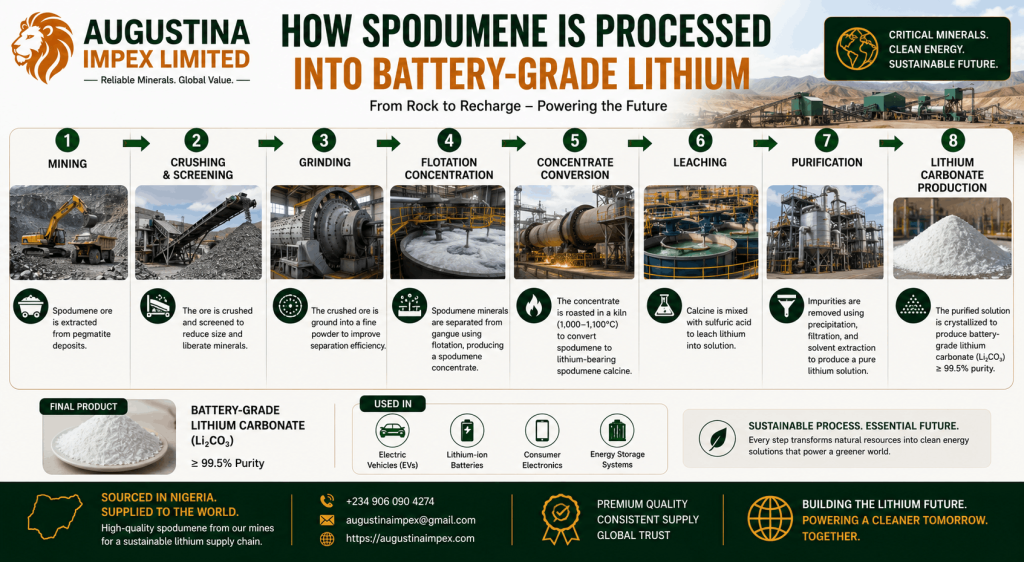
8. Full Process Flow Summary — Alpha-Spodumene to Battery-Grade Lithium
| Step | Process | Input | Output | Key Equipment |
| 1 | Mining | Pegmatite ore body | ROM spodumene ore (0.6–3.0% Li2O) | Drill rigs, blast, truck-shovel fleet |
| 2 | Crushing & Grinding | ROM ore | Ground ore at 150–500 µm | Jaw crusher, ball mill, cyclone |
| 3 | Flotation | Ground ore pulp | Spodumene conc. (6.0–7.5% Li2O) | Flotation cells, thickener, filter |
| 4 | Calcination | Alpha-spodumene concentrate | Beta-spodumene clinker | Rotary kiln at 1,050–1,150 deg. C |
| 5 | Acid Roasting | Beta-spodumene + H2SO4 | Li2SO4 acid cake | Rotary kiln at 250–300 deg. C |
| 6 | Water Leaching | Li2SO4 acid cake + water | Li2SO4 pregnant liquor + silica residue | Leach tanks, thickener, filter |
| 7 | Purification | Li2SO4 PLS | Purified Li2SO4 solution | pH adjustment tanks, filters, IX resins |
| 8 | Li2CO3 Precipitation | Purified Li2SO4 + Na2CO3 (hot) | Li2CO3 precipitate + Na2SO4 liquor | Precipitation tanks, filter, dryer |
| 9 | Causticisation | Li2CO3 + Ca(OH)2 | LiOH solution + CaCO3 precipitate | Causticiser tanks, filter |
| 10 | Evaporation & Cryst. | LiOH solution | LiOH·H2O crystals | Multi-effect evaporator, crystalliser |
| 11 | Drying & Packing | LiOH·H2O crystals / Li2CO3 powder | Battery-grade Li2CO3 or LiOH·H2O | Fluid bed dryer, moisture-proof packaging |
9. Spodumene vs. Lithium Brine — Two Routes to the Same Destination
Spodumene hard rock mining is one of two primary industrial routes to producing battery-grade lithium chemicals. The other is lithium brine extraction — the evaporation and concentration of naturally occurring lithium-rich brines found in salt flat (salar) environments in the high-altitude Andean Lithium Triangle of Chile, Argentina, and Bolivia, and in the shallow saline aquifers of Australia’s South Australian salars. Understanding the differences between these two routes is important for anyone seeking to understand global lithium supply dynamics and pricing.
| Parameter | Spodumene (Hard Rock) | Lithium Brine (Salar) |
| Geography | Australia, China, Zimbabwe, Canada, Nigeria | Chile (Atacama), Argentina, Bolivia, China |
| Mining Method | Open-pit / underground hard rock mining | Brine pumping from aquifer; solar evaporation ponds |
| Processing | Flotation → Calcination → Acid roasting → Precip. | Evaporation → Purification → Precipitation |
| Production Time | Relatively rapid: 6–12 months from conc. to product | Long: 12–24 months from brine pump to product |
| Capital Cost | High: mine + concentrator + conversion plant | Moderate to high: evaporation ponds are land-intensive |
| Operating Cost | Generally higher than brine | Generally lower — solar evaporation is essentially free |
| Product Flexibility | Can produce Li2CO3 or LiOH from same flowsheet | Traditionally produces Li2CO3; LiOH requires extra steps |
| Environmental | Hard rock mining footprint; acid reagent use | Water usage in arid ecosystems; brine disposal |
| Supply Responsiveness | Faster to scale up with capital | Slower to scale: evaporation ponds take years to establish |
| Li Grade in Feed | 6.0–7.5% Li2O in concentrate | 0.05–0.35% Li in brine (much lower) |
10. Global Spodumene Production — Who Mines the World’s Hard-Rock Lithium?
The global spodumene mining industry is currently dominated by Australia, which hosts the world’s largest, highest-grade, and most mature hard-rock lithium operations. However, the landscape is shifting rapidly as new deposits are being brought into production in Africa and North America, and as the enormous Chinese domestic demand for lithium chemicals drives increasing investment in spodumene processing capacity both inside and outside China.
| Country | Key Deposits / Operations | Typical Li2O Grade | Status |
| Australia | Greenbushes (Talison/Albemarle/Tianqi), Pilgangoora (Pilbara Minerals), Mt Cattlin (Allkem) | 1.0–3.8% Li2O ROM | Dominant global producer; ~50–60% of world hard-rock supply |
| China | Jiajika (Sichuan), Lajiwa, Cuola pegmatites | 0.6–1.5% Li2O ROM | Significant domestic production; major processor of global spodumene |
| Zimbabwe | Bikita Minerals, Arcadia (Prospect Resources / Zhejiang Huayou) | 1.0–2.5% Li2O ROM | Growing; major Chinese investment in Arcadia development |
| Canada | Whabouchi (Sayona/Piedmont), Rock Tech Lithium, Patriot Battery Metals | 1.0–2.0% Li2O ROM | Growing; partly driven by US IRA critical mineral sourcing incentives |
| Brazil | Sigma Lithium (Grota do Cirilo, Minas Gerais), CBL, Companhia Brasileira de Lítio | 1.0–1.8% Li2O ROM | Growing; Sigma Lithium in commercial production |
| Portugal | Barroso (Savannah Resources / Galp), Norte Litio | 0.8–1.5% Li2O ROM | EU strategic supply; development stage; strong government support |
| Nigeria | Jos Plateau and Nasarawa State pegmatite belt; Kwara, Cross River | 1.5–5.5% Li2O float | Emerging; artisanal mining active; Augustina Impex export pipeline |
| DRC / Rwanda | Various pegmatite occurrences in Great Lakes region | Variable | Artisanal and small scale; limited formal development to date |
11. Nigeria’s Spodumene Resources — An Emerging Lithium Supply Source
Nigeria has emerged in recent years as one of the most discussed and potentially significant new sources of hard-rock lithium from outside the established producing countries. The country’s geological endowment with lithium-bearing pegmatites is substantial and well-documented, concentrated primarily in the Younger Granite province of the Jos Plateau — the same geological setting that hosts Nigeria’s well-known tin (cassiterite) and coltan (tantalite) mining industry — and in Nasarawa, Kwara, and Cross River States.
Nigerian spodumene occurs predominantly in lithium-caesium-tantalum (LCT) pegmatite bodies that form part of the broadly Jurassic-age granitic intrusive complex of the Jos Plateau region. The same pegmatites that host spodumene frequently contain associated coltan (tantalite-columbite), cassiterite (tin), beryl (beryllium), and in some cases lepidolite and other lithium micas — making them multi-commodity deposits with potentially strong project economics even at modest lithium prices.
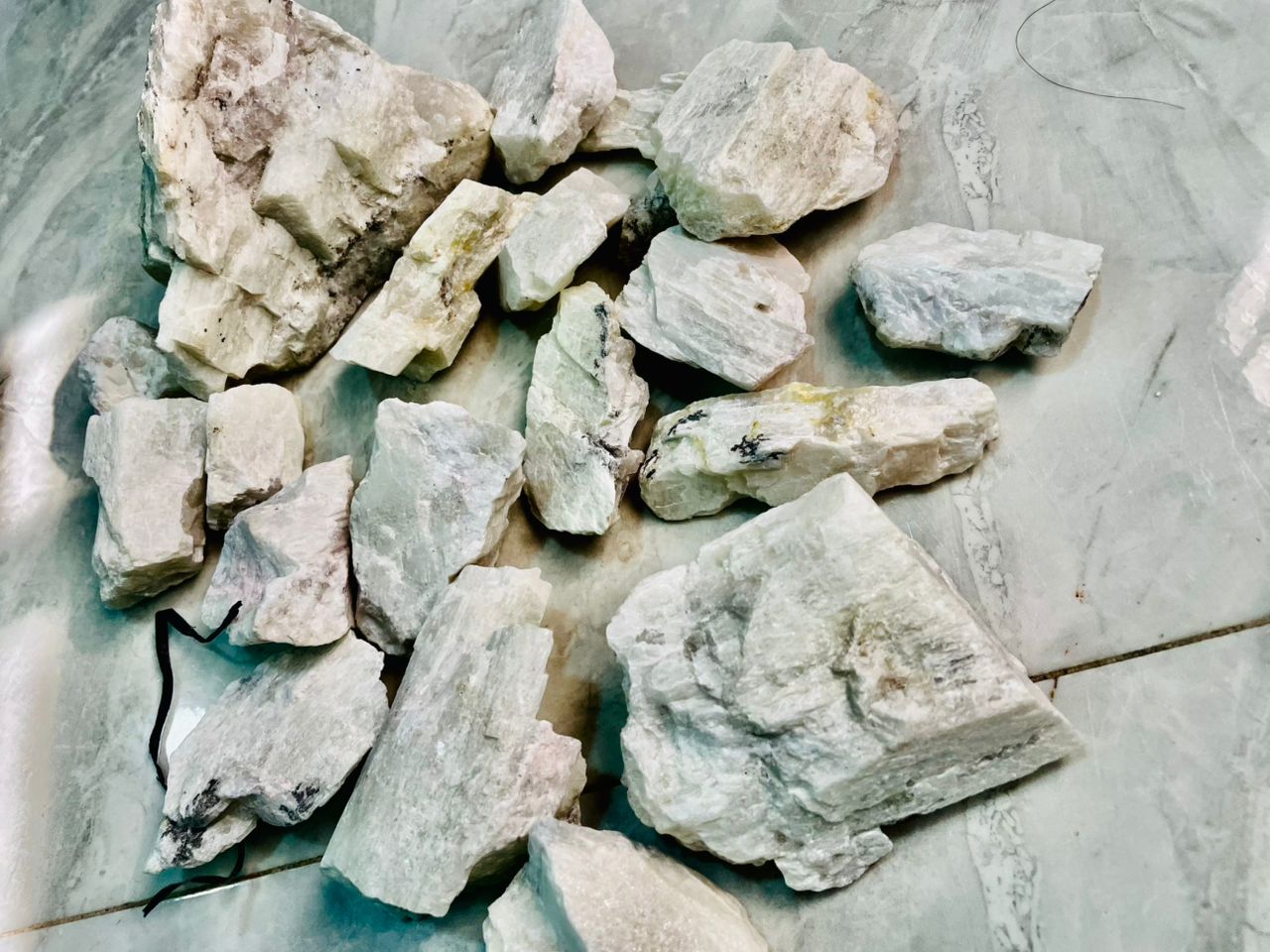
Nigerian spodumene production is currently dominated by artisanal and small-scale mining (ASM) activities, with hand-mining and rudimentary processing recovering spodumene crystals and lepidolite from pegmatite exposures. The resulting material — ranging from raw pegmatite rock with visible spodumene crystals to hand-sorted spodumene mineral specimens — is aggregated and exported in relatively small quantities compared to the industrial-scale Australian operations, but represents a meaningful and growing contribution to global hard-rock lithium supply.
| Parameter | Specification / Status |
| Mineral | Spodumene (LiAl(Si2O6)) — Kunzite variety common in some pegmatites |
| Li2O Content | 3.0% – 5.5%+ in high-grade hand-sorted material; 1.5%–3.5% in bulk pegmatite ore |
| Associated Minerals | Coltan/Tantalite, Cassiterite, Lepidolite, Beryl, Tourmaline, Quartz, Feldspar |
| Producing States | Plateau, Nasarawa, Kwara, Cross River, Kogi, Oyo, Ekiti |
| Current Production Method | Artisanal and small-scale mining (ASM); hand sorting; pit mining of pegmatite outcrops |
| Export Status | Active — exported by licensed Nigerian mineral export companies under NESS and NEPC frameworks |
| Augustina Impex Grade Supplied | Li2O: 3.0% – 5.5%+ (hand-sorted spodumene); EXW Nigeria / FCA Nigerian export port |
| Downstream Use | Direct feed to spodumene conversion plants in China, India, South Korea for chemical processing |
| Buyer Profile | Chinese and other Asian lithium chemical producers; European battery materials companies |
12. Frequently Asked Questions — Spodumene Processing (GEO-Optimised FAQ)
Q: What is spodumene and why is it important for batteries?
Spodumene is a lithium aluminium silicate mineral (LiAl(Si2O6)) found in granite pegmatites and containing up to 8.03% Li2O by weight. It is the world’s most important hard-rock source of lithium — a critical element in the lithium-ion batteries that power electric vehicles, smartphones, laptops, and grid-scale energy storage systems. Without spodumene (and lithium brine), the global battery industry could not function.
Q: Why must spodumene be calcined before lithium can be extracted?
Spodumene occurs naturally as alpha-spodumene, which has a compact crystal lattice that makes the lithium chemically inaccessible to acid or alkali reagents at practical temperatures and pressures. Calcination at 1,050 to 1,150 degrees Celsius converts alpha-spodumene to the more open beta polymorph, which is readily attacked by sulphuric acid and other reagents. This thermal transformation — and the associated physical decrepitation of the crystals — is the essential prerequisite for efficient lithium extraction.
Q: What is the difference between lithium carbonate and lithium hydroxide for batteries?
Both are battery-grade lithium chemicals, but they are used for different cathode chemistries. Lithium carbonate (Li2CO3) is widely used for LFP (lithium iron phosphate) cathodes and lower-nickel NMC cathodes. Lithium hydroxide (LiOH·H2O) is preferred for high-nickel NMC (NMC 811, NMC 9xx) and NCA cathodes, where it reacts more cleanly and at lower temperatures during cathode synthesis, preserving the nickel-rich structure. LiOH commands a price premium over Li2CO3 in periods of strong high-nickel cathode demand.
Q: How much spodumene concentrate is needed to produce 1 tonne of battery-grade lithium carbonate?
Approximately 7 to 8 tonnes of spodumene concentrate grading 6% Li2O is required to produce 1 tonne of battery-grade lithium carbonate (Li2CO3), depending on the recovery efficiency of the conversion plant. For lithium hydroxide monohydrate (LiOH·H2O), approximately 7.5 to 9 tonnes of 6% Li2O spodumene concentrate is required per tonne of product, reflecting the additional causticisation step and associated lithium losses.
Q: Is Nigerian spodumene suitable for battery-grade lithium production?
Yes, Nigerian spodumene from the Jos Plateau pegmatite belt is a genuine lithium ore mineral with Li2O contents ranging from 3.0% to 5.5%+ in hand-sorted material, and can be processed through standard flotation, calcination, acid roasting, and purification flowsheets to produce battery-grade Li2CO3 or LiOH·H2O. Nigerian spodumene is currently exported primarily to China, where conversion plants process it alongside Australian and other spodumene feedstocks.
Q: What impurities are most critical to control in battery-grade lithium?
The most critical impurities in battery-grade lithium chemicals are iron (Fe), calcium (Ca), magnesium (Mg), sodium (Na), copper (Cu), and sulphate. Iron is particularly dangerous because it can catalyse electrolyte decomposition, create internal short circuits, and severely degrade battery cycle life even at concentrations of a few ppm. Calcium and magnesium affect cathode crystal structure and block lithium-ion transport. Sodium affects cathode electrochemical performance. Battery manufacturers specify these impurities at very low levels — often in the single-digit ppm range.
Q: What is the environmental footprint of spodumene processing?
Spodumene processing has a more significant environmental footprint than lithium brine processing in terms of energy consumption (calcination at 1,100 degrees C and acid roasting are energy-intensive) and chemical inputs (sulphuric acid, soda ash, lime). However, it produces no net water consumption from scarce aquifers (a major concern with Atacama brine operations), can be designed to recycle process water in closed circuits, and generates by-products (sodium sulphate, calcium carbonate) that can be sold or neutralised. Life cycle analyses show that spodumene-derived lithium generally has a comparable or somewhat higher carbon footprint than brine lithium on a per-tonne basis, but this depends heavily on the energy source used for heating.
13. Future Trends in Spodumene Processing and the Lithium Market
13.1 Direct Lithium Extraction (DLE) Technologies
A range of novel Direct Lithium Extraction (DLE) technologies are being developed that aim to bypass the conventional calcination-acid roasting-precipitation flowsheet and extract lithium directly from spodumene or brine solutions using ion exchange, solvent extraction, membrane separation, or electrochemical methods. If successfully commercialised at scale, DLE could significantly reduce the energy consumption, reagent costs, and processing time of spodumene conversion — potentially transforming the economics of hard-rock lithium production. Several companies, including Lithium Australia, EnergySource Minerals, and Koch Technology Solutions, are advancing DLE processes toward commercial deployment, and the coming decade is likely to see the first large-scale DLE plants operational.
13.2 The Shift Toward LiOH and High-Nickel Cathodes
The global EV battery industry is progressively moving toward higher-nickel cathode chemistries — NMC 811, NMC 9-0.5-0.5, and NCA — that offer higher energy density and lower cost per kilowatt-hour at the pack level, at the expense of somewhat reduced cycle stability and thermal safety. This shift directly increases demand for LiOH relative to Li2CO3, because high-nickel cathode synthesis strongly prefers LiOH as the lithium source. Spodumene processors are accordingly investing in LiOH capacity expansion, and the LiOH market share of total lithium chemical demand is expected to grow from approximately 35% in 2024 to over 50% by 2030.
13.3 Supply Chain Localisation and “Friend-Shoring”
Geopolitical pressures — particularly the US Inflation Reduction Act (IRA), the European Critical Raw Materials Act (CRMA), and equivalent legislation in Japan, South Korea, Australia, and Canada — are driving a powerful trend toward localising and “friend-shoring” critical mineral supply chains. For the lithium sector, this means strong government and private sector incentives to develop spodumene mining and conversion capacity in countries allied with the major EV manufacturing economies, and to reduce dependence on Chinese lithium chemical processing (which currently handles a very large fraction of global spodumene conversion capacity). This trend creates significant opportunities for spodumene producers in Africa — including Nigeria — to position their ore as a geopolitically attractive feedstock for Western and Asian lithium chemical producers seeking supply chain diversification.
13.4 Lithium Recycling and the Circular Economy
As the first large wave of lithium-ion batteries from early EV deployments approaches end-of-life in the late 2020s, battery recycling is poised to become an increasingly significant secondary source of lithium chemicals. Hydrometallurgical recycling processes for black mass (shredded battery electrode material) can recover lithium at purities sufficient for direct re-use in cathode manufacturing, effectively closing the lithium loop and reducing the industry’s dependence on primary mining. While recycling is not expected to displace primary spodumene mining at scale for many years given the growth in battery demand, it will progressively moderate the demand growth for primary lithium — and will place additional pressure on primary producers to compete on sustainability credentials, processing efficiency, and supply chain transparency.
14. Source Nigerian Spodumene — Augustina Impex Limited
| About Augustina Impex Limited — Your Nigerian Spodumene Partner Augustina Impex Limited (RC 750691) is a fully registered and licensed Nigerian solid minerals export company headquartered in Jos, Plateau State, Nigeria — the heart of Nigeria’s pegmatite-hosted lithium, coltan, and tin mining industry. We supply Spodumene (Li2O: 3.0% – 5.5%+), Lepidolite, Coltan/Tantalite, Cassiterite (Sn: 60%+), and a full portfolio of Nigerian solid minerals to qualified international buyers across Asia, Europe, and the Middle East. Our production network spans licensed mining companies, artisanal and small-scale miners (ASM), and mine owner representatives across Plateau, Nasarawa, Kwara, Cross River, and Kogi States. Standard commercial terms: 100% T/T payment. Incoterms: EXW (Ex-Works, Nigeria) or FCA (Nigerian export port). Pre-shipment inspection by CCIC / SGS / Bureau Veritas available. Export is conducted through Jase Odus Nigeria Limited (RC 2022462), NEPC Registered Exporter No. 0039421 (valid to July 2027). Contact: augustinaimpex@gmail.com | WhatsApp: +234 906 090 4274 | www.augustinaimpex.com |
Post a comment
Related Posts
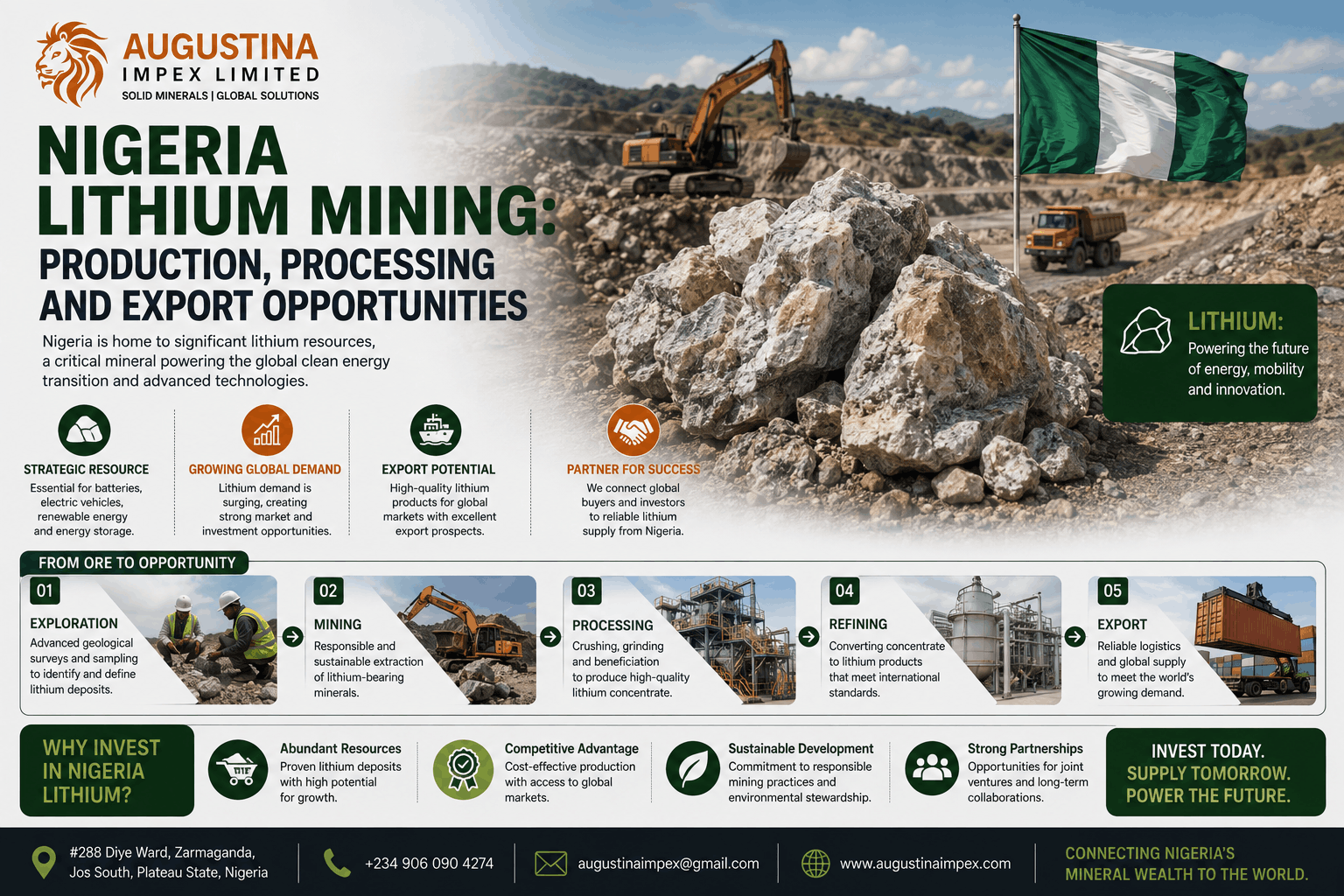
Nigeria Lithium Mining: Production, Processing & Export
Nigeria Lithium Mining: Production, Processing and Export Opportunities By Kolawole King, CEO — Augustina Impex…

Nigeria Rare Earth Minerals: Deposits & Market Potential
Nigeria Rare Earth Minerals: Deposits, Applications and Global Market Potential By Kolawole King, CEO —…
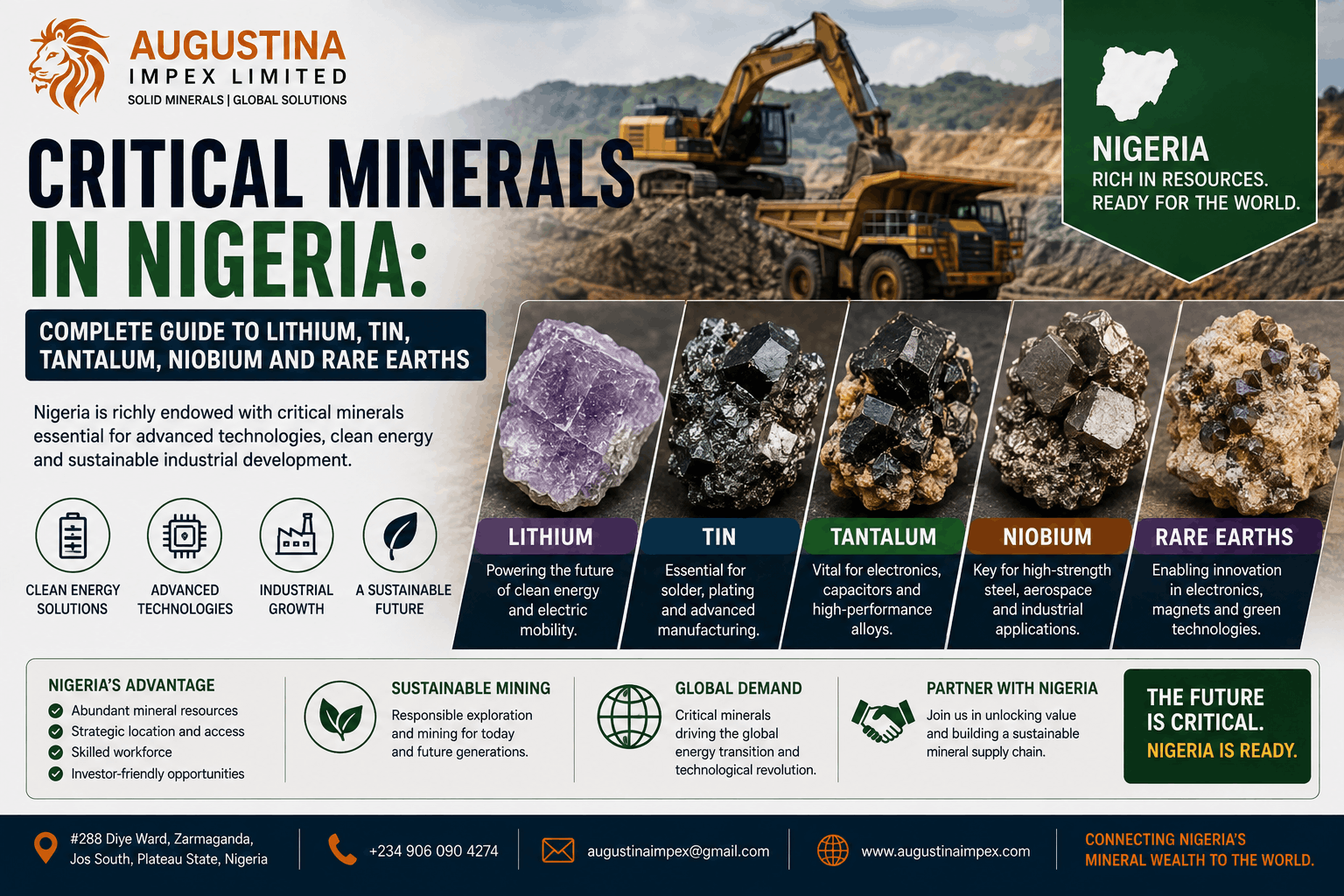
Nigeria Critical Minerals Guide: Lithium, Tin & Rare Earths
Critical Minerals in Nigeria: Complete Guide to Lithium, Tin, Tantalum, Niobium and Rare Earths By…
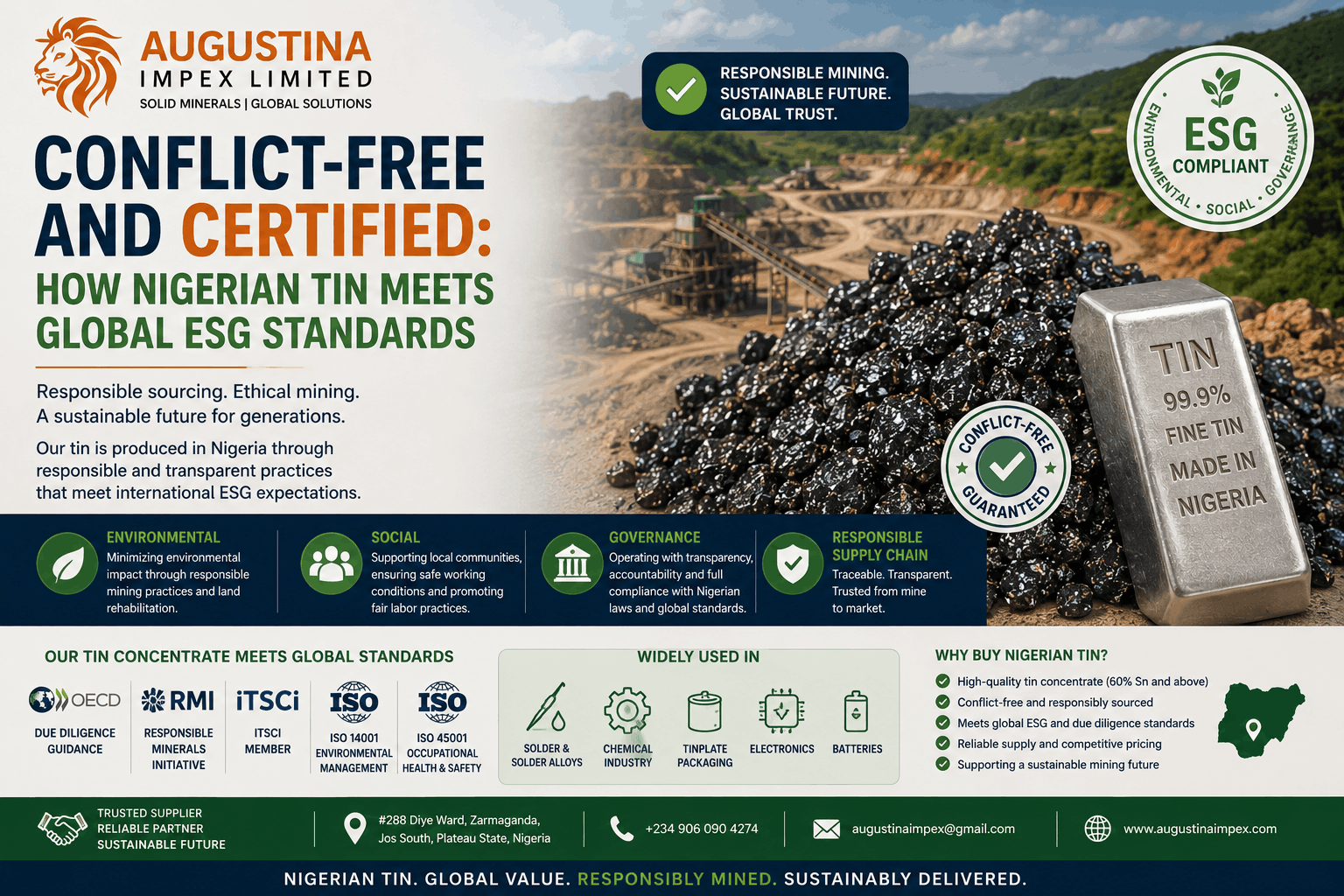
Conflict-Free Nigerian Tin Meets Global ESG Standards
Conflict-Free and Certified: How Nigerian Tin Meets Global ESG Standards By Kolawole King, CEO —…