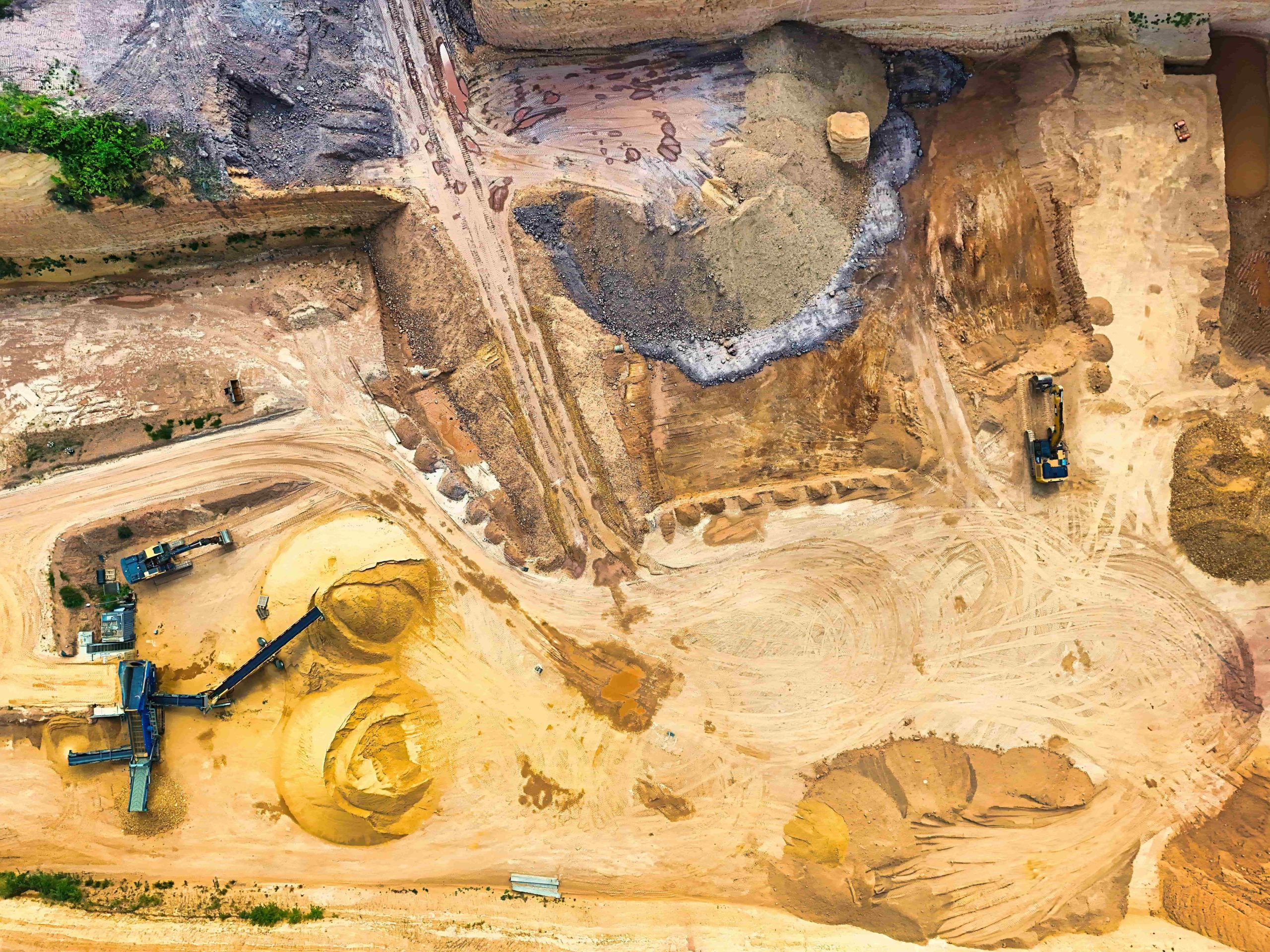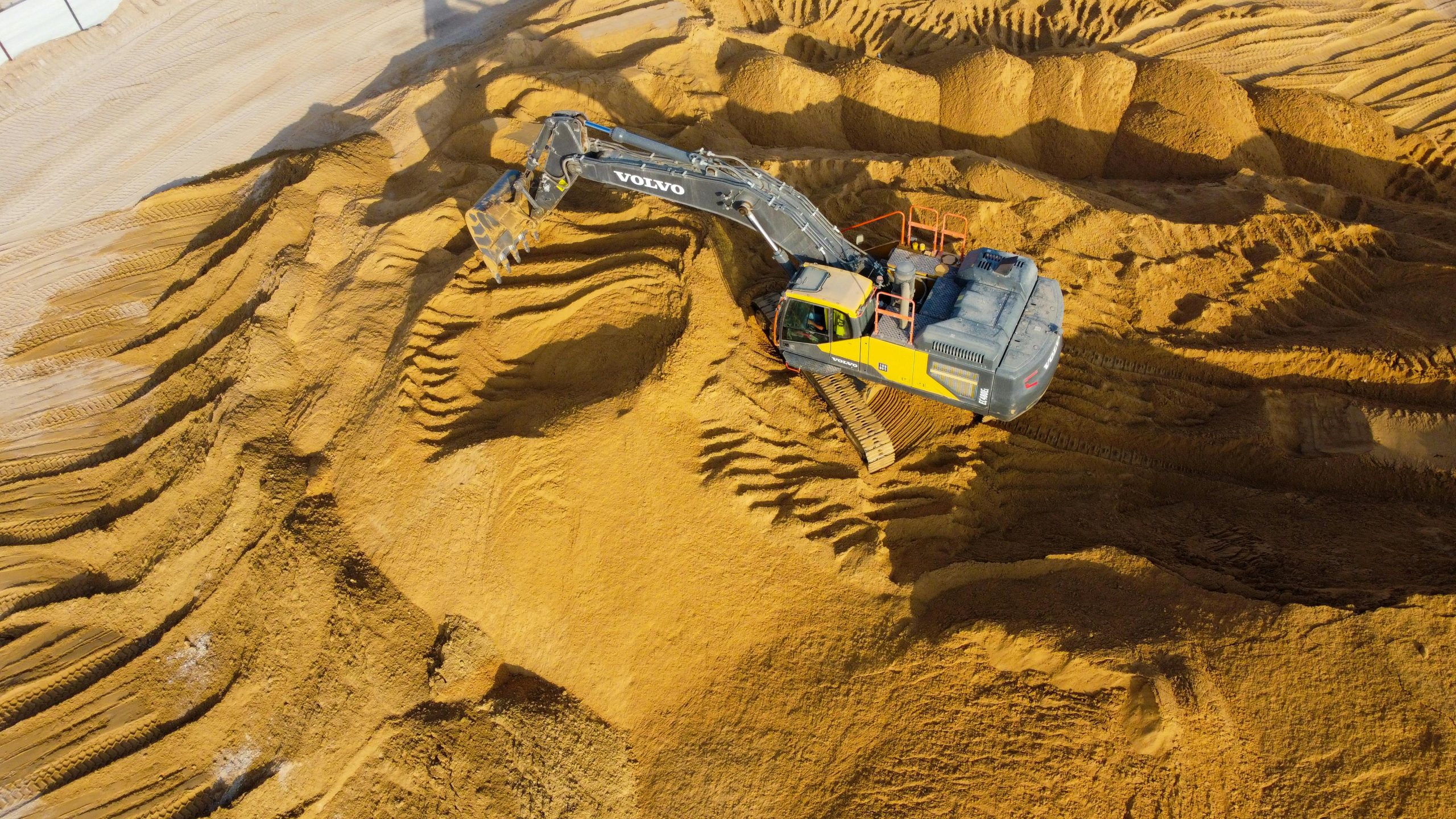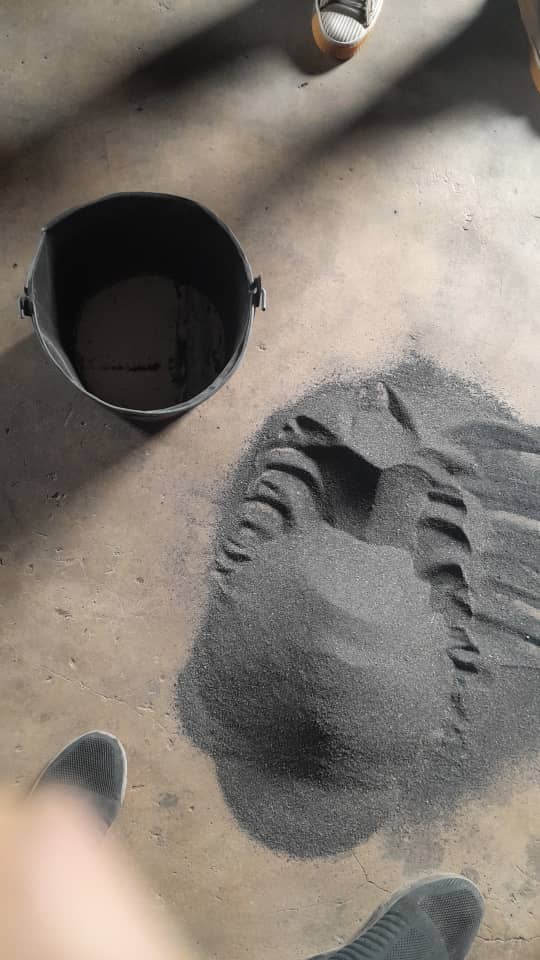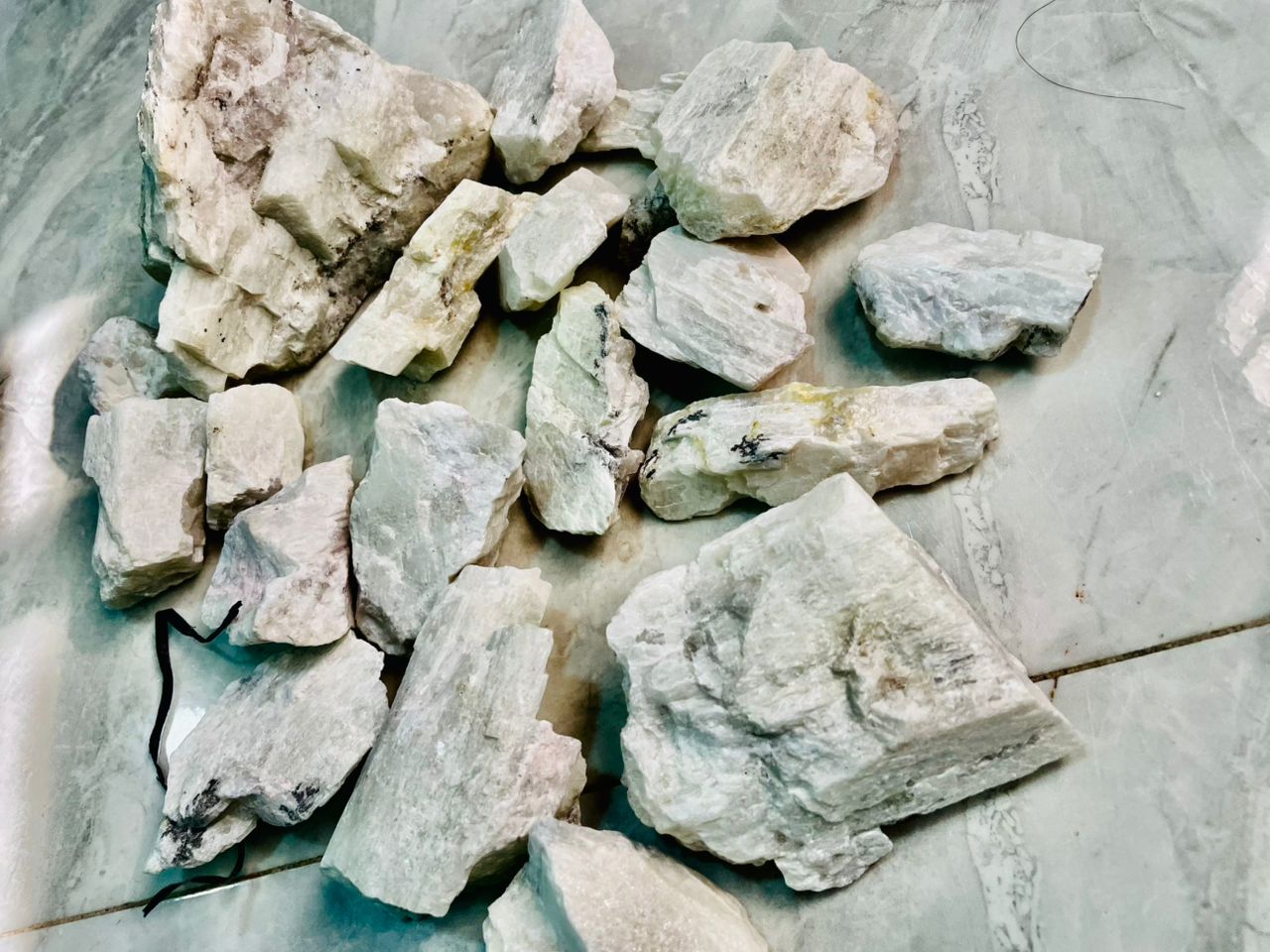


For most of my 24 years in this trade, the producer sat at the bottom of the table. The big buyers held the cards, set the prices, and we who dug the minerals out of the Jos Plateau took what we were offered and were told to be grateful for it. That arrangement felt permanent. It was simply how the mineral world worked.
It does not work that way anymore. We are living through the most dramatic reordering of mineral power in my lifetime, and the global competition for strategic minerals has burst out of the quiet world of commodity contracts and into the open arena of statecraft. Governments that once ignored mining now treat it as a matter of national survival. Great powers are racing one another to lock up supply. And — this is the part that excites me most as an African in this business — producer nations are discovering, for the first time in a long time, that they hold real leverage. This is my attempt to map that new landscape honestly.
It is a long read, because the ground really has shifted that much.

A Contest That Has Burst Into the Open
Strategic minerals are the materials a modern state cannot do without — the rare earths, lithium, cobalt, copper, gallium, antimony and their cousins that sit inside everything from electric vehicles and wind turbines to fighter jets, semiconductors and the data centres now powering artificial intelligence. For decades these moved through ordinary markets driven by price and demand. That era is finished.
What tipped it over was the realisation, hammered home through 2025, that the supply of these materials was dangerously concentrated and could be turned on and off as an instrument of pressure. China’s commanding position across mining and, above all, processing was the catalyst. But the story of 2026 is no longer mainly about China. It is about everyone else’s response — a scramble by consuming nations to secure supply and by producing nations to extract more value from it. Analysts now describe a sector running on a policy-driven business cycle rather than a price-driven one, where access to government support matters as much as geology. Minerals have become geopolitics, and the contest is fully out in the open.
The Scramble to Stockpile
The clearest sign of the new mood is the rush to hoard. After decades of running lean, the world’s wealthiest economies have decided that holding physical inventory of strategic minerals is worth almost any cost.
The United States led the headlines with Project Vault, a strategic critical minerals reserve worth roughly 12 billion dollars, built on the largest loan in the history of its Export-Import Bank topped up with private capital — a physical stockpile designed to shield American industry from supply shocks and price swings. It was not alone. Australia moved to formalise an 800 million dollar critical minerals reserve, prioritising antimony, gallium and rare earths. South Korea rolled out its own strategy to expand stockpiles. China, of course, has quietly practised strategic stockpiling for years, releasing material when it suits its purposes. The danger, as more than one analyst has warned, is that stockpiling shades into hoarding, and that hoarding becomes coercive when it is opaque or weaponised. For a producer like me, watching the biggest economies on earth compete to buy and store the very things we sell is a remarkable reversal of fortune.
New Alliances and the Diplomacy of Minerals
The second front in this competition is diplomatic, and it has moved at a pace I have never seen. Securing minerals is now done through treaties and frameworks, not just purchase orders.
In early 2026 the United States hosted a Critical Minerals Ministerial that drew representatives from more than 50 countries, and in a single week signed a wave of new bilateral mineral frameworks and memoranda of understanding with partners as varied as Argentina, Guinea, Morocco, the United Arab Emirates, the United Kingdom and the Philippines. It launched a new multilateral body — the Forum on Resource Geostrategic Engagement — to succeed the earlier Minerals Security Partnership and coordinate policy, pricing and projects among allies, with South Korea taking the first chair. A separate grouping was formed to safeguard the supply chain behind artificial intelligence. American-backed consortia began circling assets in the Democratic Republic of Congo, and Gulf investment firms were drawn into the web of partnerships. The European Union, for its part, pressed ahead with its Critical Raw Materials Act to cut dependence and build its own processing. What all this reveals is a shift from going it alone toward building blocs — coalitions of consuming and producing nations large enough to actually shape the market. Mineral diplomacy has become a central pillar of foreign policy.
The Rise of Resource Nationalism
The third front is the one I watch most closely, because it is where producer nations are flexing muscles they had forgotten they possessed. Resource nationalism — the assertion of state control over mineral wealth — has expanded far beyond the old tools of taxes and royalties.
Today it takes the form of export bans, production quotas, processing mandates and direct government intervention. Indonesia’s ban on exporting raw nickel forced processing onshore and pulled in billions of dollars of downstream investment — a result so striking that it has become a model other resource-rich countries openly study. Vietnam tightened state control over its rare earths and banned the export of raw material. Chile has steered its lithium development down a state-led path. Even the great consuming powers are intervening in ways that would once have been unthinkable, floating minimum import prices to protect their producers from being undercut, and in at least one case ordering foreign investors to sell their stakes in domestic mines on national security grounds. The state, in short, is back in the mineral business everywhere — among buyers and sellers alike. The purely private, market-driven mineral world I started my career in has been replaced by one in which government sits at every table.
The Global Competition for Strategic Minerals Is Reshaping Africa’s Hand
Here is where it becomes personal. For all the talk of great powers, the global competition for strategic minerals is quietly handing Africa a stronger hand than it has held in generations. Our continent holds something close to 30 percent of the world’s mineral reserves and a large share of the materials everyone is now chasing. When multiple powerful buyers compete for the same supply, the seller’s bargaining position improves — that is simply how markets work, and African governments are beginning to act on it.
The African Union has advanced a Green Minerals Strategy aimed at tying mineral development to industrialisation rather than mere extraction. Countries such as South Africa and Zambia have published strategies to capture more value through downstream processing and regional value chains. The DRC has used its endowment as a bargaining chip with Washington; Guinea and others have signed new frameworks. The thread running through all of it is producers using the competition among buyers to negotiate for value addition at home, instead of accepting the old role of raw-material supplier. After a career spent watching value drain away to distant refineries, I find this genuinely hopeful — provided we are disciplined enough to seize the moment.
Pawn or Player: The Choice Facing Producers
A sharp way to frame this entire era was put forward by one leading analysis of the sector for 2026: every participant must decide whether to be a pawn or a player in a business cycle now driven by the race for mineral security and national power. I think that choice applies as much to companies and communities as it does to governments.
To be a pawn is to remain a passive supplier — to ship raw rock down whichever corridor a foreign power finances, to be locked into terms set elsewhere, to pick a side in someone else’s contest and discover too late that the weather has changed. To be a player is to add value before the material leaves, to keep a diversified set of buyers rather than depending on a single patron, to insist on transparent and traceable supply that commands a premium, and to exercise the strategic patience that long mineral cycles demand. The minerals beneath African soil give us the raw potential to be players. Whether we actually become them depends on the decisions we make in the next few years.
Where Nigeria and Companies Like Mine Sit
Nigeria is no spectator to any of this. Chinese firms have poured well over a billion dollars into lithium processing on our soil, our government now ties mining licences to local-processing plans, and we were an early mover in establishing a strategic fund to manage mineral wealth. The North-Central belt I know best holds rare-earth-bearing monazite, columbite and tantalite — precisely the materials that buyers, hungry for supply outside the usual chokepoints, are now willing to pay a premium to secure from a reliable source.
That is the opening for credible local operators. In a market where the scarcest thing is not the mineral itself but a trustworthy, transparent, well-documented supply chain, the firms that can guarantee provenance and quality become genuinely valuable. The role I see for a company like mine is to help both Nigeria and its international partners act as players rather than pawns — connecting verified local material to legitimate buyers on terms that leave real value behind in the communities where the minerals are dug.
An Honest Look at the Risks
I would not be doing my job if I pretended this new era is all opportunity. It carries real dangers, and the producers who thrive will be those who respect them.
The first is volatility of a new kind. When a cycle is driven by policy rather than supply and demand, a single decision in a distant capital can reorder prices and trade flows overnight, even in markets that are otherwise well supplied. The second is the temptation to over-rely on one powerful buyer — a comfortable arrangement that becomes a trap the moment that buyer’s priorities shift. The third is social licence: the world is littered with promising projects, such as a major lithium development halted by community protests in Europe, that failed not on geology but on the consent of the people who live alongside the mine. Add the familiar frictions of governance and traceability, and the stubborn gap between grand announcements and actual delivered tonnes — because mines and refineries take years to build, no matter how much capital is pledged. And there is a quieter moral hazard: when the giants hoard and weaponise supply, smaller producers and poorer importers can be squeezed in the crossfire. None of this argues for standing aside. It argues for going in clear-eyed, with the right partners and a long view.
Where Augustina Impex Fits In
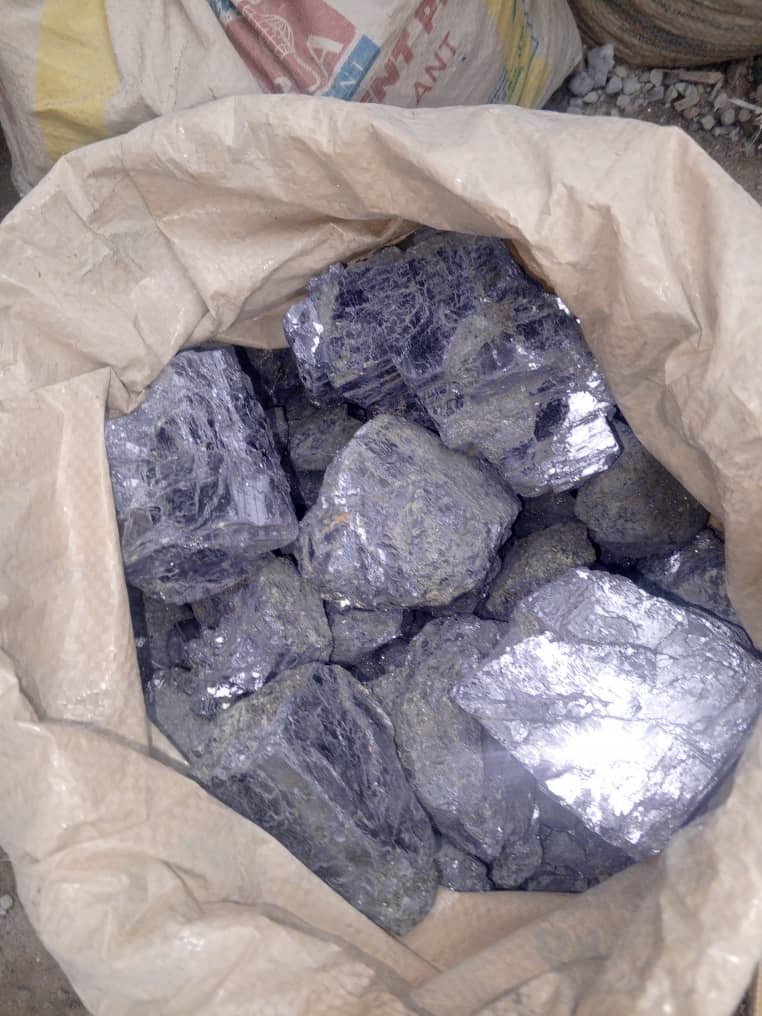
This is the work my company has done across the Jos Plateau mineral belt since 2001. Augustina Impex Limited trades a broad portfolio — monazite, ilmenite, zircon, columbite, tantalite, tin, lithium, fluorite, garnet and lead ore — and we understand the full journey from a working minesite to an international buyer’s specification. In an era defined by the competition for strategic minerals, what we offer is exactly what that competition rewards: verified local sourcing, quality assurance, proper export documentation, and the on-the-ground consultancy that turns a strategically valuable deposit into a dependable, transparent supply relationship.
If you are a buyer trying to secure reliable supply outside the obvious chokepoints, an investor looking for a credible African entry point, or a partner who values provenance and straight dealing, that is the conversation I welcome. The contest for the world’s strategic minerals is reshaping the balance of economic power. For those of us who have worked these minerals since long before the world decided they were prizes, the task now is to make sure that this time, the value finally stays closer to where the minerals come from. I am glad to talk about how.
Kolawole King Chief Executive Officer, Augustina Impex Limited #288 Diye Ward, Zarmaganda, Jos South, Plateau State, Nigeria Email: augustinaimpex@gmail.com WhatsApp: +234 906 090 4274 Website: https://augustinaimpex.com Blog: https://augustinaimpexng.blogspot.com/ Advert Video: https://www.youtube.com/watch?v=Izg0t7By6co
#StrategicMinerals #CriticalMinerals #ResourceNationalism #SupplyChainSecurity #MineralStockpiles #USChinaCompetition #RareEarths #EnergyTransition #AfricaMinerals #ValueAddition #MineralDiplomacy #CriticalMineralsRace #NigeriaMining #Monazite #AugustinaImpex
-
Previous Post
Industrial Minerals Driving the Future Economy
-
Next Post
Future Demand for Strategic Minerals
Post a comment
Related Posts
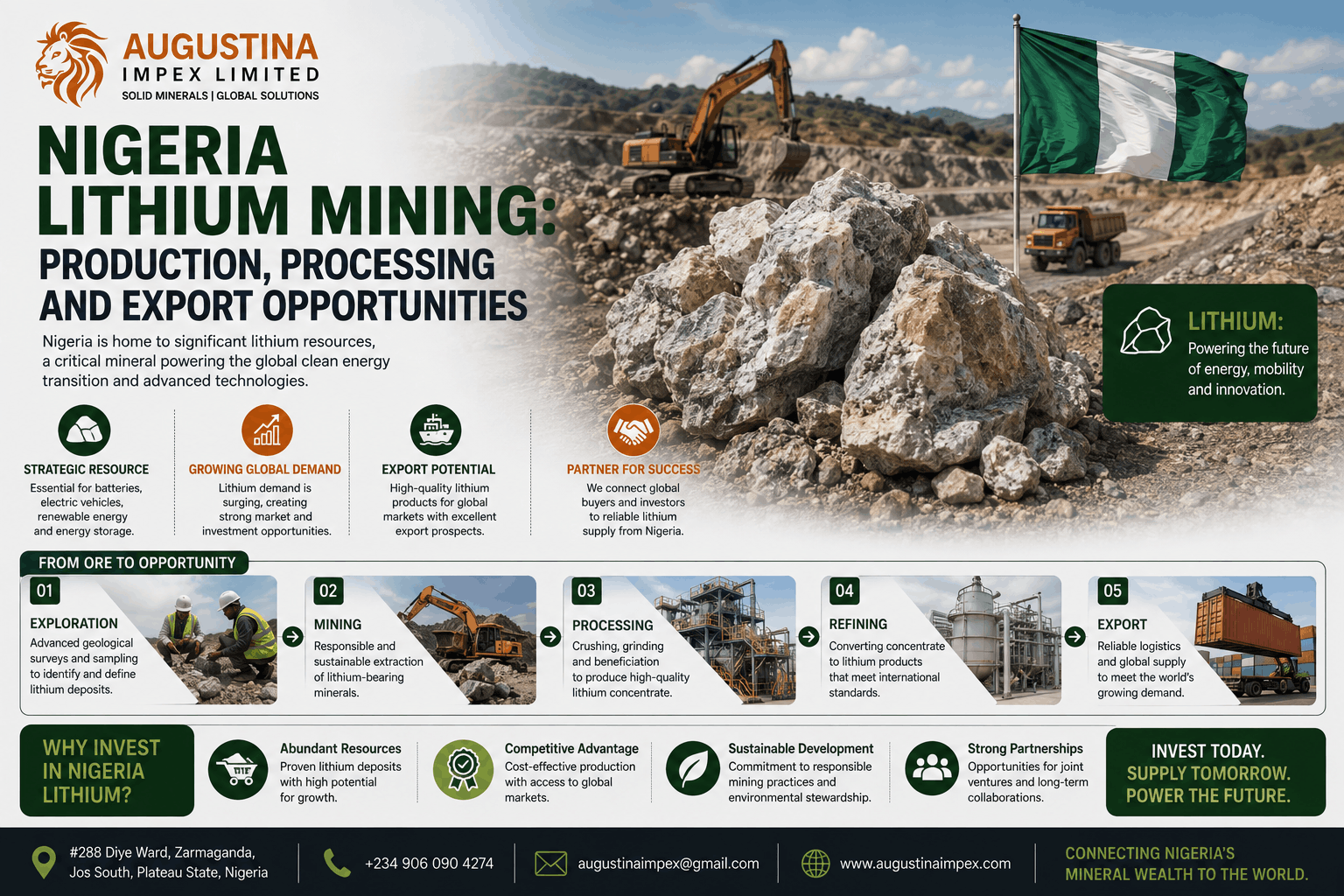
Nigeria Lithium Mining: Production, Processing & Export
Nigeria Lithium Mining: Production, Processing and Export Opportunities By Kolawole King, CEO — Augustina Impex…
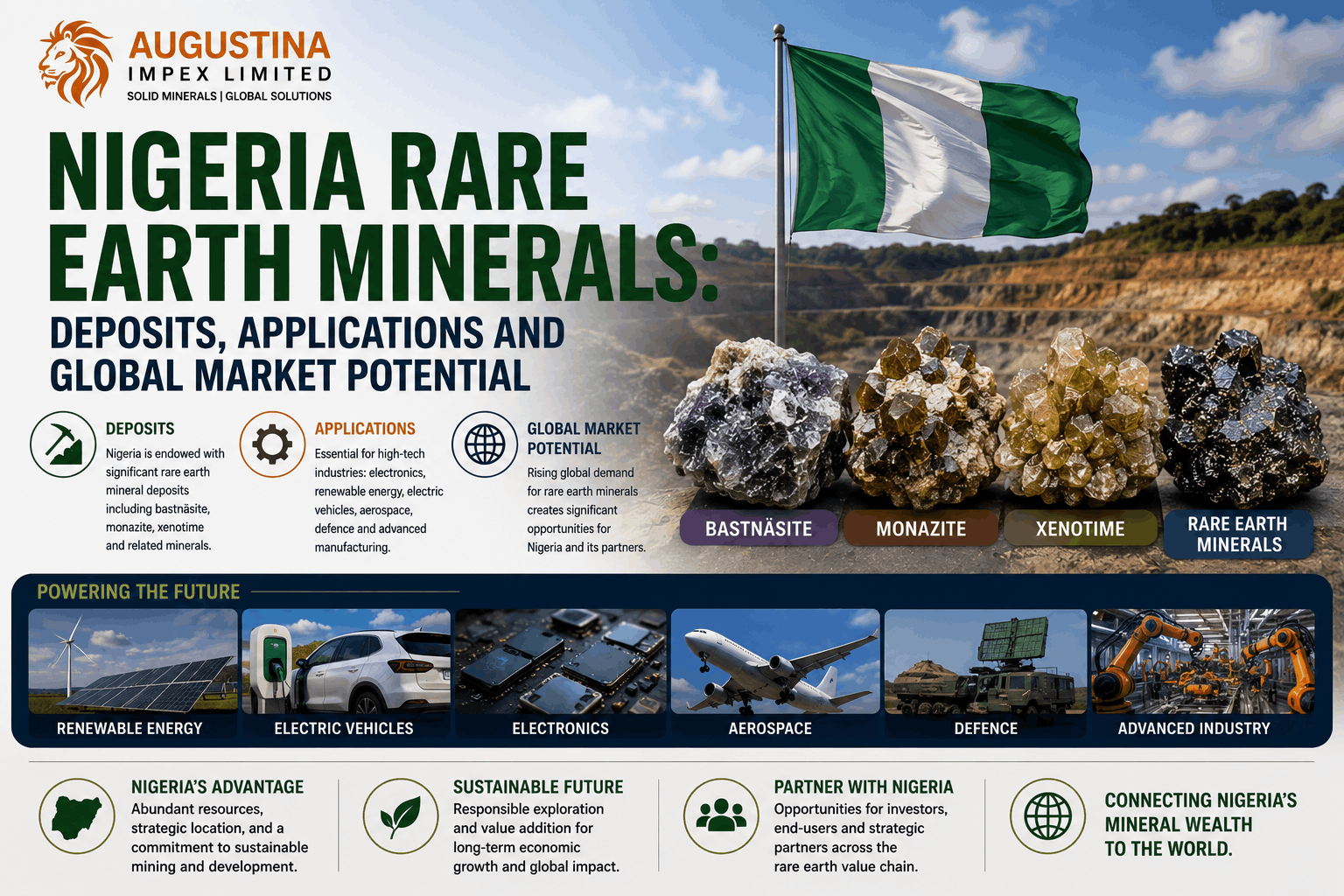
Nigeria Rare Earth Minerals: Deposits & Market Potential
Nigeria Rare Earth Minerals: Deposits, Applications and Global Market Potential By Kolawole King, CEO —…
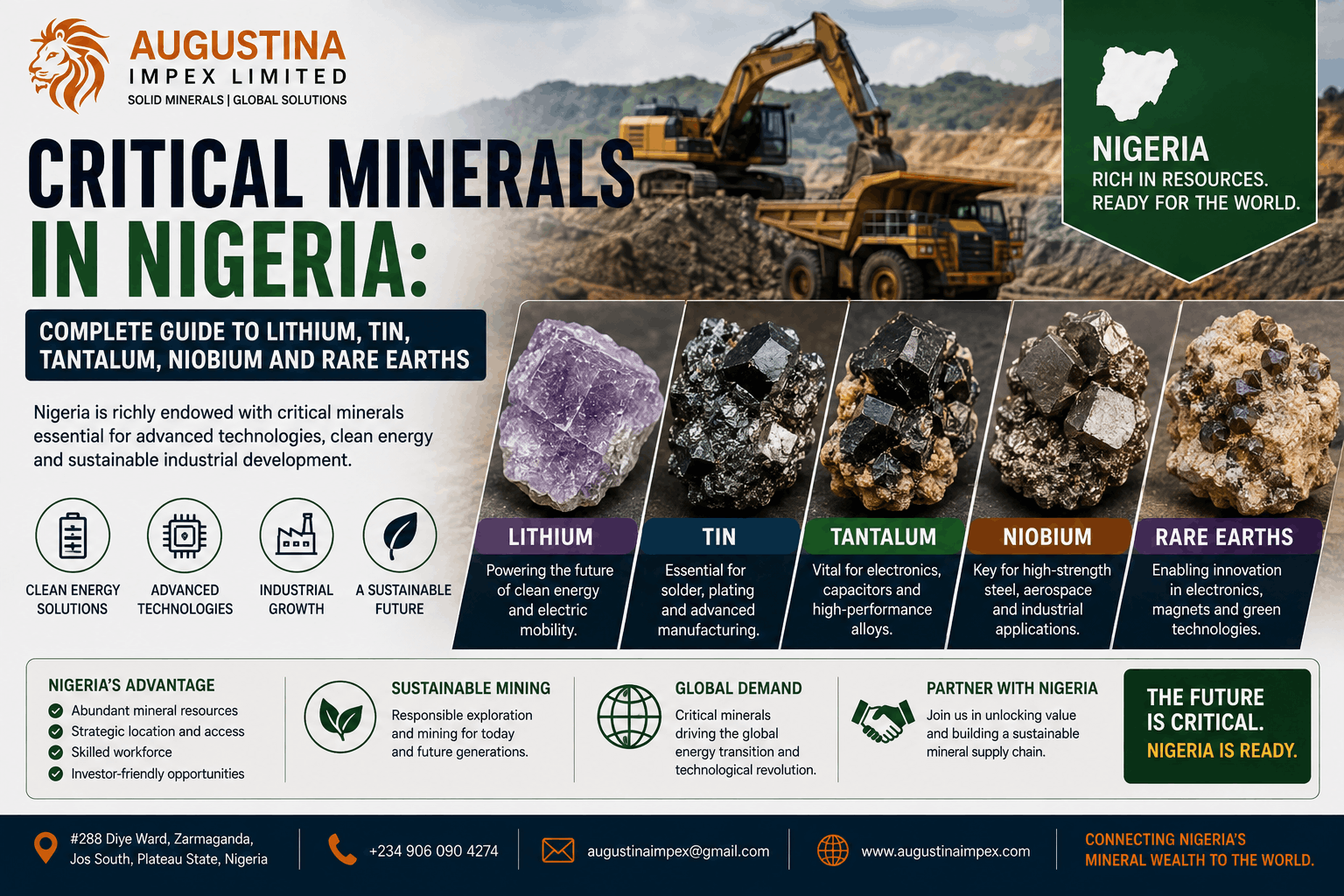
Nigeria Critical Minerals Guide: Lithium, Tin & Rare Earths
Critical Minerals in Nigeria: Complete Guide to Lithium, Tin, Tantalum, Niobium and Rare Earths By…
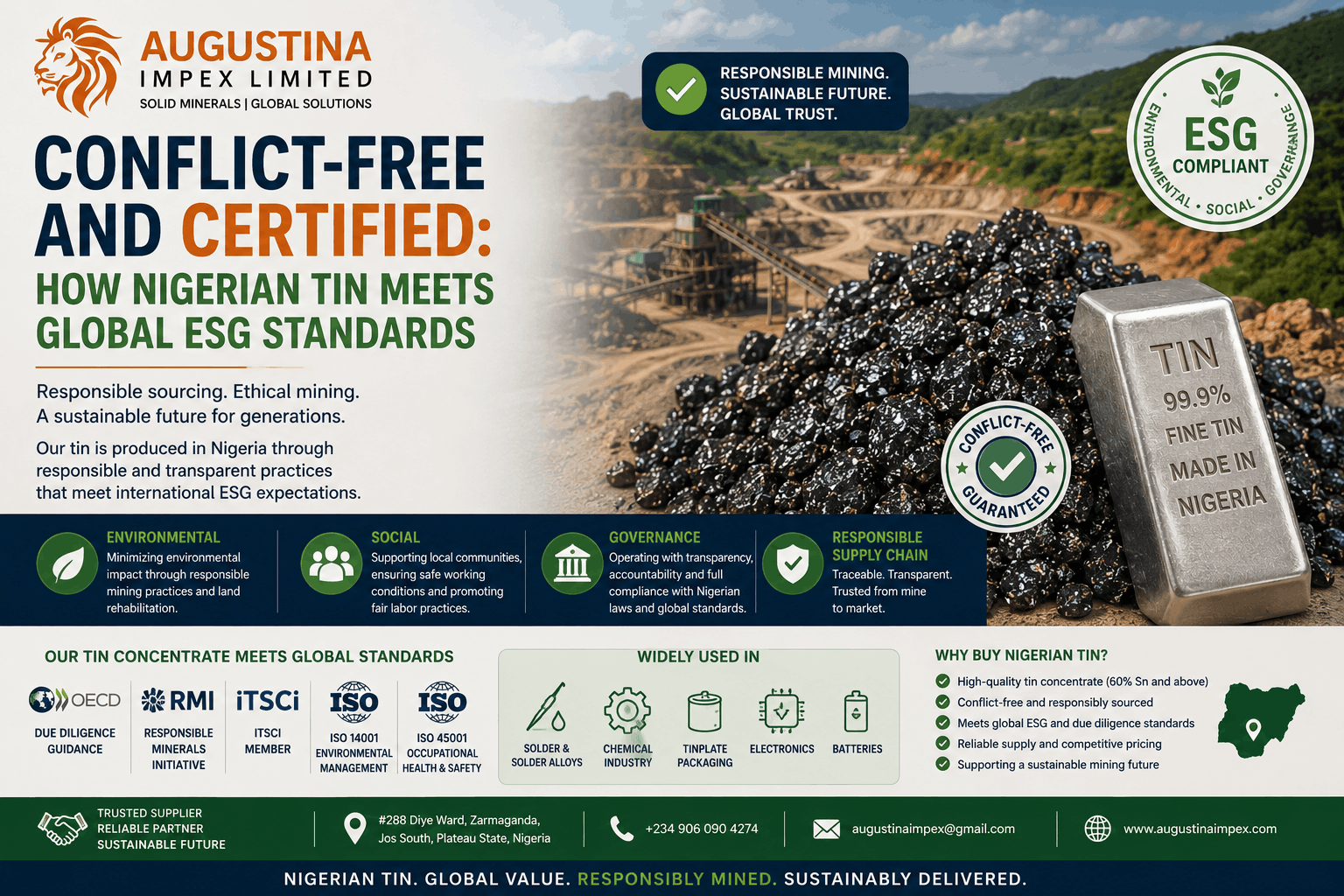
Conflict-Free Nigerian Tin Meets Global ESG Standards
Conflict-Free and Certified: How Nigerian Tin Meets Global ESG Standards By Kolawole King, CEO —…