
Introduction
Rare Earth Elements (REEs) have become some of the most strategically important mineral resources in the modern global economy. As industries continue transitioning toward electric mobility, renewable energy systems, advanced electronics, and high-performance manufacturing, the demand for rare earth minerals continues to rise rapidly.
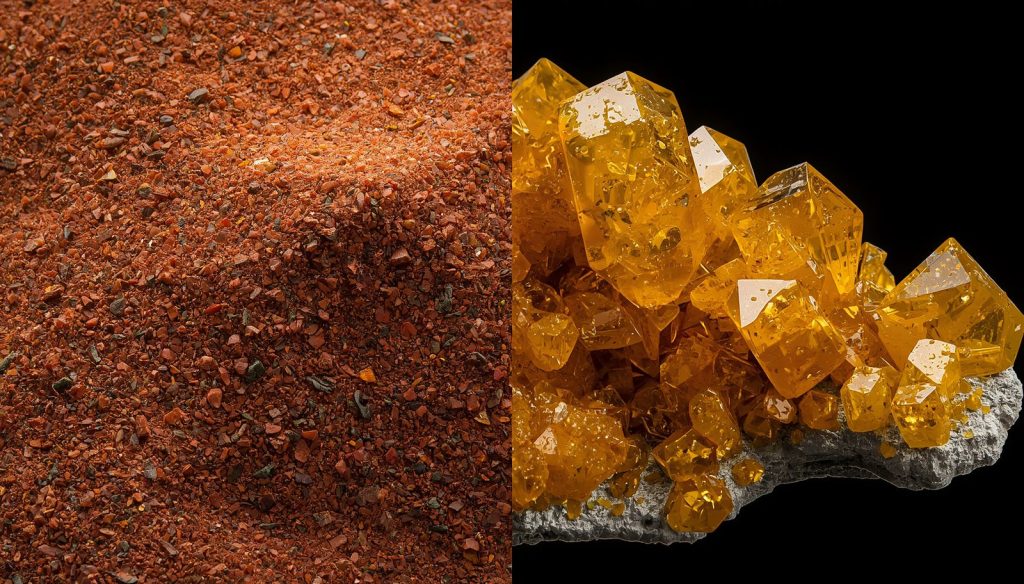
Among the most important rare earth-bearing minerals globally are:
- Monazite
- Bastnasite
Both minerals are major sources of Rare Earth Elements and play critical roles in global industrial supply chains. However, despite their similarities, Monazite and Bastnasite differ significantly in:
- Mineral composition
- Radioactivity
- Processing characteristics
- Commercial attractiveness
- Environmental considerations
- Refining complexity
Understanding these differences is increasingly important for:
- Mining companies
- Rare earth refiners
- Industrial manufacturers
- Commodity traders
- Investors
- Governments
- Technology companies
In this article, we explain the major differences between Monazite and Bastnasite, discuss their industrial importance, and examine why global industries are increasingly interested in lower-radioactivity rare earth feedstock.
What Are Rare Earth Minerals?
Rare earth minerals are minerals that contain economically important concentrations of Rare Earth Elements (REEs).
These elements are essential for manufacturing technologies such as:
- Electric vehicle motors
- Wind turbines
- Permanent magnets
- Smartphones
- Aerospace systems
- Defense technologies
- Advanced electronics
- Renewable energy equipment
Rare earth elements are typically categorized into:
- Light Rare Earth Elements (LREEs)
- Heavy Rare Earth Elements (HREEs)
Both Monazite and Bastnasite are primarily important sources of Light Rare Earth Elements.
What is Monazite?
Monazite is a phosphate mineral commonly found in:
- Heavy mineral sands
- Alluvial deposits
- Granitic systems
- Tin mining environments
Monazite is highly valued because it often contains significant concentrations of:
- Cerium (Ce)
- Lanthanum (La)
- Neodymium (Nd)
- Praseodymium (Pr)
It is one of the world’s most important rare earth-bearing minerals and is commonly associated with mineral sands operations.
Characteristics of Monazite
Advantages
- High rare earth concentration
- Strong TREO values
- Valuable Light Rare Earth Element content
- Important industrial applications
Challenges
- Often contains elevated thorium
- Sometimes contains uranium
- Higher radioactivity
- More complex environmental management
- Greater regulatory oversight
What is Bastnasite?
Bastnasite is a rare earth fluorocarbonate mineral and another major global source of Light Rare Earth Elements.
It commonly contains:
- Cerium (Ce)
- Lanthanum (La)
- Neodymium (Nd)
- Praseodymium (Pr)
Bastnasite has become increasingly important globally because of its:
- Lower radioactive characteristics
- Commercial refining advantages
- Strategic importance within the global clean energy transition
Characteristics of Bastnasite
Advantages
- Lower thorium content
- Lower radioactivity
- Easier refining potential in some cases
- Reduced environmental complications
- Increasing global demand
Challenges
- Deposit availability varies
- Requires proper beneficiation and processing
- Commercial extraction still requires technical expertise
Monazite vs Bastnasite
1. Mineral Composition
Monazite
Monazite is a phosphate mineral.
Bastnasite
Bastnasite is a fluorocarbonate mineral.
This compositional difference significantly affects:
- Processing
- Refining
- Environmental management
- Commercial handling
2. Radioactivity
One of the most important differences between Monazite and Bastnasite is radioactivity.
Monazite
Monazite frequently contains:
- Thorium
- Sometimes uranium
This can result in:
- Moderate to elevated radioactivity
- Increased environmental compliance requirements
- More complex transportation and refining procedures
Bastnasite
Bastnasite generally contains:
- Lower thorium content
- Lower radioactive characteristics
This lower radioactivity profile is one of the major reasons why Bastnasite is increasingly attractive globally.
Why Low-Radioactivity Rare Earth Minerals Matter
Global industries are increasingly prioritizing:
- Safer feedstock
- Easier permitting
- Lower environmental risks
- Reduced regulatory complications
Low-radioactivity rare earth minerals may offer:
- Easier transportation
- Lower compliance costs
- Simplified waste management
- Better public acceptance
- Faster project development
This is one reason why Bastnasite is receiving growing international attention.
Industrial Applications of Monazite and Bastnasite
Both minerals support critical modern industries.
Electric Vehicles (EVs)
Rare earth elements are used in:
- EV motors
- High-performance magnets
- Battery-related technologies
Renewable Energy
Rare earth elements are critical for:
- Wind turbines
- Clean energy systems
- Power generation technologies
Electronics and Semiconductors
Used in:
- Smartphones
- Displays
- Microelectronics
- Semiconductors
Aerospace and Defense
Rare earth materials support:
- Radar systems
- Aerospace alloys
- Guidance systems
- Defense electronics
Processing and Beneficiation
Rare earth mineral beneficiation typically involves:
- Gravity separation
- Magnetic separation
- Concentration upgrading
- Particle size control
- Mineral sorting
Processing quality directly affects:
- TREO value
- Marketability
- Refining suitability
- Export value
Monazite and Bastnasite in Nigeria
Nigeria possesses substantial mineral potential, including:
- Monazite-bearing heavy mineral sands
- Tin-associated rare earth minerals
- Bastnasite-related occurrences
- Strategic mineral deposits
Many rare earth-bearing areas are associated with:
- Plateau State
- Nasarawa State
- Kaduna State
- Niger State
As the global rare earth industry seeks diversified supply chains, Nigeria is attracting increasing international attention.
Nigeria’s Opportunity in the Rare Earth Industry
Nigeria may benefit significantly from:
- Growing EV demand
- Global critical mineral diversification
- Energy transition investments
- Rising industrial mineral demand
However, achieving this potential will require:
- Sustainable mining
- Beneficiation investment
- Infrastructure development
- International partnerships
- Responsible mineral management
About Augustina Impex Limited
Augustina Impex Limited is a Nigerian mineral sourcing, export facilitation, and mining consultancy company with over two decades of industry experience.
Our company specializes in:
- Monazite sand
- Bastnasite
- Ilmenite concentrate
- Zircon sand
- Lithium ore
- Mineral sourcing
- Beneficiation
- Export facilitation
- International mineral trade
We work closely with mineral producers and processing partners involved in heavy mineral sands beneficiation and export-grade concentrate preparation.
Partnership with Mineral Processing Operations in Jos, Plateau State
Augustina Impex Limited maintains strong relationships with mineral processing operations in Jos, Plateau State, Nigeria.
These facilities support:
- Gravity separation
- Magnetic separation
- Mineral upgrading
- Export-grade concentrate production
- Bulk aggregation and stockpiling
Products handled include:
- Monazite concentrate
- Ilmenite concentrate
- Zircon sand
- Tin-bearing concentrates
- Rare earth-related materials
The Future of Rare Earth Minerals
As the world continues transitioning toward:
- Clean energy
- Electric mobility
- Advanced manufacturing
- Strategic technologies
…the importance of rare earth minerals will continue increasing.
At the same time, industries are increasingly prioritizing:
- Lower-radioactivity feedstock
- Sustainable supply chains
- Responsible mineral sourcing
- Diversified global suppliers
This may create significant opportunities for African countries such as Nigeria.
Conclusion
Both Monazite and Bastnasite are strategically important rare earth minerals that play critical roles in the global economy.
Monazite remains commercially valuable due to its strong rare earth concentrations, while Bastnasite is becoming increasingly attractive because of its generally lower radioactive characteristics and refining advantages.
As global industries seek secure and diversified rare earth supply chains, understanding the differences between these minerals becomes increasingly important.
Nigeria possesses significant rare earth potential, and responsible development of these resources may contribute substantially to the future of the country’s mining industry.
Contact Information
Kolawole King
Chief Executive Officer
Augustina Impex Limited
📧 augustinaimpex@gmail.com
🌐 https://augustinaimpex.com
📝 https://augustinaimpexng.blogspot.com/
📱 WhatsApp: +234 906 090 4274
🎥 https://www.youtube.com/watch?v=Izg0t7By6co
-
Previous Post
Radioactivity in Rare Earth Minerals Explained
Post a comment
Related Posts
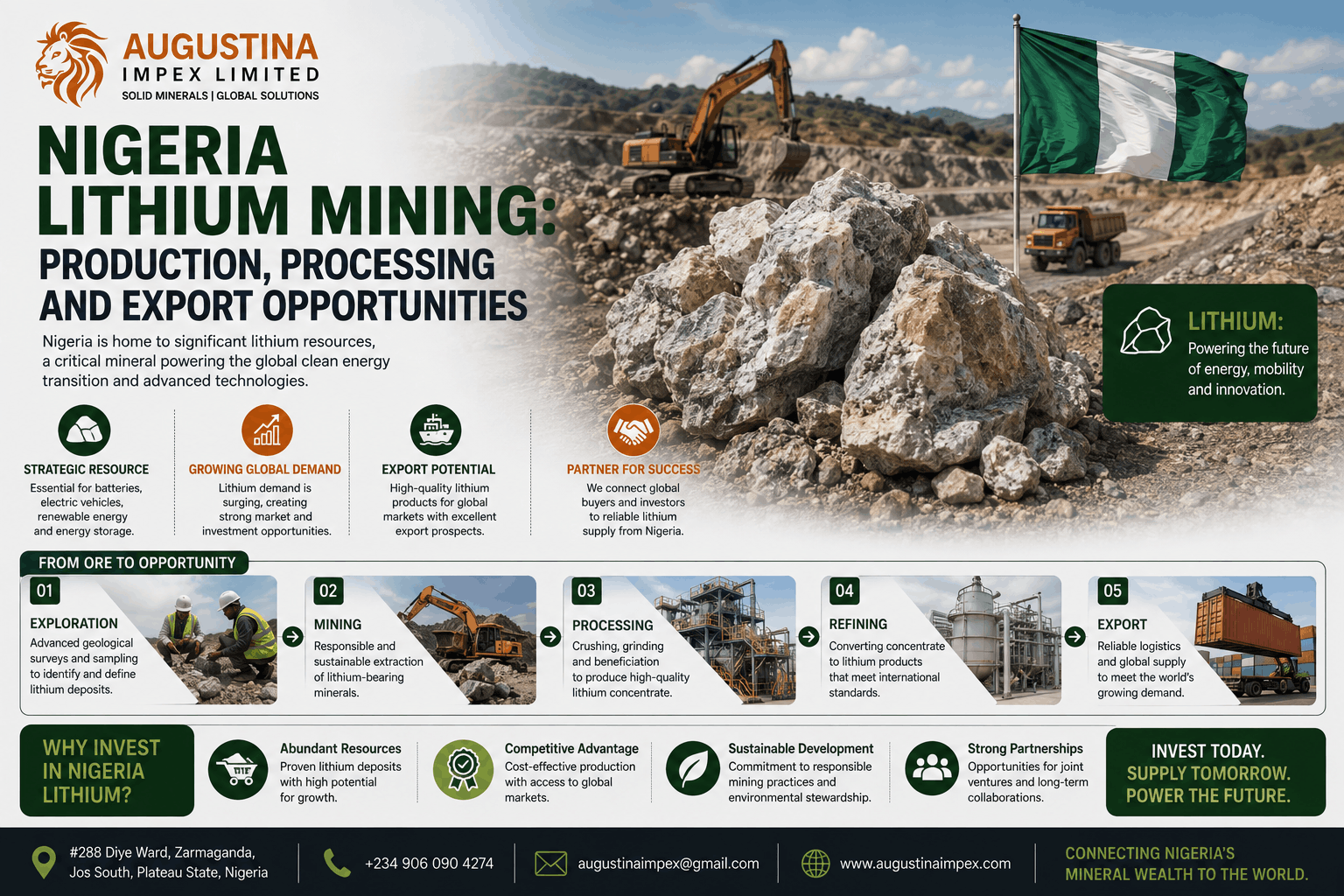
Nigeria Lithium Mining: Production, Processing & Export
Nigeria Lithium Mining: Production, Processing and Export Opportunities By Kolawole King, CEO — Augustina Impex…
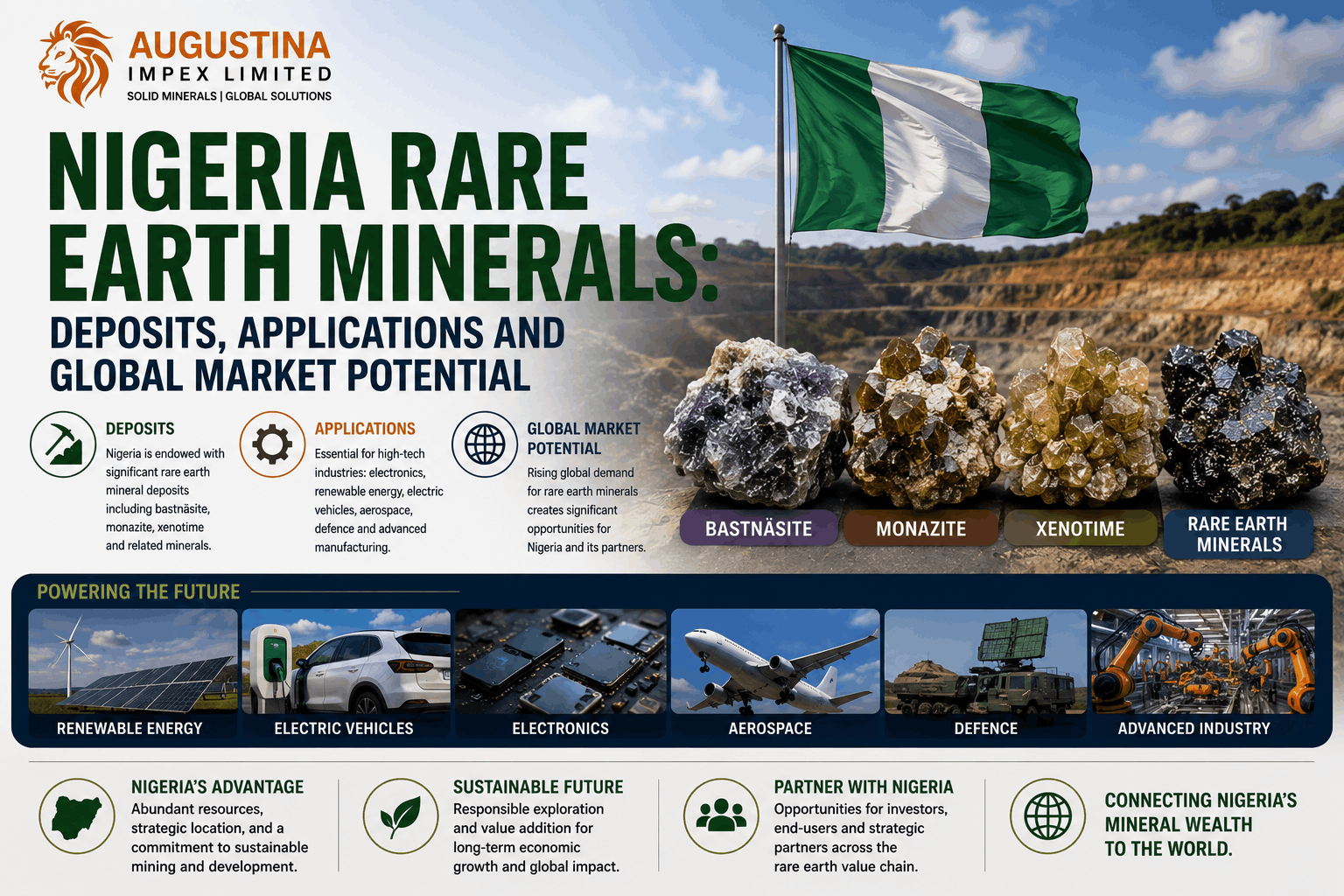
Nigeria Rare Earth Minerals: Deposits & Market Potential
Nigeria Rare Earth Minerals: Deposits, Applications and Global Market Potential By Kolawole King, CEO —…
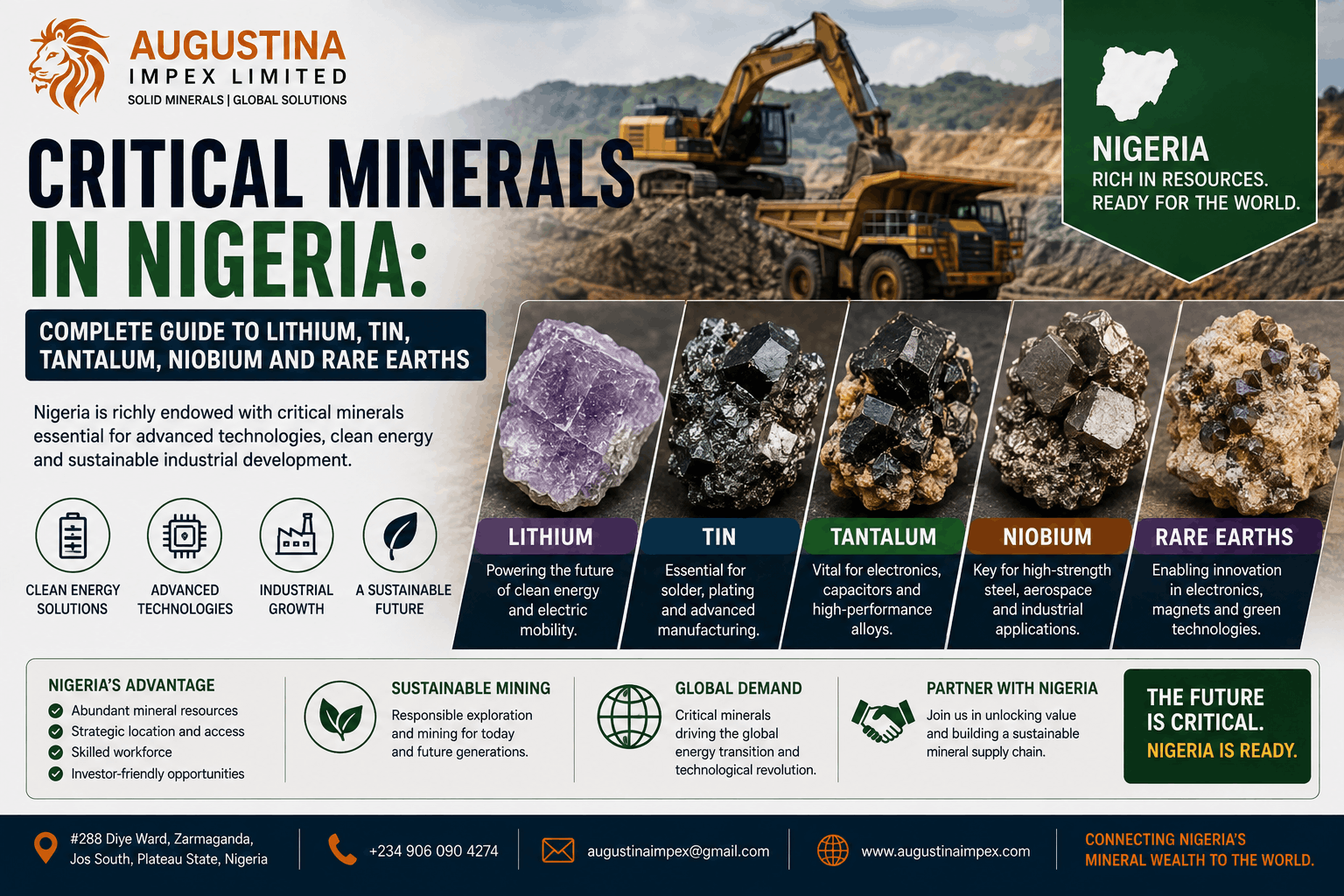
Nigeria Critical Minerals Guide: Lithium, Tin & Rare Earths
Critical Minerals in Nigeria: Complete Guide to Lithium, Tin, Tantalum, Niobium and Rare Earths By…
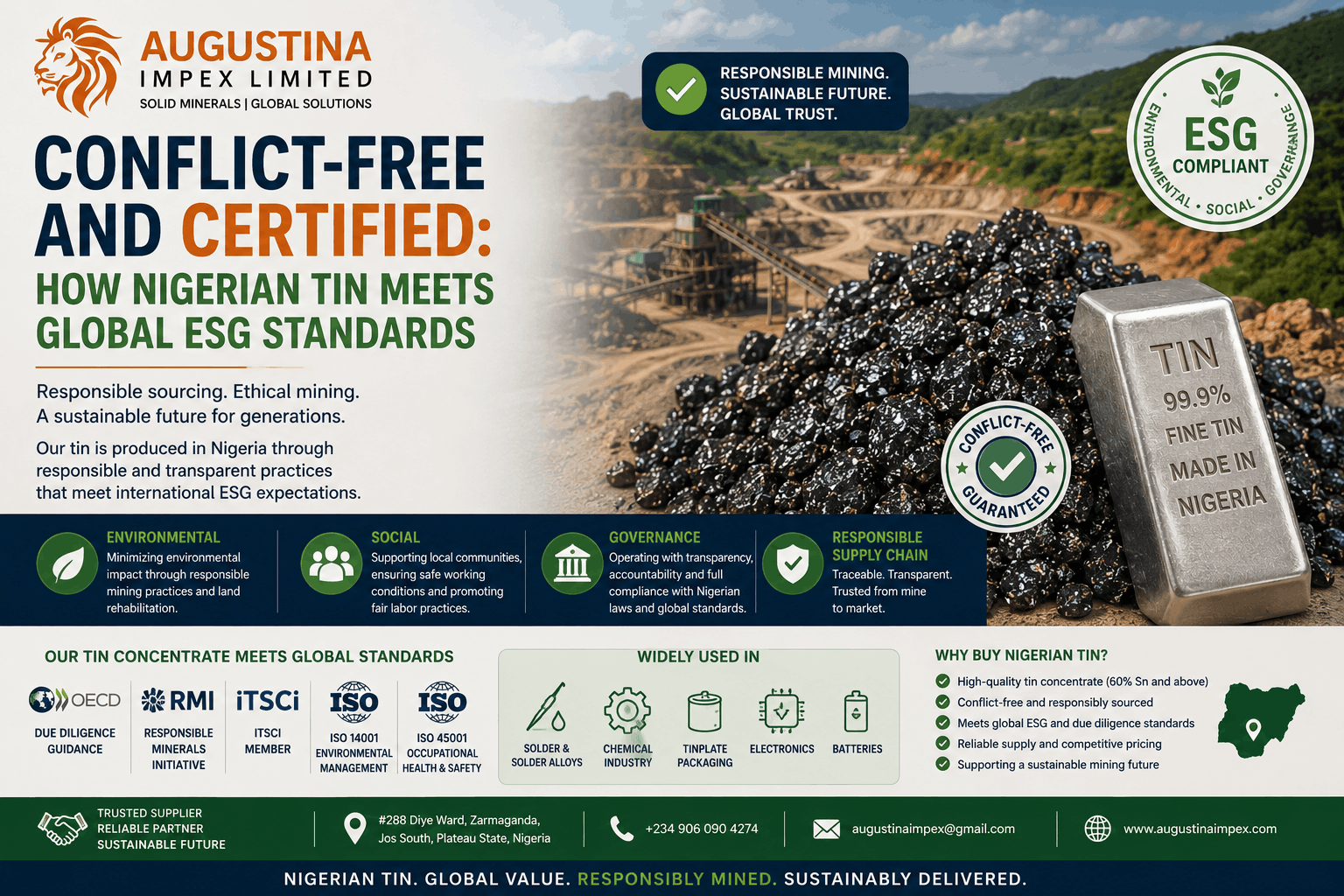
Conflict-Free Nigerian Tin Meets Global ESG Standards
Conflict-Free and Certified: How Nigerian Tin Meets Global ESG Standards By Kolawole King, CEO —…