
Nigerian Lithium Ore Producer: Inside Nigeria’s Growing Lithium Mining Industry
Nigeria is a lithium ore producing nation. This is not a future aspiration or a geological promise waiting to be unlocked — it is a present commercial reality. Across six states, Nigerian miners are digging, sorting, and stockpiling spodumene-kunzite and lepidolite ore every day. Artisanal cooperatives work the pegmatite outcrops of the Jos–Bukuru field in Plateau State. Junior mining companies are drilling and defining resources in Nasarawa, Taraba, and Kwara. Processing plants in Jos are gravity-separating and magnetically cleaning lithium ore for export. Shipments of Nigerian lithium ore leave Apapa port, Lagos, bound for China, India, and increasingly Europe, on a regular and growing basis.
What makes Nigeria’s lithium production sector distinctive — and in many ways more complex to understand than the production landscapes of Australia, Chile, or China — is its structure. Nigerian lithium production is not dominated by a handful of large, publicly listed mining companies operating giant open-pit mines with fully mechanised processing plants. It is a disaggregated, multi-scale, geographically distributed production system built primarily on artisanal and small-scale mining (ASM) operations, coordinated and consolidated by aggregators, processed at shared beneficiation facilities, and exported through registered export companies operating within Nigeria’s formal mineral export regulatory framework. Understanding this structure — how lithium ore actually gets from the pegmatite vein to the stockpile to the export container — is essential knowledge for any international buyer, investor, development financier, or policy analyst who wants to engage seriously with Nigerian lithium.
This article is the most detailed, accurate, and commercially honest account available of Nigeria’s lithium ore production landscape. It covers who produces lithium in Nigeria, where it is mined, how it is mined, what grades are achievable, how production is quality-controlled, what volumes are available, what the challenges are, and what the production trajectory looks like over the next five to ten years. Whether you are a buyer seeking to understand the supply side of your Nigerian lithium procurement, an investor evaluating a producing asset or pre-production project, or a researcher studying African lithium production, this article will give you the grounded, state-by-state intelligence you need.
The Geology That Makes Nigeria a Lithium Producer — A Foundation Explanation
Nigeria’s lithium production is rooted in one of the most mineralogically productive geological formations in Sub-Saharan Africa: the Nigerian Precambrian Basement Complex, a vast terrain of ancient crystalline rocks — granites, gneisses, migmatites, and schists — that underlie much of Nigeria’s middle belt and northwest. Cutting through these ancient rocks are swarms of pegmatite intrusions — late-stage crystalline veins and dykes that formed when the last, most volatile-rich portions of cooling granitic magmas were injected into fractures in the surrounding rock and crystallised slowly, concentrating incompatible elements — lithium, caesium, tantalum, niobium, beryllium, rubidium — into large crystal minerals that are visible to the naked eye.
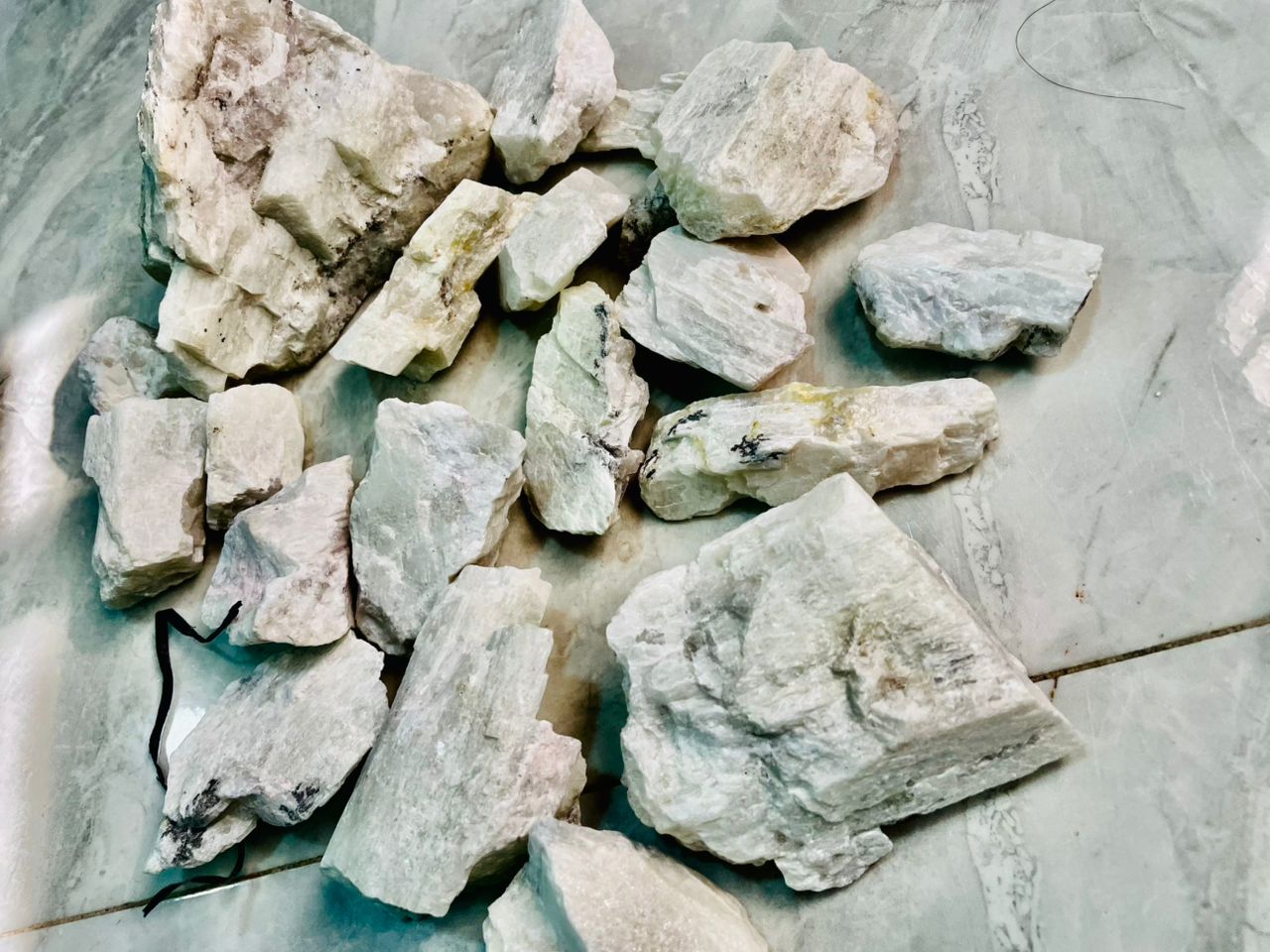
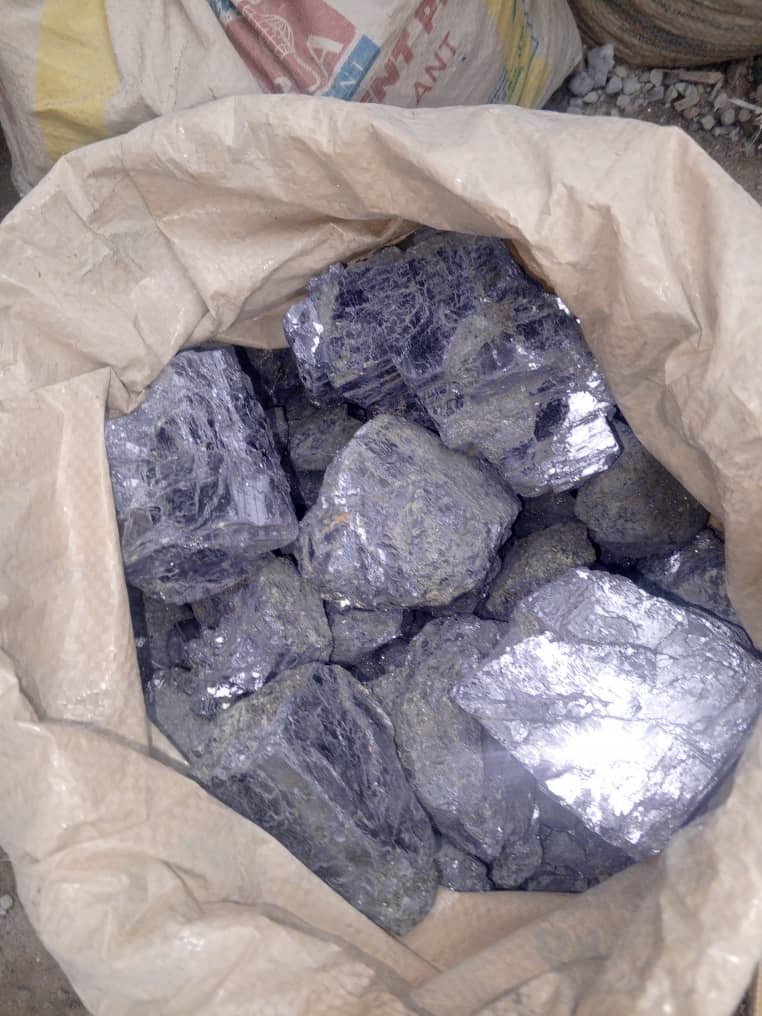
These pegmatites — classified as Lithium-Caesium-Tantalum (LCT) pegmatites in modern mineralogical terminology — are the primary host of Nigeria’s economically exploitable lithium mineralisation. Within them, lithium is concentrated primarily in two minerals: spodumene (LiAlSi₂O₆), a chain silicate that forms large, often pale green or lilac crystals (the gem variety is called kunzite), and lepidolite (K(Li,Al)₃(Al,Si)₄O₁₀(OH,F)₂), a lithium-bearing mica that forms fine, scaly, often lilac-purple aggregates. Both minerals are visually distinctive from the white quartz and pink feldspar gangue that makes up the majority of the pegmatite body, making selective manual mining practical — which is a significant reason why artisanal mining has been commercially viable in Nigerian lithium pegmatites without the need for heavy mechanised equipment.
| Lithium Mineral | Chemical Formula | Li₂O Content (Theoretical) | Visual Appearance | Processing Route |
|---|---|---|---|---|
| Spodumene | LiAlSi₂O₆ | 8.03% Li₂O (pure mineral) | Pale green, grey-white, lilac (kunzite) crystals; bladed habit; waxy lustre | DMS → Flotation → Calcination → Sulphuric acid leach → Li₂CO₃/LiOH |
| Lepidolite | K(Li,Al)₃(Al,Si)₄O₁₀(OH,F)₂ | 3.0%–7.7% Li₂O (variable by composition) | Lilac-purple, fine scaly mica aggregates; pearly lustre; soft (Mohs 2.5–3) | Sulphate roasting or pressure leaching → Li₂SO₄ → Li₂CO₃ |
| Petalite | LiAlSi₄O₁₀ | 4.88% Li₂O (pure mineral) | Colourless to white; glassy; tabular crystals | Calcination → leach; also used directly in glass-ceramics |
| Amblygonite | LiAlPO₄F | 10.1% Li₂O (pure mineral) | White to yellowish; vitreous; massive habit | Acid leach; uncommon in Nigerian production stream |
Note: Spodumene and lepidolite account for virtually all commercially produced Nigerian lithium ore. Petalite and amblygonite are present in some Nigerian pegmatites but are not currently produced at commercial scale as distinct lithium mineral products.
The Structure of Nigerian Lithium Ore Production — Who Actually Mines It
The single most important thing to understand about Nigerian lithium ore production is its structure — because it is fundamentally different from the production structure of Australia, Chile, or China, and misunderstanding it leads to unrealistic expectations about consistency, volume, and delivery logistics. Nigerian lithium production operates across four distinct producer tiers, each with different production methods, grade characteristics, regulatory status, and commercial behaviours.
① Artisanal Miners (ASM) — The Production Backbone: Artisanal miners — individuals and small family groups working with hand tools, hammers, chisels, and basic manual equipment — account for the majority of current Nigerian lithium ore production by tonnage. They work individual pegmatite outcrops, often on land they have negotiated access to informally, selectively mining the most lithium-rich portions of exposed pegmatite bodies. Their production is irregular, grade-variable, and sold to local aggregators or directly to export company representatives at field collection points. ASM lithium miners work predominantly in Plateau, Nasarawa, Taraba, Kwara, and Ekiti States.
② Small-Scale Mining Licence (SSML) Holders — The Formal Small Producers: SSML holders operate under a mining licence issued by the Federal Ministry of Mines and Steel Development (FMMSD), which grants the right to mine on a defined, limited area (typically a few hectares) using small-scale mechanised equipment (excavators, small crushers, water pumps). SSML operations produce more consistent grades and larger regular tonnages than artisanal miners and typically have more reliable supply agreements with aggregators and export companies. Several SSML holders in the Jos Plateau field have established ongoing supply relationships with Augustina Impex.
③ Junior Exploration and Mining Companies — The Emerging Formal Sector: A growing number of Nigerian and international junior mining companies hold exploration licences (EL) or full mining leases (ML) over Nigerian lithium pegmatite tenements and are at various stages of exploration drilling, resource definition, feasibility study, and mine development. These companies — listed on the Nigerian Exchange Group (NGX), the Toronto Stock Exchange Venture Exchange (TSX-V), or the Australian Securities Exchange (ASX) — represent the future formal, large-scale production tier of Nigeria’s lithium sector but are not yet producing at commercial scale from most tenements.
④ Aggregators and Processing Companies — The Commercial Consolidators: This tier — which includes Augustina Impex Limited — does not mine lithium directly but consolidates production from multiple ASM and SSML sources, coordinates beneficiation through shared processing plant infrastructure, manages export documentation, and maintains commercial relationships with international buyers. Aggregators are essential to the commercial functioning of the Nigerian lithium production system because they provide the scale, documentation capability, and market access that individual ASM producers and small SSML operations cannot achieve independently.
State-by-State Nigerian Lithium Production Landscape
Nigeria’s lithium ore production is geographically dispersed across six principal producing states, each with distinct geological characteristics, production methods, infrastructure access, and commercial development status. The following state-by-state analysis is the most geographically specific and technically grounded guide to Nigerian lithium production available to international buyers and investors.
Plateau State — Nigeria’s Premier Lithium Producing State
| Parameter | Detail |
|---|---|
| Primary Mining Zone | Jos–Bukuru Pegmatite Field; Shere Hills; Vom; Jos South LGA; Bassa LGA |
| Lithium Mineral | Spodumene-Kunzite (primary); minor lepidolite and petalite |
| Typical ROM Grade | 1.5% – 5.5%+ Li₂O (most commercial supply: 1.8%–3.5%) |
| Dominant Producer Type | Artisanal miners (majority); SSML holders (growing); junior exploration companies (active) |
| Processing Infrastructure | HMS processing plant (operational) — gravity, magnetic, electrostatic separation. Managed by Eliezer Onah (+234 706 341 9668) |
| Export Logistics | Jos → Abuja → Lokoja → Lagos (Apapa/Tin Can Island Port). ~650km road haul; 2–3 days transit. |
| Commercial Development Status | Most mature producing zone in Nigeria; active ongoing export supply available |
Plateau State is, unambiguously, the epicentre of Nigerian lithium ore production. The Jos–Bukuru Pegmatite Field — a complex of hundreds of individual pegmatite bodies distributed across the Jos Plateau upland at 1,200–1,800m elevation — has been producing industrial minerals since the early twentieth century, initially for tin (cassiterite), columbite-tantalite, and zircon, and increasingly for spodumene-kunzite since the global lithium demand surge began in earnest around 2018. The same artisanal mining communities that have worked the Jos Plateau for generations producing cassiterite and columbite have adapted their practices to include spodumene as a primary commercial target, making Plateau State both the most experienced and the most immediately supply-capable of Nigeria’s lithium producing states.
The geology of the Jos Plateau field is particularly favourable for artisanal lithium production: the pegmatite bodies weather to a significant depth — creating a residual, partly weathered “eluvial” zone near the surface in which spodumene crystals are partially liberated from the surrounding feldspar and quartz matrix, making manual sorting more effective and gravity separation more efficient than in fresh, hard pegmatite rock. This weathering profile significantly reduces the comminution energy required to liberate spodumene from gangue, lowering the processing cost relative to fresh hard-rock operations and making small-scale production economically viable.
Nasarawa State — The Growing Adjacent Producer
Immediately south and east of Plateau State, the Nasarawa pegmatite belt extends the Jos–Bukuru productive zone into Nasarawa State’s Lafia, Akwanga, Nasarawa–Eggon, and Obi Local Government Areas. The geological continuity between the Plateau and Nasarawa sections of the broader pegmatite field means that lithium mineralisation characteristics — grade range, mineral assemblage, crystal size — are broadly comparable across the state boundary, though Nasarawa tends to produce slightly more variable grades due to more fragmented and less systematically explored pegmatite exposure.
Nasarawa State’s lithium production is characterised by significant artisanal activity that has grown rapidly since 2020, when improving lithium prices and growing buyer interest from Chinese and Indian traders established a local demand signal that activated new mining effort across previously under-exploited pegmatite outcrops. The state’s proximity to Abuja — Nigeria’s Federal Capital Territory — gives it a transport logistics advantage for the initial movement of ore from field collection points to the main Abuja–Lagos highway corridor, which serves as the principal export logistics spine for Nasarawa ore.
① Nasarawa–Eggon LGA: The most active artisanal lithium mining zone in Nasarawa State, where pegmatite bodies crossing the Eggon Hills host spodumene at 1.2%–3.8% Li₂O. Multiple ASM cooperatives are active here, producing for aggregation by Jos-based export companies including Augustina Impex.
② Akiri Zone (Obi LGA): The Akiri area is better known for copper mineralisation (the Akiri Copper Mine, SSML 59148, referenced in the Augustina Impex mineral portfolio) but also hosts lithium-bearing LCT pegmatites associated with the same basement complex intrusives. Lithium ore from Akiri is produced as a secondary commodity alongside the primary copper-focused mining activity.
③ Lafia Pegmatite Belt: The Lafia area in central Nasarawa State hosts a series of north-northeast-trending pegmatite dykes with confirmed spodumene and columbite content. Junior exploration companies have identified drill targets here that could support more systematic resource definition and eventual small-scale formal mining development.
Taraba State — Nigeria’s Next Frontier Lithium Producer
Taraba State represents arguably the most geologically significant and least commercially exploited of Nigeria’s lithium producing zones. The Mambilla Plateau in southern Taraba — a high-altitude tableland rising to over 1,600m above sea level — sits on a section of the Nigerian Basement Complex that hosts some of the thickest, highest-grade, and most geologically continuous LCT pegmatite bodies yet documented in Nigeria. Artisanal mining activity on the Mambilla Plateau has intensified markedly since 2021, driven by local awareness of improving lithium prices and by the attention of both Nigerian and international mineral traders.
The challenge with Taraba is logistics. The Mambilla Plateau is remote — road access from Jalingo (the state capital) to the plateau requires traversing steep escarpment roads that are challenging in dry season and near-impassable by heavy vehicles in wet season. The absence of significant processing infrastructure in Taraba means that ore must be transported in bulk form over considerable distances before beneficiation — adding transport cost and increasing the minimum viable grade at which production is commercially attractive. Despite these constraints, Taraba’s production is growing, and the geological potential — particularly for high-grade spodumene at 3%+ Li₂O — makes it a priority zone for Augustina Impex’s supply network development.
Edo State — Nigeria’s Lepidolite Production Centre
While Plateau, Nasarawa, and Taraba States are the principal spodumene producers, Edo State occupies a distinct and important position in the Nigerian lithium production landscape as the country’s primary lepidolite producing zone. The Auchi area in Etsako West Local Government Area hosts pegmatite bodies that are exceptionally rich in lepidolite — the lithium-bearing mica mineral that represents a different chemical and processing pathway to spodumene lithium but an equally important feedstock for lithium chemical production, particularly in Chinese processing plants optimised for mica-lithium chemistry.
① Location: Auchi, Etsako West Local Government Area, Edo State. Approximately 140km northwest of Benin City, 350km from Lagos port via the Benin–Lagos expressway corridor.
② Production Method: Artisanal hand mining of lepidolite-rich pegmatite bodies. Lepidolite’s soft, scaly mica nature makes it more amenable to manual collection than hard spodumene crystals — miners can selectively collect lepidolite aggregates from pegmatite outcrops with high efficiency relative to the raw ore weight.
③ Grade Range: 1.2%–2.5% Li₂O, with regular supply at 1.5%–2.0% Li₂O. High-grade material at 2.0%–2.5% Li₂O is available in selective batches.
④ Supply Aggregation: Augustina Impex maintains a supply relationship with our associate supplier Rahim Momoh (Rahimmomoh1234@gmail.com) who coordinates field aggregation in the Auchi zone. Regular batches of lepidolite are available at ex-works pricing from Auchi (₦150,000–₦230,000/MT depending on grade) for buyers who can arrange onward transport.
⑤ Logistics: Auchi to Lagos is a well-maintained road corridor (approximately 350km, 4–5 hours by truck). Regular truck dispatch from the Auchi collection point to Apapa port is established and reliable by Nigerian logistics standards.
Kwara, Ekiti, and Zamfara States — Emerging and Secondary Producers
Three additional states contribute to Nigeria’s total lithium ore production at various stages of commercial development, and their output increasingly feeds into the Augustina Impex aggregation network as supply routes and commercial protocols have been established.
Kwara State hosts lithium-bearing LCT pegmatites in the central Kwara Basement Complex zone around Offa, Ilorin South, and Share Local Government Areas. Lithium production in Kwara is largely a by-product of feldspar and columbite artisanal mining — miners who are targeting feldspar for ceramic industry sales or columbite for export now routinely set aside spodumene-rich material that intersects their working faces, and this selective by-product collection has established a meaningful supplementary lithium ore supply stream from the state. Grades of 1.0%–2.8% Li₂O are typical from Kwara sources.
Ekiti State sits in the southwestern portion of Nigeria’s Basement Complex, where the same LCT pegmatite generation that hosts lithium across the middle belt extends into the Ikere–Ado Ekiti zone and the wider Ekiti–Ondo basement. Spodumene occurrences at grades of 1.0%–2.5% Li₂O have been documented by artisanal miners and several junior exploration companies that have staked tenements in the region since 2020. Ekiti’s proximity to Lagos port (approximately 250km, one of the shortest mine-to-port distances of any Nigerian lithium producing zone) is a significant logistics advantage that offsets the relatively lower grades compared to Plateau State production.
Zamfara State in the northwest hosts lithium mineralisation associated with the same broader Nigerian craton pegmatite belt, with artisanal miners in the Anka and Maru LGA areas producing spodumene-bearing material as a secondary mineral alongside gold and columbite — the region’s primary artisanal mining targets. Zamfara presents additional security and logistics coordination challenges, and Augustina Impex works through established, locally trusted partners to source material from the region.
How Nigerian Lithium Ore Is Mined — The Production Process Explained
Understanding how Nigerian lithium ore is actually extracted from the ground — the physical mining process — is important for buyers who need to understand the grade consistency, physical form, and contamination risks of the product they are purchasing. Nigerian lithium production encompasses three distinct mining methods, each producing material with different characteristics.
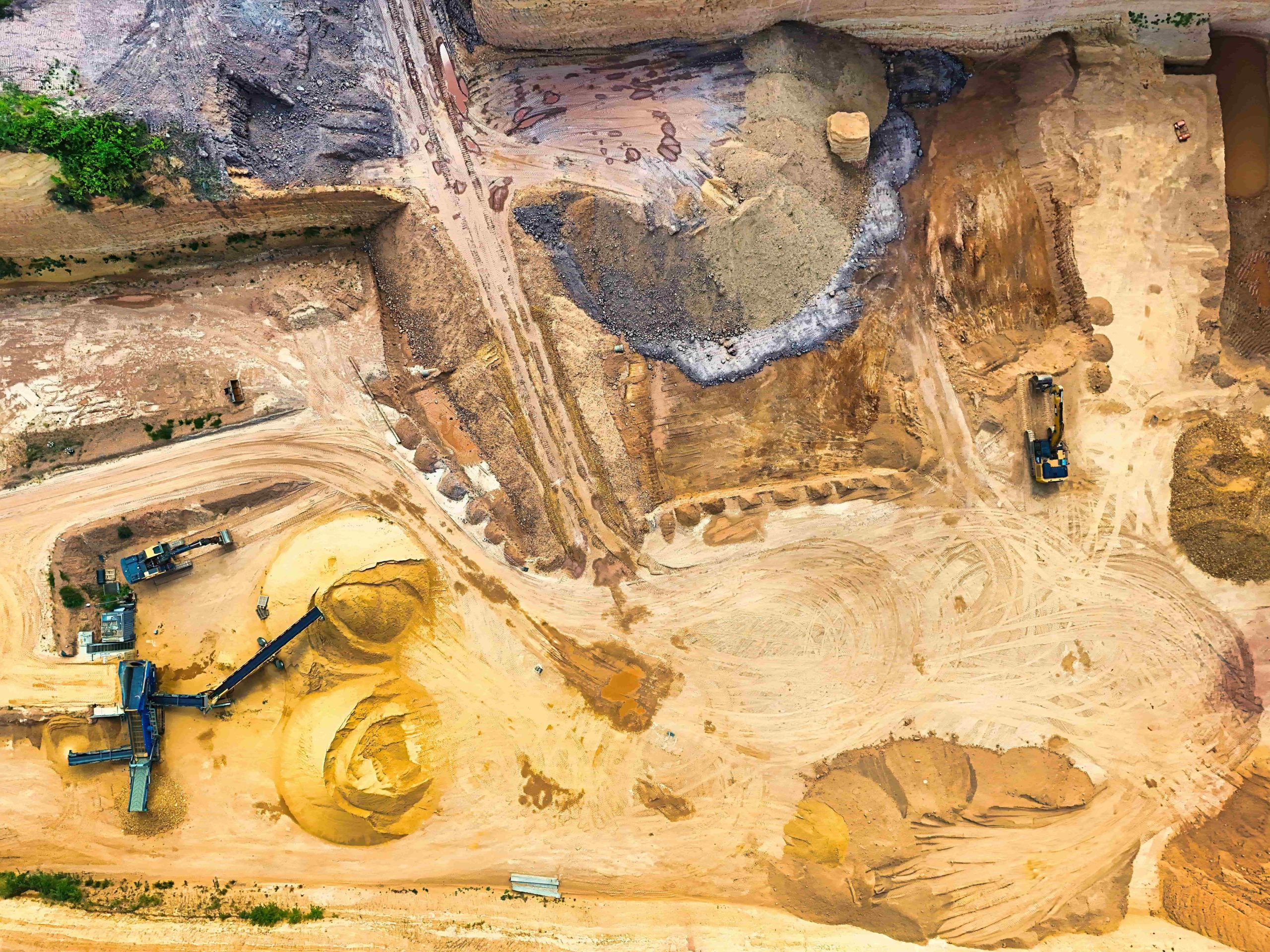
① Open-Cut Hand Mining of Weathered Pegmatite (Eluvial Mining): The most common method in the Jos Plateau field. Miners excavate the weathered residual soil and partially disintegrated pegmatite rock above and around exposed pegmatite bodies using hand tools (pick axes, hoes, shovels) and occasionally small excavators for overburden removal. In the weathered zone, spodumene crystals and crystal fragments are already partly separated from the surrounding feldspar-quartz matrix by weathering — making visual sorting of spodumene-rich material from gangue more practical than in fresh unweathered rock. Eluvially mined material tends to be finer-grained, somewhat clay-contaminated, and more variable in grade than fresh hard-rock production, but requires much lower energy input to liberate the spodumene for processing.
② Selective Hand Mining of Fresh Pegmatite Outcrops: Where pegmatite bodies crop out at surface as fresh, unweathered rock — particularly in the Shere Hills and higher-elevation portions of the Jos Plateau field — miners attack the exposed pegmatite face with hammers and chisels, selectively breaking out the visually distinctive spodumene-rich portions of the pegmatite body and setting aside the quartz-feldspar waste. This method requires more physical effort per tonne of ore produced than eluvial mining but tends to produce higher-grade material (2.5%–5.5% Li₂O) with lower clay and moisture content. The ore is produced in angular fragments of variable size, requiring crushing or screening before processing.
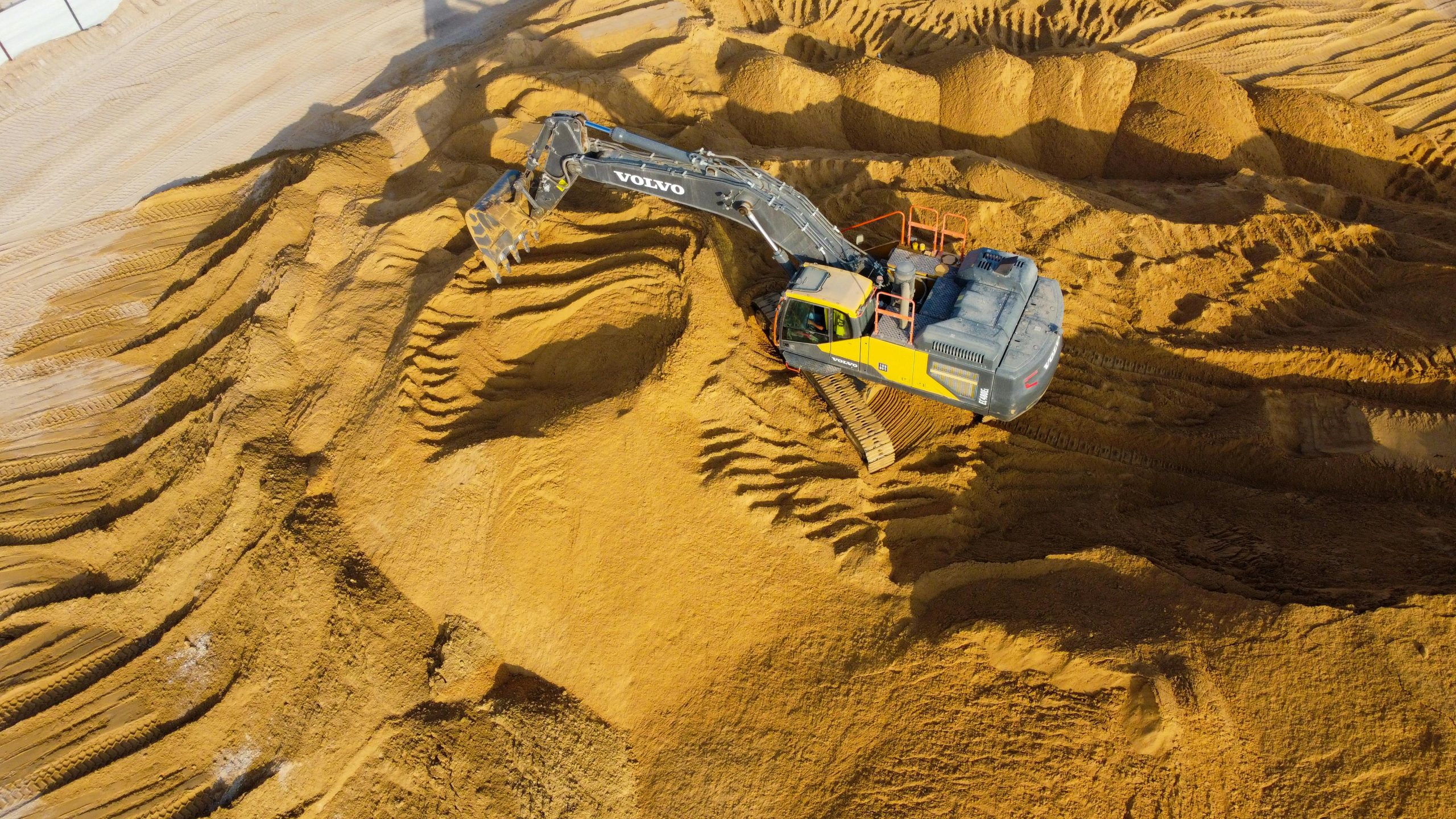
③ Semi-Mechanised Bulk Mining by SSML Operators: SSML licence holders with access to small excavators (typically 5–20 tonne class, rented or owned) can bulk-mine the pegmatite body and surrounding weathered zone, producing a higher-tonnage, more consistent grade feed for downstream gravity separation processing. This method produces less selective, lower-average-grade ore (1.5%–2.5% Li₂O) but in much larger and more consistent tonnages — 50–200 MT per week from a well-equipped SSML operation — making it the preferred production method for buyers who prioritise volume and consistency over maximum grade.
Grade Control in Nigerian Lithium Production — How Quality Is Managed
Grade control — maintaining a consistent Li₂O content in the mined ore — is both the central technical challenge and the central commercial priority of Nigerian lithium ore production. In a large formal mine with a continuous sampling programme, electronic ore tracking, and a processing plant with assay laboratory, grade control is a disciplined engineering process. In the ASM-dominated Nigerian lithium sector, grade control is a more practical, judgement-based process that nonetheless produces commercially meaningful results when properly managed.
The primary grade control mechanism in Nigerian artisanal lithium production is visual sorting — experienced miners and aggregators judge the Li₂O content of material by the visual abundance and quality of spodumene crystals in the ore. Spodumene is visually distinctive — its pale green to grey-white, bladed crystal habit, vitreous lustre, and characteristic cleavage faces make it identifiable to an experienced eye even in a mixed rock sample. Miners who have spent years working with Nigerian pegmatite materials develop a reliable intuitive sense of what different grade material looks like, allowing them to sort and grade-separate their production into rough grade categories before selling to aggregators.
① At the Mine Face — Visual Sort by Miner: ASM miners sort their production into approximate grade categories (high-grade: visually spodumene-rich; mid-grade: mixed spodumene and gangue; low-grade/waste: predominantly feldspar-quartz with minor spodumene). High-grade material commands a premium at the field buying point; low-grade material is typically rejected or sold at minimal price.
② At the Field Collection Point — Aggregator Grade Assessment: Augustina Impex’s field representatives assess incoming ore batches visually and reject material that falls below the minimum grade threshold for the active buyer order. Batches that pass visual assessment are bagged, weighed, tagged, and loaded for transport to the processing point in Jos or Lagos staging area.
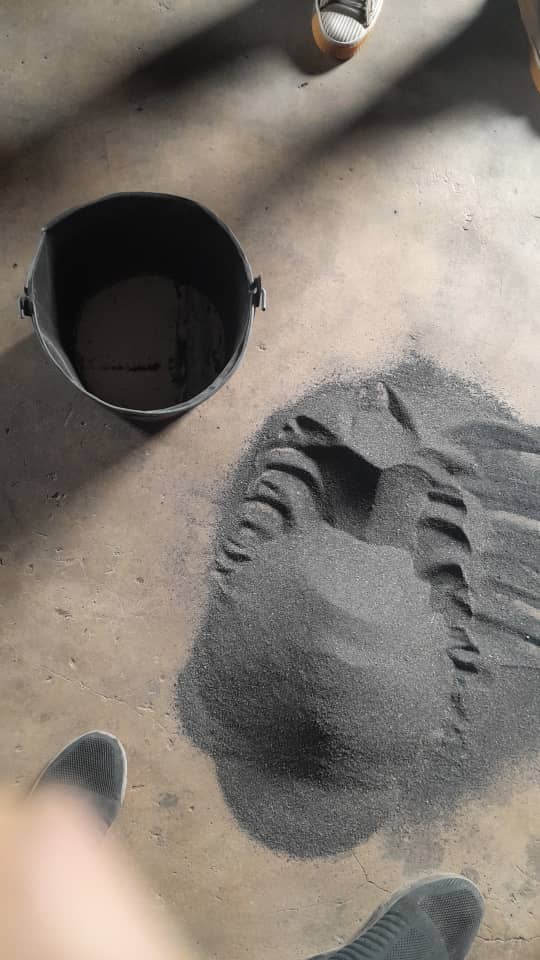
③ At the HMS Plant — Physical Beneficiation: Where applicable, aggregated ore is passed through the Jos HMS processing plant for gravity pre-concentration — spiral concentrators and shaking tables remove the coarse quartz-feldspar gangue and produce a gravity concentrate with improved Li₂O grade relative to the run-of-mine feed. This processing step is the most reliable grade upgrade available within the current Nigerian processing infrastructure.
④ Pre-Shipment Inspection — Definitive Grade Determination: The final, legally binding grade determination is made by the PSI inspector (CCIC, SGS, or Bureau Veritas) who collects representative samples from the assembled export lot, sends them to an accredited laboratory for chemical assay, and issues a weight/grade certificate. The PSI certificate’s Li₂O value is the commercial grade used for price settlement — not the miner’s estimate or the aggregator’s visual assessment.
The Role of Junior Mining Companies in Nigeria’s Formal Lithium Production Sector
While ASM producers and SSML operators form the current productive core of Nigerian lithium output, the trajectory of the sector over the next five to fifteen years will be shaped by the junior mining companies — both Nigerian and international — that are currently exploring, drilling, and developing lithium tenements across the country’s principal pegmatite belts. These companies represent the embryonic formal large-scale production tier that will, over time, transform Nigerian lithium production from an ASM-dominant artisanal system to a more conventional, large-scale, heavily capitalised mining industry.
Several categories of junior company activity are currently underway across Nigerian lithium tenements: systematic geological mapping and channel sampling to characterise the grade and geometry of pegmatite bodies; reverse circulation (RC) and diamond core drilling programmes to define JORC- or NI43-101-compliant resource estimates; preliminary economic assessments (PEA) and prefeasibility studies (PFS) modelling the economics of formal mine development; and in some cases, early-stage toll processing or small-scale production agreements to generate cash flow and geological data simultaneously.
① JORC/NI43-101 Resource Estimates: Formal drilling programmes produce measured, indicated, and inferred resource estimates to international reporting standards, giving buyers and investors confidence in the total mineral endowment of a deposit and the consistency of its grade profile — information that is absent for virtually all current ASM-supplied Nigerian lithium.
② Continuous, High-Volume Production: A formal mine with a plant processing 500,000–2,000,000 MT of ore per year can produce lithium concentrate at a scale and consistency that ASM operations cannot match — providing large-volume buyers (lithium chemical plants, battery precursor manufacturers) with the quantity certainty they need for long-term supply agreements.
③ 6%+ Li₂O Flotation Concentrate: Formal mines with flotation plants produce the 6%+ Li₂O spodumene concentrate that commands international benchmark pricing and is accepted by the full range of downstream processors — opening the market segment that is currently not accessible to Nigerian artisanal ROM ore supply.
④ Bankable Off-Take Agreements: Junior mining companies with defined resources and feasibility studies can enter into long-term offtake agreements with downstream processors — providing revenue certainty that supports project financing and demonstrating the commercial seriousness of the Nigerian lithium sector to international capital markets.
Challenges Facing Nigerian Lithium Ore Producers — An Honest Assessment
A commercially honest account of Nigerian lithium production must acknowledge the genuine challenges that constrain output quality, volume, and consistency. These challenges are real — but they are also being progressively addressed, and understanding them helps international buyers develop appropriate supply chain expectations and risk management approaches.
① Grade Variability: ASM-produced Nigerian lithium ore is inherently variable in grade — different miners, different pegmatite bodies, different portions of the same body. This variability is managed by aggregation (blending multiple sources to a more consistent average), visual sorting (rejecting substandard material at collection points), and HMS gravity pre-concentration (physical grade upgrade before export). The PSI inspection system provides the final independent assay that confirms the commercial grade of each export consignment.
② Informal Production and Documentation Gaps: A proportion of Nigerian lithium production occurs informally — miners who are not licensed, on land that is not formally registered for mining, without the documentation chain that legitimate export requires. Augustina Impex works exclusively within the formal licensed sector and does not aggregate material from unlicensed sources — but buyers should be aware that this informal segment exists and that due diligence on their supplier’s documentation chain is important.
③ Seasonal Production Variability: Artisanal mining activity in Nigeria’s middle belt is affected by seasonal weather patterns — the annual wet season (typically May–October) reduces production in some open-cut operations due to flooding of mine workings and road access deterioration. This creates seasonal supply variability that buyers with continuous production schedules need to plan around. Augustina Impex maintains strategic stockpiles of aggregated ore to buffer supply through the wet season peak.
④ Limited In-Country Flotation Capacity: The absence of flotation plants in Nigeria’s lithium belt means that the full grade upgrade to 6%+ Li₂O concentrate — which would dramatically increase the value and buyer pool for Nigerian lithium — cannot currently be achieved in-country. This constraint is the most commercially significant limitation on Nigerian lithium’s competitive position, and it is the primary target for Augustina Impex’s processing partnership development strategy.
⑤ Infrastructure — Power and Roads: Diesel generator dependence at processing plants and seasonally poor road conditions between remote mining areas and the main highway network add cost and delay to the production-to-export chain. These infrastructure constraints are being progressively addressed through hybrid power investments and ongoing road rehabilitation programmes across the mineral-bearing states.
Nigerian Lithium Production Outlook — The Next Ten Years
The trajectory of Nigerian lithium ore production over the next decade is clearly upward — the combination of growing international buyer interest, rising lithium prices relative to the cost of Nigerian production, Nigerian government policy support for the sector, and junior company exploration activity all point to a meaningfully larger and more formally structured production sector by 2030–2035. The pace of growth will depend critically on a small number of key enabling developments.
① ASM Formalisation Programme: Converting informal artisanal miners to registered SSML operators — with access to mining licences, formal commercial relationships, and financing — would significantly increase the documented, legally compliant proportion of Nigerian lithium production and open it to the full range of international buyers who require fully documented supply chains.
② First DMS Plant in Jos: The installation of a Dense Media Separation (DMS) circuit at the existing Jos HMS plant — a relatively modest capital investment relative to the value uplift it delivers — would allow Augustina Impex to supply 3%–5% Li₂O DMS pre-concentrate rather than ROM ore, immediately accessing a wider buyer market and commanding significantly higher pricing per tonne.
③ First Flotation Plant Investment: The commissioning of a spodumene flotation plant in Nigeria — either by a junior mining company developing a formal mine or by a Chinese or international processor investing in Nigerian processing infrastructure — would be a landmark development, enabling 6%+ Li₂O concentrate production and full international benchmark market access. This development would transform Nigeria’s competitive position in the global lithium market.
④ Junior Company Milestones: The publication of first JORC-compliant resource estimates for Nigerian lithium tenements would provide the first quantitative, internationally credible assessment of the scale of Nigeria’s lithium endowment — catalysing investment interest from larger mining companies, development finance institutions, and strategic investors from consuming economies seeking supply chain security.
Augustina Impex — Connecting Nigerian Lithium Producers to the World
The gap between the Nigerian lithium producer — the artisanal miner working a pegmatite outcrop on the Jos Plateau or the lepidolite collector in the Auchi hills — and the international buyer looking for a reliable Nigerian lithium supply is not primarily a geological gap or even a logistics gap. It is a commercial infrastructure gap: the gap between informal, undocumented production and the formal, inspected, documented supply chain that serious international buyers require. Bridging that gap is precisely what Augustina Impex Limited does.
Our six-state supply aggregation network — spanning Plateau, Nasarawa, Taraba, Kwara, Ekiti, Zamfara, and Edo States — connects us to the productive core of Nigeria’s artisanal and small-scale lithium production. Our field representatives maintain active buying relationships with mining cooperatives and SSML operators, providing the consistent commercial offtake that keeps these producers focused on quality and volume. Our HMS plant partnership in Jos provides the physical processing capability to upgrade ROM ore before export. Our NEPC registration, NESS compliance framework, and PSI coordination capability provide the documentation chain that transforms artisanal production into internationally tradeable mineral supply.
When a buyer in China, India, or Belgium places an order for Nigerian lithium ore through Augustina Impex, they are not simply buying rock from an unknown source. They are buying from the end of a supply chain that extends from individual miners working specific pegmatite bodies in specific Nigerian states, through field collection and aggregation, through physical processing and grade upgrade, through PSI inspection and assay certification, through NESS and NEPC export documentation — to a sealed, weighed, assay-certified shipment with a full document pack. That commercial infrastructure is what Augustina Impex brings to the Nigerian lithium production story.
Frequently Asked Questions — Nigerian Lithium Ore Production
Precise national production statistics for Nigerian lithium ore are not systematically published — a reflection of the predominantly artisanal and informal nature of current production, which is difficult to measure through conventional mineral statistics systems. Based on the volume of lithium ore export transactions visible in NESS and NEPC data, and the aggregate experience of the active export company community including Augustina Impex, total formal Nigerian lithium ore production that passes through the documented export system is estimated in the range of 10,000–50,000 MT per year of run-of-mine ore equivalent (at 1.5%–3.5% Li₂O), with the upper range estimated to include informal production that does not enter formal export channels. This figure is growing rapidly year-on-year as more buyers engage with Nigerian supply and artisanal production scales in response to commercial demand.
The regulatory situation is mixed. SSML holders and ML holders are formally licensed by the FMMSD and operate within the legal mining framework. A significant proportion of artisanal miners operate without individual mining licences — working on land with informal community access arrangements rather than formal FMMSD permits. Augustina Impex works to source from licensed operators wherever possible and does not engage supply from sources it cannot verify as legitimate. For buyers with strict supply chain compliance requirements, we can provide documentation of the mining licence status of our principal supply sources upon request.
The choice depends entirely on your processing chemistry. Spodumene production from Plateau, Nasarawa, and Taraba States suits buyers with DMS + flotation + calcination/acid leach circuits — the standard processing route for spodumene-to-lithium carbonate/hydroxide production. Lepidolite from Edo State suits buyers whose processing plants are optimised for sulphate roasting or pressure leaching of mica-type lithium minerals — a chemistry that Chinese processors have deployed at commercial scale. Some buyers also source both types and blend them as a process optimisation strategy. Augustina Impex can supply either product independently or in combination — contact us to discuss your processing chemistry and we will recommend the most appropriate Nigerian lithium product for your specific situation.
Yes — Nigerian mining law permits foreign equity participation in Nigerian mining companies and projects, subject to registration of the Nigerian entity with the Corporate Affairs Commission (CAC) and approval of the mining licence application by the FMMSD. Foreign investors can participate as joint venture partners in existing SSML or ML operations, acquire equity in Nigerian mining companies, or develop greenfield projects on new exploration licence tenements. The Solid Minerals Development Fund (SMDF) also offers concessional co-financing for qualifying mining projects that include foreign investment partnerships. Augustina Impex can provide introductions to specific producing operations and SSML holders in our supply network who are open to investment partnership discussions.
Artisanal lithium mining in Nigeria produces a smaller environmental footprint per tonne of lithium ore than open-pit hard-rock industrial mining operations, primarily because it is lower in scale and uses no blasting, minimal chemical inputs, and small-scale water management. However, it does produce localised land disturbance, residual waste rock piles, and in some cases erosion and sedimentation in immediate mine vicinities. There is no cyanide use, no sulphide tailings, and no acid rock drainage — the gangue material (quartz-feldspar pegmatite) is chemically inert. Formalisation of ASM operations — through SSML licensing and progressive introduction of environmental management plan (EMP) requirements — is the pathway to improved environmental management of the sector.
Augustina Impex Limited aggregates Nigerian lithium ore production from a six-state supply network — Plateau, Nasarawa, Taraba, Kwara, Ekiti, Zamfara, and Edo States — and delivers documented, PSI-inspected export shipments to buyers worldwide. Whether you need spodumene, lepidolite, or DMS pre-concentrate, NEPC-registered export with full documentation is our standard. Contact us today to discuss your sourcing requirements.
📧 augustinaimpex@gmail.com | 📞 WhatsApp: +234 906 090 4274
Visit Our Website
Read Our Corporate Blog
▶ Watch Our Advert Video
Kolawole King is the Chief Executive Officer of Augustina Impex Limited (RC 750691), a NEPC-registered Nigerian solid minerals export company headquartered in Jos, Plateau State — the heart of Nigeria’s lithium ore producing region. Augustina Impex operates a multi-state lithium ore aggregation and export network spanning Plateau, Nasarawa, Taraba, Kwara, Ekiti, Zamfara, and Edo States, with an operational HMS processing plant partnership in Jos for ore pre-concentration. With active commercial relationships with lithium buyers in China, India, Belgium, South Korea, Japan, and other markets, Augustina Impex is at the forefront of connecting Nigeria’s distributed lithium ore production to global industrial demand. Visit www.augustinaimpex.com or follow the corporate blog at augustinaimpexng.blogspot.com.
Post a comment
Related Posts
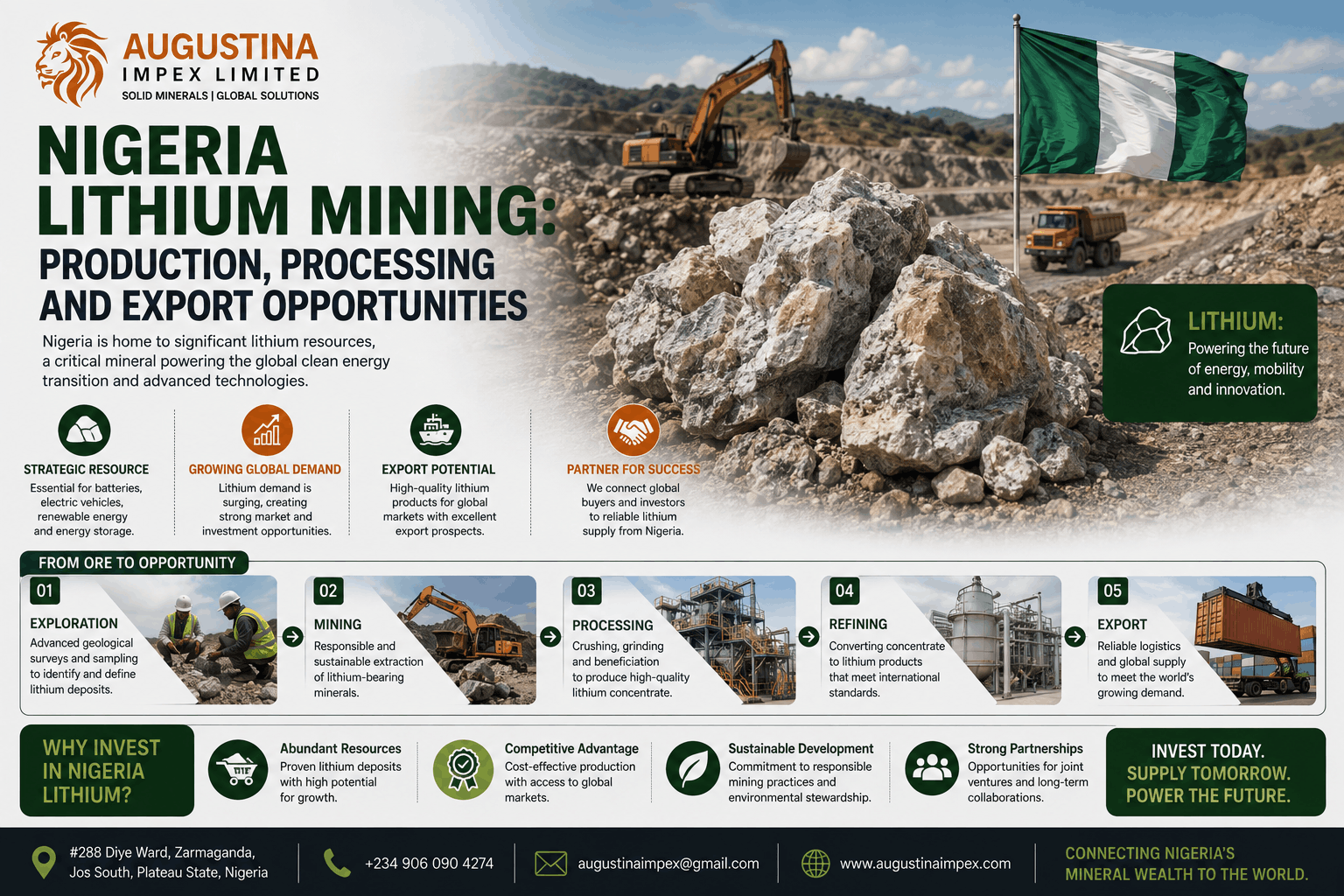
Nigeria Lithium Mining: Production, Processing & Export
Nigeria Lithium Mining: Production, Processing and Export Opportunities By Kolawole King, CEO — Augustina Impex…
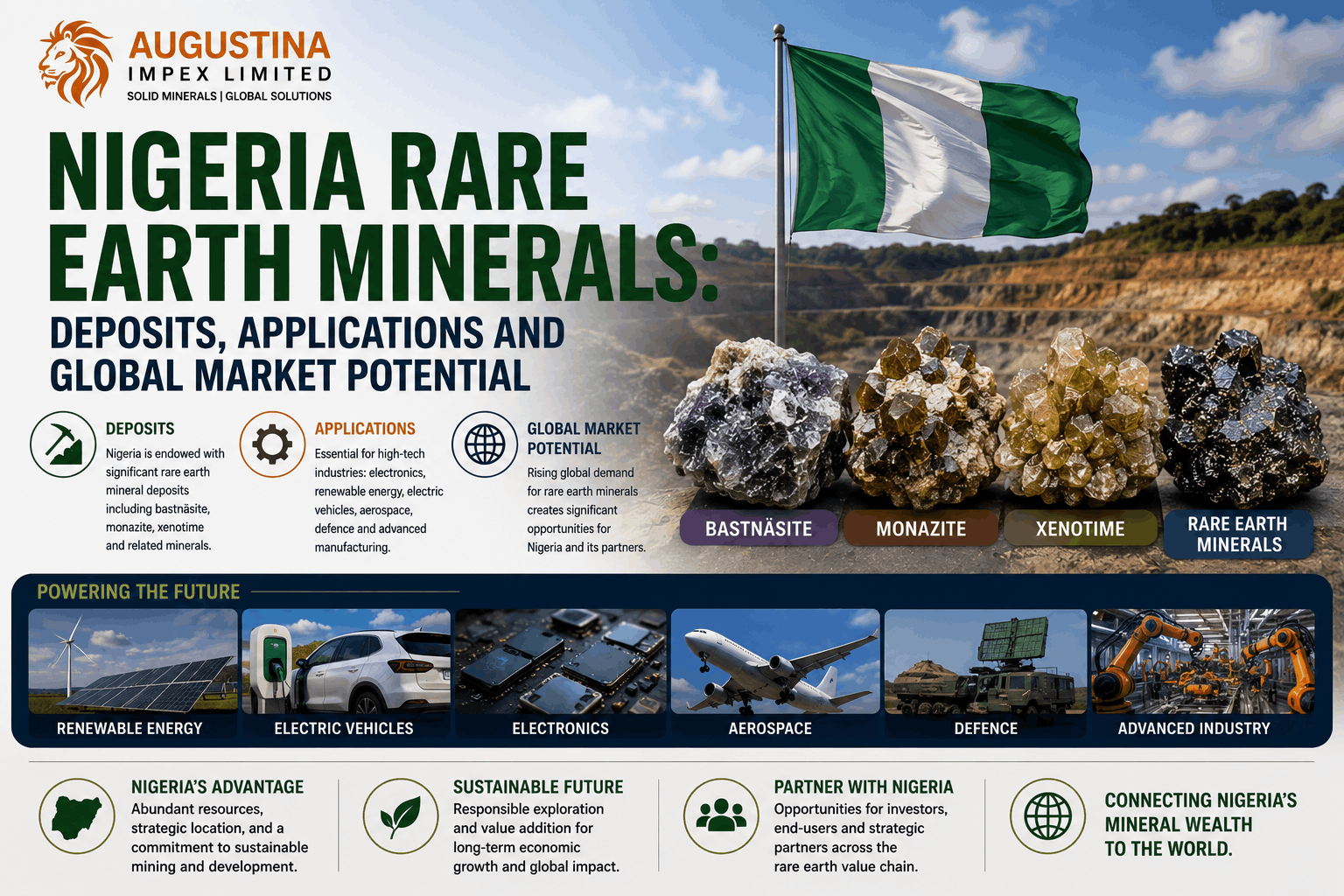
Nigeria Rare Earth Minerals: Deposits & Market Potential
Nigeria Rare Earth Minerals: Deposits, Applications and Global Market Potential By Kolawole King, CEO —…
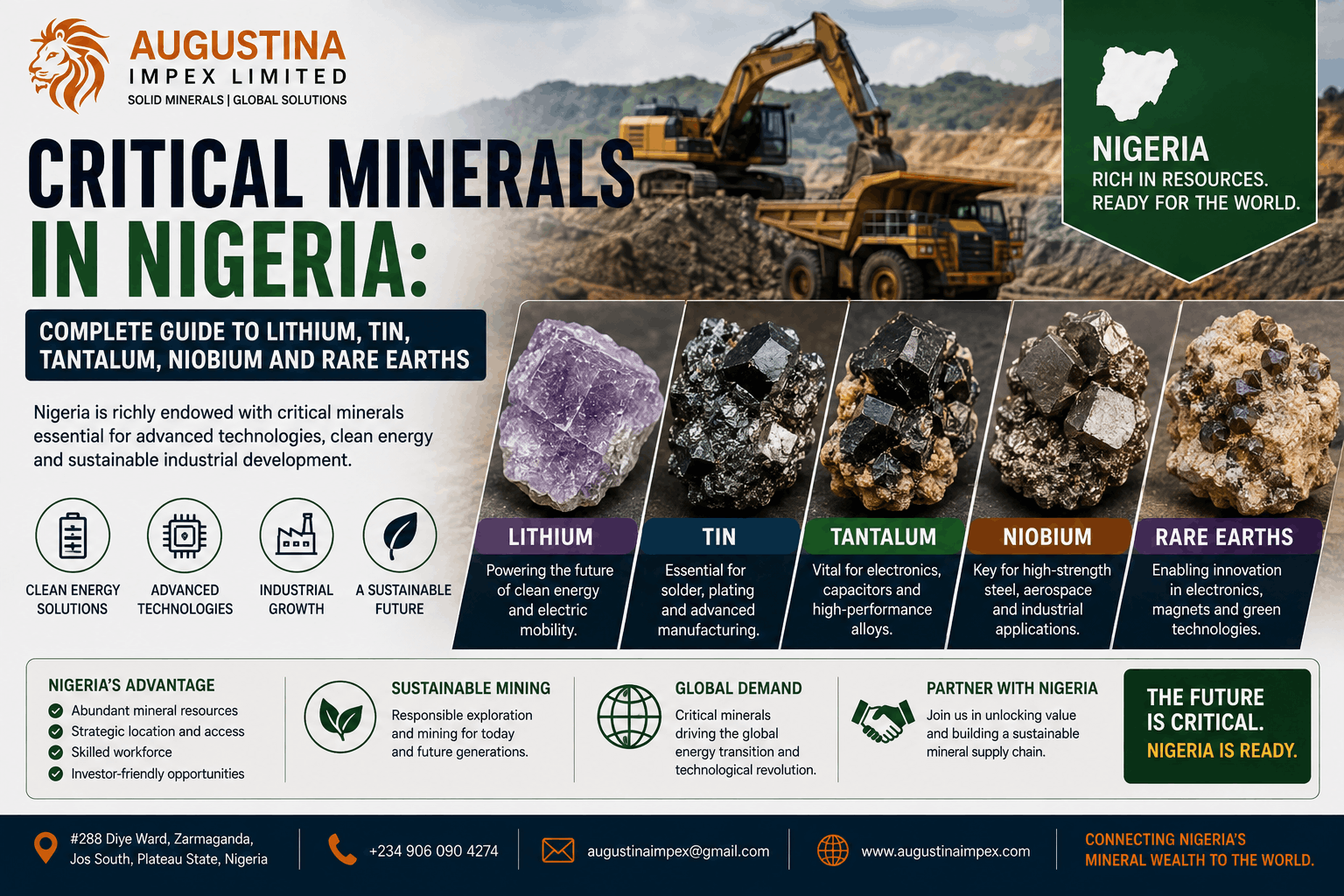
Nigeria Critical Minerals Guide: Lithium, Tin & Rare Earths
Critical Minerals in Nigeria: Complete Guide to Lithium, Tin, Tantalum, Niobium and Rare Earths By…
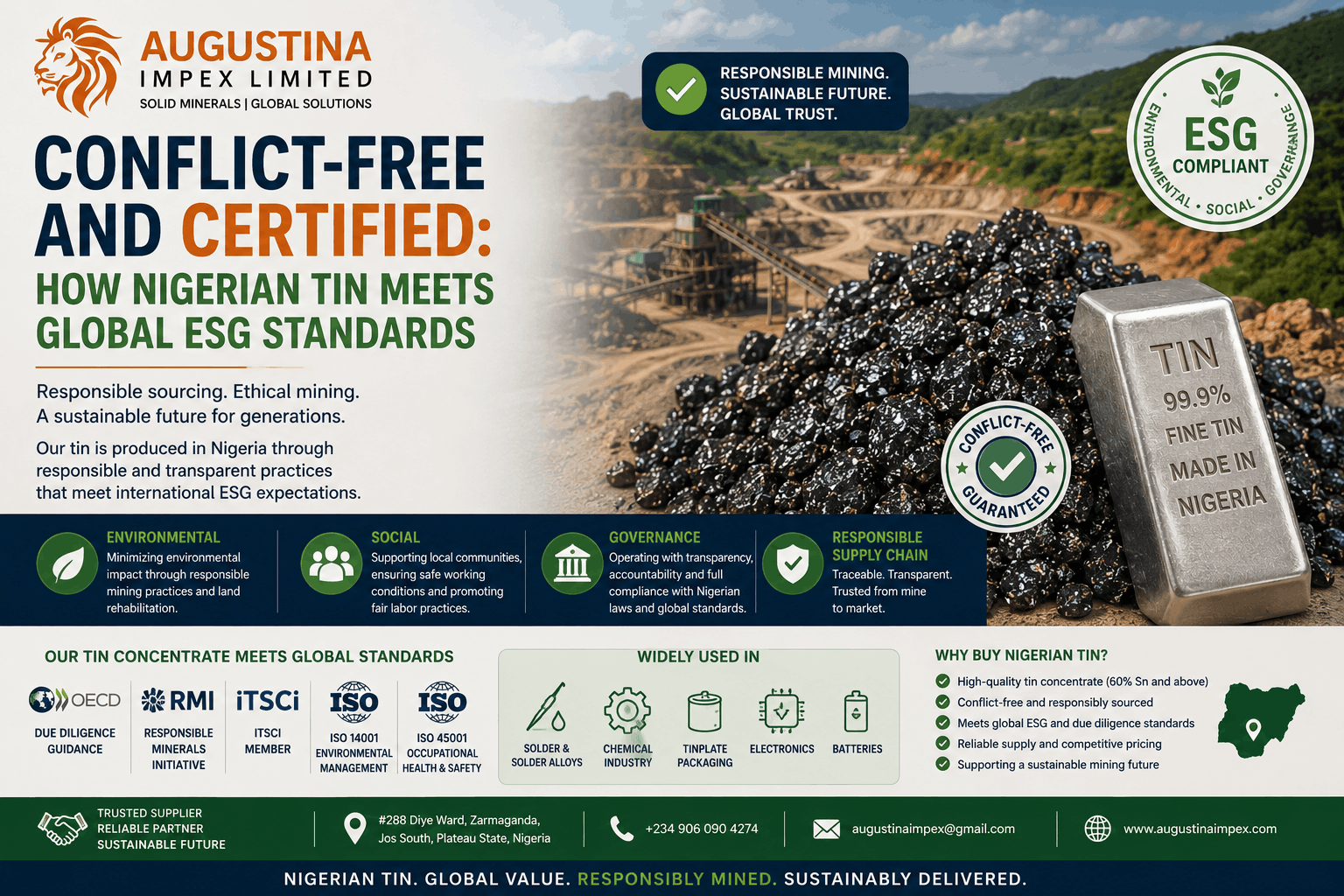
Conflict-Free Nigerian Tin Meets Global ESG Standards
Conflict-Free and Certified: How Nigerian Tin Meets Global ESG Standards By Kolawole King, CEO —…