
How Mineral Beneficiation Increases Export Value
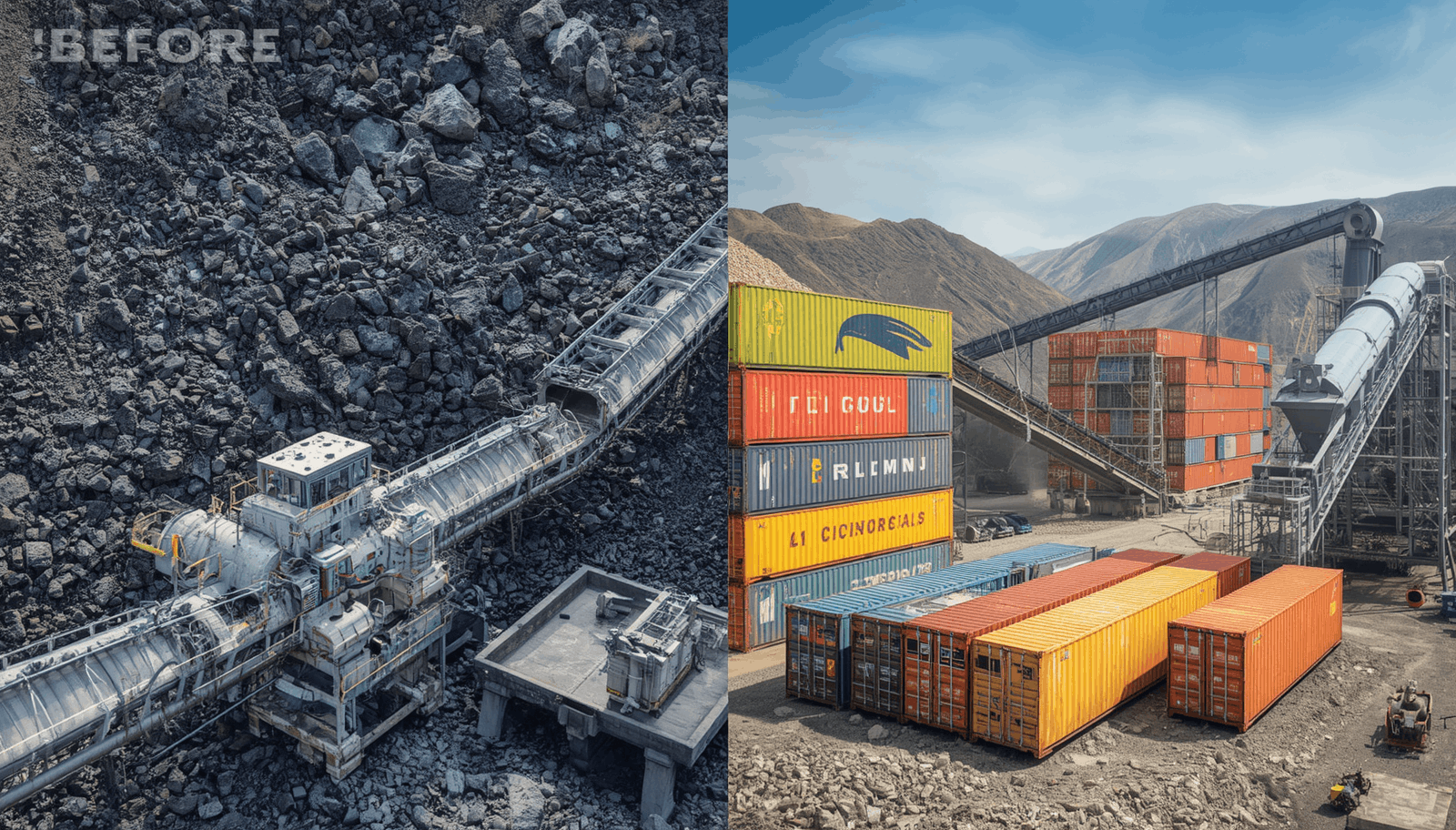
Picture two identical truckloads of ore leaving the same mine in Plateau State, Nigeria. Both contain the same total weight of raw rock. Both were mined on the same day from the same pegmatite vein. Both are heading ultimately to the same buyer in Shandong Province, China. The difference? One truck carries unprocessed run-of-mine ore that was dug out, hand-sorted, bagged, and sent directly to the port. The other carries material that spent seventy-two hours passing through a series of gravity, magnetic, and electrostatic separation stages at a processing plant — and came out the other side as a clean, high-grade concentrate. The first truck earns roughly one-fifth of the price per tonne. The second arrives at the buyer’s plant ready for chemical processing with minimal rejects. That gap — between the value of raw ore and the value of processed concentrate — is what mineral beneficiation is all about.
For Nigeria, which holds one of the most mineralogically diverse geological terrains in Sub-Saharan Africa, the question of mineral beneficiation is not merely a technical one. It is an economic and developmental imperative. For decades, Nigeria exported raw mineral ore at commodity prices while the value-adding processing happened overseas — in China, Malaysia, Australia, and elsewhere — with the captured margin and the employment benefits flowing to those processing countries rather than to Nigeria. That model is being challenged, both by Nigerian government policy and by the commercial logic of an international market that increasingly rewards consistent, specification-grade mineral supply with premium pricing.
This article is the most detailed examination available of how mineral beneficiation works, why it dramatically increases mineral export value, which specific technologies apply to Nigeria’s key mineral commodities, what the economic value multiplication looks like in practice for each major mineral, and how Augustina Impex Limited’s operational access to beneficiation infrastructure in Jos, Plateau State, positions us to offer our buyers a higher-quality, higher-value Nigerian mineral supply than pure ore traders can provide. Whether you are a mineral buyer evaluating Nigerian supply, an investor assessing the beneficiation opportunity, or a mining operator considering your processing options, this article will give you the technical and commercial grounding you need.
What Is Mineral Beneficiation? The Definitive Explanation
Mineral beneficiation — also called mineral processing, ore dressing, or mineral upgrading — is the set of physical and chemical processes applied to run-of-mine (ROM) ore to increase the concentration of valuable minerals and reduce the proportion of waste gangue material, thereby producing a higher-grade, more commercially valuable product without changing the fundamental chemical composition of the minerals themselves.
① Comminution (Size Reduction): Breaking and grinding the ore to liberate the valuable mineral particles from the surrounding waste rock (gangue). This stage includes primary crushing (jaw crushers, gyratory crushers), secondary crushing (cone crushers, impact crushers), and where required, grinding (rod mills, ball mills). The goal is to produce a particle size at which the valuable mineral and the gangue are fully separated from each other — the “liberation size.”
② Separation: Using the physical or chemical differences between the valuable mineral and the gangue to selectively concentrate the valuable mineral into a separate product stream (the “concentrate”) while rejecting the waste (the “tailings”). The specific separation technology depends on the mineral’s properties — density, magnetic susceptibility, electrical conductivity, surface chemistry.
③ Dewatering and Product Finishing: Removing water from the concentrate (using thickeners, filters, or dryers) to produce a dry or semi-dry product suitable for storage, bagging, and export. At this stage, the product may also be screened to size specifications, blended to target grade, and sampled for final assay before dispatch.
It is critical to understand what beneficiation does not include: it does not encompass smelting, refining, or chemical conversion — the processes that transform a mineral concentrate into a metal or chemical compound. Smelting iron ore to produce pig iron is metallurgy, not beneficiation. Converting spodumene concentrate to lithium carbonate is hydrometallurgy, not beneficiation. Beneficiation operates entirely in the physical domain — improving grade and reducing gangue — and is the upstream step that makes downstream metallurgical processing economically viable.
Why Exporting Raw Ore Leaves Money on the Table
To understand the economic argument for beneficiation, you need to understand the cost structure of shipping and processing minerals. When a Nigerian mine operator exports run-of-mine ore, they are paying to ship not just the valuable mineral content but also all the waste rock — the gangue — that surrounds it. In a typical hard-rock ore body, the valuable mineral might constitute 2–20% of the total rock mass. That means 80–98% of the weight being shipped is essentially worthless material that the buyer will have to dispose of at their end.
The buyer, of course, is aware of this. They price their offer accordingly — paying only for the contained valuable mineral content and discounting aggressively for the impurity burden, the processing cost they will incur to upgrade the material, and the risk of the ore not meeting their processing plant’s feed specifications. The result is that the Nigerian ore seller receives a fraction of the theoretical value of the mineral content their ore contains.
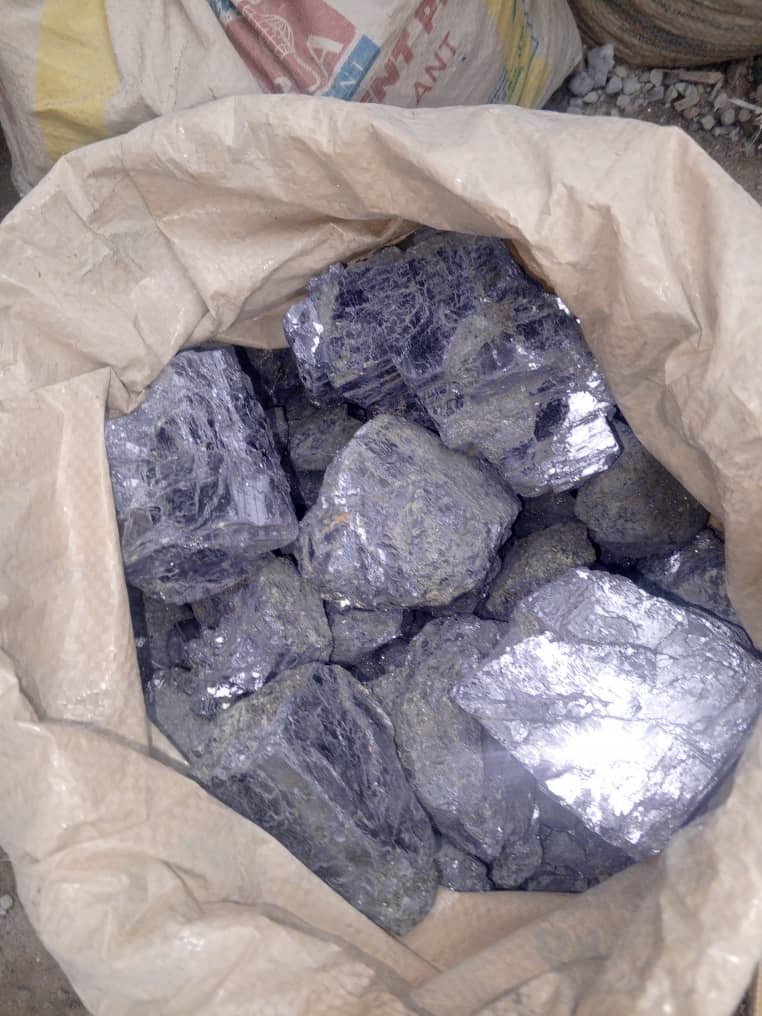
Consider a Nigerian cassiterite (tin ore) example: A 1,000 MT shipment of run-of-mine cassiterite ore at 10% Sn grade contains 100 MT of tin metal equivalent. If sold as raw ore at $500/MT (a price the buyer offers reflecting the low grade and high processing cost), total revenue = $500,000. However, if that same 1,000 MT is processed at an on-site beneficiation plant to produce 180 MT of cassiterite concentrate at 60% Sn (a typical gravity-separation recovery of 90% of contained tin), and that concentrate is sold at $3,000/MT, total revenue = $540,000 from 180 MT — a massive improvement versus the raw ore sale, despite selling a much smaller tonnage. More importantly: the seller is now capturing the value of the tin content rather than shipping waste rock to the buyer. This is the core economic logic of beneficiation.
Beyond the immediate pricing advantage, beneficiated minerals create qualitative commercial advantages that are equally important over the long term: they qualify for a wider pool of potential buyers (many processing plants have minimum feed grade requirements that unbeneficiated ore cannot meet), they command premium pricing in competitive markets, they reduce shipping costs per unit of contained metal (smaller, denser concentrate is more efficient to transport), and they demonstrate supply chain quality and professionalism that supports ongoing commercial relationships with sophisticated international buyers.
The Beneficiation Value Chain — Step by Step
Understanding where beneficiation fits in the complete mineral value chain helps clarify why it is the highest-leverage intervention available to a mineral exporting country like Nigeria. The complete value chain from mine to end product typically has four to six stages, and beneficiation sits at the critical junction between raw extraction and commercial processing.
| Value Chain Stage | Activity | Value Added | Nigeria’s Current Position |
|---|---|---|---|
| Stage 1 — Mining | Extraction of ore from mine | Low — base commodity value | Strong — active across multiple states |
| Stage 2 — Beneficiation | Crushing, separation, concentrate production | Medium-High — 2x–10x value uplift | Partial — HMS plant in Jos; expanding |
| Stage 3 — Smelting / Refining | Concentrate to metal or primary chemical | High — 5x–20x over raw ore | Minimal — nascent infrastructure |
| Stage 4 — Chemical Processing | Metal to intermediate chemical (e.g., LiCO₃) | Very High — 20x–50x over raw ore | Absent — policy aspiration only |
| Stage 5 — Component Manufacturing | Chemical to battery cathode, magnet, etc. | Very High — 50x–100x over raw ore | Absent |
This table makes the strategic priority clear: Nigeria is already strong at Stage 1 (mining) and is progressively building capability at Stage 2 (beneficiation). The shift from Stage 1 to Stage 2 is the single most achievable, highest-impact value addition step available to Nigerian mineral exporters in the near term — and it is already happening through partnerships like Augustina Impex’s HMS processing plant arrangement in Jos.
The Principal Beneficiation Technologies — How Each One Works
Mineral beneficiation is not a single process — it is a toolkit of complementary technologies, each exploiting a different physical or chemical property to separate valuable minerals from gangue. A well-designed processing plant selects and sequences these technologies to match the specific mineral assemblage and liberation characteristics of the ore being processed. Here is a comprehensive guide to the principal beneficiation technologies and their applications in the Nigerian context.
1. Crushing and Screening — The Foundation of All Beneficiation
Every beneficiation process begins with size reduction. Run-of-mine ore arrives at the processing plant in irregular chunks of rock that can range from fine dust to boulders weighing several hundred kilograms. Before any separation can take place, this material must be reduced to a consistent particle size range in which the valuable mineral grains are fully separated — “liberated” — from the surrounding waste rock.
Primary crushers (jaw crushers) reduce the largest boulders to manageable 100–300mm fragments. Secondary crushers (cone crushers or impact crushers) reduce these to 10–50mm. Vibrating screens sort the crushed material by size, returning oversized material to the crusher and passing undersized material to the next processing stage. For many Nigerian minerals — particularly the heavy minerals in the Jos Plateau pegmatites — the liberation size is relatively coarse (above 1mm), meaning that effective gravity and magnetic separation is achievable without the energy-intensive fine grinding that many hard-rock sulphide ores require. This is an important economic advantage for Nigerian ore processing.
The pegmatite-hosted minerals of the Jos–Bukuru field — cassiterite, columbite-tantalite, spodumene-kunzite, zircon — typically occur as large, coarse-grained crystals that are visually distinguishable from the surrounding quartz-feldspar matrix and that liberate effectively at relatively coarse particle sizes (often 0.5–5mm). This coarse liberation characteristic means that effective beneficiation can be achieved with relatively simple, lower-capital-cost processing equipment — gravity spirals, shaking tables, and low-field magnetic separators — rather than the complex, energy-intensive circuits required for fine-grained sulphide ores. This makes beneficiation more accessible and economically viable for Nigerian mine operators at all scales.
2. Gravity Separation — Nature’s Original Beneficiation Method
Gravity separation is the oldest and most widely used beneficiation method, exploiting the fundamental difference in density (specific gravity, SG) between valuable minerals and waste gangue to achieve separation. It requires only water as a medium, making it the most environmentally benign and lowest-operating-cost separation technology available. Most of Nigeria’s key export minerals — cassiterite (SG 7.0), columbite-tantalite (SG 5.2–8.0), zircon (SG 4.65), ilmenite (SG 4.7), spodumene (SG 3.1) — are significantly denser than the quartz (SG 2.65) and feldspar (SG 2.56) gangue that dominates Nigerian pegmatite host rock. This density differential makes gravity separation highly effective for Nigerian mineral assemblages.
The principal gravity separation devices used in Nigerian processing operations are:
① Spiral Concentrators: Helical, trough-shaped channels through which a slurry of crushed ore and water flows downward under gravity. As the slurry spirals downward, centrifugal forces and gravity cause heavy minerals to migrate to the inside edge of the trough while lighter gangue is swept to the outside. Splitters at the base of the spiral divert the heavy inner stream (concentrate) from the lighter outer stream (tailings). Spirals are low-cost, require no power beyond a slurry pump, and are the workhorse of HMS processing circuits for zircon, ilmenite, cassiterite, and columbite separation.
② Shaking Tables (Wilfley Tables): Inclined, riffled tables that vibrate horizontally while water flows across them. Heavy minerals are concentrated in bands near the riffle bars while lighter material is washed off the table edge. Shaking tables produce extremely high-grade concentrates and are used as cleaning stages after spiral pre-concentration. They are particularly effective for producing high-grade cassiterite and columbite concentrates from Jos Plateau ore.
③ Jigs (Pulsating Jigs): Upward-pulsating water through a bed of mineral particles causes stratification by density — heavy minerals sink to the bottom, light material rises. Jigs are effective for coarse-particle separation (2–50mm) and are commonly used as pre-concentration stages for coarse cassiterite and columbite in artisanal Nigerian mining operations.
④ Centrifugal Concentrators (Falcon, Knelson): High-G centrifugal forces dramatically enhance gravity separation of fine-grained heavy minerals that do not respond well to conventional low-G gravity methods. Used for fine cassiterite recovery (<0.1mm) that would otherwise be lost in tailings.
3. Dense Media Separation (DMS) — Precision Density Sorting at Scale
Dense Media Separation (DMS), also called Heavy Media Separation (HMS), takes gravity separation to a new level of precision by using a suspension of fine ferrosilicon (FeSi) or magnetite powder in water to create a liquid medium of a precisely controlled density — typically between 2.6 and 3.4 g/cm³. When crushed ore is introduced into this medium, particles that are denser than the medium sink to the bottom (the “sinks” fraction, rich in heavy minerals) while particles less dense than the medium float to the top (the “floats” fraction, predominantly gangue).
DMS is exceptionally effective for pre-concentration of spodumene (SG 3.1) from quartz-feldspar gangue (SG 2.56–2.65) in lithium pegmatite ore — one of the most commercially important applications for Nigerian lithium ore upgrading. By setting the medium density between the specific gravity of spodumene and feldspar, DMS can produce a spodumene-enriched sinks fraction at 3–5% Li₂O from a 1–2% Li₂O feed — dramatically reducing the volume of material that needs to pass through the more expensive flotation stage and reducing total processing cost per unit of lithium recovered.
| Nigerian Mineral | SG of Mineral | DMS Medium Density | Achievable Feed Upgrade |
|---|---|---|---|
| Spodumene (Lithium) | 3.1–3.2 | 2.85–3.0 g/cm³ | 1–2% Li₂O → 3–5% Li₂O |
| Fluorite | 3.0–3.2 | 2.80–2.95 g/cm³ | 60% CaF₂ → 80–90% CaF₂ |
| Cassiterite (Tin) | 6.8–7.1 | 3.2–3.4 g/cm³ | 10% Sn ore → 40–55% Sn pre-concentrate |
4. Froth Flotation — The Chemistry of Selective Mineral Separation
Froth flotation is the most widely used mineral separation technology in the world, and it is the process that makes the production of high-grade (6%+ Li₂O) spodumene concentrate — the international standard for lithium ore exports — commercially achievable. Unlike gravity and magnetic separation, which exploit physical properties, flotation exploits the surface chemistry of minerals: specific reagents (collectors) are added to a water-mineral slurry that selectively adsorb onto the surface of the target mineral, making it hydrophobic (water-repelling) while leaving the gangue minerals hydrophilic (water-attracting).
When air is bubbled through the conditioned slurry in flotation cells, air bubbles attach to the hydrophobic mineral particles and carry them to the surface, where they form a stable froth that is mechanically scraped off as the concentrate product. The hydrophilic gangue remains in the slurry and is discharged as tailings. Multiple flotation stages (rougher, scavenger, cleaner circuits) are combined to achieve both high recovery and high concentrate grade.
① Spodumene Flotation (Lithium): The standard industrial process for producing 6%+ Li₂O spodumene concentrate. After high-temperature calcination (to change spodumene’s surface chemistry from alpha to beta phase, improving collector adsorption), spodumene is floated using fatty acid or amine collectors. This process, operating in Australia at mines like Greenbushes and Pilgangoora, typically produces 6.0–7.5% Li₂O concentrate from 1–2% Li₂O ore, with recoveries of 80–90%. Investment in flotation infrastructure in Nigeria would transform the lithium export value proposition.
② Fluorite Flotation: High-grade acid-grade fluorspar (97%+ CaF₂) is produced by selective flotation of fluorite from gangue minerals including calcite, quartz, and silicates. The fluorite flotation circuit uses oleic acid or its saponified form as the primary collector and sodium silicate as a depressant for silicate gangue. Nigerian fluorite ore at 60–80% CaF₂ feed can be upgraded to 90–97% CaF₂ by flotation, opening the higher-value acid-grade market.
③ Graphite Flotation: Natural flake graphite is beneficiated almost exclusively by froth flotation, exploiting graphite’s naturally hydrophobic surface (due to its layered carbon structure). Multiple flotation stages produce a 90–96% TGC (Total Graphitic Carbon) flake graphite concentrate from 5–20% TGC ore — a 5x–10x concentration ratio that transforms graphite ore into a battery-grade product.
5. Magnetic Separation — Exploiting Mineral Magnetism
Magnetic separation exploits differences in magnetic susceptibility between minerals — their tendency to be attracted to or repelled by a magnetic field — to achieve separation. Minerals range from strongly magnetic (ferromagnetic, e.g., magnetite) through weakly magnetic (paramagnetic, e.g., ilmenite, columbite, wolframite) to non-magnetic (diamagnetic, e.g., quartz, zircon, cassiterite, spodumene). By passing mineral slurries or dry feeds through magnetic separators of different field intensities, the magnetic minerals can be extracted from non-magnetic minerals in a series of stages that progressively purify each mineral fraction.
In Nigerian HMS processing circuits — particularly at the Jos Plateau processing plant partnership used by Augustina Impex — magnetic separation is the critical technology for separating the mixed heavy mineral assemblage into its individual constituent products. The typical separation sequence for a Jos Plateau heavy mineral concentrate proceeds as follows:
① Low-Intensity Magnetic Separation (LIMS) — Drum Magnet, ~0.1 Tesla: Removes strongly magnetic minerals (magnetite, pyrrhotite). These are contaminant minerals that depress the grade of all downstream products. LIMS is the first cleaning step applied to any heavy mineral concentrate.
② Medium-Intensity Magnetic Separation — Rare Earth Drum Magnet, ~0.5–0.8 Tesla: Separates strongly paramagnetic minerals (ilmenite, maghemite, some columbite). The magnetic fraction (ilmenite-rich) is collected as a separate product; the non-magnetic fraction proceeds to the next stage.
③ Wet High-Intensity Magnetic Separation (WHIMS) — Superconducting or electromagnetic, 1.0–1.5 Tesla: Separates weakly paramagnetic minerals (wolframite, columbite-tantalite, most iron-bearing impurities) from non-magnetic minerals (zircon, cassiterite, spodumene, rutile, quartz). This stage is critical for producing clean zircon and cassiterite concentrates free from iron-bearing contaminants that reduce their market value.
④ Re-cleaner Magnetic Passes: Multiple passes through progressively higher-field WHIMS units produce incrementally purer products. Final zircon concentrate specifications (Fe₂O₃ <0.1%) for premium ceramics applications require careful magnetic cleaning to remove trace iron-bearing minerals that are not removed in a single pass.
6. Electrostatic Separation — The Final Polishing Stage
Electrostatic separation (also called high-tension separation or corona-roll separation) exploits differences in electrical conductivity between mineral species. When a stream of mineral particles falls across a high-voltage electrode (typically 30,000–50,000 volts), conductive minerals (rutile, ilmenite, some cassiterite) become charged and are deflected by the electrostatic field, while non-conductive minerals (zircon, spodumene, quartz) are not charged and fall in a separate stream. This technology achieves the critical separation between titanium minerals (rutile, ilmenite) and zircon in an HMS heavy mineral concentrate — a separation that neither gravity nor magnetic methods can achieve cleanly.
Electrostatic separation using High-Tension Roll (HTR) separators is the technology that allows an HMS processing plant to produce separate, clean zircon concentrate and rutile concentrate from a mixed titanium-zircon heavy mineral feed — turning what would otherwise be a mixed, lower-value product into two distinct, premium-grade export products that can be sold to different buyer markets at their respective market prices.
For Nigerian monazite sand — a NORM (Naturally Occurring Radioactive Material) classified under IATA Dangerous Goods regulations — electrostatic separation plays a particularly important role. Monazite (a rare earth phosphate mineral) is strongly conductive and is separated from the non-conductive zircon stream in a two-stage electrostatic process. This mechanical beneficiation route — using only gravity, magnetic, and electrostatic separation, with no chemical reagents whatsoever — is a critical compliance advantage for European buyers who require that their NORM mineral supply has not been subjected to chemical treatment. Nigerian monazite processed through Augustina Impex’s HMS plant partnership is produced by purely mechanical means, satisfying the most stringent European regulatory requirements.
Beneficiation of Specific Nigerian Minerals — The Value Uplift in Practice
Theory is valuable, but numbers are what drive commercial decisions. The following mineral-by-mineral analysis quantifies the value uplift that beneficiation achieves for Nigeria’s key export minerals — showing precisely where the economic opportunity lies for Nigerian mine operators, export companies, and the national economy.
Cassiterite (Tin Ore) — Jos Plateau’s Flagship Processing Opportunity
| Parameter | Raw Ore | Beneficiated Concentrate |
|---|---|---|
| Product Grade (Sn %) | 8–15% Sn (run-of-mine) | 60–72% Sn (gravity concentrate) |
| Typical Market Price (USD/MT) | $400–$700/MT | $2,500–$4,000/MT |
| Contained Tin Value per MT of Ore | Low — discounted for grade | High — full concentrate value |
| Beneficiation Method | — | Jig → Spiral → Shaking table → WHIMS cleaning |
| Revenue Uplift Factor | Baseline | 4x–6x per tonne of ore processed |
Cassiterite beneficiation by gravity separation is one of the most technically straightforward and economically compelling processing opportunities in the Jos Plateau mining sector. The combination of high mineral density, coarse liberation, and simple gravity responsiveness means that a well-operated spiral-table circuit can consistently produce 60%+ Sn concentrate from a 10–15% Sn feed with 85–92% tin recovery — capturing nearly all the contained tin value and delivering a product that meets the specifications of Malaysian, Chinese, and Indonesian tin smelters without further processing.
Zircon Sand — Separating Premium Product from Heavy Mineral Mix
| Parameter | Mixed Heavy Mineral Sand (Unbeneficiated) | Clean Zircon Concentrate |
|---|---|---|
| ZrO₂ Content | Variable — mixed mineral stream | 60–66% ZrO₂ (premium ceramics grade) |
| Typical Price (USD/MT) | $200–$400/MT (mixed HM) | $1,200–$1,800/MT (clean zircon) |
| Beneficiation Route | — | Spiral → LIMS → WHIMS → Electrostatic HTR |
| Revenue Uplift Factor | Baseline | 3x–6x uplift in price per MT product |
A crucial advantage of zircon beneficiation is that the processing route also produces valuable by-products — ilmenite, rutile, and in NORM-compliant circuits, monazite sand — from the same feed material that would otherwise be sold at mixed heavy mineral sand pricing. This multi-product output from a single HMS circuit is a powerful economic argument for beneficiation investment in Nigerian heavy mineral sand deposits.
Spodumene (Lithium Ore) — The Beneficiation Case for Nigeria’s Most Sought Mineral
| Product Form | Li₂O Grade | Indicative Market Price | Processing Stage |
|---|---|---|---|
| Run-of-Mine Ore | 1.0–2.0% Li₂O | Discounted — limited buyer pool | Mine gate |
| DMS Pre-concentrate | 3.0–5.0% Li₂O | Premium over ROM; wider market | DMS circuit |
| Flotation Concentrate | 6.0–7.5% Li₂O | International benchmark price; full market access | DMS + Flotation |
| Li₂CO₃ (Lithium Carbonate) | Battery-grade 99.5%+ | 10x–30x over ROM ore value | Flotation + Roasting + Leaching |
The lithium beneficiation value stack illustrates both the opportunity and the challenge for Nigeria. Moving from run-of-mine ore to DMS pre-concentrate is achievable with moderate capital investment and operational expertise — and it immediately opens a far wider pool of buyers who can work with 3–5% Li₂O material. Moving to flotation concentrate at 6%+ Li₂O requires more significant capital and chemical engineering expertise but delivers the full international market price and access to the largest lithium chemical converter market. Investing in this step-change in beneficiation capability is one of the most commercially compelling opportunities available to Nigerian mineral sector entrepreneurs and international investors.
Fluorite (Fluorspar) — From Metspar to Acidspar Value
The fluorite market has three distinct grade segments — metallurgical (metspar, 60–85% CaF₂), ceramic (85–95% CaF₂), and acid grade (acidspar, 97%+ CaF₂) — and the price differential between these segments is dramatic. Metspar sells for approximately $150–$250/MT; ceramic grade for $250–$400/MT; acid grade for $400–$700/MT and above. Nigerian fluorite typically enters the market at metspar grade (60–85% CaF₂), leaving the higher-value ceramic and acid grade markets entirely uncaptured.
Upgrading Nigerian fluorite from metspar to ceramic or acid grade requires a combination of crushing and screening (to remove friable gangue), gravity separation (to remove dense sulphide minerals if present), and froth flotation (to achieve the 97%+ CaF₂ purity required for acid grade). Each processing step adds capital and operating cost, but the price premium more than justifies the investment: moving from 65% CaF₂ metspar at $200/MT to 97%+ acid grade at $600/MT represents a 3x revenue increase from the same contained fluorite value.
Columbite-Tantalite (Coltan) — Hand Sorting Versus Processed Concentrate
Nigerian coltan is currently sold in two primary forms: hand-sorted concentrate (produced by artisanal miners who manually select coltan-rich rock fragments from mine waste) and gravity-processed concentrate (produced by processing plants using spiral and shaking table circuits). The grade difference between these two product forms is significant: hand-sorted material typically grades at 30–40% Nb₂O₅ + Ta₂O₅ with variable iron mineral contamination; gravity-processed material grades at 45–60%+ Nb₂O₅ + Ta₂O₅ with controlled iron content.
Buyers — particularly the downstream tantalum powder producers in the US, Germany, and Japan who use the mineral to produce capacitor-grade tantalum — specify minimum Nb₂O₅ + Ta₂O₅ content and maximum iron content. Hand-sorted material that falls below specification must be either rejected or sold at a discount to a trader who will blend it. Gravity-processed Nigerian coltan concentrate, meeting full specification, commands full market pricing and direct access to the premium-paying end-use market rather than the lower-paying intermediary trader market.
The Comprehensive Value Uplift Summary — Nigerian Minerals
| Nigerian Mineral | Raw Ore Price Range | Beneficiated Concentrate Price | Value Uplift | Primary Beneficiation Method |
|---|---|---|---|---|
| Cassiterite (Tin) | $400–$700/MT (10% Sn) | $2,500–$4,000/MT (60%+ Sn) | 4x–6x | Gravity (Jig, Spiral, Table) |
| Zircon Sand | $200–$400/MT (mixed HM) | $1,200–$1,800/MT (60%+ ZrO₂) | 3x–6x | Spiral + WHIMS + Electrostatic |
| Spodumene (Lithium) | Discounted (1–2% Li₂O) | Full market (6%+ Li₂O) | 5x–10x | DMS + Flotation |
| Fluorite (Fluorspar) | $150–$250/MT (65% CaF₂ metspar) | $400–$700/MT (97%+ CaF₂ acidspar) | 2x–4x | Gravity + Flotation |
| Coltan (Ta/Nb) | Hand-sorted; grade variable | 45–60%+ Nb₂O₅+Ta₂O₅ concentrate | 2x–3x | Gravity (Spiral, Table) |
| Graphite | $100–$200/MT (5–20% TGC ore) | $600–$1,200/MT (90%+ TGC flake) | 5x–8x | Multi-stage Flotation |
| Manganese Ore | $50–$120/MT (30% Mn lump) | $150–$250/MT (44%+ Mn washed) | 2x–3x | Washing, Screening, DMS |
| Copper Ore | Grade-based pricing (3–11% Cu) | 25–30% Cu flotation concentrate | 4x–8x | Flotation (sulphide circuit) |
Augustina Impex’s HMS Processing Plant Partnership in Jos — Operational Beneficiation Now
While much of the discussion about beneficiation investment in Nigeria focuses on what needs to be built, Augustina Impex Limited operates from a position of practical, operational advantage: we have an established partnership with a functioning Heavy Mineral Sands (HMS) processing plant in Jos, Plateau State — the commercial and geographical heart of Nigeria’s mining sector. This plant is operational today, equipped with the core separation technologies needed to produce clean mineral concentrates from the mixed mineral assemblages that characterise Plateau State’s pegmatite-derived ore streams.
① Location: Jos, Plateau State — the centre of Nigeria’s mining activity and the closest major processing point to the Jos–Bukuru Pegmatite Field, Nigeria’s most productive mineral zone.
② Plant Manager: Eliezer Onah (WhatsApp: +234 706 341 9668) — an experienced minerals processing professional managing day-to-day plant operations.
③ Processing Technologies Installed: Gravity separation (spiral concentrators, shaking tables), magnetic separation (drum magnets for LIMS, WHIMS for paramagnetic mineral separation), and electrostatic separation (high-tension roll separators for conductive/non-conductive mineral fractionation). This full suite of HMS separation technologies enables the production of individual clean mineral concentrates — zircon, ilmenite, cassiterite, columbite — from mixed heavy mineral sand feed.
④ Toll Processing Service: The plant is available for toll processing — meaning third-party ore owners (artisanal miners, small-scale mine operators, other aggregators) can send their bulk ore to the plant for processing on a fee-per-tonne basis, receiving clean concentrates in return. This is an invaluable service for Nigerian mine operators who do not have their own processing equipment but want to sell beneficiated concentrate rather than raw ore.
⑤ Quality Assurance: Concentrates produced at the Jos plant are sampled and assayed at every processing stage, providing buyers with a well-documented quality control trail from feed to final product. Pre-shipment inspection by CCIC, SGS, or Bureau Veritas is facilitated at the plant.
Nigeria’s Government Policy on Mineral Beneficiation — The Regulatory Incentive Framework
The Nigerian Federal Government has made in-country mineral value addition a central pillar of its solid minerals sector development strategy. This policy orientation creates a supportive regulatory and incentive environment for beneficiation investment that goes beyond rhetoric — there are concrete commercial and regulatory mechanisms in place that reward beneficiators and, in some cases, penalise the export of unprocessed ore.
① Nigerian Minerals and Mining Act 2007 — Value Addition Provisions: The NMMA explicitly mandates the promotion of in-country beneficiation as a condition of mineral export licences and as a criterion in mining lease awards. Operators who demonstrate in-country beneficiation capability receive favourable treatment in licence renewals and lease applications.
② Export Duty Differentials: Nigerian export duty regulations apply higher effective duty rates to unprocessed mineral ore exports than to processed mineral concentrate exports, creating a direct financial incentive to process before exporting.
③ Solid Minerals Development Fund (SMDF): Provides concessional financing for processing infrastructure investment, including beneficiation plant equipment, at preferential interest rates that make the capital cost of beneficiation more accessible to Nigerian operators.
④ Pioneer Status Incentives: Mining and mineral processing companies can apply for Pioneer Status with the Nigerian Investment Promotion Commission (NIPC), which provides a 3–5 year corporate income tax holiday for new mining and processing operations — significantly improving the return on investment for beneficiation plant construction.
⑤ NEPC Export Incentives for Value-Added Minerals: The Nigerian Export Promotion Council (NEPC) provides additional incentives — including export expansion grants and market development funds — specifically targeted at exporters of value-added mineral products rather than raw ore.
Beneficiation by Nigerian State — A GEO-Specific Opportunity Map
The geographic distribution of Nigeria’s mineral deposits creates distinct beneficiation opportunity clusters across different states, each with its own mineral mix, existing infrastructure, and investment potential. Understanding this geographic landscape helps investors and buyers identify the most relevant processing locations for their specific mineral interests.
① Plateau State (Jos) — Multi-Mineral HMS Hub: Nigeria’s most mature mineral processing zone. The Jos–Bukuru Pegmatite Field hosts cassiterite, columbite, zircon, lithium, and coltan in close geographic proximity. The Augustina Impex HMS plant partnership is located here. Highest near-term beneficiation opportunity in Nigeria — infrastructure, expertise, and ore supply are already in place. Key opportunity: expand capacity to handle growing lithium ore volumes and produce DMS lithium pre-concentrate.
② Benue State — Fluorite Flotation Opportunity: Nigeria’s primary fluorite belt runs through Benue State. The opportunity is to establish a fluorite flotation plant (relatively low capital cost, established technology) that can upgrade 65% CaF₂ metspar to 97%+ CaF₂ acid grade — tripling the export value of every tonne of fluorite produced in the state. Proximity to the north-south road network provides adequate logistics access.
③ Nasarawa State — Copper Flotation Opportunity: The Akiri copper zone in Nasarawa State hosts copper ore at 3–11% Cu in vein and skarn deposits. Establishing a sulphide flotation circuit at or near the Akiri zone would produce 25–30% Cu concentrate for direct smelter sale — dramatically increasing the value captured per tonne of ore mined in the area and attracting Chinese smelter interest in long-term offtake agreements.
④ Cross River and Ondo States — Coastal HMS Processing: Heavy mineral sand placer deposits along Nigeria’s southern coastline in Cross River, Ondo, Delta, and Rivers States contain assemblages of ilmenite, rutile, zircon, and monazite. An HMS plant located near the coast would minimise ore transport distance to the processing point and minimise concentrate transport distance to Lagos or Port Harcourt export ports.
⑤ Taraba State — Emerging Graphite and Lithium Beneficiation: Taraba’s pegmatite belt holds both lithium and graphite mineralisation. As exploration and artisanal production in Taraba matures, a simple gravity-flotation beneficiation circuit would allow Taraba’s production to be upgraded before the long haul to Lagos port — reducing transport cost and increasing export value simultaneously.
How Buyers Benefit from Purchasing Beneficiated Nigerian Minerals
The case for beneficiation is not only compelling from the Nigerian seller’s perspective — it also delivers concrete commercial and operational benefits to international buyers who purchase beneficiated Nigerian mineral concentrates rather than raw ore. Understanding these buyer-side benefits helps explain why serious, large-scale commodity buyers strongly prefer to deal with beneficiation-capable suppliers.
① Reduced Shipping Cost per Unit of Contained Metal: Shipping 100 MT of 60% Sn cassiterite concentrate is far more efficient than shipping 600 MT of 10% Sn raw ore to deliver the same amount of contained tin. The buyer saves significantly on freight, insurance, port charges, and import duties — all of which are calculated on gross weight.
② Reduced Processing Plant Feed Variability: Beneficiated concentrate from a well-operated processing circuit has controlled, consistent grade and particle size specifications — much easier to handle in a downstream smelter, refinery, or chemical plant than variable-grade raw ore. This reduces production disruptions and processing losses at the buyer’s facility.
③ Reduced Waste Disposal Cost at Destination: Every tonne of gangue in raw ore that the buyer receives must be disposed of at their processing facility — incurring handling, storage, and waste disposal costs. Buying concentrate dramatically reduces the volume of waste the buyer must manage.
④ Compliance with Plant Feed Specifications: Many industrial processing plants have minimum feed grade specifications — a lithium carbonate plant may require 5%+ Li₂O concentrate as feed; a tin smelter may require 55%+ Sn. Without beneficiation, Nigerian mineral supply may be ineligible for these plants entirely, regardless of price. Beneficiation is the key that unlocks the full buyer market.
⑤ Cleaner Impurity Profile: Beneficiation removes iron-bearing minerals, sulphides, and silicates that cause processing problems in downstream plants — fouling furnace linings, consuming reagents, reducing product quality. A clean concentrate with controlled impurity levels is more valuable not just in headline grade but in its overall processability.
Challenges to Beneficiation Development in Nigeria
An honest examination of mineral beneficiation in Nigeria must acknowledge the genuine challenges that have limited the pace of beneficiation development relative to the country’s mineral production potential. These challenges are real — but each has solutions that are being progressively implemented.
① Capital Access: Beneficiation plants require upfront capital investment in equipment (crushers, spirals, magnetic separators, flotation cells) that is beyond the means of most artisanal miners and small-scale operators. Mitigation: Toll processing arrangements (like Augustina Impex’s Jos plant partnership) allow miners to access beneficiation without owning equipment. SMDF financing provides concessional loans for plant investment. Foreign investment JV structures can bring capital from outside Nigeria.
② Unreliable Power Supply: Processing plants require consistent electrical power for pumps, magnetic separators, screens, and electrostatic separators. Unreliable grid power in Nigeria’s mining regions increases operating costs through diesel generator dependency and reduces plant availability. Mitigation: Hybrid solar-diesel power systems are becoming more cost-effective for remote industrial applications. Grid connection agreements with state electricity distribution companies can provide partial power supply with generators for backup.
③ Technical Skills Gap: Operating a mineral processing plant requires technical skills — plant metallurgy, process control, equipment maintenance — that are not widely available in Nigeria’s mining communities. Mitigation: Partnering with experienced plant operators, investing in operator training, and engaging technical consultants from established mining jurisdictions for commissioning and optimisation.
④ Water Management: Wet processing operations (gravity, flotation) consume water and produce process water that must be managed. In some Nigerian mining areas, water availability is seasonal. Mitigation: Closed-circuit water recycling systems, seasonal water storage dams, and the increasing use of dry processing alternatives (dry magnetic separation, air table gravity separation) where applicable.
⑤ Market Knowledge Gap: Many Nigerian mine operators and small traders do not fully understand the price differential between raw ore and processed concentrate, or how to access the buyers who pay concentrate prices. Mitigation: Working with export companies like Augustina Impex that provide market intelligence, buyer access, and practical guidance on what specifications and grades attract premium pricing.
Frequently Asked Questions — Mineral Beneficiation in Nigeria
Beneficiation is a physical process that increases the concentration of a valuable mineral within a bulk material — no change to the mineral’s chemical composition occurs. The output is a mineral concentrate, not a pure metal or chemical. Refining (or smelting) takes that concentrate and uses heat, electricity, or chemicals to extract and purify the actual metal or chemical compound. For example: beneficiation of cassiterite ore produces tin concentrate (60%+ Sn mineral); smelting that concentrate produces tin metal (99%+ Sn). Nigeria currently operates primarily at the beneficiation stage; smelting and refining remain largely offshore.
Yes — for several key minerals, Augustina Impex can supply processed concentrate through our HMS plant partnership in Jos. We can supply gravity-separated cassiterite concentrate (60%+ Sn), magnetically cleaned zircon sand, ilmenite concentrate, columbite-tantalite concentrate, and basic gravity-separated heavy mineral pre-concentrates. For minerals requiring flotation for full grade upgrading (spodumene to 6%+ Li₂O, fluorite to 97%+ CaF₂), we coordinate with flotation-capable partner plants and can discuss appropriate commercial structures with buyers who have the volume to justify the arrangement.
Yes. Third-party mine owners and mineral aggregators can deliver their bulk ore to our Jos plant partnership for toll processing on a fee-per-tonne basis. The ore owner provides the feed material; the plant processes it using gravity, magnetic, and electrostatic separation; and the ore owner receives the resulting mineral concentrates minus the processing fee. Toll processing is an excellent option for mine operators who want to upgrade their ore to concentrate specification without investing in their own processing plant. Contact Augustina Impex to discuss tonnage, ore type, and commercial terms for toll processing arrangements.
The core export documentation framework — NESS certificate, NEPC Form NXP, commercial invoice, packing list, certificate of origin, Bill of Lading — applies to both raw ore and mineral concentrate exports. However, beneficiated concentrate exports typically attract a different NESS valuation basis (the value of the concentrate, not the raw ore) and may qualify for different export duty treatment. The pre-shipment inspection process for beneficiated concentrate is also more straightforward, as grade verification by the PSI inspector at a concentrating plant is more reliable and rapid than assaying variable-grade raw ore stockpiles. Augustina Impex manages all export documentation for both ore and concentrate shipments.
Processing time depends on the ore type, feed tonnage, and circuit configuration. For a 500 MT feed of Jos Plateau heavy mineral sand ore through a gravity-magnetic-electrostatic HMS circuit, processing typically takes 5–15 working days, producing multiple separate concentrate fractions. The resulting concentrates are sampled, assayed, and stockpiled for PSI and export. Processing adds 2–3 weeks to the overall export timeline compared to raw ore shipment, but the economic return from the higher concentrate price makes this time investment highly worthwhile.
Beneficiation as Nigeria’s Path to Higher Export Earnings — The Macro Picture
Stepping back from the individual mineral and plant level, the beneficiation opportunity has profound implications for Nigeria’s national economic development. Nigeria’s solid minerals sector currently contributes approximately 0.3–0.5% of GDP — a figure that the federal government has repeatedly stated must rise to 3–5% of GDP to diversify the economy away from petroleum dependence. The pathway to achieving that goal runs through beneficiation.
Consider the macroeconomic arithmetic: if Nigeria exports 1 million MT of raw mineral ore at an average of $300/MT, total export earnings are $300 million. If the same 1 million MT is beneficiated to produce concentrate at an average of $1,200/MT (a modest 4x uplift — conservative by the standards of the value uplift table above), total export earnings are $1.2 billion from the same geological endowment — a $900 million increase in foreign exchange earnings from the same quantity of mined material. That is the scale of the opportunity that mineral beneficiation represents for Nigeria’s economy.
Every processing plant built, every gravity circuit installed, every flotation cell commissioned in Nigeria is a step towards capturing that $900 million — and Augustina Impex Limited, through its HMS plant partnership in Jos and its active engagement with the mineral processing opportunity across multiple Nigerian states, is committed to being at the forefront of that transformation.
Whether you need high-grade mineral concentrates for your processing plant, want to upgrade your ore through our Jos HMS plant toll processing service, or are evaluating a beneficiation investment partnership in Nigeria — Augustina Impex Limited is your partner. NEPC-registered. Operationally proven. Pre-shipment inspection ready.
📧 augustinaimpex@gmail.com | 📞 WhatsApp: +234 906 090 4274
Visit Our Website
Read Our Corporate Blog
▶ Watch Our Advert Video
Kolawole King is the Chief Executive Officer of Augustina Impex Limited (RC 750691), a NEPC-registered Nigerian solid minerals export company headquartered in Jos, Plateau State. With an operational partnership at a Heavy Mineral Sands (HMS) processing plant in Jos and a multi-state mineral supply network spanning Plateau, Nasarawa, Benue, Taraba, Zamfara, Cross River, Kogi, Edo, and Kwara States, Augustina Impex is uniquely positioned to supply beneficiated mineral concentrates — not just raw ore — to international buyers. Follow the corporate blog at augustinaimpexng.blogspot.com and visit the company website at www.augustinaimpex.com.
-
Previous Post
Lithium Mining in Nigeria: Opportunities and Challenges
Post a comment
Related Posts
Nigeria Lithium Mining: Production, Processing & Export
Nigeria Lithium Mining: Production, Processing and Export Opportunities By Kolawole King, CEO — Augustina Impex…
Nigeria Rare Earth Minerals: Deposits & Market Potential
Nigeria Rare Earth Minerals: Deposits, Applications and Global Market Potential By Kolawole King, CEO —…
Nigeria Critical Minerals Guide: Lithium, Tin & Rare Earths
Critical Minerals in Nigeria: Complete Guide to Lithium, Tin, Tantalum, Niobium and Rare Earths By…
Conflict-Free Nigerian Tin Meets Global ESG Standards
Conflict-Free and Certified: How Nigerian Tin Meets Global ESG Standards By Kolawole King, CEO —…