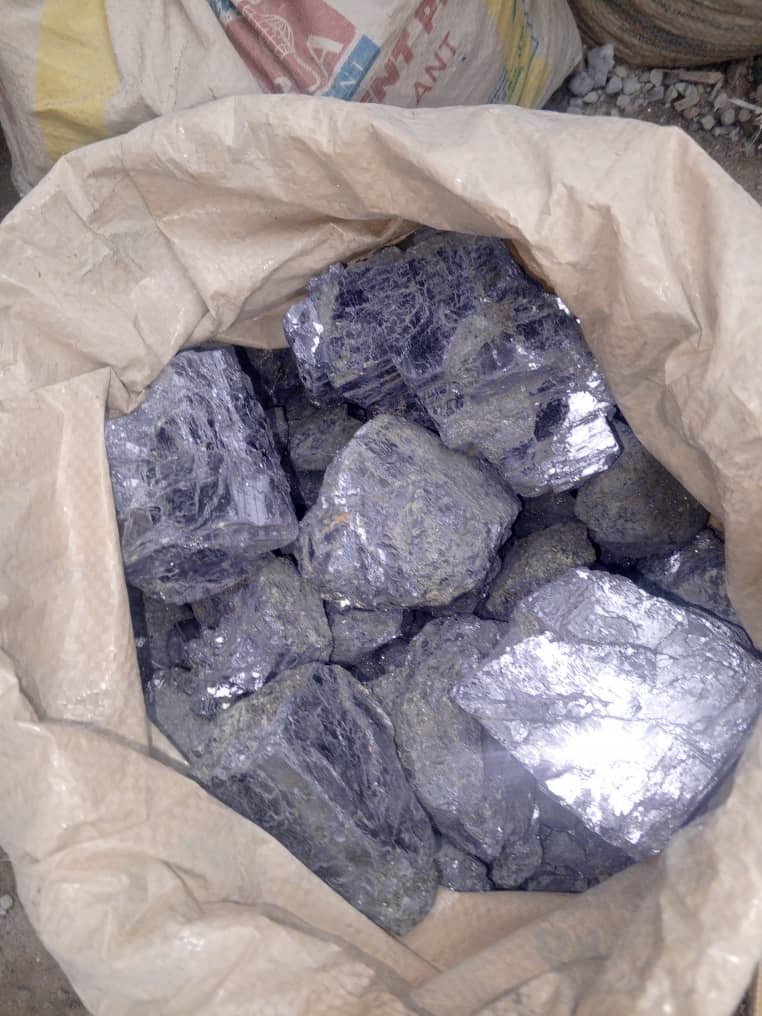


Industrial Minerals Explained: Types, Uses, and Market Demand
Walk into any modern building, pick up a smartphone, drive a car, or swallow a vitamin tablet — and you are, without realising it, the end-user of industrial minerals. These are not the glamorous precious stones that fill jewellery displays or the gold and silver that dominate financial headlines. Industrial minerals are the quiet workhorses of the global economy: the raw materials that make cement harden, glass become transparent, steel stay strong, batteries hold their charge, and paint cling to a wall. They are, in every practical sense, the invisible foundation upon which modern civilisation is built.
Yet for all their indispensability, industrial minerals remain poorly understood by the general public — and even by many investors and procurement professionals who interact with them daily. This article is designed to change that. Over the following sections, we will examine what industrial minerals actually are, explore the major types and their industrial applications, trace the surging global market demand that is reshaping supply chains, and — critically for buyers and investors — explain why Nigeria has emerged as one of the most strategically important sources of industrial minerals in the world today.
Whether you are a bulk commodity buyer in China, an industrial procurement manager in Europe, a mineral trading firm in India, or simply someone who wants to understand the raw material economy better, this guide is written for you. Let us begin at the beginning.
What Are Industrial Minerals? A Clear Definition
The term “industrial minerals” refers to naturally occurring non-metallic minerals — as well as certain metallic minerals used in chemical form rather than for their metal content — that are mined and processed for use in a wide variety of industries. They are distinguished from fuel minerals (coal, oil, gas) and from precious metals (gold, silver, platinum) by the fact that their primary value lies in their physical and chemical properties rather than in their elemental rarity or energy content.
Industrial minerals are non-fuel, non-metallic (and some metallic) minerals mined primarily for their chemical composition, physical properties, or structural characteristics — not for their fuel value or intrinsic metal worth. They are consumed in bulk in industries ranging from construction, ceramics, and glass to electronics, energy storage, agriculture, and pharmaceuticals.
What makes an industrial mineral valuable is not scarcity in the way that gold is scarce — it is the specific combination of properties that makes it uniquely suited to a technical application. Fluorite, for example, is valued for its exceptionally high fluorine content and flux properties. Zircon is prized for its thermal stability and resistance to corrosion. Graphite is indispensable because of its electrical conductivity and lubricating properties. Each mineral fills a niche that no synthetic substitute can easily or cheaply replicate.
It is also worth noting that the boundary between “industrial” and “metallic” minerals is not always fixed. Ilmenite, for instance, is mined both as a source of titanium metal and as a feedstock for titanium dioxide pigment — a key industrial mineral application. Similarly, manganese ore is smelted into ferromanganese for steel production but also processed into manganese dioxide for battery cathodes. The industrial minerals category is broad, dynamic, and expanding as technology creates new end-use demands.
The Major Types of Industrial Minerals
Industrial minerals span an extraordinary range of geological origins, chemical compositions, and physical forms. The following is a structured overview of the major categories and key minerals within each. We focus particularly on minerals with significant global trade volumes and on those found in abundance in Nigeria — a country that, as we shall see, is rapidly becoming a tier-one supplier.
1. Fluorite (Fluorspar) — The Flux Mineral
Fluorite, or fluorspar as it is commercially known, is the primary industrial source of fluorine. It occurs naturally as calcium fluoride (CaF₂) and is classified into three grades: metallurgical (metspar, CaF₂ ≥60%), ceramic (CaF₂ 85–95%), and acid (acidspar, CaF₂ ≥97%). Its applications span the full sweep of modern industry — from steel and aluminium smelting (where it acts as a flux to lower melting points and remove impurities), to the production of hydrofluoric acid (HF) used in petrochemical refining and semiconductor manufacturing, to the manufacture of refrigerants, fluoropolymers like PTFE (Teflon), and pharmaceutical fluorinated compounds.
| Grade | CaF₂ Content | Primary Use |
|---|---|---|
| Metallurgical (Metspar) | ≥60% | Steel, aluminium smelting, cement |
| Ceramic Grade | 85–95% | Glass, ceramics, enamel coatings |
| Acid Grade (Acidspar) | ≥97% | HF production, refrigerants, PTFE, pharma |
Nigeria holds significant fluorite ore deposits in Benue State and several other states across the Middle Belt. With Chinese demand for fluorspar consistently exceeding domestic Chinese production, Nigerian fluorite is attracting serious attention from Chinese commodity traders and steel producers alike.
2. Lithium Minerals — The Backbone of the Energy Transition
Few industrial minerals have experienced a demand revolution as dramatic as lithium. Once a niche element used primarily in ceramics, lubricating greases, and certain pharmaceutical applications, lithium has been catapulted to the centre of global energy policy by the electric vehicle (EV) revolution and the proliferation of grid-scale battery storage. Lithium-ion batteries now power everything from mobile phones and laptops to electric buses and grid stabilisation systems — and every single one of them requires lithium.
The two principal hard-rock lithium minerals traded in bulk are spodumene and lepidolite. Spodumene (LiAlSi₂O₆) is the dominant source, with lithium content measured as Li₂O — typically 1% to 6%+ in commercial ore. Lepidolite, a lithium-bearing mica, is mined at lower Li₂O concentrations (1.2–2.5%) but is prized in certain processing routes and as a feedstock for lithium carbonate production.
Nigeria’s lithium ore deposits span multiple states — Plateau State (Jos–Bukuru Pegmatite Field), Nasarawa State (Akiri Zone), Cross River, Kwara, and Oyo — with spodumene-kunzite specimens assaying between 1% and 5.5%+ Li₂O. Lepidolite is actively mined in Edo State (Auchi region). Nigeria is now on the radar of Asian battery manufacturers as a reliable alternative to Australian and South American sources.
3. Coltan and Tantalite — The Conflict-Free Supply Challenge
Coltan — a colloquial portmanteau of columbite and tantalite — is among the most strategically important industrial minerals of the digital age. Its refined product, tantalum metal, is used in the capacitors that regulate electrical flow in smartphones, laptops, medical implants, and aerospace guidance systems. Without tantalum capacitors, modern electronics simply would not function at their current performance levels.
The Democratic Republic of Congo has historically dominated global coltan supply, but the persistent association of Congolese coltan with armed conflict has driven manufacturers — under pressure from the Dodd-Frank Act and EU Conflict Minerals Regulation — to actively seek certified conflict-free sources. Nigeria’s coltan and tantalite deposits, primarily in Plateau State, Nasarawa, and Taraba, are emerging as a credible, compliance-friendly alternative. Nb₂O₅ + Ta₂O₅ content in Nigerian coltan typically ranges from 35% to 55%+.
4. Tin Concentrate (Cassiterite) — From Solder to Tinplate
Tin, extracted from the mineral cassiterite (SnO₂), has been one of humanity’s most useful metals for over five millennia. Today, its industrial applications are concentrated in three major areas: soldering (tin-based solder alloys are the backbone of electronic circuit board assembly), tinplate (steel coated with tin for food and beverage cans), and tin chemicals (used in PVC stabilisers, biocides, and catalysts). A smaller but growing application is tin as an anode material in next-generation sodium-ion batteries.
The Jos Plateau in Plateau State, Nigeria, was one of the world’s most productive tin-mining regions during the British colonial era, producing millions of tonnes of cassiterite concentrate. Though large-scale industrial mining has declined, artisanal and small-scale mining continues to yield high-grade cassiterite (Sn 60%+) that is actively exported through licensed channels. Nigeria’s rich legacy of tin production means that existing infrastructure, geological knowledge, and experienced mining labour are readily available.
5. Zircon Sand — The Ceramics and Nuclear Industry’s Workhorse
Zircon (ZrSiO₄) is a heavy mineral sand prized across multiple industries for its exceptional combination of properties: high melting point (2,550°C), chemical inertness, low thermal expansion, and high refractive index. In ceramics, zircon opacifies and whitens ceramic tiles, sanitaryware, and tableware — a single standard-size bathroom tile may contain up to 200 grams of zircon. In refractories, zircon bricks and castables line the furnaces of glass factories, steel mills, and foundries. In foundry casting, zircon sand’s thermal stability makes it a superior mould and core sand. And in nuclear applications, zircaloy (a zirconium alloy derived from zircon) encases uranium fuel rods in nuclear reactors.
As of mid-2026, the zircon market in Jos, Plateau State is notably active, with multiple buyers — particularly from China and India — sourcing Nigerian zircon sand through licensed export companies. ZrO₂ content in Nigerian zircon ranges from 40% to 66.5%, making it competitive with Australian and South African material for ceramics-grade applications.
6. Ilmenite and Rutile — Titanium’s Two Doors
Titanium dioxide (TiO₂) is the world’s most widely used white pigment — the brilliant whiteness in paint, paper, plastics, and cosmetics derives almost entirely from TiO₂. Two heavy mineral sands supply virtually all of the world’s TiO₂ feedstock: ilmenite (FeTiO₃, typically TiO₂ 44–60%) and rutile (TiO₂ 90%+). Rutile is the higher-grade feedstock and commands a premium; ilmenite, being more abundant, is more widely traded but requires upgrading (through the Becher or smelting processes) to produce synthetic rutile or titanium slag.
Beyond pigment, titanium metal — derived from rutile via the Kroll process — is one of the most extraordinary structural materials known: stronger than aluminium, as strong as steel, yet 45% lighter, and fully corrosion-resistant. It is indispensable in aerospace (airframes, jet engines), marine engineering, medical implants (hip and knee replacements, dental fixtures), and chemical processing equipment. Nigeria holds ilmenite and rutile deposits in Cross River, Ondo, Edo, and other coastal states, associated with heavy mineral sand placer deposits.
7. Monazite Sand — Rare Earths and the Energy Economy
Monazite is a phosphate mineral containing a rich assemblage of rare earth elements (REEs) — including cerium (Ce), lanthanum (La), neodymium (Nd), praseodymium (Pr), and thorium (Th). The rare earths in monazite are of extraordinary strategic importance: neodymium and praseodymium together form the basis of neodymium-iron-boron (NdFeB) permanent magnets — the most powerful magnets known, and the technology at the heart of every EV motor, wind turbine generator, and hard disk drive.
Nigerian monazite sand, available through Augustina Impex Limited, carries a TREO (Total Rare Earth Oxide) content of 52.2%, NdPr oxide of 12.0%, and an ultra-low thorium content of approximately 0.05% ThO₂. This near-zero thorium profile is a significant advantage for European buyers who must comply with FANC (Belgian Federal Agency for Nuclear Control) and EU NORM regulations. Beneficiation is by mechanical means only — gravity, magnetic, and electrostatic separation — with no chemical reagents involved.
Because monazite contains thorium — a naturally occurring radioactive material (NORM) — its export and handling are subject to strict regulatory oversight. In Nigeria, monazite exports must comply with the Nigerian Nuclear and Radiological Regulatory Authority (NNRA) framework. Any buyer or trading company purchasing Nigerian monazite should verify that their supplier holds the requisite NNRA clearances and that the cargo is properly classified as Class 7 NORM cargo under IATA Dangerous Goods Regulations for air freight.
8. Bastnasite (Bastnäsite) — Rare Earth Carbonates
Bastnasite (or Bastnäsite) is a fluorocarbonate mineral bearing cerium, lanthanum, neodymium, praseodymium, and other rare earth elements. Unlike monazite, bastnasite does not contain significant thorium, making it considerably easier to process and trade without radioactive material concerns. It is the world’s second-most-important primary source of rare earth elements after Chinese ionic clay deposits and the Mountain Pass carbonatite in California.
Nigeria’s bastnasite deposits — particularly those at producing sites managed by companies such as Tulay Africa — are attracting increasing interest from Asian and European buyers seeking to diversify their rare earth supply chains away from China. Assay results from Zirconex Mining & Metal Laboratory (Abuja, ISO/IEC 17025 accredited) confirm that Nigerian bastnasite concentrate carries commercially significant REO (Rare Earth Oxide) content across multiple pit samples, with alluvial and hard-rock extraction points in operation.
9. Graphite — The Dual-Use Industrial Mineral
Graphite is crystalline carbon — and it is one of the most versatile industrial minerals in existence. Its two forms — flake graphite and amorphous graphite — each serve distinct markets. Flake graphite (Total Graphitic Carbon, TGC 80–98%) is the feedstock for expandable graphite (used in fire retardants and gaskets), graphene production, and lithium-ion battery anodes — where it constitutes roughly 10–15% of battery weight as the anode active material. Amorphous graphite is used in foundry facings, lubricants, and carbon brushes for electric motors.
With China controlling approximately 65–70% of global natural flake graphite production, and the US, EU, and Japan all classifying graphite as a critical mineral, there is intense pressure to diversify supply. Nigerian graphite ore — with TGC ranging from 80% to 95% — is drawing attention from buyers who want to reduce dependence on Chinese supply chains.
10. Manganese Ore — Steel and Batteries
Manganese is the fourth-most-traded metal by volume globally, and it is critically important to both traditional steelmaking and the emerging battery economy. In steelmaking, manganese is used as a deoxidiser and desulphuriser, and ferromanganese alloys harden and strengthen structural steel. A standard tonne of steel contains approximately 6–9 kg of manganese. In batteries, manganese dioxide is a key cathode material in alkaline batteries, and lithium-manganese-oxide (LMO) and LNMO battery chemistries are gaining ground for EVs due to their thermal stability and low cost.
Nigerian manganese ore, found in deposits across Plateau, Nassarawa, Cross River, and Kogi States, typically assays at Mn 35–48% — suitable for both metallurgical and chemical processing routes. With South African supply domination increasingly challenged by infrastructure constraints and logistical bottlenecks, Nigerian manganese is a viable alternative for Asian steelmakers seeking diversification.
11. Lead Ore (Galena) and Zinc Ore — The Base Metal Partners
Lead and zinc almost always occur together geologically, hosted in the same sulphide ore deposits. Lead’s primary industrial application is in lead-acid batteries — still the dominant battery technology for automotive starting, lighting, and ignition (SLI) and for stationary backup power systems (UPS). Secondary uses include radiation shielding (in medical X-ray facilities and nuclear environments), ammunition, and cable sheathing. Zinc’s largest industrial application is galvanising — coating steel to prevent corrosion — followed by die-casting alloys, brass production, and zinc oxide used in rubber, paints, and ceramics.
Nigeria’s most notable galena (lead ore) deposit is located at the Dengi Mine in Kanam Local Government Area, Plateau State. Lead (Pb) content ranges from 40% to 70%, making it high-grade by global standards. Zinc ore from associated deposits assays at Zn 30–55%. Both minerals are available for export on EXW or FCA terms through licensed Nigerian export companies compliant with the Nigerian Export Supervision Scheme (NESS).
12. Copper Ore — The Red Metal of the Electrification Age
Copper is one of the oldest metals in human use — and in the twenty-first century, it has taken on a new urgency. The reason is simple: copper is the most electrically conductive common metal, and the global transition to clean energy is an inherently copper-intensive process. Every wind turbine requires 2–4 tonnes of copper. Every electric vehicle contains 3–4 times as much copper as an equivalent internal combustion engine vehicle. Every kilometre of power grid infrastructure — the transmission lines, substations, and distribution cables needed to electrify economies — is copper-intensive. The IEA estimates that achieving net-zero targets by 2050 will require a doubling or tripling of current copper production.
| Grade | Cu Content | Description |
|---|---|---|
| Grade A | 8–11% Cu | Premium grade; direct smelter feedstock |
| Grade B | 5–7% Cu | Mid-grade; beneficiation or direct feed |
| Grade C | 3–4% Cu | Lower grade; concentrate processing required |
Nigerian copper ore deposits are found in Nasarawa State (notably the Akiri area), Plateau State, and Zamfara State. Unlike the dominant porphyry copper deposits of South America, Nigerian copper tends to occur in smaller, higher-grade vein systems and skarn deposits — suited to artisanal and small-scale mining and attractive to Chinese smelters and trading companies that can blend lower-grade material.
13. Wolframite (Tungsten Ore) — The Hardest Metal’s Source
Tungsten has the highest melting point of all metals (3,422°C) and the highest tensile strength at high temperatures — properties that make it irreplaceable in applications where ordinary metals would simply melt, deform, or fail. Tungsten carbide (WC) accounts for roughly 60% of global tungsten consumption, used in cutting tools, drilling bits, mining equipment, and wear-resistant coatings. Tungsten metal is used in lamp filaments (in halogen and specialist incandescent bulbs), radiation shielding, and high-temperature aerospace components. Tungsten alloys, particularly W-Ni-Fe, are used in kinetic energy penetrators and other defence applications.
China controls approximately 80% of global tungsten production, and wolframite — the primary tungsten ore mineral, carrying WO₃ content of 30–75% — is classified as a critical mineral by the US, EU, and Japan. Nigerian wolframite (WO₃ 30–50%) is mined in Plateau, Nasarawa, and Kogi States, and represents an increasingly significant alternative source for global manufacturers seeking supply chain resilience.
Global Industrial Minerals Market Demand — The Big Picture
The global industrial minerals market is not a single market — it is a collection of overlapping, intersecting markets, each driven by distinct industrial demands, technology cycles, and geopolitical pressures. However, several macro-level forces are simultaneously driving demand across almost all industrial mineral categories, creating what analysts are calling a “super-cycle” in critical and industrial minerals that may persist for the next two to three decades.
① The Energy Transition: The global shift from fossil fuels to renewable energy and electric mobility is massively mineral-intensive. Wind, solar, EVs, and grid storage all require far more minerals per unit of energy produced than conventional energy systems. Lithium, cobalt, manganese, graphite, rare earths, copper, zircon, and titanium are all critical enablers of the energy transition.
② Supply Chain Diversification: COVID-19 exposed the fragility of single-source mineral supply chains. Geopolitical tensions between China and the West have further accelerated the search for non-Chinese mineral sources. Buyer countries — particularly the US, EU, Japan, South Korea, and Australia — are actively investing in supply chain diversification, creating new demand for African mineral exports.
③ Urbanisation and Infrastructure Construction: Rapid urbanisation — particularly in Asia, Africa, and Latin America — drives massive demand for construction minerals (limestone, gypsum, silica), ceramics (zircon, feldspar, kaolin), and structural steel (manganese, fluorite). The UN estimates that the world’s urban population will grow by 2.5 billion people by 2050 — the greatest construction wave in human history.
④ Technology Advancement: Each successive generation of electronics, telecommunications, and industrial equipment demands purer, more consistently specified mineral inputs. The 5G rollout, semiconductor fabrication, optical fibre deployment, and advanced manufacturing all create new or expanded demand for industrial minerals.
⑤ Critical Mineral Legislation: The US Inflation Reduction Act (IRA), EU Critical Raw Materials Act (CRMA), and equivalent legislation in Japan, South Korea, and Canada are creating legislative demand pull for certified, ethically sourced industrial minerals. This is opening premium market segments for compliant African mineral exporters.
Market Demand by Mineral — Current Trends and Price Outlook
While general trends are helpful, serious buyers and investors need mineral-specific demand intelligence. The following table provides a concise overview of demand trends and market dynamics for key industrial minerals as of 2025–2026.
| Mineral | Key Demand Driver | Market Trend 2025–2026 | Nigeria Supply Status |
|---|---|---|---|
| Lithium (Spodumene) | EV batteries, grid storage | Sustained demand; oversupply correction in 2024–25 | Active — Plateau, Nasarawa, Cross River |
| Fluorite | HF acid, steel, refrigerants, EVs | Strong; Chinese production declining | Active — Benue, Plateau States |
| Coltan/Tantalite | Electronics capacitors, aerospace | Strong; conflict-free sourcing pressure growing | Active — Plateau, Nasarawa, Taraba |
| Cassiterite (Tin) | Solder, tinplate, batteries | Recovering; solder demand resilient | Active — Plateau State (Jos legacy mines) |
| Zircon Sand | Ceramics, refractories, nuclear | Active — Chinese ceramics recovery driving demand | Active — Jos market; Plateau State |
| Ilmenite | TiO₂ pigment, titanium metal | Depressed 2025–26; recovery expected H2 2026 | Available — Cross River, Ondo, Edo States |
| Monazite Sand | NdPr magnets, rare earth separation | Strong and growing; NdPr supply deficit looming | Active — NNRA-compliant export available |
| Bastnasite (REE) | Rare earth separation, magnets | Rising; China export quota concerns driving demand | Active — Tulay Africa production, Lagos |
| Graphite | Battery anodes, lubricants, foundry | Strong; China export restrictions elevating ex-China prices | Available — multiple states |
| Copper Ore | Electrification, EVs, power grid | Very strong; structural demand deficit expected | Active — Nasarawa, Zamfara, Plateau |
| Wolframite | Cutting tools, defence, aerospace | Stable; China dominance creating procurement risk | Available — Plateau, Kogi, Nasarawa |
| Manganese Ore | Steel, battery cathodes | Moderate; steel recovery critical variable | Available — Plateau, Nassarawa, Kogi |
Nigeria as a Global Industrial Minerals Supplier — A GEO-Specific Overview
Nigeria is not often the first country that comes to mind when global buyers think of industrial mineral supply — but that perception is changing rapidly, and it is changing for very good reasons. Nigeria sits atop one of the most mineral-rich geological terrains in Sub-Saharan Africa: the Basement Complex, an ancient Precambrian rock formation that covers approximately 50% of Nigeria’s landmass and hosts an extraordinary diversity of mineral deposits.
The Nigerian government, through the Federal Ministry of Mines and Steel Development (FMMSD), has in recent years adopted deliberate policies to accelerate the formalisation and commercialisation of the solid minerals sector — including mandatory NESS (Nigerian Export Supervision Scheme) certification for all bulk mineral exports, NEPC (Nigerian Export Promotion Council) registration for mineral exporters, and the development of the National Integrated Mineral Exploration Project (NIMEP) to generate bankable geological data. These regulatory improvements are making it progressively easier for serious international buyers to source Nigerian minerals through verifiable, documented supply chains.
| State / Region | Key Minerals | Notes |
|---|---|---|
| Plateau State | Tin, Coltan, Zircon, Lithium, Lead, Manganese, Wolframite, Fluorite | Historic mining heartland; Jos–Bukuru Pegmatite Field; HMS plant in Jos |
| Nasarawa State | Copper Ore, Lithium, Coltan, Baryte | Akiri Copper Mine area; growing artisanal mining |
| Benue State | Fluorite Ore, Limestone, Salt | Major source of metallurgical and ceramic fluorite |
| Taraba State | Coltan, Gold, Lithium, Graphite | Rich pegmatite belt; emerging exploration zone |
| Zamfara State | Gold, Copper Ore, Lead-Zinc | Northwest Nigeria; active artisanal mining corridor |
| Kogi State | Iron Ore, Limestone, Wolframite, Manganese | Itakpe Iron Ore; Jakura Marble |
| Cross River State | Lithium Ore, Ilmenite, Baryte, Lead-Zinc | South-south zone; coastal heavy mineral sands |
| Edo State | Lepidolite, Ilmenite, Limestone, Clay | Auchi region lepidolite; active supply at Li₂O 1.2–2.5% |
| Kwara State | Lithium Ore, Columbite, Feldspar | Pegmatite-hosted minerals; growing export activity |
| Adamawa State | Limestone, Gypsum, Feldspar, Mica | Northeast Nigeria; significant construction mineral reserves |
How Industrial Minerals Are Graded, Tested, and Verified
One of the most critical — and most frequently misunderstood — aspects of industrial minerals trading is the process by which mineral grades are established, verified, and warranted in commercial contracts. Unlike standardised exchange-traded commodities, most industrial minerals are not traded on an open exchange with publicly published prices. Price and grade are negotiated between buyer and seller on the basis of independent assay results, pre-shipment inspection reports, and contractual grade warranties.
The standard workflow in reputable mineral export transactions proceeds as follows:
① Specification Confirmation: The buyer confirms required grade parameters, minimum acceptable content, moisture limits, deleterious element maximums, form (lump/fines/concentrate), and volume requirements.
② Sample Shipment and Independent Assay: A representative bulk sample (typically 100–500 kg) is shipped to the buyer’s designated independent laboratory (SGS, Intertek, ALS Minerals, Bureau Veritas, etc.) for full chemical assay. Freight and assay costs are typically shared or borne by the seller in competitive markets.
③ Soft Corporate Offer (SCO): Upon assay confirmation, the seller issues a Soft Corporate Offer detailing price, incoterms, volume, payment terms, validity period, and documentation requirements.
④ Supply Contract / MOU: Both parties execute a formal supply agreement covering grade warranty, quantity tolerances, pricing mechanism, payment terms, force majeure, dispute resolution, and governing law.
⑤ Pre-Shipment Inspection (PSI): CCIC (China Certification and Inspection Group), SGS, or Bureau Veritas inspectors attend at origin to verify grade, weight, packing condition, and documentation before loading. The PSI certificate is required for Chinese customs clearance.
⑥ Export Documentation and Shipment: Full export documentation is compiled — NESS certificate, NEPC Form NXP, commercial invoice, packing list, certificate of origin, and any specialist regulatory certificates (e.g., NNRA permit for monazite). Goods are released to the buyer’s carrier on agreed incoterms.
Industrial Minerals in the Battery Supply Chain — A Deep Dive
The battery supply chain deserves particular attention because it is simultaneously the fastest-growing end market for several key industrial minerals and the most geopolitically contested supply chain in the world today. Understanding where minerals fit in the battery value chain is essential for anyone involved in sourcing, trading, or investing in industrial minerals.
A standard lithium-ion battery cell — whether for an EV, a grid storage system, or a consumer device — contains the following mineral-derived materials in its key functional components:
| Cell Component | Material | Mineral Source |
|---|---|---|
| Cathode | Lithium Nickel Manganese Cobalt Oxide (NMC) | Lithium ore, Manganese ore, Cobalt |
| Anode | Graphite (natural or synthetic) | Natural flake graphite ore |
| Electrolyte | Lithium hexafluorophosphate (LiPF₆) | Lithium ore + Fluorite (for HF production) |
| Separator | Polyolefin membrane | Petroleum-derived (no direct mineral input) |
| Current Collectors | Copper foil (anode), Aluminium foil (cathode) | Copper ore, Bauxite/Aluminium ore |
This breakdown makes it clear that Nigeria — with its lithium ore, graphite, fluorite, copper ore, and manganese resources — is positioned to supply multiple components of the battery supply chain simultaneously. This multi-mineral profile is increasingly rare and strategically valuable in a world where battery manufacturers are trying to consolidate their upstream supply chains.
The Role of HMS Processing in Nigeria — Gravity, Magnetic, and Electrostatic Separation
Heavy Mineral Sands (HMS) processing is an industrial process used to separate and concentrate co-occurring heavy minerals from bulk sand ore bodies. In Nigeria — particularly on the Jos Plateau where ore streams often contain mixed assemblages of cassiterite, columbite, tantalite, zircon, and ilmenite — HMS processing is the critical beneficiation step that upgrades run-of-mine ore into marketable concentrate fractions.
The process employs a combination of physical separation technologies that exploit differences in density, magnetic susceptibility, and electrical conductivity between minerals:
① Gravity Separation (Spiral Concentrators, Shaking Tables): Separates heavy minerals (SG >2.9) from lighter gangue material using water flow and centrifugal forces. Primary separation step.
② Magnetic Separation (Wet High-Intensity Magnetic Separators — WHIMS; Rare Earth Drum Magnets): Separates paramagnetic minerals (ilmenite, columbite, magnetite) from non-magnetic minerals (zircon, cassiterite, rutile). Multiple passes at increasing magnetic intensity allow precise mineral fractionation.
③ Electrostatic Separation (High-Tension Roll Separators — HTR): Exploits differences in electrical conductivity. Conductive minerals (ilmenite, rutile) deflect differently from non-conductive minerals (zircon) when passed through a high-voltage electrostatic field. Enables final clean separation of zircon from titanium minerals.
④ Froth Flotation (Chemical): Used where chemical treatment is permissible; separates sulphide minerals and upgrades certain concentrates. Not used in NORM mineral processing where reagent-free beneficiation is required.
Augustina Impex Limited operates in partnership with an operational HMS processing plant in Jos, Plateau State, managed by Eliezer Onah. This plant is available to third-party ore owners for toll processing — meaning artisanal miners and small-scale mine owners can send their bulk ore for processing and receive clean mineral concentrates ready for export, without having to invest in processing equipment themselves.
Regulatory and Compliance Framework for Nigerian Mineral Exports
Serious international buyers rightly demand that their Nigerian mineral suppliers demonstrate compliance with the applicable Nigerian and international regulatory frameworks. The key regulatory pillars governing Nigerian solid mineral exports are as follows:
① Nigerian Minerals and Mining Act 2007: The principal legislation governing all mining activities in Nigeria. Mandates mining licences for all mining operations. Prohibits unlicensed mineral exploitation.
② Nigerian Export Supervision Scheme (NESS): Administered by the Federal Ministry of Industry, Trade and Investment. All bulk mineral exports above a threshold value must obtain a NESS certificate issued by an approved inspection body (COTECNA, Crown Agents, or equivalent). NESS confirms quality, quantity, and value of the export cargo.
③ Nigerian Export Promotion Council (NEPC) Registration: All registered mineral exporters must hold NEPC registration. The NEPC Registered Exporter (RE) number appears on export documentation and confirms the company is a legitimate, registered Nigerian exporter.
④ Nigerian Nuclear and Radiological Regulatory Authority (NNRA): Governs the handling, transport, and export of naturally occurring radioactive materials (NORM) including monazite sand, zircon (in high-thorium varieties), and other NORM-bearing heavy mineral concentrates. An NNRA permit is mandatory for NORM mineral exports.
⑤ Central Bank of Nigeria (CBN) Form NXP: All export transactions must be routed through a licensed Nigerian commercial bank under the CBN’s export proceeds repatriation framework. The Form NXP documents the export transaction and ensures foreign exchange earnings are properly repatriated.
⑥ Federal Ministry of Mines and Steel Development (FMMSD): Issues mining licences (ML), small-scale mining licences (SSML), and quarry licences. All minerals legally mined in Nigeria must originate from a validly licensed mine.
Challenges in the Industrial Minerals Market — And How to Navigate Them
No honest guide to industrial minerals trading would be complete without addressing the real challenges that both buyers and sellers face. The Nigerian mineral export market, for all its enormous potential, is not without friction — and understanding these challenges is the first step to navigating them successfully.
① Grade Inconsistency: Artisanal mines produce ore of variable grade. Our approach: We operate through established, long-term supply relationships with licensed mine owners and require assay testing from accredited laboratories before any commercial offer is made.
② Fraudulent Suppliers: The Nigerian mineral export space, like any high-value commodity market, has its share of fraudulent actors making supply claims they cannot fulfil. Our approach: All offers are backed by verifiable laboratory assay results, and we facilitate direct inspection by buyer-appointed inspectors (CCIC, SGS, BV) at origin before any payment is made.
③ Logistics Complexity: Moving bulk mineral cargo from inland Nigerian mine sites to Lagos or Port Harcourt ports involves road haulage challenges, port congestion, and documentation complexity. Our approach: We maintain established logistics partnerships and can coordinate end-to-end from mine gate to vessel.
④ Payment Terms Disagreement: International buyers often prefer deferred payment or LC terms; Nigerian mineral suppliers typically require advance payment given the capital requirements of aggregating mineral supply. Our approach: We are transparent about why advance payment is standard practice in the Nigerian mining sector and work with established relationships to develop flexible terms over time.
⑤ Regulatory Documentation: Obtaining all required Nigerian export certifications in a timely manner can be challenging for inexperienced exporters. Our approach: As a NEPC-registered exporter with NEPC RE No. 0039421, we have established relationships with all relevant regulatory bodies and routinely manage full documentation packages for mineral export transactions.
Frequently Asked Questions (FAQ) — Industrial Minerals Sourcing from Nigeria
MOQ varies by mineral and by logistics mode. For bulk sea freight, practical minimums are typically 500 MT to 1,000 MT per shipment to justify a 20ft or 40ft container or bulk vessel booking. For air freight (applicable to NORM materials like monazite samples), quantities of 10 kg to 100 kg are standard for initial sample transactions. We can accommodate smaller sample quantities for independent assay purposes at the outset of any new buyer relationship.
The industry standard for independent Nigerian mineral exporters is 100% advance Telegraphic Transfer (T/T) before shipment. This is not arbitrary — it reflects the capital requirements of mineral aggregation, the lack of financing infrastructure in the artisanal mining sector, and the well-documented history of payment defaults in African commodity trades. More flexible terms — such as partial advance and balance against Bill of Lading, or Letter of Credit — can be considered for established relationships and larger, long-term supply contracts.
The default incoterms offered by Augustina Impex Limited are EXW (Ex-Works, Nigeria — mine gate or processing plant) and FCA (Free Carrier — nominated Nigerian export port, typically Lagos Apapa or Tin Can Island). CIF (Cost, Insurance, Freight) can be arranged for established relationships where the buyer requires door-to-port pricing. All incoterms are per Incoterms® 2020.
Pre-shipment inspection (PSI) costs are typically borne by the buyer, as the buyer selects and appoints the inspection body (CCIC, SGS, BV, or Intertek). Augustina Impex facilitates access to the mine site and processing plant for the inspection team and provides all necessary documentation support. We welcome PSI as a transparency and quality assurance measure.
Yes. For minerals where our supply network has sufficient production capacity, we can supply on a regular monthly shipment schedule under a supply contract. We are actively building long-term supply relationships with qualified international buyers across Asia, Europe, and the Middle East. Monthly supply agreements provide buyers with pricing predictability and supply continuity, and provide our mining partners with the consistent demand signal needed to justify capital investment in production expansion.
Why Choose Augustina Impex as Your Nigerian Industrial Minerals Partner
In a market where credibility, compliance, and supply chain transparency are non-negotiable, Augustina Impex Limited offers a uniquely comprehensive platform for international buyers seeking to access Nigeria’s extraordinary industrial mineral wealth.
① Multi-State Supply Network: We operate across Plateau, Nasarawa, Taraba, Zamfara, Cross River, Kogi, Adamawa, Kwara, and Edo States — giving us unmatched geographic reach within the Nigerian mining sector and access to a broad spectrum of mineral commodities from a single, accountable supplier.
② HMS Processing Partnership: Direct partnership with an operational HMS processing plant in Jos, Plateau State — enabling us to offer upgraded, assay-verified mineral concentrates rather than unbeneficiated bulk ore.
③ Full Regulatory Compliance: Registered with NEPC (RE No. 0039421, valid July 2027), compliant with NESS, NNRA, CBN, and FMMSD requirements. Export documentation is managed in-house.
④ Export via Licensed Entity: All exports are issued under Jase Odus Nigeria Limited (RC 2022462), a fully registered Nigerian export company, ensuring full legal and corporate compliance.
⑤ Inspection-Friendly: We actively welcome CCIC, SGS, and Bureau Veritas pre-shipment inspections and have established processes for facilitating inspector access at all our supply points.
⑥ Experienced Leadership: Led by Kolawole King, Chief Executive Officer, with direct relationships across the Nigerian mining, logistics, and regulatory landscape, Augustina Impex brings both technical knowledge and commercial acumen to every transaction.
The Future Outlook — Industrial Minerals in a Decarbonising World
The long-term outlook for industrial minerals is, in a word, exceptional. The physics of the energy transition are fixed: you cannot build a wind turbine without rare earth magnets; you cannot make a battery without lithium, graphite, manganese, and copper; you cannot refine petroleum or manufacture refrigerants without fluorite. The demand for these minerals is structurally embedded in the technology choices that governments and industries around the world have already made — and the supply side has not kept pace.
The International Energy Agency (IEA) projects that by 2040, demand for lithium will increase by a factor of 40 relative to 2020 levels. Cobalt demand is projected to increase by 20x, nickel by 20x, and rare earth elements by at least 6x. Copper demand is expected to double by 2035. These are not modest increments — they represent the largest expansion of mining activity since the Industrial Revolution, and they must be satisfied primarily from developing nations that hold the geological endowment.
Africa — and Nigeria specifically — sits at the intersection of two of the most powerful forces in twenty-first century economic geography: extraordinary mineral endowment and rapidly improving governance and export infrastructure. For the buyers and investors who position themselves early in Nigeria’s emerging mineral export ecosystem, the opportunities are genuinely transformative.
We invite you to be part of that story. Whether you are looking to source a single container of zircon sand, establish a monthly supply contract for fluorite ore, or build a multi-year rare earth supply agreement, Augustina Impex Limited is ready to be your trusted Nigerian mineral partner.
Augustina Impex Limited is Nigeria’s trusted aggregator, processor, and exporter of industrial minerals — connecting qualified international buyers with verified Nigerian mineral supply, with full regulatory compliance and pre-shipment inspection support.
📧 augustinaimpex@gmail.com | 📞 WhatsApp: +234 906 090 4274
Visit Our Website
Read Our Corporate Blog
▶ Watch Our Advert Video
Kolawole King is the Chief Executive Officer of Augustina Impex Limited (RC 750691), a fully licensed Nigerian solid minerals export company headquartered in Jos, Plateau State. With a multi-state mineral supply network spanning Plateau, Nasarawa, Taraba, Zamfara, Cross River, Kogi, Kwara, Adamawa, and Edo States, Kolawole brings deep operational knowledge of Nigeria’s mining sector and international commodity trading to every client engagement. Augustina Impex is registered with the Nigerian Export Promotion Council (NEPC RE No. 0039421) and operates in full compliance with all applicable Nigerian mineral export regulations. Follow the corporate blog at augustinaimpexng.blogspot.com and visit the company website at www.augustinaimpex.com.
-
Previous Post
How to Export Solid Minerals from Nigeria
Post a comment
Related Posts
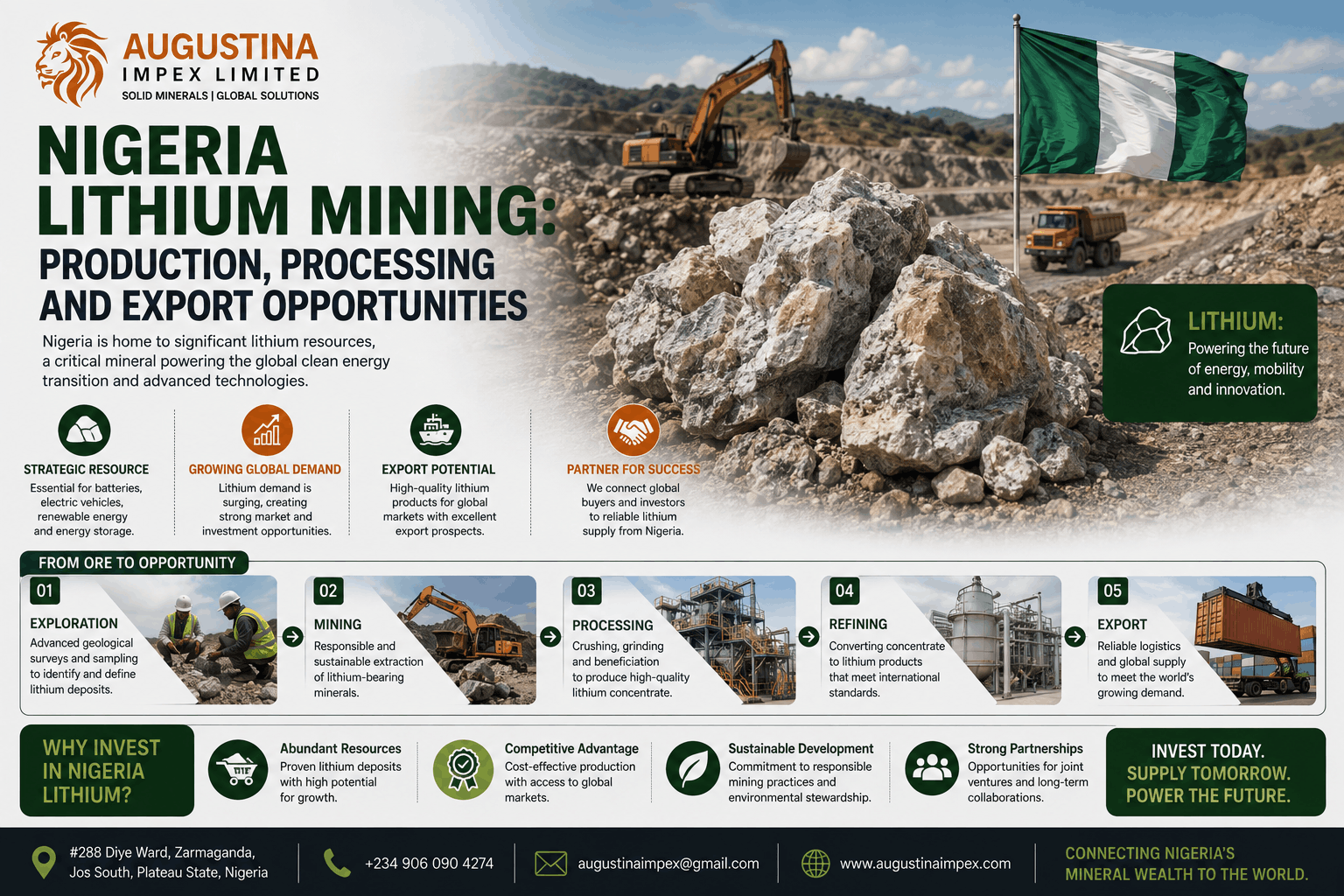
Nigeria Lithium Mining: Production, Processing & Export
Nigeria Lithium Mining: Production, Processing and Export Opportunities By Kolawole King, CEO — Augustina Impex…
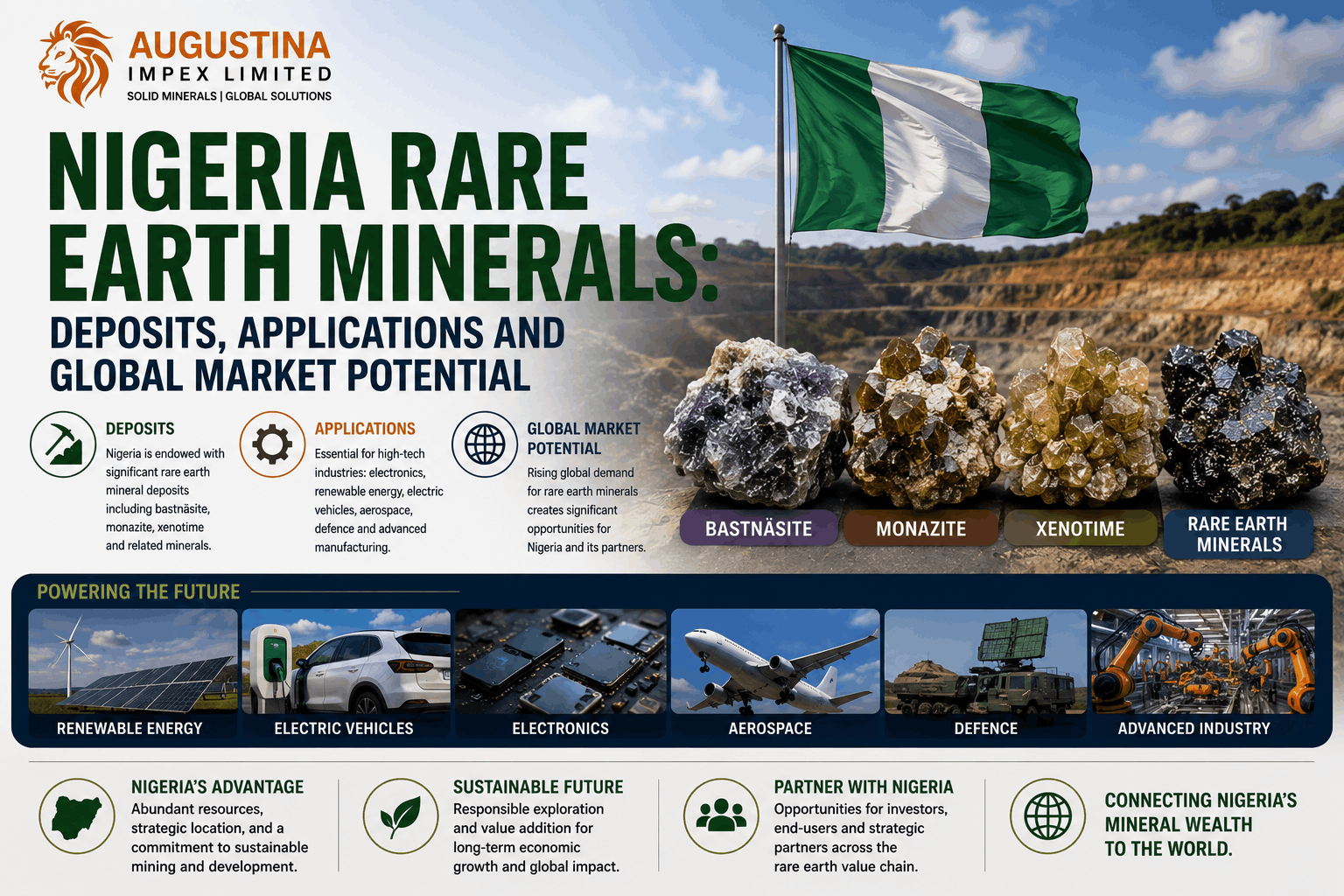
Nigeria Rare Earth Minerals: Deposits & Market Potential
Nigeria Rare Earth Minerals: Deposits, Applications and Global Market Potential By Kolawole King, CEO —…
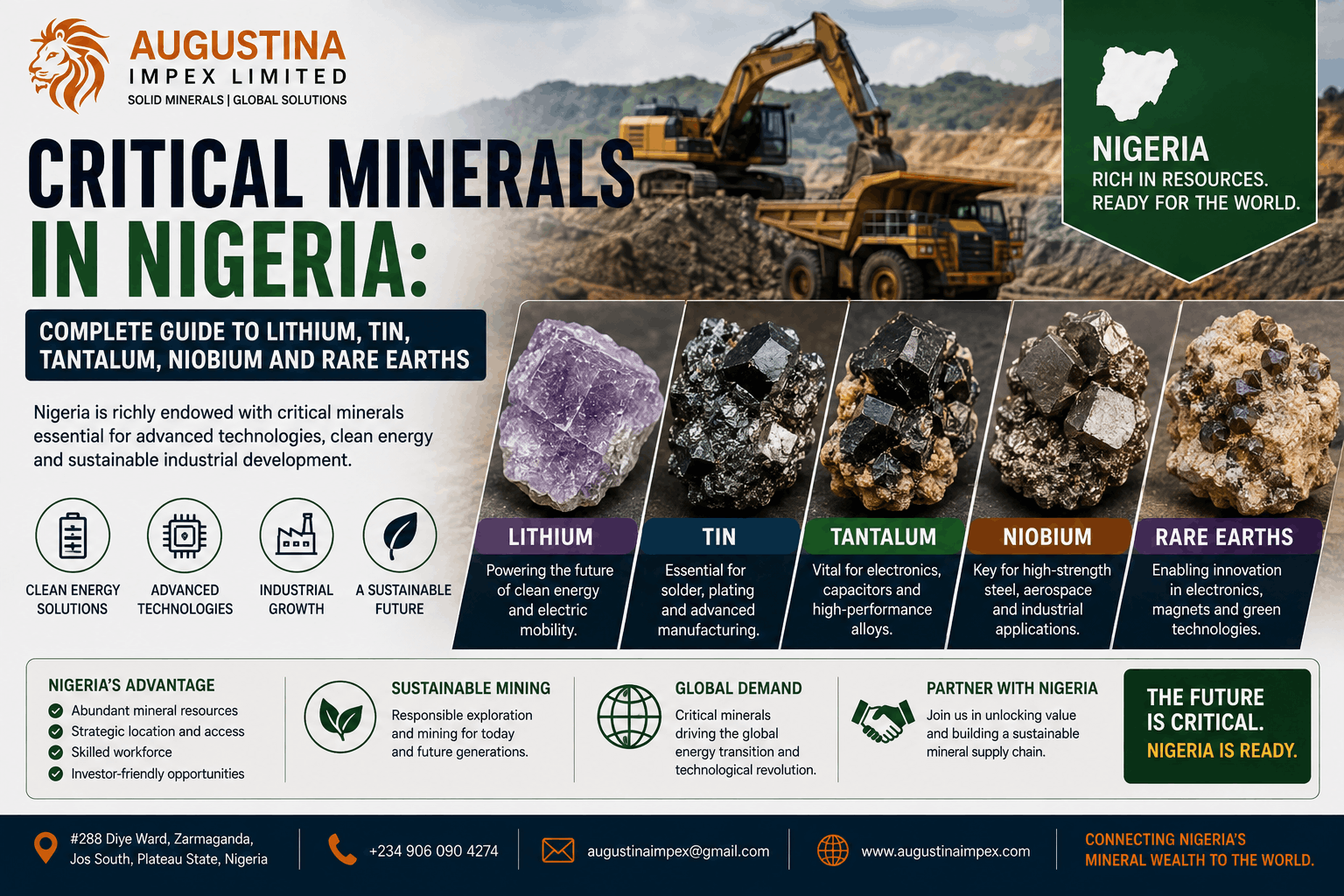
Nigeria Critical Minerals Guide: Lithium, Tin & Rare Earths
Critical Minerals in Nigeria: Complete Guide to Lithium, Tin, Tantalum, Niobium and Rare Earths By…
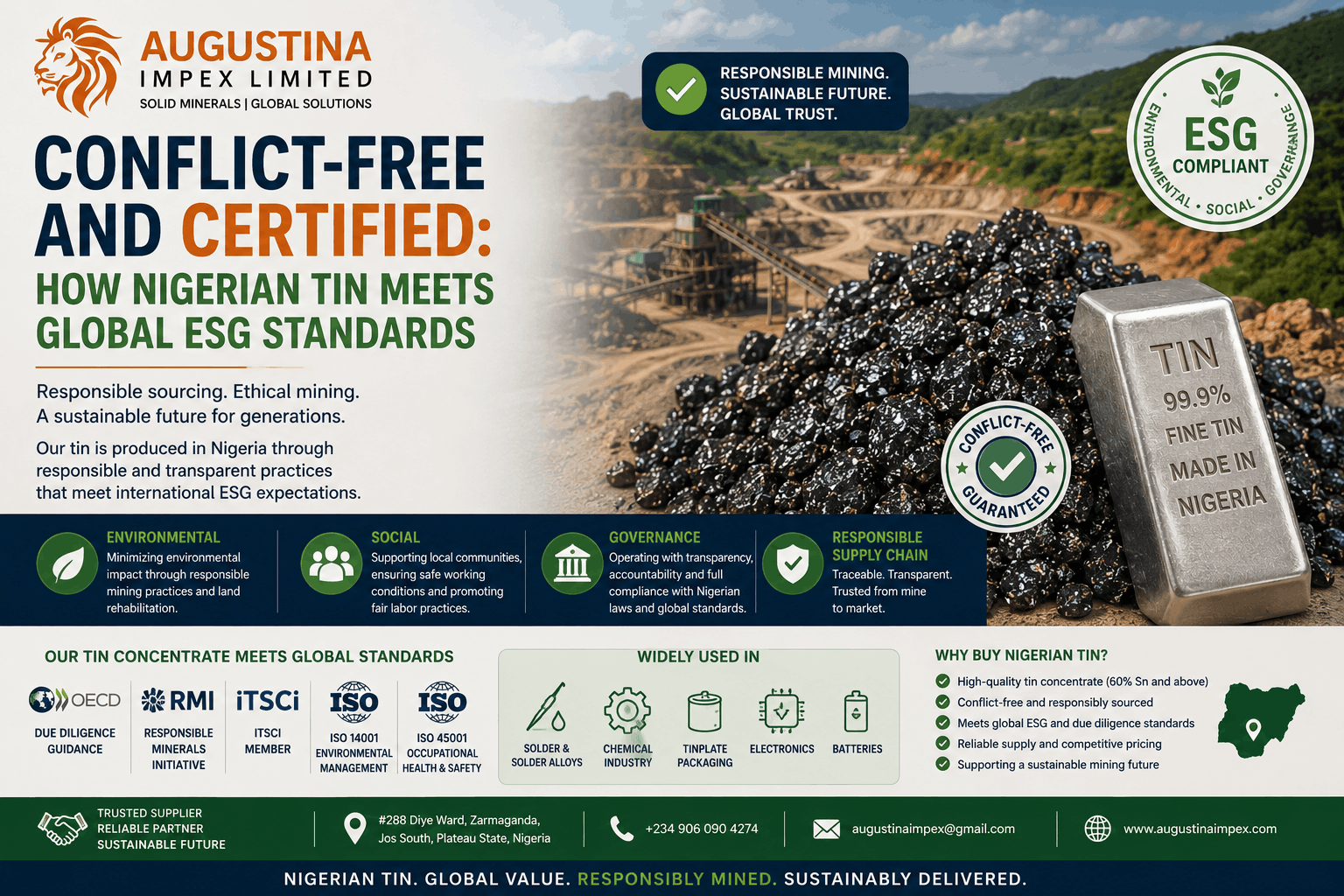
Conflict-Free Nigerian Tin Meets Global ESG Standards
Conflict-Free and Certified: How Nigerian Tin Meets Global ESG Standards By Kolawole King, CEO —…