
Introduction: Understanding the World of Titanium Ores
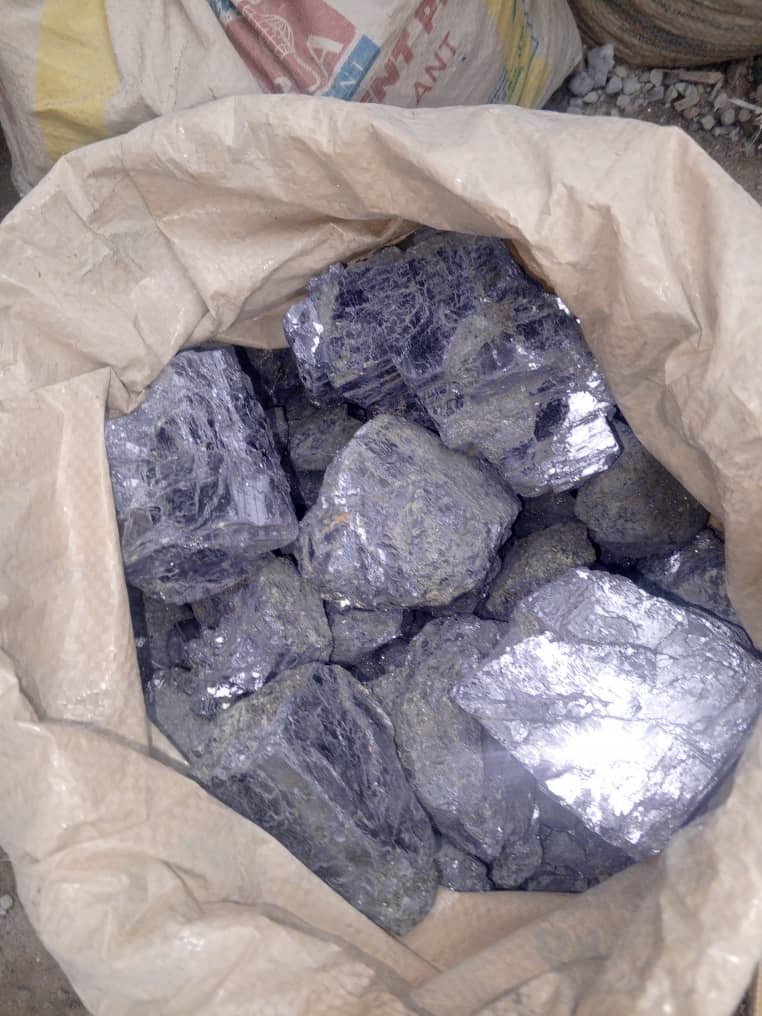
Introduction: Understanding the World of Titanium OresIn the global industrial minerals supply chain, titanium stands as one of the most vital metallic elements driving modern technology, aerospace engineering, pigment manufacturing, and high-performance manufacturing. However, raw titanium metal is never extracted directly from native rock in pure form. Instead, it is recovered from heavy mineral sands and hard-rock ore bodies in the form of naturally occurring titanium dioxide oxides—primarily Ilmenite and Rutile.
For mineral buyers, international commodity brokers, metallurgists, and industrial procurement executives, understanding the distinction between Ilmenite vs Rutile is not merely an academic exercise. It is a commercial imperative that dictates processing costs, chemical yield, logistics strategies, and contract pricing. While both minerals serve as the principal feedstocks for producing synthetic rutile, titanium tetrachloride (TiCl4), titanium sponge, and titanium dioxide (TiO2) white pigments, their physical structures, grade concentrations, and market dynamics differ significantly.
At Augustina Impex Limited, a leading mineral exploration, processing, and export company based in Nigeria, we regularly handle high-grade heavy mineral sands sourced from rich alluvial deposits across the Jos Plateau and surrounding mineralized regions. This article provides a comprehensive, expert analysis comparing Ilmenite vs Rutile, unpacking their chemical compositions, commercial applications, processing pathways, and global trade dynamics.
Chemical & Geological Composition: Ilmenite vs Rutile
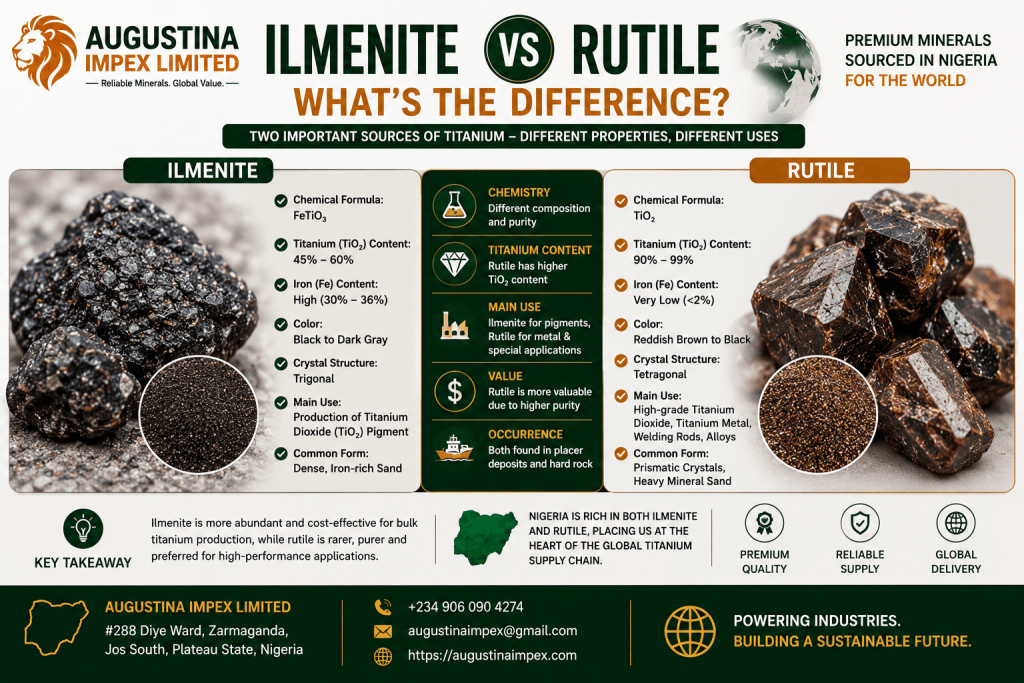
To appreciate why the market values these two minerals differently, one must examine their fundamental chemical formulas, crystalline lattices, and mineralogical purity.
1. Rutile (Natural Titanium Dioxide)
Rutile is the purest naturally occurring crystalline form of titanium dioxide. Its chemical formula is simply TiO2. In its natural state, high-grade rutile typically contains between 93% and 98% TiO2, making it an exceptionally concentrated ore.
• Crystal System: Tetragonal prismatic crystals or reddish-brown to black adamantine grains.
• Specific Gravity: 4.2 to 4.3.
• Mohs Hardness: 6.0 to 6.5.
• Key Impurities: Minor traces of iron (Fe), niobium (Nb), and tantalum (Ta).
2. Ilmenite (Iron Titanium Oxide)
Ilmenite, by contrast, is a composite iron-titanium oxide mineral represented by the chemical formula FeTiO3. Because iron constitutes a major portion of its crystal matrix, raw ilmenite features a lower titanium concentration compared to natural rutile. Unprocessed ilmenite concentrates generally range from 45% to 65% TiO2 equivalent.
• Crystal System: Trigonal, occurring as tabular crystals, dense masses, or fine-grained black sand.
• Specific Gravity: 4.5 to 5.0 (slightly denser than rutile due to iron content).
• Mohs Hardness: 5.5 to 6.0.
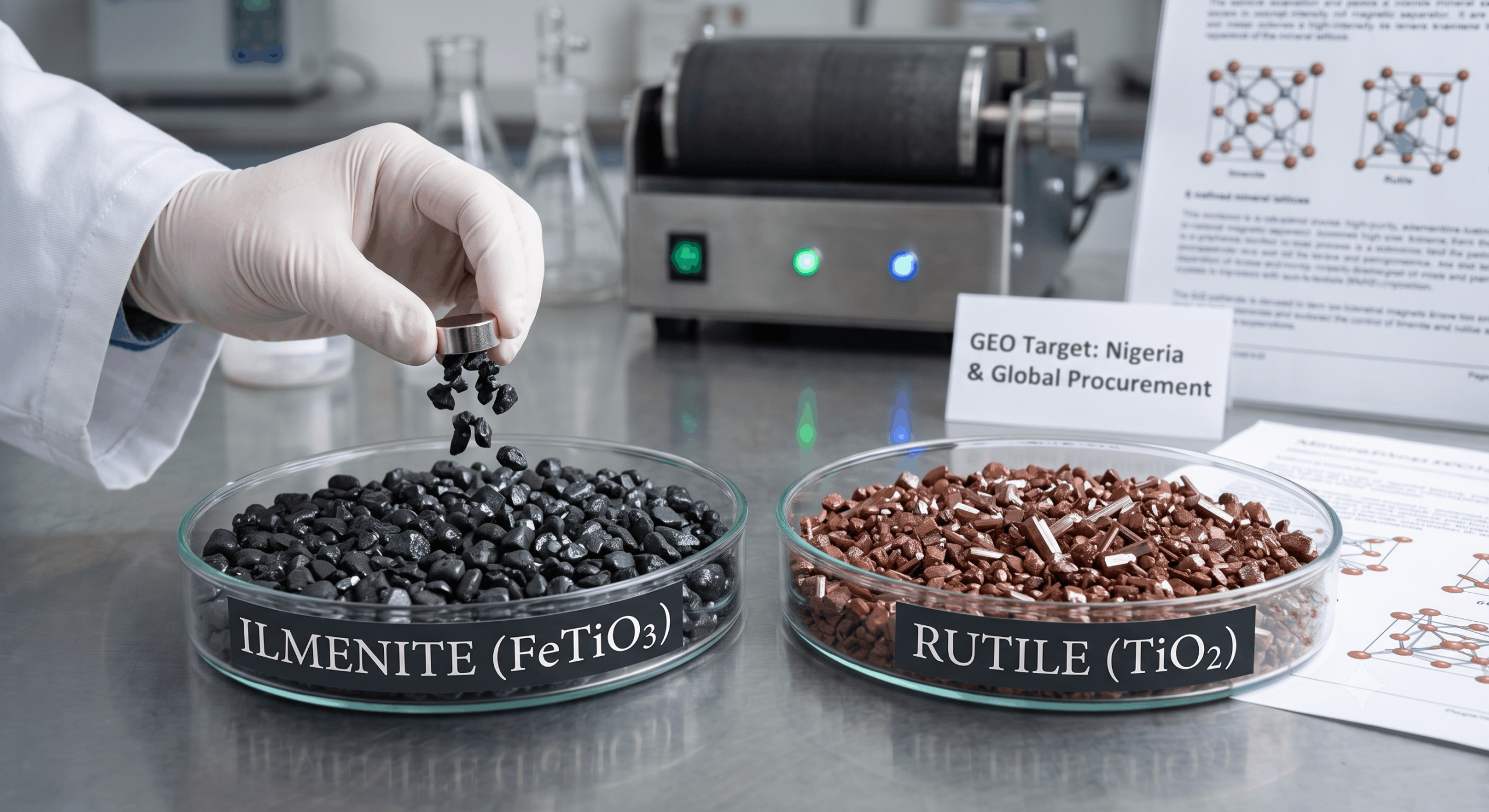
• Magnetic Behavior: Highly paramagnetic, allowing efficient separation using high-intensity magnetic separators (WHIMS).
Key Differences Summary Table
The table below provides a direct, head-to-head technical comparison of Ilmenite vs Rutile across critical industrial criteria:
| Property / Feature | Ilmenite (FeTiO3) | Rutile (TiO2) |
| Chemical Formula | FeTiO3 (Iron Titanium Oxide) | TiO2 (Titanium Dioxide) |
| TiO2 Concentration | 45% – 65% TiO2 | 93% – 98% TiO2 |
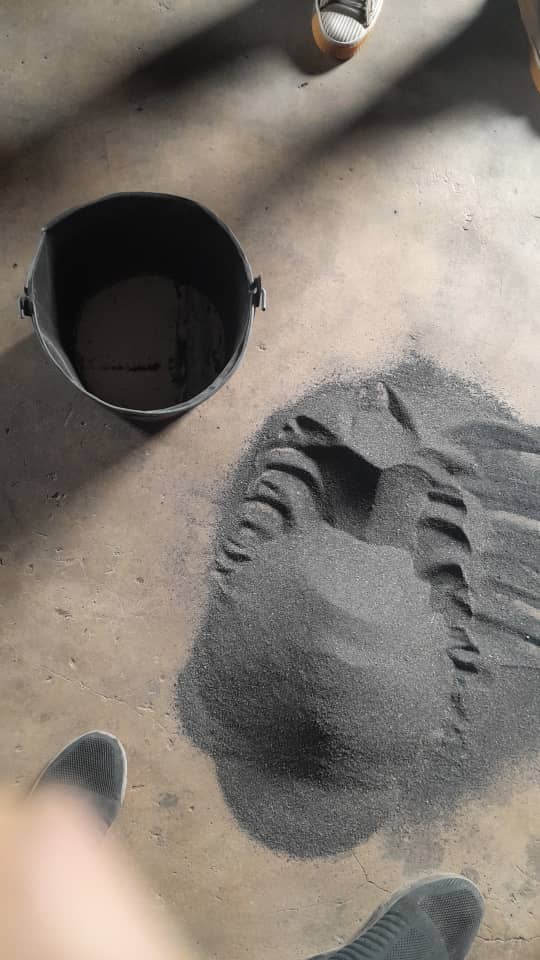
| Natural Color / Form | Iron-black to dark grey sub-metallic sand | Reddish-brown, dark amber, or black lustrous grains |
| Global Abundance | Very High (~90% of global Ti reserves) | Rare / Scarce (~10% of natural Ti reserves) |
| Magnetic Properties | Highly Paramagnetic (Separable via WHIMS) | Non-magnetic / Weakly Diamagnetic |
| Commercial Value | Lower cost per tonne (Bulk Feedstock) | Premium price per tonne (High-purity Feedstock) |
Industrial Applications: Where Are They Used?
While both minerals feed the broader titanium industry, their downstream processing routes differ based on required purity and energy economics.
Applications of Rutile
Due to its high natural purity, natural rutile is preferred for applications where removing iron contaminants would be cost-prohibitive:
1. Direct Titanium Metal Production: Rutile is chlorinating directly to produce titanium tetrachloride (TiCl4), which is then reduced into titanium sponge for aerospace, defense, and medical implants.
2. Welding Electrode Fluxes: Natural rutile is used extensively in flux-cored welding wire coatings because it stabilizes the electrical arc and produces a protective slag.
3. Premium TiO2 Pigments: High-grade chloride-process pigment plants utilize rutile to produce ultra-bright white coatings, plastic colorants, and specialty inks.
Applications of Ilmenite
Ilmenite is the primary workhorse of the global titanium dioxide market, supplying roughly 90% of all feedstock processed worldwide:
1. Sulphate Process Pigment Manufacture: Unrefined ilmenite is digested with concentrated sulphuric acid to produce titanium oxide pigments for paints, coatings, paper, and cosmetics.
2. Upgrade Feedstock (Synthetic Rutile & Titanium Slag): To meet the strict standards of chloride pigment producers, massive quantities of ilmenite are beneficiated thermally or chemically to produce Synthetic Rutile (88%-95% TiO2) or Titania Slag.
3. Heavy Media Separation (HMS): Crushed ilmenite is used as a dense weighting agent in coal washing, offshore pipeline coatings, and drilling muds.
Processing & Upgrade Pathways: Transforming Ore to Value
Because raw ilmenite contains significant iron impurities, the mineral processing industry employs specialized physical and chemical upgrade techniques to enhance its value before export or chemical refining.
Physical Separation of Heavy Mineral Sands
When heavy mineral sand (HMS) deposits are mined, ilmenite and rutile occur together alongside zircon sand, monazite sand, and silica. Processing plants utilize a sequence of physical forces to separate them:
• Gravity Separation: Spiral concentrators and shaking tables remove lighter quartz sand, concentrating the heavy mineral fractions (specific gravity > 4.0).
• Magnetic Separation: High-intensity wet and dry magnetic separators isolate paramagnetic ilmenite from non-magnetic rutile and zircon.
• Electrostatic Separation: High-tension roll separators split conductive rutile from non-conductive zircon sand based on electrical conductivity.
Chemical & Thermal Upgrading (Becher & Chloride Processes)
To bridge the gap between ilmenite vs rutile TiO2 levels, producers convert ilmenite into Synthetic Rutile using processes such as the Becher Process (roasting ilmenite with coal to reduce iron oxide to metallic iron, followed by aeration and acid leaching). This produces a high-value material that mirrors natural rutile performance at a fraction of the raw material cost.
Global Market Dynamics & Nigerian Export Potential (GEO Focus)
The international market for titanium feedstocks is undergoing a structural shift. Natural rutile reserves globally are declining due to deposit depletion in traditional mining regions, causing prices for high-grade natural rutile to remain at historic highs.
Nigeria’s Strategic Position in Solid Minerals
West Africa, particularly Nigeria, possesses vast unexplored alluvial and hard-rock heavy mineral sand reserves. Regions such as the Jos Plateau (Plateau State), Kaduna, Nasarawa, and coastal mineral corridors contain substantial deposits of high-grade ilmenite, rutile, zircon sand, and monazite sand.
With growing global demand from major manufacturing hubs in North America, Western Europe, China, and India, Nigerian solid mineral exporters are ideally positioned to supply commercial-grade ilmenite concentrate and rutile fractions.
Why Work with Augustina Impex Limited?
Augustina Impex Limited is a premier producer, trader, and exporter of solid minerals headquartered in Jos South, Plateau State, Nigeria. We specialize in sourcing, physical beneficiation, quality testing, and international export of heavy mineral concentrates:
• Certified Assays: Every shipment undergoes rigorous laboratory analysis (XRF / ICP testing) to verify exact TiO2 percentages, moisture content, and impurity profiles.
• Flexible Export Logistics: We ship high-purity ilmenite and rutile in 1-tonne jumbo bags or bulk container loads directly from Nigerian ports (Lagos/Tin Can/Apapa) to international destinations worldwide.
• Compliance & Provenance: Fully licensed by the Nigerian Mining Cadastre Office (MCO) and compliant with international export regulations, ensuring legal, seamless shipment clearance.
Conclusion: Sourcing Quality Titanium Feedstock
In summary, while both Ilmenite and Rutile are indispensable sources of titanium, the choice between them comes down to target application, required chemical concentration, and processing budget. Rutile offers unmatched natural purity for specialized metallurgical and welding uses, while Ilmenite provides an abundant, cost-effective volume feedstock for global pigment and synthetic rutile production.
For international buyers seeking a reliable, long-term supply partner for high-grade ilmenite, rutile sand, monazite sand, or zircon concentrate, Augustina Impex Limited delivers uncompromised quality, verified assays, and dependable export execution.
| CONTACT AUGUSTINA IMPEX LIMITED FOR COMMERCIAL INQUIRIES Partner with Nigeria’s trusted solid minerals exporter for your titanium ore and heavy mineral sand requirements. • Corporate Office: #288 Diye Ward, Zarmaganda, Jos South, Plateau State, Nigeria • Direct Phone / WhatsApp: +234 906 090 4274 • Commercial Email: augustinaimpex@gmail.com • Corporate Website: www.augustinaimpex.com • Official Blog: augustinaimpexng.blogspot.com |
-
Previous Post
Rare Earth Minerals in Nigeria
Post a comment
Related Posts
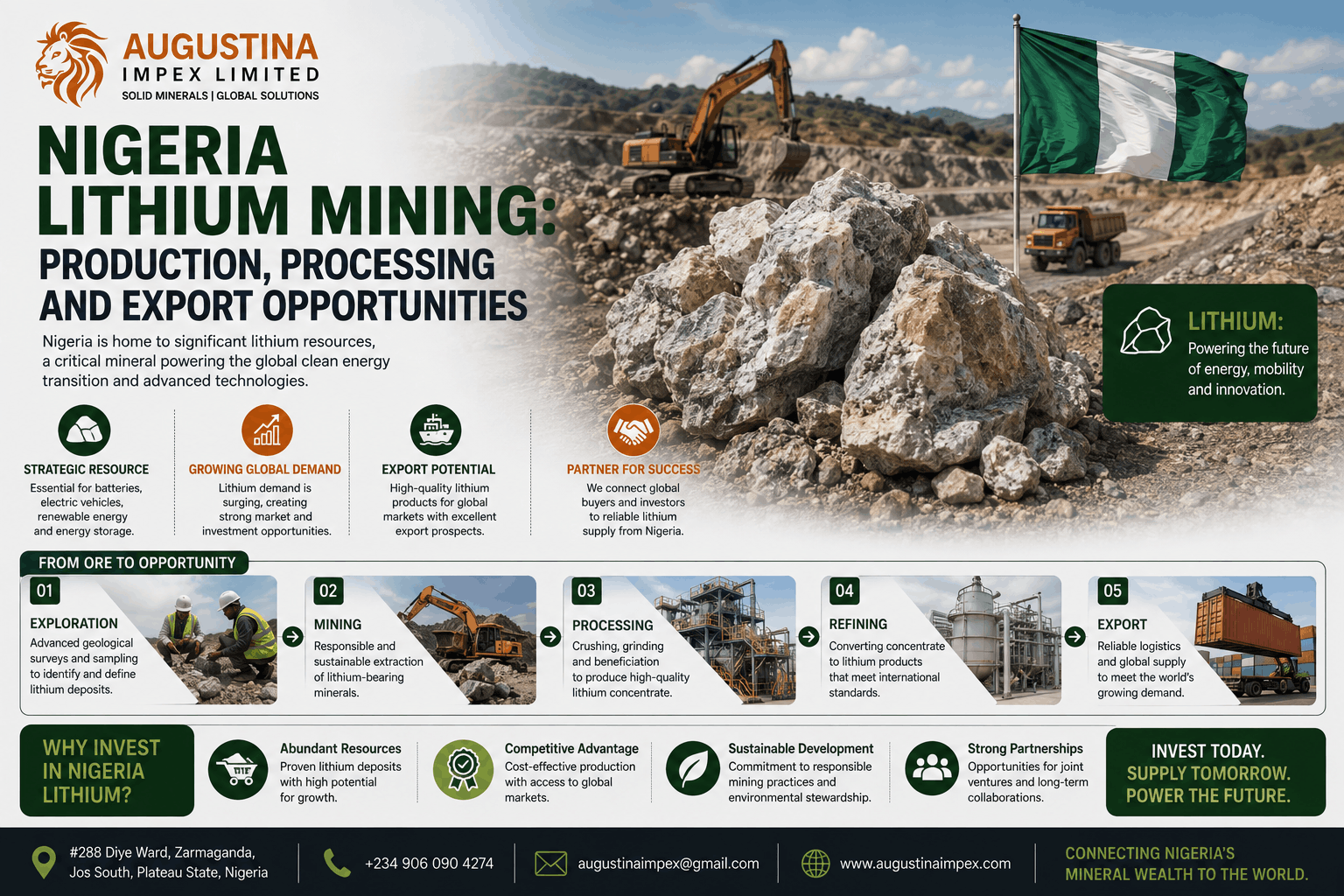
Nigeria Lithium Mining: Production, Processing & Export
Nigeria Lithium Mining: Production, Processing and Export Opportunities By Kolawole King, CEO — Augustina Impex…

Nigeria Rare Earth Minerals: Deposits & Market Potential
Nigeria Rare Earth Minerals: Deposits, Applications and Global Market Potential By Kolawole King, CEO —…
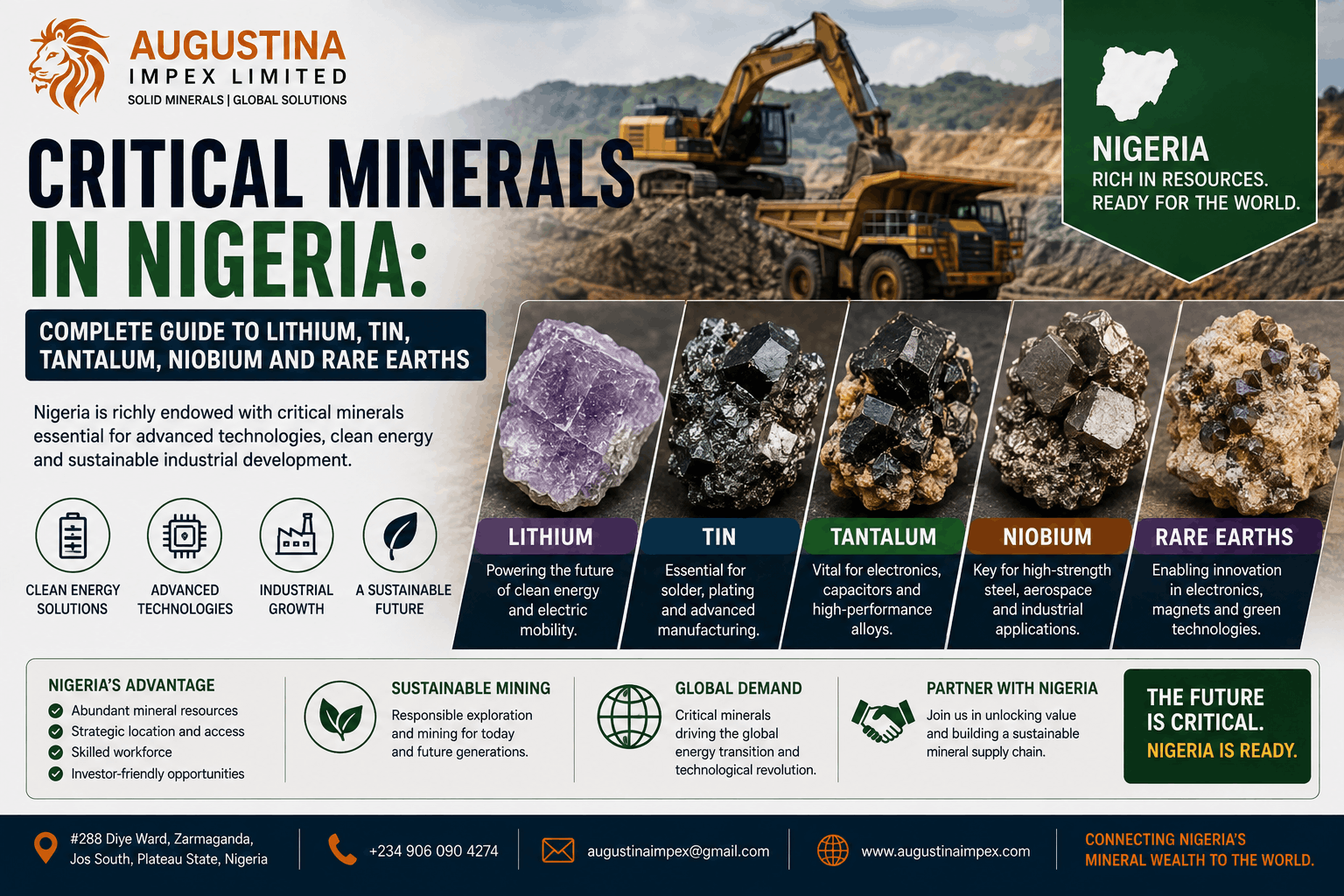
Nigeria Critical Minerals Guide: Lithium, Tin & Rare Earths
Critical Minerals in Nigeria: Complete Guide to Lithium, Tin, Tantalum, Niobium and Rare Earths By…
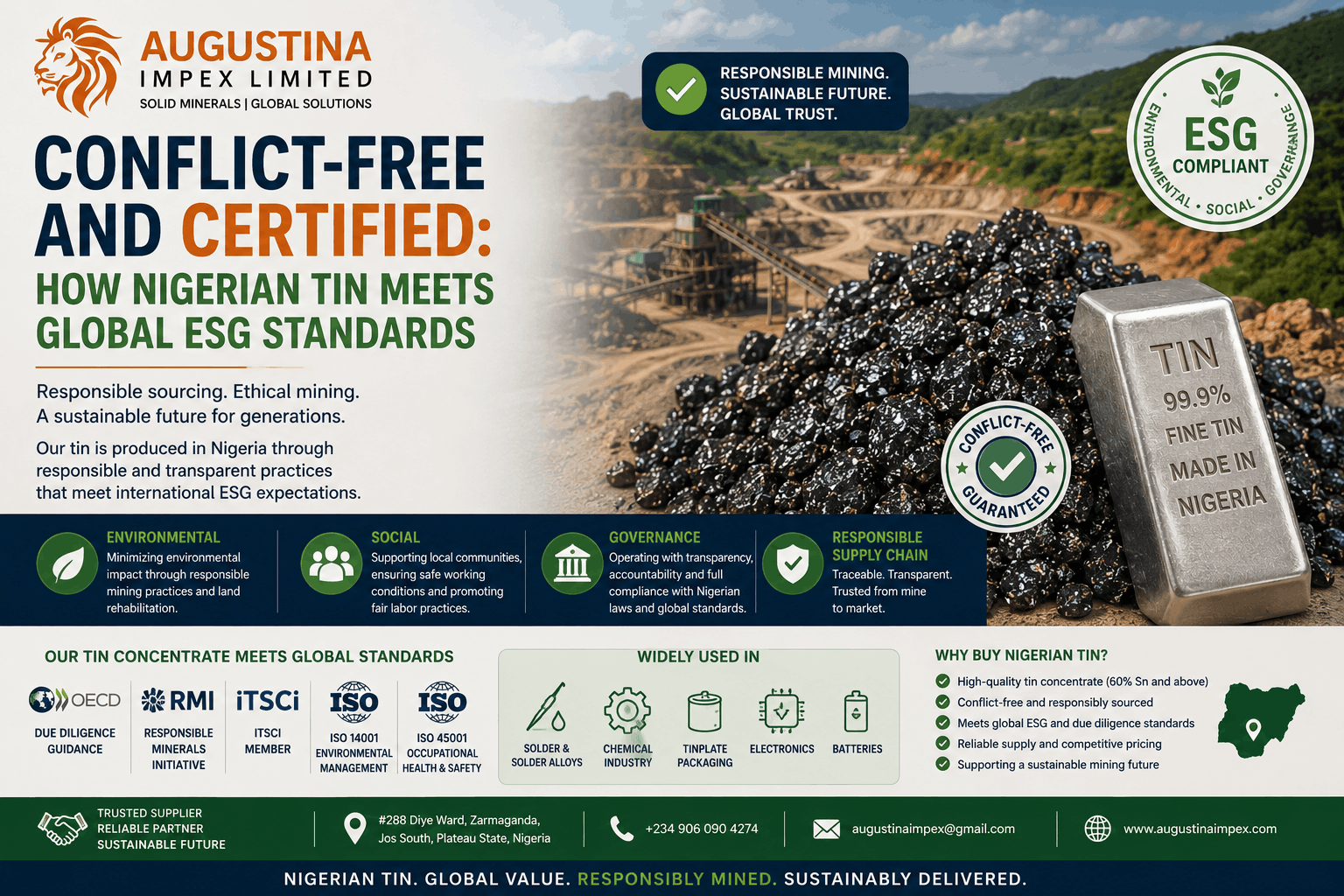
Conflict-Free Nigerian Tin Meets Global ESG Standards
Conflict-Free and Certified: How Nigerian Tin Meets Global ESG Standards By Kolawole King, CEO —…