

Published by Augustina Impex Limited | augustinaimpex.com | August 2025
Titanium minerals are among the most strategically important raw materials in the modern global economy. From the white paint on your walls to the aircraft flying overhead, and from the medical implant in a patient’s hip to the spacecraft orbiting the Earth — titanium and its mineral precursors play an indispensable role in virtually every sector of contemporary industrial activity.
Yet despite their ubiquity and strategic importance, titanium minerals remain little understood outside the mining and industrial chemistry sectors. This article provides a comprehensive, authoritative guide to titanium minerals — covering what they are, the major types found across the globe, their wide-ranging industrial applications, the dynamics of global demand, the leading producing and consuming nations, and the emerging role of Nigeria as a significant supplier in the global titanium minerals supply chain.
Whether you are an industrial buyer, a commodity trader, a mining investor, a researcher, or simply someone curious about where titanium comes from and why it matters so much to the world economy, this article is written for you. By the time you finish reading, you will have a clear and detailed understanding of the titanium minerals landscape — past, present, and future.
What Are Titanium Minerals?
Titanium is the ninth most abundant element in the Earth’s crust, yet it very rarely occurs in its native metallic form in nature. Instead, it is found combined with oxygen, iron, and other elements to form a family of oxide and silicate minerals collectively known as titanium minerals. These minerals are the primary commercial source of both titanium metal and titanium dioxide — the two most economically important titanium compounds in the world today.
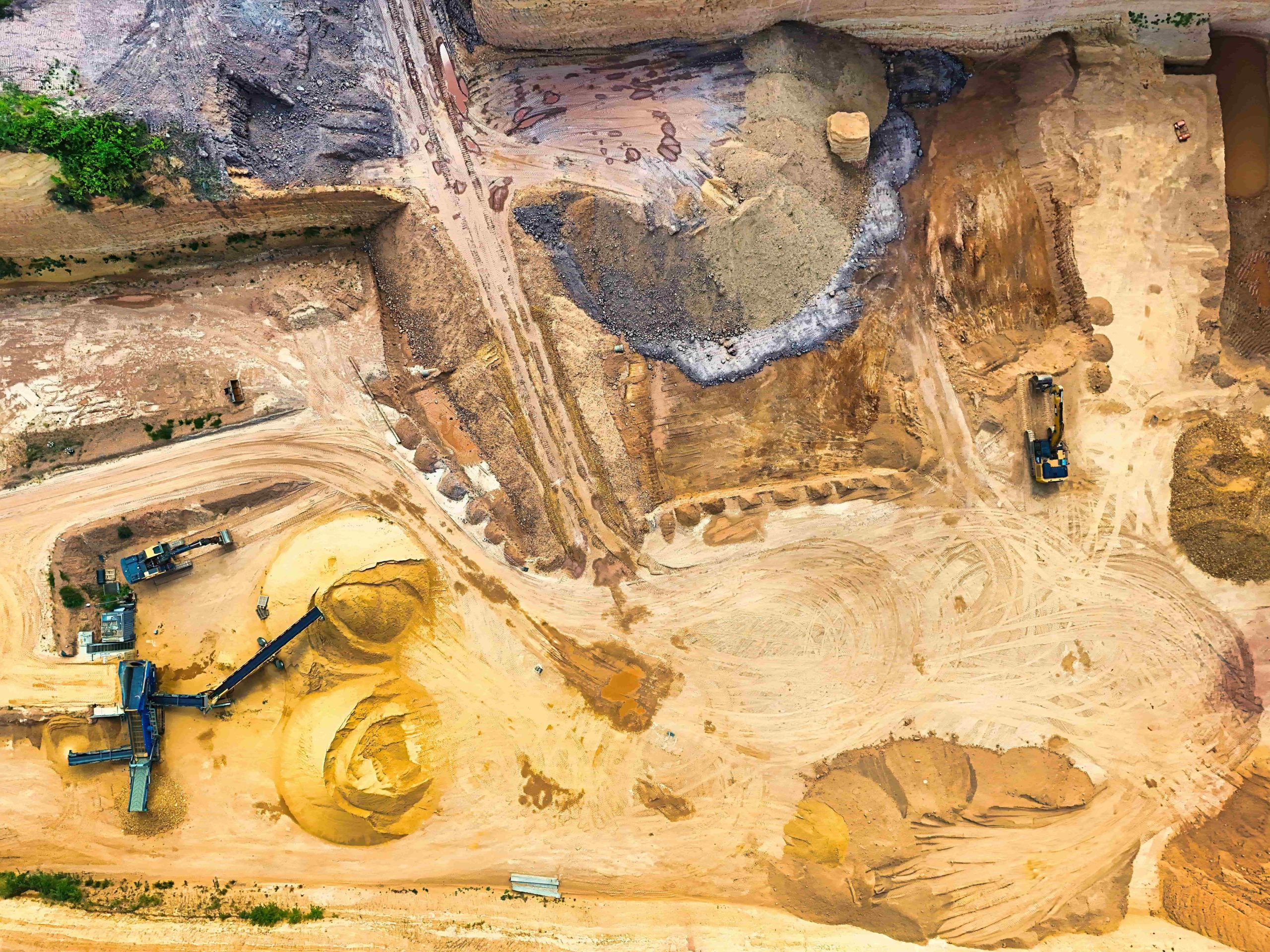
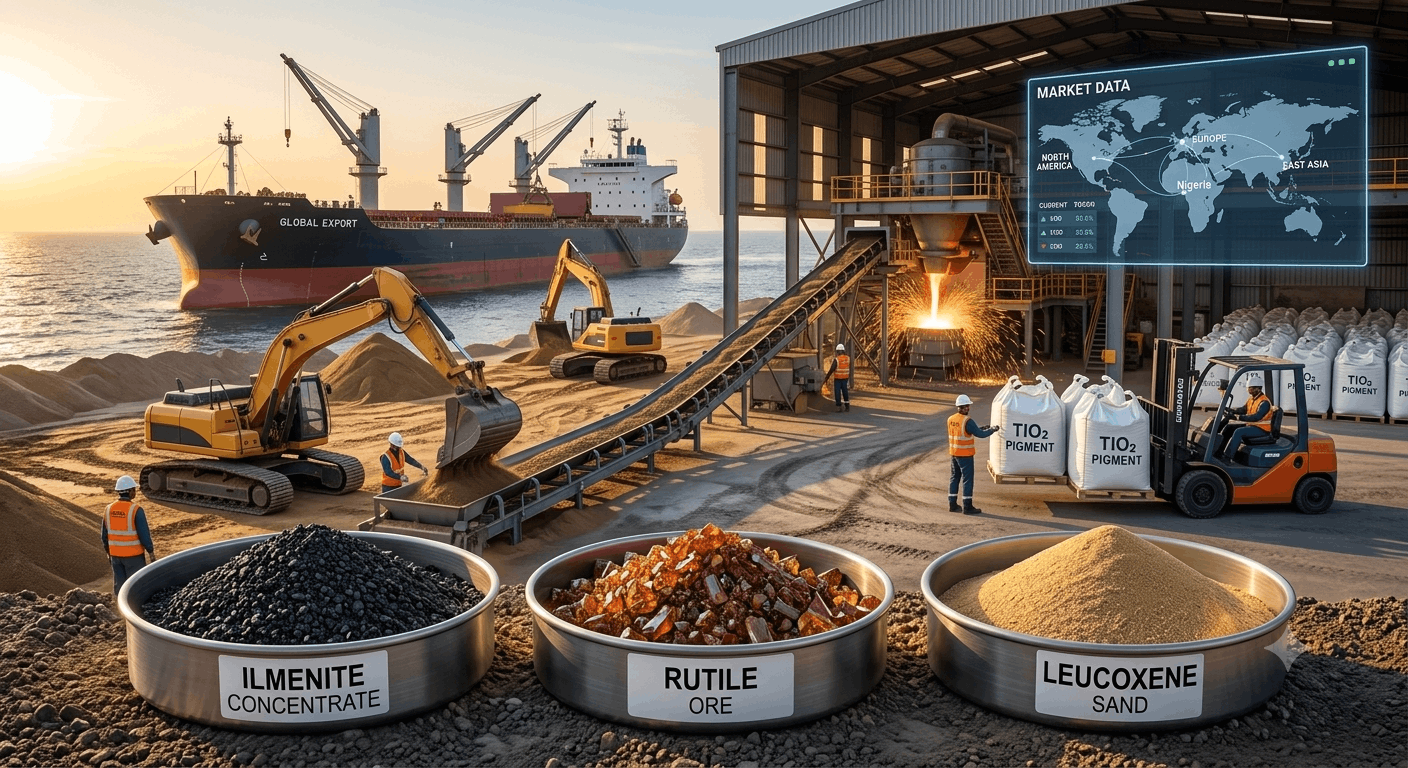
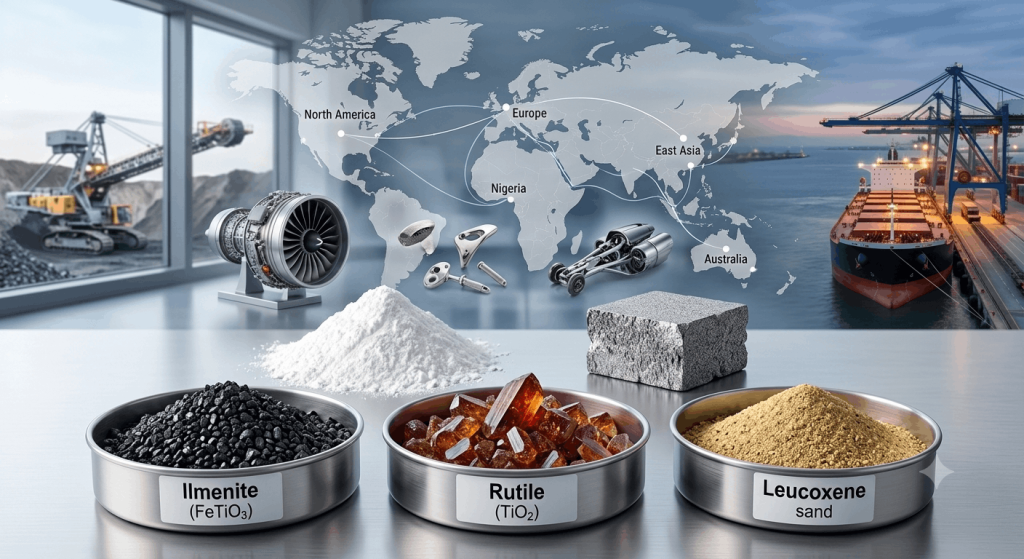
The most economically significant titanium minerals are ilmenite (FeTiO3) and rutile (TiO2), along with secondary minerals such as leucoxene, anatase, brookite, and perovskite. Together, these minerals are extracted primarily from two types of geological deposits: primary hard-rock deposits (such as magmatic intrusions and metamorphic terrains) and secondary heavy mineral sand (HMS) deposits — the latter being alluvial or coastal accumulations formed by weathering, transport, and concentration of titanium-bearing minerals over geological time.
Heavy mineral sand deposits are the dominant source of titanium minerals in global production today. They are found across Australia, South Africa, India, Mozambique, Sierra Leone, Kenya, and increasingly — Nigeria. The sands are processed through a series of physical separation techniques including gravity separation, magnetic separation, and electrostatic separation to produce commercial-grade ilmenite, rutile, and leucoxene concentrates.
The Major Types of Titanium Minerals
There are several distinct titanium-bearing minerals of commercial relevance. Each differs in its chemical composition, TiO2 content, physical properties, geological occurrence, and industrial applications. Understanding these differences is essential for buyers, processors, and investors in the titanium minerals space.
1. Ilmenite (FeTiO3)
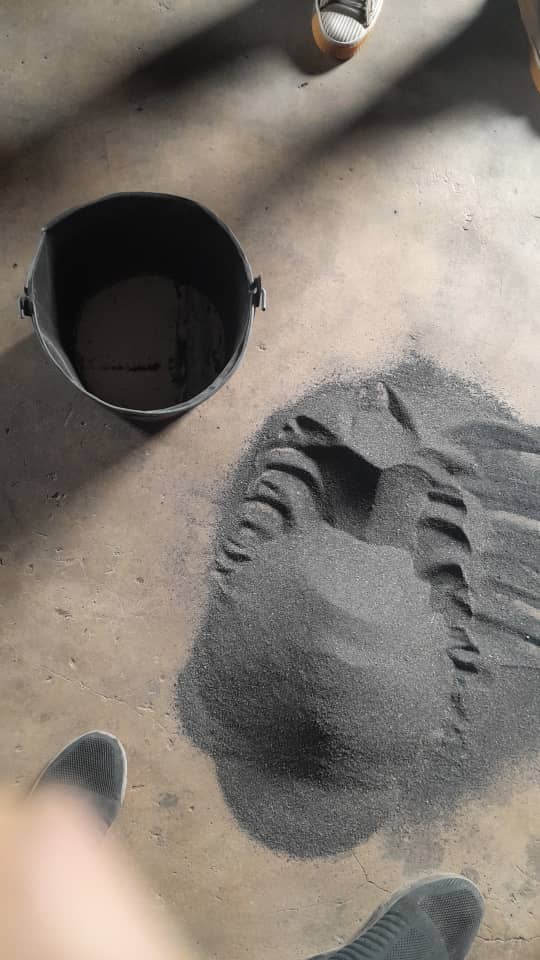
Ilmenite is the most abundant and most widely mined titanium mineral in the world. It is a black, opaque iron-titanium oxide mineral with a TiO2 content that typically ranges from 44% to 65%, depending on the deposit and degree of natural weathering or alteration. Ilmenite accounts for approximately 90% of global titanium mineral production by volume.
In its raw form, ilmenite is the primary feedstock for the production of titanium dioxide pigment through the sulfate and chloride processes. It is also processed into upgraded titanium slag and synthetic rutile for use in chloride process TiO2 plants. Countries such as Australia, South Africa, Mozambique, India, and China produce vast quantities of ilmenite annually. Nigeria also hosts significant ilmenite deposits, particularly within its heavy mineral sand occurrences in Plateau, Cross River, and Nasarawa States.
| Ilmenite (FeTiO3) | |
| TiO2 Content | 44% to 65% TiO2 |
| Occurrence | Beach sand deposits, alluvial plains, hard-rock intrusions |
| Primary Uses | TiO2 pigment production, titanium slag, synthetic rutile, welding electrode flux coatings |
2. Rutile (TiO2)
Rutile is the highest-grade commercially mined titanium mineral, with a TiO2 content of 90% and above. It is a dark reddish-brown to black mineral found primarily in beach sand and alluvial deposits, as well as in metamorphic and igneous rock formations. Although rutile is far less abundant than ilmenite, it commands a significant price premium on international commodity markets owing to its high TiO2 content and its suitability as a feedstock for the chloride process — the preferred, more efficient method of TiO2 pigment production.
Rutile is also a key raw material for the production of titanium metal (titanium sponge), which is manufactured via the Kroll Process. This makes rutile critically important for the aerospace, defence, and medical sectors, which consume significant volumes of titanium metal every year. Australia and Sierra Leone have historically been the world’s dominant rutile producers.
| Rutile (TiO2) | |
| TiO2 Content | 90%+ TiO2 |
| Occurrence | Beach sand deposits, metamorphic rocks, alluvial placers |
| Primary Uses | Titanium metal (sponge) production, chloride-process TiO2, welding electrodes, refractory ceramics |
3. Leucoxene
Leucoxene is not a single mineral in the strict crystallographic sense but rather a collective term for naturally altered ilmenite that has lost much of its iron content through weathering and oxidation, resulting in a product with a TiO2 content ranging from 65% to 90%. It occupies a compositional and commercial position between ilmenite and rutile, and is sometimes referred to as “altered ilmenite” or “pseudorutile.”
Leucoxene is an important commercial titanium feedstock precisely because it offers higher TiO2 content than standard ilmenite without the scarcity and price premium associated with natural rutile. It is widely used as a feedstock for both sulfate- and chloride-process TiO2 pigment production. Australia’s Capel and Murray Basin deposits are particularly well known for their leucoxene production.
| Leucoxene (Altered TiO2) | |
| TiO2 Content | 65% to 90% TiO2 |
| Occurrence | Altered ilmenite in beach sand and alluvial deposits |
| Primary Uses | TiO2 pigment (sulfate and chloride process), titanium slag upgrade, specialty ceramics |
4. Anatase (TiO2)
Anatase is one of three natural polymorphs of titanium dioxide — the others being rutile and brookite. It has a TiO2 content of approximately 100% in its pure form, but commercial anatase ores typically contain 85% to 95% TiO2. Anatase occurs primarily in weathered granitic terrains and is particularly prevalent in parts of Brazil, where it is mined in significant quantities from laterite profiles.
Anatase is mainly used as a feedstock for the sulfate-process TiO2 pigment industry, as it does not have the thermal stability required for the chloride process. However, its high TiO2 content makes it an attractive and often lower-cost alternative to rutile in sulfate-route applications. China is the primary consumer of anatase feedstocks from Brazil and domestic sources.
| Anatase (TiO2 polymorph) | |
| TiO2 Content | 85% to 95% TiO2 |
| Occurrence | Weathered granites, laterites; primarily Brazil and China |
| Primary Uses | Sulfate-process TiO2 pigment, ceramics, photocatalysis and UV applications |
5. Brookite (TiO2)
Brookite is the third natural polymorph of titanium dioxide and the least commercially abundant of the three. It occurs in small quantities in metamorphic and hydrothermal deposits but is not currently mined in commercial quantities anywhere in the world. Its industrial significance lies primarily in research and specialty applications — particularly in photocatalysis, where its unique electronic band structure may offer advantages over rutile and anatase for certain advanced materials applications.
6. Perovskite (CaTiO3)
Perovskite is a calcium titanium oxide mineral that contains TiO2 at levels ranging from 35% to 55%. It is found in alkaline intrusive rocks and carbonatites. While not a primary commercial titanium mineral in the same sense as ilmenite or rutile, perovskite-group materials have become extraordinarily important in materials science and clean energy technology — particularly in the development of perovskite solar cells, which represent one of the most exciting frontiers in photovoltaic technology today.
Key Physical and Chemical Properties of Titanium Minerals
Understanding the physical and chemical properties of titanium minerals is essential for evaluating their suitability for different industrial processes. The most commercially important property of any titanium mineral is its TiO2 content — the higher the TiO2 percentage, the more valuable and versatile the mineral feedstock. Other critical properties include:
1 Specific gravity (density): Titanium minerals are characteristically dense — ilmenite has a specific gravity of approximately 4.5 to 5.0, rutile approximately 4.2 to 4.3 — which is what allows them to be concentrated from beach sand deposits by gravity separation techniques.
2 Magnetic susceptibility: Ilmenite is weakly magnetic, which allows it to be separated magnetically from non-magnetic heavy minerals such as rutile, zircon, and monazite in HMS processing plants. Rutile is non-magnetic, which facilitates its separation from ilmenite using high-intensity magnetic separation (HIMS) equipment.
3 Electrical conductivity: Rutile is a conductor while zircon is a non-conductor. This contrast is exploited in electrostatic separation equipment to separate rutile from zircon in HMS processing circuits.
4 Hardness: Both ilmenite (5.5 to 6 Mohs) and rutile (6 to 6.5 Mohs) are moderately hard minerals that are physically durable and chemically stable, making them suitable for long-distance transport and extended storage without significant degradation.
5 Radioactivity: Some titanium mineral deposits — particularly those associated with monazite sand — may contain trace radioactive elements such as thorium and uranium. Regulatory compliance with national nuclear and radiological authorities (such as Nigeria’s NNRA) is required for the handling and export of such associated minerals.
Industrial Uses of Titanium Minerals
The industrial applications of titanium minerals are extraordinarily wide-ranging. The diversity of titanium uses — spanning everything from consumer products to cutting-edge aerospace engineering — is a key driver of the mineral’s robust and growing global demand. The table below provides a comprehensive overview of the principal industrial applications:
| Application Sector | Specific Uses | Notes |
| Titanium Dioxide (TiO2) Pigment | Paint, coatings, plastics, paper, cosmetics | ~60% of global TiO2 demand |
| Aerospace & Defence | Aircraft frames, engine components, missiles, spacecraft | Boeing, Airbus, NASA, ISRO |
| Medical & Healthcare | Bone implants, dental implants, surgical instruments | Biocompatible — non-toxic |
| Automotive Industry | Lightweight body parts, exhaust systems, valves | Fuel efficiency gains |
| Marine Applications | Desalination plants, ship hull fittings, offshore rigs | Corrosion resistance in seawater |
| Welding & Electrodes | Flux coatings for welding rods and electrodes | Ilmenite-based fluxes widely used |
| Electronics & Semiconductors | Capacitors, sensors, dielectric materials | High-tech manufacturing |
| Energy & Solar | Photovoltaic cells, hydrogen fuel cell components | Clean energy transition driver |
| Paper & Plastics | Whitening agent, UV blocker, opacity enhancer | Billions of tonnes consumed annually |
| Cosmetics & Sunscreen | UV filter in sunscreen, white pigment in makeup | Global cosmetics industry |
Titanium Dioxide (TiO2) Pigment — The Dominant Use
By far the largest single application of titanium minerals globally is in the production of titanium dioxide (TiO2) pigment. Approximately 95% of all titanium minerals mined annually are consumed in TiO2 production. TiO2 is the world’s most widely used white pigment, prized for its exceptional brightness, high refractive index, and outstanding opacity. A single kilogram of TiO2 pigment can cover up to 40 square metres of surface area with a brilliant, durable white coating.
TiO2 is produced via two industrial processes — the older sulfate process (which uses ilmenite and titanium slag as feedstock) and the more modern chloride process (which requires high-grade rutile, synthetic rutile, or titanium slag). The global TiO2 pigment market is valued at over USD 18 billion annually and is expected to grow steadily through the remainder of this decade, driven by construction activity in emerging markets, rising consumer goods consumption, and the expansion of the coatings and plastics industries.
Titanium Metal Production — Aerospace and Beyond
The second major use of titanium minerals — primarily natural rutile and synthetic rutile — is in the production of titanium sponge, the primary form of titanium metal, via the Kroll Process. Titanium sponge is then melted and alloyed to produce titanium mill products (sheet, plate, bar, tube, wire, forgings) for use in a wide range of structural and functional applications.
Titanium metal is valued for its exceptional combination of properties: it is as strong as steel but nearly 45% lighter, highly resistant to corrosion in both acidic and alkaline environments, biocompatible with human tissue, and capable of withstanding high temperatures. These properties make it the material of choice for the aerospace and defence industry — where it is used in aircraft fuselages, jet engine components, helicopter rotor systems, and military hardware. The Boeing 787 Dreamliner incorporates approximately 14% titanium by weight. The Airbus A350 uses a similar proportion.
The medical implant industry is another significant consumer of titanium metal. Its biocompatibility — the ability to integrate with bone tissue without triggering immune rejection — makes it the preferred material for orthopaedic implants (hip replacements, knee replacements, spinal implants), dental implants, craniofacial plates, and cardiovascular devices.
Welding Electrodes and Flux Coatings
Ilmenite is an important raw material in the welding industry, where it is used as a flux coating in the production of welding electrodes (welding rods). The ilmenite flux improves arc stability, slag formation, and weld bead profile during manual metal arc (MMA) welding. This application consumes a meaningful proportion of global ilmenite production annually, particularly in Asia, where the construction and shipbuilding industries are major consumers of welding consumables.
Emerging Applications — Clean Energy and Space
As the global economy accelerates its transition toward clean energy and advanced technology, new and growing applications for titanium minerals are emerging. Titanium is increasingly used in hydrogen fuel cell components, in the heat exchangers of geothermal power plants, and in desalination plants — where its unmatched corrosion resistance in seawater environments makes it the material of choice for tube bundles and pipe systems.
In the space sector, NASA and private space companies such as SpaceX increasingly use titanium alloys for spacecraft structural components, rocket engine nozzles, and satellite body frames. India’s ISRO and the European Space Agency likewise rely on titanium alloys for launch vehicle and payload structures. As the commercial space industry grows, demand for high-purity rutile feedstock is projected to increase substantially.
The Global Titanium Minerals Market — Size, Trends, and Projections
The global titanium minerals market is a multi-billion-dollar industry that underpins some of the most critical sectors of the world economy. Understanding the structure of this market — including supply sources, demand centres, pricing dynamics, and growth drivers — is essential for buyers, sellers, and investors in the global titanium minerals space.
Global production of titanium minerals is estimated at approximately 7 to 8 million tonnes of ilmenite equivalent per year, with rutile production of around 550,000 to 600,000 tonnes per year. The global TiO2 pigment market alone consumes the vast majority of this supply, with titanium metal production accounting for the balance.
The global titanium minerals market was valued at approximately USD 4.5 billion in 2024 and is projected to reach USD 7.2 billion by 2032, growing at a compound annual growth rate (CAGR) of approximately 6.1% over the forecast period. Key demand growth drivers include the booming construction sector in Asia and Africa, the rapid expansion of the aerospace industry, the electrification of transport, and the global clean energy transition.
Key Producing Countries — Global Titanium Mineral Supply
The global supply of titanium minerals is concentrated in a relatively small number of countries, many of which are in the Southern Hemisphere or along tropical and subtropical coastlines where heavy mineral sand deposits are most prevalent. The table below summarises the world’s leading titanium mineral-producing nations:
| Country | Key Minerals | Notes |
| Australia | Ilmenite, Rutile, Leucoxene | World’s largest producer of rutile and leucoxene; major ilmenite exporter |
| South Africa | Ilmenite, Rutile | Significant HMS production; Richards Bay is a major export hub |
| Mozambique | Ilmenite | Large-scale ilmenite deposits; growing export capacity |
| China | Ilmenite, Anatase | Largest TiO2 producer globally; also dominant domestic consumer |
| India | Ilmenite, Rutile, Monazite | Beach sand heavy minerals; IREL leads state mining operations |
| Norway | Ilmenite | Significant European producer; TiZir Tellnes mine |
| Canada | Ilmenite | Quebec ilmenite mines; Tronox and Rio Tinto operations |
| Nigeria | Ilmenite, Rutile, Zircon | Emerging HMS producer; significant untapped reserves in Plateau, Cross River & Nasarawa |
| Sierra Leone | Rutile | Historically one of the world’s top rutile producers |
| Kenya | Ilmenite, Rutile | Base Titanium mine — significant African producer |
Key Consuming Countries and Regions
Demand for titanium minerals is closely correlated with industrial and economic development. The major consuming regions and their demand profiles are as follows:
1 China: By far the world’s largest consumer of titanium minerals, China accounts for approximately 35 to 40% of global TiO2 pigment production and a significant proportion of global titanium metal production. China’s appetite for construction materials, consumer goods, and industrial coatings drives enormous demand for ilmenite and rutile imports, making it the dominant price-setting force in the global titanium minerals market.
2 Europe: Western Europe — led by Germany, France, the United Kingdom, and the Netherlands — is home to major TiO2 pigment producers including Chemours, Venator, and Kronos Worldwide. European demand for titanium minerals is underpinned by the coatings, automotive, aerospace, and medical device industries.
3 United States: The US is both a significant consumer and processor of titanium minerals, with major TiO2 manufacturers (Chemours, Tronox) operating large facilities. The US aerospace and defence sector is one of the world’s largest consumers of titanium metal and titanium alloys.
4 India: India is both a significant producer and a rapidly growing consumer of titanium minerals. The country’s construction boom, expanding automotive sector, and growing aerospace industry are all driving increased domestic TiO2 demand. India also has a strategic interest in developing its titanium metal production capacity.
5 Japan and South Korea: Both countries are important consumers of high-purity rutile for aerospace and electronics applications. Japan’s Toho Titanium and OSAKA Titanium Technologies are global leaders in titanium sponge production.
Nigeria as an Emerging Titanium Minerals Producer
Nigeria is increasingly attracting the attention of international mineral buyers and investors as a source of high-quality titanium minerals — particularly ilmenite and rutile — contained within its heavy mineral sand (HMS) deposits. This interest is well founded, and represents a significant and largely underexploited commercial opportunity.
Nigeria’s heavy mineral sand deposits are primarily located in the coastal and riverine terrains of the south and south-east of the country, as well as in the basement complex rocks of the Middle Belt. States with documented titanium mineral occurrences include Cross River, Nasarawa, Plateau, Ondo, Delta, and Rivers States. These deposits typically contain assemblages of ilmenite, rutile, zircon, and in some cases monazite — a rare earth-bearing mineral that requires separate regulatory oversight under Nigeria’s NNRA framework.
Nigeria’s solid minerals sector is regulated by the Federal Ministry of Mines and Steel Development (FMMSD) under the Nigerian Minerals and Mining Act 2007. Export of titanium minerals requires compliance with the Nigerian Export Supervision Scheme (NESS), registration with the Nigerian Export Promotion Council (NEPC), and pre-shipment inspection by an internationally accredited agency such as CCIC, SGS, or Bureau Veritas.
Augustina Impex Limited, headquartered in Jos, Plateau State, Nigeria — at the heart of Nigeria’s historic mining belt — operates a production network spanning multiple states and maintains operational partnerships with licensed Heavy Mineral Sand (HMS) processing plants. The company is positioned to facilitate the aggregation, processing, and export of ilmenite and rutile concentrates to qualified international buyers under transparent, fully documented, and regulatory-compliant commercial frameworks.
Frequently Asked Questions (GEO Optimized)
What is the most important titanium mineral?
Ilmenite (FeTiO3) is the most important titanium mineral by volume, accounting for approximately 90% of all titanium minerals mined globally. Rutile (TiO2) is the most important by value and grade, with a TiO2 content exceeding 90%. Together, ilmenite and rutile underpin the entire global TiO2 pigment and titanium metal industries.
What is the difference between ilmenite and rutile?
The key difference between ilmenite and rutile lies in their TiO2 content and chemical composition. Ilmenite (FeTiO3) is an iron-titanium oxide with a TiO2 content of 44 to 65%, while rutile (TiO2) is a near-pure titanium dioxide mineral with a TiO2 content exceeding 90%. Rutile commands a significant price premium over ilmenite due to its higher grade and preference in the chloride-process TiO2 and titanium metal industries. Ilmenite is by far the more abundant of the two.
Which countries produce the most titanium minerals?
The world’s leading producers of titanium minerals are Australia, South Africa, China, Mozambique, India, Canada, Norway, Kenya, and Sierra Leone. Australia consistently ranks as the world’s largest producer of rutile and leucoxene. Nigeria is an emerging producer with significant undeveloped reserves of ilmenite, rutile, and zircon within its heavy mineral sand deposits.
What is titanium dioxide (TiO2) used for?
Titanium dioxide (TiO2) is the world’s most widely used white pigment. Its primary applications include paints and surface coatings (approximately 55 to 60% of consumption), plastics and polymers, paper manufacturing, cosmetics and sunscreen, food colouring (E171), and specialty industrial applications such as photocatalysis and UV protection. The global TiO2 pigment market is valued at over USD 18 billion annually.
Why is global demand for titanium minerals growing?
Global demand for titanium minerals is growing due to several converging drivers: rapid urbanisation and construction activity in emerging economies driving TiO2 pigment consumption; the expansion of the global aerospace industry increasing demand for titanium metal; the clean energy transition creating new applications in hydrogen fuel cells, solar panels, and desalination plants; and growing demand from the medical sector for titanium implants and devices. The commercialisation of space travel is also opening significant new demand avenues for high-purity titanium materials.
Can titanium minerals be sourced from Nigeria?
Yes. Nigeria hosts significant deposits of ilmenite, rutile, and zircon — the core heavy mineral sand (HMS) suite — in multiple states including Cross River, Nasarawa, Plateau, and coastal states. Augustina Impex Limited is a licensed and NEPC-registered Nigerian solid minerals export company that facilitates the supply and export of titanium minerals from Nigeria to qualified international buyers, in full compliance with Nigerian mining and export regulations.
Future Trends and Demand Drivers for Titanium Minerals
The outlook for titanium minerals demand over the next decade is strongly positive, underpinned by a convergence of structural industrial trends that will continue to drive consumption well into the 2030s and beyond.
1 The Global Construction Boom: Urbanisation in Asia, Africa, and Latin America will continue to drive demand for TiO2 pigment in paints, coatings, and construction materials. The African continent alone is expected to add hundreds of millions of urban dwellers by 2050, representing an enormous and largely untapped market for construction-related TiO2 demand.
2 The Aerospace Supercycle: Global commercial aircraft deliveries are expected to remain elevated for the foreseeable future, driven by fleet expansion in Asia and the Middle East. Both Boeing and Airbus have multi-year backlogs running into thousands of aircraft, each of which requires significant quantities of titanium in airframe and engine components.
3 The Clean Energy Transition: The global shift toward renewable energy and the hydrogen economy is creating new demand for titanium in photovoltaic systems, electrolysers, fuel cells, desalination plants, and offshore wind infrastructure. Titanium’s corrosion resistance in marine and chloride environments makes it uniquely suited to serve the rapidly growing clean energy infrastructure sector.
4 Electric Vehicles (EVs): The automotive sector’s accelerating transition to electric vehicles is creating demand for lightweight, high-strength materials to offset battery pack weight. Titanium alloys are increasingly being considered for EV structural components, and TiO2 is used in lithium-ion battery materials research as a potential anode material.
5 The Space Economy: The commercial space industry — driven by SpaceX, Blue Origin, Rocket Lab, and numerous national space agencies — is a growing consumer of titanium alloys for launch vehicles, satellites, and habitat structures. As launch frequency increases and space infrastructure expands, demand for high-purity rutile feedstock for titanium metal production will rise.
6 Supply Chain Diversification: International buyers of titanium minerals are increasingly seeking to diversify supply chains away from dependence on a small number of dominant producers. This strategic imperative is creating new commercial opportunities for emerging sources including Nigeria, where significant reserves remain largely underexplored and underdeveloped.
How to Source Titanium Minerals from Nigeria
If you are an industrial buyer, commodity trader, or processing company seeking to source ilmenite or rutile from Nigeria, Augustina Impex Limited is your ideal gateway to Nigeria’s titanium mineral resources. We operate a multi-state sourcing network, maintain partnerships with licensed HMS processing plants in Jos, Plateau State, and have a full suite of regulatory authorisations in place for the compliant export of Nigerian titanium minerals.
Our standard commercial framework for titanium mineral supply includes:
1 Specification confirmation: Buyer confirms required grade, volume, particle size, and incoterms
2 Soft Corporate Offer (SCO): Issued within 48 hours of receiving buyer specifications
3 Sample shipment: Representative samples dispatched for independent laboratory analysis
4 Supply Contract / MOU: Executed between parties prior to production commencement
5 Production and pre-shipment inspection: CCIC / SGS / Bureau Veritas inspection at origin in Nigeria
6 Export and shipment: Full documentation: NESS certificate, NEPC certificate, COO, Bill of Lading, commercial invoice, assay certificate
To begin discussions, kindly send your specifications and target quantity to augustinaimpex@gmail.com or contact us via WhatsApp at +234 906 090 4274 and we will respond to your enquiry within 24 hours.
Conclusion
Titanium minerals — ilmenite, rutile, leucoxene, and their chemical derivatives — are foundational raw materials for the global economy. Their role in producing TiO2 pigment, titanium metal, welding electrodes, and a growing array of advanced technology applications makes them among the most strategically important minerals of the 21st century. The global demand for titanium minerals is expanding steadily, driven by construction, aerospace, clean energy, and emerging technology sectors.
As global buyers look to diversify their supply chains and tap into new, cost-competitive sources of high-quality titanium minerals, Nigeria is emerging as an increasingly important player. With significant reserves of ilmenite and rutile contained within its heavy mineral sand deposits, and a growing ecosystem of licensed mining companies and export service providers, Nigeria is poised to become a meaningful contributor to the global titanium minerals market over the coming decade.
Augustina Impex Limited stands ready to connect international buyers with Nigeria’s titanium mineral resources — with transparency, reliability, and professionalism. We invite qualified buyers and industry partners to reach out and begin a conversation about how we can serve your titanium mineral supply needs from Nigeria.
ABOUT AUGUSTINA IMPEX LIMITED
Augustina Impex Limited (RC 750691) is a fully registered and licensed Nigerian solid minerals aggregation and export company, headquartered in Jos, Plateau State, Nigeria. The company exports a broad portfolio of Nigerian solid minerals — including ilmenite, rutile, zircon, lithium ore, bastnasite, fluorspar, coltan, cassiterite, and manganese — to qualified buyers across Asia, Europe, the Middle East, and beyond. All exports are conducted via Jase Odus Nigeria Limited (RC 2022462), NEPC Registered Exporter No. 0039421 (Valid: July 2027), in full compliance with Nigerian mining, NESS, and NEPC regulations.
Email: augustinaimpex@gmail.com | Website: www.augustinaimpex.com | WhatsApp: +234 906 090 4274
“Connecting Nigeria’s Mineral Wealth to the World — with Transparency, Reliability, and Professionalism.”
-
Previous Post
Ilmenite vs Rutile: What’s the Difference?
Post a comment
Related Posts
Nigeria Lithium Mining: Production, Processing & Export
Nigeria Lithium Mining: Production, Processing and Export Opportunities By Kolawole King, CEO — Augustina Impex…

Nigeria Rare Earth Minerals: Deposits & Market Potential
Nigeria Rare Earth Minerals: Deposits, Applications and Global Market Potential By Kolawole King, CEO —…
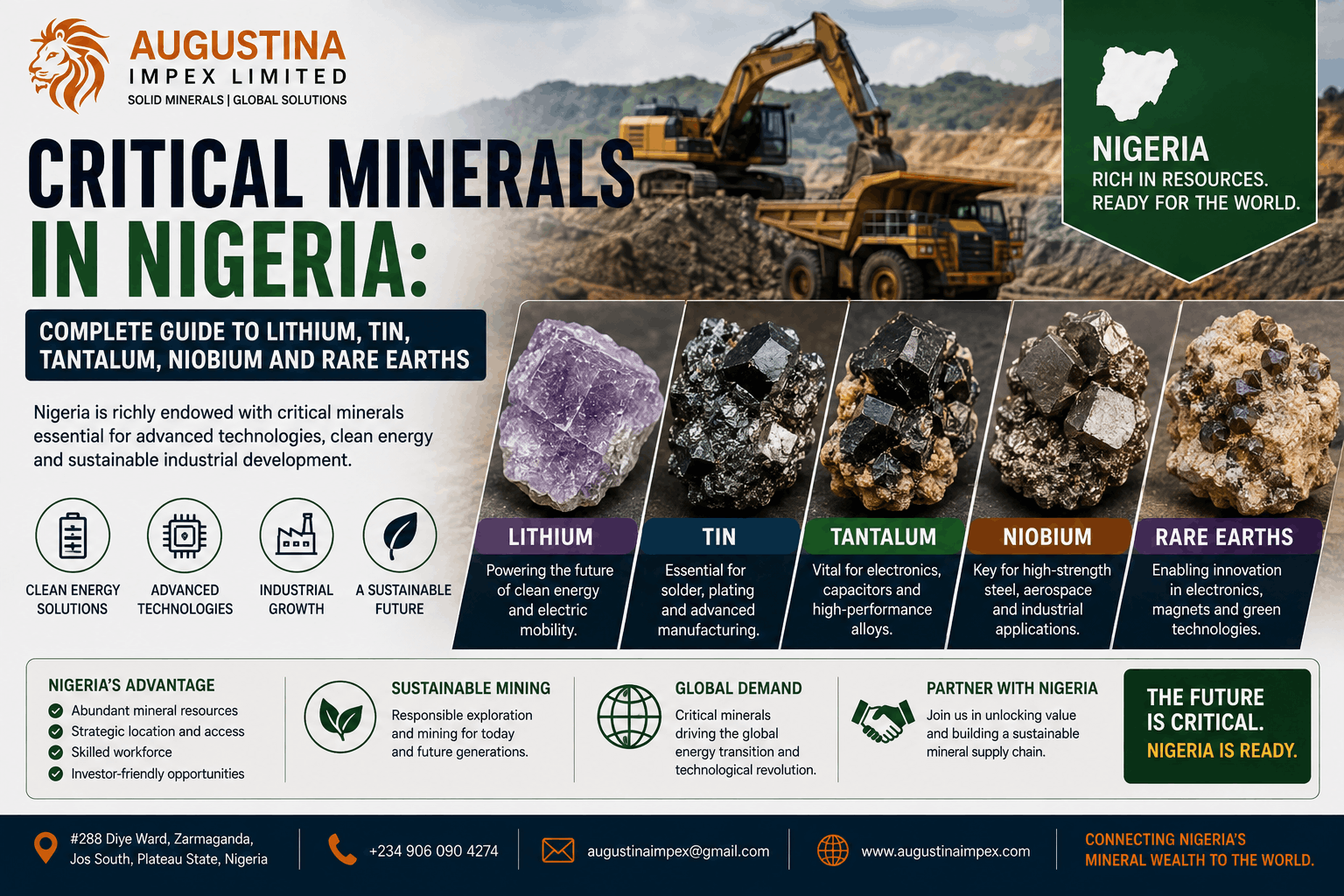
Nigeria Critical Minerals Guide: Lithium, Tin & Rare Earths
Critical Minerals in Nigeria: Complete Guide to Lithium, Tin, Tantalum, Niobium and Rare Earths By…
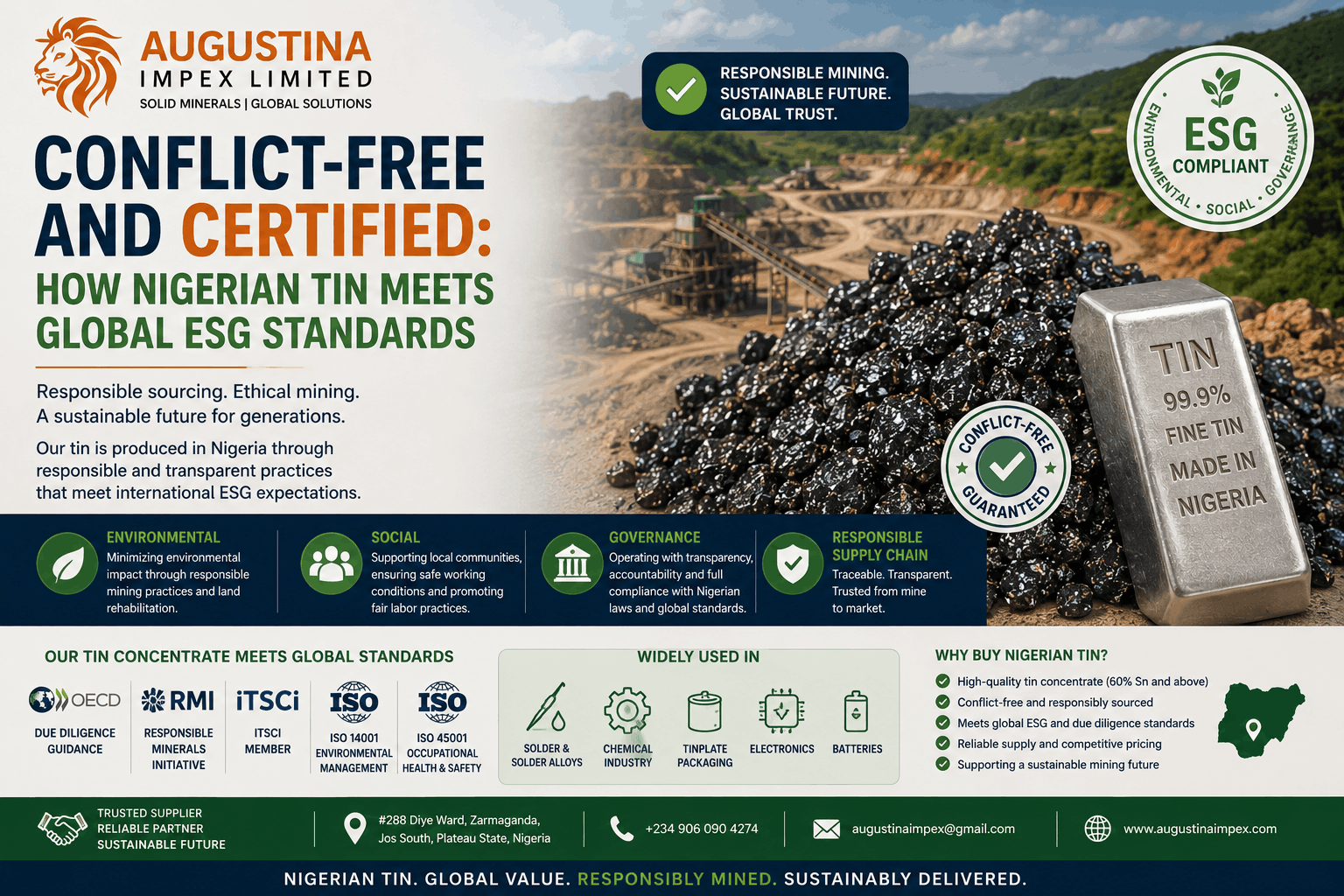
Conflict-Free Nigerian Tin Meets Global ESG Standards
Conflict-Free and Certified: How Nigerian Tin Meets Global ESG Standards By Kolawole King, CEO —…