
If you have been researching where to find a trusted Nigerian Monazite Sand supplier, the information you are about to read was written specifically for you. Whether you are a rare earth processor in China, a commodity trader in Europe, an industrial buyer in South Korea, or a strategic minerals procurement officer in the United States, navigating the Nigerian Monazite Sand market can feel overwhelming — especially if this is your first time sourcing from West Africa.
At Augustina Impex Limited, we have worked with international buyers at every stage of the procurement journey. We have answered the same questions hundreds of times, guided buyers through their first African mineral deal, and helped them understand exactly what they are getting into — and what they stand to gain — when they choose Nigerian Monazite Sand as a supply source.
This guide is our most comprehensive answer yet. We have covered everything: what Monazite Sand is and why it matters, what Nigerian Monazite looks like technically, how pricing works, how the export process flows from the mine to the vessel, what compliance requirements you need to be aware of, and exactly how to start a business relationship with a Nigerian Monazite Sand supplier. Read it from start to finish and you will arrive at the other end equipped to make confident procurement decisions.
What Is Monazite Sand and Why Is It So Valuable?
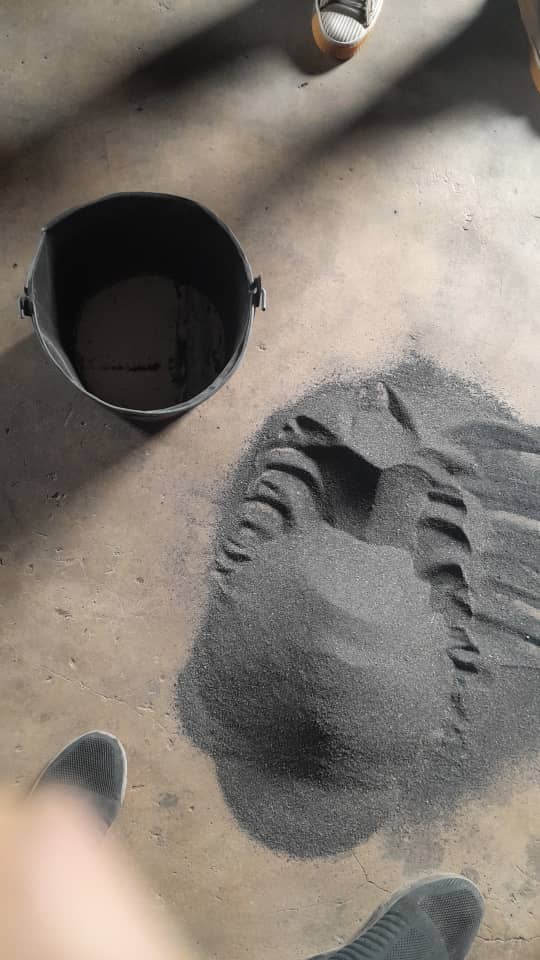
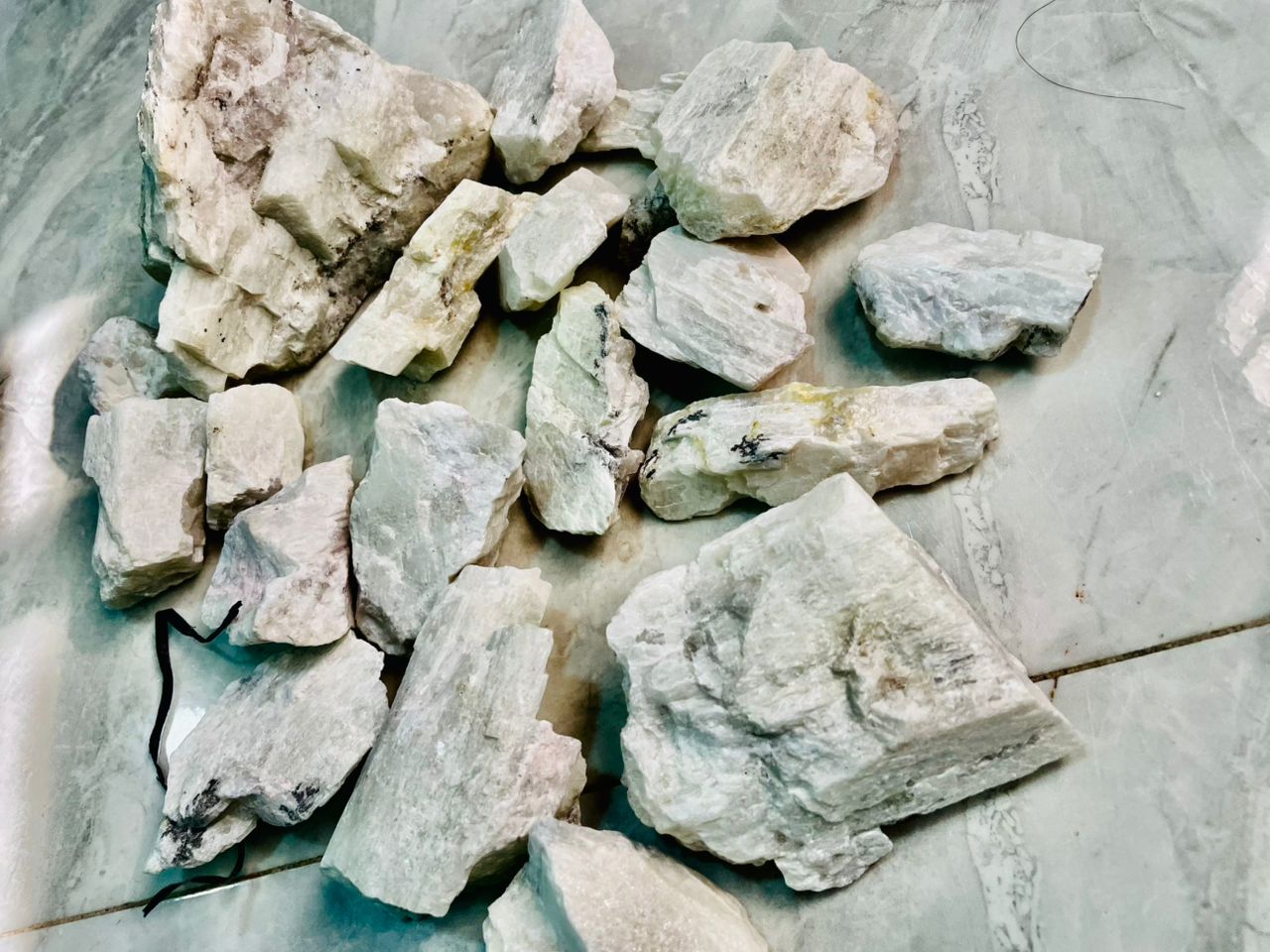
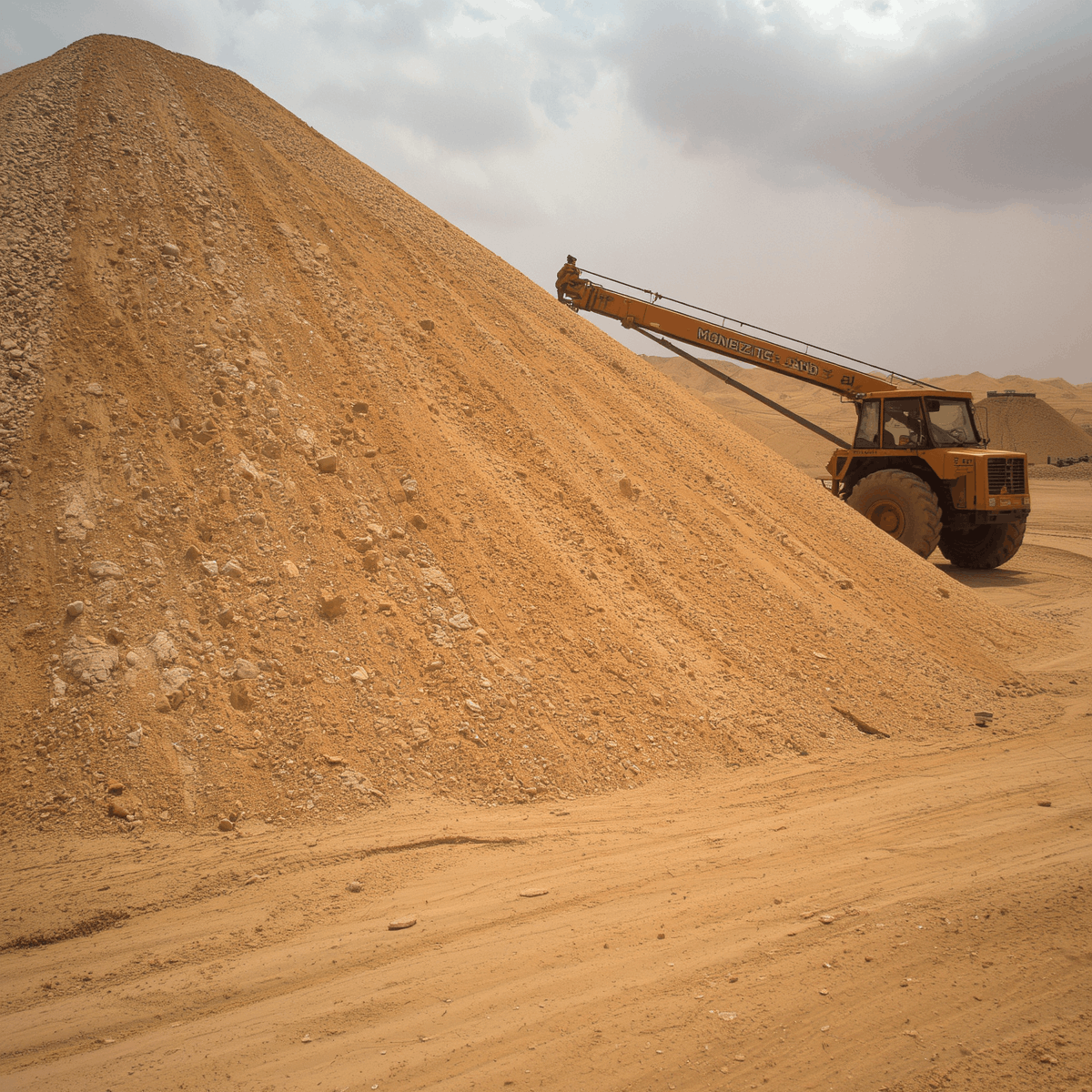
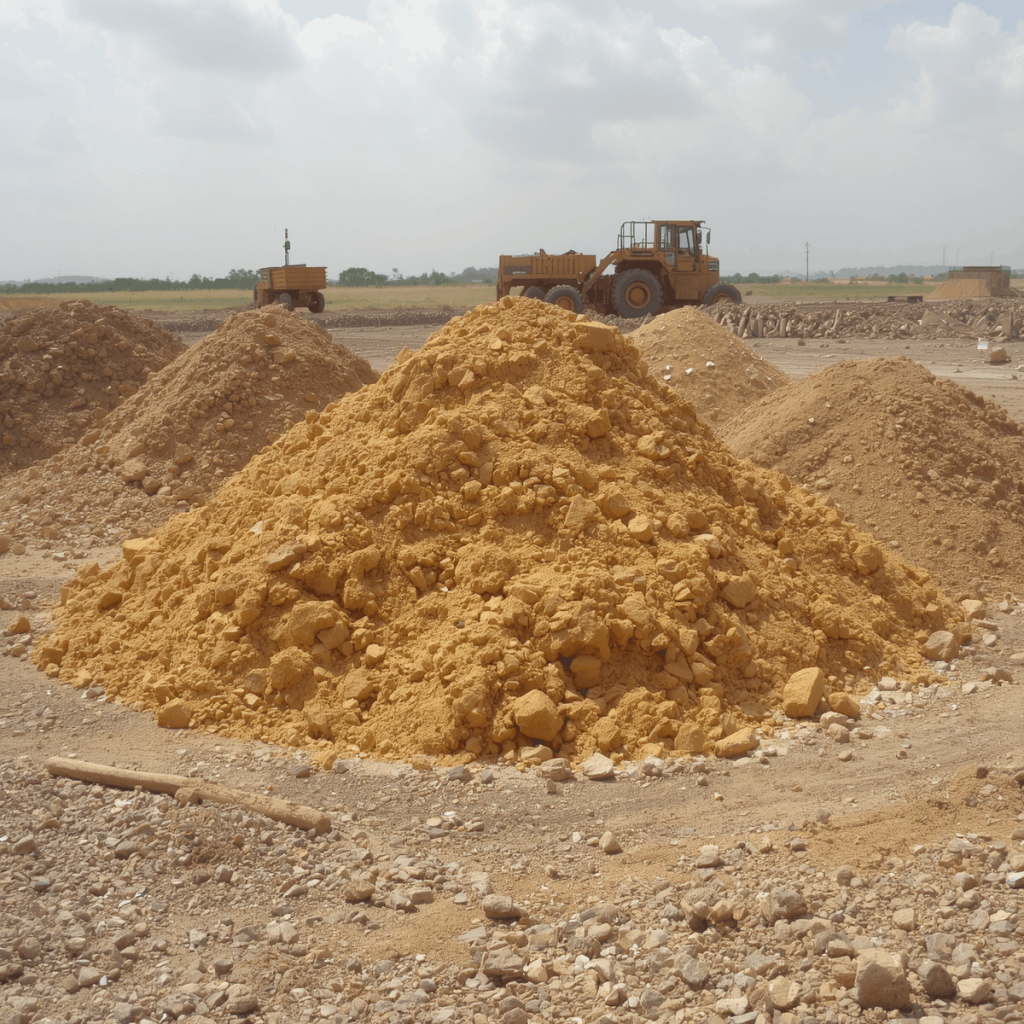
Before getting into the specifics of Nigerian supply, it is worth grounding the conversation in the fundamentals. Monazite is a phosphate mineral that occurs naturally in heavy mineral sand deposits around the world. In its raw form, it appears as a brownish-yellow, fine-grained sand. But what makes Monazite commercially important — extraordinarily so — is what it contains inside.
Monazite is one of the richest natural sources of Total Rare Earth Oxides (TREO): a basket of seventeen metallic elements that are quietly embedded in virtually every piece of modern technology. Think of the motor in a Tesla Model 3, the turbine generators inside an offshore wind farm, the screen on a high-end smartphone, the guidance systems in military defence hardware, and the catalytic converters in industrial processing plants. All of these depend — in one way or another — on the rare earth elements that come from minerals like Monazite.
The key rare earth elements present in Monazite include Cerium (Ce), Lanthanum (La), Neodymium (Nd), Praseodymium (Pr), Samarium (Sm), Gadolinium (Gd), and Europium (Eu). Of these, Neodymium and Praseodymium are the ones attracting the most commercial attention right now because they are essential ingredients in neodymium-iron-boron (NdFeB) permanent magnets — the type used in EV motors and direct-drive wind turbines.
In addition to rare earth elements, Monazite also contains Thorium (Th), a mildly radioactive element that classifies Monazite as a Naturally Occurring Radioactive Material (NORM). This has implications for handling, export compliance, and import regulations that every buyer needs to understand — and we will address those in detail later in this guide.
Why Nigeria Is Emerging as a Key Monazite Sand Source
When buyers first hear about Nigerian Monazite Sand, the natural question is: why Nigeria? The country is better known internationally for its oil production than for its solid minerals sector. So it is worth explaining why serious mineral buyers are increasingly paying attention to what Nigeria has to offer.
Nigeria’s Solid Minerals Endowment Is Vastly Underappreciated
Nigeria sits atop one of Africa’s richest solid mineral belts. The country’s geological survey data documents commercially significant deposits of over forty different mineral types across thirty-three of its thirty-six states. Among these minerals — many of which have barely been touched by modern exploration — are substantial deposits of Monazite, Zircon, Ilmenite, Coltan, Lithium, Tin, and Niobium.
For much of Nigeria’s post-independence history, the country’s economic focus on oil revenue meant that solid minerals were largely overlooked. That is now changing rapidly. Nigeria’s federal government has elevated solid minerals to a strategic national priority, and the country’s Geological Survey Agency has significantly expanded its mapping and certification activities. For international buyers, this means greater transparency, better documentation, and more organised supply chains than were available even five years ago.
The Jos Plateau — Nigeria’s Mineral Heartland
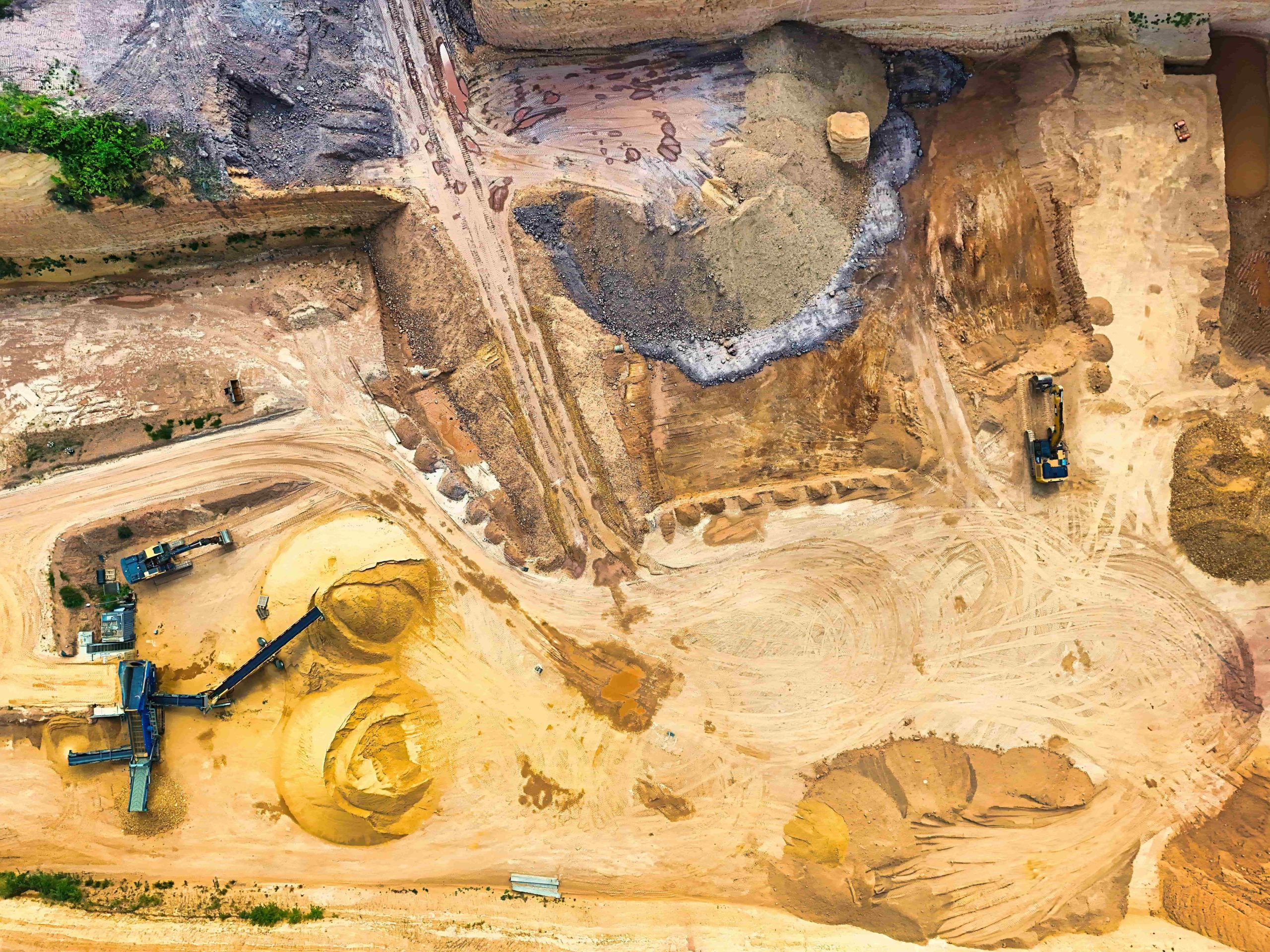
The geographical epicentre of Nigeria’s Monazite Sand supply is the Jos Plateau in Plateau State, North-Central Nigeria. This elevated region — sitting at an average altitude of approximately 1,200 metres above sea level — has been a mining area for well over a century. Colonial-era tin and columbite mining operations cut deeply into the Plateau’s alluvial deposits, and in doing so, they also concentrated heavy mineral assemblages including Monazite, Zircon, and Ilmenite.
The geology of the Jos Plateau is characterised by Precambrian basement complexes, Pan-African granites, and Jurassic Biotite granites — the type of geological environment that is classically associated with accessory mineral enrichment. When these granitic parent rocks weathered over millions of years, the heavy minerals within them — Monazite among them — were released, transported by water, and concentrated in alluvial and placer deposits throughout the Plateau’s river systems and valley floors.
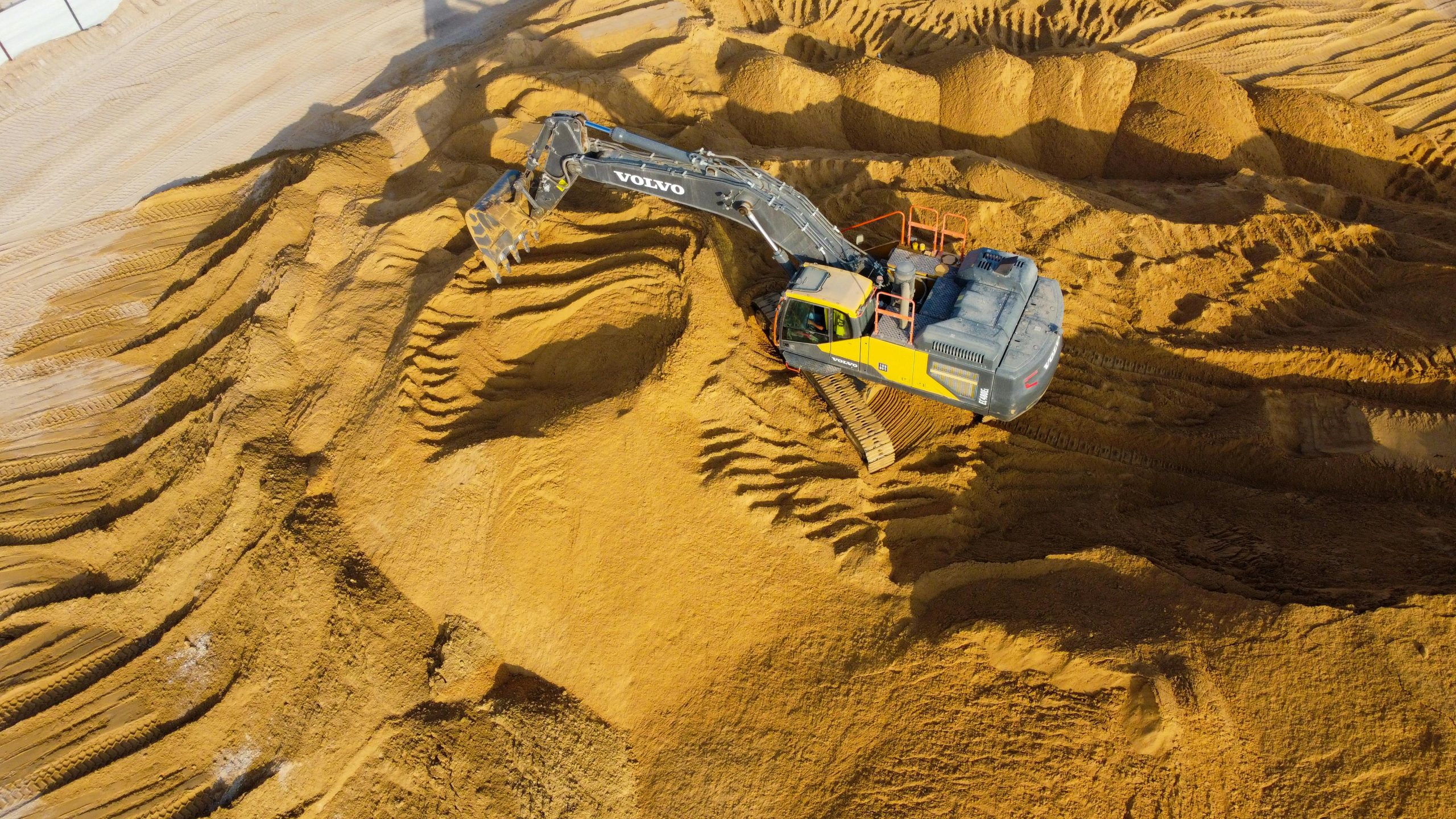
Today, Monazite Sand is extracted from these deposits through gravity separation and magnetic separation techniques, and it is available in commercially significant volumes that can support regular export shipments.
TREO Content: What Nigerian Monazite Delivers
The commercial value of any Monazite Sand deposit is primarily determined by its TREO content — Total Rare Earth Oxides expressed as a percentage of the dry weight of the material. The higher the TREO, the more rare earth elements can be extracted per tonne of feedstock, and the less processing cost is incurred per unit of rare earth output.
Nigerian Monazite Sand from the Jos Plateau region consistently assays at TREO concentrations between 50% and 56%, verified through the Chinese Magnetic Analysis method at internationally accredited laboratory facilities including ALS Laboratory Group in Perth, Australia. Results have returned purity levels of approximately 96%, confirming that this is commercially viable, high-quality material.
For context, Monazite deposits below 45% TREO are generally considered marginal for commercial processing. Nigerian Monazite, at 50–56% TREO, sits comfortably in the range that downstream rare earth processors in China, Malaysia, India, and Estonia consider attractive feedstock.
The Global Rare Earth Market and Why Nigerian Supply Matters
To fully appreciate why sourcing Monazite Sand from Nigeria makes strategic sense, you need to understand the broader rare earth supply landscape — because the geopolitical dynamics at play are directly relevant to your procurement decisions.
For most of the past three decades, China has dominated global rare earth supply, accounting for over 60% of world mine output and an even larger share of refining and processing capacity. This concentration of supply in a single country has created significant strategic vulnerability for consuming nations — a vulnerability that became painfully apparent during the 2010 China-Japan rare earth trade dispute, and that has grown sharper in the context of the ongoing US-China technology competition.
In response, governments across the United States, European Union, Japan, South Korea, and Australia have each launched formal critical minerals strategies with a shared objective: reducing dependence on Chinese rare earth supply by developing alternative source countries. Nigeria is increasingly on the shortlist of countries being considered for strategic mineral partnerships, particularly for heavy mineral sand commodities including Monazite.
For buyers, this geopolitical backdrop creates a concrete commercial opportunity: securing a Nigerian Monazite Sand supply chain now — before competition for West African supply intensifies — is a strategy that makes both economic and operational sense. Supply that is accessible, competitively priced, and well-documented today may be substantially harder to secure in three to five years as more buyers pursue the same diversification objective.
Full Technical Specifications of Nigerian Monazite Sand
When you engage a Nigerian Monazite Sand supplier, the first thing any serious buyer asks for is the technical specification sheet. Here is a comprehensive overview of the specifications that characterise Nigerian Monazite Sand from the Jos Plateau, as documented through NGSA certification and independent laboratory assays.
TREO Content
Total Rare Earth Oxides: 50% – 56% (dry weight basis) This is the primary value driver and the first number any buyer should evaluate.
Individual Rare Earth Oxide Profile
The rare earth element profile of Nigerian Monazite includes Cerium Oxide (CeO₂), Lanthanum Oxide (La₂O₃), Neodymium Oxide (Nd₂O₃), Praseodymium Oxide (Pr₆O₁₁), Samarium Oxide (Sm₂O₃), and Gadolinium Oxide (Gd₂O₃), among others. Cerium and Lanthanum together typically account for 50–60% of the TREO basket, with Neodymium and Praseodymium (NdPr) making up a significant portion of the remaining value.
Thorium Content and NORM Classification
Thorium Oxide (ThO₂): Typically 6% – 8% of total mineral content This classifies Nigerian Monazite as a NORM material. All exports require NNRA compliance documentation. See the NORM compliance section below for full details.
Physical Properties
Particle size: Approximately 100 microns (fine sand, naturally processed by alluvial sorting) Specific gravity: 4.9 – 5.3 g/cm³ (true specific gravity) Loose bulk density: Approximately 2.5 – 3.0 g/cm³ Appearance: Brownish-yellow fine-grained powder/sand
Moisture Content
Supplied at low moisture (typically below 2% on shipment), confirmed by pre-shipment inspection.
Certification
All supply is accompanied by an NGSA Certificate of Analysis from the Nigerian Geological Survey Agency, which is the primary regulatory and certification body for Nigerian mineral exports. Independent third-party assay reports from internationally accredited laboratories are available on request.
How Monazite Sand Is Priced: What Every Buyer Must Understand
Unlike base metals such as copper, aluminium, or iron ore — which are traded on regulated exchanges with daily published benchmark prices — Monazite Sand does not have a single global price index. Monazite is priced bilaterally between sellers and buyers, and the price you are quoted will reflect a number of specific factors.
TREO Grade: The higher the TREO percentage, the higher the price per metric tonne. A Monazite Sand at 55% TREO will command a meaningfully higher price than one at 48% TREO, because it delivers more rare earth content per tonne of material processed.
Underlying Rare Earth Oxide Prices: Monazite pricing tracks the basket value of the rare earth oxides it contains. When NdPr oxide prices rise — as they have done significantly during periods of EV demand acceleration — Monazite Sand prices follow. Buyers who understand the upstream rare earth market will have a better sense of whether they are receiving a fair Monazite price.
Volume and Duration of Commitment: Suppliers offer more competitive pricing for long-term offtake agreements with guaranteed monthly volumes than for one-off spot purchases. A buyer committing to 500 metric tonnes per month for 24 months will receive a materially better price than a buyer purchasing 50 metric tonnes on a trial basis.
Loading Port and Incoterm: Nigerian Monazite Sand is priced on FOB (Free on Board) terms at the nominated Nigerian loading port. The choice of port — Onne Port (Rivers State), Apapa Port (Lagos), or Lekki Deep Sea Port (Lagos) — can affect the logistics cost component of the FOB price.
Inspection and Certification Costs: Pre-shipment inspection fees, NGSA certification costs, and NNRA compliance documentation costs are all factored into the FOB price structure.
At Augustina Impex Limited, we provide transparent, itemised pricing quotations so that buyers understand exactly what they are paying for. We do not embed hidden fees or inflate documentation costs. Our price is the FOB price at the Nigerian port, and everything you receive in our quotation is explained clearly.
How to Source Monazite Sand from Nigeria: A Step-by-Step Guide
This is the section that most first-time buyers of Nigerian Monazite Sand find most useful. The procurement process for Nigerian minerals has a defined structure, and understanding it in advance will save you significant time and prevent the misunderstandings that can derail early-stage negotiations.
Step 1 — Initial Enquiry and Soft Corporate Offer (SCO)
The process begins with your initial enquiry to the supplier. At this stage, share the following information: the TREO grade you require, your target monthly volume, your preferred port of destination, your intended end use, and any specific documentation requirements relevant to your import regulations.
Within 48–72 hours of a credible enquiry, a reputable Nigerian Monazite Sand supplier will issue a Soft Corporate Offer (SCO) — a non-binding document that sets out the proposed supply terms including product specification, indicative price (USD per metric tonne FOB), minimum order quantity, payment terms, and validity period. Review the SCO carefully and ask any clarifying questions at this stage.
Step 2 — Due Diligence and Supplier Verification
Before progressing to a formal agreement, conduct your due diligence on the supplier. Request the following: Company Registration Certificate (CAC certificate in Nigeria), NGSA Export Licence, recent laboratory assay reports, references from previous buyers, and NNRA compliance documentation for Monazite.
You may also request a product sample — typically 1–2 kilograms — for independent assay at your own nominated laboratory before committing to a purchase. A reputable supplier will accommodate this request, though sample shipment logistics for NORM materials require coordination with relevant authorities.
Step 3 — Full Corporate Offer (FCO) and Sales & Purchase Agreement (SPA)
Once due diligence is satisfactory, the supplier will issue a Full Corporate Offer (FCO) — a binding commercial offer specifying all terms of the transaction in detail. If you accept the FCO terms, both parties progress to signing a Sales and Purchase Agreement (SPA), which is the formal contract governing the transaction.
The SPA should cover: product specification and tolerance, quantity and delivery schedule, FOB loading port, payment terms, inspection agency and process, force majeure provisions, dispute resolution mechanism, and governing law.
Step 4 — Letter of Credit Opening and Pre-Shipment Inspection
Payment for Nigerian Monazite Sand transactions is structured as an Irrevocable Documentary Letter of Credit (LC) issued by the buyer’s bank in favour of the seller. The standard payment structure is:
95% of the invoice value — payable at sight against full shipping documents (Bill of Lading, commercial invoice, certificate of origin, NGSA certificate of analysis, packing list, NNRA documentation)
5% final payment — payable against discharge port documents confirming weight and quality at destination
Once the LC is confirmed, the supplier proceeds to aggregate the material and arrange pre-shipment inspection by an independent third-party inspection agency nominated by the buyer. The most commonly used inspection agencies for Nigerian mineral exports are CCIC (China Certification and Inspection Group), Bureau Veritas (BV), SGS, and Intertek.
The pre-shipment inspection covers: net and gross weight verification, representative sample collection and on-site rapid assay, moisture determination, packing condition inspection, and container/vessel condition assessment.
Step 5 — Loading, Shipping, and Document Transfer
Once the inspection is complete and the inspection certificate is issued, the material is loaded onto the vessel at the Nigerian port. The shipping documents — including the original Bill of Lading — are sent to the buyer’s bank via the seller’s bank for LC negotiation and payment processing.
The buyer receives the documents, the cargo sails to the port of destination, and the buyer collects the material against presentation of the original Bill of Lading. Any quality disputes at discharge are resolved against the 5% retention payment, providing both parties with financial protection.
NORM Compliance: What International Monazite Sand Buyers Must Know
The single question that creates the most hesitation for first-time buyers of Nigerian Monazite Sand is the NORM question. Monazite contains Thorium, which is a naturally occurring radioactive element. This means Monazite is classified as a Naturally Occurring Radioactive Material (NORM) under both Nigerian and international regulatory frameworks. It is important to address this clearly and honestly, because it is not a reason to avoid Monazite — it is simply a compliance dimension that needs to be managed correctly.
NORM materials are handled, shipped, and processed safely every day at industrial facilities around the world. Millions of tonnes of Monazite have been processed commercially over the past century in countries including India, Malaysia, China, Brazil, and the United States. The thorium content in Monazite is mildly radioactive and does not present a significant hazard when standard industrial handling protocols are followed — the radioactivity levels are far lower than those associated with uranium ore, for example.
In Nigeria, the regulatory authority for NORM materials is the Nigerian Nuclear Regulatory Authority (NNRA). Augustina Impex Limited works within the NNRA compliance framework for all Monazite Sand exports. This means that every Monazite shipment we facilitate is properly licensed for export under NNRA guidelines, and the relevant compliance documentation is included in the shipping document package.
On the import side, buyers are responsible for understanding and complying with the NORM import regulations applicable in their country of destination and at their specific processing facility. NORM import regulations vary significantly by country: some countries have straightforward notification-based frameworks, while others require specific import licences for Thorium-bearing materials. We strongly recommend that buyers engage with their national nuclear regulatory authority or a specialist NORM compliance consultant before executing their first Monazite Sand import.
We are always willing to provide the full technical specification and radioactivity characterisation data of our Monazite supply — including specific activity measurements — to assist buyers in completing their import compliance assessments. This is a normal part of the pre-trade documentation process and we have experience providing this information in formats that satisfy regulatory requirements in China, Japan, South Korea, Germany, the Netherlands, and the United States.
Export Documentation Package: What You Will Receive
Every Monazite Sand shipment facilitated by Augustina Impex Limited comes with a complete export documentation package. Buyers should expect to receive the following:
Commercial Invoice — detailing the contract price, quantity, and buyer/seller details
Bill of Lading — the primary shipping document issued by the vessel operator, serving as both a receipt for the cargo and a document of title
Certificate of Origin — issued by the Nigerian Export Promotion Council (NEPC) or Nigerian Chamber of Commerce, confirming the Nigerian origin of the goods
NGSA Certificate of Analysis — issued by the Nigerian Geological Survey Agency, certifying the mineral type, grade, and compliance with Nigerian export regulations for solid minerals
Independent Pre-Shipment Inspection Certificate — issued by the buyer’s nominated inspection agency (CCIC, BV, SGS, or Intertek), confirming weight, quality, moisture, and container condition
NNRA Compliance Documentation — confirming that the NORM export has been properly licensed under Nigerian nuclear regulatory requirements
Packing List — detailing the number and weight of bags, containers, and handling marks
Weight Note / Draught Survey Report — confirming the net and gross weight of material loaded
This documentation package is prepared and transmitted to the buyer’s bank via standard Letter of Credit procedures. Any additional documents required by the buyer’s country of import — such as phytosanitary certificates, fumigation certificates, or specific customs pre-clearance documents — can be arranged on request.
Which Buyers Are the Best Fit for Nigerian Monazite Sand?
Not every mineral buyer needs Monazite Sand, and we believe it is important to be honest about who this material is genuinely suited for. Here is a clear picture of the buyer types who benefit most from Nigerian Monazite Sand supply.
Rare Earth Separation and Processing Plants are the primary end users of Monazite Sand globally. These are industrial facilities — typically in China, India, Malaysia, and increasingly in Europe and North America — that chemically process Monazite to extract the individual rare earth oxide streams (Cerium, Lanthanum, Neodymium, Praseodymium, etc.) for sale to manufacturers. For these buyers, Nigerian Monazite at 50–56% TREO is commercially attractive feedstock.
Commodity Traders and Brokers with established relationships with rare earth processors are a major buyer segment for us. If you are a trader who sources Monazite on behalf of a downstream processor client, we are an ideal supply partner — we provide the consistency, documentation, and compliance support that sophisticated processors demand from their supply chains.
Thorium Research and Energy Organisations are an emerging buyer category. As thorium-based nuclear energy concepts advance from laboratory research toward prototype development, organisations studying the thorium fuel cycle are beginning to source Monazite as a natural thorium feedstock. Nigerian Monazite, with its 6–8% ThO₂ content, is well-suited for this application.
Ceramics and Glass Manufacturers who use Cerium-based polishing compounds and UV-filtering glass formulations may source Monazite as an upstream input into their Cerium oxide supply chain. This buyer type is more common in India and Southeast Asia.
Government Strategic Mineral Reserve Agencies from the United States, European Union, Japan, and other critical-mineral-importing economies are increasingly looking to build physical stockpiles of rare earth bearing materials as part of national supply chain resilience programmes. Nigerian Monazite, properly documented and certified, is a suitable material for this purpose.
Why Buyers Choose Augustina Impex Limited as Their Nigerian Monazite Sand Supplier
There are dozens of Nigerian entities that will offer you Monazite Sand. Not all of them can deliver what they promise. Here is what genuinely distinguishes Augustina Impex Limited from the crowd of brokers, middlemen, and paper traders that populate the Nigerian mineral export landscape.
We Are Based in Jos, Plateau State — the physical epicentre of Nigeria’s heavy mineral sand production. We are not operating from Lagos behind a laptop screen. We have ground-level relationships with licensed mining operations across the Jos Plateau, we know the material, and we know the people who produce it.
We Are Compliance-First — every shipment we facilitate is fully documented, legally exported, and NNRA-compliant. We do not cut corners on export licensing or certification because we understand that a compliance failure at the Nigerian port creates a disaster at the buyer’s bank. Our reputation depends on executing shipments correctly.
We Work With International Laboratories — our quality assay process uses ALS Laboratory Group in Perth, Australia, alongside domestic NGSA-accredited facilities. This gives international buyers the independent, internationally recognised quality certification they need to satisfy their own quality management systems.
We Are Transparent About Our Supply Chain — we can explain, step by step, how material moves from the mine to the port, who handles it, where quality checks happen, and who the inspection agencies are. We are open to site visits, video walkthroughs, and virtual meetings with buyers who want to conduct their own supply chain due diligence.
We Pursue Long-Term Relationships — we are not interested in a single transaction. We are building an export business with a reputation for reliability, and we prioritise buyers who are equally interested in long-term offtake relationships. The buyers who get our best pricing, fastest response times, and most proactive supply management are the ones who commit to working with us over multiple shipment cycles.
Frequently Asked Questions From Monazite Sand Buyers
What is the minimum order quantity for Nigerian Monazite Sand? We can accommodate trial shipments from 25 metric tonnes upward, though standard commercial shipments are typically in the 100–500 metric tonne range per shipment. Our long-term offtake agreements typically run from 200 to 1,000 metric tonnes per month.
How long does it take from order confirmation to shipment? From signing of the SPA and confirmation of the Letter of Credit, typical lead time to loading is 30–45 days, depending on the volume, port scheduling, and pre-shipment inspection timeline.
Can I have the material independently tested before committing to purchase? Yes. We accommodate buyer-nominated pre-shipment inspection at the Nigerian loading port by CCIC, Bureau Veritas, SGS, or Intertek. We can also provide samples for independent laboratory testing at the buyer’s own facility, though NORM-regulated sample shipments require proper licensing and coordination.
Does Augustina Impex own the mines? Augustina Impex Limited operates as a mineral trading and export facilitation company. We source from licensed artisanal and small-scale mining (ASM) operators in the Jos Plateau region who hold valid mining licences issued under the Nigerian Minerals and Mining Act (2007). We take full responsibility for quality, documentation, and logistics at every point in the supply chain we manage.
What currency and payment method do you accept? All transactions are priced and settled in United States Dollars (USD). Payment is by Irrevocable Documentary Letter of Credit (LC) issued by the buyer’s bank. We do not accept advance payment transfers (T/T) for first-time transactions.
Can you supply Monazite Sand under a long-term offtake agreement? Yes, and this is our preferred commercial structure. We can commit to monthly supply volumes over 12, 24, or 36-month terms, with pricing frameworks that provide stability for both buyer and seller. Please contact us directly to discuss your volume requirements and we will propose an appropriate offtake structure.
Do you supply other heavy mineral sands in addition to Monazite? Yes. Augustina Impex Limited also facilitates the export of Ilmenite Sand, Zircon Sand, Coltan, Lithium Ore (Spodumene), Copper Ore, and Tin Ore from Nigeria. Buyers interested in sourcing multiple minerals from a single supplier are welcome to discuss multi-commodity offtake frameworks with us.
Conclusion: Nigeria Is Ready — And So Is Augustina Impex Limited
The global rare earth supply landscape is at a genuine inflection point. The pressure to diversify away from single-source dependency, the acceleration of EV and clean energy demand, and the growing recognition of Nigeria’s mineral potential are all converging at the same moment. For international buyers searching for a reliable Nigerian Monazite Sand supplier, this is the right time to act.
At Augustina Impex Limited, we have built our business around one mission: to connect Nigeria’s world-class mineral endowment with the world’s growing need for responsibly sourced, quality-certified, export-ready heavy mineral feedstocks. We bring the technical knowledge, the supply chain relationships, the compliance discipline, and the long-term commercial commitment that serious buyers require.
Whether you are purchasing your first 25 metric tonnes as a supply chain trial or planning a multi-year offtake programme at scale, we invite you to begin a conversation with us. Our team responds to all serious enquiries within 48 hours.
Reach out to Augustina Impex Limited today — and let us show you what Nigerian Monazite Sand can do for your business.
Contact Augustina Impex Limited Email: augustinaimpex@gmail.com Website: www.augustinaimpex.com Location: Jos, Plateau State, Nigeria
Post a comment
Related Posts
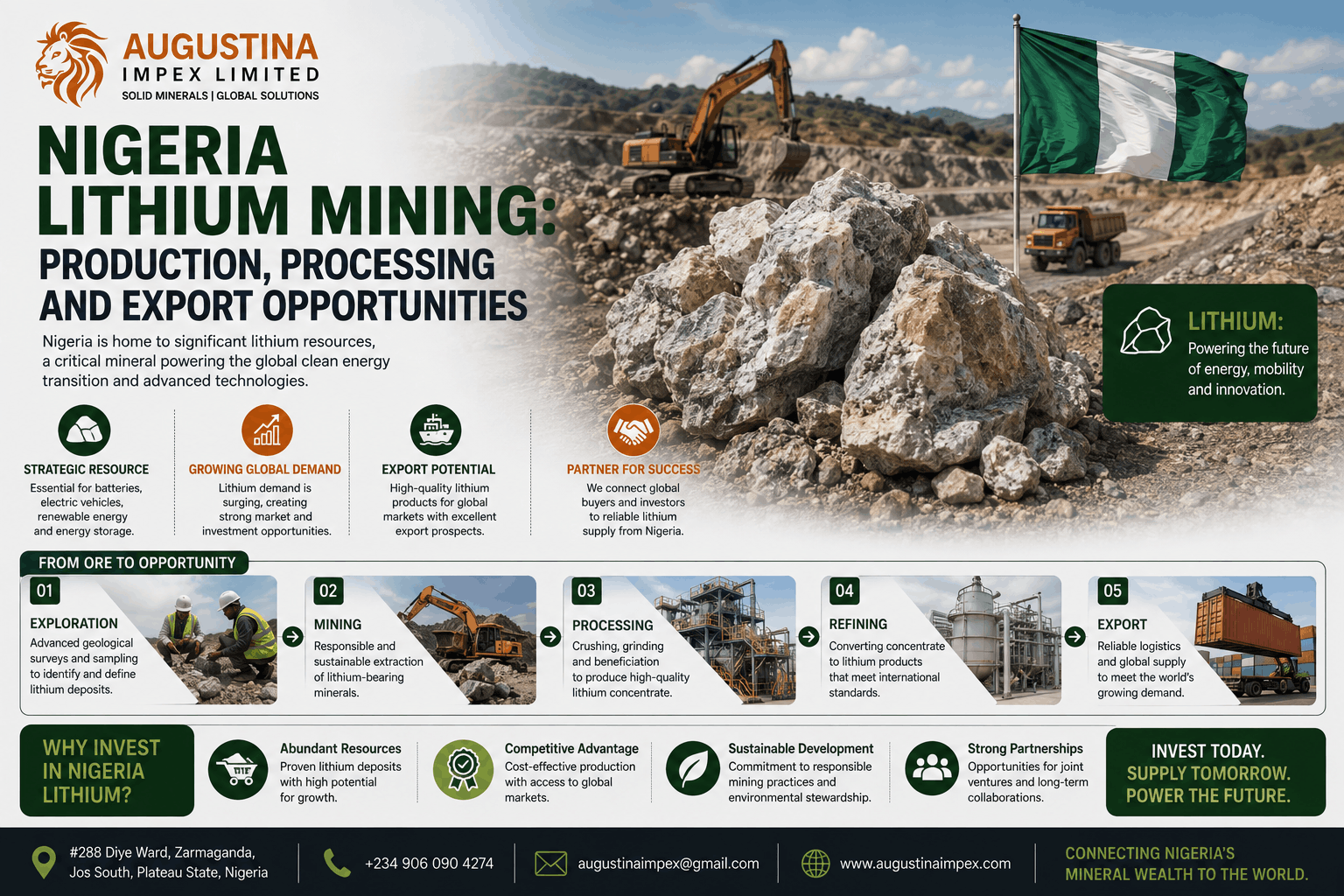
Nigeria Lithium Mining: Production, Processing & Export
Nigeria Lithium Mining: Production, Processing and Export Opportunities By Kolawole King, CEO — Augustina Impex…

Nigeria Rare Earth Minerals: Deposits & Market Potential
Nigeria Rare Earth Minerals: Deposits, Applications and Global Market Potential By Kolawole King, CEO —…
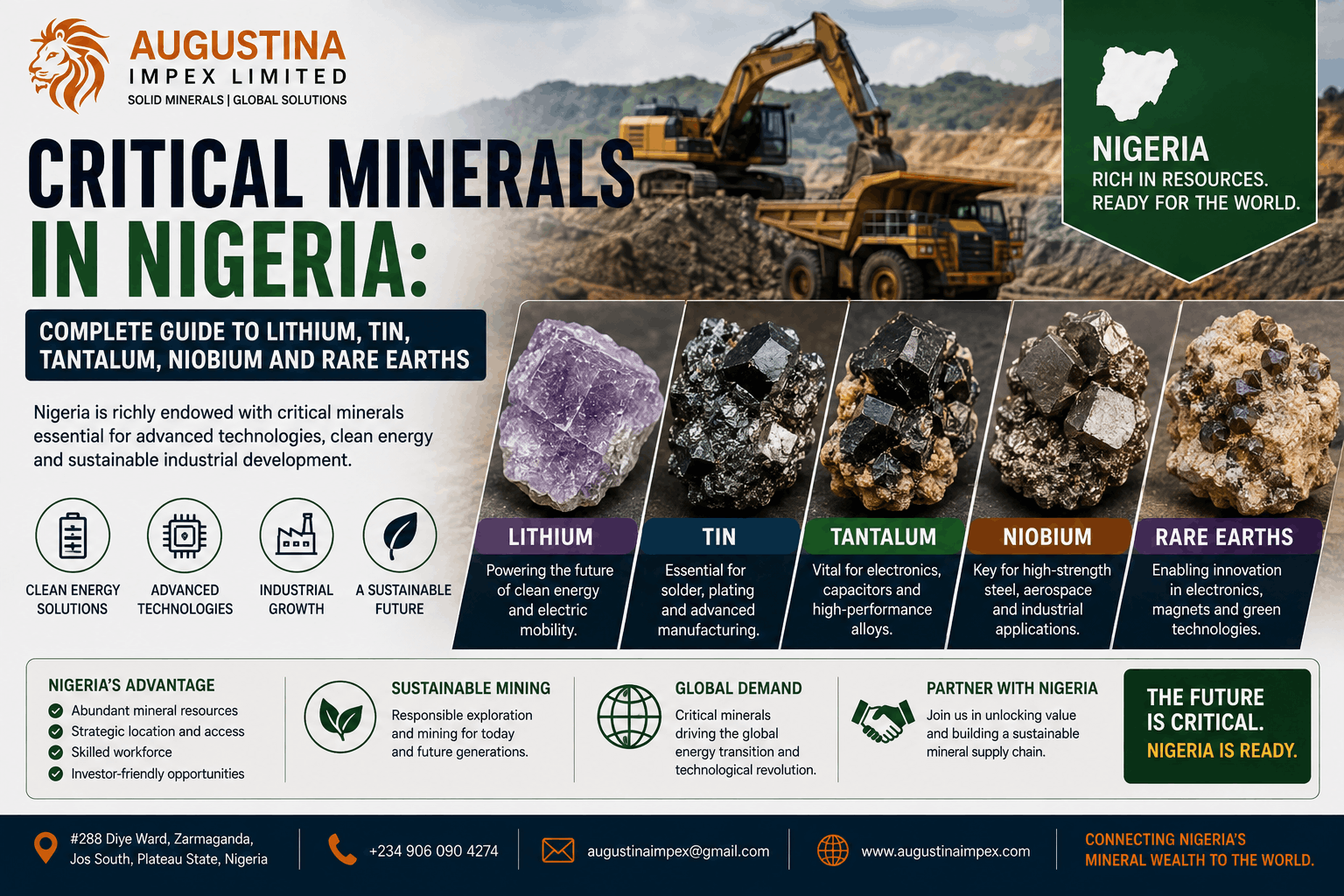
Nigeria Critical Minerals Guide: Lithium, Tin & Rare Earths
Critical Minerals in Nigeria: Complete Guide to Lithium, Tin, Tantalum, Niobium and Rare Earths By…
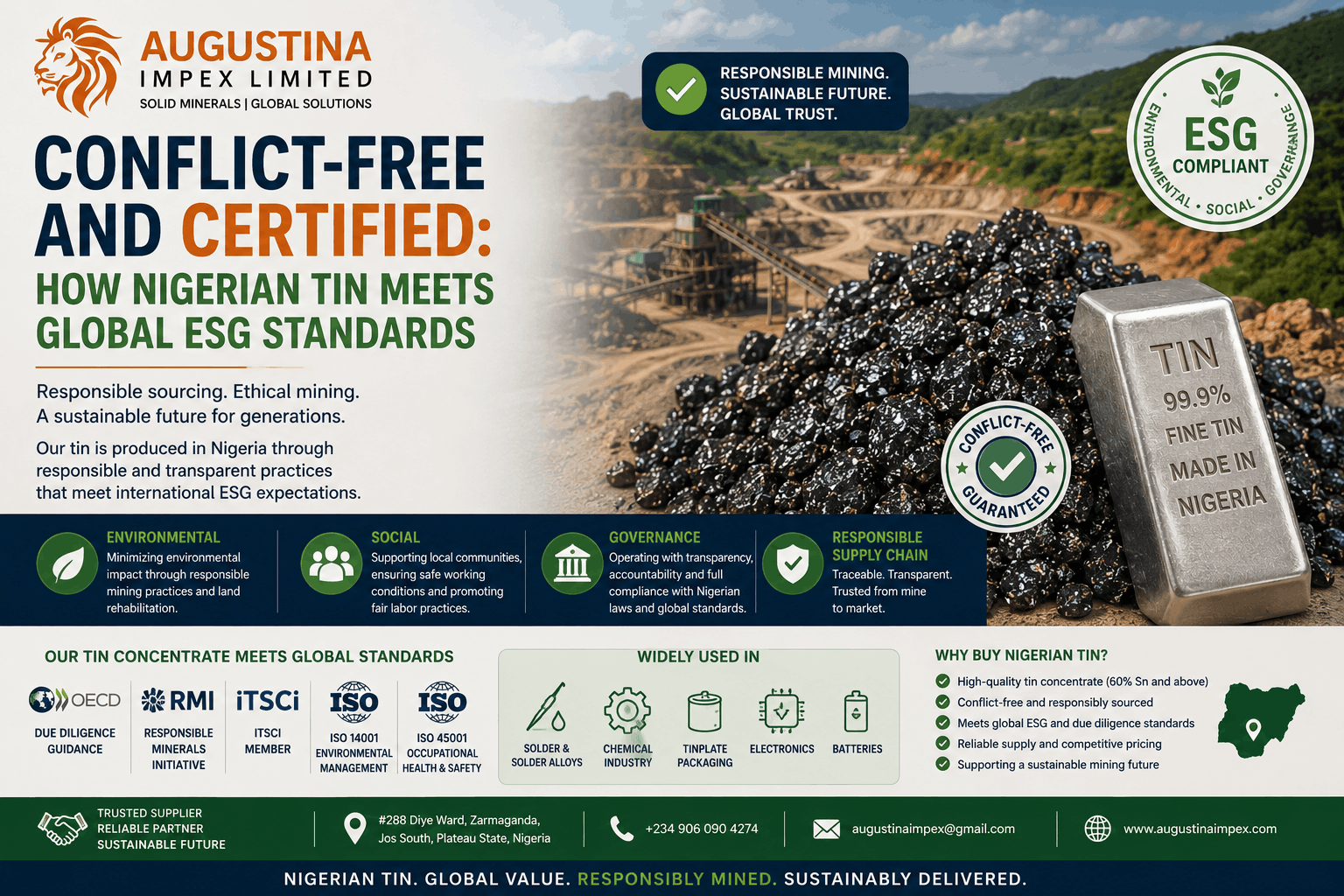
Conflict-Free Nigerian Tin Meets Global ESG Standards
Conflict-Free and Certified: How Nigerian Tin Meets Global ESG Standards By Kolawole King, CEO —…