
Few geological phenomena have shaped the modern industrial world as quietly yet as profoundly as heavy mineral sands. Lying concealed beneath coastal beaches, ancient shorelines, river deltas, and desert dune systems across every continent, these unassuming deposits harbour some of the most strategically important mineral commodities on Earth. Ilmenite, rutile, zircon, monazite, leucoxene, garnet, and staurolite — the primary minerals that make up heavy mineral sand (HMS) deposits — collectively underpin industries as diverse as aerospace engineering, ceramics manufacturing, nuclear energy, water filtration, construction materials, and the global pigment trade.
Yet for all their industrial importance, heavy mineral sands remain poorly understood by the general public and even by many investors and policymakers operating at the edges of the mining sector. This comprehensive guide sets out to change that. Whether you are a minerals trader, a research scientist, a procurement specialist sourcing industrial raw materials, or simply a curious reader interested in the building blocks of modern technology, this article will take you through everything you need to know about heavy mineral sands — from their geological origins and chemical composition, through the sophisticated processing technologies used to extract and separate their constituent minerals, to the extraordinary range of industries that depend on HMS products every day.
We will also examine the global geography of HMS production, explore emerging demand drivers in the energy transition and advanced manufacturing sectors, and take a detailed look at Nigeria’s rapidly developing Heavy Mineral Sands sector — a largely untapped resource base that is beginning to attract serious international attention.
1. What Are Heavy Mineral Sands?
Heavy mineral sands are naturally occurring concentrations of dense mineral grains that have been physically separated from lighter minerals — predominantly quartz and feldspar — through the long-term action of wind, water, and wave energy. The term “heavy” refers to specific gravity: the minerals that make up HMS deposits have specific gravities generally greater than 2.85 g/cm3, compared to quartz sand at approximately 2.65 g/cm3. This density differential is the fundamental physical property that drives both their natural concentration and their industrial extraction.
In geological terms, heavy mineral sands are a type of placer deposit — a category of mineral accumulation formed by the mechanical sorting and concentration of resistant, dense mineral grains during sedimentary transport and deposition. The original source rocks for HMS minerals are typically granites, pegmatites, metamorphic gneisses, and basic igneous rocks. Over millions of years, these source rocks are weathered, eroded, and their constituent minerals transported by rivers to coastal zones where wave action, longshore drift, and aeolian (wind-driven) processes further concentrate the heavy minerals into economically workable deposits.
The resulting deposits may take several forms: modern beach sands along active coastlines, raised beach deposits stranded above current sea level by tectonic uplift or sea-level change, aeolian dune deposits formed in arid coastal environments, fluvial (river-channel) deposits, and ancient palaeo-shoreline deposits buried beneath younger sediments. Some of the world’s most significant HMS deposits are not beaches at all in any contemporary sense — they are ancient geological shorelines that existed millions of years ago and have since been covered and buried, only revealed through geological exploration and drilling.
2. Composition of Heavy Mineral Sands — The Mineral Suite
A typical heavy mineral sand deposit is not a single mineral — it is a complex assemblage of several distinct mineral species, each with its own chemical formula, physical properties, and industrial applications. Understanding this mineral suite is fundamental to appreciating both the value and the processing complexity of HMS deposits.
2.1 Ilmenite (FeTiO3)
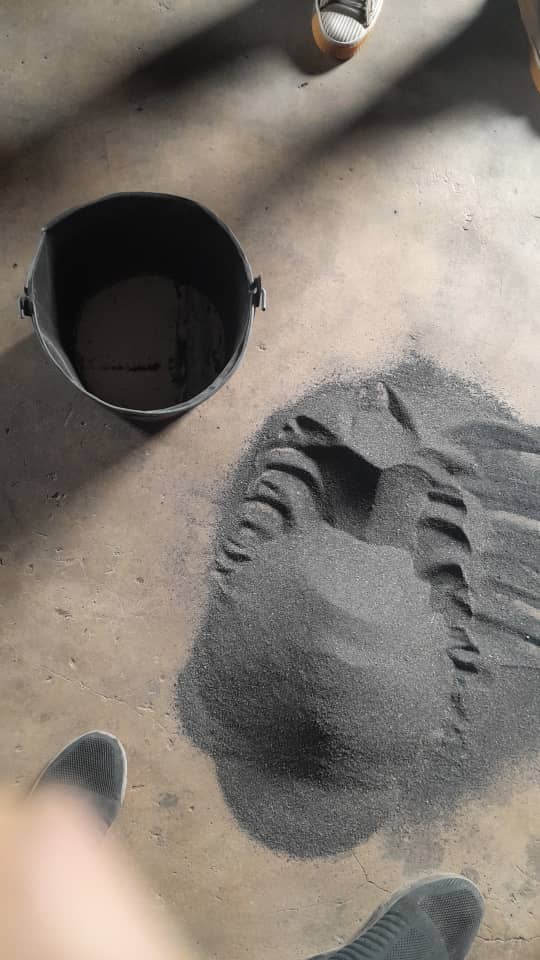
Ilmenite is the most abundant mineral in the majority of HMS deposits worldwide and the primary source of titanium in global production. Its chemical formula is iron titanium oxide (FeTiO3), with a theoretical TiO2 content of approximately 52.6%, though natural ilmenite typically contains 44% to 65% TiO2 depending on the degree of alteration. Ilmenite has a specific gravity of approximately 4.7 g/cm3, a characteristic metallic black appearance, and is weakly magnetic — a property that is exploited in its industrial separation.
Ilmenite is the dominant feedstock for the global titanium dioxide (TiO2) pigment industry, which processes it through either the sulphate route or the chloride route to produce TiO2 pigment — the world’s most widely used white pigment, found in paints, plastics, paper, cosmetics, and food colouring. In markets where high-grade TiO2 feedstocks are preferred for the chloride process, ilmenite is often further upgraded — either through weathering (producing leucoxene) or through industrial beneficiation (producing synthetic rutile or titania slag) before being fed to TiO2 pigment plants.
2.2 Rutile (TiO2)
Rutile is the naturally occurring, high-grade form of titanium dioxide, containing 90% to 99% TiO2 — significantly higher than ilmenite and the preferred feedstock for the titanium metal industry and the chloride-process TiO2 pigment route. Rutile has a specific gravity of approximately 4.2 to 4.3 g/cm3, a distinctive reddish-brown to black colour, and is electrically conducting — the key property used in electrostatic separation during HMS processing.
Titanium metal, produced from rutile via the Kroll process, is prized for its exceptional combination of low density, high strength, and outstanding corrosion resistance. It is a critical material in aerospace (aircraft airframes, jet engine components), defence (armour, missiles), medical implants (orthopaedic devices, dental implants), marine engineering, and high-performance sporting goods. Rutile is also the source mineral for titanium tetrachloride (TiCl4), the chemical intermediate used in both the chloride-process TiO2 pigment production and the manufacture of titanium metal.
2.3 Zircon (ZrSiO4)
Zircon (zirconium silicate, ZrSiO4) is one of the oldest and most stable minerals on Earth — some zircon crystals from Western Australia have been dated to over 4.4 billion years, making them the oldest known solid material on our planet. Zircon has a specific gravity of approximately 4.6 to 4.7 g/cm3 and is characterised by its exceptional chemical stability, extremely high melting point (approximately 2,550 degrees Celsius), and low thermal expansion coefficient.
These properties make zircon an indispensable raw material for the ceramics industry (where it is used as an opacifier in wall and floor tiles, giving them their characteristic white, opaque appearance), the refractory industry (where it is used to line furnaces operating at extreme temperatures in the steel, glass, and non-ferrous metals industries), and the foundry industry (where zircon sand is used as a moulding sand for the casting of metal components due to its excellent thermal properties and resistance to metal penetration). Zircon is also the primary source of zirconium metal and zirconium chemicals, with zirconium finding critical applications in nuclear reactor fuel cladding, chemical process equipment, and advanced ceramics.
2.4 Monazite — The Rare Earth Mineral
Monazite is a phosphate mineral with the general formula (REE, Th)PO4, where REE represents a variable mixture of rare earth elements — predominantly cerium (Ce), lanthanum (La), neodymium (Nd), and praseodymium (Pr), along with smaller quantities of samarium, europium, gadolinium, dysprosium, terbium, yttrium, and other rare earths. Monazite has a specific gravity of approximately 4.9 to 5.3 g/cm3 and is the most economically significant source of light rare earth elements (LREE) in many countries.
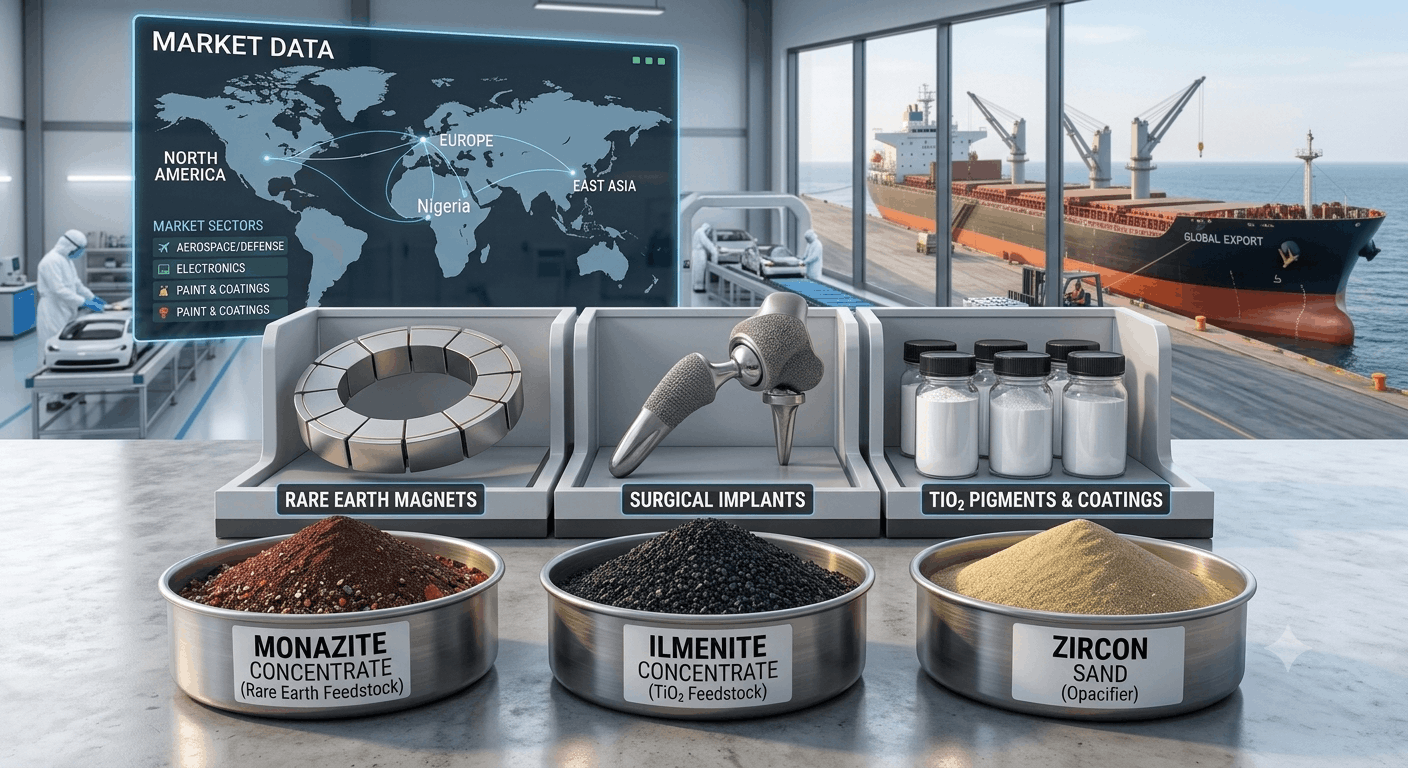
The presence of thorium (ThO2) in monazite — typically in the range of 1% to 12% depending on the deposit — classifies it as a Naturally Occurring Radioactive Material (NORM) and subjects it to stringent regulatory controls governing its mining, processing, storage, transportation, and export in most jurisdictions. However, this should not obscure the enormous strategic importance of the rare earth elements it contains: neodymium and praseodymium (collectively known as NdPr) are the critical feedstocks for neodymium-iron-boron (NdFeB) permanent magnets — the most powerful commercially available magnets and essential components of electric vehicle motors, wind turbine generators, robotics, and defence systems.
2.5 Leucoxene
Leucoxene is not a distinct mineral species but rather an alteration product of ilmenite — a fine-grained, porous aggregate of titanium oxide minerals (predominantly rutile, anatase, and brookite) formed when ilmenite undergoes natural weathering and loses its iron content over geological timescales. The TiO2 content of leucoxene is consequently higher than ilmenite, typically ranging from 70% to 90%, making it a valuable high-grade titanium feedstock intermediate between ilmenite and natural rutile.
2.6 Garnet
Garnet in HMS deposits is predominantly almandine garnet (iron-aluminium silicate), with a specific gravity of approximately 3.9 to 4.3 g/cm3. While not a titanium or zirconium mineral, garnet is an important co-product of HMS mining operations and has significant industrial value as an abrasive — both as a blasting abrasive for surface preparation and, increasingly, as the preferred abrasive in waterjet cutting systems used in the fabrication of metals, stone, glass, and composites. High-purity garnet abrasive is also used in water filtration systems as a filter medium.
2.7 Staurolite
Staurolite is an iron-aluminium silicate mineral (Fe2Al9Si4O23(OH)) with a specific gravity of approximately 3.7 to 3.8 g/cm3. In HMS operations it occurs as a byproduct mineral and is primarily used as an industrial abrasive and blasting medium, serving as a lower-cost alternative to garnet in certain surface preparation applications. Staurolite blasting is commonly used in shipbuilding, bridge maintenance, and industrial steel surface preparation.
3. HMS Mineral Suite — Summary Reference Table
| Mineral | Formula | SG | TiO2 / Key Content | Primary Industrial Use |
| Ilmenite | FeTiO3 | 4.5–4.7 | TiO2: 44–65% | TiO2 pigment (sulphate route) |
| Rutile | TiO2 | 4.2–4.3 | TiO2: 90–99% | Titanium metal; chloride TiO2 pigment |
| Zircon | ZrSiO4 | 4.6–4.7 | ZrO2: 65–67% | Ceramics, refractories, foundry sand |
| Monazite | (REE,Th)PO4 | 4.9–5.3 | TREO: 50–65%; ThO2 1–12% | Rare earth elements; NdPr magnets |
| Leucoxene | TiO2 alteration | 3.8–4.2 | TiO2: 70–90% | High-grade TiO2 feedstock |
| Garnet | Fe3Al2(SiO4)3 | 3.9–4.3 | Al2O3 + SiO2 | Abrasives; waterjet cutting; filtration |
| Staurolite | Fe2Al9Si4O23(OH) | 3.7–3.8 | Al2O3 + SiO2 | Blasting abrasive; surface preparation |
4. Geology and Formation of HMS Deposits
The geological story of heavy mineral sand deposits begins hundreds of millions of years ago, in the parent rocks that are the ultimate source of all HMS minerals. The titanium minerals (ilmenite, rutile, leucoxene) and zircon derive predominantly from granites, syenites, gabbros, gneisses, and metamorphic rocks. Monazite derives from granites and granite-related pegmatites. Garnet is a product of metamorphic processes. These source rocks must be exposed at the surface — either through tectonic uplift, erosion of overlying strata, or both — before the weathering and transport cycle can begin.
The concentration mechanism for HMS deposits involves several sequential processes. First, mechanical and chemical weathering at the outcrop disintegrates the source rock and liberates the individual mineral grains. Second, fluvial transport by rivers carries the liberated minerals toward the coast, with the denser, more resistant minerals preferentially surviving the journey compared to lighter, more chemically reactive phases. Third, at the coastal zone, wave action, longshore drift, swash, and backwash continuously rework and sort the beach sediments, progressively concentrating the denser heavy minerals in the foreshore and nearshore zones. Fourth, in arid coastal environments, wind picks up and transports lighter mineral grains (quartz, feldspar) away from the beach, further enriching the residual heavy mineral content in the surface sands.
The resulting HMS deposits are classified by their mode of occurrence into several types: modern beach and nearshore deposits (actively forming today), raised beach deposits (stranded above modern sea level), aeolian deposits (wind-transported dunes), fluvial and alluvial deposits (in river channels and floodplains), and palaeo-shoreline deposits (ancient beach deposits buried under younger sediment cover). Each deposit type presents different mining and processing challenges and opportunities.
5. Global Distribution — Where Are the World’s Major HMS Deposits?
Heavy mineral sand deposits occur on every inhabited continent, but the global distribution is far from uniform. The world’s largest and highest-grade deposits are concentrated in a relatively small number of countries, and the geography of HMS production has significant implications for global supply chains and resource security.
| Country / Region | Key Deposits | Primary Minerals | Status |
| Australia | Murray Basin (VIC/NSW/SA), Eucla Basin, West Coast (WA) | Ilmenite, Rutile, Zircon, Leucoxene | World’s largest producer; multiple large-scale operations |
| South Africa | KwaZulu-Natal (Richards Bay), Western Cape | Ilmenite, Rutile, Zircon | Major global supplier; Richards Bay Minerals is a world leader |
| Mozambique | Moma (Nampula Province) | Ilmenite, Rutile, Zircon | Kenmare Resources; large-scale dredge operation |
| Kenya | Kwale (Coast Province) | Ilmenite, Rutile, Zircon | Base Titanium; significant active producer |
| Madagascar | Fort Dauphin (Anosy Region) | Ilmenite, Ilmenite, Zircon | Rio Tinto QMM; large dredge operation |
| India | Kerala, Tamil Nadu, Orissa coastal belts | Ilmenite, Rutile, Zircon, Monazite | Government-controlled; IREL is the major producer |
| Sri Lanka | South and west coast beaches | Ilmenite, Rutile, Zircon | Historical producer; smaller-scale operations |
| United States | Trail Ridge (Florida), Green Cove Springs | Ilmenite, Rutile, Zircon | Domestic production for strategic supply security |
| Brazil | Espinharas, Cumuruxatiba | Ilmenite, Rutile, Zircon, Monazite | Growing producer; large palaeo-shoreline deposits |
| Nigeria | Plateau, Cross River, Nasarawa, Taraba States | Ilmenite, Rutile, Zircon, Monazite | Emerging; significant untapped alluvial HMS potential |
6. HMS Mining Methods
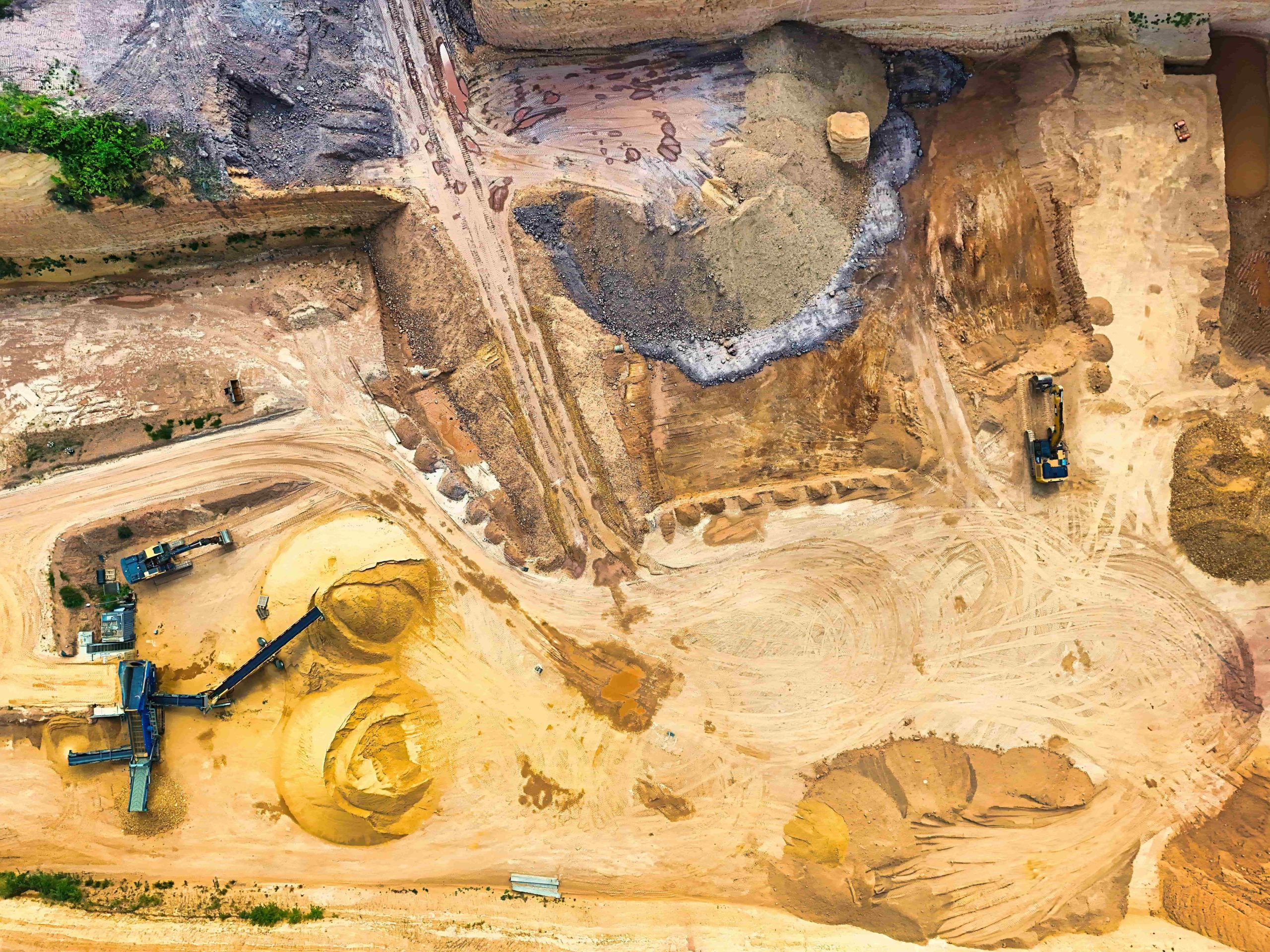
The method used to mine a heavy mineral sand deposit depends primarily on the ore’s location (above water table vs. below), the deposit geometry, the overburden thickness, the environmental setting, and the regulatory framework. There are two principal mining methods used in large-scale HMS operations worldwide: dredge mining and dry mining.
6.1 Dredge Mining
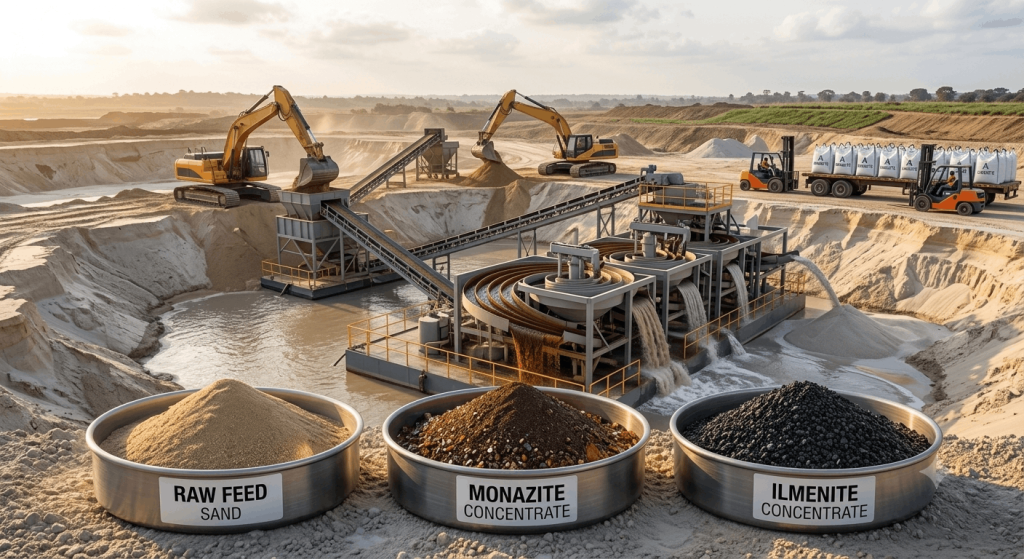
Dredge mining is the dominant method used at the world’s largest HMS operations and is used when the ore body lies in or below the water table, allowing the creation of an artificial pond or lake through which the dredge can operate. A suction cutter dredge — essentially a floating mining and primary processing plant — excavates ore from the face of the pond using a rotating cutter head, draws the slurried ore into the vessel via suction pumps, and processes it through an onboard wet concentrator plant (WCP) that uses gravity separation (spiral concentrators) to produce a heavy mineral concentrate (HMC).
Dredge mining is highly efficient and environmentally compact because the mining pond advances through the deposit in one direction while land rehabilitation is carried out simultaneously at the trailing end of the pond, effectively recycling the land as the dredge moves forward. The Kenmare Moma operation in Mozambique and the Rio Tinto QMM operation in Madagascar are prime examples of large-scale dredge mining operations.
6.2 Dry Mining
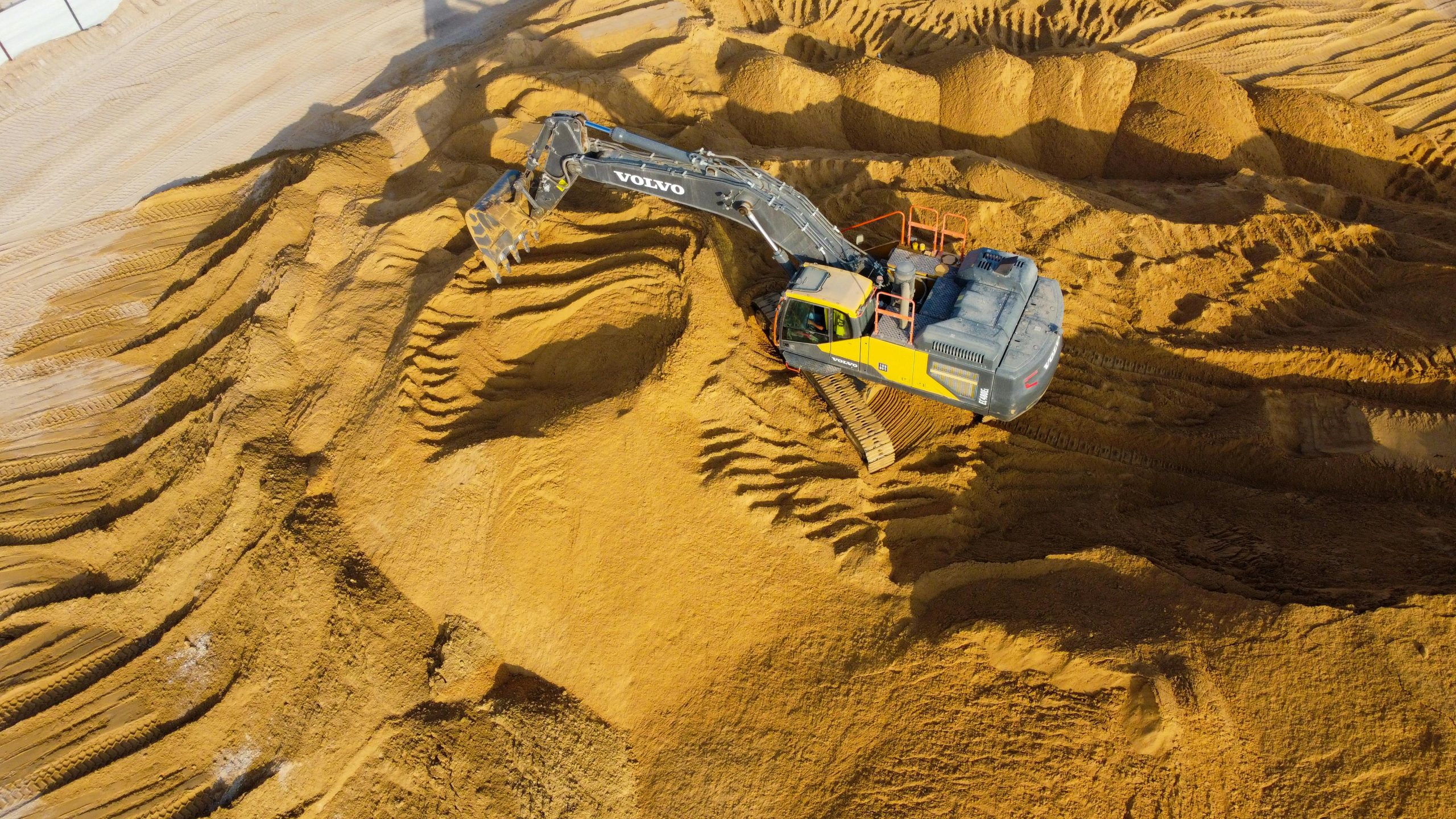
Dry mining is used when the ore body sits above the water table and cannot be inundated to form a mining pond, or when environmental considerations preclude dredge operation. In dry mining, large earthmoving equipment — scrapers, bulldozers, and front-end loaders — excavate the ore from open-cut areas and transport it to a separate wet concentrator plant where it is slurried with water before being processed through spiral concentrators to produce HMC. Dry mining is typically less capital-intensive to establish than dredge mining but is more energy and water intensive on a per-tonne basis.
6.3 Artisanal and Small-Scale Mining (ASM) of HMS
In many emerging mineral-producing countries — including Nigeria — a significant proportion of HMS mineral production originates from artisanal and small-scale mining (ASM) operations. ASM miners use hand tools, sluice boxes, and small portable sluice or jig concentrators to recover heavy mineral concentrates from alluvial sand deposits in rivers, stream beds, and shallow pit workings. While individual ASM operations are small in scale, their aggregate contribution to national mineral production can be substantial, and they serve as an important economic livelihood for rural mining communities.
7. HMS Beneficiation and Separation — From Ore to Final Product
Raw HMS ore contains a mixture of all the heavy mineral species described above, together with varying amounts of quartz sand, clay, and other light gangue minerals. Transforming this complex mixture into separate, high-purity mineral products requires a sophisticated multi-stage beneficiation and separation process that exploits the different physical and electrical properties of each mineral. The process typically proceeds through three major stages.
Stage 1: Wet Concentration — Gravity Separation
The first stage of HMS processing is performed at the Wet Concentrator Plant (WCP), where the mined ore is slurried with water and fed through banks of spiral concentrators. Spiral concentrators are helical channels down which slurry flows under gravity, with centrifugal forces and friction causing the denser heavy mineral grains to migrate to the inner part of the spiral and the lighter quartz and feldspar grains to migrate to the outer part, where they overflow as tailings. The inner stream (the heavy mineral concentrate, or HMC) is collected and pumped to a stockpile or directly to the Mineral Separation Plant. A typical HMS WCP achieves HMC grades of 85% to 95% heavy minerals.
Stage 2: Drying and Magnetic Separation
At the Mineral Separation Plant (MSP), the HMC is first dried in a rotary dryer and then passed through high-intensity magnetic separators (typically Wet High-Intensity Magnetic Separators, or WHIMS, followed by Rare Earth Drum Magnetic Separators, or REDS) that exploit the differences in magnetic susceptibility between the HMS minerals. Ilmenite is weakly magnetic and is separated from the non-magnetic minerals (rutile, zircon, leucoxene, monazite) in the magnetic fraction. The non-magnetic fraction proceeds to the next stage for further separation. Monazite, being slightly paramagnetic, is typically recovered in a dedicated rare earth magnetic separation step.
Stage 3: Electrostatic Separation
The final separation stage uses high-tension roll (HTR) electrostatic separators to distinguish between the conducting and non-conducting minerals in the non-magnetic fraction. Rutile and leucoxene are electrically conducting, while zircon and monazite are non-conducting. When the mineral grains pass over a grounded rotating drum and are exposed to a high-voltage electrode, the conducting minerals (rutile, leucoxene) acquire a charge and are attracted to the drum, while the non-conducting minerals (zircon, monazite) are flung free by centrifugal force and collected separately. Multiple passes through the electrostatic separator, with progressive adjustments to voltage and feed rate, allow the production of separate, high-purity rutile, zircon, and monazite products.
| Processing Stage | Technology | Minerals Separated | Property Exploited |
| Stage 1: Wet Concentration | Spiral concentrators (WCP) | Heavy minerals from quartz/clay/light gangue | Specific gravity (density) |
| Stage 2: Magnetic Separation | WHIMS + REDS magnetic separators (MSP) | Ilmenite (magnetic) from non-magnetic fraction | Magnetic susceptibility |
| Stage 2b: REE Magnetic Step | Specialised rare earth magnet separator | Monazite (paramagnetic) from zircon/rutile | Paramagnetic response |
| Stage 3: Electrostatic Sep. | High-tension roll (HTR) electrostatic sep. | Rutile/leucoxene (conducting) from zircon | Electrical conductivity |
| Stage 3b: Final Cleaning | Air tables, additional WHIMS/HTR passes | High-purity rutile / zircon / leucoxene | Density + conductivity |
8. Industrial Applications of Heavy Mineral Sand Products
8.1 Titanium Dioxide (TiO2) Pigment — The Paint That Covers the World
The single largest application of HMS minerals is the production of titanium dioxide (TiO2) pigment — and it is one of the most ubiquitous industrial chemicals in the world. TiO2 pigment is the dominant white pigment in global commerce, prized for its extraordinary whiteness, brightness, opacity, UV resistance, and chemical inertness. It is present in an astonishing array of everyday products: interior and exterior paints, plastic packaging and consumer goods, printing inks, paper coatings, synthetic fibres, rubber products, sunscreens, toothpaste, pharmaceuticals, and food colouring (where it is used as the food additive E171 in some jurisdictions).
Global TiO2 pigment production is approximately 7 to 8 million tonnes per year and growing, driven by rising urbanisation, expanding middle-class populations in emerging markets, and the increasing use of plastics in consumer goods. The two industrial processes used to make TiO2 pigment are the sulphate process (which can use lower-grade ilmenite as feedstock) and the chloride process (which requires high-grade rutile or synthetic rutile as feedstock). Both processes consume enormous quantities of HMS mineral feedstocks and represent the primary demand driver for the global ilmenite and rutile markets.
8.2 Titanium Metal — The Material of Aerospace and Medicine
Beyond pigment, titanium metal is the second major downstream product of the HMS industry. Rutile (high-grade TiO2) is converted to titanium tetrachloride (TiCl4) in a carbochlorination process, and TiCl4 is subsequently reduced with magnesium metal (the Kroll process) to produce titanium metal sponge, which is then consolidated into ingot and fabricated into mill products — sheet, plate, bar, tube, wire, and castings.
Titanium metal’s extraordinary combination of properties — a density of only 4.5 g/cm3 (roughly 60% the density of steel), tensile strength comparable to structural steels, and outstanding corrosion resistance in seawater, chlorine environments, and many acids — makes it the material of choice in demanding applications where weight, strength, and durability are simultaneously critical. Primary markets include commercial aviation (Boeing and Airbus aircraft structures and engine components), military aerospace, naval vessels, offshore oil and gas equipment, chemical processing plant, desalination plant, medical implants (where titanium’s biocompatibility is essential), sports equipment, and architectural cladding.
8.3 Zircon Applications — Ceramics, Refractories, and Beyond
Zircon (ZrSiO4) is arguably the most versatile mineral in the HMS suite, with an exceptionally diverse range of industrial applications spanning several major industries.
In the ceramics industry, zircon is the dominant opacifier for ceramic tiles — the material that gives wall tiles, floor tiles, and sanitaryware their characteristic opaque, white appearance. Global tile production consumes well over 1 million tonnes of zircon per year, and the tile sector is the largest single end-market for zircon globally. Zircon is also used as a glaze opacifier in tableware and as a component in advanced technical ceramics.
In the refractory industry, zircon’s extremely high melting point (2,550 degrees Celsius) and excellent thermal shock resistance make it an ideal lining material for furnaces and kilns operating at the extreme temperatures required in steel production, glass manufacturing, and non-ferrous metallurgy. Zircon-based refractories are used in glass furnace superstructures, steel continuous casting equipment, and aluminium reduction cell linings.
In the foundry industry, zircon sand is widely used as a moulding sand for metal casting — particularly for the casting of steel and iron components — because its excellent thermal properties prevent metal penetration into the mould and allow the casting of fine surface finishes. Zircon’s low thermal expansion also reduces mould distortion during casting, resulting in more dimensionally accurate castings.
Zirconium metal and zirconium chemicals, derived from zircon through zirconium processing, have their own specialised applications: zirconium alloys (known as “zircaloy”) are the standard cladding material for uranium fuel rods in nuclear reactors, chosen for their very low neutron absorption cross-section; zirconium dioxide (zirconia) is used in dental ceramics and advanced engineering ceramics; and zirconium chemicals are used in deodorants, water treatment, catalysts, and surface coatings.
8.4 Rare Earth Elements from Monazite
Monazite’s significance in the heavy mineral sands industry has grown dramatically in recent years as the world has awakened to the critical importance of rare earth elements (REEs) in the technology of the 21st century. The neodymium (Nd) and praseodymium (Pr) content of monazite — collectively termed NdPr — is the feedstock for neodymium-iron-boron (NdFeB) permanent magnets, the most powerful permanent magnets commercially available and the enabling component of electric vehicle traction motors, wind turbine direct-drive generators, industrial robots, hard disk drive actuators, and military guidance systems.
The global transition to electric mobility and renewable energy has created an unprecedented demand surge for NdPr oxide — a demand that is expected to multiply several times over by 2030 as EV adoption accelerates worldwide. Cerium (Ce) from monazite is used in catalytic converters, glass polishing, and UV-absorbing glass; lanthanum is used in hybrid vehicle nickel-metal hydride batteries, fluid catalytic cracking (FCC) catalysts, and specialty optical glass; and other rare earths have applications ranging from defence electronics to medical imaging.
8.5 Garnet — Cutting, Blasting, and Filtering
Industrial garnet from HMS operations has established itself as a premium abrasive material in three primary applications. In waterjet cutting — a precision manufacturing process that uses a high-pressure jet of water mixed with abrasive garnet to cut virtually any material — garnet’s hardness (approximately 7.5 on the Mohs scale), angular grain shape, and chemical inertness make it the abrasive of choice for cutting metal, stone, glass, composites, and ceramics in aerospace, automotive, construction, and precision engineering applications.
In abrasive blasting for surface preparation — cleaning and profiling steel surfaces before painting or coating — garnet offers a combination of cutting efficiency, low dust generation, low free silica content (making it safer than silica sand for workers), and recyclability that makes it competitive with and often preferable to other blasting media. Garnet water filtration media are used in multi-media filtration systems for municipal water treatment and industrial process water treatment, where garnet’s density, hardness, and chemically inert nature provide excellent filtration performance.
9. Global HMS Market Overview
The global heavy mineral sands market is a multi-billion-dollar sector underpinned by structural demand from several large, mature industries — notably the TiO2 pigment, titanium metal, and ceramics sectors — as well as rapidly growing demand from the rare earth and electric vehicle supply chains. Market dynamics are characterised by a relatively concentrated supply side (a handful of major producing countries and a small number of large multinational mining companies dominate global production) and a broadly diversified and geographically distributed demand side.
| HMS Product | Approx. Global Production | Key Producers | Primary Demand Sectors |
| Ilmenite | ~7.5 million MT/yr | Australia, South Africa, Mozambique, Kenya, India | TiO2 pigment (sulphate process), titania slag, synthetic rutile |
| Rutile | ~700,000 MT/yr | Australia, South Africa, Sierra Leone, Kenya | Titanium metal, chloride-process TiO2 pigment, welding electrodes |
| Zircon | ~1.4 million MT/yr | Australia, South Africa, Mozambique, Kenya | Ceramics (tile opacifier), refractories, foundry, zirconium metal |
| Monazite | Smaller volumes | India, Brazil, Australia, China, Nigeria (emerging) | Rare earth elements (NdPr magnets, Ce, La), thorium |
| Garnet | ~1.0 million MT/yr | Australia, India, South Africa, USA | Waterjet cutting, abrasive blasting, water filtration |
10. Nigeria’s Heavy Mineral Sands Sector — An Emerging Opportunity
Nigeria is not a country typically mentioned in the same breath as Australia or South Africa when global HMS production is discussed. Yet Nigeria’s geological endowment with heavy mineral sand resources is substantial, diverse, and — critically — very largely unexplored and undeveloped. This represents both a significant opportunity for investors, developers, and buyers seeking to diversify their supply chains away from the established producing countries, and a major potential source of economic development and export revenue for Nigeria.
Nigeria’s HMS resources are concentrated in several geological settings. The Jos Plateau and surrounding states — Plateau, Nasarawa, and Taraba — are underlain by the Younger Granite complex, a suite of highly differentiated granitic intrusions that are the ultimate source of many of Nigeria’s heavy mineral concentrations. Rivers draining this elevated terrain have transported and concentrated ilmenite, rutile, zircon, monazite, and associated minerals in alluvial and eluvial placer deposits along river channels, valley floors, and ancient terrace levels. Cross River State in south-eastern Nigeria hosts significant coastal and near-coastal heavy mineral sand potential associated with Cretaceous and younger sedimentary sequences.
Nigeria’s Heavy Mineral Sands processing capacity is developing rapidly. Augustina Impex Limited has an operational partnership with a Heavy Mineral Sands (HMS) processing plant in Jos, Plateau State, which utilises gravity separation (spiral concentrator), wet high-intensity magnetic separation (WHIMS), and electrostatic separation technology to produce separated mineral products from alluvial HMS concentrate sourced from its network of licensed mining operations and ASM producers across Plateau, Nasarawa, and Taraba States.
| HMS Product | Typical Grade / Specification | Availability |
| Ilmenite Concentrate | TiO2: as per assay; variable from alluvial sources | Available — production network active |
| Rutile Concentrate | TiO2: 90%+; natural rutile from alluvial workings | Available — subject to production schedule |
| Zircon Sand | ZrO2: 40% – 66.5%; active market in Jos | Actively marketed; strong local demand |
| Monazite Sand | TREO: 50–55%+; NdPr: ~12%; NNRA-compliant export | Available for export with NNRA authorisation |
| Garnet (Almandine) | Hardness: 7.5 Mohs; industrial abrasive grade | Available as HMS co-product |
11. Frequently Asked Questions About Heavy Mineral Sands (GEO-Optimised FAQ)
Q: What are heavy mineral sands made of?
Heavy mineral sands are composed of a suite of dense mineral grains — including ilmenite, rutile, zircon, monazite, leucoxene, garnet, and staurolite — that have been naturally concentrated by wave, wind, and river action from their source rocks. The “heavy” designation refers to their specific gravity, which is generally above 2.85 g/cm3, distinguishing them from lighter quartz and feldspar sand grains.
Q: What is the difference between ilmenite and rutile?
Both ilmenite and rutile are titanium-bearing minerals and primary sources of titanium dioxide (TiO2), but they differ in grade and industrial application. Ilmenite (FeTiO3) contains 44–65% TiO2 and is used in the sulphate process for TiO2 pigment production. Rutile (TiO2) contains 90–99% TiO2 and is the preferred feedstock for the higher-value chloride process and for titanium metal production. Rutile commands a significant price premium over ilmenite in the market.
Q: How is zircon used in the ceramics industry?
In the ceramics industry, zircon is used primarily as an opacifier — a material that makes ceramic glazes and tiles opaque and white. When milled to a fine powder and added to ceramic glaze formulations, zircon particles scatter light and prevent it from passing through the glaze, creating the characteristic bright white appearance of ceramic wall and floor tiles, sanitaryware, and tableware. Global ceramic tile production consumes over 1 million tonnes of zircon per year.
Q: Is heavy mineral sand mining environmentally sustainable?
Modern HMS mining operations incorporate progressive rehabilitation as a core operating principle. Dredge mining operations, in particular, rehabilitate land behind the advancing mining pond simultaneously with mining ahead of it, restoring topsoil, vegetation, and land productivity in a continuous cycle. The mining footprint at any given time is relatively small, and post-mining land use can include agriculture, forestry, wildlife habitat, and water storage. Regulatory requirements in most producing countries mandate detailed environmental management plans and rehabilitation bonds.
Q: What role do heavy mineral sands play in the energy transition?
Heavy mineral sands play a critical and often underappreciated role in the global energy transition. Titanium (from ilmenite and rutile) is used in wind turbine components, offshore platform structures, and hydrogen production equipment. Zircon-derived zirconia is used in solid oxide fuel cells and electrolyser membranes. Most importantly, monazite from HMS deposits is a significant source of rare earth elements — particularly neodymium and praseodymium (NdPr) — that are essential for the permanent magnets used in electric vehicle motors and wind turbine generators.
Q: What does NORM mean in the context of HMS mining, and does it apply to all HMS minerals?
NORM stands for Naturally Occurring Radioactive Material. In HMS mining, NORM status applies specifically to monazite, which contains naturally occurring thorium (ThO2, typically 1–12%) and uranium (U3O8). NORM classification subjects monazite to special handling, storage, transportation, and export regulations in most countries, requiring regulatory approvals from nuclear authorities. The other HMS minerals — ilmenite, rutile, zircon, garnet, and staurolite — are not classified as NORM and do not carry radioactive material regulatory obligations.
Q: Can Nigeria become a significant heavy mineral sands producer?
Nigeria has genuine potential to become a meaningful HMS producer, particularly in ilmenite, rutile, zircon, and monazite from alluvial placer deposits in the Jos Plateau region and adjoining states. The key requirements for realising this potential are systematic geological exploration to delineate and characterise the resource base, investment in modern HMS processing plant infrastructure, a clear regulatory framework for NORM materials (particularly monazite), and established commercial relationships with international buyers. Companies such as Augustina Impex Limited are actively working to develop these elements and connect Nigerian HMS production with the global mineral sands market.
12. Future Trends in the Heavy Mineral Sands Industry
The heavy mineral sands industry is entering a period of accelerating change, driven by several powerful macro-trends that are reshaping both demand patterns and supply geography.
12.1 Electric Vehicle and Wind Energy Demand for NdPr
The most transformative demand driver currently reshaping the HMS landscape is the global electric vehicle revolution and the rapid expansion of wind power capacity. Both of these energy transition technologies are critically dependent on neodymium-iron-boron (NdFeB) permanent magnets, and the neodymium and praseodymium that feed those magnets must ultimately be extracted from rare earth minerals — of which monazite, recovered as a by-product of HMS processing, is one of the most abundant and accessible sources outside of China. As EV and wind capacity deployments accelerate through the 2020s and 2030s, demand for NdPr oxide is expected to grow several times faster than supply from the currently dominant Chinese rare earth mining sector, creating significant opportunities for non-Chinese monazite producers.
12.2 Supply Chain Diversification Away from China
China currently dominates global rare earth production and processing, and many critical mineral supply chains run through Chinese refineries and processors. The geopolitical risks associated with this concentration — starkly highlighted by China’s rare earth export restrictions in 2010 and renewed concerns about supply security in the context of US-China trade tensions — are driving Western governments, automakers, technology companies, and defence contractors to actively seek and develop diversified rare earth supply chains. This creates a powerful commercial tailwind for HMS deposits containing monazite in countries outside China — including Australia, Brazil, India, and increasingly Nigeria.
12.3 Rising Demand for Zircon in Emerging Markets
The long-term outlook for zircon demand is positive, driven by rapid urbanisation and middle-class expansion in Asia, the Middle East, and Africa — regions where per-capita consumption of ceramic tiles, sanitaryware, and building materials is growing rapidly from a low base. Ceramic tile production is the dominant demand driver for zircon, and as countries such as India, Vietnam, Bangladesh, Egypt, and the nations of Sub-Saharan Africa expand their construction and housing sectors, demand for ceramic tiles — and the zircon used to produce them — will continue to grow.
12.4 Titanium in Emerging Applications
While TiO2 pigment and aerospace remain the dominant applications for titanium, several emerging markets are creating new demand growth vectors. Additive manufacturing (3D printing) of titanium components for aerospace, medical, and industrial applications is growing rapidly, with titanium powder demand increasing sharply as the technology matures. Desalination plant construction in water-stressed regions — the Middle East, North Africa, South Asia, and parts of Sub-Saharan Africa — uses titanium tubing and heat exchangers extensively. Hydrogen production by electrolysis uses titanium anodes and bipolar plates in proton exchange membrane (PEM) electrolysers.
13. Sourcing Nigerian HMS Minerals — Augustina Impex Limited
| About Augustina Impex Limited Augustina Impex Limited (RC 750691) is a fully registered and licensed Nigerian solid minerals export company headquartered in Jos, Plateau State, Nigeria — the epicentre of Nigeria’s historic and rapidly expanding mining industry. We aggregate, beneficiate, and export Nigerian solid mineral commodities including Ilmenite, Rutile, Zircon, Monazite, Coltan/Tantalite, Lithium Ore, Tin Concentrate, Bastnasite, and other strategic minerals. Our operational partnership with an HMS processing plant in Jos utilises gravity separation, magnetic separation, and electrostatic separation technology to produce separated, marketable HMS mineral products from alluvial concentrate. Export is conducted through Jase Odus Nigeria Limited (RC 2022462), NEPC Registered Exporter No. 0039421 (valid to July 2027), operating under full compliance with Nigerian mining, export, and — where applicable — NNRA regulations. Contact: augustinaimpex@gmail.com | WhatsApp: +234 906 090 4274 | www.augustinaimpex.com |
-
Previous Post
Lithium Battery Supply Chain Explained: From Mine to EV
Post a comment
Related Posts
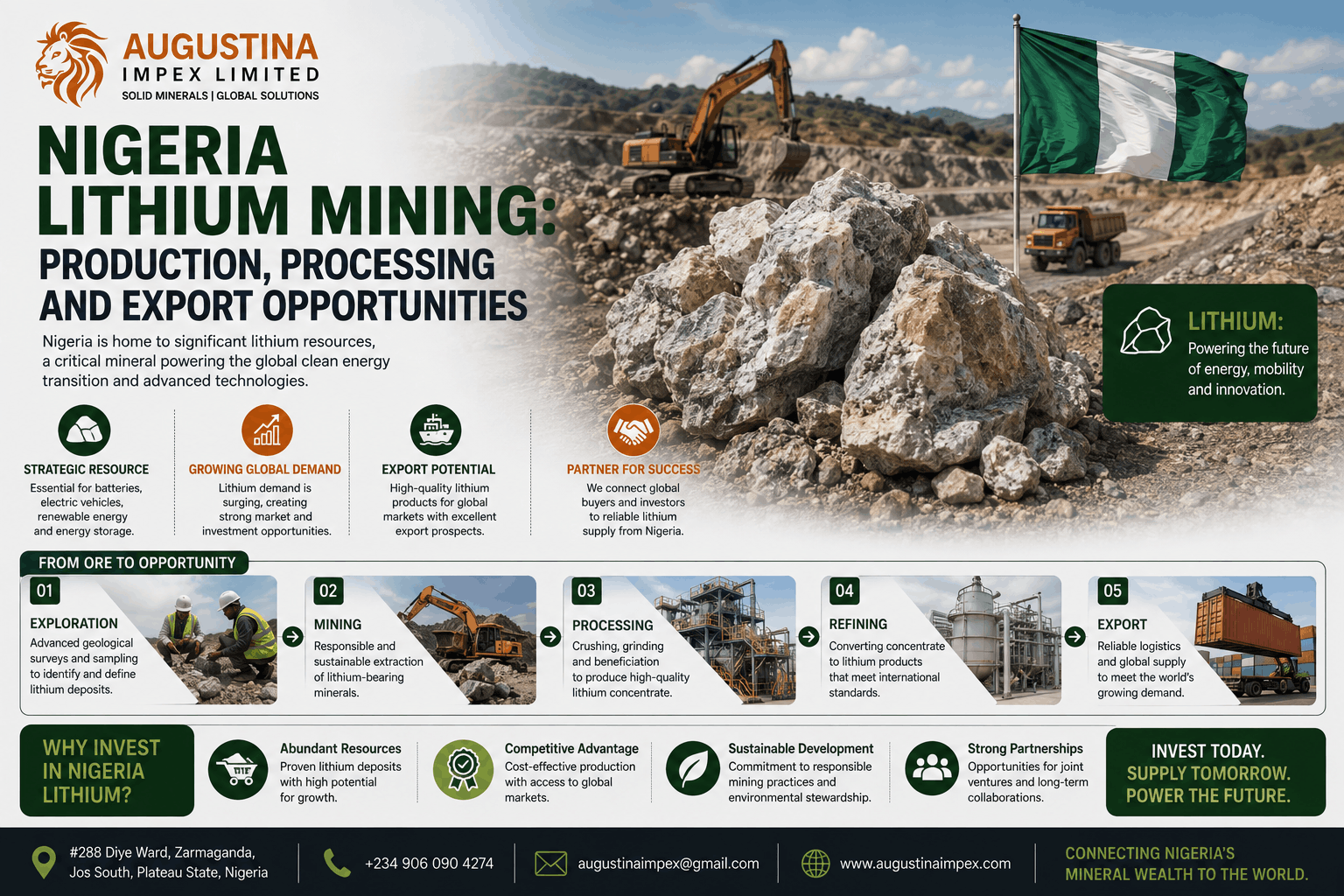
Nigeria Lithium Mining: Production, Processing & Export
Nigeria Lithium Mining: Production, Processing and Export Opportunities By Kolawole King, CEO — Augustina Impex…
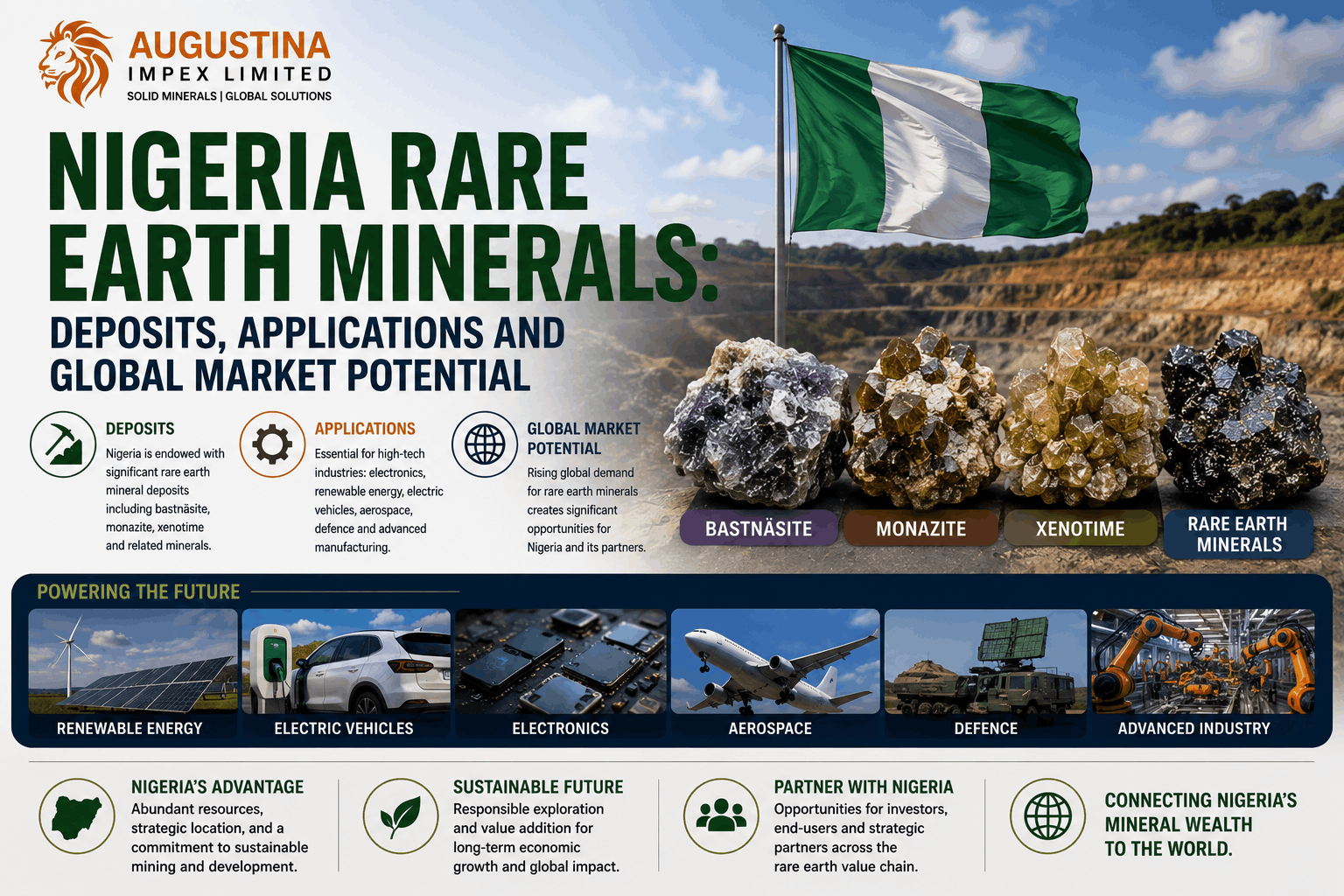
Nigeria Rare Earth Minerals: Deposits & Market Potential
Nigeria Rare Earth Minerals: Deposits, Applications and Global Market Potential By Kolawole King, CEO —…
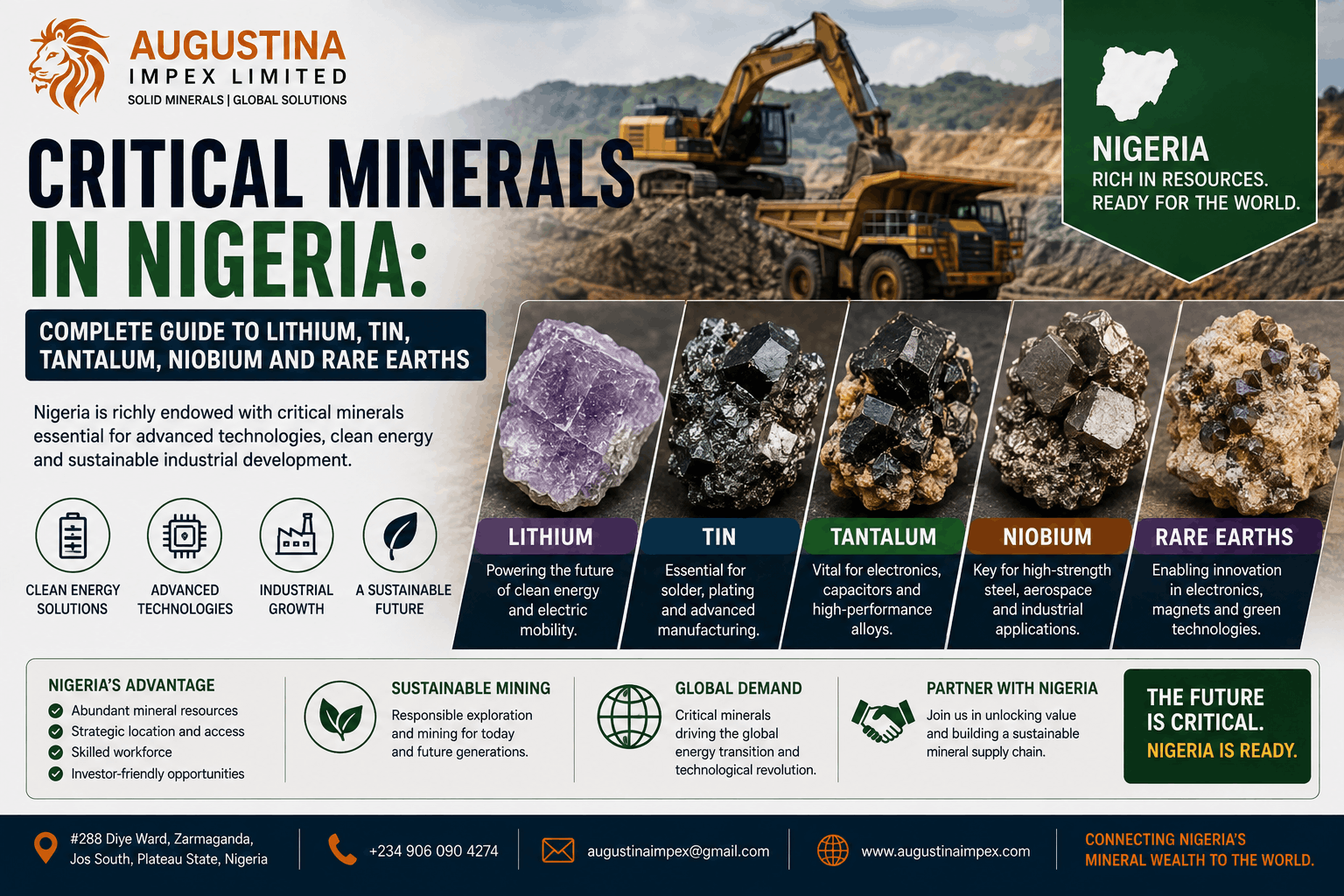
Nigeria Critical Minerals Guide: Lithium, Tin & Rare Earths
Critical Minerals in Nigeria: Complete Guide to Lithium, Tin, Tantalum, Niobium and Rare Earths By…
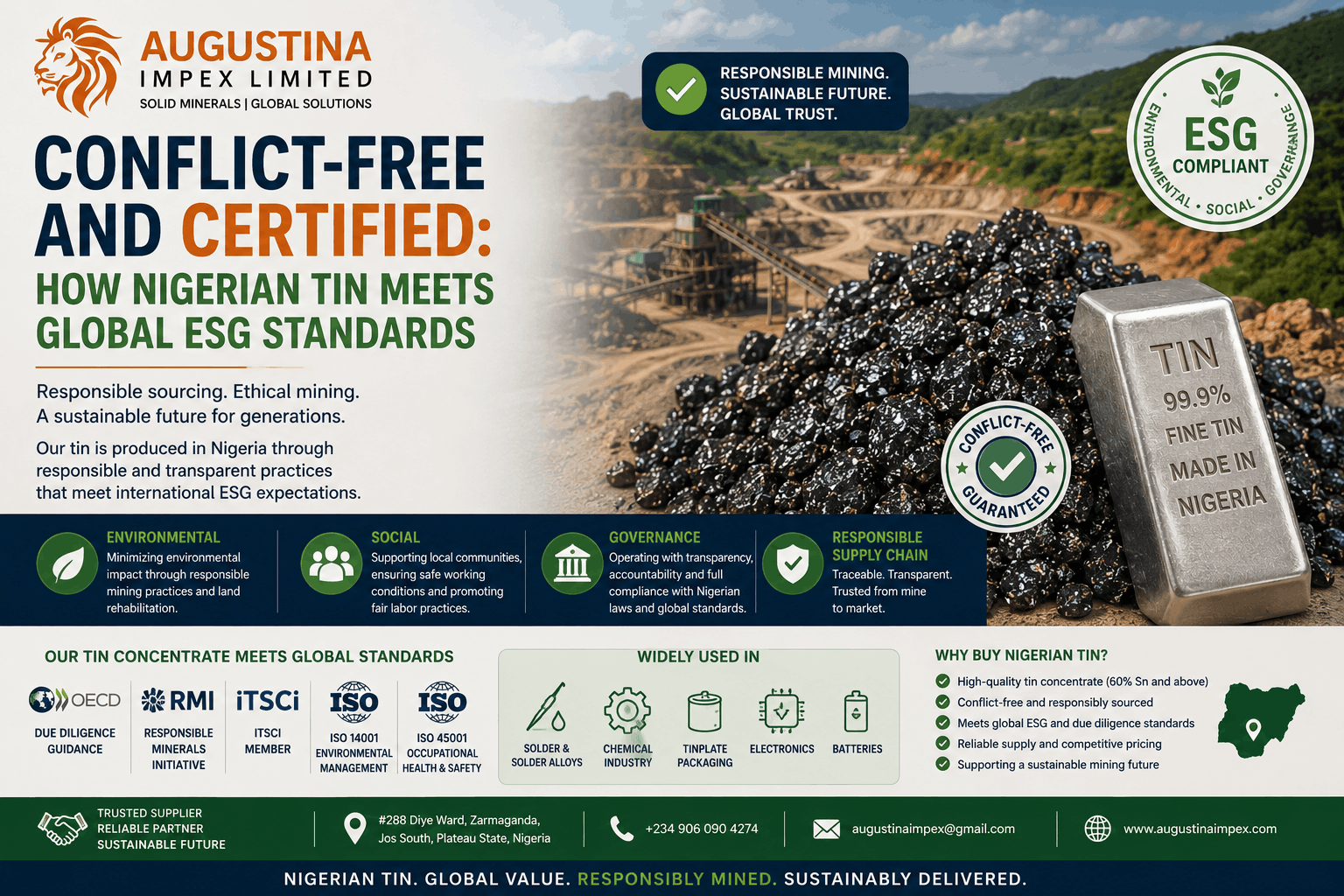
Conflict-Free Nigerian Tin Meets Global ESG Standards
Conflict-Free and Certified: How Nigerian Tin Meets Global ESG Standards By Kolawole King, CEO —…